-
 Duration
14 Days
Duration
14 Days
-
 Difficulty
Challenging
Difficulty
Challenging
-
 Max Elevation
5,106m
Max Elevation
5,106m
-
 Group Size
1 to 10 Person
Group Size
1 to 10 Person
-
 Accommodation
- Three Star hotel in Kathmandu and Tea House in Mountain
Accommodation
- Three Star hotel in Kathmandu and Tea House in Mountain
-
 Start/End
Kathmandu / Kathmandu
Start/End
Kathmandu / Kathmandu
-
 Destination
Manaslu
Destination
Manaslu
-
 Best Season
Sep- Nov and Feb - May
Best Season
Sep- Nov and Feb - May
Experience the Hidden Buddhist Sanctuary on Nepal’s Most Authentic Trek
Entering Sereng Gompa is like entering the world three hundred years ago. The morning haze is clinging to the prayer flags as monks sing their morning pujas of the day. This is not a visit to another monastery during the Manaslu Circuit. Here the road is slow, here the tourists really lodge, and here the high mountain air is filled with something that you will not find in the guides.
The Sereng Gompa Manaslu Circuit Trek is the Manaslu experience you had, with a very important bonus. The majority of trekkers fly by Sereng Gompa to go to Lho or Samagaon. It was a day we made a whole day of. You will sleep in the monastery guesthouse, pray with the monks on Saturdays if you wish, and then wake up one morning with the mountain views causing you tightness in the chest. We have guided this route eleven times now. Every single group tells us Sereng Gompa was their favorite night on the trek. Not because the lodge is fancy, It’s not. But because something happens when you slow down enough to actually be somewhere.
Why This Trek Hits Different
The Manaslu circuit is already more authentic than the Everest Base Camp and the Annapurna trail. The drop in the number at the teahouses could be an indication that the overall number of trekkers is dropping. The route continues to pass through real villages, where the primary business is not tourism but a secondary activity. Kids still stare at foreigners. That’s rare in Nepal these days.
But the Sereng Gompa variation adds something extra. Most itineraries skip right over this monastery or treat it like a photo stop. We made it the anchor point of day five. You are coming in the early afternoon, so you have time to look around and are not in a hurry. The head lama occasionally lets the trekkers sit in on evening prayers. Sometimes he doesn’t. That’s the whole point. You are not practicing tourism. You’re just there.
The monastery is located at 3,240 meters, being located in a side valley where one can see the Manaslu North directly. Its position was sufficient to make it special. However, it is the feeling that captures the hearts. Prayer wheels, which are really used. butter lamps, which monks light out each evening, not to show. A tiny library in which century-old books gradually crumble into dust, since that is what old things do.The rest of the circuit follows the classic route. You’ll cross Larkya La pass at 5,106 meters. You’ll walk through the restricted area that keeps group sizes small.You will get the best scenic views that all people are talking about. The distinction is that you will not be in a hurry to get through it. This itinerary includes sufficient acclimatization, moderate distances each day, and sufficient flexibility that prevents bad weather from destroying the whole trip.
When Those Mountains Hit Your Eyes
- Spring and autumn work best. The weather is clear and consistent in October and November. By then, the rhododendrons will have been in bloom, but you will have better views.
- March through May brings those famous flower displays, though afternoon clouds can hide the peaks.
- Winter is possible if you’re tough. The pass can close with snow, but the lower valleys stay pleasant. The summer monsoon turns the trail into a mud festival. Some people love it. Most don’t. The leeches certainly do.
- Temperature swings hard. Kathmandu will be warm when you start. By the time you’re at Sereng Gompa, you’ll want that down jacket by 5 PM. At Larkya La pass, it’s seen minus fifteen Celsius. Layers are your religion on this trek.
How Your Body Handles the Altitude
The Manaslu Circuit goes high. Not Everest high, but high enough to be felt in your body. The expedition begins from an altitude of around 700 meters and terminates at 5,106 meters at Larkya-La. That’s serious altitude.
This itinerary adds an extra acclimatization day at Samagaon (3,530 meters). Most groups push through in thirteen days. We take fifteen. That extra time matters. Your body gets to catch up. Headaches stay manageable. You actually enjoy the views instead of just surviving them.
The night at Sereng Gompa helps too. It is high enough, with 3,240 meters, so you are in a state of acclimatization, but it is not so high that you feel terrible. We have seen people struggle at Lho (3,180 meters) because they climbed too fast from Deng. Sereng Gompa breaks that climb into gentler pieces.
Diamox helps if altitude is your enemy. The majority of people do not need it, yet carry it around. Consume more water than it appears rational. That’s the mountain hydration test.
The Logistics Nobody Talks About
You need permits for Manaslu. Three of them. The Manaslu Restricted Area Permit costs $70 during the fall season, $50 during the spring, and $40 during the winter. The Manaslu Conservation Area Permit costs 30 dollars. This is in addition to the Annapurna Conservation Area Permit (which you complete in the Annapurna region), which costs another 30Usd.
There is a prohibition on solo trekking in the restricted region. You require a registered guide and must have two people in a group. This isn’t the government being difficult. The rule keeps rescue costs manageable and ensures someone knows where you are.
Insurance is mandatory. Get a cover that covers helicopter evacuation up to 6,000 meters. The pass is well above 5,100 meters, but helicopters fly above it to get to you. This will not be covered by most standard travel insurance. You require certain trekking insurance. Kathmandu to Machha Khola is an 8-9 hour journey on a good day and even more on a bad day when the road is washed away. Which it does. The jeep ride is rough. Bring something for motion sickness if that’s your thing.
What You’re Actually Walking Through
The first few days move through subtropical forest and terraced fields. You are in the valley of the Budhi Gandaki, just by a river that is attempting to kill itself on the rocks with all its might. It runs on suspension bridges, which shake as porters pass. Some of these bridges make you think about your life choices.
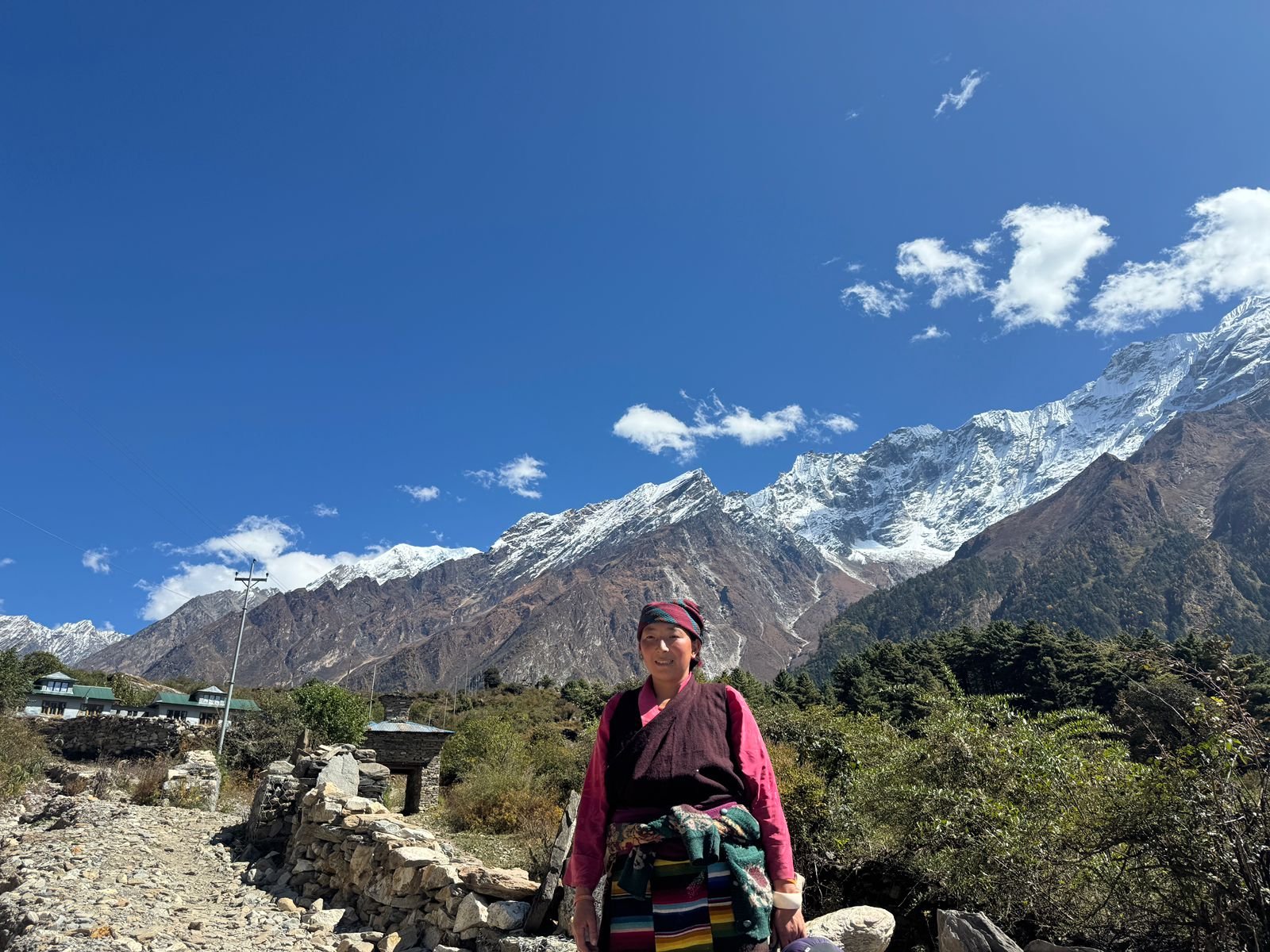
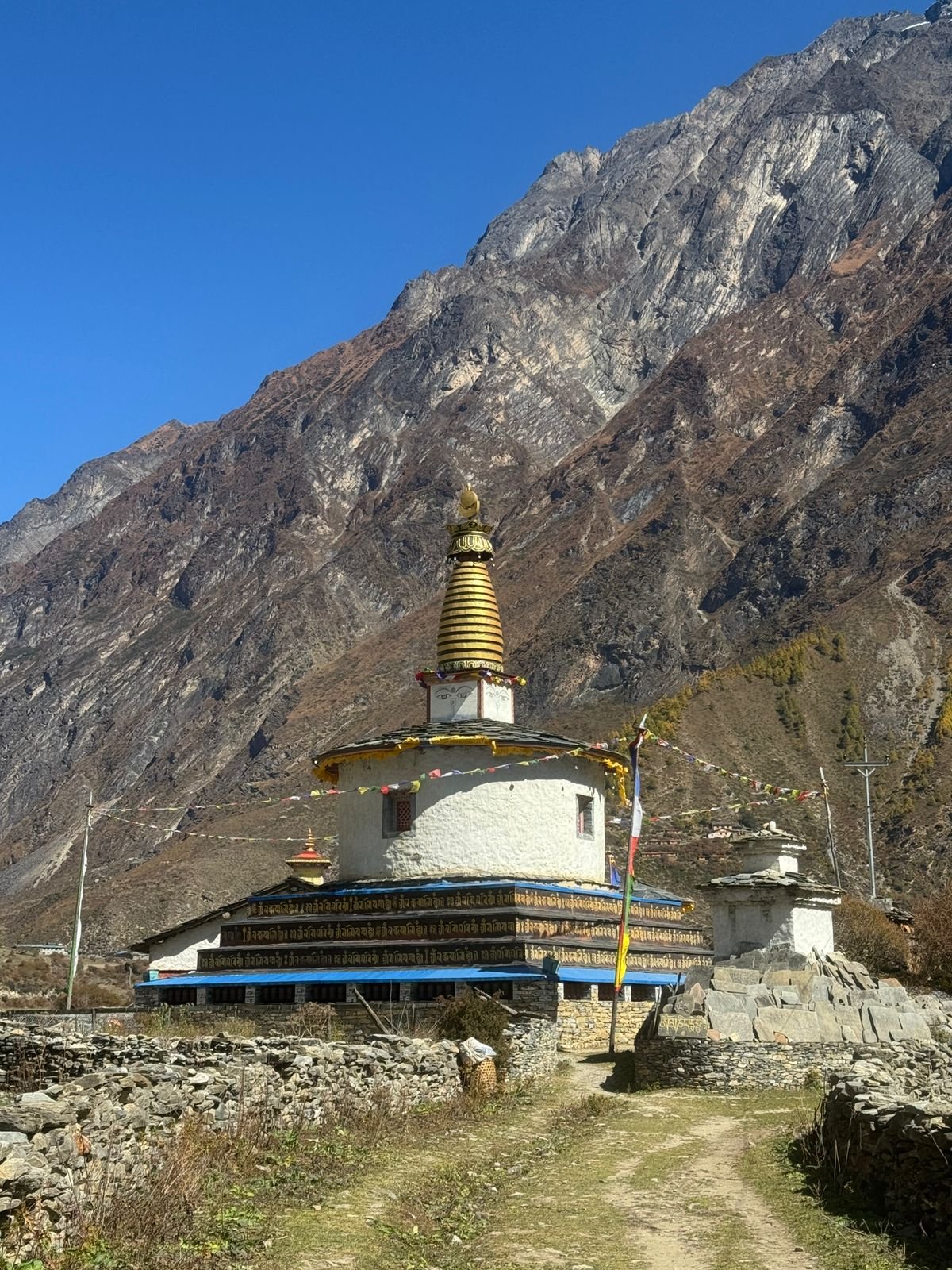
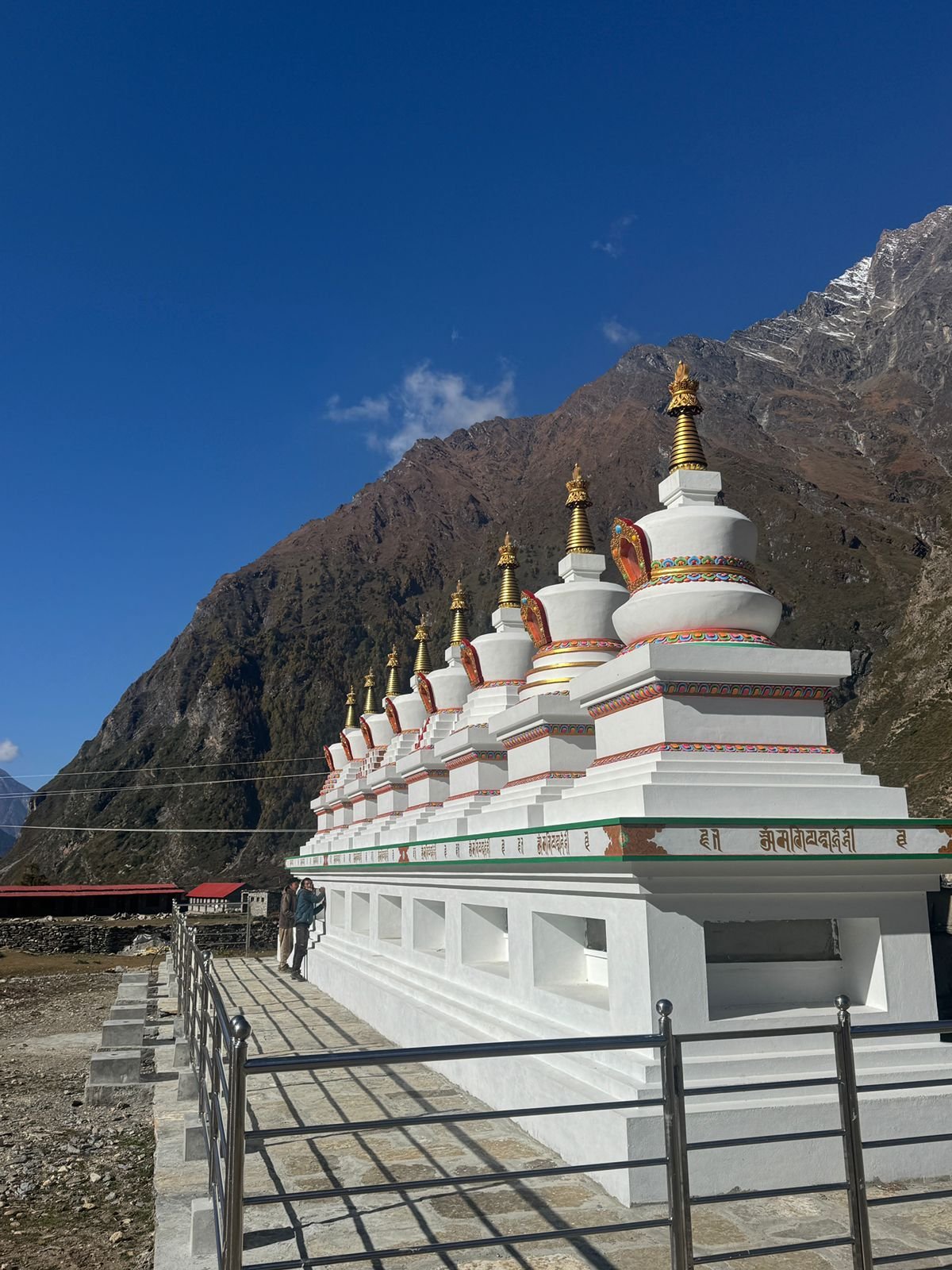
Around Deng, the valley opens up. Pine forests replace the subtropical mess. The villages turn more Tibetan. Prayer flags appear. Mani walls line the trail, carved stones that people have been walking past for generations. You’re supposed to keep them on your right side. Everyone does it. The trail just works that way.
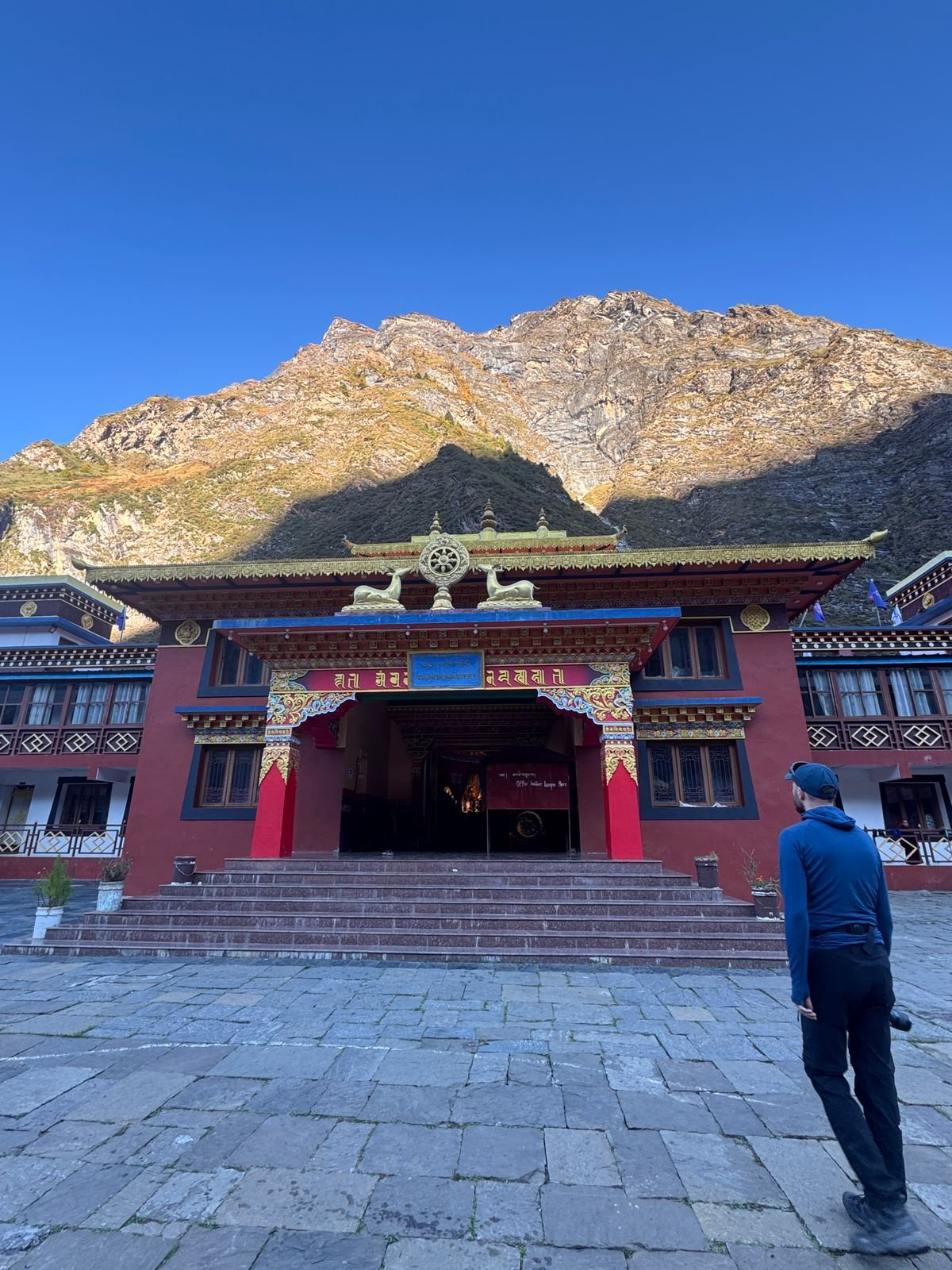
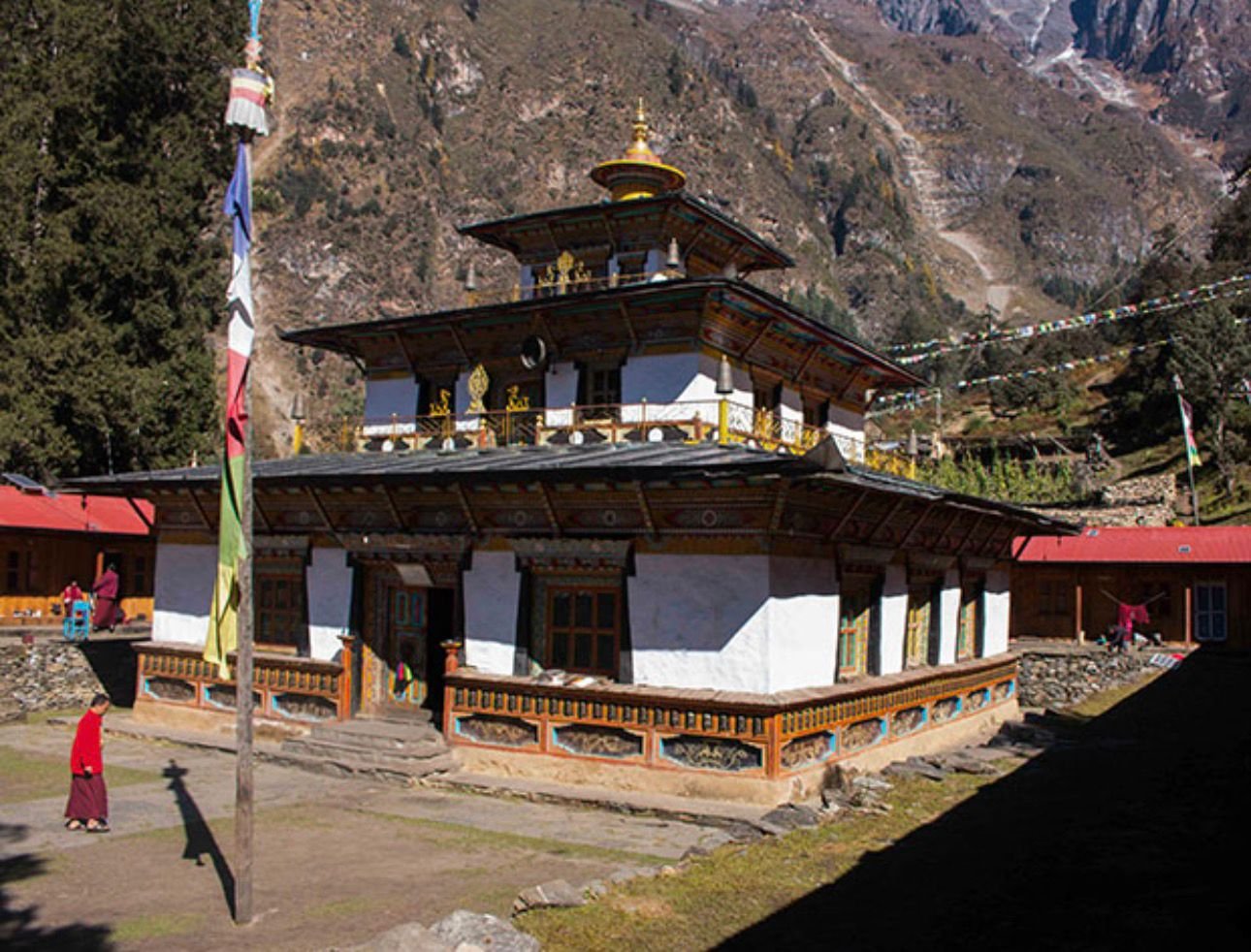
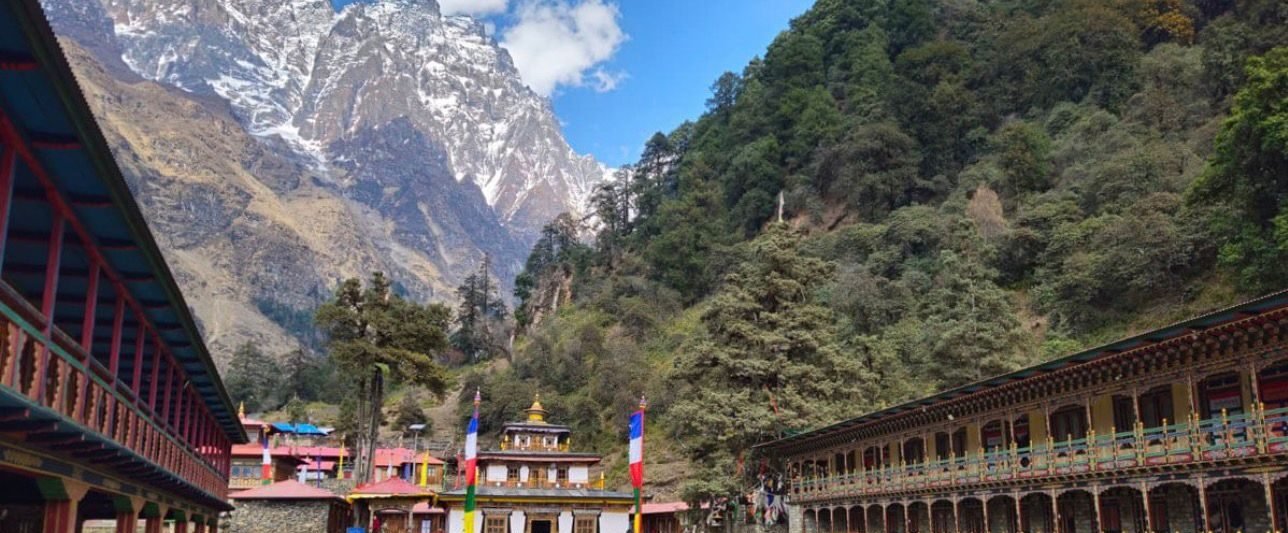
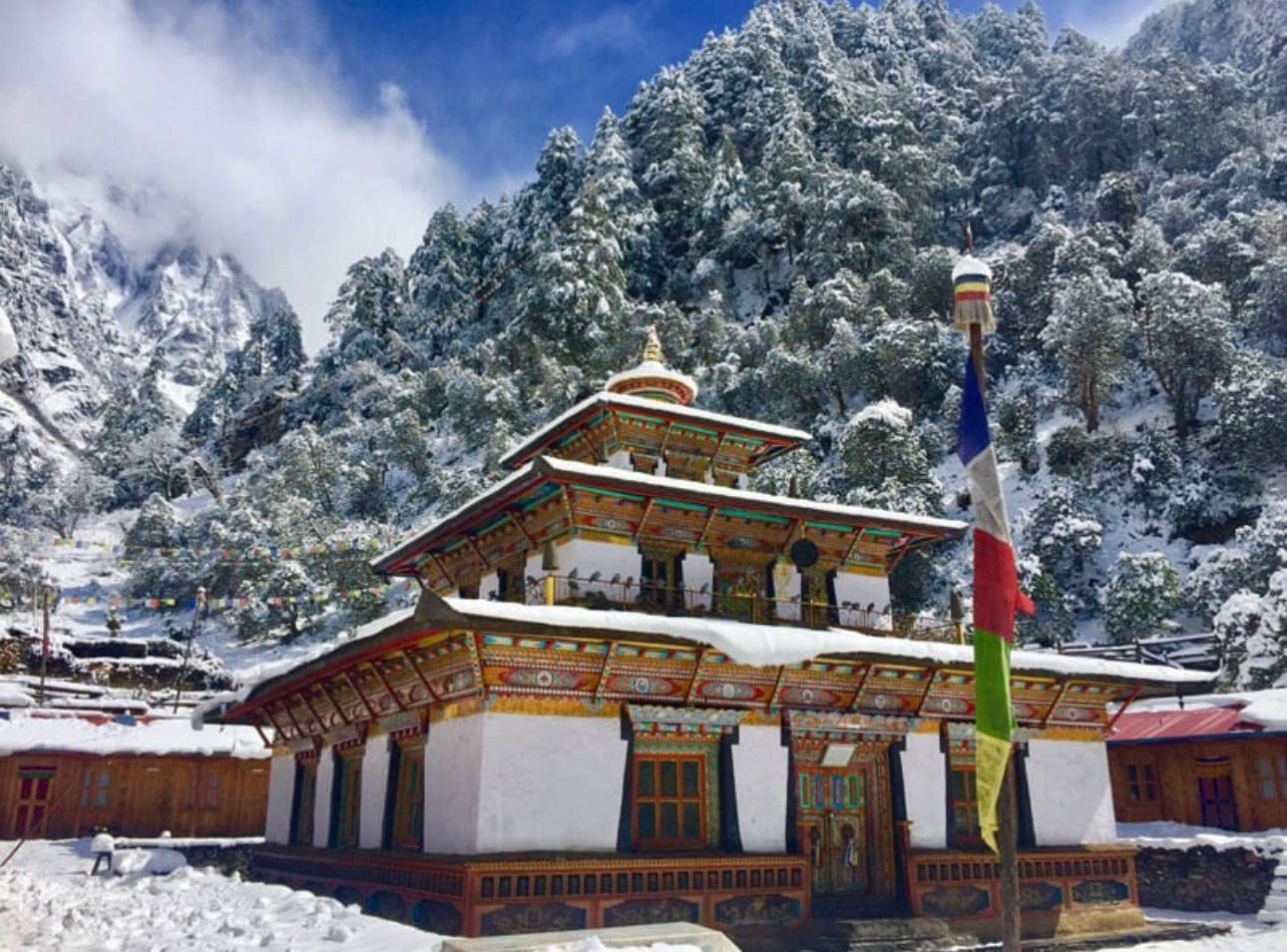
Sereng Gompa sits in a side valley that splits off before Lho. The path to it ascends in rhododendron wood. During spring, the entire hillside is red and pink. The monastery complex is not massive, approximately twenty buildings. The central prayer hall dates back to the 1600s. Their age is best indicated by the wood carvings exposed on the inside.
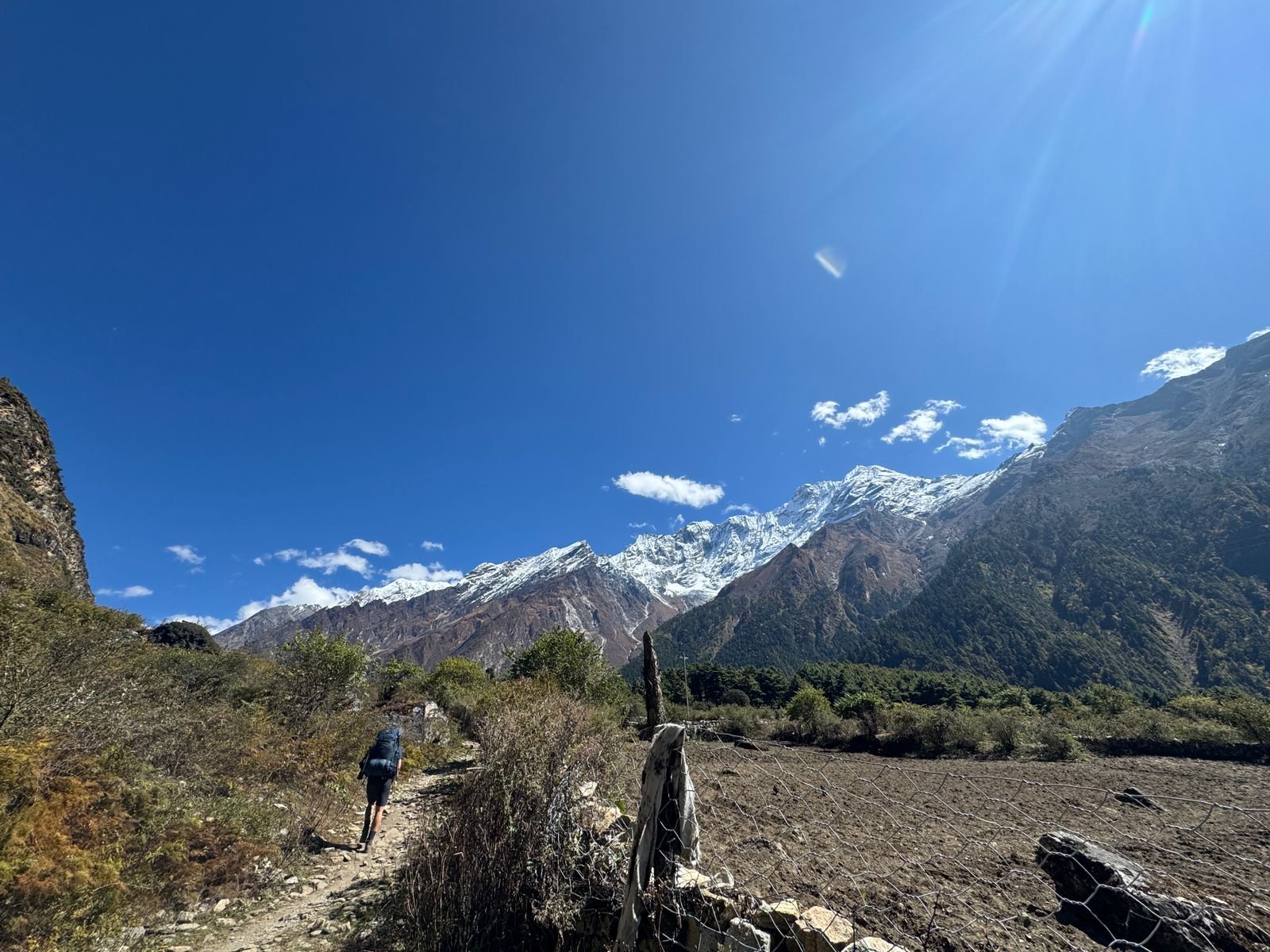
Past Samagaon, you’re in proper high-altitude terrain. Vegetation gives up. The landscape turns to rocks and glacial valleys. Manaslu dominates everything. It is the 8th-tallest mountain in the world, with an altitude of 8,163 meters.
Up here, you believe it, Larkya La pass is the crux. The climb from Dharamsala starts around 3 AM. You’re hiking by headlamp in the dark and cold because you need to cross before the afternoon winds make it dangerous. The pass itself is a wide saddle. Prayer flags everywhere. People got emotional, took photos, and felt accomplished. All of that is fine. You earned it.
What You’ll Eat on the Trail
Dal bhat becomes your best friend. Rice and lentils, served twice a day, free refills. It’s the trekker fuel that actually works. The teahouses also offer noodle soup, fried rice, momos, Tibetan bread, and attempts at Western food that range from good to optimistic.
At Sereng Gompa, the monastery kitchen serves simpler food. Basic dal bhat, thukpa (noodle soup), and maybe some vegetables if the supply recently came through. Nothing fancy. It tastes better than it should, probably because you’re hungry and the setting matters.
Vegetarian works fine throughout the trek. Meat is available, but iffy at high altitude. Water from taps is not safe. Carry purifying pills or a filter. Purchasing bottled water generates plastic waste that is challenging to manage in this area. Instead, the fill came out of the teahouse’s boiled water supply.
Comfort on Your Trek: Where You’ll Stay
Manaslu teahouses are simple. Sharing of bathrooms and dining facilities with wood or yak dung stoves and twin rooms with thin mattresses. You can have a shower at a lower altitude. There is a bucket of warm water higher-up, at an extra price. Few people have their shower beyond 4,000 meters.
The guesthouse of Sereng Gompa is a part of the monastery complex. Rooms are plain, unhygienic, and unheated. The bathroom is outside. But the magic takes place in the dining hall, though. Big windows facing Manaslu. Monks wandering through. The entire place reminds you of going to the house, which is what you are doing.
Carry a good sleeping bag with the lowest rating of minus ten degrees Celsius. The blankets issued assist, yet to a certain degree only. A sleeping bag liner is also a form of added warmth, and it keeps the bedding cleaner. Earplugs are clever in case you are annoyed by snoring. In teahouses, there is one person who is always snoring.
What to Pack (Because Lists Are Useful)
Clothing layers:
- wick moisture base layers (wool or synthetic, not cotton)
- Down or wool evening jacket.
- Waterproof shell jacket and pants.
- Warm hat, sun hat, buff, or scarf
- Gloves (liner gloves and warm mittens in case of the pass)
Footwear:
- Worn-out hiking shoes with straps on the ankle.
- Evening teahouse shoes, or sandals.
- Hiking socks (bring spares), wool or synthetic.
Gear:
- Sleeping bag rated to -10 °C
- Hiking sticks (you will be glad to have them)
- Additional battery headlamp.
- Hydration system (2 liters minimum) or Water bottles.
- Filter/water purification pills.
- UV protection sunglasses.
- Lip balm (high SPF) and sunscreen.
- Personal medications and a first aid kit.
Optional but recommended:
- E-reader or book to the teahouse evenings.
- Travel games or playing cards.
- Camera and additional batteries (cold kills batteries)
- Electricity is scarce at high altitude, and so a portable charger is necessary.
Connecting With Local Culture Without Being Weird About It
The Manaslu region is strongly Tibetan Buddhist. The culture is authentic, not acted out for the tourists. Prayer flags mean something here. Mani stones are not ornaments. You should pass by a chorten or prayer wheel with it on your right. That’s the tradition. At Sereng Gompa, one is supposed to ask permission to take photos inside the prayer hall. In most cases, there is nothing wrong, but inquire. When the monks are doing a puja, you can see it in the back. Sit quietly. Don’t walk around. It is not a performance, but a true religious ceremony.
It helps learn a couple of Nepali or Tibetan phrases. Namaste, everyone knows. Dhanyabad means thank you. Ramro chha means good or beautiful.
Even when your pronunciation is not that good, people like what you are saying.
Tipping is expected. Your guide and porter work hard for the modest incomes. Allow 15-20$ per day guide, 10- 12$ per day porter. Present it when completing the trek in an envelope. It matters to them.
Staying Safe Up There
The greatest danger is altitude sickness. Headache, nausea, dizziness, and sleeping difficulties at the beginning are normal. When the symptoms actually become worse rather than improved, then there is an issue with this. If you can’t walk straight or start acting confused, you need to go down immediately. The trek includes satellite phone access through your guide. Cell service cuts out after the first few days. In emergencies, helicopter evacuation is possible from most points on the trail. This is why insurance matters. A helicopter rescue runs $5,000-8,000Usd.
The mountains change their weather quickly. The blue skies may turn blue within an hour. Listen to your guide about timing. If they say we’re starting early, they mean it. If they say the pass is too dangerous today, believe them. They do this for a living. River crossings can be sketchy during the afternoon melt. The morning freeze makes water levels lower. This is another reason for early starts. Those suspension bridges look terrifying, but are safe. Just don’t jump on them like an idiot.
Trekking Fitness: The Reality Check You Need
One need not be an athlete, yet he or she must be capable of walking a daypack uphill for six hours. Typically, the trail days are 5-7 hours of hiking. Some days are longer. The pass day starts around 3 AM and doesn’t end until mid-afternoon. Training helps. Spend a few months doing long walks with elevation gain. Stairs work if you live somewhere flat. And cardio fitness is superior to leg strength, but that is beneficial. When a person feels happy with the idea of working hard long time, then everything becomes easier. Age isn’t the limiting factor. Physical fitness is not superior to being mentally tough when the times are tough. It is the skill of being able to continue walking when you are tired.
Smart Spending on the Trail: Budget Tips for Trekkers
Bring cash in Nepali rupees. There are ATM in Kathmandu, but never in the mountains. Plan on about 25-35 dollars a day on trail food, beverages, and snacks. The higher the altitude, the higher the prices are since everything is transported by porter or mule.
A Coke costs 100 rupees at Soti Khola. By Dharamsala, it’s 400 rupees. That’s not a scam. That’s logistics. Someone carried that can for three days uphill. Tea stays cheap throughout. Dal bhat Yields 800-1200 rupees /ALT.
Electronics is more expensive, typically a 200-300 rupee device. Solar power and diesel generators are expensive at this height. Save battery by keeping devices in airplane mode. The photos can wait until you have wifi in Kathmandu.
Hot showers are a luxury item. Lower down, expect to pay 300-500 rupees. Higher up, they often aren’t available at all. Baby wipes become your shower. Embrace it.
Leave No Trace: Caring for This Place
The Manaslu area receives a lower number of people compared to Everest or Annapurna, which makes it weaker as well. Best waste management is scarcely done beyond Samagaon. Everything you bring in, you should bring out or dispose of properly.
Pass on individual bottles of plastic. Instead, use water purification. Do not discard trash anywhere, even the biodegradable ones. The peels of the orange require years before it deteriorates at high elevations. Toilet paper is burnt or packed out. Nature isn’t a trash can.
Ancient is the wood fire that is not sustainable. Kerosene or solar power is being used in many teahouses. The warmth is the same. The forest stays standing. And when you are cold, put on another layer, not a second blanket of fire.
Answer the local culture and economy by engaging local guides and porters. The permit requirements will make sure of this, albeit at a cost worthy of existence. These mountains are their home and livelihood. Tourism should support that, not extract from it.
Why Sereng Gompa Specifically Matters
Most Manaslu trekkers push from Ghap to Lho or even Samagaon in one day. That’s 7-9 hours of walking that gains serious altitude. It’s doable but not ideal. Bodies need time to adjust. Minds need time to process.
Splitting that section with a night at Sereng Gompa changes everything. The morning walk from Ghap is gentle, maybe three hours through a beautiful forest. You arrive at the monastery around lunch. The afternoon is yours. Explore the grounds. Sit with the view. Read a book. Actually rest.
The monastery itself feels alive in a way many tourist-circuit temples don’t. Monks actually live here year-round. Their practice continues whether tourists show up or not. When the head lama is present, he occasionally narrates the history of the monastery. He sometimes nods and continues with his work. Both are fine.
Visitors staying overnight will always have a chance to attend evening prayers. It’s optional, obviously. But, it is sitting in the prayer hall with monks chanting, with butter lamps fluttering, with mountain cold oozing through the walls – that is what people remember years later. Not another tea house, but this one.
How This Compares to Other Nepal Treks
Everest Base Camp gets all the fame. Manaslu is better. That’s not controversial among people who’ve done both. EBC is crowded now, commercialized, and expensive. The views are incredible, sure. But you’re sharing them with hundreds of other trekkers.
Manaslu Circuit gives you similar altitude, similar mountain scenery, and similar challenge. But you’ll see maybe twenty other trekkers on a busy day instead of hundreds. Villages feel real. The trail hasn’t been smoothed into a highway. It’s what Everest was twenty years ago.
Annapurna Circuit is the other comparison. Annapurna has better infrastructure and easier logistics. Roads have cut into parts of the trail. It’s still beautiful but less remote. Manaslu keeps that wilderness feeling. The trade-off is simpler accommodations and fewer food options.
For people who want actual adventure with real cultural immersion, Manaslu wins. The restricted area permit means smaller groups and local guides. You are not just walking in the backyard of someone. You’re being invited in.
Balancing Connectivity and Peace on the Trail
Cell service drops out after Philim. Your phone becomes a camera and nothing else. Some lodges have wifi, but it’s satellite-based, expensive, and slow. Expect to pay $5-8 for an hour that might actually work for twenty minutes.
Sereng Gompa has no wifi. Neither do the majority of high-altitude lodges. This is a feature, not a bug. The experience involves the lack of connection. Ask everybody you will be off-grid for two weeks. They’ll survive. So will you.
Your guide carries a satellite phone for emergencies. Real emergencies, not Instagram updates. They can be of assistance in case you need to contact a person as urgently as possible. Otherwise, enjoy the silence. The world will wait.
Lasting Memories From Your Trek Adventure
Sereng Gompa Manaslu Circuit Trek is not the easiest choice in Nepal. It’s not the shortest. It is by no means the least expensive. But it may be the most rewarding.
It is not only the mountains, but it is also a special thing. It’s the pace. The cultural depth. The fact that you’re walking through places where tourism hasn’t smoothed all the edges yet. Sereng Gompa anchors the whole experience with that overnight stay. It forces you to slow down when modern travel culture says speed up.
People come back from this trek different. Not in some dramatic way. Just… quieter. More present. They’ve spent two weeks where effort matters, where weather dictates plans, where monasteries are living spaces instead of museums. That changes your baseline.
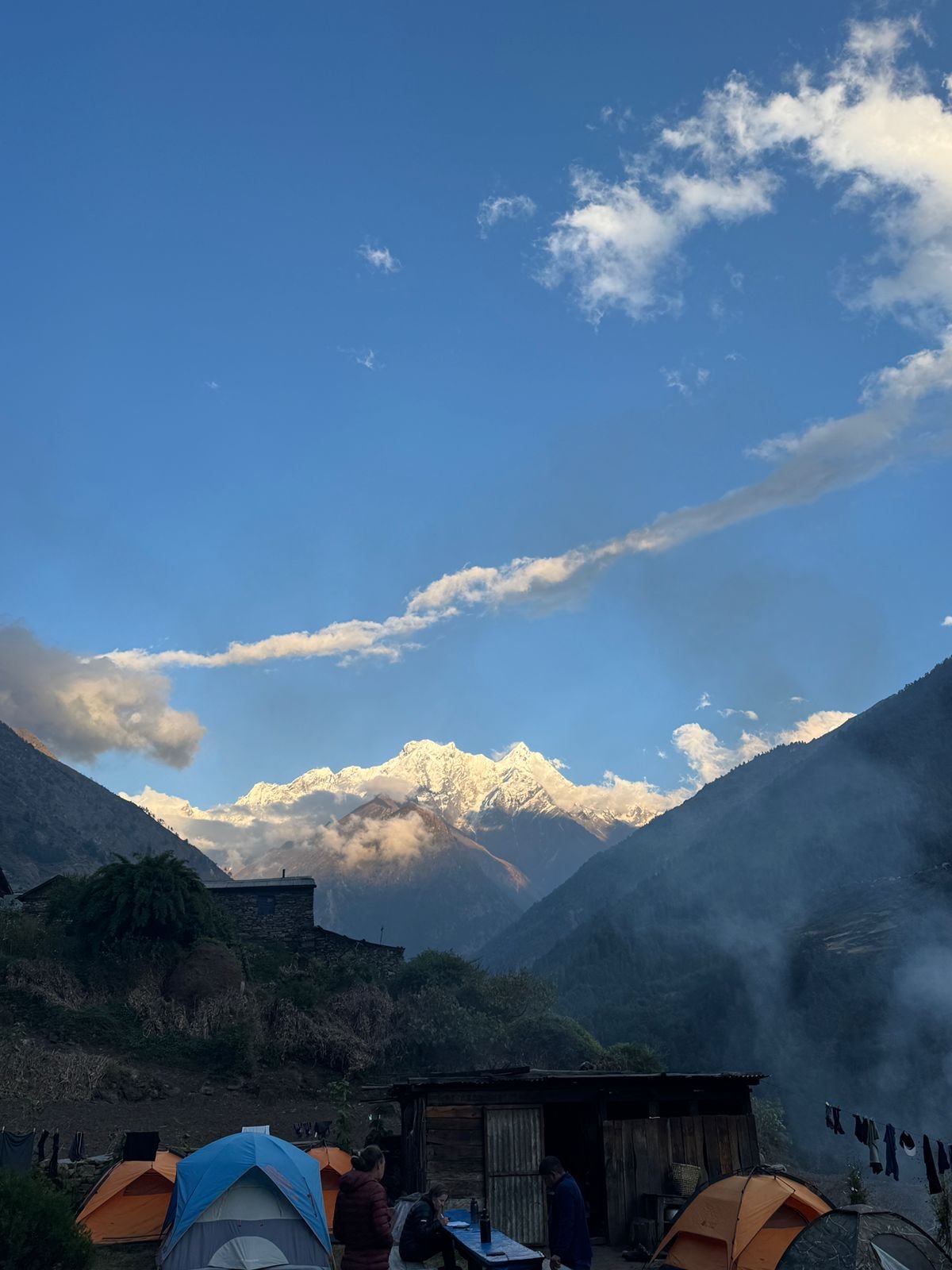
The mountains will be there even tomorrow. However, you won’t be the same person. It is the true motive to make this trek. Not to pick photos or check boxes. To be really somewhere different enough that it changes something in you. Early in the morning at Sereng Gompa, when the prayer flags fly in the wind, and Manaslu turns pink, that is where it takes place.
Trip Highlights
- Overnight at Sereng Gompa monastery - Evening prayers with resident monks in 400-year-old prayer hall as Manaslu turns pink at sunset.
- Cross Larkya La Pass at 5,106 meters and panoramic views of Himalayan peaks: Manaslu (8,163m), Himlung Himal, and untold sheds of Tibetan mountains.
- Walk through authentic Tibetan Buddhist villages where prayer wheels actually get used and tourism is still the side business
- Visit the Manaslu restricted region -Small group sizes and guided requirements ensure this trip is impeccably uncrowded by comparison with either Everest or Annapurna.
- Two offacclimatization days at Samagaon and Samdo - Your body has time to get used to it and then you not only see them but you actually enjoy the views.
- Explore different regions of the country of subtropical jungles to desert - rhododendron forests, glacial valleys, barren mountain passes all in 2 weeks.
- See the north face of Witness Manaslu as few trekkers observe - The monastery path is a chance to look in different angles not of the usual path.
Sereng Gompa Manaslu Circuit Trek ~ Itinerary
Day 1
Arrival in Kathmandu
- Max Altitude: 1,350m
- Accommodation: Three star standard hotel
Upon your arrival at Kathmandu, our agency’s representative will meet and welcome you with our company name (Nepal Royal Tourism Holiday Pvt. Ltd) on the display board at the Arrival gate then you will be transferred to your hotel.
Day 02
Drive from Kathmandu to Machha Khola
- Max Altitude: 870 m
- Duration: Approximately 7-9 hours Drive
- Drive Distance: 164 Km
- Meal: Breakfast, Lunch and Dinner
- Accommodation: Tea house
The journey starts in the morning in Kathmandu. You take a jeep together with your guide and other trekkers. The motivation continues westward on the congested city streets and into the country terrain. The highway is not well-maintained, and thus you will enjoy a hearty breakfast. Besi is a market town across which you pass; the drivers have tea and samosas. The road becomes a graveyard as one enters the mountains. Rice fields are washed away in river gorges and hilltop villages. You get to the valley of the Budhi Gandaki River by afternoon. The junction of the trails is called Machha Khola and has simple lodging that indicates the start of the trail. Take off your tea, cleanse the dust out of your shoes, and have a nap. Tomorrow you walk
Day 03
Trek Start from Machha Khola to Jagat
- Altitude: 1340 m
- Trek Duration: 7-9 Hours
- Trek Distance: 17 km
- Meal: Breakfast, Lunch, and Dinner
- Accommodation: Tea house
The valley narrows. Cliff-faces were sliced by waterfalls. Its trail is still dramatic as it passes among the rock walls and the river is below. You go up very steep stairs of stone at Khorlabesi, and across another suspension bridge, and then upon ridges above the water-mass. Tatopani comes in a few hours–hot springs, where you are scarcely detained as you are so soon starting the trek. The road becomes more ascetic. Forest thickens. Altitude rises in big steps. Dobhan provides a lunch-stop, consisting of a few lodges, at which the trail diverges a little. Then further up to Jagat, an ancient check point village. The stone houses are close to one another. The presence of prayer flags is more frequent. You get into Nubri valley where the culture begins to change towards Tibetan. This initial clone of dal bhat is good.
Day 04
Trek from Jagat to Deng
- Maximum Altitude: 1940 m
- Trek Duration: 7-9 hours
- Trek Distance: 21 km
- Meal: Breakfast, Lunch and Dinner
- Accommodation: Tea house
The trail continues with its lapses of ascending, crossing and descending. This is done by going through Salleri, a Gurung village where children continue to make the trekker wave. The valley opens a little. The lower elevation scrub is replaced by pine forest. Terraces are resumed by rock walls. Philim is the following village and the final one that has a solid cell service. Individuals final glance on their phones, relay going dark messages. Philim is no longer the scenery. Chortens appear. The trail has portions that are lined with Mani walls. The last Tibetan prayer wheels identify the way. You are forging into Buddhist country. On either side of the river is a beautiful valley where Deng is seated. The lodges are basic but warm. Mountains begin to be revealed above the tree line.
Day 05
Trek from Deng to Sereng Gompa
- Altitude: 3,050 m
- Trek Duration: 7-8 hours
- Trek Distance: 16 km
- Meal: Breakfast, Lunch and Dinner
- Accommodation: Tea house
To-day a great way up the hill but rest in the afternoon. The morning begins with the crossing into the opposite bank of the river to the west. Through rhododendron forest you climb that is colored in spring. Pine scent fills the air. The trail divides in front of Ghap–the majority of the trekkers, go toward Lho. You go left, and there, on a lesser road which leads higher and higher into a side valley, you go up into the valley. The road is the Sereng Gompa road. The compound of the monasteries is revealed step by step, introducing trees, and prayer flags. The main prayer hall is enclosed by stone structures of traditional Tibetan style. At this place you are to stop a night. Login into the basic monastery guesthouse. Afternoon will be your own, to either kick some butt with the view of the Manaslu North, or round the prayer wheel circuit should you choose. Evening prayers commence at about 5 00 PM assuming that the monks are carrying out these prayers. The food offered in the dining hall is of simple kind and it becomes special due to the place of eating. At this elevation, sleep presents no difficulty provided that you have paced yourself.
Day 06
Trek from Sereng Gompa to Samagaon
- Altitude: 3,530 m
- Trek Duration: 7-8 hours
- Trek Distance: 9 km
- Meal: Breakfast, Lunch and Dinner
- Accommodation: Tea house
A short day by design. Your body is getting used to the thin air. This leads to the main valley, where it rejoins the Manaslu Circuit trail near Lho. Thence it is up to Samagaan by a gradual ascent. The terrain has been transformed totally. Trees thin out. The valley opens wide. At 8,163m, Manaslu is the eighth highest mountain in the planet, which dominates the skyline. Here every meter matters. Samagaon is a big Tibetan village which is among the largest among the settlements in the upper valley. Stone houses with flat roofs. Prayer flags everywhere. The village is dominated by a monastery. It is enclosed by potato fields and barley terraces. This lessens your two-night abode. Arrive early, rest, hydrate. To-morrow is a day of acclimatization. Your body will thank you.
Day 07
Samagaon Acclimatization Day.
- Altitude: 3,530 m
- Meal: Breakfast, Lunch and Dinner
- Accommodation: Tea house
Acclimatization does not imply stagnation, but the movement. It is by climbing high and sleeping low. It is a hike out of the village to-day to Pungyen Gompa, a hillside monastery. The hike lasts approximately two hours to the top and slightly faster down the mountain. The view is stunning. It is also possible to walk to Manaslu Base Camp, a more extensive walk that is quite near to the glaciers of the mountain, as well as visit Birendra Lake, a clear glacial pool with a name of the king. All these journeys assist in getting your body adapted. You ascend in the daytime, and come back to Samagaon to sleep. The level of oxygen in the blood is normalized, headaches disappear, and you become more active. The village is also worth a visit. Walk around the gompa. Ask locals whether they would like to talk. Get snacks to the higher trail. Rest and read. This is a significant day that follows.
Day 08
Trek from Samagaon to Samdo
- Altitude: 3,530 m
- Trek Duration: 3-4 hours
- Trek Distance: 8.2 km
- Meal: Breakfast, Lunch and Dinner
- Accommodation: Tea house
You get another short day when you go up higher. The path continues northwards along a valley, and initially it is level. You traverse rivulets that are no more than the melting ice. The scenery is constrained to a high desert: barren and rocky. Juniper bushes cover the slope sides of the hills and the yak pastures cover the valleys. Samdo is near the Tibetian border where trading has been easy. The village seems distant in an excellent manner. A couple of lodges, stone houses and prayer flags turn in the ever blowing wind. In the background, a side valley leads to the Tibetan plateau with Samdo in the background. There are individuals who drive to the top to have afternoon tours. The air is thin. It is difficult to breathe on a mountain. That is normal. To obtain oxygen, your body is working hard. It may be difficult to sleep and that is alright. There is another day of acclimatizing tomorrow and then the big push.
Day 9
Samdo to Dharamsala / Larkya Phedi (4,460m)
- Altitude: 3,875 m
- Trek Duration: 3-4 hours
- Trek Distance: 8 km
- Meal: Breakfast, Lunch and Dinner
- Accommodation: Tea house
The road to Dharamsala is not long but quite significant. It gets you in condition to cross the pass tomorrow. The trail ascends straight on rock. There is no plant life here. You see only rock, ice, and sky. The highest sleeping spot in this trek is the lodge in Dharamsala. It is extremely simple: rough walls, communal rooms, small heating. But it matters where it is as you have to go across Larkya La tomorrow. Get here early in the afternoon. Rest and drink a lot. Your guides will tell you tomorrow. You get up at about 2AM, begin hiking at 3AM with headlamps and continue until you go across the pass before the afternoon wind renders it unsafe. Try to sleep before the walk. Wake up to an alarm, change batteries of headlights, and be prepared.
Day 10
Trek from Dharamsala to Bimthang through Larkya La Pass (5,106m).
- Maximum Altitude: 5106 m
- Trek Duration: 7-8 hours
- Trek Distance: 16 km
- Meal: Breakfast, Lunch and Dinner
- Accommodation: Tea house
Summit day. You rise early in the morning for tea and biscuits. Wrap up in all your warm things. Headlamps turn on at about 3 AM. It is a gradual ascent, then sharp towards the approach of the pass. You are passing by a procession of headlamps, as each one is moving at its own speed. The air is very thin. Every step takes focus. Take presents and rest. And keep going. During the morning, the sky is turning from black to deep blue to pink. The Larkya La prayer flags can be seen. This is the highest point at 5,106 m. This is an extended saddle having mountains: Manaslu to the south, Himlung Himal to the north, and numerous more mountains. Don’t forget to take pictures, then breathe and experience what you experience, and begin to descend. It is a long and steep descent to Bimthang. Your knees will hurt. Poles help. The scenery gets softer. In the afternoon, you come to Bimthang, a valley meadow, which is a tropical area in comparison with the pass. The lodge makes you warm, and the food is good to eat. You sleep deeply.
Day 11
Trek from Bimthang to Tilije
- Maximum Altitude: 2,300 m
- Trek Duration: 7-8 hours
- Trek Distance: 20 km
- Meal: Breakfast, Lunch and Dinner
- Accommodation: Tea house
Once the pass has been made, all is made easier. There is more oxygen in the body, and pressure is reduced. The trail now passes through rhododendron woods and through hamlets. You go through Karche, Gho. Here comes the Dudh Khola river, which is supplied by glacier melting that happened in the mountains you have just passed through. The path leads to the Annapurna Conservation Area. You are in a new territory; however, the switchover is slow. Tilije is a small traditional village consisting of stone houses, fields of barley, and prayer wheels. Early dinner is taken in the lodge. You will likely get ten hours of sleep. The pass and the weariness of nearly two weeks of walking are wearing you out.
Day 12
Trek from Tilije to Dharapani
- Maximum Altitude: 1,860 m
- Trek Duration: 2 hours
- Trek Distance: 8 km
- Meal: Breakfast, Lunch and Dinner
- Accommodation: Tea house
The path continues to descend. The forest gets thicker. You pass by the tiny village of Thonje, and you are checked by the officials to have your permit for the Annapurna. The route goes along the Marsyangdi River and leads to the Annapurna Circuit. Traffic gets a bit heavier. You can also notice other trekkers approaching you in the opposite direction. At this place, several trails intersect. The village contains good lodges that have hot showers. The shower is a blessing after almost 2 weeks of inappropriate sleeping quarters. The dining hall has wifi. Your phone works again. The outside world comes back. Messages pile up. Take your time to readjust.
Day 13
Dharapani to Kathmandu
- Maximum Altitude: 1,350 m
- Drive Duration: 9 hours
- Drive Distance: 250 km
- Meal: Breakfast, Lunch and Dinner
- Accommodation: Tea house
Jeeps are on hold in Dharapani to be driven back to Kathmandu. The road goes with the Marsyangdi River to the South along the Besisahar and then connects to the main highway at Dumre. You find the same landscape in inverted form, yet it has been different. Those mountains you have already walked over. They are not mere scenery anymore. Most of the day is spent in the drive. By the evening, you are in Kathmandu again in the chaos. Traffic. Noise. People. It feels overwhelming. Check into your hotel. Take a good shower. Eat food that isn’t dal bhat. Attempt to digest the recent occurrence.
Day 14
Final Departure day
After enjoying your breakfast, based on your flight schedule, you may even have some free time to explore a bit more of Kathmandu. A member of the team will be with you when you go to the airport. They will be there a few hours before your flight to help you with your departure arrangements so you can take great memories of your Manaslu trek. We, as your reliable travel partner, Nepal Royal Tourism Holiday Pvt. Ltd. (www.nepalroyaltreks.com), feel very lucky to have had the chance to share this exceptional experience with you. Travel safely and see you next time!
Trip Cost Includes/Excludes
Cost Includes
- All the necessary trekking permits, including Manaslu Restricted Area, Manaslu Conservation Area and Annapurna Conservation Area.
- A professionally trained government licensed English speaking guide.
- A porter to every two trekkers with a weight of as much as 20kg.
- Food, lodging, and insurance, as well as salaries, of the guide and porter.
- Transport of attention to Kathmandu by personal vehicle up to Machha Khola, and Dharapani to Kathmandu.
- Lodging in Teahouse during the trek without a room with another individual.
- The trek was three meals a day, breakfast, lunch, and dinner.
- One cup of tea or coffee in the morning with breakfast and one cup of hot drink in the evening with dinner.
- On the eve of the trek Khathmandu, and on the evening thereafter, in a primitive hotel in a room with another customer.
- There was a first-aid kit that the guide was carrying.
- Guidance to a satellite cell phone in case of an emergency.
- Sleeping bags and down jackets would be rented in case you require them; drop them after the trek.
- Any government taxation and official expenses.
- Nepal Royal Treks completion certificate.
Cost Excludes
- International flight in Kathmandu in and out.
- The Nepal visa charge: 30 dollars in 15 days, 50 dollars in 30 days, which is paid at the airport entry.
- The mandatory of the travel and trekking insurance that must cover evacuation by helicopter up to 6,000 m.
- Kathmandu lunch and dinner, no breakfast at the hotel
- Additional days in Kathmandu on top of the ones included.
- Personal trekking equipment in the form of boots, clothes, a daypack, etc.
- You will be able to take advantage of hot showers along the Trek; they have a fee of 300 to 500 rupees.
- Other fees may include: Battery charging fee of 200 to 300 rupees per unit, lodge fees of 500 to 800 rupees, or purchase of individual food and drink items, such as: alcoholic and non-alcoholic drinks, bottled water; candies, bars and chips, as well as miscellaneous charges including: laundry/phones/souvenirs, etc.
- Guide and porter tips
- The evacuation expenses that your insurance provides in case of an emergency.
- Any expenses brought about by unpredictable events like natural calamities, cancellations of flights, or political strikes.
Trip Photo/Video Gallery
Frequently Asked Questions
You do not have to be a sports star, but you must be able to walk around 6-7 hours per day with a light day pack. These days are mostly spent with uphill climbing at an elevation. You will be able to cope with that if you can walk several hours without having breaks and manage uneven ground. Training assists—spend some months taking long walks uphill. Raw strength is not as vital as cardio fitness. The most important factor is mental toughness to continue even when being tired.
Ideally, it is October-November and March-May. The best weather is in autumn (October-November), when the skies are clear and the weather is most consistent; however, it is the prime season and therefore will have more trekkers. The spring (March-May) is accompanied by the bloom of rhododendron and better temperatures, although cloudy afternoons can conceal mountainous scenery. It can be winter for hardy trekkers who are not bothered by snow and cold. Summer monsoon (June-September) implies mud, leeches, and low visibility; do not even attempt it unless you are fond of suffering.
The Manaslu restricted area needs a registered guide and a minimum of two people. Solo trekking isn’t allowed. It is not just a mere rule of thumb, and it keeps the rescue logistics controlled, meaning that an individual is aware of where they are. You will have to go into a group of people arranged, or you will have to hire a guide. This rule is imposed harshly, even in the case that you are a seasoned solitary walker.
The expedition climaxes at 5,106 meters at Larkya La pass. That is a high elevation at which your body certainly feels the thin air. This itinerary has two days of acclimatization, with the purpose of getting used to it. The overwhelmingly major part of the population develops some symptoms, which are headaches, mild nausea, and insomnia, but these symptoms are overcome. The trick is to go up at a slow pace, taking a lot of water, and listening to your body. Diamox might work when altitude is the adversary. The stay at Sereng Gompa (3,240 m) gives a softer acclimatization process that is omitted in the regular itineraries.
The cheap hot showers are available in lower levels at 300-500 rupees. Increasing the altitude, the showers will be removed, and you will receive a bucket of warm water, provided you pay. At altitudes above 4,000 meters, the vast majority of individuals do not take a shower at all—it is not only cold, but the body dries in a short time. You become friends with baby wipes. Most teahouses have toilets of a squat type, which are shared. At Sereng Gompa, the bathroom is external to the main building. It’s basic but clean. Paper towels are your own business.
Food is generally safe. Dal bhat (rice and lentils), but it comes hot and fresh and has free refills—it is the trekker anthel that indeed works. The teahouses also offer noodle soup, fried rice, momos, and simple Western services. During the trek, Vegetarian will suit very well. High altitude has risky meat. Do not use tap water; use a purification pill or a filter. A majority of lodges offer water that you can refill, which is boiled and therefore less expensive than purchasing bottles, which demand more plastic.
Day-to-day changes in temperatures vary significantly, as do changes in altitude. When you start, Kathmandu will be warm. By Sereng Gompa, you will wish to wear a down jacket at 5 PM. At the crossing, I have observed down to minus fifteen Celsius. Carry a sleeping bag that should be able to withstand a temperature of at least -10°C. Teahouses also offer blankets; however, they are not useful at high altitudes. A sleeping bag liner is also something that helps to add warmth and keep the bedding cleaner. And layers, on this pilgrimage, are thy Sabbath.
On the fourth, Philim decreases the cell service. Other lodges do offer satellite wifi, though, but it is expensive (5-8 an hour) and probably sluggish and unreliable. Sereng Gompa does not even have wifi. Neither do most of the high-altitude lodges. Calculate two weeks off-grid. The guide has a satellite phone in case of a real emergency. Send them news back home; you will not be contacted. The dissociation is also part and parcel of the experience.
The trail has most points where helicopter evacuation is possible. There is satellite phone access in case of emergency with your guide. That is why it is imperative to have trekking insurance covering helicopter rescue up to 6,000 meters because a rescue costs 5-8000 dollars. Your guide has a first aid kit, and most are wilderness-trained first aid workers in case of minor problems. The severe altitude sickness requires descent. Never fool around with symptoms that become worse rather than better.
The budget for food, drinks, snacks, charging, and showering should range from 25 to 35 dollars a day, measured in Nepali rupees. There are higher prices due to the climb since everything has to be carried in with a porter or a mule. Bottles of Coke are priced at 100 rupees in Soti Khola and at 400 rupees in Dharamsala. There are ATMs in Kathmandu, whereas in the mountains, there is a lack of ATMs. You will need plenty of cash. In the trial, credit cards do not work. Put aside money to be used in tips—your guide, 15-20 dollars a day, and your porter, 10-12 dollars a day.
The vast majority of itineraries bypass Sereng Gompa or make a brief stop to take a photo. This is the path of you spending the night at the monastery, which will split the difficult walk between Deng and Samagaon into two not-so-difficult days. You become more acclimatized, you have a cultural experience of your own with resident monks, and you have vistas of Manaslu previously impossible on the regular route. The experience of being in the monastery is a retrospective that people always remain fond of, unlike in a teahouse.
The teahouses also charge 200-300 rupees per device. Solar panels or diesel generators produce electricity at high altitude; thus, it is scarce and costly. Bring a portable power bank. Turn off your gadgets before the flight. Batteries are quickly drained in the cold weather, so warm them up in a sleeping bag at night. You cannot count on more than 4,000 meters—it may be out of power.
It is difficult but possible with the correct preparation, and this is the first time in the high-altitude trek. The plan gives an additional number of acclimatization days to beginners. You must be physically fit and mentally strong. Begin with less demanding tours in case it is your first time hiking for multiple days. Should you be in shape, well-trained, and just ready to endure uncomfortable moments, then most first-timers complete this trek successfully.
Groups usually have 2-12 people. The restricted area permit has at least a two-person requirement, and therefore, even individual trips must have at least two. Small groups are more flexible and also move more quickly. Bigger ones are more socially interactive and can have lower prices per head. In most businesses, groups should have no more than 12 people to maintain quality.
Three permits are required: the Manaslu Restricted Area Permit (70-September-November) or (50-December-August), the Manaslu Conservation Area Permit (30), and the Annapurna Conservation Area Permit (30), because you will also be completing the Annapurna region. The application for the permits is done by your trekking company. You cannot get them as a single person. The limited area permit has you working with a registered guide who is already part of organized treks.
You may also like

Menu