


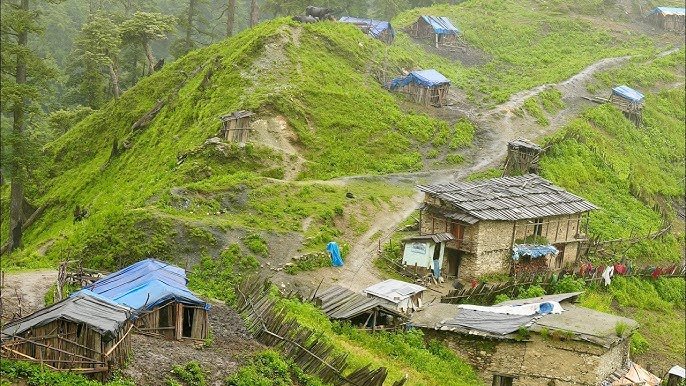
6 Hidden Village Treks in Nepal You Won’t Believe Exist
There is more to Nepal than the familiar Everest, Kathmandu, and Pokhara. For adventure seekers and adrenaline junkies, Nepal offers far more than the popular hotspots. In fact, it’s the offbeat trekking trails and remote regions that reveal the authentic Nepal. These regions offer untamed, rugged trails for a pure wilderness experience, showcasing Nepal’s natural and cultural richness.
In these remote regions, trekkers step into mountain villages that live at their own quiet pace, where families rely on the land and grow their own food. Life in the hills is still beautifully simple, shaped more by tradition than by modern influence.
Venturing into these lesser-traveled routes feels different from the usual trekking experience. The journey becomes more immersive, offering moments of peace, raw nature, and cultural connection that you simply won’t find on commercial trails.
For anyone hoping to discover Nepal’s true essence, untouched landscapes, rich local customs, breathtaking Himalayan vistas, wild forests, and secluded settlements, these off-the-beaten-path treks reveal a side of the country that remains astonishingly hidden and authentic.
1) Kori Danda Trek
Duration: 6 days
Difficulty Level: Moderate
Max Altitude: 3800M
Starting Point: Pokhara
Kori Danda is a hidden gem in Nepal’s Annapurna Region, recently gaining attention for its stunning Himalayan vistas. Rising to 3,800 meters, this viewpoint offers breathtaking views of peaks such as Annapurna II, Lamjung Himal, and Machhapuchhre (Fishtail Mountain). One of the major highlights of the short Kori Danda trek is Kapuche Glacier Lake, the lowest-altitude glacial lake in the world, at 2,546 meters above sea level.
This serene lake adds a unique charm to the journey, making the trek not just about mountain panoramas but also about rare natural wonders. The trail also passes through the Gurung village of Sikles, one of the largest indigenous Gurung settlements in Nepal, offering trekkers a chance to witness traditional lifestyles and local culture that remain largely untouched by modern life.
While the trek is moderate, featuring rocky paths and sections with sparse vegetation, every step is rewarded with spectacular scenery, cultural insights, and the unforgettable experience of standing at Kori Danda, surrounded by the grandeur of the Annapurna region.
2) Khumai Danda Trek
Duration: ¾ days
Difficulty Level: Easy-Moderate
Max Altitude: 3245M
Starting Point: Pokhara
Khumai Danda is a scenic hill in the Kaski district, located at the base of the southern face of Machhapuchhre Base Camp. It is fast gaining popularity as a trekking destination in the Annapurna region. This trek takes you through vibrant forests, village settlements, and open
ridges, offering fantastic views of peaks such as Machhapuchhre (6,993 m), Annapurna South (7,219 m), Annapurna I (8,091 m), Dhaulagiri (8,167 m), and Nilgiri (7,061 m).
The trek can be comfortably completed in 3–4 days, making it ideal for travelers with limited time who still want a taste of the Himalayas. As you walk along trails lined with blossoming rhododendrons and soak in the snow-capped panoramas, you get an intimate experience with nature far from the crowds. Its short duration, easy trails, and serene landscapes make Khumai Danda a hidden gem for both local explorers and international trekkers seeking off-the-beaten-path adventures.
For those looking for longer, more challenging treks in Nepal, classic options include Everest Base Camp, Manaslu Circuit, Annapurna Circuit with Tilicho, and the Annapurna Conservation Area Trek (ACAT). But for a quick Himalayan escape with stunning scenery, Khumai Danda is a perfect choice.
3) Barpak Trek
Duration: 10 days
Difficulty Level: Moderate
Max Elevation: 4570M
Starting Point: Arkhet
The Barpak Trek offers a unique blend of natural beauty, adventure, and cultural immersion. Imagine stepping away from the hustle and bustle of city life, into serene landscapes where every step forward is both a challenge and a reward.
This trek also tells a story of resilience —
the remote villages of Barpak, Laprak, and Gumda in the Gorkha district were severely affected by the devastating earthquake on April 25, 2015, leaving many residents homeless and struggling. 7
Today, these villages are slowly rebuilding, and visitors can witness their perseverance while experiencing the warmth and hospitality of the Gurung community. Starting from Kathmandu, this trek takes trekkers through lush forests, charming settlements, and panoramic mountain views, combining the beauty of nature with the rich culture and traditions of the Gorkha people.
4) Ruby Village Trek
Duration: 7 days
Difficulty Level: Moderate
Max Elevation: 3845M
Starting Point: Syabrubesi
The Ruby Valley Trek is a hidden treasure in Nepal’s Ganesh Himal region, perfect for trekkers seeking a peaceful escape with authentic cultural experiences. This week-long adventure winds through traditional Tamang and Gurung villages, offering an intimate look at local life far from the crowded trails.
With fewer tourists, trekkers can fully enjoy pristine landscapes, majestic mountain panoramas, and the serenity of rural Nepal. The trek follows the Ruby Valley, a region famed for its stone deposits, traversing diverse terrain—from terraced farmlands and dense forests to high alpine pastures. Along the way, you’ll pass waterfalls and hot springs, and the ridgelines open up to wide views of the Ganesh Himal range and other peaks rising above 7,000 meters.
The adventure begins with a drive from Kathmandu to Syabrubesi (1,503 m) near the Langtang region. From there, trekkers pass through villages such as Gatlang, Somdang, Tipling, and Chalis Gaon, where green meadows, farmlands, and rugged hills create a spectacular backdrop.
On clear days, the trail offers views of 23 snow-capped peaks, including Manaslu, Annapurna, Langtang, Dorje Lakpa, and the Ganesh Himal Range.
5) Nar Phu Valley Trek
Duration: 16 days
Difficulty Level: Challenging
Max Elevation: 5,416M
Starting Point: Jagat
The Nar Phu Valley Trek is one of Nepal’s newest trekking destinations, officially opened in 2003. Remote, little-traveled, and requiring a special permit, it offers a truly off-the-beaten-path experience for trekkers seeking both adventure and cultural immersion. Located just off the Annapurna Circuit, the trail leads through isolated villages, narrow canyons, dense forests, and Tibetan-style settlements, giving trekkers a glimpse into a unique way of life.
Along the way, you’ll see Buddhist gumbas and striking mountain views that make the journey even more scenic. A crossing over the Marshyangdi River marks the steep, forested entrance to Nar Phu Valley. Though daily hikes are moderate in length, averaging 5–6 hours, the terrain is challenging, requiring good fitness and prior trekking experience. The trek provides awe-inspiring views of some of the region’s tallest peaks, including Manaslu (8,163 m), Dhaulagiri (8,167 m), and Annapurna I (8,091 m).
The route continues from Nar Phu through Manang, over the Thorong La Pass, and reconnects with the Annapurna Circuit at Muktinath, a significant Hindu pilgrimage site. From here, trekkers can either fly to Pokhara or continue along the Kali Gandaki River, passing the village of Marpha and the Poon Hill viewpoint. Along the way, trekkers gain insight into the local culture.
Farmers in this remote valley continue to cultivate potatoes, barley, buckwheat, and vegetables, while also raising yaks and sheep — living as their ancestors did for generations. For those seeking high Himalayan scenery without the crowds, Nar Phu Valley is a remarkable choice.
6) Chepang Hill Trek
Duration: 7 days
Difficulty Level: Moderate
Max Elevation: 2400M
Starting Point: Hugdi
The Chepang Hill Trek is a hidden gem in Nepal, offering a 7-day journey through the remote Chepang villages. Beginning in Hungdi and concluding at Shakti Khor, the trek combines traditional homestays, untouched landscapes, and a unique opportunity to experience the daily
life of the Chepang people. The Chepang, an indigenous community with their own language, traditions, and semi-nomadic lifestyle, live close to nature.
Along the trail, trekkers can observe their farming, hunting, and foraging practices, and also encounter other ethnic groups, including Tharu, Musahar, Satahar, Danuwar, Tamang, Kumal, Gurung, and Magar. This trek offers a truly authentic cultural experience far removed from typical tourist routes. One of the highlights of the trail is the Siraichuli viewpoint, the highest point of the trek, which rewards hikers with panoramic views of the Terai plains below and the towering Himalayan peaks above, including Manaslu, Annapurna, Dhaulagiri, Langtang, and Ganesh Himal.
At the endpoint, Shakti Khor, within Chitwan National Park, offers the chance to spot wildlife such as rhinos, elephants, and tigers, adding a thrilling natural experience to the trek. Beyond its scenic and cultural appeal, the Chepang Heritage Trail is a community-driven initiative supported by the Rural Poverty Alleviation Program (TRPAP).
The trek helps generate income for the marginalized Chepang community while showcasing an untouched and newly opened route through Nepal’s cultural heartlands. Its relatively easy terrain makes it accessible to trekkers of most fitness levels and can be combined with other activities, such as rafting on the Trisuli River, making it a perfect off-the-beaten-path adventure.
Tips for Traveling in Rural Nepal
Exploring Nepal’s countryside can be a rewarding experience if you keep a few simple guidelines in mind:
● Go Slow: Life in rural villages moves at a relaxed pace. Take your time to enjoy the surroundings, soak in the scenery, and explore the trails without rushing.
● Support the Local Community: Choose homestays, eat meals prepared by local families, and purchase handmade products. Your support helps sustain livelihoods and preserves local traditions.
● Pack Smart and Light: Trails can be rugged and remote, so carry only the essentials—sturdy shoes, warm clothing, and basic trekking gear.
● Embrace the Local Way of Life: Be curious, ask questions, and greet people with a warm “Namaste.” Rural Nepalis are known for their friendliness and hospitality.
● Travel Responsibly: Respect traditions, avoid littering, and be mindful of the environment and local lifestyle. Leave each place better than you found it.