


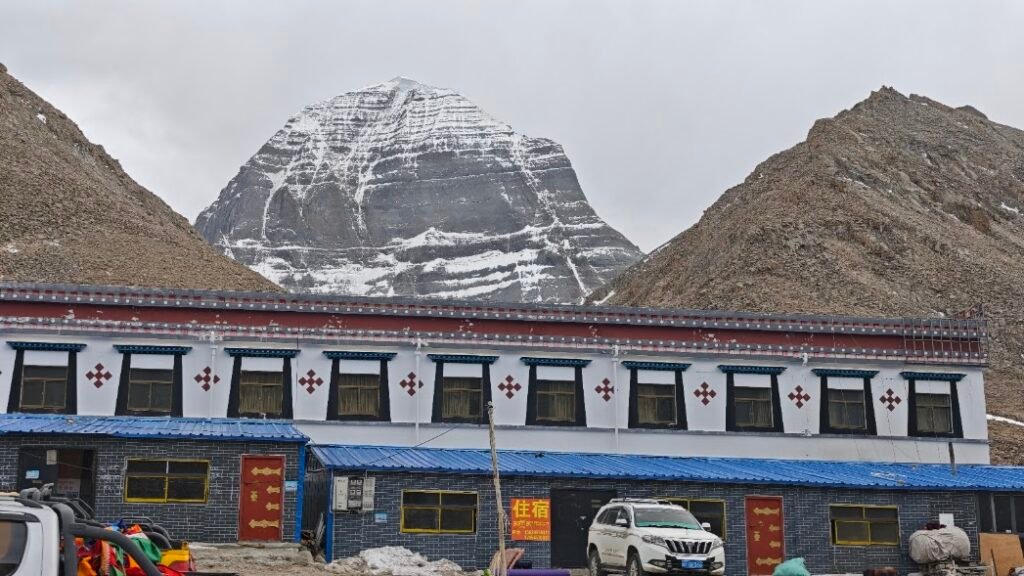
Kailash Parvat: Mysteries, Legends, and the Sacred Mountain of the Universe
Mount Kailash, also known as Kailash Parvat, is one of the most famous peaks in the Tibet Autonomous Region of China. Despite its prominence, the mountain has never been successfully climbed. Over the years, several mountaineers have attempted the summit, but all efforts have ended in failure.
There are several reasons why Kailash remains unconquered. Beyond the physical challenges, the mountain holds deep spiritual and cultural significance for Hindus, Buddhists, Jains, and Bon followers, making it a sacred site. While climbers have not reached the summit, visitors are allowed to trek and explore the mountain up to certain regions, allowing people to experience its grandeur and spiritual energy without disturbing its sanctity.
Even today, Mount Kailash stands as a symbol of mystery, reverence, and the limits of human endeavor—a peak that inspires awe without ever being summited.
Where Is Kailash Parvat Located?
The summit of Mount Kailash rises to an elevation of 6,638 meters (21,778 feet), situated near the western trijunction of China, India, and Nepal. The peak stands majestically in a region that is not only geographically significant but also deeply sacred.
Kailash lies close to Lake Manasarovar and Rakshastal, two important lakes that enhance the area’s spiritual and natural beauty. The region is also the source of four major rivers: the Indus, Sutlej, Brahmaputra, and Ghaghara, making it a vital water hub for surrounding countries.
The mountain holds profound religious significance across several faiths. It is revered in Hinduism, Buddhism, Jainism, and the Bon tradition. Pilgrims from China, India, Nepal, and beyond travel to Mount Kailash every year, often trekking to Lake Manasarovar and performing a circumambulation (kora) around the mountain—a spiritual journey believed to bring blessings and purification.
Mount Kailash remains a unique place where geography, religion, and culture converge, attracting adventurers, pilgrims, and spiritual seekers alike.
Weather and Environmental Changes at Mount Kailash
Mount Kailash experiences relatively dry weather from April to June, with daytime temperatures ranging from 5 to 17 °C (41 to 63 °F) and nighttime temperatures dropping to 0 to 6 °C (32 to 43 °F). By October, the temperatures start to fall, and winters bring much colder conditions. Daytime temperatures hover around −4 to 0 °C (25 to 32 °F), while nights can plummet to −20 °C (−4 °F), making January the coldest month of the year.
The monsoon season, from late June to August, brings rain along with chilly winds, creating slippery trails and challenging conditions for trekkers and pilgrims.
In recent years, locals have noticed that the region around Mount Kailash is warming faster than before, a trend linked to global climate change. The Tibetan Plateau is warming about three times faster than the global average, with winters seeing less snowfall than in the past. Glaciers are retreating, and permafrost is thawing, creating potential impacts on the water supply from the rivers that originate here.
Along with climate change, tourism and population growth are putting increasing pressure on this fragile ecosystem. Visitors are encouraged to travel responsibly and respect the delicate balance of the region’s natural and spiritual environment.
How to Reach Mount Kailash
Mount Kailash is reachable from multiple parts of the world, including Western countries, making it accessible for international travelers. The easiest and most popular starting point is Kathmandu, Nepal, which serves as a convenient gateway to the Tibetan plateau.
Why Start From Nepal?
Tibet has stricter travel regulations compared to Nepal. Visiting Tibet directly can involve complex visa requirements, permits, and route restrictions. Nepal, on the other hand, offers a simpler process for tourists, making it a preferred option for most travelers.
Starting your journey from Kathmandu also allows you to spend a few days exploring the city. Accommodation and amenities in Nepal are generally more affordable than in other countries near Kailash, making it a practical choice for travelers on a budget.
Visa and Travel Assistance
Travelers to Mount Kailash need a Chinese visa to enter Tibet. Processing it independently can be time-consuming and confusing. From Kathmandu, the visa process typically takes a few days, and while waiting, you can explore the city instead of spending all your time in a hotel.
Must-Visit Places Near Mount Kailash
Mount Kailash is surrounded by breathtaking landscapes and culturally significant sites that make it unlike anywhere else in the world. The mountain itself is the main attraction, but it shares the region with other peaks such as Om Parvat and Adi Kailash, which remain snow-capped year-round and hold deep religious significance. Visitors can witness these stunning peaks throughout the year, and the mountains’ spiritual and natural appeal makes the journey even more memorable.
The area is also home to numerous rivers and lakes. Mount Kailash is the source of major rivers, including the Indus, Brahmaputra, Karnali, and Sutlej, while nearby Lake Manasarovar and Rakshastal provide serene, crystal-clear views that contrast beautifully with the rugged mountain terrain.
Tibetan culture is deeply woven into the region. The local people are welcoming and accustomed to visitors, offering a glimpse into their lifestyle, traditions, and cuisine. Over centuries, Chinese influence has also blended into the area, but the primary language remains Tibetan, and the spiritual atmosphere is distinctly Tibetan and Buddhist.
The town of Darchen, where most Kailash journeys begin, is small but lively, with festivals, celebrations, and a mix of Tibetan and Hindu traditions that add color and energy to the pilgrimage experience.
Monasteries In Kailash Parvat
Religious and historical sites enrich the journey even further. Monasteries, such as the Tirthapuri Monastery, provide insight into Buddhist culture and practices, and are open to all visitors regardless of their faith. Milarepa’s Cave, where the legendary sage meditated for years, remains a spiritual highlight, drawing pilgrims from around the world who come to pay their respects and experience the serene environment. The cave has retained its original form over centuries, making it a living piece of history.
For relaxation and rejuvenation, visitors can also enjoy the Tirthapura Hot Springs, naturally heated waters said to have healing properties. A short dip can relieve the physical strain from trekking and add a moment of calm amid the active pilgrimage.
Best Time to Visit Mount Kailash
Visiting Mount Kailash is possible throughout the year, but certain seasons offer better experiences depending on your goals, comfort level, and trekking experience. Each season has its unique charm and challenges.
Spring (March to May) – The Ideal Season
Spring is widely considered the best time for both first-time visitors and seasoned travelers. The skies are clear, giving the mountains and lakes a vivid blue backdrop. Trails are dry and safe, making trekking or pilgrimages easier.
This season is also lively socially, as travelers from around the world arrive, sharing experiences and cultural insights. The Saga Dawa festival, held in May or June, fills the region with music, dances, and colorful kites, showcasing Tibetan traditions at their best. Wildlife sightings are more common, adding extra wonder to the journey.
Fall (September to November) – Stable Weather and Scenic Views
Fall offers stable weather with clear trails free from heavy snow or rainfall. The temperatures are perfect for high-altitude travel, and photographers find this season especially rewarding with crisp skies and clear landscapes.
The trails are easy to navigate, whether on foot, trekking, or riding a mule. Amenities are accessible, and crowds are moderate, giving a lively but not overwhelming experience. Fall is also ideal for those who want to avoid delays caused by unpredictable weather.
Winter (December to February) – Peaceful but Challenging
Winter is the harshest season in the region. Snowfall and freezing temperatures make trekking challenging, so it is recommended only for experienced adventurers.
The scenery is serene and peaceful, with snow-covered peaks creating a sense of quiet isolation. While this season is magical for those prepared, beginners should avoid it due to extreme cold and difficult trails.
Summer and Monsoon (June to August) – Off-Season Adventures
The Monsoon and the summer season see fewer visitors because heavy rain and slippery trails can create dangerous conditions. Summer temperatures can also be warm and uncomfortable for trekking.
However, this season has advantages for experienced trekkers or budget travelers. Accommodation and travel costs are lower, airfares may be cheaper, and fewer crowds make for a more secluded experience. The journey is more challenging, but those prepared for the conditions can enjoy a unique and quiet visit.
Religious Significance of Kailash Parvat
In Buddhism, Mount Kailash, or Kailasa, represents the mythological Mount Meru. It holds a central place in Buddhist cosmology. The mountain symbolizes the father of the world, and Lake Manasarovar represents the mother. Padmasambhava established Tantric Buddhism in Tibet in the 8th century CE. Saint Milarepa is said to have reached the summit riding the Sun’s rays, winning a contest against the Bon follower Naro Böncham.
For the Bon religion, Kailash is the home of the sky goddess Sipaimen. It served as the center of the ancient Zhang Zhung empire. Bon followers also see it as the universe’s center and the source of four mythical rivers flowing in the cardinal directions.
In Hinduism, Mount Kailash is the abode of Shiva with Parvati and their children, Ganesha and Kartikeya. The mountain was first described as part of the Himalayas but later identified with Mount Meru, a cosmic stairway to heaven. The Vishnu Purana places Meru at the world’s center, surrounded by six mountain ranges. Legends tell of the demon king Ravana shaking the mountain. Shiva trapped him under his toe, inspiring the Ravananugraha depiction.
In Jainism, Rishabhadeva, the first Tirthankar, attained moksha on Mount Kailash. His son, Emperor Bharata Chakravartin, built stupas and shrines in the area for the 24 Tirthankaras. The last Tirthankar, Mahavira, was taken to the summit by Indra after birth and received ceremonial anointments.
The Enigmatic Kailash Parvat
Kailash Parvat holds countless mysteries. Revered as the home of Lord Shiva, the mountain is said to possess energies beyond human understanding. Despite attempts from mountaineers worldwide, no one has successfully climbed its sacred peak. According to Tibetan beliefs, only saints like Milarepa, with extraordinary spiritual knowledge, could ascend it. Today, even the most determined adventurers lack the capacity to conquer the mountain.
Visitors to Kailash Parvat often report strange experiences. Some claim that time seems to stop around the mountain. Watches may fail to work, and hours can feel like days. Some attribute this to unusual gravitational forces, while others see it as a spiritual phenomenon tied to the mountain’s sanctity.
Pilgrims also describe unexpected changes in their bodies. Many notice that their hair and nails grow faster, and some even feel older after their journey. The effect is subtle yet widely reported, adding to the mountain’s aura of mystery.
Kailash Parvat is known by many names across cultures. In Sanskrit, it is called Kailasa; in Tibetan, Kangri Rinpoche; and in Bon, Water’s Flower. Each name reflects the deep spiritual significance that different traditions attach to the peak.
The mountain is also believed to be the center of the universe. Tibetans regard it as the earthly counterpart of the mythical Mount Meru. Hindu devotees call it the navel of the universe, seeing it as a focal point of cosmic energy. Even with modern geography, these beliefs continue to inspire awe and devotion.
If you want to make your Kailash dream a reality, contact Nepal Royal Treks for expert guidance and support.