-
 Duration
7 Days
Duration
7 Days
-
 Difficulty
Medium
Difficulty
Medium
-
 Max Elevation
4380m
Max Elevation
4380m
-
 Group Size
1 to 10 Person Person
Group Size
1 to 10 Person Person
-
 Accommodation
Tea House/Lodge
Accommodation
Tea House/Lodge
-
 Start/End
Kathmandu Airport/ Kathmandu
Start/End
Kathmandu Airport/ Kathmandu
-
 Destination
Langtang Region
Destination
Langtang Region
-
 Best Season
Mar - May and Sep - Nov
Best Season
Mar - May and Sep - Nov
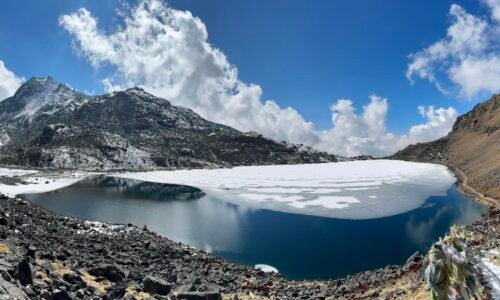
The Gosaikunda Lake Trek is an amazing Himalayan adventure within the core of the Langtang National Park in Nepal, which is a combination of high altitude sceneries and the culture of the Tamang people inhabiting the area.
This journey to Gosaikunda Lake is not limited to one peak or one destination as other treks are, but passes various environment, starting with the terraced lowlands along the Dhunche side, down through the valley of the Trishuli River, and into the dense woodland of oak, pine, and rhododendron, before rejoining the beauty of the alpine meadows and the sacred water of Gosaikunda.
The trail has been walked for centuries by local pilgrims and traders, and the stones and tracks are a portion of a living, breathing story of people and mountain life that are bound together.
The trail starts off on a slow ascent of lower altitudes, where the earliest villages are, where trekkers are initially exposed to the music of the mountain life. Chandanbari, Laurebina, and Pairobesi are settlements resting harmoniously between the hills that contain stone houses, prayer flags and mani walls along the walks.
As the trail grows higher and higher, the woods grow thicker, and the path cuts through beds of rhododendron which, in spring, shed their color load of red, pink, and white in a kind of living canopy.
There are bamboo clustering, moss-grown rocks, and the occasional gurgling brooks which empty into the bigger subsidiaries of the Langtang system.
A number of Himalayan wildlife thrives in this environment. Visitors can have a glimpse of the Himalayan red panda that is elusive and hides in the bamboo due to its reddish-brown fur.

Himalayan thar go flying over the precipices, snowcocks and yellow pheasants are passing through the brush. Small mammal tracks, such as the Himalayan field mouse or the leopard track, which is present occasionally, are an indication of the hidden life in these forests.
Even the trail becomes different as the altitude changes. It is, at the beginning, a combination of dirt paths and mule tracks, frequently on irrigation canals and little streams.
The Langtang Khola and other tribal crossings consist of mere suspension bridges, all of which provide a short-lived panorama of forested valleys and snow-topped peaks above.
Once the trail passes beyond the tree line, earth is substituted with stone and moraine, and the steep sides are dominated by alpine scrub and hardy grasses.
The air is thinner, chilly, crispy, and smells of juniper and pine resin. The beat of walking on rocky streets makes a reflective tempo that befits the vast landscape that is developing in front.
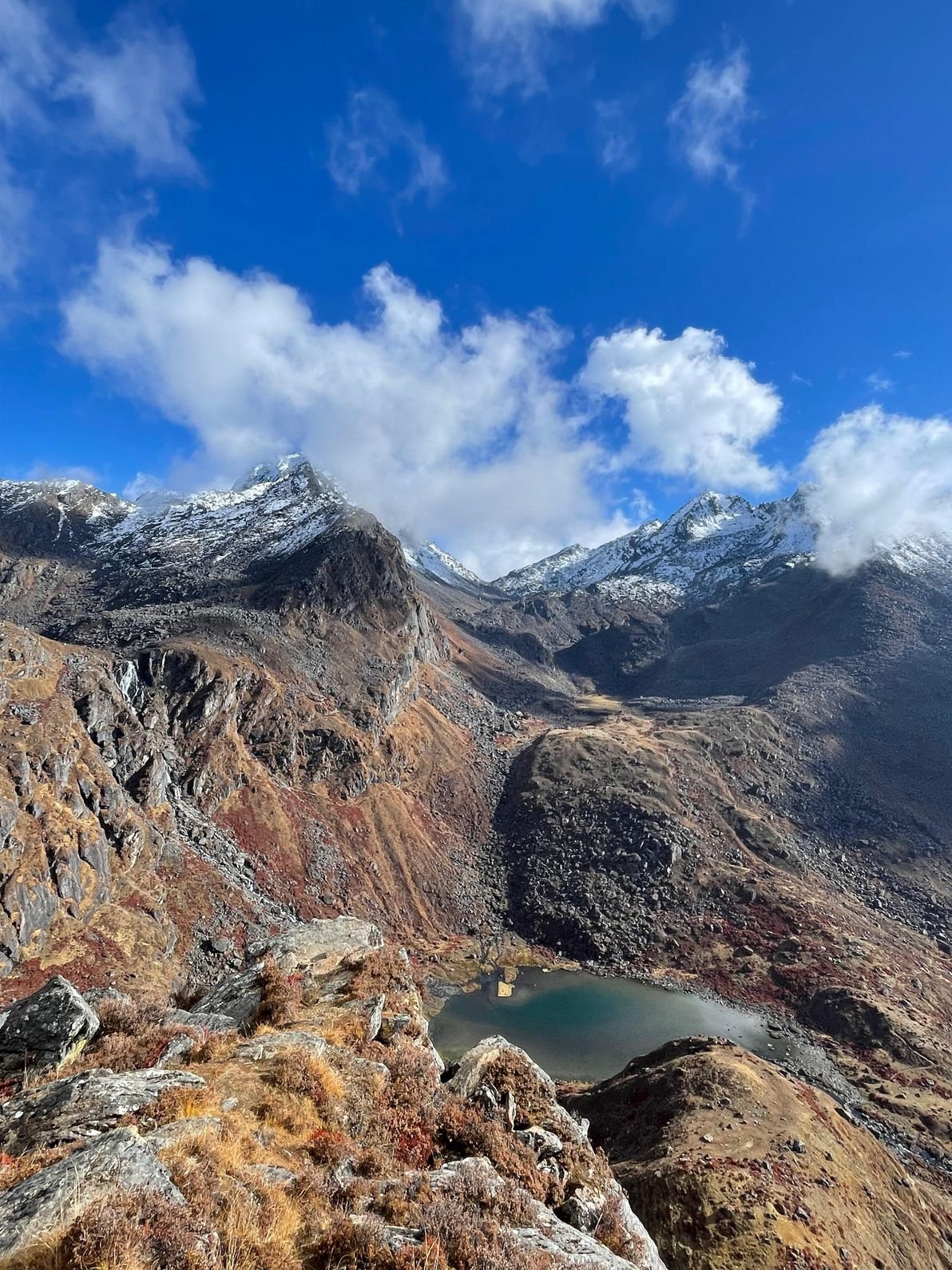
Raised heights allow broad and sweeping vistas of some of the most recognizable mountains in the area. The Langtang Lirung jagged spire is the highest point of the skyline with the glaciers shining in the sun.
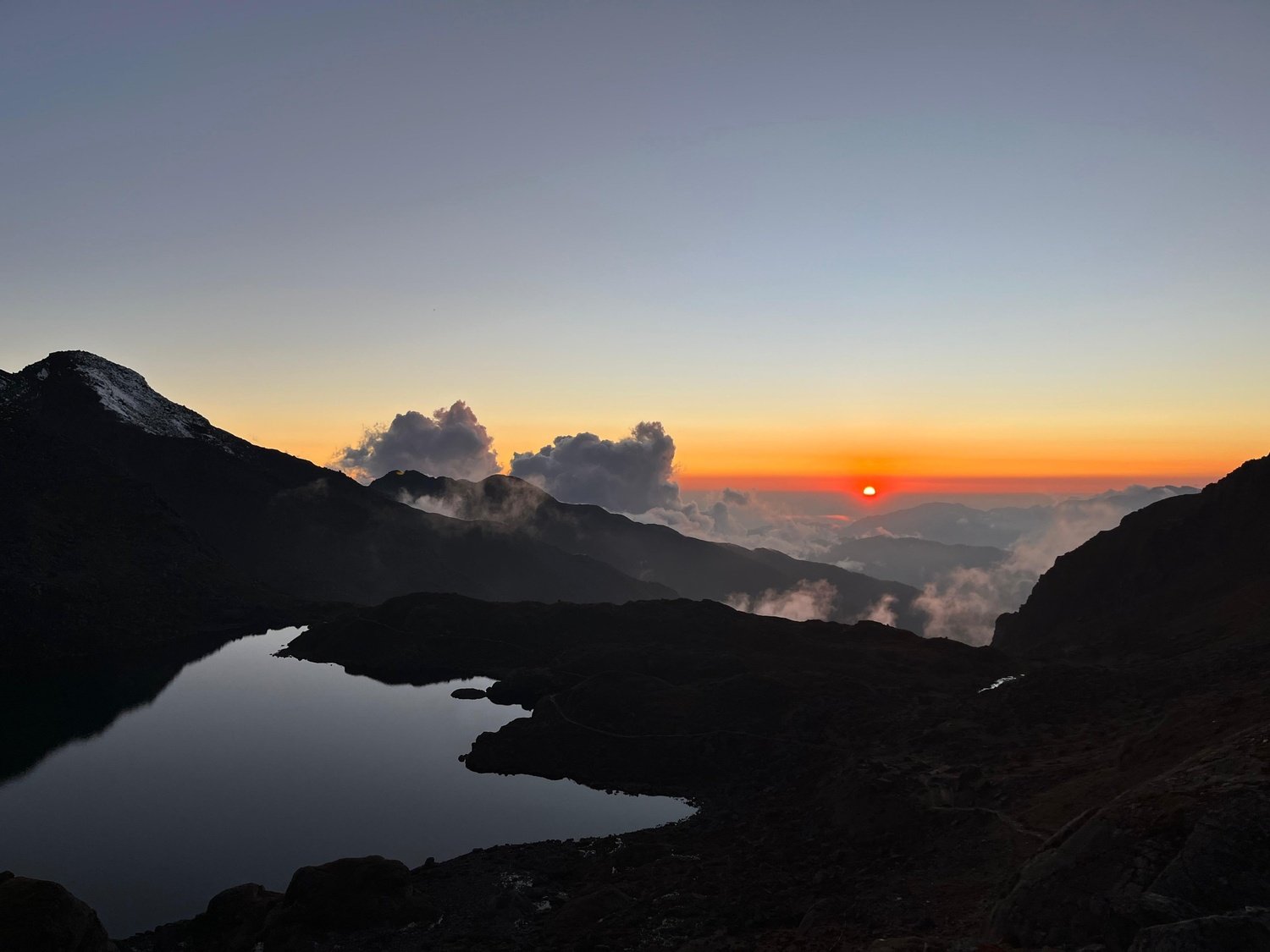
When the sky is clear, the peaks of Ganesh Himal, as well as the huge figure of Gauri Shankar, can be seen above the valleys. These mountains are the ever-present companions of the journey, and they are subject to the light of dawn and night, and to varying temperatures of fiery sunrise and mysterious mist.
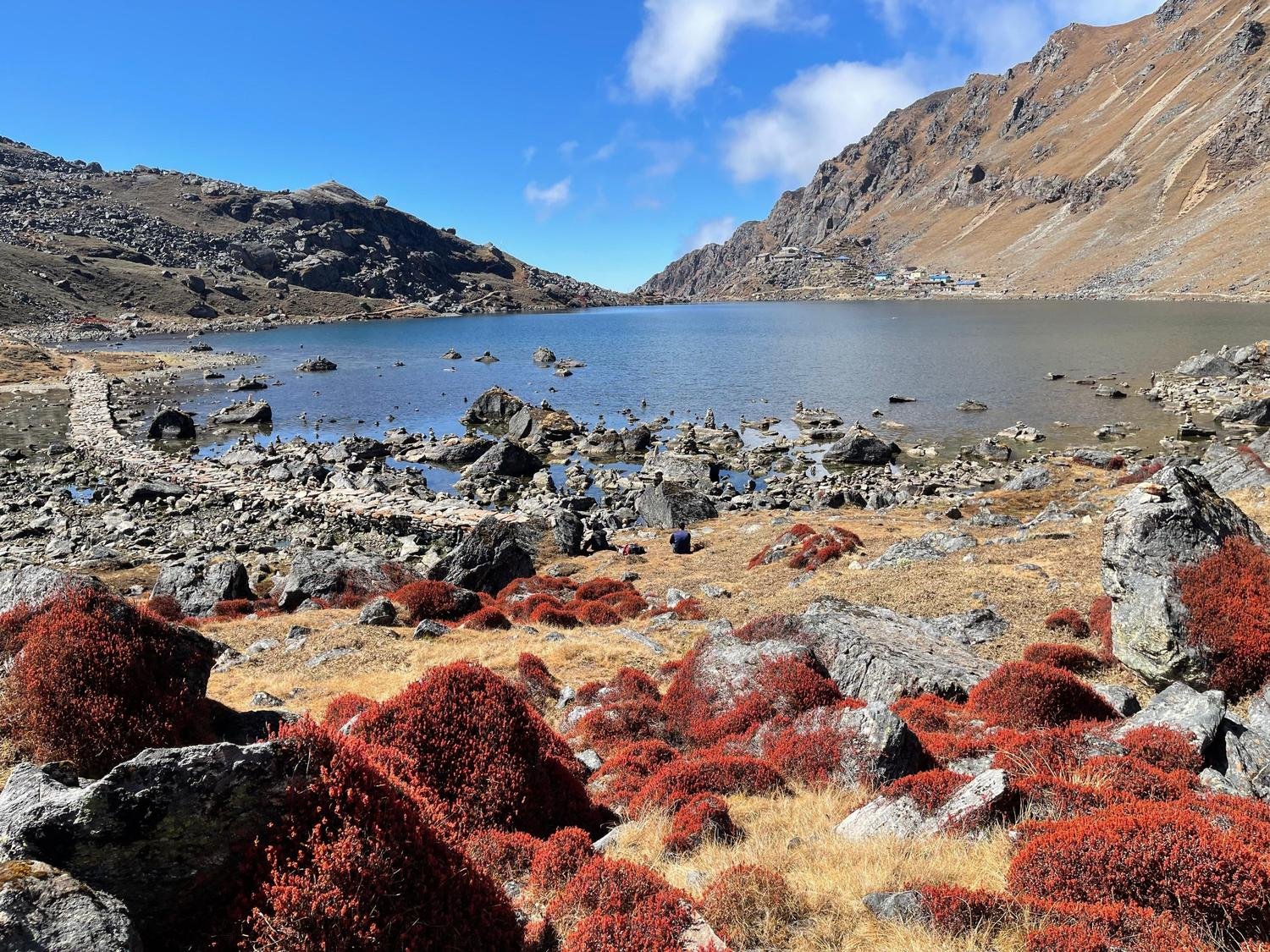
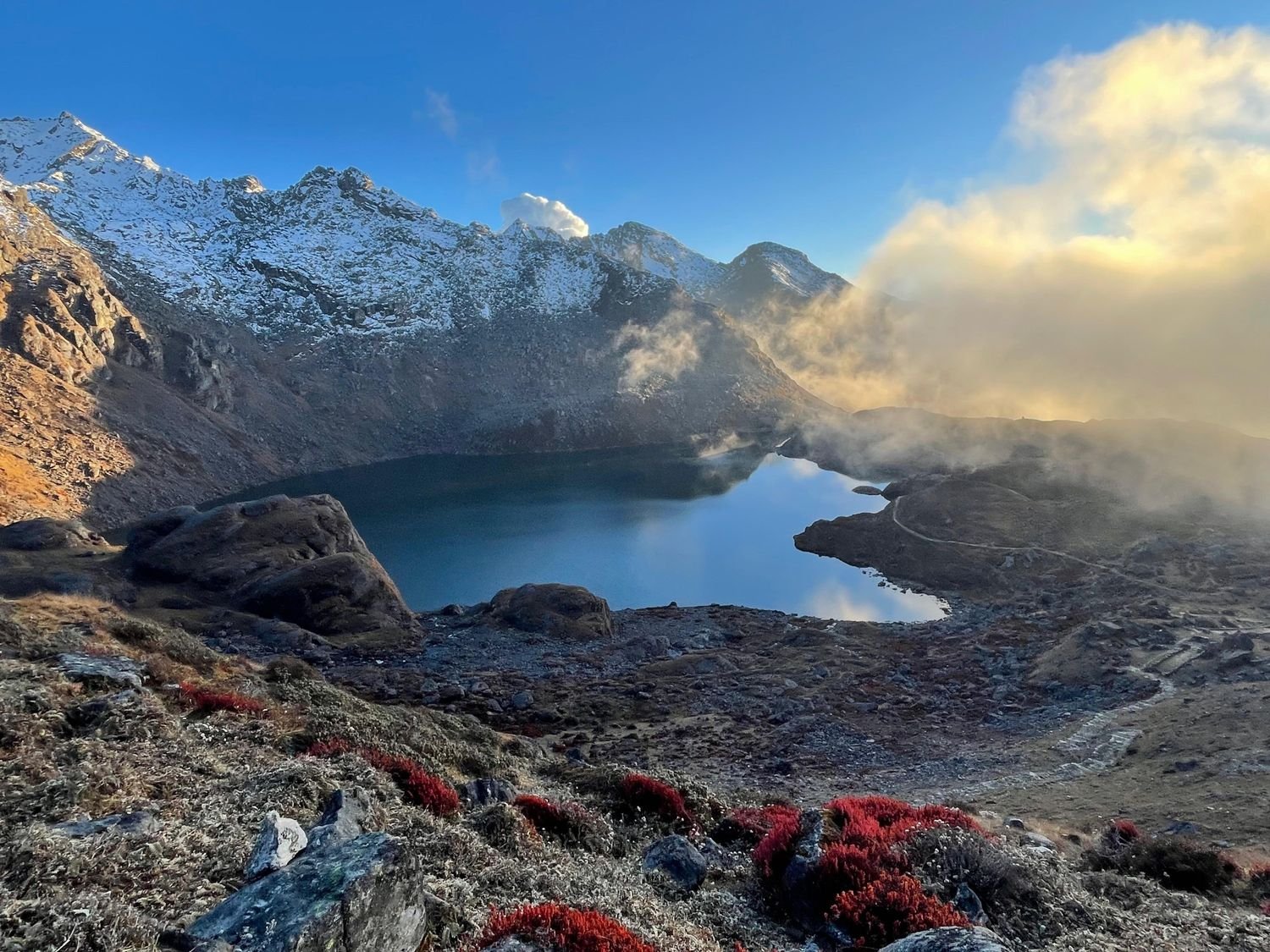
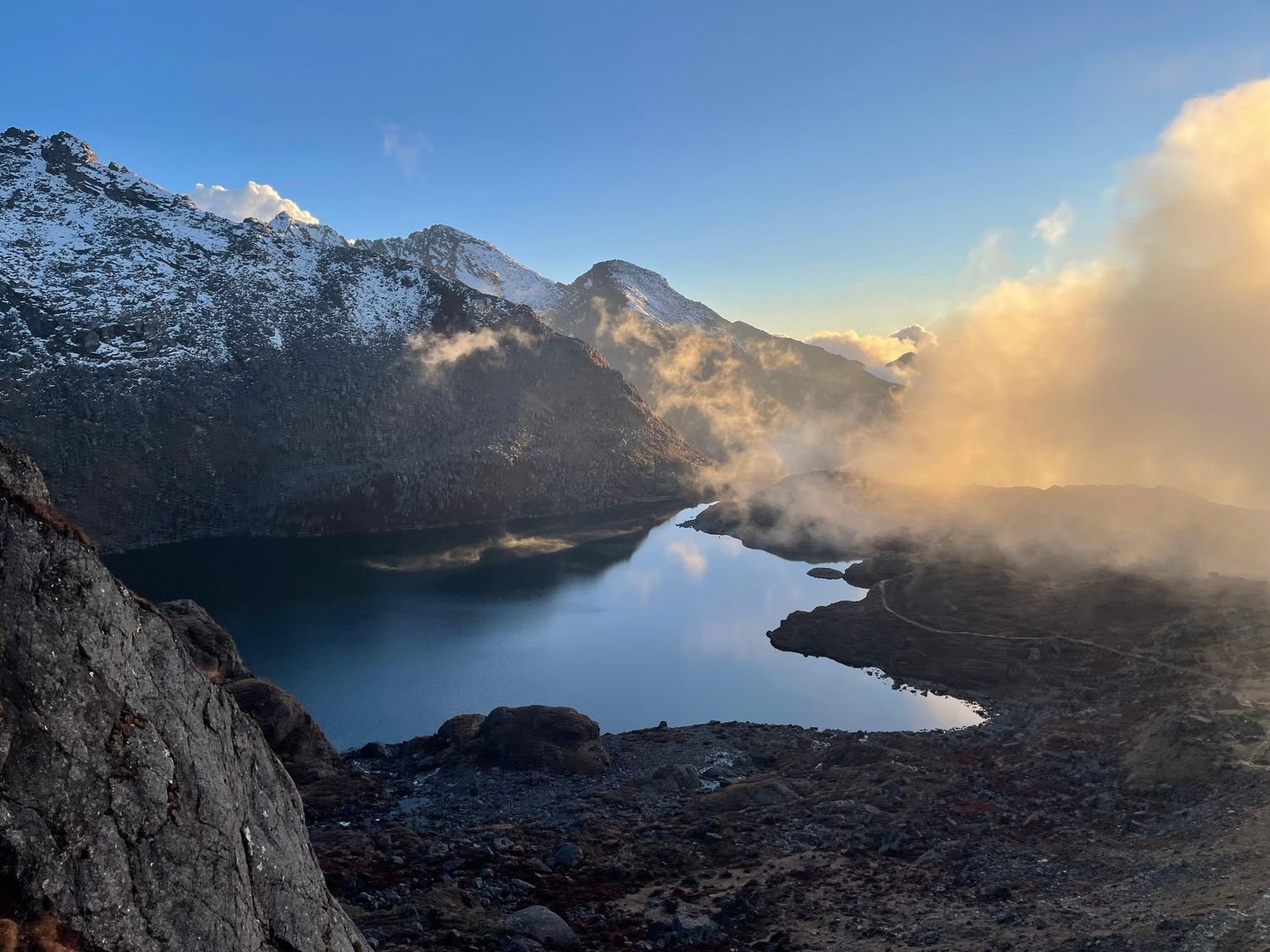
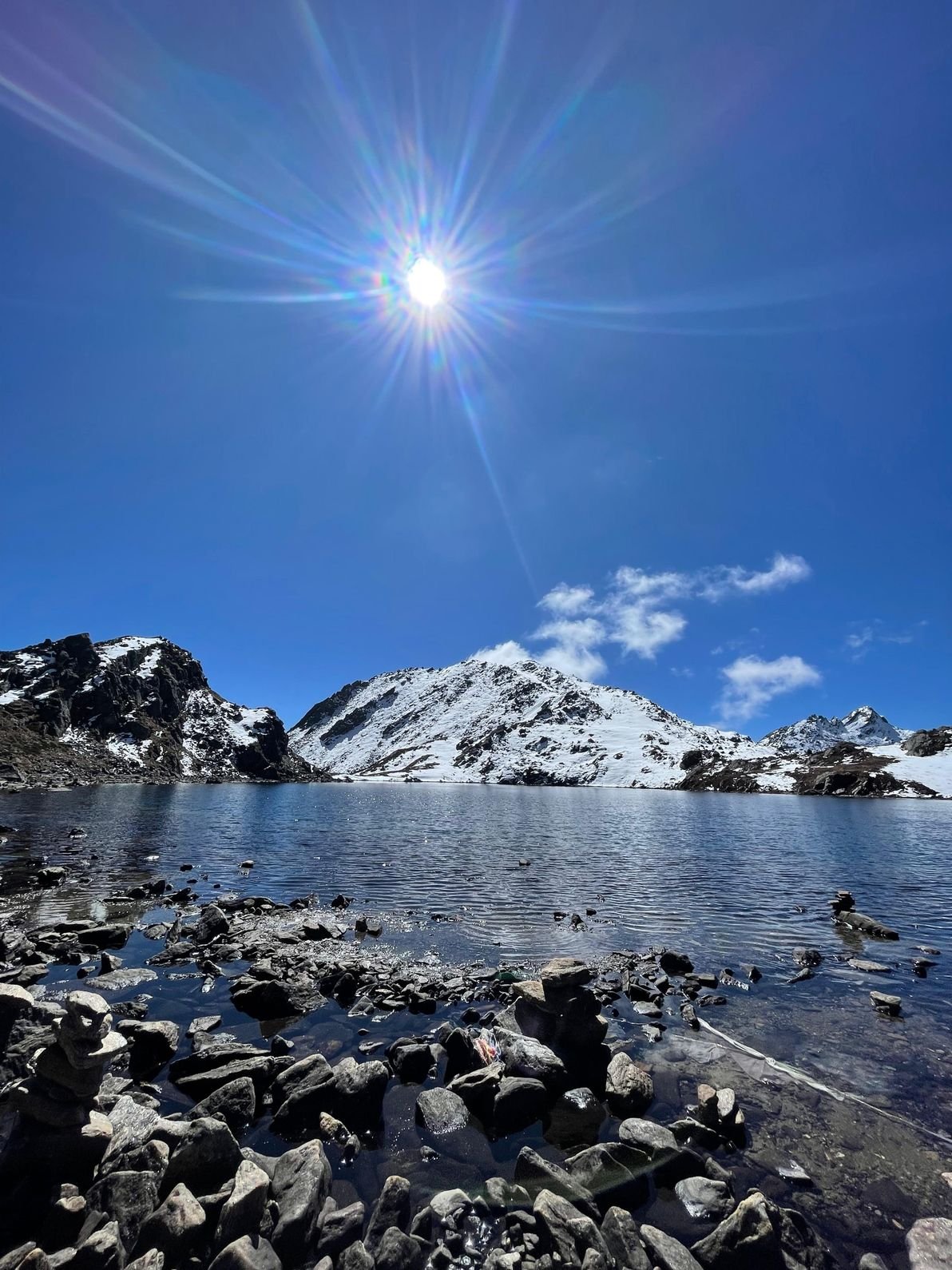
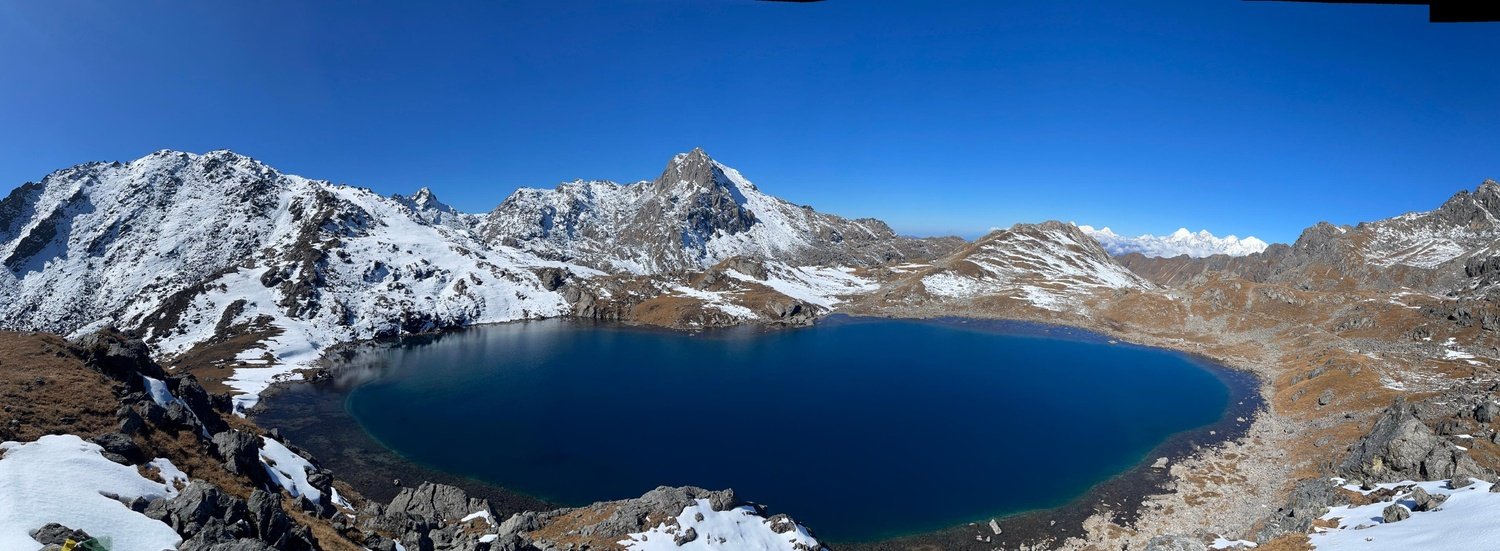
The ridges and peaks in the high alpine meadowlands surrounding Gosaikunda itself provide the lake with a reflective, near-otherworldly quality.
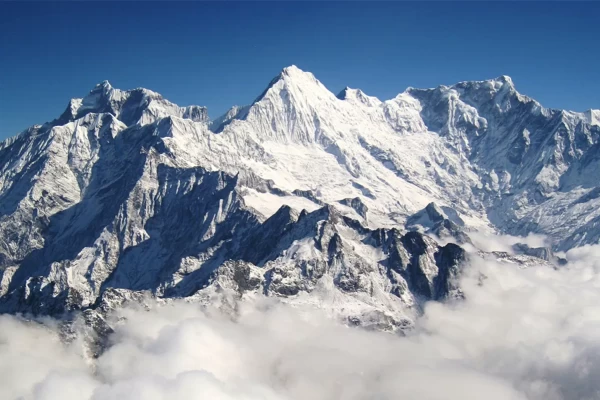
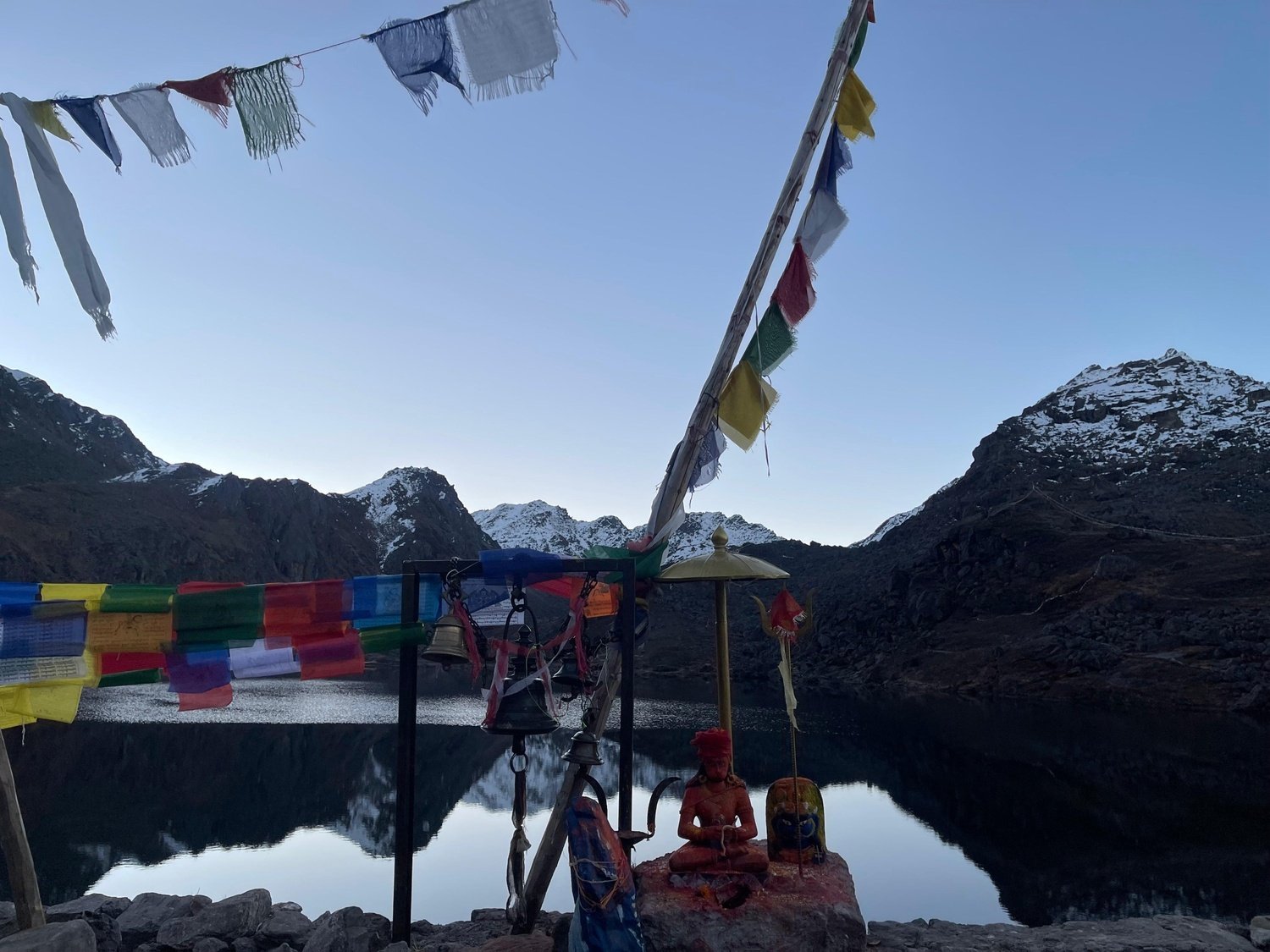
Gosaikunda Lake is not a mere sightseeing tourism site, it is a place of profound spiritual meaning. Visitors to this place are pilgrims who come to nearby valleys and go around the lake in religious practices associated with not only the Hindu and Buddhist religions.
The lake has stone shrines, small pagodas, and prayer flags that show hundreds of years of worship. To land here after days spent in picking their way through wooded dales and the alpine world, presents to the trekkers a feeling of pilgrimage to themselves, of silent recognition that the mountains, as well as being natural panoplies, are places of human meaning and worship.
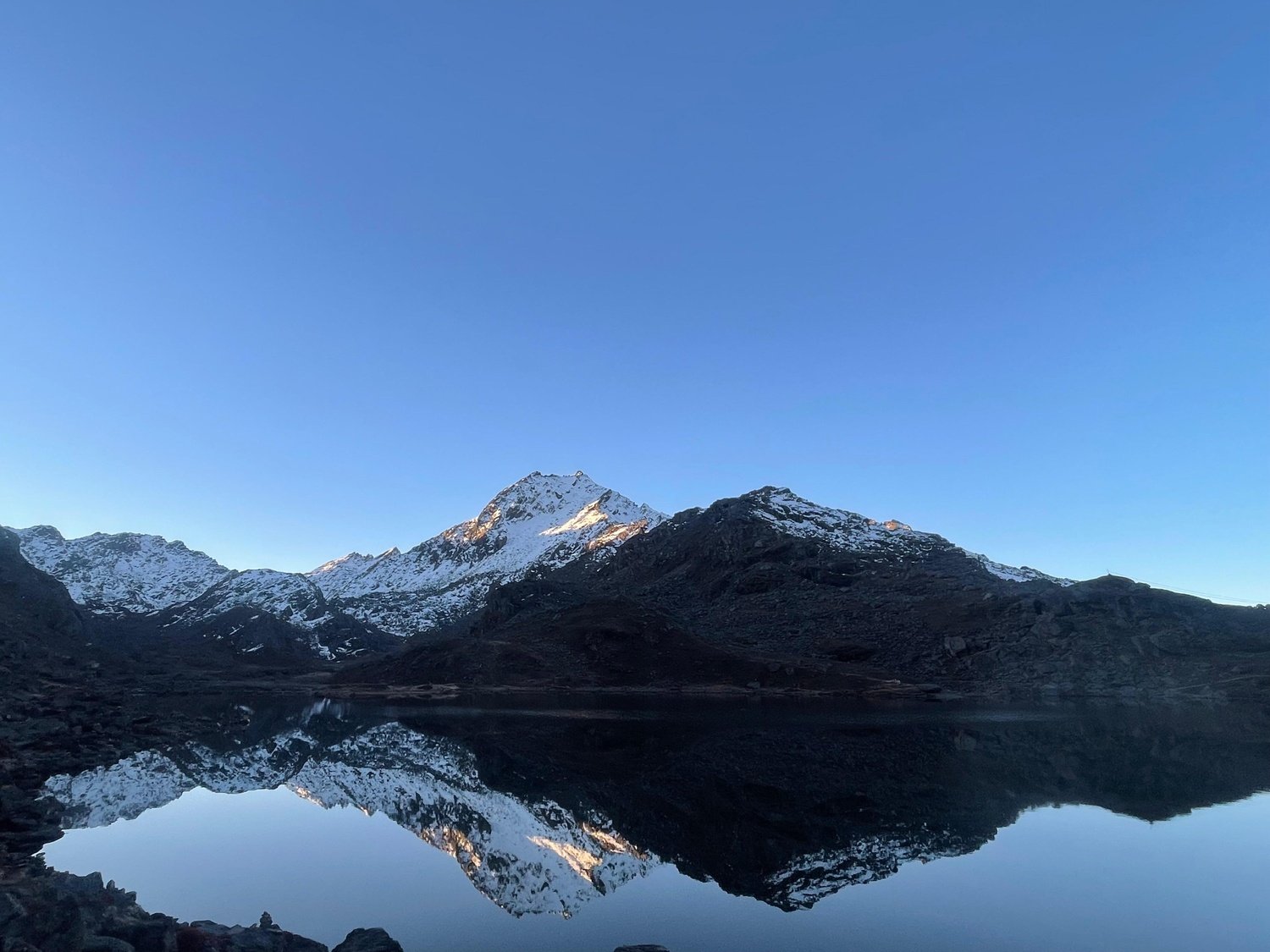
There is nothing like the calmness of watching the lake early in the morning when the wind stops and the mountains are perfectly mirrored on its turquoise waters, and this is what the Himalayas is all about.
Local culture is still palpable throughout the trek. Tamang villages will offer a close perspective of the mountain life where there is simple yet sustaining food, warm hospitality, and preservation of the traditional practices.
The design is practical, though unique, including slate roofs, walls made of stone, and prayer wheels. The trails are covered by many walls, inscribed with sacred writings, and meadows and hilltops are dotted with tiny Buddhist shrines.
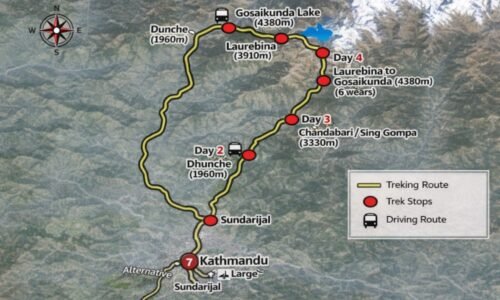
The presence or witnessing of such practices is a way of enriching the trek, as it provides the trek with a human nature, which most adventure-based treks lack.
The expedition is also environmentally diverse. The Langtang National Park is a UNESCO site that contains a wide variety of plants and wildlife, both of the rhododendron and bamboo thickets as well as the alpine grasses and moss-covered boulders.
Such birds as blood pheasant, Himalayan monal, and yellow-billed chough are frequent associates, and evidence of snow leopard, Himalayan wolf, and barking deer is found in the passes and valleys.
The rivers, the falling cascades, and the seasonal glacial streams create the life lines to the wildlife and to the human settlements, linking the lower and the higher part of the trail in an uninterrupted ecology.
The Gosaikanda trek is not just a high-altitude hiking; it is a progressive dive into a living scenery, in which nature and culture interrelate with each other at each point. The introduction is pleasant in the lower valleys that have rivers and terraces.
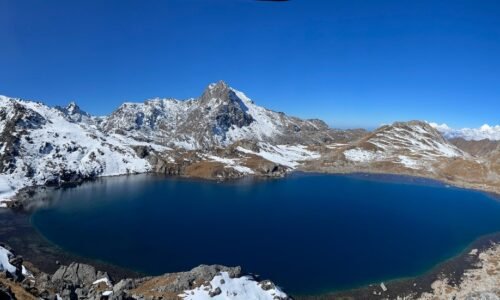
Middle elevation paths that pass through oak and pine trees provide a mix of shaded cover, animal experiences, and a view of mountain tops. The Alpine meadows and ridges give one a clear feeling of height and exposure, which culminates in the holy lake and peaks.
All stages are natural and allow the trekkers time to acclimatize both physically and mentally and also enable the mountains to show themselves in a controlled yet memorable manner.
Without the focus on permits, accommodation, and logistics, the nature of the trek is obvious.
A small, genuine Himalayan experience that initiates the traveler in the religious landscape, the traditional culture of the mountain, the wild fauna, and the theatrical mountainous scenery. It is a trek where the trail is as significant as the destination, where each village, forest, and mountain view forms a chapter in the larger story of Langtang National Park.
For travelers with limited time but a desire to experience true Himalayan journey, the Gosaikunda Lake trek offers a journey that is complete, immersive, and unforgettable.
Trip Highlights
- Sacred Gosaikunda Lake at about 4,380 m offers a calm alpine basin ringed with prayer flags and small shrines, a place where pilgrims and trekkers can finally relax.
- Large perspectives of the Langtang range dominate the skyline and on a clear day one can also identify Ganesh Himal and Gauri Shankar in the distance.
- Tamang villages like Dhunche, Chandanbari and Laurebina have a walking tour with stone houses, mani walls and the norming village life
- During spring the path passes through the dense rhododendron and pine trees which are in blossom and scent.
- The schedule is timed in such a way that you can gradually gain momentum, where walks will be done every day to ensure that the body adapts to the higher altitude.
- Night in teahouses are simple and cozy with dal bhat, plain rooms and lingering talks with the guides and hosts.
- In Langtang National Park, one can get an opportunity of seeing the high altitude birds, timid mammals as the Himalayan thar and endangered Red Pandas which are numbered in around 50 to 100.
- A scenic drive along the Trishuli valley gets you into mountain light quickly and keeps the whole trip compact and efficient.
- It is a perfect hiking trip for those with good stamina, beginners with steady progress but wish to avoid technical climbing and do a culture and forest walk with alpine climax.
- The one big summit day to Gosaikunda is steep but rewarding, ending with lakeshore views and a real sense of achievement.
Gosaikunda Lake Trek – 7 Days ~ Itinerary
Day 1
Arrival at Kathmandu Airport - Welcome to Nepal
- Altitude: 1,350m
- Accommodation: Standard Three Star Hotel
- Meal: Lunch, Dinner, and Breakfast too, depending upon your arrival
At Tribhuvan International Airport, a representative of Nepal Royal Tourism will meet you and take you to your hotel in Kathmandu. After some rest, we conduct a detailed trek briefing covering route conditions, altitude safety, permits, packing checks, and local guidelines. In the evening, you may wander around the vibrant streets of Thamel.
Day 2
Kathmandu to Dhunche
- Max altitude : 1,960m
- Drive duration: 5-6 hours
- Distance: 100 km
- Meal: Breakfast, Lunch and Dinner
- Accommodation: Teahouse
You head north of Kathmandu valley straight into the Trishuli river gap and Kathmandu is a distant thing as the road ascends into the foothill landscapes. The path is taken along the Trishuli River valley and connects through roadside towns and terraced farmland, providing consistent views along ridge-lines and snowy distances. You arrive at Dhunche and enroll locally and get ready to walk the trail; the stone houses and small market of the town provide a practical initial impression of the life of a mountain village. The evening is of last moment gear inspection and a mere meal then on to the trail in earnest.
Day 3
Dhunche to Chandanbari / Sing Gompa
- Max altitude : 3,330m
- Trek Duration: 5-6 hours
- Trek Distance: 9 km
- Meal: Breakfast, Lunch and Dinner
- Accommodation: Teahouse
The song goes off the road and up to the forests of Langtang national park. You pass under the canopy of the oaks and pine trees, the path being interwoven with rhododendron and bamboo bushes, crossing little streams and passing many walls and country Shrines. The speed is not fast but smooth and as you become elevated, villages and yaks pastures are visible. Sing Gompa or Chandanbari is on a lonely ridge with a small monastery, and simple lodges; it is a natural place to stretch the legs and have the first long view back into lower valleys.
Day 4
Chandanbari to Laurebina
- Max altitude : 3,910m
- Trek Duration: 5-6 hours
- Trek Distance: 9 km
- Meal: Breakfast, Lunch and Dinner
- Accommodation: Teahouse
The path of Chandanbari leads up through the mixed forest into the more open high meadows where the air is relatively thinner, and the landscape is opened. The trail traverses ridges and outside small seasonal camps and offers a bigger picture of the Langtang skyline as one starts their journey.
Laurebina sits exposed on a high meadow, a simple cluster of teahouses with wide vistas of ridges and glacier tongues in the distance. The day is deliberately slow so that the body gets used to it and the eyes gradually absorb the increasing size of the mountains. With an extra day, we can also visit “Suryakunda” which stands at around 4600m. For that, we have to access via Surya Kunda Pass. When trekking to Gaosaikunda many individuals don’t want to miss this very spot. If so be ready for few extra hours of walk.
Day 5
Laurebina to Gosaikunda Lake and return to Laurebina
- Max altitude : 4,380m
- Trek Duration: 7-8 hours
- Trek Distance: 11 km
- Meal: Breakfast, Lunch and Dinner
- Accommodation: Teahouse
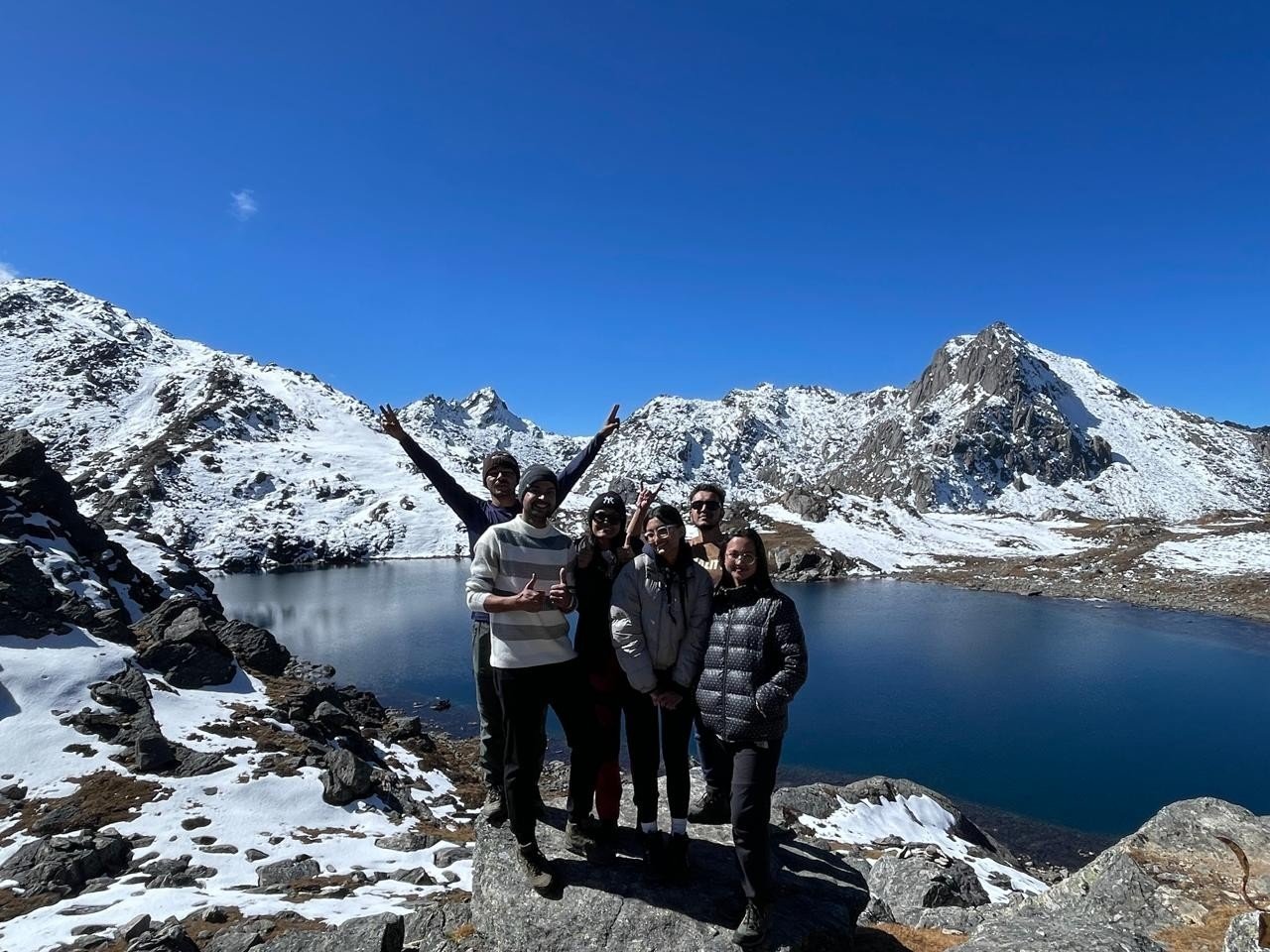
This is key day of your Trek. You start very early from Laurebina and climb into open alpine terrain, leaving the last scrub and rhododendrons behind. The route passes smaller sacred ponds such as Saraswati Kunda and Bhairab Kunda before the ground becomes stonier and the air noticeably thin. You have reached your destination that you have waited for the past couple of days. You can enjoy the sacred alpine freshwater lake by your naked eyes which feels mesmerizing, meaning you actually want to spend much time sitting there, taking pictures and relieving the moment. On the road you traverse smaller tarns and stream outlets.
Day 6
Laurebina to Chandanbari to Dhunche
- Max altitude : 3,360m
- Trek Duration: 6-7 hours
- Trek Distance: 9 km
- Meal: Breakfast, Lunch and Dinner
- Accommodation: Teahouse
The path leads off Laurebina declining into high meadows into into rhododendron and pine trees. You travel the peaceful village of Chandanbari, in which there is a small monastery and villa lodges which indicates a sigh of relief. The down slope is marked by obvious ridges and lee gullies, as the scenery starts and stops as you gain or lose altitude. On reaching the lower valleys, the air becomes warm, fields and village life reinstate and the route leads back to the administrative town of Dhunche where a local market and simple teahouses await the evening.
Day 7
Dhunche to Kathmandu (drive)
- Max altitude: 1350m
- Drive duration: 5-6 hours
- Distance: 100 km
- Meal: Breakfast, Lunch and Dinner
- Accommodation: Standard Three Star Hotel
You are on your way southwards along the Trishuli valley, falling out of the steep hills into the larger river valley and then towns along the riverside leading back to the capital. The road runs through Betrawati and a short way up to viewpoints then down to Kathmandu ringroad. Afternoon, arrive in Kathmandu and change to your hotel in Thamel. It is a debrief evening, gear-back evening and a last-city meal evening. You now now finally see the pictures you have clicked in relief and upload in your socials.
Day 8
Final Departure
Depending on your flight schedule, you might have some leisure time to further explore Kathmandu after breakfast. One of our team members will then accompany you to the airport a few hours before your departure time, carrying with you unforgettable memories from your Gosaikunda Lake trek. As your reliable travel partner, Nepal Royal Tourism Holiday (www.nepalroyaltreks.com), we’re thankful for the opportunity to have shared this extraordinary journey with you. Until we meet again, travel safely!
Gosaikunda Lake Trek – 7 Days Fixed Departures Dates
Trip Cost Includes/Excludes
Cost Includes
- Private airport arrival and departure transfers (Kathmandu)
- 1 night three star hotel in Kathmandu (twin-sharing, breakfast) and teahouse accommodation on trek (twin-sharing).
- Ground transport between Kathmandu and Dhunche (jeep or tourist bus depending on group size).
- Experienced, government-licensed trekking guide and porters (1 porter per 2 trekkers).
- All meals during trekking (breakfast, lunch, dinner) at local teahouses.
- Langtang National Park permits and TIMS card.
- Use of a trekking duffel bag and sleeping bag for the trek (returned at end).
- Complimentary company T-shirt and trekking completion certificate.
- All applicable government taxes and service charges.
Cost Excludes
- International airfare to/from Kathmandu.
- Nepal visa fees and travel/medical insurance (including emergency evacuation).
- Personal expenses: hot/cold drinks, bottled water, snacks, laundry, toiletries.
- Additional teahouse charges or hot showers.
- Tips for guide and porter (customary but not mandatory).
- Any extra costs due to weather, road conditions, or itinerary changes for safety reasons.
Trip Photo/Video Gallery
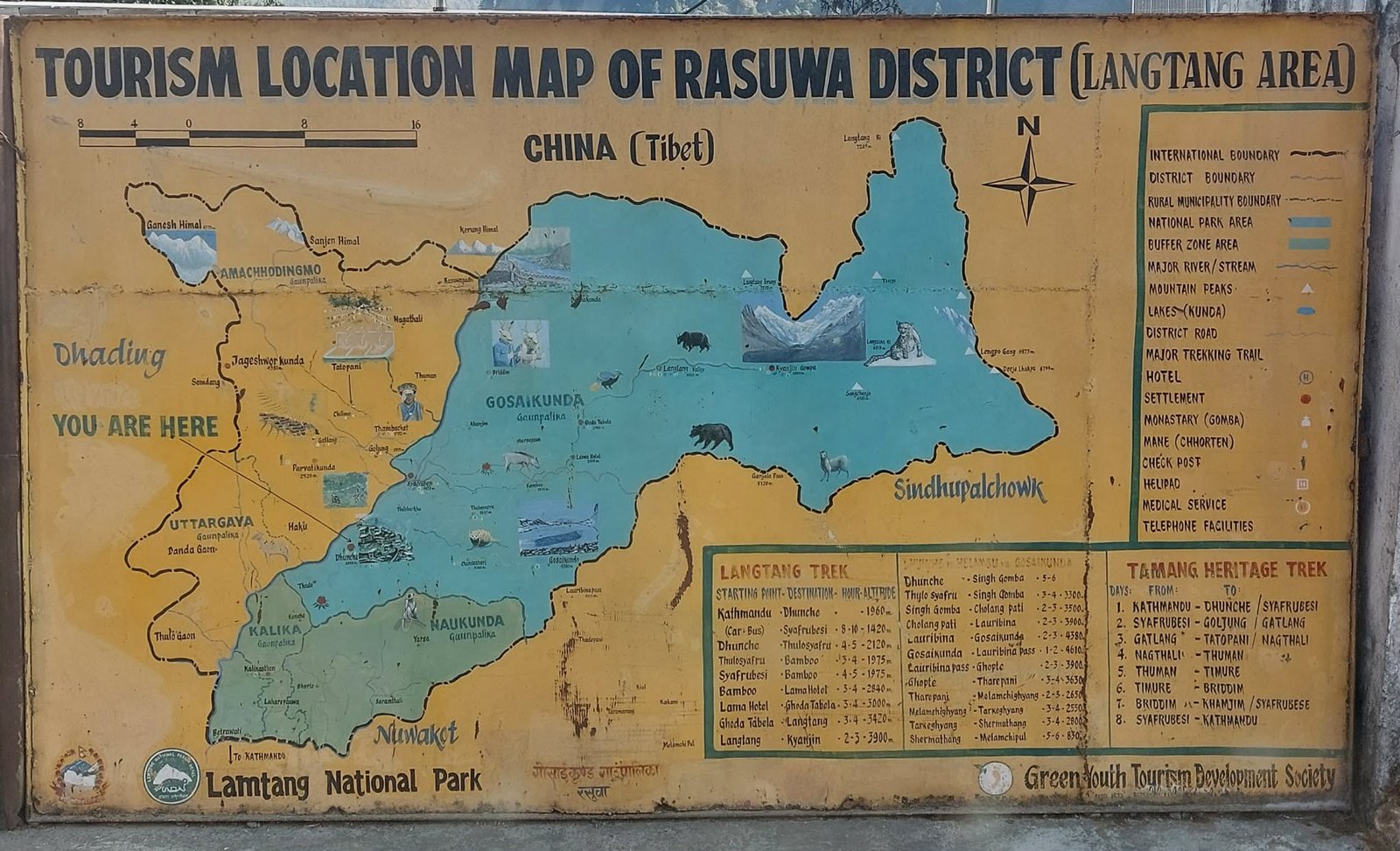
Route Map for Gosaikunda Lake Trek – 7 Days
Frequently Asked Questions
Gosaikunda Lake sits high in the central Himalaya inside Langtang National Park
Yes, you can also visit Surya Kunda during the Gosaikunda Trek, but extra cost will be applicable as the trek days will increase.
The trek is moderate, not technical, but it reaches high altitude, so it can cause Altitude sickness for few.
Yes. You need the Langtang National Park permit and a TIMS card; Nepal Royal Treks will arrange for you before departure.
On average, you walk 4 to 6 hours per day.
The best time for this Trek are Spring and Autumn.
You can get dal bhat, noodles, soups, eggs, tea, fried rice, tea and coffee usually. The teahouse/lodge often serve fresh food.
You typically walk around 35 to 40 kms during the Trek.
You can expect the Network and Wi-Fi in lower villages, but in higher altitude, these are completely cutoff.
Yes. Travel insurance covering high-altitude trekking and emergency helicopter evacuation is strongly recommended, especially if you visit Surya Kunda. But, it is not a necessity.
You must pack, Warm insulated jacket, Waterproof jacket and pants, good trekking boots, trekking stick, personal water bottle, basic medication, and a couple of extra socks.
You may also like
Menu