


Ghode Jatra 2026: Kathmandu’s Spectacular Horse Festival in March
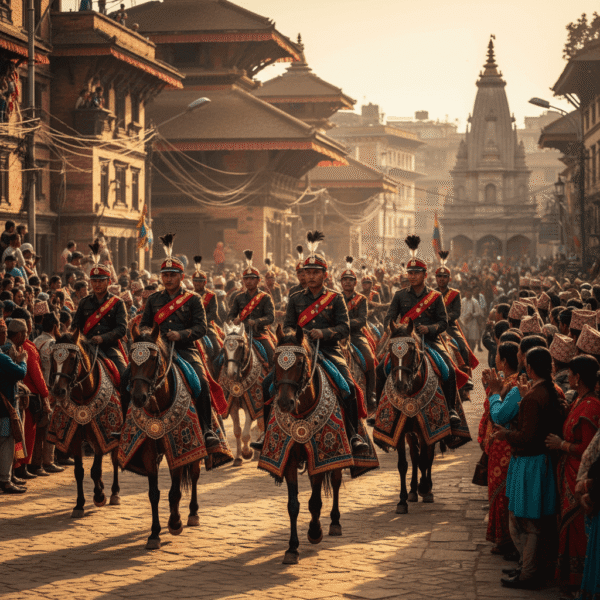
Ghode Jatra stands as one of Kathmandu’s most significant traditional festivals and reflects the deep cultural heritage of the Newar community and the historical identity of the Kathmandu Valley. People observe the festival each year around late March or early April. The celebration centers on a grand horse procession that represents ancient Hindu legends, especially the victory of Lord Bhairav over the demon Ghanta Karna. This story symbolizes the defeat of evil forces that once threatened the valley and strengthens long-held beliefs about protection, bravery, and balance within the community.
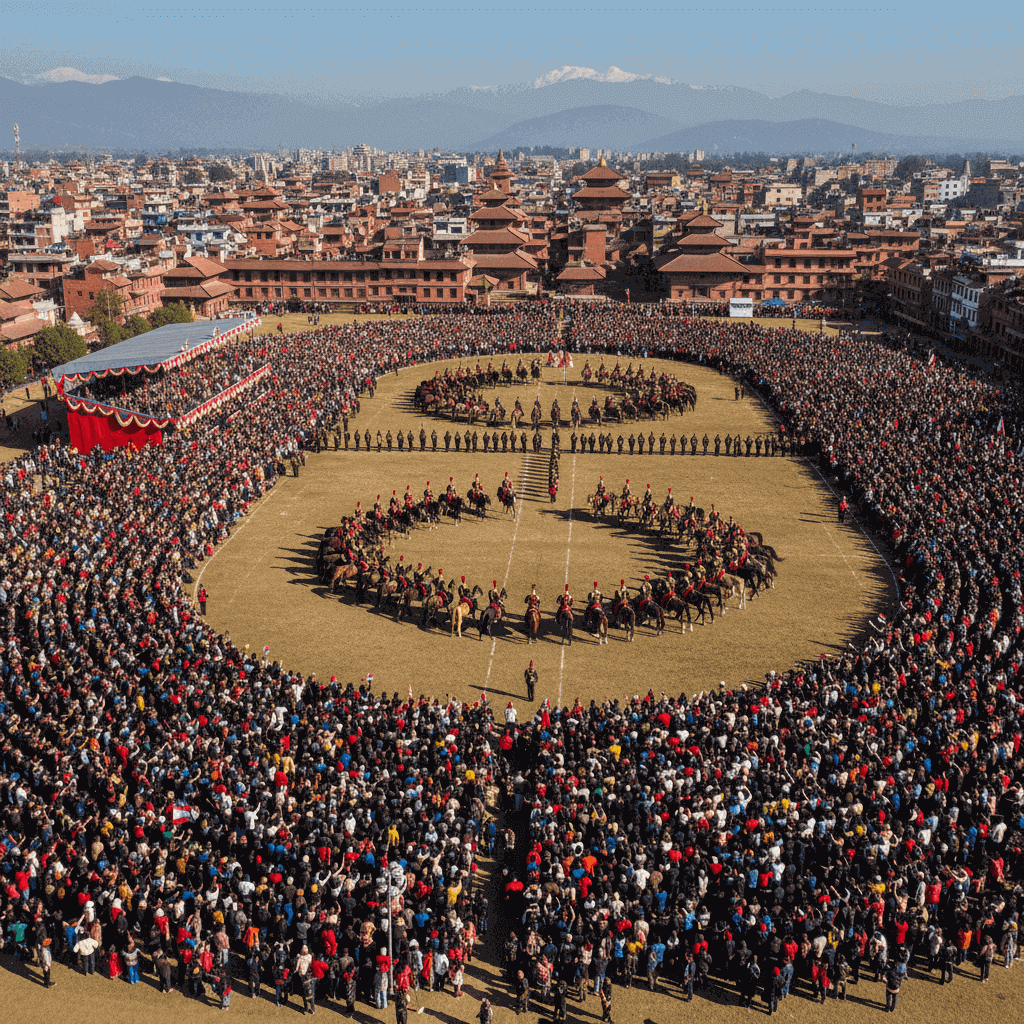
The celebration takes place mainly at Tundikhel, a historic open ground in central Kathmandu and one of the city’s most important landmarks. At this venue, the Nepal Army and Nepal Police organize large equestrian parades and skilled horse displays, which government officials, dignitaries, and thousands of spectators come to watch.
When Is the Ghode Jatra Celebrated?
People celebrate Ghode Jatra every year in Kathmandu during the month of Chaitra, which usually falls in late March or early April in the Gregorian calendar. In 2026, the festival will take place on Chaitra 04, 2082, which corresponds to March 18, 2026. In 2027, the celebration will fall on April 6. The festival closely connects with the arrival of the Nepali New Year and holds strong cultural and religious importance for the Newar community of the Kathmandu Valley.
Ghode Jatra also marks the central and most important day of the three-day Newari festival known as Pahachare. Although celebrations continue for several days, the second day attracts the largest crowds and features the main events.
How Is the Ghode Jatra Festival in Nepal Celebrated?
People across Nepal celebrate Ghode Jatra with great energy and pride, especially at Tudikhel in Kathmandu. Communities in Lalitpur, Bhaktapur, Palpa, Butwal, Dharan, and nearby areas also take part in the festival. In Kathmandu, a large public parade fills the city with decorated horses, performers in colorful traditional clothing, and massive crowds. People surround Tudikhel from all sides to watch the horse parade, creating a lively and exciting atmosphere.
The Nepal Army leads the main events at Tudikhel. Army units perform organized cavalry marches, horse races, and skilled equestrian shows. They also present military acts such as acrobatics and parachute demonstrations. Senior leaders from the government, army, and diplomatic community attend the program, while the general public watches from outside the grounds. The celebrations spread festive energy across the city and also signal the beginning of the Nepali New Year.
Cultural and Religious Significance of Ghode Jatra
Ghode Jatra goes beyond parades and performances and carries strong cultural and religious meaning. Cultural groups perform mask dances that bring old stories and legends to life. Traditional music and smaller processions add to the festive mood. Hindu priests carry out important rituals during the festival, including the renewal of a Vishnu statue and special pujas.
The festival closely connects with the three-day Newari celebration called Pahachare, with Ghode Jatra serving as its second and most important day. On the first day, people clean their surroundings, worship local gods, take part in symbolic chariot clashes near the Annapurna Temple, and share community feasts.
In the evening, people carry statues of gods and goddesses through the city in palanquins. Local traditions add deeper meaning to the celebration. In areas like Kharpan, communities place local gods on small chariots and honor the demon Gurumapa with a large communal feast. In Patan, locals developed a unique form of Ghode Jatra that features energetic horse activities rooted in Newari traditions.
Although the Newar community celebrates Ghode Jatra most prominently, the public holiday allows families across Nepal to join in. People spend the day with their loved ones and prepare special meals at home. In Newari households, families organize a traditional bhoj (feast), just as they do during other major festivals.
The festival also reflects the change of seasons. People believe that nutritious food, rest, and family time help maintain good health. By coming together, sharing meals, and honoring tradition, people make Ghode Jatra a joyful and meaningful celebration for everyone.
Mythological Roots of the Ghode Jatra Festival
Legend from the Lichchhavi Period
The history of Ghode Jatra comes from several ancient legends and mythological stories that people in Nepal have passed down through generations. One of the earliest legends dates back to the Lichchhavi period, when kings ruled the Kathmandu Valley.
According to this story, a severe drought once struck the valley and caused great suffering. Priests advised the king to bring a sacred statue of Lord Vishnu from India to please the gods and restore balance. Soldiers on horseback led a grand procession as they brought the statue into the valley. People believe that rain finally fell soon after the statue arrived, ending the drought. Many consider this horse-led religious procession to be one of the earliest roots of the Ghode Jatra festival.
The Legend of Kesh Chandra and Gurumapa
The story begins in Kutumbahal, Kathmandu, with a clever but unlucky trader named Kesh Chandra. He loved to gamble and often bet the little money he had, hoping to win big. Every day, he returned home empty-handed and hungry. One day, he went to ask his sister, married to a wealthy Newar, for help. She welcomed him warmly and served him a meal on a gold plate. After eating, Kesh Chandra stole the gold plate to use in his gambling. As usual, he lost everything, including the plate.
He returned to his sister for help. Forgiving him, she served him a meal on a silver plate. Again, Kesh Chandra stole it and lost it in gambling. The third time, his sister served him a meal without a plate. Not wanting to eat on the ground, Kesh Chandra left with a handful of rice and settled under a banyan tree near Swayambhunath Stupa to spend the night.
The next morning, pigeons pecked away all his rice. In return, they dropped golden eggs for him, changing his fortune. While carrying the gold, Kesh Chandra saw a giant demon named Gurumapa, known to scare children across Kathmandu. The demon tried to make Kesh Chandra his meal, but Kesh Chandra offered a clever deal. He promised Gurumapa a grand feast at his home, including a buffalo and three bundles of rice, and offered the golden eggs as a guarantee.
Gurumapa followed him to the city and ate the offerings. At first, he seemed satisfied, but soon he refused to leave and demanded more food. The people noticed the demon living in Kesh Chandra’s house and worried about their safety. To protect the city, Kesh Chandra tricked Gurumapa into staying on a fig tree in Tundikhel Park, promising to feed him regularly.
When Kesh Chandra failed to bring food after a few days, Gurumapa became furious. He terrorized the city, frightening people and taking children. The people of Kathmandu finally united and confronted the demon. They tried to hit him with sticks and swords, but nothing worked. Then, they released a herd of horses, which stampeded over Gurumapa and finally defeated him.
To prevent Gurumapa from returning, the people began an annual ritual of running horses across Tundikhel. Over time, they added horse races, tricks, and parades, creating the festival now known as Ghode Jatra.
FAQs
1) Who introduced Ghode Jatra in Kathmandu?
The Ghode Jatra festival in Nepal traces its origins back to the period of the Malla rulers, between the 12th and 18th centuries. Historical accounts suggest that King Gunakamadeva, who ruled in the 15th century, organized the first horse parade, marking the beginning of this long-standing tradition.
2) How has Ghode Jatra changed over time?
Over time, Ghode Jatra transformed from a protective ritual into a grand festival, celebrating the arrival of spring and honoring the horse, a symbol of power, strength, and nobility in Nepalese culture.
3) Is Ghode Jatra celebrated only in Kathmandu?
Although Ghode Jatra is mainly celebrated in Kathmandu, people in other parts of Nepal also observe it, especially in cities and regions with large Newar communities, such as Lalitpur, Bhaktapur, and Palpa.
4) Can Tourists Take Part in Ghode Jatra?
Yes, tourists can join in and observe the Ghode Jatra celebrations. It offers a unique chance to experience Nepal’s rich cultural heritage and see traditional festivities up close.
5) Is Ghode Jatra a Public Holiday in Nepal?
Yes, Nepal observes a public holiday during Ghode Jatra, giving people the chance to join the celebrations and enjoy the cultural festivities.
6) When will Ghode Jatra take place in 2026?
In 2026, Ghode Jatra will be celebrated on March 18 according to the English calendar.
Why Plan Your Next Nepal Trip with Nepal Royal Treks
Planning a trip to Nepal is easy with Nepal Royal Treks. With expert local guides, personalized itineraries, and transparent pricing for all budgets, they make trekking, cultural tours, and adventure activities smooth and hassle-free. From handling permits and accommodations to arranging transportation, we take care of all logistics so you can focus on enjoying Nepal’s mountains, heritage, and wildlife. By traveling with us, you also support responsible tourism and local communities, ensuring a memorable and authentic Nepal experience.