-
 Duration
9 Days
Duration
9 Days
-
 Difficulty
Moderate
Difficulty
Moderate
-
 Max Elevation
3880m
Max Elevation
3880m
-
 Group Size
1 to 10 Person Person
Group Size
1 to 10 Person Person
-
 Accommodation
Tea House/Lodge
Accommodation
Tea House/Lodge
-
 Start/End
Kathmandu Airport/ Kathmandu
Start/End
Kathmandu Airport/ Kathmandu
-
 Destination
Everest Region
Destination
Everest Region
-
 Best Season
Mar - May and Sep - Nov
Best Season
Mar - May and Sep - Nov

Everest View Trek is a short trek that is the ideal escape to the Khumbu without having to take the long trip.
Within just several days, you are out of busy Kathmandu, you do a well-known short flight, hike through rhododendron forest, Sherpa villages, and you stand on beautiful hills looking over the horizon with Everest and its surrounding peaks.
The trek is short, yet all-inclusive. You see the mountains, get acquainted with the local people who surround them with their lives, and stay in warm teahouses that provide the feeling that can be provided only by the hospitality of the mountains.
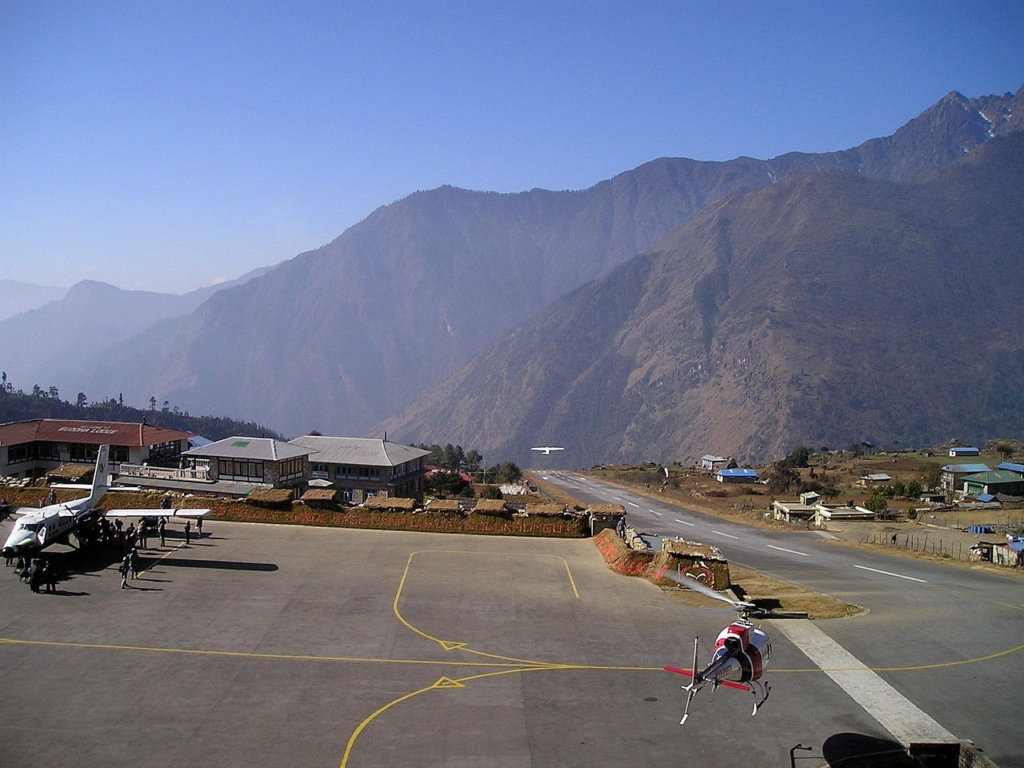
The expedition begins with an early flight to Lukla. It is not just a normal flight but an experience as it includes small runways, steep ridges beneath, and a first view in the air of the mountains, which causes the people to cease chatting and start staring.
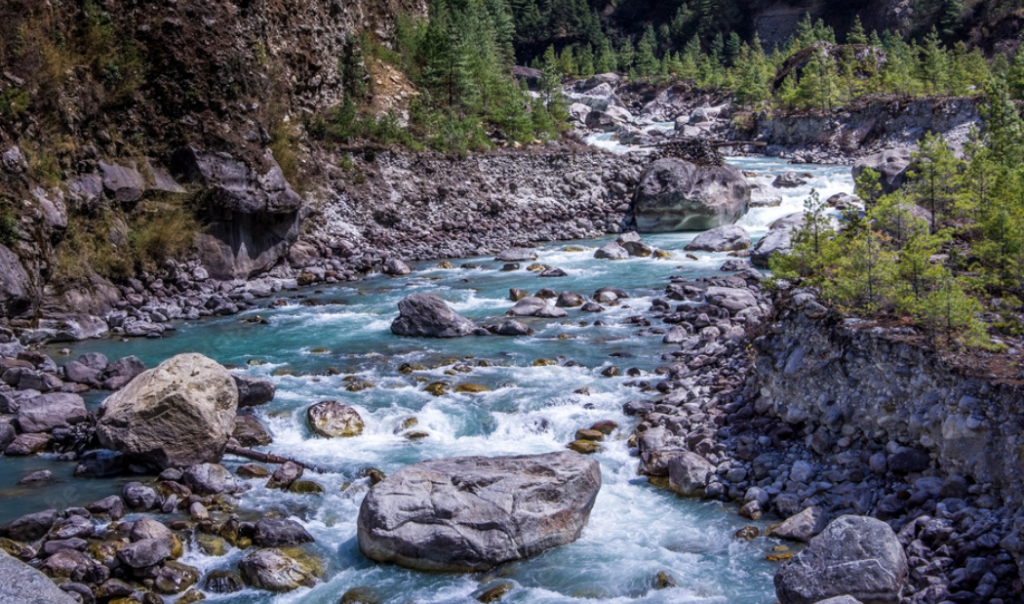
A flight up the river du follows a pleasant path at Lukla. The initial day is deliberately light so that your legs and lungs can get used to the thin air as you pass through small villages crossing classic suspension bridges adorned with prayer flags.
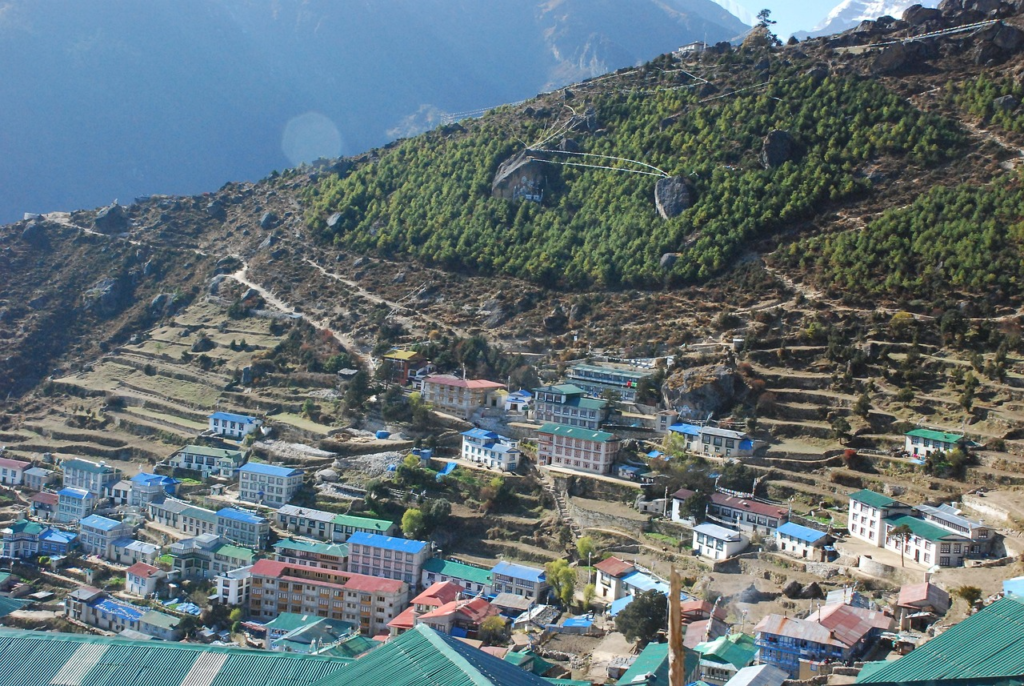
It takes one or two days walking to reach Namche Bazaar, the trading center of the area, and the most ideal region to observe life in the highlands.
Namche, a shoe-shaped Sherpa town, is natural, resembling a live city to many first-time tourists, including bakeries, deployment stores, cafes, and a continuous flow of hikers, porters, and merchants. It is a bonus because most tours will acclimate in this area.
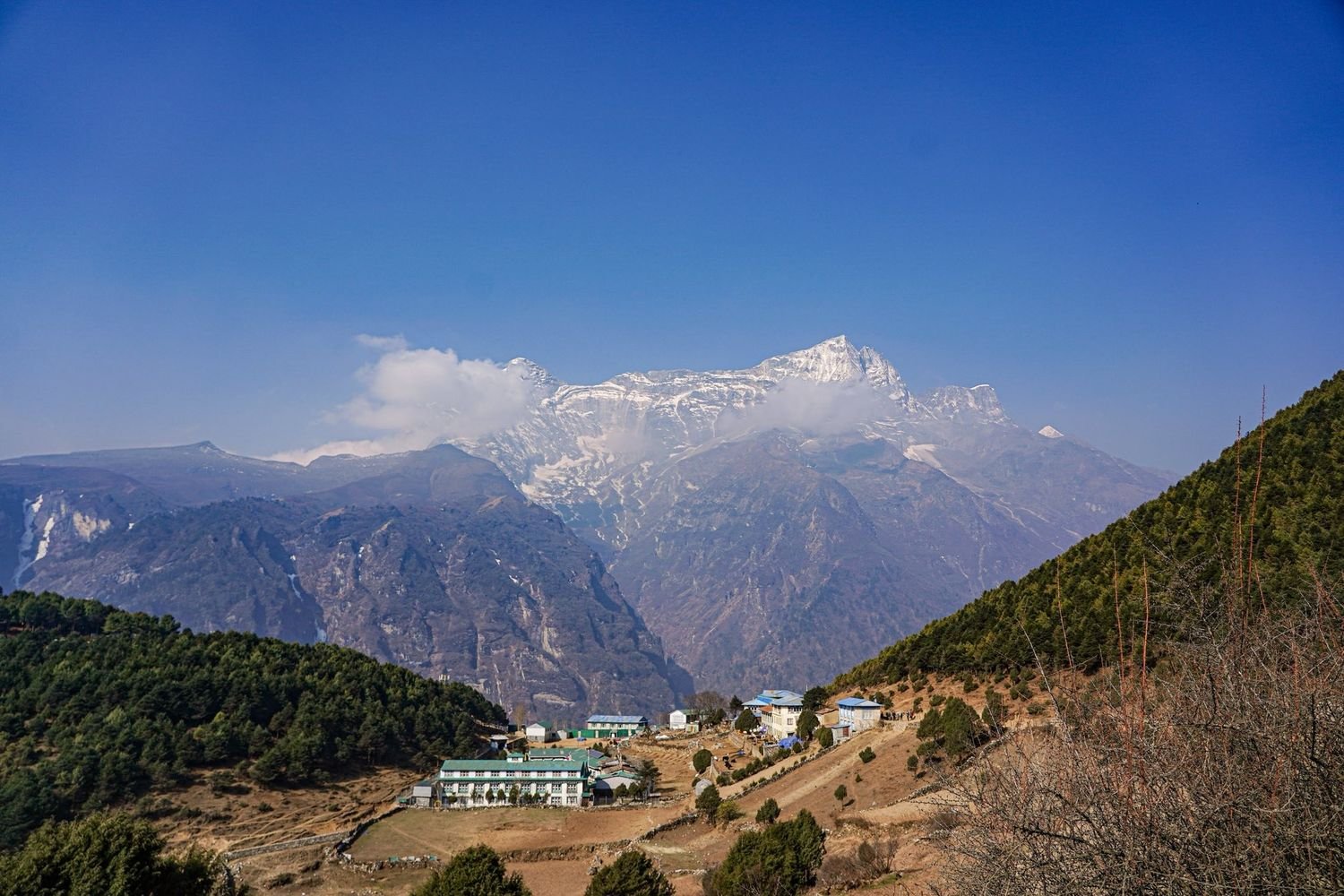
You can walk up to greater heights to observe Everest and Ama Dablam, illuminated in the morning, go to the museum, purchase the last-minute things, or simply sit down and have tea and observe the valley open and close under the clouds.
At Namche, the way is evidently turned alpine. The wood path becomes gravelly heights and bare heavens.
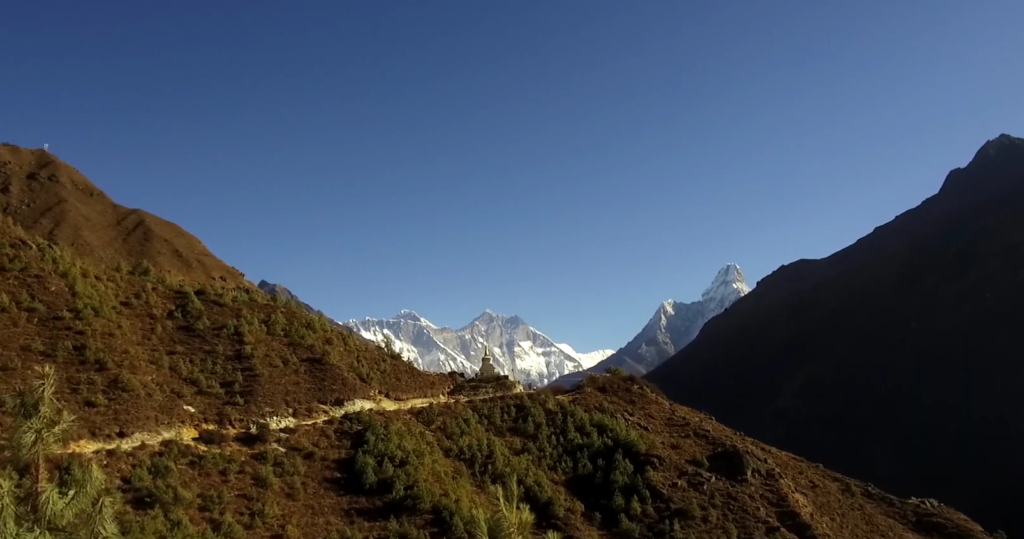
One of the places that attracts most tourists is the Tengboche Monastery; the monastery is located on the ridge with the ability to see the snowy mountains behind the prayer flags moving in the wind.
The morning prayers in Tengboche have the effect of being a natural rest stop in the walk; it is very quiet and has a nice contrast with the steep path.
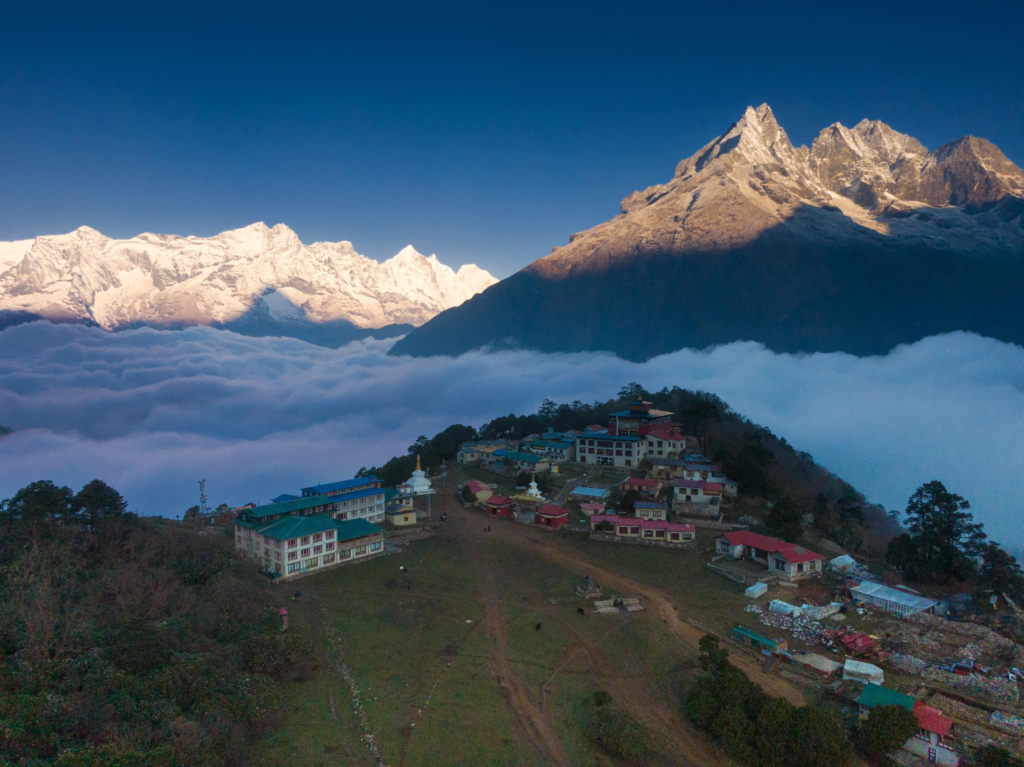
Close-up views, Adjacent perspectives, including the Everest View Hotel ridge, offer some of the simplest and most dramatic close-up views of Everest without the viewer having to come to base camp.
This route will alternately change in terms of terrain and scenery. At one time, you pass through rhododendron and pine trees, sap-smelling, and the next time, you are on clear ledges where you can see long, unbroken lines of the mountains.
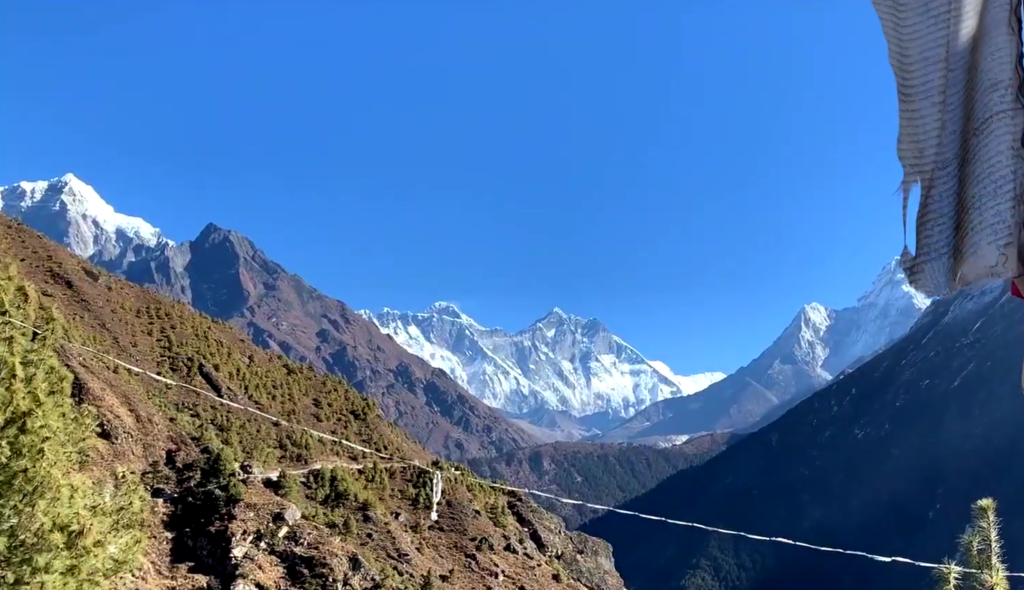
You will also get to see the likes of Lhotse, Nuptse, Thamserku, Tabuche Peak, Kusum Kanguru, and Kwangde, if weather and cloud gods are on your side.
The path crosses preserved locales in the Sagarmatha territory where you encounter vegetation and an animal or two, like pheasants, mountain goats, and the footprint of motionless mammals.
Human landscape is also captivating here, thanks to mani walls, chortens, plain stone houses, and yaks and donkeys which still transport goods on highways.
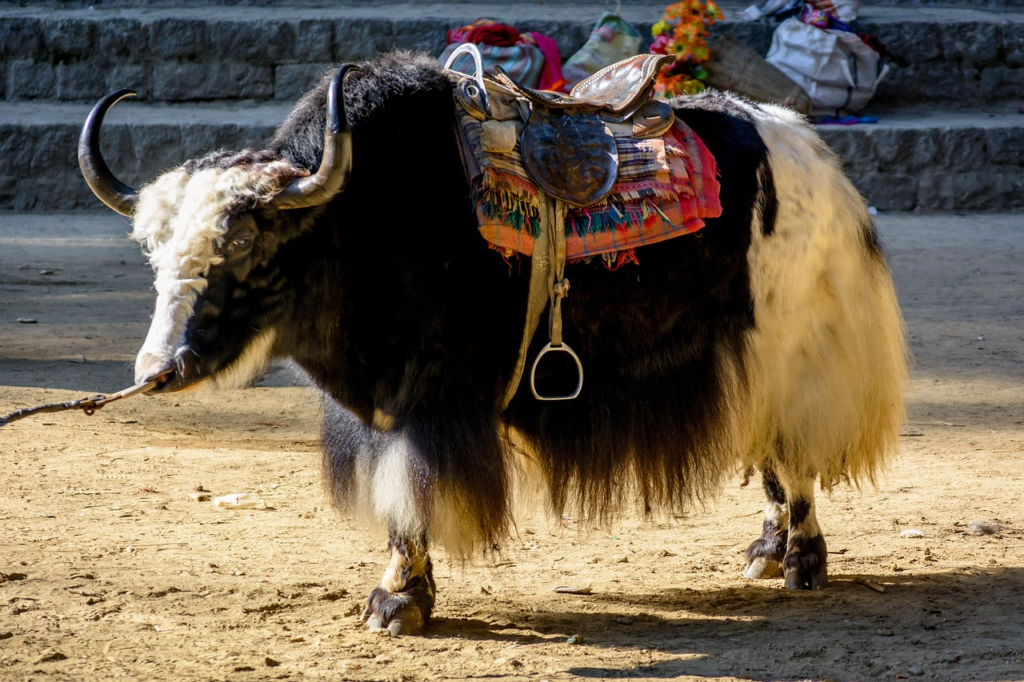
They are eternally young over a dramatic mountainous background. There are teahouses which merit a paragraph.
They are plain and even more useful, normally consisting of twin rooms. In some restaurants, there are even hot showers (paid), and dining rooms, which turn into the social center of the evening.
Food is ample and cozy in most treks. Mostly Dal bhat, soups, noodles, and fresh bread are included in every menu.
Guides and kitchen personnel serve an outstanding purpose of providing food to people who have just spent many hours exploring the village or coming from a tiring trek.
Evenings at the wood stove are communal and pleasant, with anecdotes, map chat, and the effortless good nature of men that ensues when men travel side by side.
The maximum elevation of the classic route is high three thousand, and the threat of severe issues related to the altitude is lower compared to more extended routes.
Adequate daily walking is typically of a moderate type, four or six hours on most days, and acclimatization time schedule properly.
This is what makes it a good choice for the trek by the fit beginners, older walkers keen on a big mountain experience, and anyone willing to work hard with moderate fitness.
The best time of the day with the most favorable clear skies and narrow views are in the spring and autumn.
Also, Spring includes rhododendron flowers coloring the lower cases, and autumn has the same consistent weather and clear views.
Greener valleys that operate in monsoon months, and poorer visibility, but cold and quiet winter with very crisp air, in case you are prepared to be cold.
Lastly, it is one of the nicest aspects of the Everest View Trek as it leaves other options open. You are on a ridge, with the prayer flags at the back of Everest, and wish to go on further; such paths as Gokyo Lakes or the entire circle of Everest Base Camp become obvious extensions.
However, in case you would like a short, intensive, and incredibly satisfying Himalayan experience, this is the trek that delivers what it promises.
It is a trip that takes you into the realm of Everest, into the Sherpa community, along vintage highland routes, and gives back to Kathmandu a pair of incomparable and individual memories, whether you are along with a guide or have a group joining you.
Trip Highlights
- An exciting short trip to Tenzing -Hillary Airport provides you a quick glimpse of the mountains and is in itself pleasant.
- The Everest View ridges have clear broad views of the Mount Everest, Lhotse and Nuptse. At dawn and sunset, these opinions are memorable.
- The location of Tengboche Monastery is on the mountain hilltop. It is a combination of reduce serene spiritual ambiance and one of the finest mountain scenery one can see.
- Enjoy simple evenings in tea houses at the Sherpa Villages with hearty dal bhat, gundruk, wood stoves and guides.
- One of the stops will be Namche Bazaar to see the life of Sherpa towns, visit local shops, and have a taste of locally prepared meals and baked items to get used to the high altitude.
- Hiking in Sagarmatha National Park, which is a preserve, demonstrates to you UNESCO-listed sceneries, numerous plant life, and how the villagers do for their daily living.
- Walking through Sagarmatha National Park means moving through a UNESCO protected landscape where you will get to see rhododendron woods, high ridges and changing scenery each hour. Also, if you are lucky, you will get to see the horses, pheasants, musk deer and the Himalayan tahr.
- The trail follows the clear waters of the Dudh Kosi River and crosses typical-Nepali suspension bridges.
- Cultural background is provided by visits to villages like Khumjung. The story of Sherpa life can be seen on Mani walls, local monasteries, as well as in the Hillary School.
- Enjoy simple evenings in tea houses at the Sherpa Villages with hearty dal bhat, gundruk, wood stoves and guides.
- Night after a night in mountain teahouses can be both hospitable and cozy, rice and lentil stew (dal bhat) is delicious and a great opportunity to share laughter with trekkers, locals and your guide.
Everest View Trek ~ Itinerary
Day 1
Arrival at Kathmandu Airport - Welcome to Nepal
- Altitude: 1,350m
- Accommodation: Standard Three Star Hotel
- Meal: Provided depending upon your arrival time
Welcome to Nepal, the land of world’s tallest peak. On arrival at Tribhuvan International Airport, you will be greeted and transferred to your hotel in Kathmandu, where a pre‑trek briefing will outline your upcoming Everest View adventure. On arrival of the hotel and in your room, you shall have a brief session on the Everest View Trek. Our guide will explain the the route, safety, altitude problems, and the walking schedule that you will be doing over the next few days. You can walk in the nearby streets, go to the local markets, or go to one of multiple restaurants in the city and try the Nepali cuisine.
Day 2
Fly Kathmandu to Lukla and Trek to Phakding
- Max altitude: 2,840 m
- Flight Duration: 30–35 minutes
- Trek Duration: 3–4 hours
- Trek Distance: 7–8 km
- Meal: Breakfast, Lunch and Dinner
- Accommodation: Tea house in Phakding
You begin your journey early in the morning with a grand flight to Lukla. It is one of the most foregrounding mountain flights in the world and you get the vistas of deep valleys, terraced hills, and snow-capped mountains too far away. The aircraft takes off at one of the well-known airstrips of Lukla, the primary point of the Everest region. nce you have met the trekking team and left your bags with the porters, the trek starts off with a light walk along small Sherpa villages and farmland. The road tracks go through the Dudh Koshi River, stone mani walls, prayer wheels and colorful prayer flags which demonstrate local Buddhist customs.
Day 3
Phakding to Namche Bazaar
- Max altitude: 3,440 m
- Trek Duration: 5–7 hours
- Trek Distance: 11 km
- Meal: Breakfast, Lunch and Dinner
- Accommodation: Tea house in Namche Bazaar
It is the most thrilling day of the trek today. The path goes along the river, the Dudh Koshi and over a number of suspension bridges adorned with prayer flags. You are going to have villages like Benkar, Monjo, and Jorsalle. You formally enter Sagarmatha National Park, a UNESCO World Heritage site at Monjo which preserves the ecosystem of the Everest region which is unique. Once one passes the entrance to the park, the trail moves along the river and begins the gradual ascent to the Namche Bazaar, the largest Sherpa town in the area located in a natural amphitheater, which is 3,440 meters
Day 4
Acclimatisation in Namche Bazaar and Everest View option
- Max altitude: 3,880 m
- Trek Duration: 2–4 hours (optional hikes)
- Trek Distance: 4–8 km (depending on route)
- Meal: Breakfast, Lunch and Dinner
- Accommodation: Tea house in Namche Bazaar
This day is made for acclimatization to adjust your body to higher altitude. Rather than waiting fully, you can walk to a higher location and then there back and sleep in Namche. One of the main popular ones is the hiking to Everest View Hotel which is one of the highest hotels in the world. The path ascends slowly over Namche through barren hills and through small villages. Outstanding panoramic views of the mountain Everest, Lhotse, Nuptse, and Ama Dablam are visible just outside the hotel border. The path continues down to Namche Bazaar after having had the scenic view and captured photos. During the afternoon, you would have the time to go around the town or visit the Sherpa Culture Museum, or enjoy a break in a cafe with a view of the mountain.
Day 5
Namche Bazaar to Tengboche
- Max altitude: 3,867 m
- Trek Duration: 5–6 hours
- Trek Distance: 9.5 km
- Meal: Breakfast, Lunch and Dinner
- Accommodation: Tea house in Tengboche
The current trail begins with a scenic trip along a high peak, which offers an awesome view of Everest, Ama dablam, and Thamserku. It then continues the descent gradually through pine forests to reach the river at Phunki Thenga where a number of trekkers stop to have lunch. The trail goes up hill through rhododendron forests to Tengboche after crossing the river. It consists of the biggest and the most significant Buddhist monastery in the Everest area. The monastery is located on a large ridge in the midst of the mountainous landscape. Several trekkers go there every night to observe the monks go through prayer rituals.
Day 6
Tengboche to Namche Bazaar
- Max altitude: 3,440 m
- Trek Duration: 4–5 hours
- Trek Distance: 9.5 km
- Meal: Breakfast, Lunch and Dinner
- Accommodation: Tea house in Namche Bazaar
The trek now returns to Namche Bazaar after the relaxing environment of Tengboche. This trail descends through the trees down into the river and crosses it once more at Phunki Thenga and follows a gradual ascent back to Namche. Although the path is the same, when you are going down the scenery is different. The glimpses of the valleys and mountains open in new directions bringing new pictures to enjoy. In the next step upon returning to Namche Bazaar, you can hot drink and a slice of cake in a local bakery.
Day 7
Namche Bazaar to Lukla
- Max altitude: 2,860 m
- Trek Duration: 6–7 hours
- Trek Distance: 18 km
- Meal: Breakfast, Lunch and Dinner
- Accommodation: Tea house in Lukla
The path on this day decreases gradually through trees and villages until you reach the Dudh Koshi river. There are a number of suspension bridges along the route and some well known settlements like Jorsalle, monjo and Phakding are passed. The way back allows the trekkers to reflect on the journey and take in the ultimate scenery of the Everest region. The arrival in Lukla is the point of the trekking stage of the journey. On the evening, the trekkers very commonly drink with the guides and porters who assisted them.
Day 8
Lukla to Kathmandu
- Max altitude: 2,840 m
- Flight Duration: 30–35 minutes
- Meal: Breakfast, Lunch, Dinner
- Accommodation: Standard three star hotel in Kathmandu
You will be on the morning flight back to Kathmandu after having breakfast; don’t forget to see the mountains clearly one last time during your flight through the window. Upon arriving in Kathmandu, you would be escorted to a hotel. The remainder of the day you can do some shopping, see some cultural sightseeing or just take some leisure time after completing the trek.
Day 9
Final Departure from Kathmandu
- Max altitude: 1,350 m
- Meal: Breakfast
Your Everest View Trek comes to an end today. Depending on your flight schedule, you may have some free time to explore Kathmandu or do some last-minute shopping for souvenirs. Our team at Nepal Royal Tourism Holiday will transfer you to the airport a few hours before your international departure. As you leave Nepal, you will carry with you unforgettable memories of the Everest region, its landscapes, and the warm hospitality of the Himalayan people and hopefully, our team as well.
Everest View Trek Fixed Departures Dates
Trip Cost Includes/Excludes
Cost Includes
- Domestic transformation with Kathmandu-Lukla-Kathmandu flights and airport transfers
- Covers two sharing hotel rooms in Kathmandu and tea house lodges during the trek
- Three meals a day: Breakfast, Lunch and Dinner, offering Nepali and Western foods depending upon teahouses
- Group led by an experienced, licensed English‑speaking guide
- Porter support, typically one porter for every two trekkers
- Permits such as the Sagarmatha National Park permit and local area permit are arranged by us
- Trekking rental items such as sleeping bags and duffel bags are provided and to be returned at trip end
- A trekking map, itinerary booklet, and a complimentary Nepal Royal Tourism Holiday T‑shirt and completion certificate
- All government taxes and service charges
Cost Excludes
- International airfare and Nepal entry visa fees
- Travel/Medical insurances (helicopter evacuation recommended)
- Personal expenses like drinks, laundry, Wi‑Fi or hot showers
- Tips for guides/porters
- Costs from flight delays or itinerary changes
Trip Photo/Video Gallery




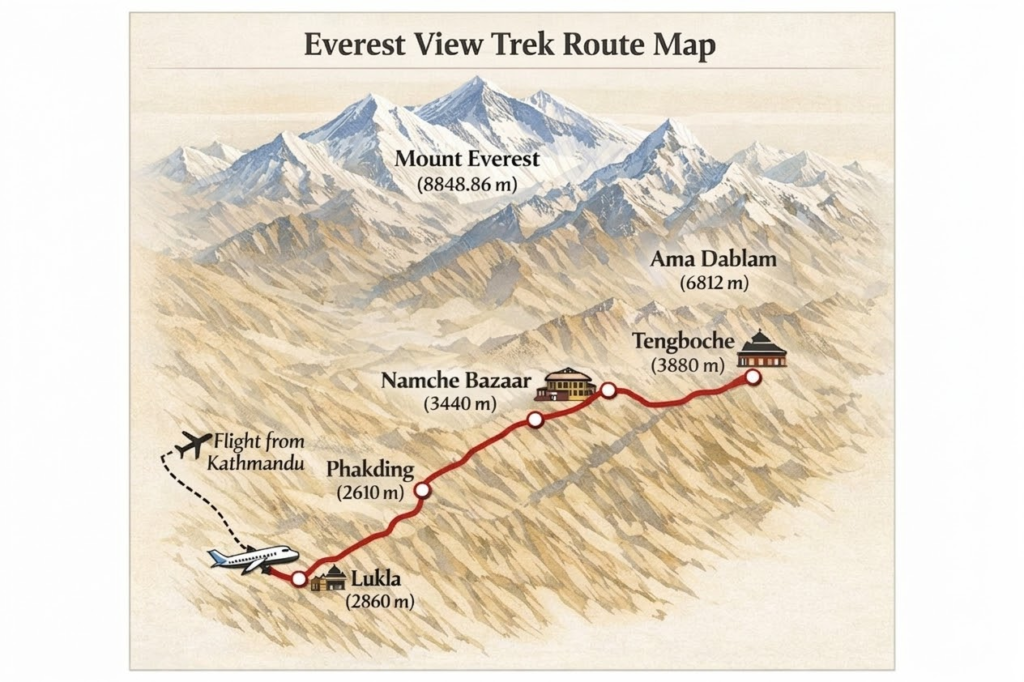
Route Map for Everest View Trek
Frequently Asked Questions
You should be reasonably fit and used to walking for couple of hours a day. The trail thankfully is not technical but steep at times.
You need a Sagarmatha National Park permit and a TIMS trekking card to enter the Everest region. Nepal Royal Tourism Holiday will manage these before your trek.
Yes, we strongly recommend a licensed guide and a porter if you prefer to walk light.
The most enjoyable months are spring (March- May) and autumn ( September-November) which are the clearest. The spring is the season of rhododendrons and wildflowers, autumn is known by stable weather and clear visions.
Flights to Lukla are weather dependent and most reliable early in the morning. Delays and cancellations happen in poor visibility. We plan buffer days and have backup options accordingly.
Bring layered clothing such as base, insulating and waterproof layers. Also, turdy trekking boots, sun protection, a daypack, water purification or tablets, a torchlight, personal meds, power banks and essential clothing for you.
Yes, the Everest View route is a natural springboard to longer treks like Everest Base Camp or the Gokyo Lakes circuit. Extensions add several days, extra permits and more demanding altitude profiles. So, make sure to make up your mind before we leave Kathmandu.
Altitude sickness can happen even on shorter treks. We manage risk with a gradual itinerary, an acclimatisation day at Namche, sensible daily ascent limits, and trained guides who monitor symptoms.
Accommodations is usually in tea houses, with basic twin rooms and shared bathroom. For food, choosing Dal Bhat is the best choice though you have couple of other options. Also, hot showers and Wi-Fi are available at some stops for a small fee.
There’s no strict age limit; families with older teens and seniors in good health do this trek frequently. Though, we recommend a health checkup or guide’s advisory before leaving.
You must have travel insurance that covers high-altitude trekking and helicopter evacuation. Make sure to read refund and cancellation terms carefully and consider a flexible international ticket if your schedule is tight.
You may also like

Menu