

-
 Duration
23 Days
-
 Difficulty
Challenging to Strenuous
-
 Max Elevation
5, 416m
-
 Group Size
1 to 10 Pax Person
-
 Accommodation
Teahouse/Lodge
-
 Start/End
Machha Khola-Pokhara
-
 Destination
Manaslu and Annapurna
-
 Best Season
March to may and September to November

The Manaslu Circuit with Annapurna Circuit Trek connects two of Nepal’s great Himalayan trekking regions in one continuous journey.
Beginning in the Budhi Gandaki Valley, the route passes remote Manaslu villages, Buddhist monasteries and alpine landscapes before crossing Larkya La Pass (5,160 m).
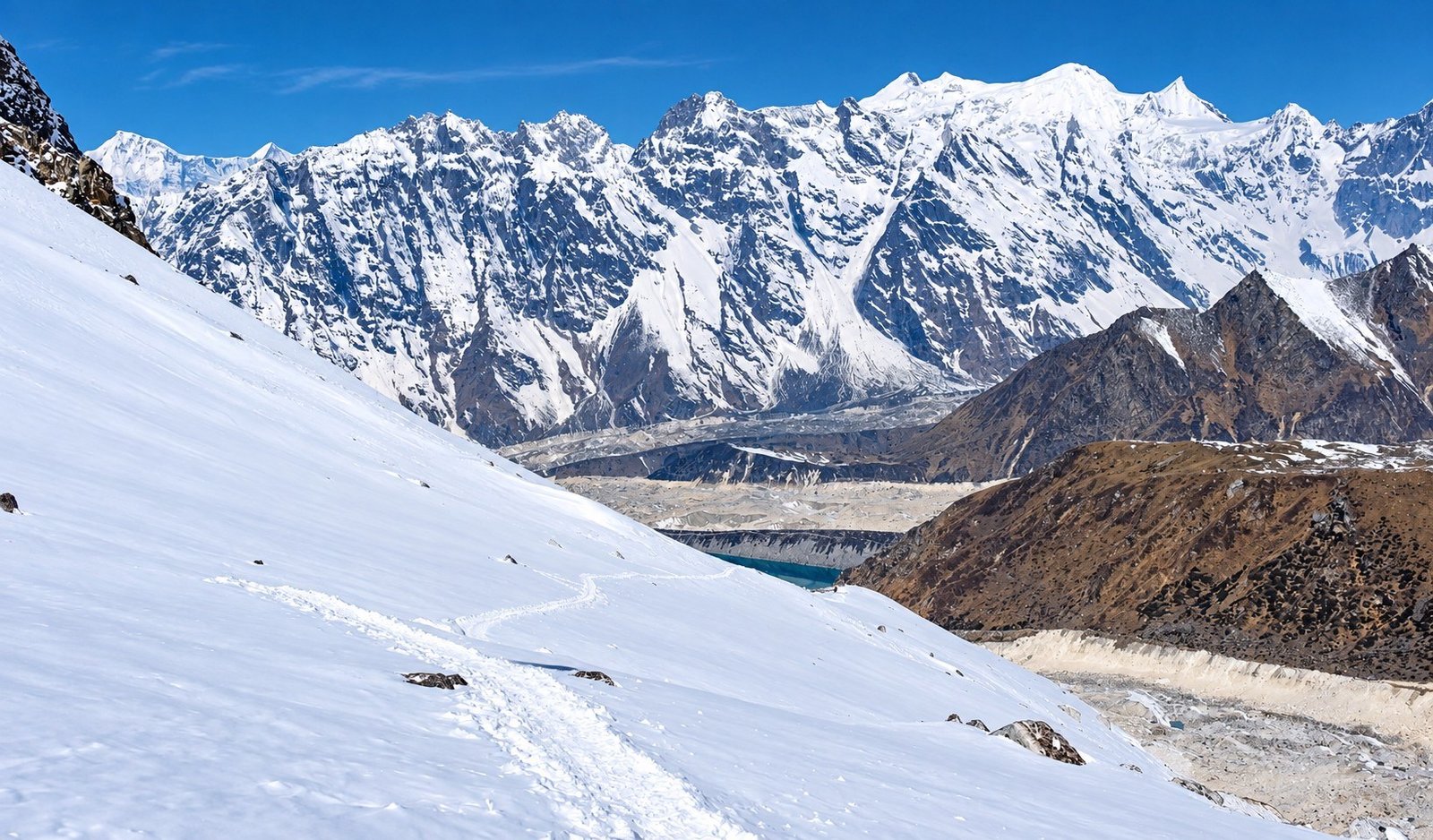
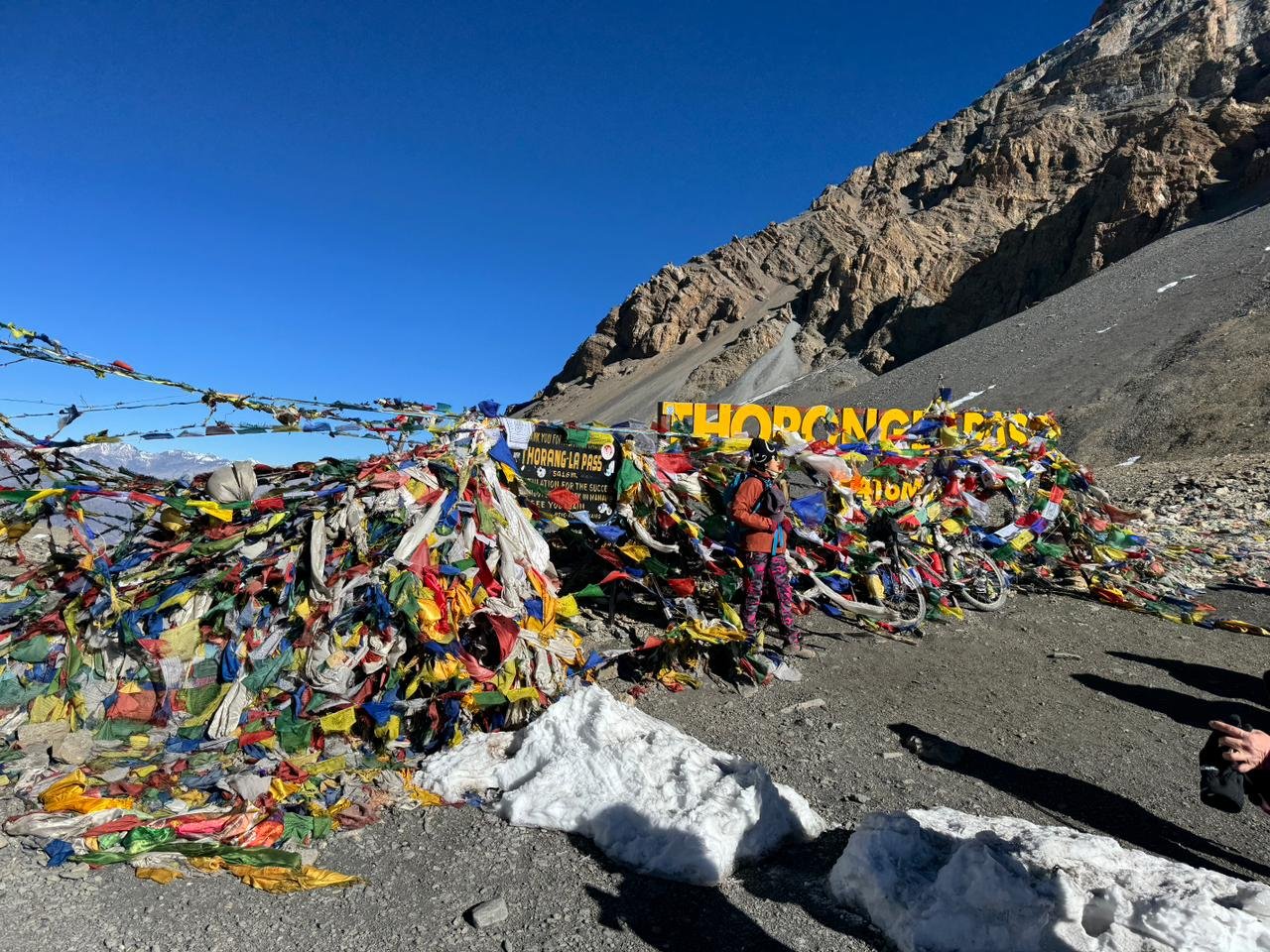
Rather than ending at Dharapani, the trail joins the Annapurna Circuit and continues through Chame, Upper Pisang and Manang towards Thorong La Pass (5,416 m), the highest point of the adventure.
These neighbouring circuits offer contrasting experiences. Manaslu is known for quieter trails, traditional Tibetan-influenced communities and views of Mount Manaslu (8,163 m), the world’s eighth-highest mountain.
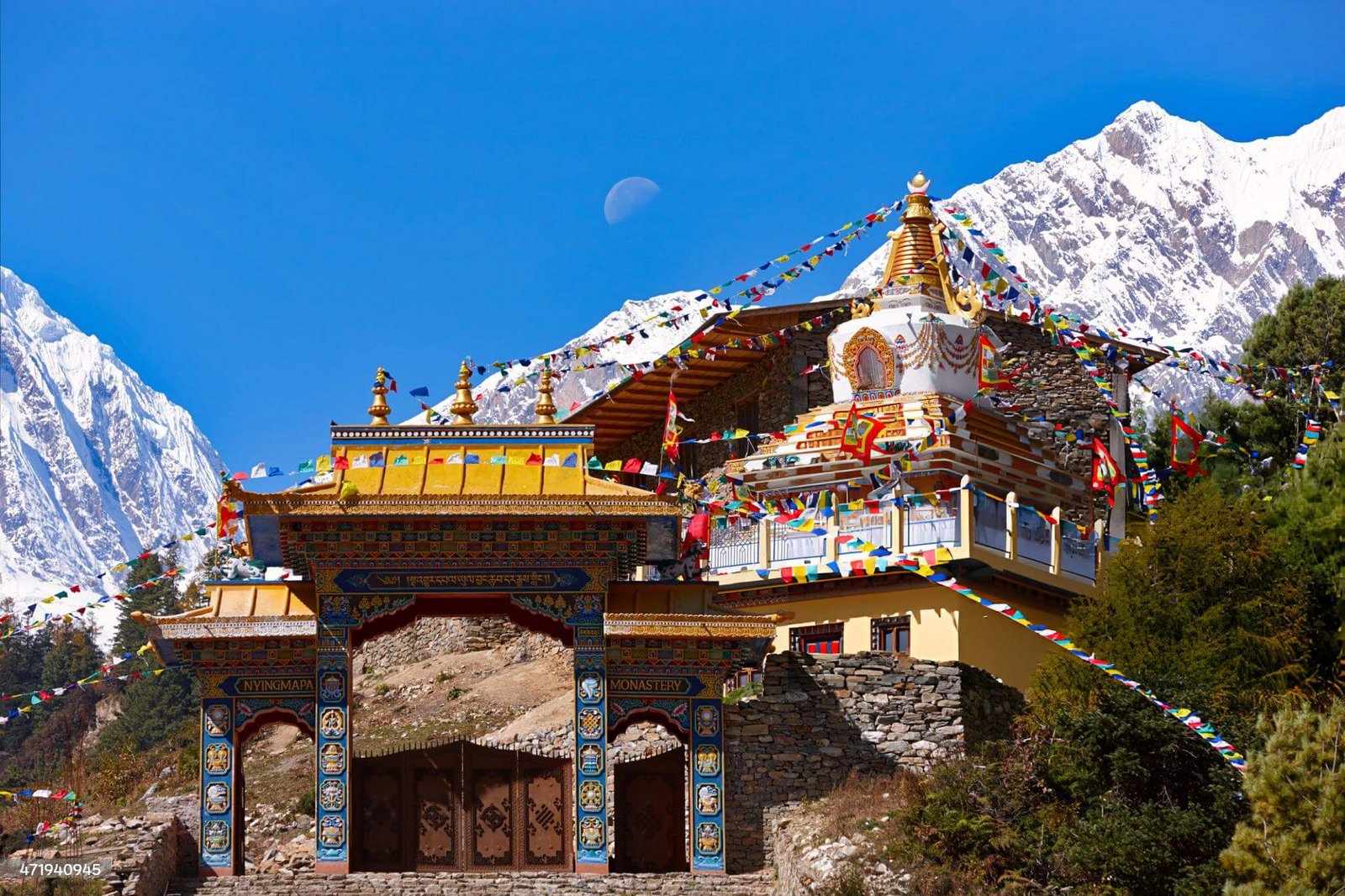
Annapurna circuit introduces established trekking villages, the Marsyangdi Valley and mountain scenery around Annapurna II, Annapurna III and Gangapurna.
After the second pass, the route descends into Mustang and reaches sacred Muktinath before continuing by road towards Pokhara and Kathmandu.
It is a challenging to strenuous trek best suited to travellers with strong fitness, multi-day hiking experience and the flexibility needed for changing mountain conditions.
Manaslu Circuit with Annapurna Circuit Trek
| Trip Information | Details |
|---|---|
| Trek Name | Manaslu Circuit with Annapurna Circuit Trek |
| Trip Duration | 23 Days / 22 Nights |
| Trekking Regions | Manaslu Conservation Area and Annapurna Conservation Area |
| Maximum Elevation | Thorong La Pass (5,416 m) |
| Major Mountain Passes | Larkya La (5,160 m) and Thorong La (5,416 m) |
| Difficulty | Challenging to Strenuous |
| Starting and Ending City | Kathmandu |
| Trekking Trailhead | Machha Khola |
| Major Destinations | Jagat, Namrung, Shyala, Samagaun, Samdo, Bimthang, Dharapani, Chame, Upper Pisang, Manang and Muktinath |
| Accommodation | Hotels in Kathmandu and Pokhara, mountain teahouses during the trek |
| Best Trekking Seasons | Spring (March–May) and Autumn (September–November) |
| Main Trekking Experience | Two high Himalayan passes, Tibetan-influenced cultures, traditional villages and varied Himalayan landscapes |
Why Combine the Manaslu Circuit and Annapurna Circuit?
The two circuits connect at Dharapani, allowing trekkers to experience both regions without returning to Kathmandu between them.
On the Manaslu side, the trail passes steep river gorges, long suspension bridges and relatively isolated villages. After Larkya La, the route descends through forested valleys and enters the more established Annapurna trekking corridor.
The Manaslu Circuit: Budhi Gandaki Valley to Samagaun
The Manaslu Circuit trekking journey begins at Machha Khola after a road transfer from Kathmandu. The route follows the Budhi Gandaki River through riverside settlements, forest paths and dramatic gorges.
As trekkers pass Jagat, Deng and Namrung, the valley gradually opens, the air becomes cooler and the architecture and customs increasingly reflect the Tibetan Buddhist traditions of upper Manaslu.

Beyond Namrung, mountain views grow more impressive. The trail passes traditional stone houses, mani walls, prayer flags and chortens on the way towards Shyala and Samagaun.
On clear days, the surrounding peaks, including Manaslu, dominate the skyline. This section provides cultural encounters alongside some of the most striking scenery in the Manaslu region.
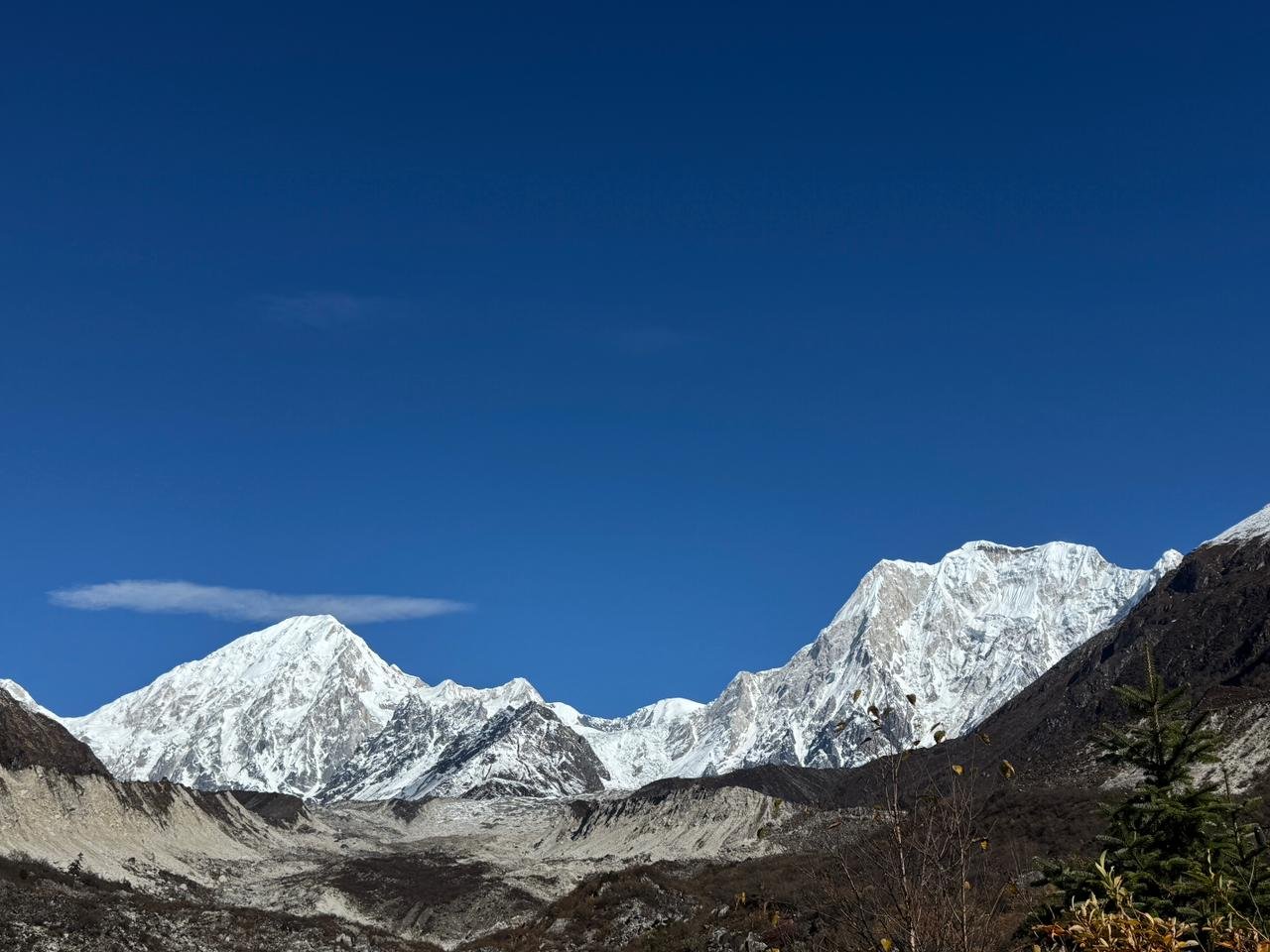
The Shyala and Samagaun area is memorable for its open mountain valley and views of glaciers beneath the Manaslu massif. The itinerary includes an excursion towards Pungyen Gompa, a Buddhist monastery in a beautiful setting below the surrounding peaks.
The visit brings a cultural dimension to the route, with opportunities to observe the religious traditions of the local communities.

Samagaun is also an important acclimatization stop before the route approaches Samdo and Dharmashala.
Depending on weather and fitness, trekkers may explore nearby viewpoints or the Birendra Tal area, while taking care not to overexert themselves. The priority is to adjust to the altitude before crossing Larkya La.
Crossing Larkya La Pass (5,160 m)
From Samagaun, the trek continues through Samdo towards Dharmashala (Larkya Phedi), the last overnight stop before Larkya La.
The pass-crossing day normally starts very early, with a sustained ascent over rocky, exposed and sometimes snow-covered terrain. Cold temperatures, wind and thin air make this one of the hardest days of the Manaslu section.

The high-pass area offers dramatic views of glacial valleys and surrounding peaks, including Himlung Himal and Cheo Himal when the weather is clear.
After reaching Larkya La, the descent towards Bimthang is long and can be demanding on tired legs, particularly if ice or loose stones affect the trail. A careful pace and the guide’s assessment of conditions are essential.
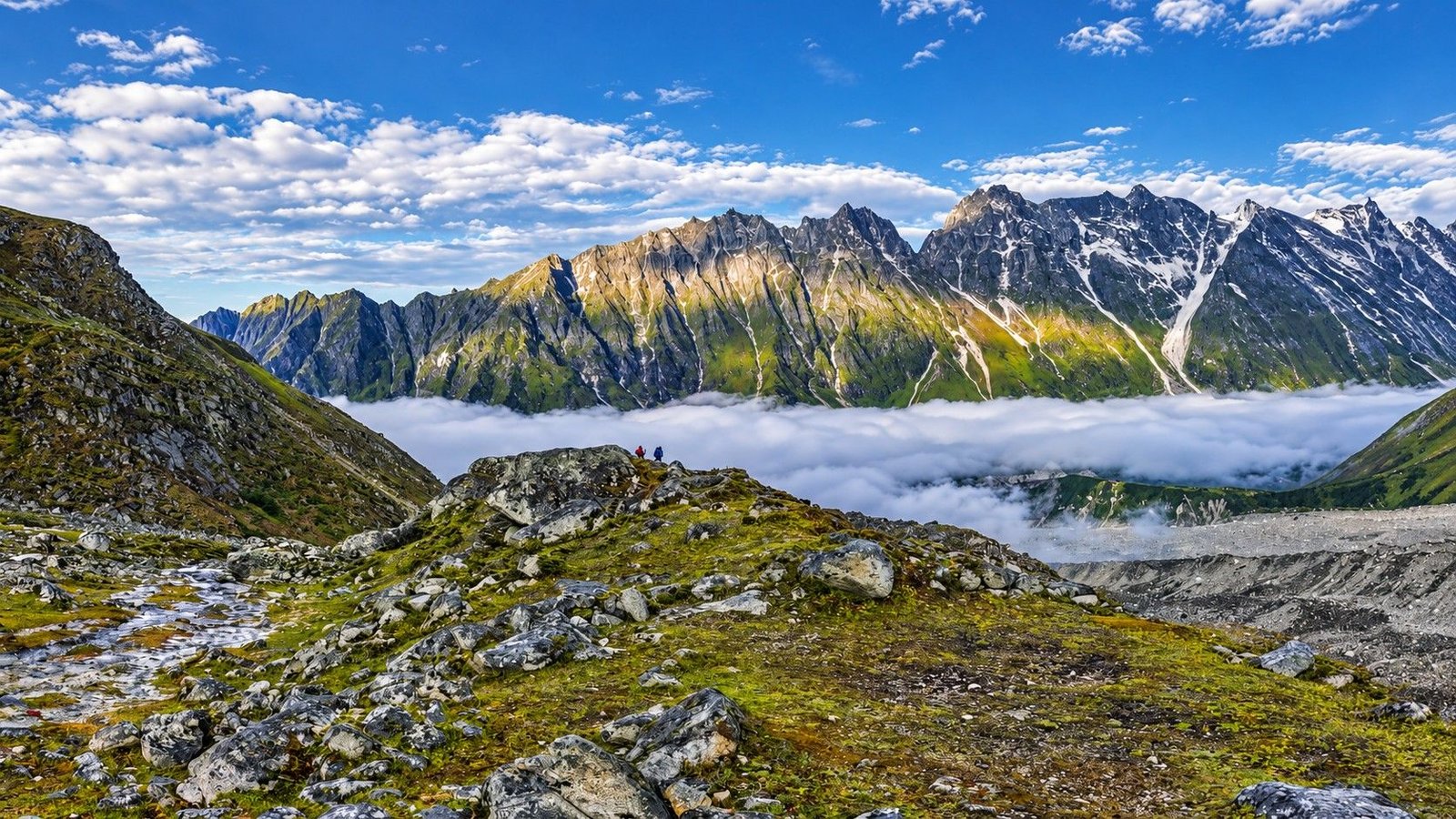
Beyond Bimthang, the trail drops through forested slopes, rivers and small villages towards Gho, Tilije and Dharapani. The change from exposed alpine terrain to greener valleys is striking after the high-pass crossing.
At Dharapani, the Manaslu trail connects directly with the Annapurna Circuit, and the journey continues rather than ending with a road transfer.
The Annapurna Circuit: Chame, Upper Pisang and Manang
From Dharapani, the trek follows the Marsyangdi River Valley towards Chame. Mountain forests, waterfalls and traditional settlements line the route, with increasingly impressive views of the Annapurna range.
Continuing to Upper Pisang, trekkers encounter stone-built houses, Buddhist landmarks and dramatic views towards Annapurna II.

The trail then reaches Manang, surrounded by dry mountain slopes, cliffs and views of Gangapurna and the Annapurna massif.
Compared with the Manaslu section, parts of the Annapurna route offer a wider choice of teahouses, although the higher villages remain simple and exposed.
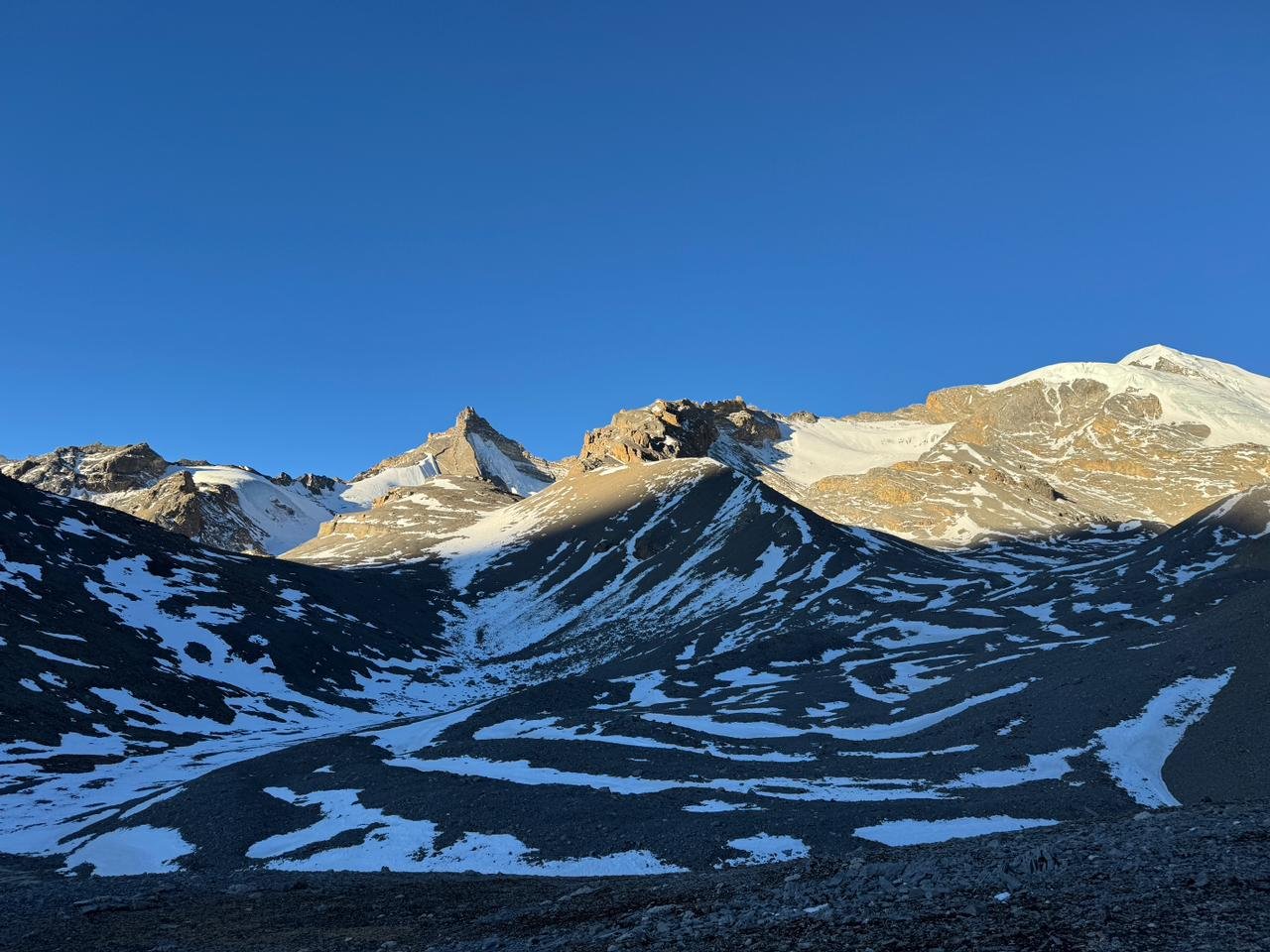
This is also a chance to appreciate the changing culture and landscape between the two valleys.
An acclimatization day in Manang provides time to rest and take a suitable walk to a nearby viewpoint if the group is feeling well.
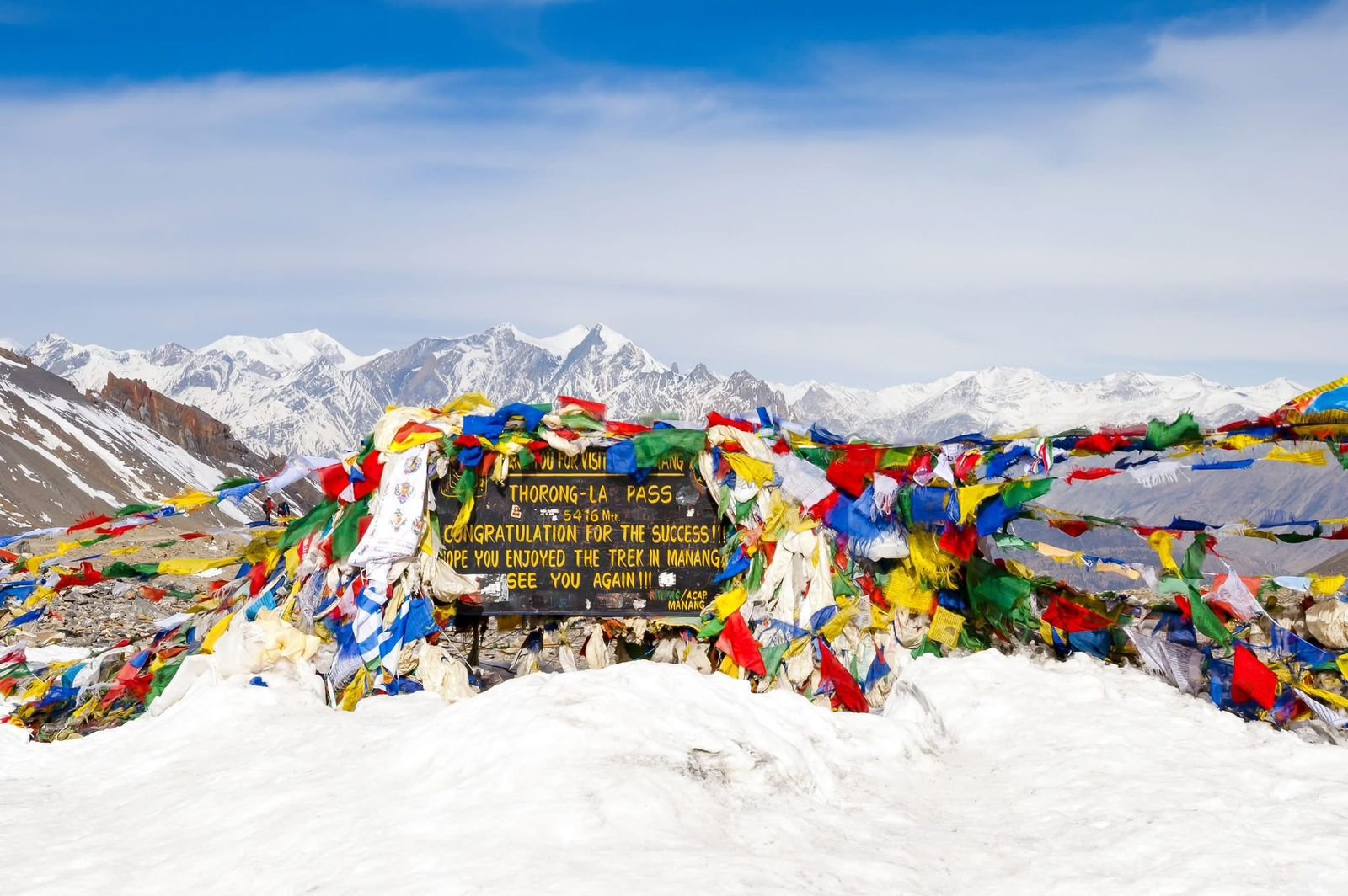
Even though trekkers have previously crossed Larkya La, careful altitude management is still important. After Manang, the route rises through Yak Kharka towards Thorong Phedi, where the team prepares for the second high-altitude crossing.
Thorong La (5,416 m) is the highest point on this itinerary. The ascent from Thorong Phedi begins early to make the most of favourable morning conditions.

The climb is long and exposed, and even fit trekkers may find the altitude, wind and cold demanding. Reaching the prayer-flag-covered pass marks the completion of the journey’s second major crossing.
The route then descends towards Muktinath, trading the high alpine landscape for the drier terrain of Mustang. The descent is substantial, so trekking poles and careful footing are valuable.
Heavy snow or strong wind can prevent a safe crossing, and the guide must be free to delay or change the plan.
Comparing Larkya La and Thorong La Passes
| Feature | Larkya La Pass | Thorong La Pass |
|---|---|---|
| Elevation | 5,160 m | 5,416 m |
| Trekking Region | Manaslu | Annapurna |
| Starting Point | Dharamsala / Larkya Phedi | Thorong Phedi |
| Destination After Crossing | Bimthang | Muktinath |
| Main Challenges | Long crossing, moraine, altitude and possible snow | High altitude, prolonged ascent, wind and long descent |
| Mountain Experience | Remote high Himalayan valleys and glacial scenery | High mountain panorama and transition into Mustang |
Muktinath and the Return Through Mustang
Muktinath is an important pilgrimage destination for Hindus and Buddhists, known for its temple complex, sacred water spouts and mountain setting. After visiting the area, the journey continues by road through the Kali Gandaki corridor towards Pokhara.
The changing landscape provides a final contrast to the forests and high valleys crossed earlier. The return to Kathmandu completes the 23-day journey.
Trek Difficulty and Physical Fitness
This combined route is graded Strenuous because it involves more than three weeks of travel, consecutive trekking days and two crossings above 5,000 metres.
The ground ranges from forest trails and suspension bridges to steep climbs, moraine and possible snow or ice. Some pass days can be considerably longer than an ordinary walking day.
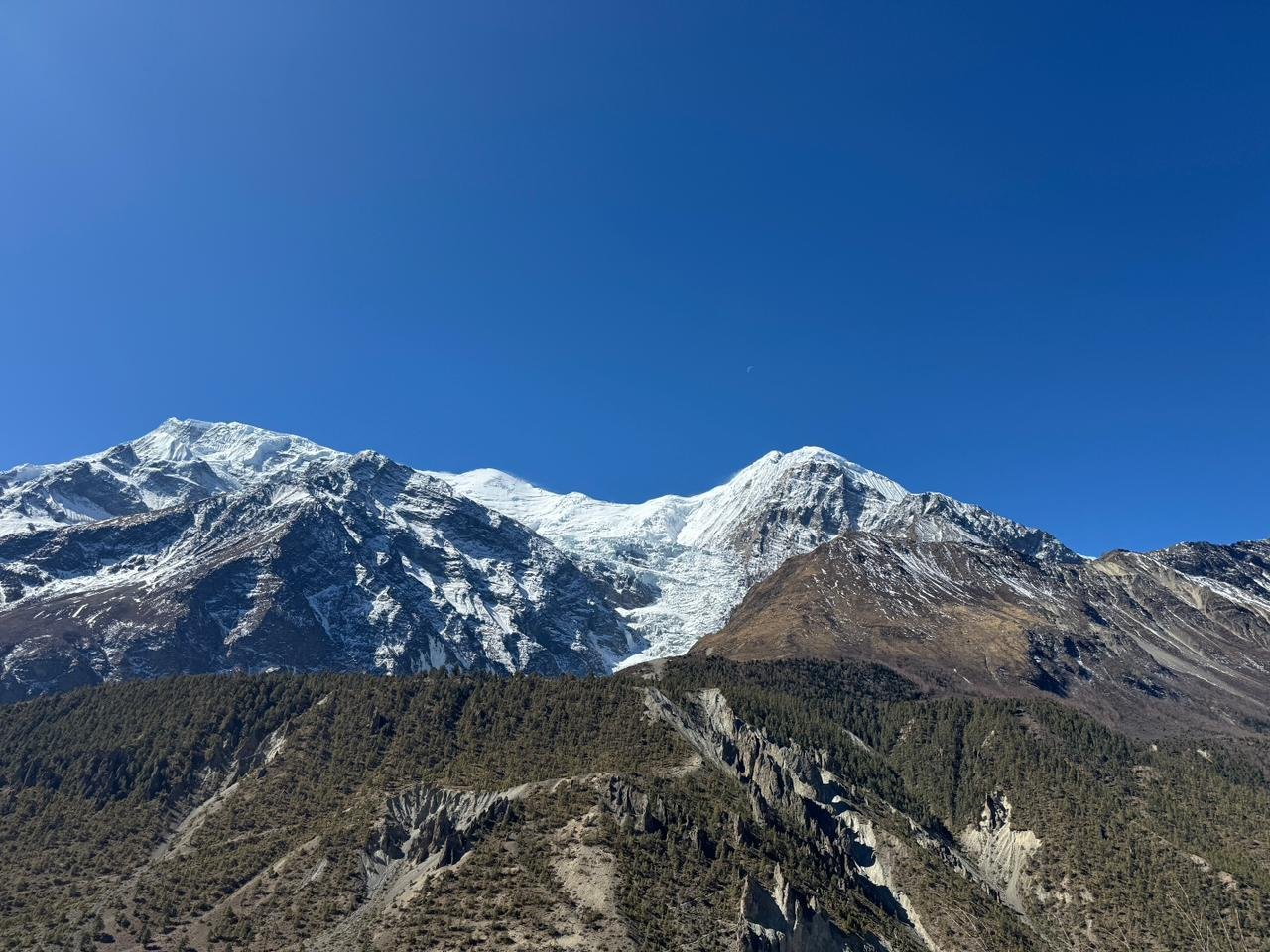
Previous multi-day trekking experience is strongly recommended. Preparation should include regular hill walks, cardiovascular exercise and strength training for long climbs and descents.
Technical climbing is not usually needed in normal trekking conditions, but traction devices may be necessary when the route is icy. Anyone joining should be comfortable with basic mountain lodges and flexible schedules.
Physical Fitness and Trekking Preparation
| Trekking Challenge | What to Expect | Recommended Preparation |
|---|---|---|
| Daily Walking | Several hours of trekking over consecutive days | Regular hiking and cardiovascular training |
| High-Pass Crossings | Long ascents and descents above 5,000 m | Hill walking, endurance training and previous trekking experience |
| Mountain Terrain | Rocky paths, steep slopes and uneven ground | Good trekking footwear, balance and trekking poles |
| Weather Conditions | Cold mornings, wind and possible snowfall | Layered clothing and reliable waterproof equipment |
| Extended Duration | More than three weeks of travel and trekking | Physical conditioning and preparation for simple mountain facilities |
Altitude, Acclimatization and Safety
The route begins at lower elevation, rises towards Samagaun and Larkya La, descends to Dharapani and climbs again towards Manang and Thorong La.
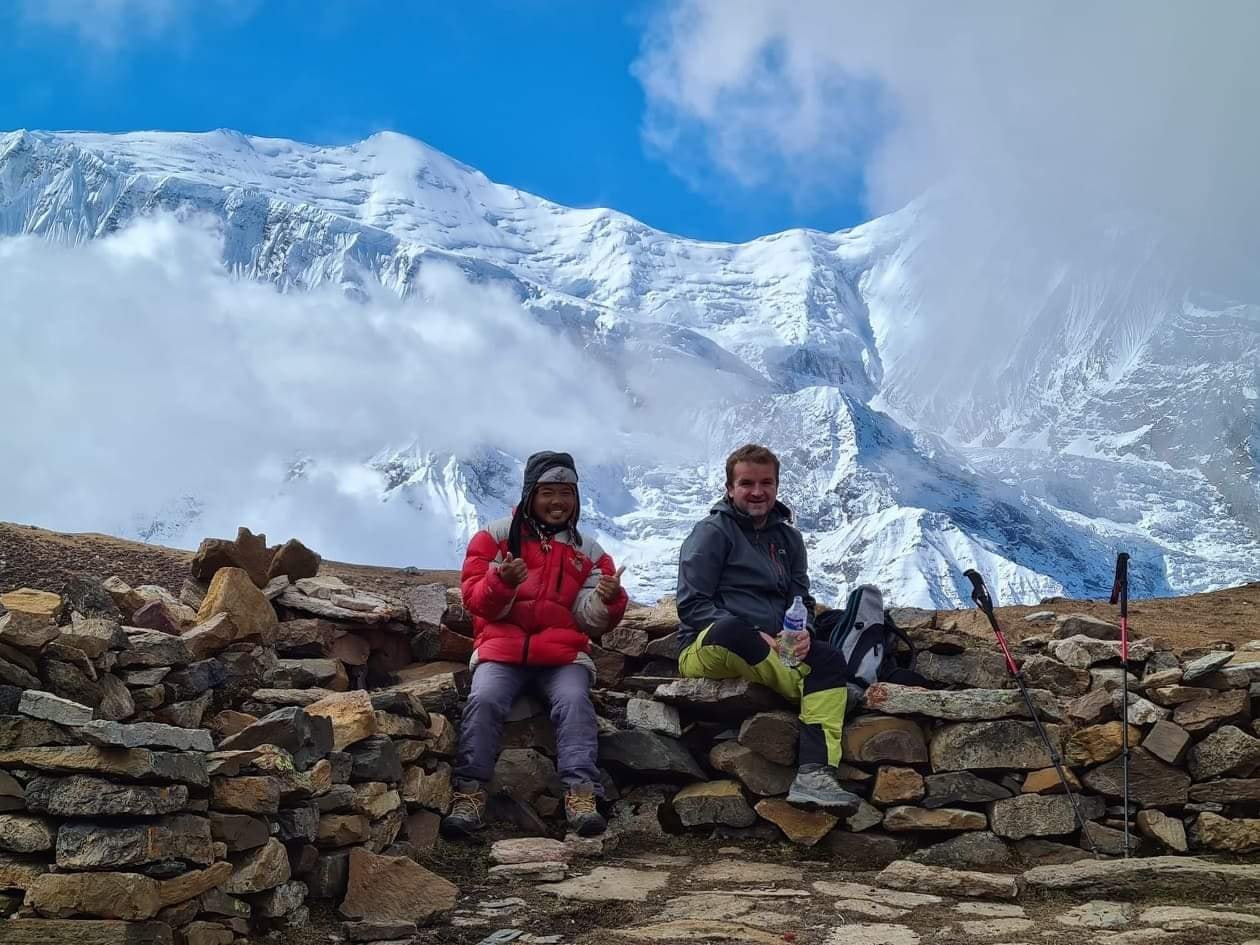
The itinerary includes acclimatization stops in Samagaun and Manang, but these cannot eliminate the risk of altitude sickness. Headache, nausea, dizziness and unusual fatigue must be taken seriously and reported to the guide.
Trekkers should ascend at a sensible pace, eat regularly and remain hydrated. If symptoms worsen, continuing uphill is unsafe; descent and medical assistance may be necessary.
Mountain weather can change suddenly, and the guide may adjust or cancel a pass crossing when snow, wind or visibility make conditions hazardous. Appropriate high-altitude travel insurance, including emergency evacuation, is essential.
Best Time for the Manaslu and Annapurna Circuit Trek
Spring (March–May) and autumn (September–November) are generally the preferred seasons. Spring brings flowering vegetation in the lower valleys, while autumn often offers clearer mountain visibility after the monsoon.
Conditions on Larkya La and Thorong La may remain icy or snowy even when the lower trails are pleasant.
Summer rain can affect road access, cause slippery trails and increase landslide risk. Winter brings severe cold and the possibility that heavy snow will block one or both passes.
Trekking dates should therefore be selected with flexibility rather than assuming the route will be passable on a fixed day.
Seasonal Weather and Trekking Conditions
| Season | Typical Conditions | Trekking Suitability |
|---|---|---|
| Spring (March–May) | Generally improving temperatures, flowering forests and possible snow at higher passes | Recommended season, subject to snow and weather conditions |
| Summer / Monsoon (June–August) | Rainfall, cloudy weather, slippery trails and possible road disruption | Generally not preferred for the complete combined circuit |
| Autumn (September–November) | Often clearer skies, good mountain visibility and progressively colder nights | Recommended season, especially during stable weather periods |
| Winter (December–February) | Severe cold, possible heavy snowfall and icy mountain passes | Demanding, with possible pass closures and itinerary changes |
Accommodation and Meals During the Trek
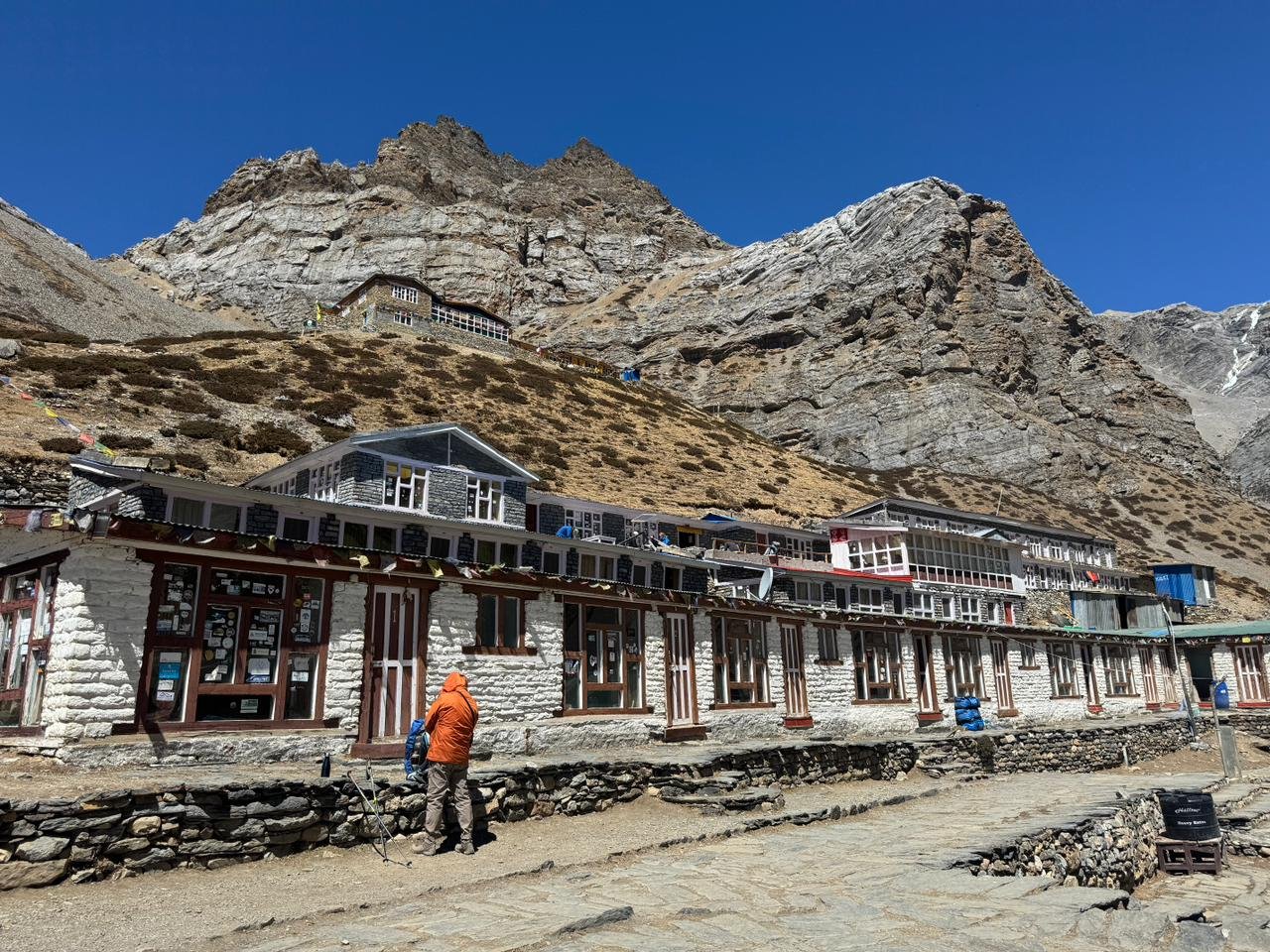
The combined trek primarily uses the teahouse system, with simple rooms and meals in local mountain lodges. Accommodation is usually basic, particularly at high-altitude stops such as Dharmashala and Thorong Phedi.
Heating is often available only in shared dining rooms, so a suitable sleeping bag is important. Hotels in Kathmandu and Pokhara follow the booked package standard.
Meals commonly include dal bhat, soups, noodles, potatoes, vegetable curries and breakfast dishes such as porridge or Tibetan bread. Food selection may narrow at remote settlements because supplies are carried long distances.
The separate Cost Includes and Cost Excludes sections set out the meals, services and personal expenses covered by the package.
Accommodation Across the Two Trekking Regions
| Location | Accommodation Type | What to Expect |
|---|---|---|
| Kathmandu and Pokhara | Standard hotel | Comfortable rooms and city facilities |
| Lower Manaslu Villages | Local teahouses | Simple rooms, local meals and basic facilities |
| Samagaun and Samdo | Mountain lodges | Basic accommodation with limited heating |
| Dharamsala | Basic high-altitude shelter or lodge | Limited rooms and simple services |
| Manang and Annapurna Villages | Teahouses and local lodges | Established trekking accommodation, varying by village |
| Thorong Phedi | Basic mountain lodge | Simple accommodation before the pass crossing |
Permits Required for the Manaslu and Annapurna Circuit Trek
This route passes through both the Manaslu Conservation Area and Annapurna Conservation Area, as well as a restricted section of Manaslu.
Foreign trekkers must arrange the appropriate restricted-area authorization, conservation permits and licensed-guide arrangements in accordance with current requirements. Any applicable trekking registration is checked for the confirmed route.
Nepal Royal Tourism Holiday can coordinate the documentation before departure. Permit conditions may depend on nationality, itinerary and current regulations, so the final requirements should be confirmed at booking rather than relying on old fixed-price information.
Trekking Permits and Entry Requirements
| Permit or Requirement | Purpose |
|---|---|
| Manaslu Restricted Area Permit (RAP) | Required authorization for the designated restricted sections of the Manaslu route |
| Manaslu Conservation Area Permit (MCAP) | Entry into the Manaslu Conservation Area |
| Annapurna Conservation Area Permit (ACAP) | Entry into the Annapurna Conservation Area |
| TIMS / Trekking Registration | Arrange any trekking registration applicable to the confirmed route under current requirements |
| Licensed Trekking Guide | Required guiding arrangements for the restricted Manaslu section |
Transportation and Travel Arrangements
The package begins with a road transfer from Kathmandu to Machha Khola. Roads through the hills can be rough and subject to delays after rain.
Once the trekking route finishes at Muktinath, the return follows the Kali Gandaki corridor by road to Pokhara, then continues to Kathmandu. Driving times depend on the state of mountain roads, weather and traffic.
Essential Packing List for Two Himalayan Circuits
The route crosses several climatic zones, from warmer river valleys to freezing conditions near high passes. Trekkers need moisture-wicking base layers, insulating clothing, waterproof outerwear and well-fitting boots.
Warm gloves, a hat, UV-protective sunglasses and sun protection are essential. A sleeping bag, headlamp, trekking poles, reusable water bottles and personal medication should also be packed.
Carry only what is needed each day and discuss luggage allowances with the team. When the forecast suggests snow or ice, the guide may recommend additional traction equipment. Equipment should be tested before the trek rather than first worn on a long mountain crossing.
Recommended Trekking Equipment
| Equipment | Purpose |
|---|---|
| Insulated Down Jacket | Protection against cold temperatures in high-altitude settlements |
| Thermal Layers and Fleece | Warmth and flexible temperature management |
| Waterproof Jacket and Trousers | Protection against wind, rain and snow |
| Trekking Boots and Poles | Stability on rocky trails, steep descents and uneven surfaces |
| Warm Sleeping Bag | Comfort during cold nights in mountain lodges |
| Headlamp and Spare Batteries | Early departures for Larkya La and Thorong La |
| Sunglasses, Sunscreen and Sunhat | Protection against strong Himalayan sunlight |
| Water Purification System | Access to safer drinking water during trekking days |
| Personal Medication and First-Aid Kit | Personal healthcare and minor medical needs |
| Microspikes When Required | Additional traction on icy sections when recommended by the guide |
Responsible Trekking in Manaslu and Annapurna
Both conservation areas contain sensitive mountain habitats and culturally important communities.
Stay on established trails, avoid single-use plastics where possible, carry rubbish to suitable disposal points and respect monasteries and local customs. Supporting local teahouses, guides and porters contributes to the communities who make these journeys possible.
Who Is This Combined Trek Best Suited For?
The trip suits experienced hikers looking for a sustained Himalayan challenge rather than a short trek focused on one destination.
It rewards travellers who enjoy remote villages, varied mountain geography and the achievement of crossing two major passes.
Strong fitness, patience and flexibility are important, particularly when weather or altitude requires a change of plans.
Plan Your Manaslu and Annapurna Circuit Trek with Nepal Royal Tourism Holiday
Discover two of Nepal’s great trekking regions on our 23-day combined Manaslu and Annapurna Circuit adventure. Cross Larkya La and Thorong La, explore traditional mountain villages and experience extraordinary Himalayan scenery with local trekking support.
Contact Nepal Royal Tourism Holiday to discuss departure dates, group size and the arrangements that best suit your journey.
Trip Highlights
- Experience two of Nepal's most spectacular Himalayan trekking routes, combining the remote Manaslu Circuit and the classic Annapurna Circuit in one 23-day adventure
- Cross the challenging Larkya La Pass (5,160 m), surrounded by breathtaking Himalayan peaks, glaciers and rugged alpine landscapes
- Conquer Thorong La Pass (5,416 m), the highest point of the journey and one of Nepal's most celebrated high-altitude trekking crossings
- Enjoy magnificent views of Mount Manaslu (8,163 m), the world's eighth-highest mountain, alongside the surrounding Himalayan ranges
- Explore traditional Tibetan-influenced villages, including Namrung, Shyala, Samagaun and Samdo, known for their Buddhist heritage and mountain culture
- Visit Pungyen Gompa, a beautiful Buddhist monastery set beneath the towering peaks and glaciers of the Manaslu region
- Trek through the dramatic Budhi Gandaki Valley, crossing suspension bridges, forested hillsides, waterfalls and traditional mountain settlements
- Experience the remarkable transition from Bimthang to Dharapani, where the remote Manaslu Circuit connects with the Annapurna Circuit
- Discover the beautiful villages of Chame, Upper Pisang and Manang, surrounded by impressive views of Annapurna II, Annapurna III and Gangapurna
- Enjoy dedicated acclimatization time in Samagaun and Manang, with opportunities to explore the surrounding Himalayan landscapes
- Visit Muktinath Temple, a sacred pilgrimage destination revered by both Hindus and Buddhists in the Mustang region
- Experience extraordinary landscape diversity, from lush river valleys and rhododendron forests to high mountain passes, glacial terrain and the arid landscapes of Mustang
23 Days Manaslu + Annapurna Circuit trek ~ Itinerary
Day 1
Arrival in Kathmandu
- Maximum Altitude: 1,350 m
- Overnight Altitude: 1,350 m
- Accommodation: Three-Star Hotel in Kathmandu
Welcome to Nepal! Upon your arrival at Tribhuvan International Airport, a representative from Nepal Royal Tourism Holiday will greet you and arrange your transfer to the hotel in Kathmandu. After checking in, you can relax or explore the nearby streets of Thamel, known for its trekking shops, restaurants and lively atmosphere.
Depending on your arrival time, you may meet your trekking guide for an introduction to the upcoming Manaslu and Annapurna Circuit adventure. The evening is free to rest after your journey and prepare for the next day’s activities.
Day 2
Kathmandu Sightseeing and Trek Preparation
- Maximum Altitude: 1,350 m
- Overnight Altitude: 1,350 m
- Activity Duration: Half to Full Day
- Meals: Breakfast
- Accommodation: Three-Star Hotel in Kathmandu
Today is dedicated to preparing for the combined Manaslu and Annapurna Circuit Trek. Our team will review your trekking documents, permits, equipment and transportation arrangements. Your guide will explain the route, acclimatization schedule and important safety considerations for crossing Larkya La and Thorong La.
Depending on the available time and arrangements, you may explore Kathmandu’s cultural landmarks or visit the local markets for any remaining trekking essentials. Spend the evening organising your luggage and getting ready for the journey to Machha Khola.
Day 3
Drive from Kathmandu to Machha Khola
- Maximum Altitude: 1,350 m
- Overnight Altitude: 870 m
- Driving Duration: 8–10 Hours
- Driving Distance: 160–190 km, Depending on the Road Route
- Meals: Breakfast, Lunch and Dinner
- Accommodation: Teahouse in Machha Khola
After breakfast, we begin our scenic drive from Kathmandu towards Machha Khola, the starting point of our Manaslu trekking journey. The road passes through countryside settlements, terraced farmland and river valleys before following the increasingly rugged route towards the Budhi Gandaki Valley.
The final sections may be rough and dusty, depending on the season and road conditions. Upon reaching Machha Khola, we check into a local teahouse and prepare for the first walking day. The evening is spent resting beside the Budhi Gandaki River.
Day 4
Trek from Machha Khola to Jagat
- Maximum Altitude: 1,410 m
- Overnight Altitude: 1,410 m
- Trekking Duration: 6–8 Hours
- Trekking Distance: 20–22 km
- Meals: Breakfast, Lunch and Dinner
- Accommodation: Teahouse in Jagat
Our first trekking day follows the Budhi Gandaki River through narrow valleys, hillside settlements and several suspension bridges. We pass Khorlabesi and Tatopani before continuing towards Dobhan, where the trail moves between rocky slopes and forested sections.
After crossing further bridges and ascending stone stairways, we arrive at Jagat, a traditional stone-built village and an important entry point to the Manaslu Conservation Area. We complete the necessary permit formalities and spend the night in a local teahouse.
Day 5
Trek from Jagat to Deng
- Maximum Altitude: 1,860 m
- Overnight Altitude: 1,860 m
- Trekking Duration: 6–8 Hours
- Trekking Distance: 18–21 km
- Meals: Breakfast, Lunch and Dinner
- Accommodation: Teahouse in Deng
Leaving Jagat, we continue through the beautiful Budhi Gandaki Valley, passing Salleri, Sirdibas and Philim. The trail follows a combination of stone pathways, suspension bridges and forested hillsides, with occasional views of waterfalls and surrounding mountain slopes.
Beyond Philim, the route enters quieter surroundings and passes through narrow gorges and bamboo forests. The cultural influence of Tibetan Buddhism becomes increasingly noticeable through mani walls and prayer flags. We eventually reach Deng, where we stay overnight.
Day 6
Trek from Deng to Namrung
- Maximum Altitude: 2,630 m
- Overnight Altitude: 2,630 m
- Trekking Duration: 6–8 Hours
- Trekking Distance: 16–19 km
- Meals: Breakfast, Lunch and Dinner
- Accommodation: Teahouse in Namrung
Today’s trail climbs through forests, river crossings and traditional mountain settlements as we continue deeper into the Manaslu region. Passing Rana, Bihi Phedi and Ghap, we encounter Buddhist prayer wheels, mani walls and beautiful mountain landscapes.
The route gradually ascends through pine and rhododendron forests towards Namrung. On clear days, views of Shringi Himal and neighbouring peaks appear above the valley. We arrive in Namrung, a traditional village where the architecture and local culture reflect the influence of the northern Himalayan communities.
Day 7
Trek from Namrung to Shyala
- Maximum Altitude: 3,500 m
- Overnight Altitude: 3,500 m
- Trekking Duration: 5–7 Hours
- Trekking Distance: 10–12 km
- Meals: Breakfast, Lunch and Dinner
- Accommodation: Teahouse in Shyala
After breakfast in Namrung, we continue ascending through forests and traditional villages towards Lho and Shyala. The mountain scenery becomes increasingly impressive, with opportunities to admire Mount Manaslu and surrounding snow-covered peaks. Prayer flags, chortens and monasteries reflect the strong Buddhist heritage of the region.
Passing through Lho, we continue towards Shyala, a beautiful village surrounded by remarkable Himalayan views. Today’s considerable altitude gain requires a steady walking pace and attention to acclimatization. Upon arrival, we rest and prepare for the journey towards Samagaun.
Day 8
Trek from Shyala to Samagaun via Pungyen Gompa
- Overnight Altitude: 3,530 m
- Trekking Duration: 6–8 Hours, Including the Pungyen Gompa Excursion
- Trekking Distance: Varies with the Selected Monastery Trail
- Meals: Breakfast, Lunch and Dinner
- Accommodation: Teahouse in Samagaun
Today’s journey takes us towards Pungyen Gompa, a Buddhist monastery situated in a beautiful alpine setting beneath the Manaslu massif. The excursion offers magnificent views of surrounding peaks, glaciers and open mountain valleys. The monastery is also an important cultural landmark associated with the Buddhist traditions of the region.
After exploring the area, we continue towards Samagaun, one of the principal villages of upper Manaslu. The monastery detour makes this a longer day than the direct village trail, so the guide will assess weather and group fitness before proceeding. We settle into our teahouse and rest before tomorrow’s acclimatization day.
Day 9
Acclimatization Day in Samagaun and Optional Birendra Lake Hike
- Overnight Altitude: 3,530 m
- Hiking Duration: 2–3 Hours for the Optional Birendra Lake Excursion
- Hiking Distance: 3–5 km, Depending on the Walking Route
- Meals: Breakfast, Lunch and Dinner
- Accommodation: Teahouse in Samagaun
Today is reserved for acclimatization in Samagaun before continuing towards the higher elevations of the Manaslu Circuit. Depending on the group’s condition, we may take a short hike towards Birendra Lake, a beautiful glacial lake surrounded by impressive mountain scenery. The walk provides an opportunity to explore the landscape without committing to another demanding trekking day.
After returning to Samagaun, the afternoon is free for rest, exploring the village or visiting nearby Buddhist landmarks. Our guide will check the group’s acclimatization and discuss the approaching Larkya La crossing. Adequate rest and hydration remain important as we prepare to ascend further.
Day 10
Trek from Samagaun to Samdo
- Maximum Altitude: 3,860 m
- Overnight Altitude: 3,860 m
- Trekking Duration: 3–4 Hours
- Trekking Distance: 8–9 km
- Meals: Breakfast, Lunch and Dinner
- Accommodation: Teahouse in Samdo
After breakfast, we leave Samagaun and follow the trail north through the upper Budhi Gandaki Valley. The landscape becomes increasingly open and dry, with fewer trees, scattered juniper bushes and beautiful views of the surrounding Himalayan mountains. The route passes yak grazing areas and follows gentle ascents through the valley.
We eventually reach Samdo, a traditional Tibetan-influenced settlement close to Nepal’s northern border region. The shorter walking day allows time to rest and adjust to the elevation. Depending on our condition, we may explore the village surroundings before spending the night in a local teahouse.
Day 11
Trek from Samdo to Dharamsala (Larkya Phedi
- Maximum Altitude: 4,460 m
- Overnight Altitude: 4,460 m
- Trekking Duration: 4–5 Hours
- Trekking Distance: 7–9 km
- Meals: Breakfast, Lunch and Dinner
- Accommodation: Basic Mountain Lodge in Dharamsala
Today’s trek leads from Samdo towards Dharamsala, also known as Larkya Phedi, the final overnight stop before crossing Larkya La Pass. The trail gradually ascends through rocky mountain terrain, passing glacial streams and exposed slopes. As we gain elevation, the vegetation becomes sparse and the surrounding landscape increasingly rugged.
Upon reaching Dharamsala, we settle into the basic mountain lodge and spend the afternoon resting. Our guide will assess the weather, discuss the route across Larkya La and confirm the early departure arrangements. Accommodation and facilities are limited at this elevation, so a warm sleeping bag and proper preparation are essential.
Day 12
Trek from Dharamsala to Bimthang via Larkya La Pass (5,160 m)
- Maximum Altitude: 5,160 m
- Overnight Altitude: 3,720 m
- Trekking Duration: 8–10 Hours
- Trekking Distance: 16–20 km, Depending on Trail Conditions
- Meals: Breakfast, Lunch and Dinner
- Accommodation: Teahouse in Bimthang
Today is one of the most challenging days of the journey as we cross Larkya La Pass (5,160 m). Starting early from Dharamsala, we climb through rocky and potentially snow-covered terrain towards the high pass. On clear days, the surrounding mountains, including Himlung Himal and Cheo Himal, provide spectacular views throughout the ascent.
After reaching the prayer flags at Larkya La, we begin the long descent towards Bimthang. The downhill section requires careful footing, particularly when snow or ice covers the trail. By the time we arrive in Bimthang, we have completed the first major Himalayan pass and can enjoy a well-earned rest in the beautiful alpine surroundings.
Day 13
Trek from Bimthang to Dharapani
- Maximum Altitude: 3,720 m
- Overnight Altitude: 1,860 m
- Trekking Duration: 7–9 Hours
- Trekking Distance: 23–26 km
- Meals: Breakfast, Lunch and Dinner
- Accommodation: Teahouse in Dharapani
Leaving Bimthang, we descend through beautiful forests and mountain valleys, following trails alongside the Dudh Khola. The route passes through settlements such as Gho and Tilije, where rhododendron and pine forests gradually replace the exposed alpine scenery of the previous days.
After passing Thonje, we continue towards Dharapani, where the Manaslu Circuit joins the Annapurna Circuit. This marks an important transition in our journey as we complete the Manaslu section and prepare to continue through the Marsyangdi Valley. Overnight in Dharapani.
Day 14
Trek from Dharapani to Chame
- Maximum Altitude: 2,670 m
- Overnight Altitude: 2,670 m
- Trekking Duration: 5–7 Hours
- Trekking Distance: 15–16 km
- Meals: Breakfast, Lunch and Dinner
- Accommodation: Teahouse in Chame
Today, we begin the Annapurna Circuit section of our adventure, trekking from Dharapani towards Chame. The trail follows the Marsyangdi River Valley through forested hillsides, waterfalls and traditional settlements. Along the route, we enjoy views of the surrounding mountains as the valley gradually narrows.
After passing through the Danakyu and Timang areas, we continue towards Chame, the administrative centre of Manang district. The village offers beautiful views towards Annapurna II and Lamjung Himal, along with established trekking lodges. We spend the evening resting and preparing for the journey to Upper Pisang.
Day 15
Trek from Chame to Upper Pisang
- Maximum Altitude: 3,300 m
- Overnight Altitude: 3,300 m
- Trekking Duration: 5–6 Hours
- Trekking Distance: 13–15 km
- Meals: Breakfast, Lunch and Dinner
- Accommodation: Teahouse in Upper Pisang
After breakfast in Chame, we continue through the Marsyangdi Valley towards Upper Pisang. The trail passes through pine forests and traditional villages, including Bhratang, before revealing the impressive curved rock face near Dhikur Pokhari. As we gain elevation, the mountain views become increasingly dramatic.
We continue towards Upper Pisang, a beautiful village known for its traditional architecture, Buddhist monastery and magnificent views of Annapurna II. Upon arrival, we settle into our teahouse and have time to explore the village surroundings before dinner.
Day 16
Trek from Upper Pisang to Manang via Ngawal
- Maximum Altitude: Around 3,660 m on the Upper Route
- Overnight Altitude: 3,540 m
- Trekking Duration: 6–8 Hours
- Trekking Distance: 17–20 km
- Meals: Breakfast, Lunch and Dinner
- Accommodation: Teahouse in Manang
Today’s trek follows the scenic upper route from Pisang towards Manang, passing through the traditional village of Ngawal. The trail climbs above the Marsyangdi Valley and offers outstanding views of Annapurna II, Annapurna III and surrounding peaks. Buddhist monasteries and traditional stone houses add cultural interest to the journey.
After Ngawal, we gradually descend towards the main valley and continue through the Braga area before reaching Manang. The village is surrounded by dramatic Himalayan scenery and serves as an important acclimatization stop before Thorong La. We settle into our teahouse for a two-night stay.
Day 17
Acclimatization Day in Manang
- Overnight Altitude: 3,540 m
- Hiking Duration: 2–4 Hours for an Optional Acclimatization Walk
- Hiking Distance: Depends on the Selected Route
- Meals: Breakfast, Lunch and Dinner
- Accommodation: Teahouse in Manang
Today is reserved for acclimatization in Manang before continuing towards the higher elevations of the Annapurna Circuit. Depending on the group’s fitness and weather conditions, we may visit Gangapurna Lake or take a short uphill walk towards a nearby viewpoint. The surrounding mountains provide excellent scenery without requiring a full trekking day.
During the afternoon, we return to the village for rest and preparation. Our guide will review the weather, equipment and upcoming route towards Yak Kharka and Thorong Phedi. Proper acclimatization remains important despite our previous experience crossing Larkya La.
Day 18
Trek from Manang to Yak Kharka
- Maximum Altitude: 4,050 m
- Overnight Altitude: 4,050 m
- Trekking Duration: 4–5 Hours
- Trekking Distance: 9–10 km
- Meals: Breakfast, Lunch and Dinner
- Accommodation: Teahouse in Yak Kharka
After breakfast in Manang, we begin ascending towards Yak Kharka, gradually leaving the wider Marsyangdi Valley behind. The trail climbs through alpine landscapes, passing small settlements and open grazing areas where yaks can often be seen. Beautiful views of Gangapurna and the surrounding Annapurna mountains accompany us throughout the journey.
As we approach Yak Kharka, the vegetation becomes sparse and the mountain environment more exposed. We maintain a steady pace to adjust to the increasing elevation. Upon arrival, we settle into our teahouse and spend the afternoon resting before continuing towards Thorong Phedi.
Day 19
Trek from Yak Kharka to Thorong Phedi
- Maximum Altitude: 4,450 m
- Overnight Altitude: 4,450 m
- Trekking Duration: 4–5 Hours
- Trekking Distance: 6–8 km
- Meals: Breakfast, Lunch and Dinner
- Accommodation: Basic Mountain Lodge in Thorong Phedi
Today’s trek takes us closer to Thorong La Pass as we continue through the rugged alpine landscapes above Yak Kharka. The trail gradually ascends towards Ledar and follows the mountain valley, passing exposed slopes and a section where loose rocks require careful footing.
After reaching Thorong Phedi, we settle into our mountain lodge and spend the afternoon resting. Our guide will check the weather conditions, discuss the pass-crossing route and confirm the early morning departure. We prepare our warm clothing, headlamps and essential equipment for one of the most demanding days of the journey.
Day 20
Trek from Thorong Phedi to Muktinath via Thorong La Pass (5,416 m)
- Maximum Altitude: 5,416 m
- Overnight Altitude: 3,800 m
- Trekking Duration: 8–10 Hours
- Trekking Distance: 14–16 km
- Meals: Breakfast, Lunch and Dinner
- Accommodation: Teahouse in Muktinath
Today is the highest and one of the most rewarding days of our combined Manaslu and Annapurna Circuit Trek. We begin early from Thorong Phedi, ascending through steep, rocky and potentially snow-covered terrain towards Thorong La Pass (5,416 m). The climb is physically demanding due to the altitude, but the surrounding Himalayan scenery makes the journey memorable.
Upon reaching Thorong La, we celebrate completing our second major Himalayan pass before beginning the long descent towards Muktinath. The landscape gradually changes into the dry mountain surroundings of Mustang. After reaching Muktinath, we check into our teahouse and rest following a challenging day of trekking.
Day 21
Drive from Muktinath to Pokhara
- Overnight Altitude: 822 m
- Driving Duration: 7–10 Hours
- Driving Distance: 170–190 km, Depending on the Route
- Meals: Breakfast
- Accommodation: Hotel in Pokhara
After breakfast, we begin our scenic drive from Muktinath towards Pokhara, leaving the high-altitude landscapes of Mustang behind. The route follows the Kali Gandaki corridor through mountain settlements, river valleys and changing scenery as we descend towards the lower hills of western Nepal.
Depending on road and weather conditions, the journey may involve rough sections and occasional delays. Upon reaching Pokhara, we transfer to our hotel and enjoy a relaxing evening. The lakeside city provides a welcome change after completing two demanding Himalayan trekking circuits.
Day 22
Drive from Pokhara to Kathmandu
- Overnight Altitude: 1,350 m
- Driving Duration: 7–9 Hours
- Driving Distance: 200–220 km
- Meals: Breakfast
- Accommodation: Three-Star Hotel in Kathmandu
After breakfast in Pokhara, we begin our return journey to Kathmandu. The drive follows the main highway through riverside settlements, terraced hillsides and beautiful countryside, offering a final opportunity to enjoy Nepal’s diverse landscapes.
Upon arriving in Kathmandu, we transfer to our hotel. The remainder of the day is free for relaxation, souvenir shopping or exploring the nearby streets. After completing the Manaslu and Annapurna Circuit Trek, we can look back on a remarkable journey through traditional villages, mountain valleys and two challenging Himalayan passes.
Day 23
Final Departure from Kathmandu
- Maximum Altitude: 1,350 m
- Meals: Breakfast
Today marks the conclusion of your 23-day Manaslu Circuit with Annapurna Circuit Trek. After breakfast at the hotel, you may have some free time depending on your international flight schedule. Our representative will arrange your transfer to Tribhuvan International Airport with sufficient time for departure formalities.
Thank you for choosing Nepal Royal Tourism Holiday for your Himalayan adventure. We hope your journey through the Manaslu and Annapurna regions has been memorable, and we look forward to welcoming you again for another trekking experience in Nepal.
23 Days Manaslu + Annapurna Circuit trek Fixed Departures Dates
Trip Cost Includes/Excludes
Cost Includes
- Airport Pick up and drop by private car
- 3 star standard Hotel in Kathmandu and Pokhara with bed and breakfast
- Twin Sharing Mountain Lodge Accommodation
- Experienced, Friendly government licensed guide and his Foods & Salary
- Porters to Carry your Bags- 1 Porter for 2 PAX
- 3 Meals (Breakfast, lunch and dinner) during the trekking as per menu and a cup of tea
- All Necessary Trekking Permits including National Park Fees
- Kathmandu to Machhakhola by Public sharing bus
- Drive Mukthinath to Pokhara to Kathmandu by Tourist/ Public bus
- Duffel and Sleeping bag for your trekking (refund after trek completion )
- Staff insurance, medication and equipment
- First Aid Kit (Recommended to have your Own Medicine)
- Arrangement of Emergency Evocations
- Certificate of Appreciation
- All Government Taxes
Cost Excludes
- Personal Travel/Trekking insurance
- International airfare
- Any kinds of Drinks including Tea /Coffee during your trek.
- Hot Shower, Wife, Phone Charging Etc. during mountain.
- Tips for our guide and Porter.
Trip Photo/Video Gallery


Route Map for 23 Days Manaslu + Annapurna Circuit trek
Frequently Asked Questions
Combining the Manaslu Circuit with Annapurna Circuit Trek is generally labeled as a difficult trek. The experience includes long hiking days, crossing high-altitude passes, and navigating challenging mountain trails. Good physical condition and some trekking experience are strongly recommended.
Usually, hikers finish the combined Manaslu Circuit & Annapurna Circuit Trek in about 20–24 days based on the schedule, number of days for acclimatization, and exploration of side valleys.
Mostly, accommodation is in local teahouses or lodges which are quite basic but usually clean and comfortable. There are shared dining areas and very limited facilities.
The summit of the trek is Larkya La Pass (5,106 meters/16,752 feet), a stunning Himalayan pass and one of the most beautifully located in Nepal.
Absolutely. Since the Manaslu area is considered a restricted region, Nepal government rules mandate trekkers to be accompanied by a licensed guide while trekking through a registered agency.
You will need the following:
- Manaslu Restricted Area Permit (MRAP)
- Manaslu Conservation Area Permit (MCAP)
- Annapurna Conservation Area Permit (ACAP)
The optimal time to go trekking is in:
- Spring (March to May)
- Autumn (September to November)
During these periods, you can expect crystal-clear mountain sights, agreeable weather conditions, and generally comfortable trekking setups.
Inexperienced users who have a good fitness level can still do the trek, but be warned, it is quite tough physically. Getting some hiking experience beforehand and preparing adequately would be a great idea.
During the trek, you will be able to: Gaze at Mount Manaslu (8,163m), View Himalchuli, Spot Ngadi Chuli, Watch Annapurna II, See Annapurna III, Discover Gangapurna, Look at Lamjung Himal and Explore various Himalayan peaks
Altitude sickness can certainly be a problem as the trek goes up to over 5,000 meters. Staying well acclimatised, drinking plenty of water and ascending slowly will help reduce the risk.
You will find Wi-Fi in a good number of villages but beware it may be rather slow, unreliable and sometimes you will have to pay extra, especially when you go higher in the mountains.
Most teahouses offer charging options to their guests. However, keep in mind that you might have to pay a small fee when you charge your devices.
Meals in teahouses mostly consist of items such as the following:
- Dal Bhat
- Noodles
- Fried rice
- Soups
- Pasta
- Eggs
- Pancakes
- Tea and coffee
Indeed. You must have comprehensive travel insurance that covers high-altitude trekking and emergency helicopter evacuation.
Manaslu trek takes you to the wild and almost untouched nature of Manaslu whereas Annapurna circuit is the most famous route.
The combination of the variety of landscapes and cultural diversity of the Annapurna region together with the wild and remote nature of Manaslu makes this a memorable and one of the best long-distance treks in Nepal.
There are very few and quite unreliable. During the trek, you should make sure to bring enough Nepalese rupees from Kathmandu.
Some of the important things to bring are:
- A warm down jacket
- A sleeping bag
- Waterproof clothing
- Hiking boots
- Gloves and hat
- Sunglasses
- Hiking poles
- Personal medicines
Certainly. Nepal Royal Tourism can tailor the itinerary to match your fitness level, time available, trekking preferences, and group size.
With Nepal Royal Tourism, you are guaranteed experienced local guides, personalized service, safe trekking arrangements, flexible itineraries, and genuine Himalayan experiences at reasonable prices.
Leave a Review
23 Days Manaslu + Annapurna Circuit trek
5 Reviews to 23 Days Manaslu + Annapurna Circuit trek
You may also like

Menu

D. Carter
at 10:12 am
Dream Trek Completed
A lifetime experience crossing Larke Pass and Thorong La. Professional service, friendly team, and outstanding support from start to finish. I will highly recommend Nepal Royal Tourism
Olivia B.
at 10:12 am
Outstanding Service & Memories
“Everything was smooth and stress-free. Our guide was knowledgeable and caring. One of the best trekking experiences we’ve ever had.”
Sophie Martin
at 9:53 am
Best Trekking Experience in Nepal
Nepal Royal Tourism organized everything perfectly. The trek was challenging but rewarding, and our guide was fantastic throughout the journey.
Michael Thompson
at 8:51 pm
Incredible 23 Days Manaslu & Annapurna Circuit Adventure – Lifetime Experience in Nepal
An unforgettable 23-day trek through Manaslu and Annapurna. Excellent guide, great organization, and breathtaking mountain views. Highly recommended Nepal Royal Tourism!
Jasper D
at 11:51 am
Jasper D
Amazing trek with some great people. It is a great beginner trek, and the guides are people who will be will you every step of the way making sure that you are well equipped and well informed along your journey. Recommend spending time in Pokhara over Kathmandu if given the chance!