


Kala Patthar Nepal: Why This Short Climb From EBC Gives the Best View of Mount Everest
Kala Patthar is one of the most important places on the Everest Base Camp trek, even though it is not always the first name people search for.
Everest Base Camp is the famous destination, but Kala Patthar is the place that usually gives trekkers the view they were hoping for all along.
The viewpoint stands above Gorak Shep in Nepal’s Khumbu region, inside Sagarmatha National Park, and it is widely regarded as the best close-up, non-technical viewpoint of Mount Everest on the standard trekking route.
Its elevation is commonly considered 5,545 to 5,555 meters, while the higher summit point on the ridge at about 5,644.5 meters.
That small difference in height does not change what Kala Patthar means for trekkers. In real world , it is the black rocky ridge above Gorak Shep that people climb for the clearest ground-level view of Everest.
The name itself is usually understood as “black rock”, which fits the dark, wind-cut summit ridge above the glacier basin.

Many trekekrs may get confused but is not a climbing peak in the expedition sense, and it is not a separate mountaineering goal that needs technical gear.
It is in fact a short but demanding high-altitude climb reached on foot from the last settlement on the Everest Base Camp trail.
What makes Kala Patthar so valuable
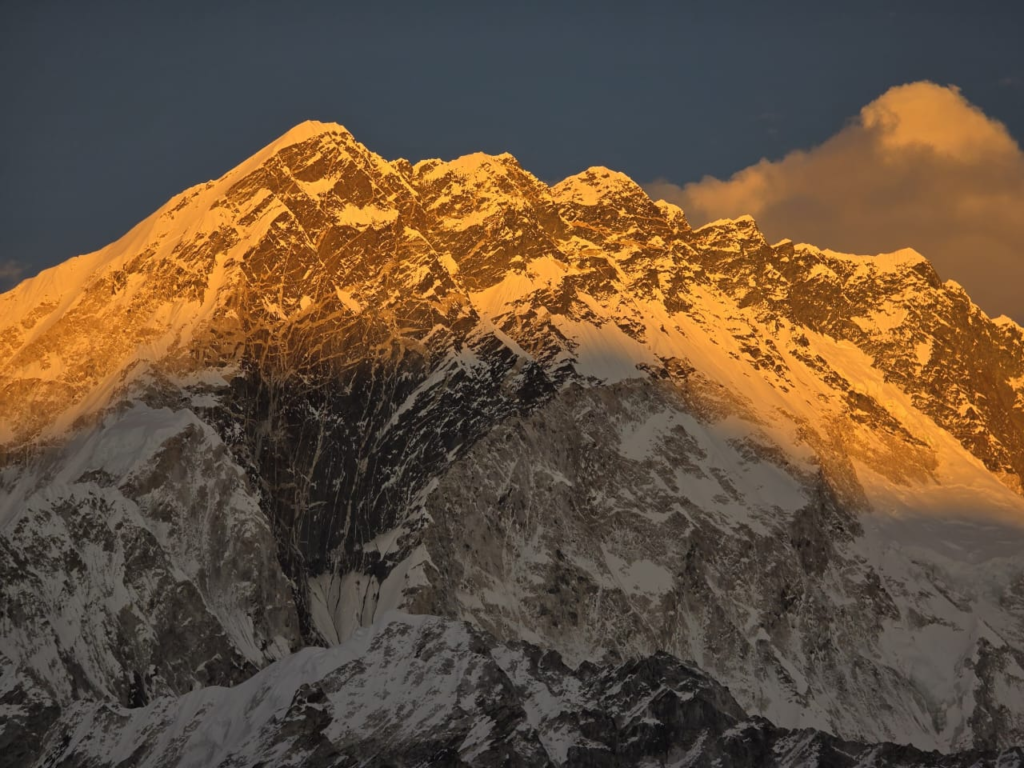
Everest Base Camp is the milestone, but Kala Patthar is the real viewpoint. From Base Camp, Everest itself is not seen clearly because the shoulder of Nuptse blocks much of the mountain’s upper profile.
From Kala Patthar, that problem largely disappears. The ridge lifts you high enough and places you at the right angle to see Everest in a fuller and more satisfying way, along with the surrounding giants of the Khumbu.
That is why this short climb of couple of hundred metres of elevation matters so much. It turns the Everest trek from a famous route into a real mountain encounter.
Many trekkers reach Base Camp proud, tired, and happy to be there. But the moment that stays with them most is often the cold morning climb above Gorak Shep, when the sky begins to lighten, the glacier valleys below come into shape, and Everest finally stands free in the distance with Lhotse, Nuptse, Changtse, Pumori, and the Khumbu Icefall all around it.
Where Kala Patthar is and how the climb begins
Kala Patthar rises directly above Gorak Shep, which sits at roughly 5,163 to 5,164 meters and serves as the last settlement before Everest Base Camp.
Gorak Shep is the point where trekkers normally sleep before visiting Base Camp and before making the pre-dawn climb to Kala Patthar.
From there, the trail goes up over dry, rough ground toward the black ridge above the valley.
The one-way distance is usually given at around 1.5 to 2 kilometers, and the full ascent commonly takes about 1.5 to 2 hours, with the round trip often taking 3 to 4 hours depending on pace, weather, and acclimatization.
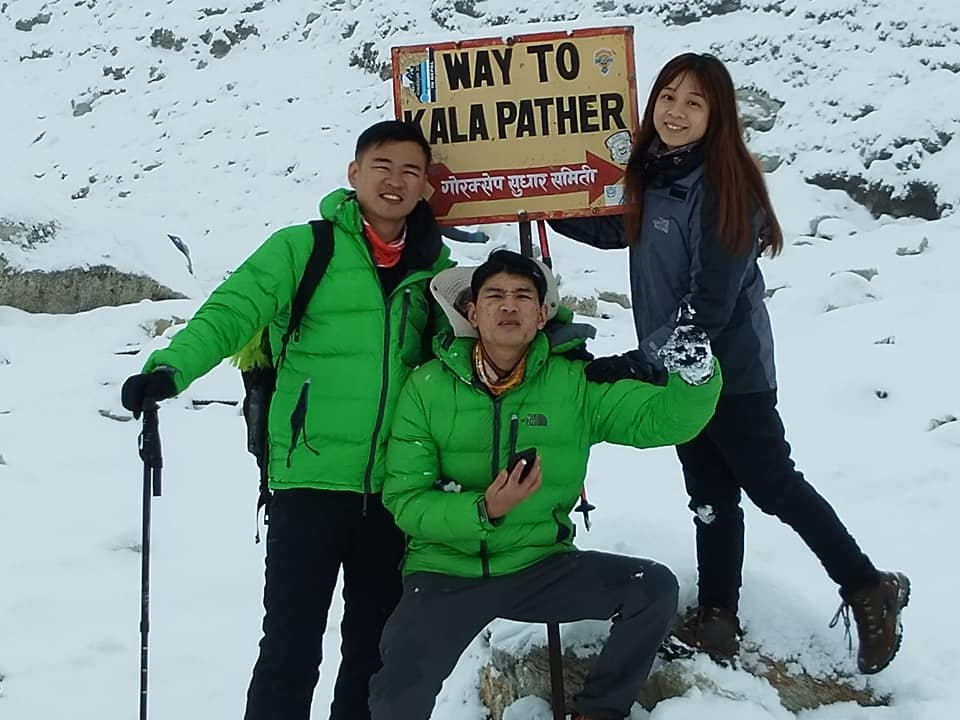
That sounds short on paper, but it is not a small effort at this height. By the time trekkers reach Gorak Shep, they are already sleeping well above 5,000 meters.
A climb that might feel moderate at lower altitude becomes much harder in thin air.
The distance is not what makes Kala Patthar difficult. The real challenge is the combination of steep trail, freezing morning conditions, altitude, and accumulated fatigue from the days below.
Kala Patthar also sits within one of Nepal’s most important protected mountain areas. Sagarmatha National Park, established in 1976, covers 1,148 square kilometers in Solukhumbu and protects the upper Everest region’s landscapes, glaciers, forests, and settlements.
That matters because Kala Patthar is not just a viewpoint above one lodge village. It is part of a much bigger Himalayan system where glaciers, trails, villages, wildlife, and high peaks all fit together.
Why Kala Patthar gives a better Everest view than Base Camp
The strongest reason to talk about Kala Patthar is that it solves one of the biggest surprises on the Everest trek.
Everest Base Camp itself is not the best place to see Everest. Base Camp sits on the Khumbu Glacier and matters deeply because of its link to climbing history, but the mountain’s structure and the position of Nuptse limit the view from there.
Kala Patthar lifts you above the valley floor and to a better angle, which is why the Everest profile opens up so clearly from the ridge.
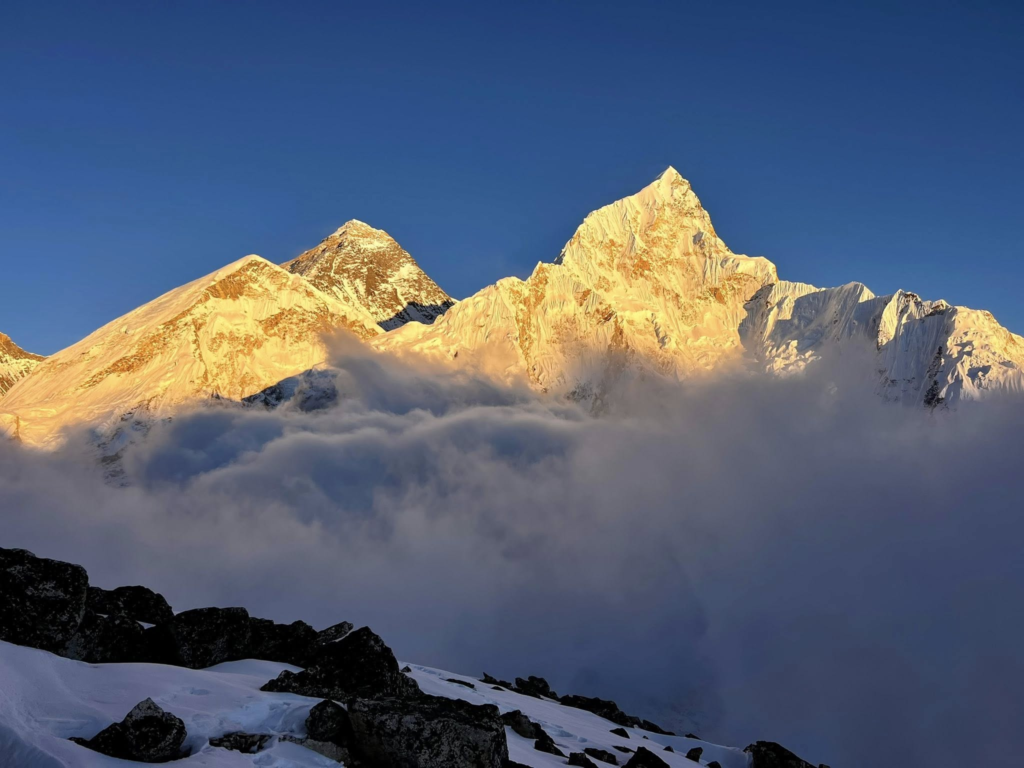
From the summit area, the panorama becomes much bigger than Everest alone. The main view usually includes Everest, Nuptse, Lhotse, Changtse, Pumori, and the broken white mass of the Khumbu Glacier and Khumbu Icefall below.
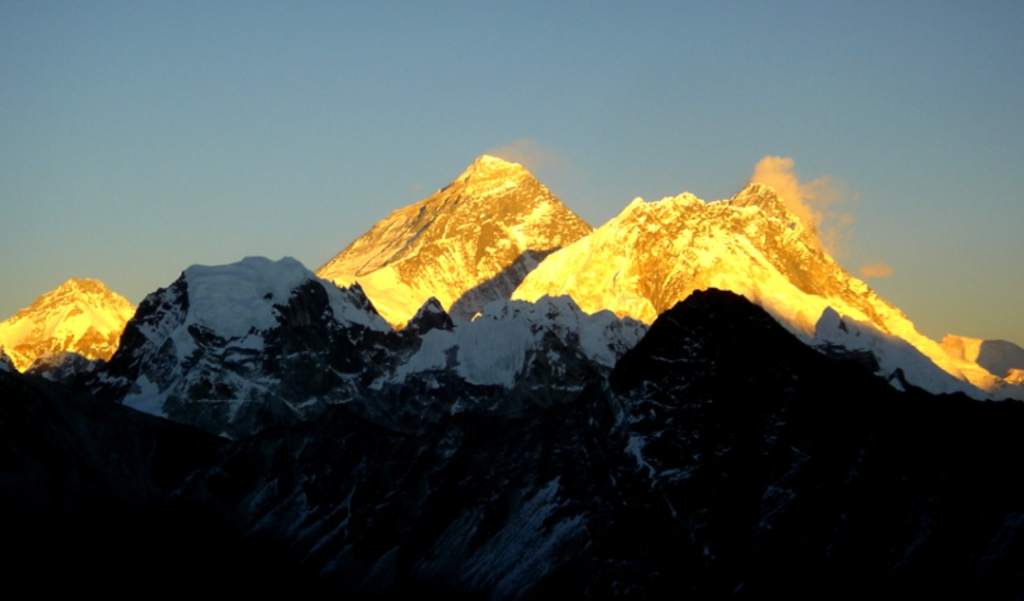
That is one reason the viewpoint feels so complete. You are not looking at one mountain in isolation.
You are looking into the middle of the high Khumbu, where snow peaks, dark rock, glacial ice, and sharp ridges all come together in one sweep.
This is also why photographers and trekkers value Kala Patthar differently from Base Camp. Base Camp is famous by name. Kala Patthar is famous for the actual view.
If someone wants the strongest ground-level image of Everest on the classic route, this is the place most likely to deliver it. That is not a small detail. It changes the emotional shape of the whole trek. Base Camp feels like arrival. Kala Patthar feels like reward.
How Kala Patthar fits into the Everest Base Camp trek
Kala Patthar works best when it is understood as part of the full Everest Base Camp journey rather than as a standalone climb.
The body needs time to adjust, and the view feels stronger because of the days it takes to reach it.
Most trekkers arrive through Lukla, pass through Phakding, Namche Bazaar, Tengboche, Dingboche, Lobuche, and Gorak Shep, then visit Everest Base Camp and climb Kala Patthar near the end.
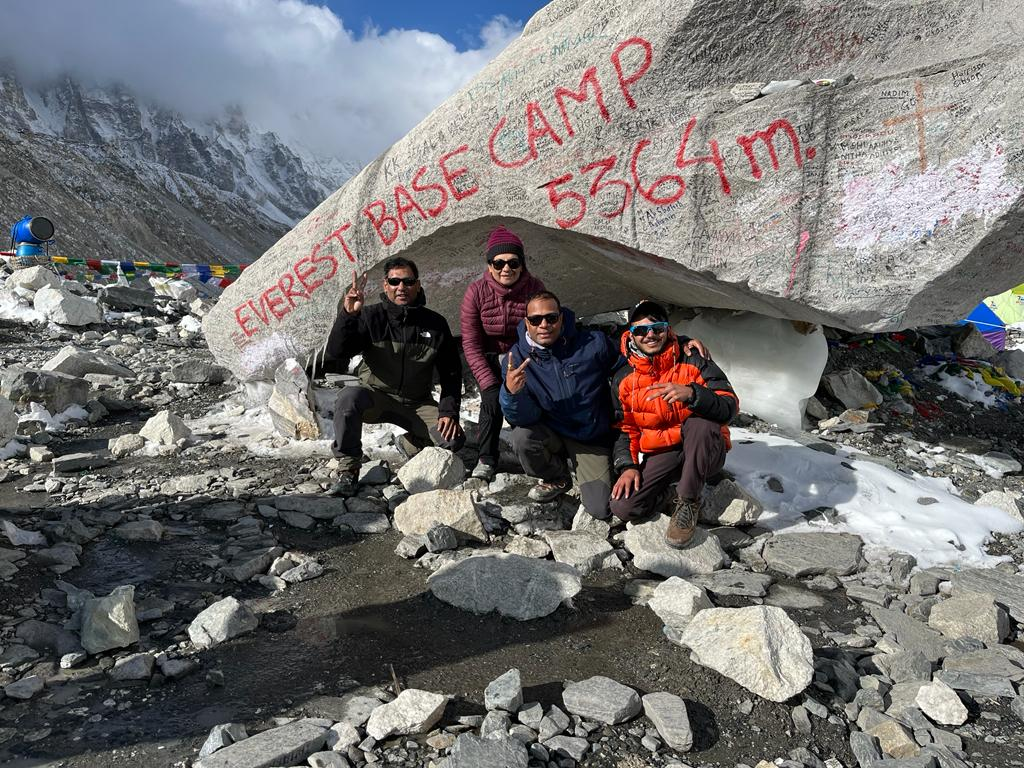
That route gives the body time to adapt and gives the viewpoint its proper place in the story of the trek.
A clean way to see where Kala Patthar sits in the full journey is the itinerary below. It follows the process you shared, with Kala Patthar coming after Everest Base Camp rather than before it.
| Day | Route | Altitude | Main Focus |
|---|---|---|---|
| Day 1 | Welcome to Nepal | Kathmandu 1,350 m | Arrival and trek preparation |
| Day 2 | Kathmandu to Lukla flight, then trek to Phakding | Lukla 2,840 m / Phakding about 2,610–2,660 m | The trek begins in the Khumbu |
| Day 3 | Phakding to Namche Bazaar | Namche Bazaar 3,440 m | Major climb into the Everest region |
| Day 4 | Acclimatization day in Namche Bazaar | 3,440 m | Body adjustment before going higher |
| Day 5 | Namche to Tengboche | Tengboche about 3,860–3,870 m | First big monastery and wider mountain views |
| Day 6 | Tengboche to Dingboche | Dingboche 4,410 m | Entering the higher alpine zone |
| Day 7 | Acclimatization day in Dingboche | 4,410 m | Second key adjustment day |
| Day 8 | Dingboche to Lobuche | Lobuche about 4,910–4,940 m | Closer to the Khumbu Glacier and high memorial zone |
| Day 9 | Lobuche to Gorak Shep, then trek to Everest Base Camp | Gorak Shep 5,164 m / EBC 5,364 m | Base Camp day on the Khumbu Glacier |
| Day 10 | Early morning Kala Patthar hike, then descend via Gorak Shep to Pheriche | Kala Patthar about 5,545–5,555 m / Pheriche about 4,240 m | Best Everest view and highest point of the trek |
That progression matters because Kala Patthar works best after the body has already had time in Namche Bazaar and Dingboche to acclimatize.
By the time the climb comes, trekkers have already crossed the suspension bridges below Namche, seen the first partial glimpse of Everest above the valley, passed through Tengboche’s monastery zone, and reached the hard brown-and-white high country above Dingboche and Lobuche. Kala Patthar is not just a viewpoint reached in isolation.
It is the last lift in a journey that has been building for days.
The route to Kala Patthar feels short on the map and much bigger on the ground
One reason Kala Patthar stays in memory is that it changes the feeling of the whole trek in a very short span.
The climb begins in darkness. Headlamps light only a few meters of trail. The air is thin, the wind can be sharp, and the body is already tired from the effort of reaching Gorak Shep and visiting Base Camp the day before. The mountain world does not open all at once. It reveals itself slowly.
At first, the route is mostly about breath and rhythm. The switchbacks rise above the flat bowl of Gorak Shep. Then the light changes.

The outlines of the peaks begin to separate from the sky. Pumori, Nuptse, and the long dark forms around the glacier emerge first.
Then Everest itself becomes clearer. By the time the first sunlight appears the higher faces, the climb stops feeling like a test of effort alone and starts to feel like the exact reason people come this far.
The climb is harsh and cold, but the reward is wide and luminous. The trail is short, but the setting feels enormous. The viewpoint is only a dark rocky summit, but the scene around it carries the full force of the high Khumbu. That contrast is what gives the place its energy.
Sunrise is the moment most trekkers remember
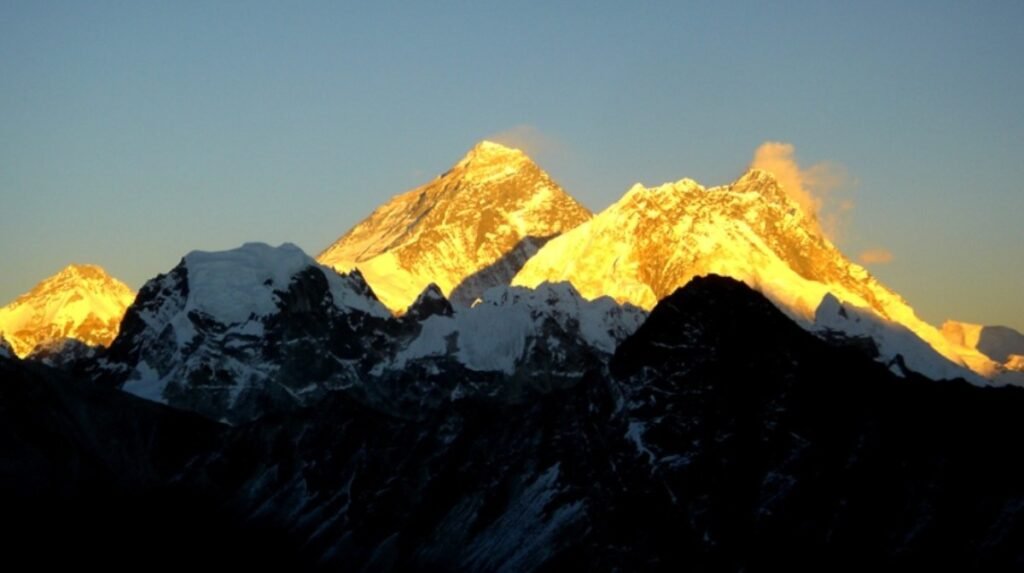
Kala Patthar is especially known for sunrise, and that reputation is deserved. The light at dawn changes the experience of the place completely.
Instead of seeing Everest as a static mountain, you watch the face and summit line take color while the valley below remains dark. Gold and orange hit the snow first.
Then the black rock of the foreground begins to show, the icefall stands out more clearly, and the whole mountain group feels alive in front of you.
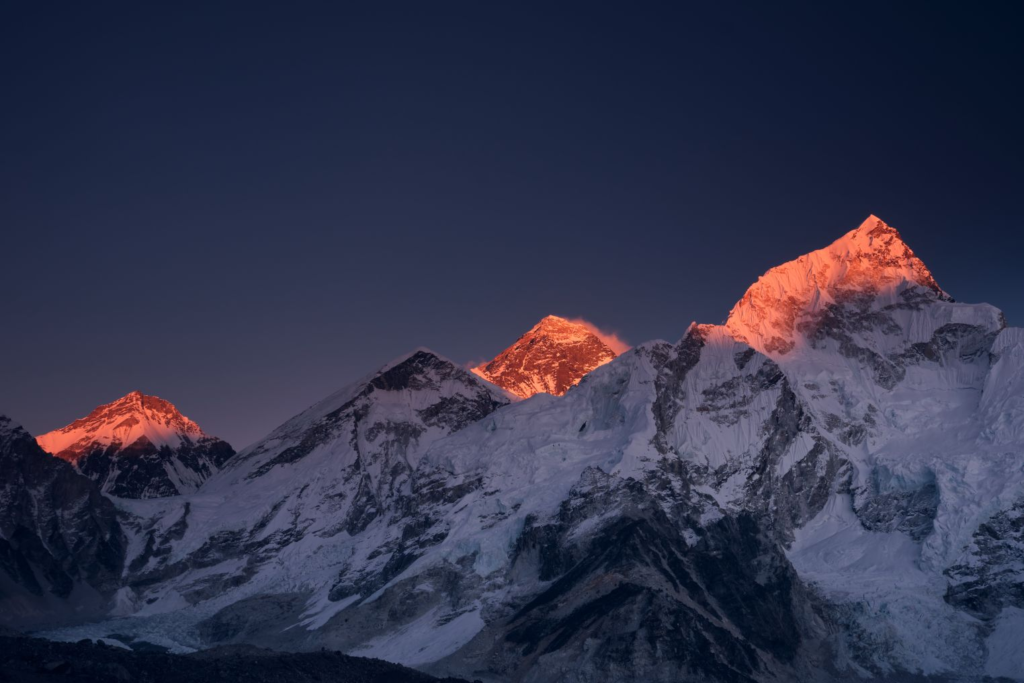
That visual reward is part of the reason trekkers willingly leave the lodge at such an uncomfortable hour.
A Kala Patthar morning usually begins before dawn, when the body would rather stay inside a sleeping bag. The cold is real, and so is the effort.
But sunrise gives the climb a purpose that is easy to understand once you are there. It is not just about standing on a high point. It is about seeing the Everest range at the hour when it feels most dramatic.
Sunset can work too, and some trekkers do go later in the day, but is not recommended. But sunrise remains the classic choice because it gives the clearest sense of arrival.
The mountains seem to appear out of shadow rather than simply sit there in open light. Kala Patthar is not famous only because it is high. It is famous because of what the first light does to the Everest view.
The climb is short, but the difficulty is real
Kala Patthar is often described as a short climb, and that is true in simple distance terms.
But no one should mistake short for easy. The trail is steep enough to be tiring, the footing can be loose and rocky, and the altitude makes every small gain feel larger than it would lower down.
This is usually the highest point most trekkers reach without entering technical climbing territory, and the body feels that.

What makes the climb manageable is not strength alone but preparation. The rest days in Namche Bazaar and Dingboche are not there to slow the journey down.
They are what make Kala Patthar realistic later on. Trekkers who rush the Everest trail often struggle far more by the time they reach Gorak Shep.
Trekkers who give the body time to adjust usually get more out of the climb because they can move with steadier breath and less strain.
That is why Kala Patthar belongs right in the Everest Base Camp trek as more than a viewpoint.
It is the place where the value of acclimatization becomes visible. The slow days below, the measured pace, the extra night in the right village, all of it pays off when the final climb comes. The view at the top is the reward, but the ability to enjoy it is built much earlier in the trek.
Why Kala Patthar often becomes the real high point of the trek
There is a reason Kala Patthar stays in so many trekkers’ minds even more strongly than Everest Base Camp itself.
Base Camp is important, but it is busy with meaning that often comes from outside the experience: expedition history, famous names, summit dreams, and the symbolic idea of reaching a legendary place.
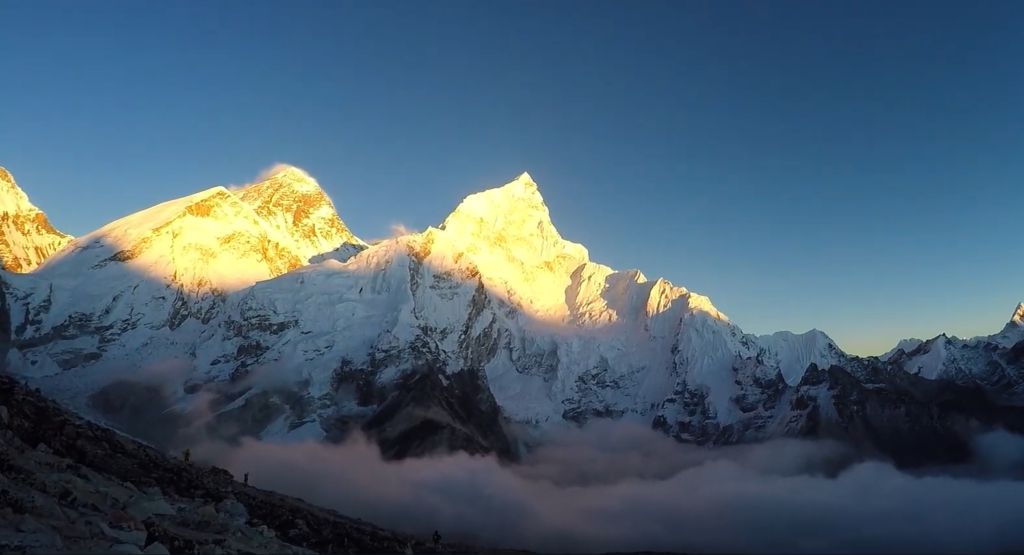
Kala Patthar is simpler. It is about the mountains in front of you, the cold in the air, the climb behind you, and the view opening in real time.
You stand on dark rock at well above 5,500 meters and look at the greatest concentration of high mountain drama most trekkers will ever see from one spot.
Everest is there, but so is the wider Khumbu, Nuptse closing the valley, Lhotse standing beside it, Changtse beyond, Pumori above Gorak Shep, and the glacier systems below tying the whole scene together. It feels complete in a way that very few viewpoints do.

That is the real reason this short climb gives the best view of Mount Everest. It is not only that the angle is better. It is that Kala Patthar places Everest inside its real setting.
You do not just see the summit. You see the mountain as part of the high Khumbu, framed by the peaks and ice that give the region its scale.
For a trekker, that makes the view feel less like a postcard and more like an encounter.
A Must Do Trek For Scenery
Kala Patthar is not the most famous name on the Everest trail, but it is often the place that gives the trek its sharpest meaning.
It rises above Gorak Shep, asks for one last hard effort in thin air, and gives back the clearest close view of Mount Everest on the classic route.
The climb is short, but at that altitude it never feels casual. The reward is not only the summit of a black rocky ridge. It is the moment Everest opens properly, with the Khumbu Glacier and the surrounding giants filling the full scene.
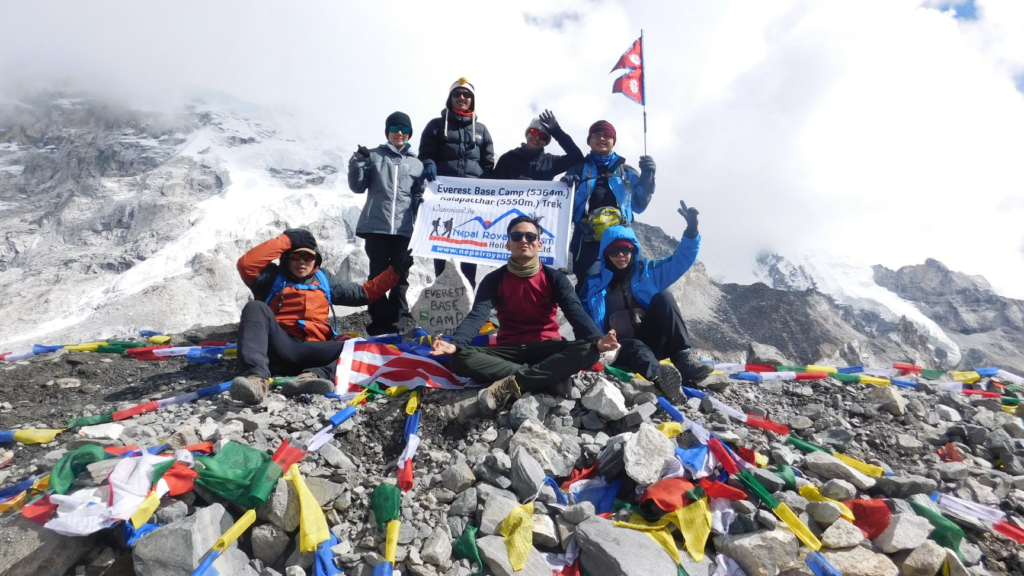
That is why Kala Patthar deserves its own place in Everest trekking writing. It is not just a line in an itinerary. It is the part of the journey where the dream view becomes real.
For many trekkers, Everest Base Camp is where they arrive. Kala Patthar is where they truly see why they cam