

-
 Duration
20 Days
Duration
20 Days
-
 Difficulty
Challenging
Difficulty
Challenging
-
 Max Elevation
5143m
Max Elevation
5143m
-
 Group Size
1 to 10 People Person
Group Size
1 to 10 People Person
-
 Accommodation
Tea House
Accommodation
Tea House
-
 Start/End
Kathmandu Airport/Kathmandu
Start/End
Kathmandu Airport/Kathmandu
-
 Destination
Kanchenjunga
Destination
Kanchenjunga
-
 Best Season
March-May and Sep-Nov
Best Season
March-May and Sep-Nov

The Kanchenjunga North Base Camp Trek is one of the best long treks in Nepal for people who want something remote, quiet, and big in every sense.
It takes you into the far east of the country, away from the busy Everest and Annapurna routes, and leads all the way to Pangpema, the North Base Camp of Kanchenjunga which stands at 8,586 meters and is the third-highest mountain in the world.
This trek is not quick unlike others and definitely not for the faint-hearted as the elevation reaches above 5000.
It is a full 20-day journey that asks for time, patience, and good fitness. But for trekkers who want a route that still feels wild and less touched by tourism, it is one of the strongest choices in Nepal.
If you are planning to trek on Kanchenjunga Region, it can be seen in medium difficulty among a bit easier Kanchenjunga South Base Camp Trek and quite challenging Kanchenjunga Circuit trek.
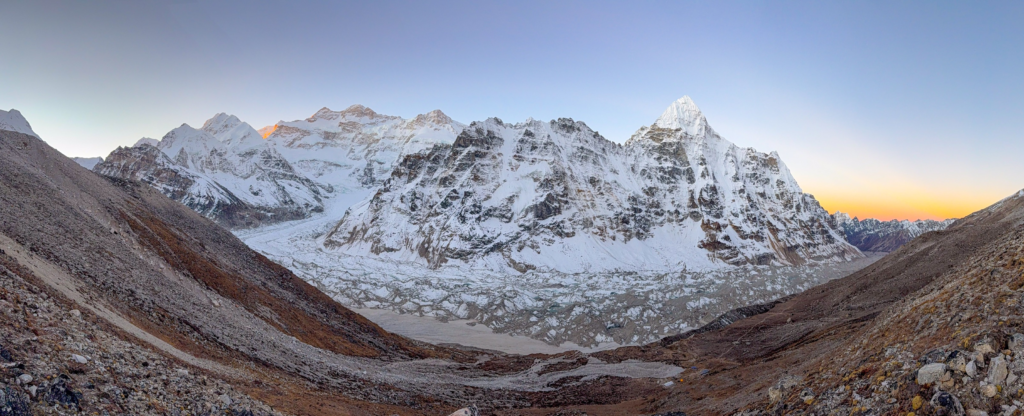
The journey begins in Nepal’s capital Kathmandu and then moves east toward the Kanchenjunga region.
From there, the trail slowly leaves roads and larger towns behind and begins to feel more and more cut off from the rest of the country. That slow change is one of the best parts of the trek.
In the early days, the route passes through lower hills, farmland, tea-growing areas, and village paths.
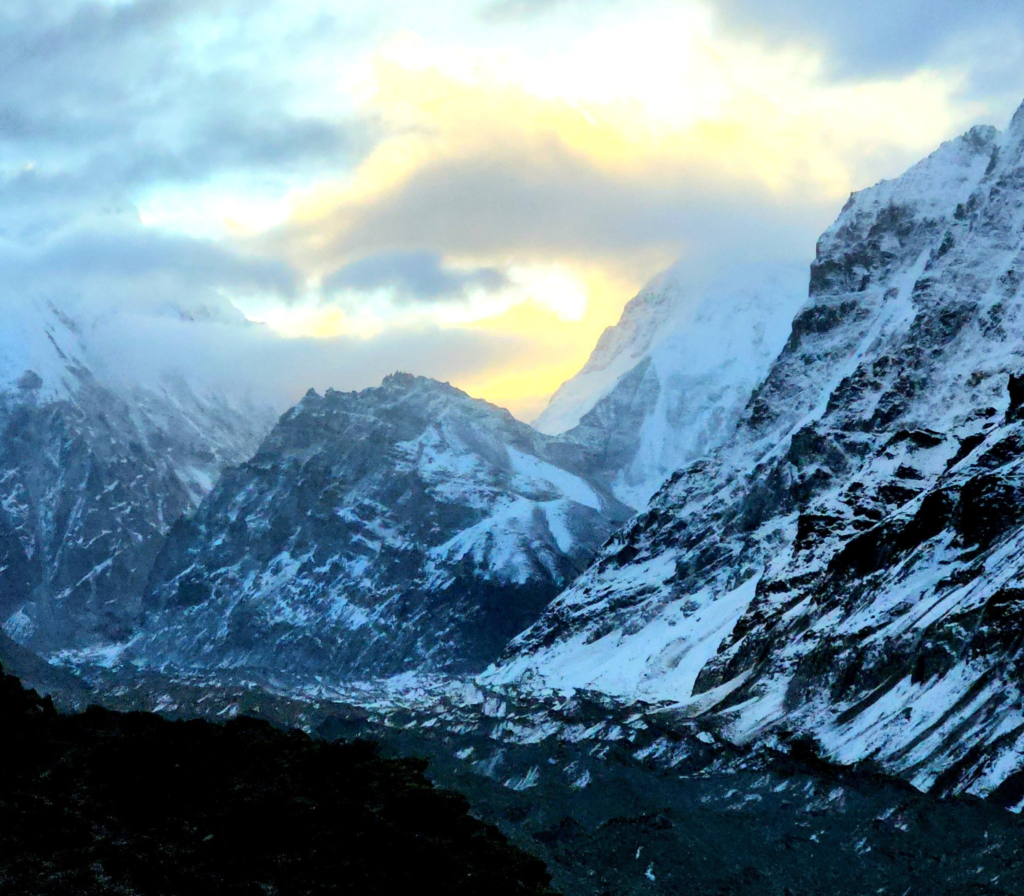
You walk through places where everyday mountain life is still very visible, with fields, stone houses, and local markets. That makes the first section feel grounded and human.
As you climb through the trail, the setting changes bit by bit. Green hills turn into thicker forest, river valleys become narrower, and the villages begin to feel smaller and farther apart.
By the time you are deeper into the route of the Kanchenjunga region, it is clear that this trek is moving into a very different kind of mountain world.
A big part of that change comes when the trail enters the Kanchenjunga Conservation Area. This protected region covers about 2,035 square kilometers and is known for its forests, wildlife, and wide mountain valleys.
The conservation area is one of the reasons the trek feels so untouched, peaceful and worth exploring.
The lower and middle parts of the trek are surrounded with nature. You will get to enjoy the greenary specially during the spring season when season is just changing gradually from winter.
Rhododendron, bamboo, oak, and pine forests cover much of the trail, and in the right season the route feels full of color.
Rushing rivers, wooden bridges, and mossy paths give the walk a strong sense of life before the high mountains take over.
The route then moves through settlements such as Sekathum, Amjilosa, Gyabla, and Ghunsa.
Ghunsa is one of the most important stops on the whole trek. It sits at about 3,595 meters and is one of the last real village stops before the trail climbs into higher and emptier ground.
Stone houses, prayer walls, and the stronger Tibetan Buddhist feel of the village give this part of the trek a very different character from the lower hills.
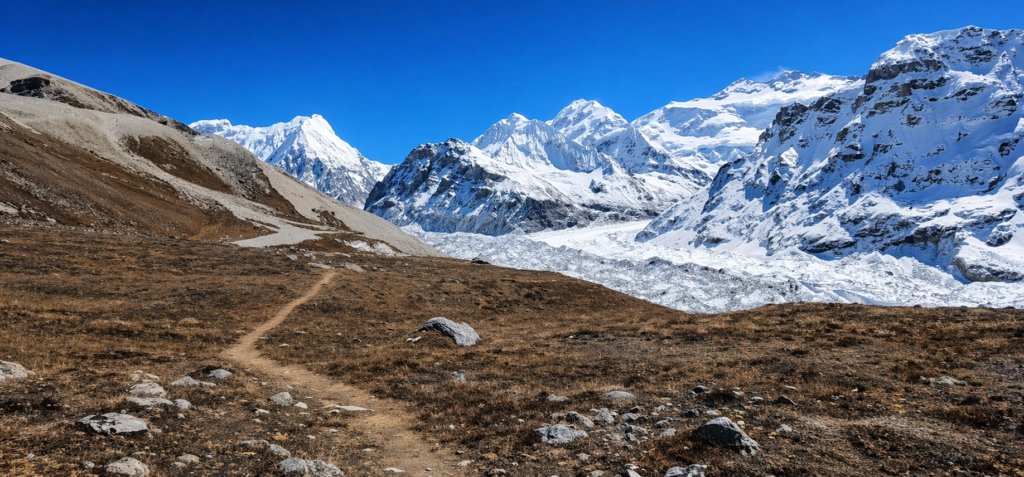
The cultural side of the trek is definitely of its real strengths. Lower down, the region is home to Limbu and Lepcha communities, while higher up the villages carry stronger Tibetan Buddhist influence.
Along the trail you see prayer flags, mani walls, chortens, and simple mountain homes that make the trek feel rich in local life, not just scenery.
The teahouses are simple, the villages are real, and the trail still feels tied to the people who live there, you see them feeding their domestic animals and working hard for a daily living.
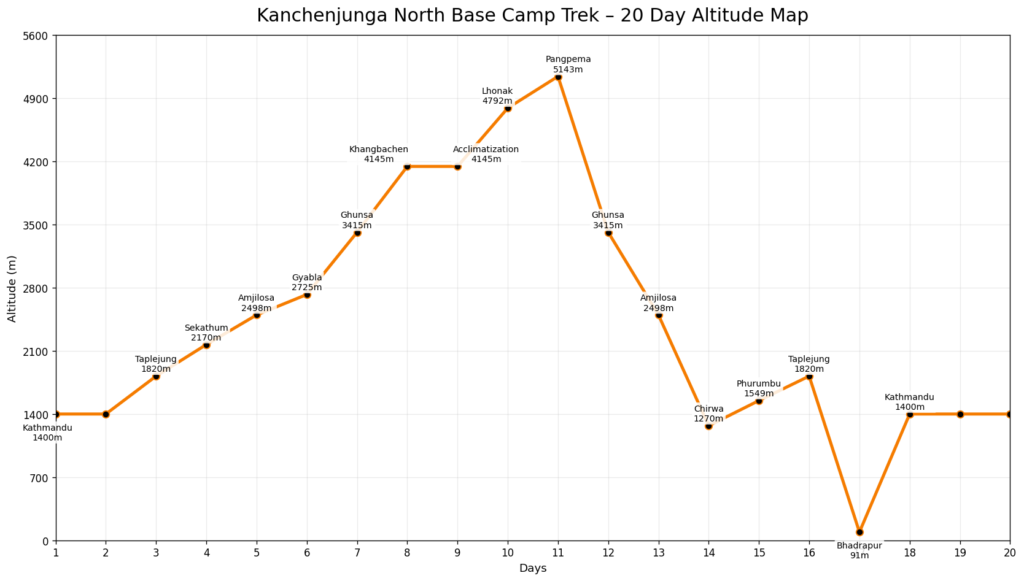
Even when the comforts are basic, the trek has warmth because the places along the way still feel personal.
From Ghunsa, the landscape begins to open in a bigger way. The route climbs toward Kambachen, then Lhonak, and the forest starts to disappear.
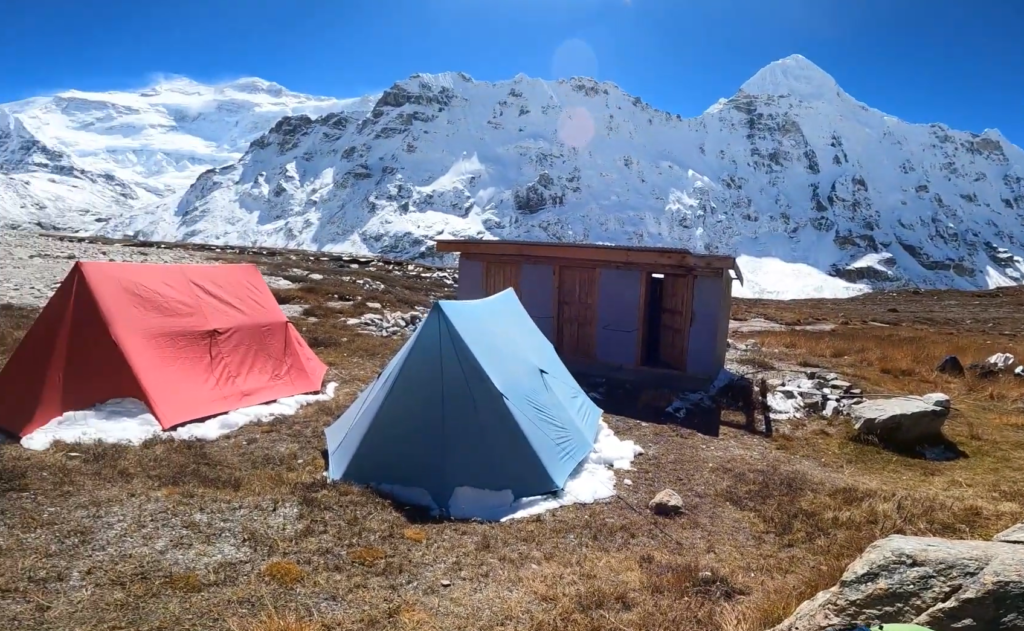
As you move along and leave the villages behind, it will get harsher and colder. Nonetheless, you will get to experience world of yak grazing land, alpine meadows, rocky slopes, and glacier-shaped ground.
Kambachen sits at around 4,050 meters and Lhonak rises to about 4,780 meters. By the time you are sleeping in these places, the trek feels very far from the lower villages where it started.
The air is thinner, the nights are colder, and the mountains begin to take over the whole horizon, like you would imagine in trek of such altitude.
The final push to Pangpema from Jorku is what gives this trek its strongest sense of purpose. Pangpema sits at about 5,143 meters and is the North Base Camp of Kanchenjunga. Reaching it feels like entering the heart of the high Himalaya.
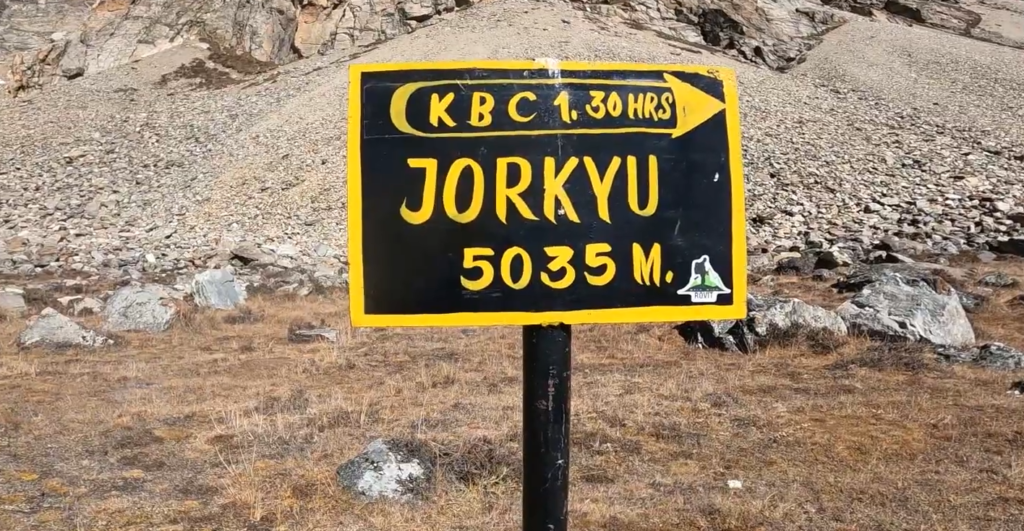
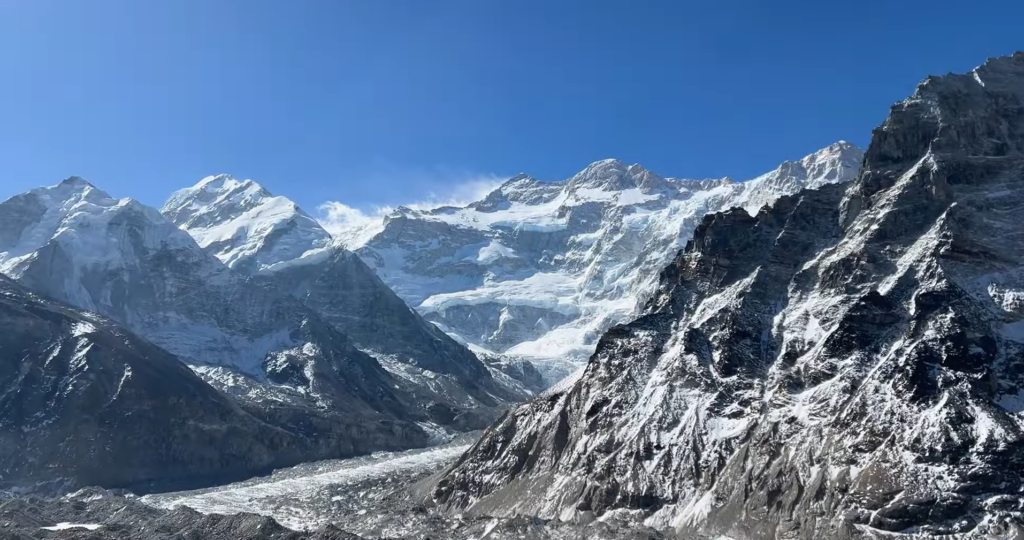
From Pangpema, the scale of the region becomes very clear. The north face of Kanchenjunga rises above the valley in a way that feels huge and close at the same time.
On clear days, the views also stretch toward other big peaks in the area, including stunning 360-degree panorama of mountains including, Jannu (Kumbhakarna), Yalung Kang (Kanchenjunga West, Chang Himal, Nepal peak, Gimmigela II and Gimmigela I.
This is the kind of place that makes the long approach feel worth it. You do not get there in a rush, and that is exactly why the arrival feels so strong.
Day by day, the trek builds toward that moment, and the high base camp view feels earned rather than handed to you.
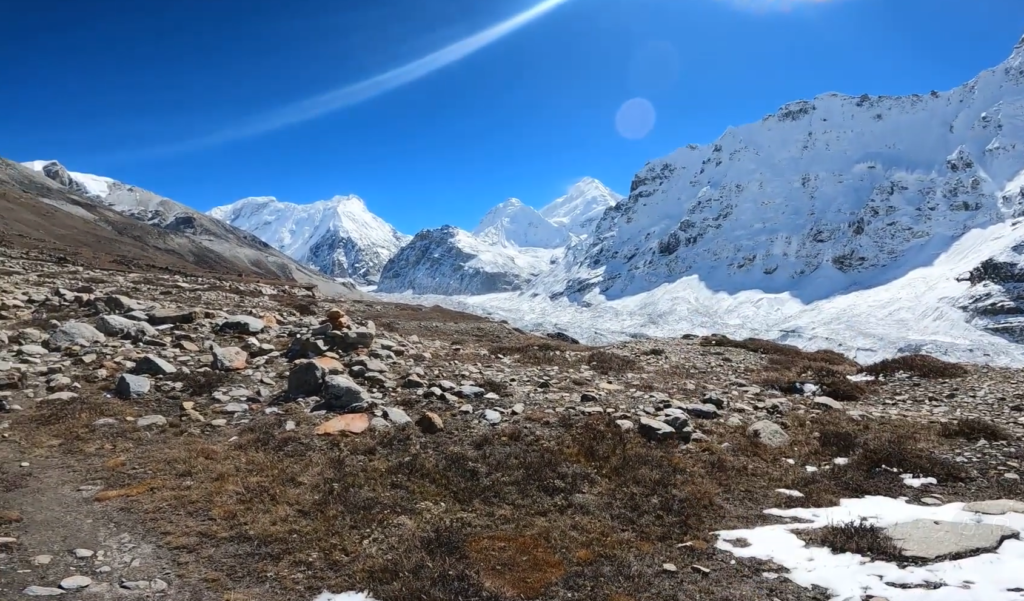
The pace of a 20-day itinerary is important on a route like this. Kanchenjunga is too long and too remote to be rushed. A slower plan gives your body time to adjust, especially before going above 4,000 meters, and it also lets the journey feel more natural from one stage to the next.
That slower rhythm also makes the trek more enjoyable. Instead of chasing the end point too fast and hurting your body, you get time to notice the real shape of the region, the shift from tea hills to deep forest, from forest to high valley, and from high valley to glacier country.
That full change is one of the main reasons this trek feels so complete.
Another reason the route stands out is how quiet it stays. Even though it is a known trek, it still feels far less crowded than Nepal’s more famous trails.
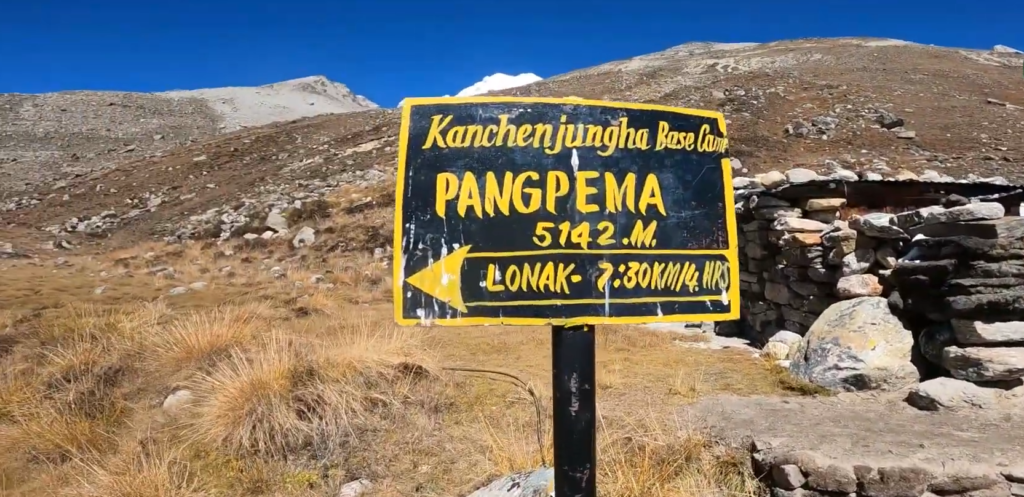
That gives the whole journey a stronger feeling of space and isolation, which is exactly what many trekkers want when they choose Kanchenjunga in the first place.
In the end, the Kanchenjunga North Base Camp Trek is for travelers who want a big mountain journey with real depth to it. I
t is long, hard in places, and far from easy, but it gives back a lot: strong village life, changing landscapes, huge mountain views, and the rare feeling of walking into a part of Nepal that still feels wild.
For people who want a trek that is quiet, remote, and deeply rewarding, this route is one of the best in the country.
Trip Highlights
- Trek through the remote Kanchenjunga Conservation Area, one of Nepal’s wildest regions with vast and diverse landscapes.
- Reach Pangpema, the North Base Camp of Kanchenjunga (8586 m), which is surrounded by alpine peaks and Yalung Kang, the West side of Kanchunjunga.
- Relive the moment and enjoy panoramic views of Kanchenjunga, Jannu (Kumbhakarna), Kabru, Simvo, and other Himalayas from the close range.
- Walk through villages and terraced fields of eastern Nepal, experiencing local culture before entering the high mountain area and reaching the base camp.
- The route moves through protected wild life inside the Kanchenjunga Conservation Area, which gives the trek a clean and natural feel.
- The trail stays quiet and less crowded unlike other regions, which makes the whole journey feel more peaceful.
- Pass through Buddhist shrines, mani walls, and chortens along the high route. Also, ascend past dense rhododendron and oak forests
- Enjoy a scenic Lukla-like flight route out of Bhadrapur with mountain views including that of Everest (return by flight to Kathmandu).
- Enjoy a scenic Lukla-like flight route out of Bhadrapur with Mount Everest views (return by flight to Kathmandu).
- Complete the journey with a comfortable trek pace (5–7 hrs/day) and a careful itinerary that includes acclimatization and buffer days.
Kanchenjunga North Base Camp Trek – 20 Days ~ Itinerary
Day 1
Arrival at TIA - Welcome to Nepal
- Altitude: 1,350 m
- Accommodation: Standard Three Star Hotel in Thamel
Welcome to Nepal. Upon arrival at the Airport, one of Nepal Royal Tourism Holidays’ member will pickup and get you to your Hotel in Thamel. You can rest, head to the heritage sites or explore the Thamel area.
Day 2
Rest Day at Kathmandu
- Altitude: 1350 m
- Meal: Breakfast
- Accommodation: Standard Three Star Hotel in Thamel
Considering you are headed to a lengthy trek, you get a second leisure day at Kathmandu. Like the first day, you can stroll around the capital city, head to nearby sites like Basantapur Durbar Square or Boudha Stupa. At evening, make sure to attend trekking orientation including gearing checks and permits briefing, before you take on a long yet satisfying Himalayan journey.
Day 3
Fly to Bhadrapur then drive to Taplejung
- Max altitude: 1442 m
- Flight Duration: 45 to 50 minutes
- Travel Duration: 8-9 hours
- Travel Distance: 241
- Meal: Breakfast, Lunch and Dinner
- Accommodation: Teahouse in Taplejung
An early flight takes you from Kathmandu to Bhadrapur in the southeastern lowlands of Nepal. After landing, you continue by road to Taplejung, the main gateway to the Kanchenjunga region, passing through eastern hill country, tea-growing landscapes, and winding mountain roads as the trip starts to feel more remote.
Day 4
Drive from Taplejung to Sekathum
- Max altitude: 1820 m
- Travel Duration: 4-5 hours
- Travel Distance: 40 km
- Meal: Breakfast, Lunch and Dinner
- Accommodation: Teahouse in Sekathum
Leave Taplejung by jeep and drive down through river valleys toward Sekathum. The road is rough and narrow, passing steep hills, waterfalls, terraced fields, and small villages on the way. This part of the journey takes you closer to the Kanchenjunga Conservation Area and toward the meeting point of the lower trails, where the you pass though Tamor Valley route and the Ghunsa Khola valley.
Day 5
Trek from Sekathum to Amjilosa
- Max altitude: 2898 m
- Trek Duration: 5-6 hours
- Trek Distance: 7-9 km
- Meal: Breakfast, Lunch and Dinner
- Accommodation: Teahouse in Amjilosa
The real trek starts from Sekathum as the trail follows the Ghunsa Khola upstream through a narrow and more remote valley. You cross suspension bridges, walk through bamboo and rhododendron forest, and climb above the river on steeper hillside trails with waterfalls and deep gorges below. From the first day, the trek already feels wild and peaceful, with only a few small settlements and far fewer people than on the busier trekking routes in Nepal.
Day 6
Trek from Amjilosa to Gyabla
- Max altitude: 2725 m
- Trek Duration: 4-5 hours
- Trek Distance: 8 km
- Meal: Breakfast, Lunch and Dinner
- Accommodation: Teahouse in Gybala
From Amjilosa, the trail climbs through dense forest and a rather greener section of the valley. Your destination for today is a small, quiet Sherpa and Tibetan settlement, which feels like the first real step into the higher country.
Day 7
Trek from Gyabla to Ghunsa
- Max altitude: 3415 m
- Trek Duration: 6-7 hours
- Trek Distance: 11 km
- Meal: Breakfast, Lunch and Dinner
- Accommodation: Teahouse in Ghunsa
You pass through higher trails with pine and rhododendron before opening up to upper valley. You also get past Phale, a small Tibetan refugee settlement, and the route begins to feel more distinctly Tibetan in culture. As you approach Ghunsa, the walk follows the Ghunsa Khola, prayer flags appear more frequently, and snow peaks begin to show more clearly, including early views toward Mt. Jannu/Kumbhakarna on clearer sections of the trail. Ghunsa itself is one of the key high villages on the north base camp route.
Day 8
Trek from Ghunsa to Khambachen
- Max altitude: 4145 m
- Trek Duration: 6-7 hours
- Trek Distance: 10-11 km
- Meal: Breakfast, Lunch and Dinner
- Accommodation: Teahouse in Khambachen
After leaving Leaving Ghunsa, the trail grows more open and colder, giving you the exact mountain feel. The path follows the Ghunsa Khola past mani walls, chortens, prayer wheels, grassy flats, and rocky sections toward places such as Thango, Tartang, Chhermalung, and Labuk before the final reach to Khambachen. Clear-weather views on this section often include Jannu/ Kumbhakarna, Phole Peak, and Khabur Peak.
Day 9
Rest and acclimatization day at Khambachen
- Max altitude: 4145 m
- Trek Duration: 3 to four hours
- Trek Distance: custom to match acclimatization
- Meal: Breakfast, Lunch and Dinner
- Accommodation: Teahouse in Khambachen
This day is kept for acclimatization before heading farther into the high valley. A commonly mentioned side hike is toward Phat Tanglung, where you gain height during the day and come back down to sleep lower. The area gives wider views into the surrounding glaciers and Mount Kumbhakarna. It is a sensible pause in the itinerary for acclimatization because the trail beyond Khambachen climbs into a more exposed and thinner-air environment.
Day 10
Trek from Khambachen to Lhonak
- Max altitude: 4792 m
- Trek Duration: 5-6 hours
- Trek Distance: 9-10 km
- Meal: Breakfast, Lunch and Dinner
- Accommodation: Teahouse in Lhonak
The route to Lhonak follows the upper valley into increasingly remote ground. long the way, trekkers pass points such as Lumbuchhemu, Ladam, Khando Waterfall, and Ramdang, with the track moving through rocky, landslide-prone sections and opening wider toward the Kanchenjunga Glacier system. This stage often brings sightings of blue sheep for lucky trekkers, and the final approach to Lhonak feels high with surrounding peaks glance behind you.
Day 11
Hike to Kanchenjunga North Base Camp (Pang Pema) and return to Lhonak
- Max altitude: 5143 m
- Trek Duration: 7-8 hours
- Trek Distance: 8-9 km
- Meal: Breakfast, Lunch and Dinner
- Accommodation: Teahouse in Lhonak
This is the highlight day of the north base camp trek. From Lhonak, the trail climbs along rough moraine and rocky high-altitude ground toward Pang Pema, the Kanchenjunga North Base Camp. Some detailed route notes mark points such as Syamjo, Thanakpu, and Jorkyu on the way. From base camp, the mountain panorama is the reward. Beyond the dominating north face of Kanchenjunga, you also get the views of Wedge Peak, Tent Peak, Nepal Peak, The Twins (Gimmigela Chuli) and more. After spending time at Pang Pema, you return to Lhonak for the night.
Day 12
Trek from Lhonak to Ghunsa
- Max altitude: 4792 m
- Trek Duration: 7-8 hours
- Trek Distance: 20 km
- Meal: Breakfast, Lunch and Dinner
- Accommodation: Teahouse in Ghunsa
Although the distance seems high, this route is all descent from Lhonak that passed through Khambachen to Ghunsa. This is a long day, for better for your lungs as the elevation is slowly decreasing. It is one of the most satisfying return days on the itinerary because you really feel the mountain environment soften as you lose height.
Day 13
Trek from Ghunsa to Amjilosa
- Max altitude: 3415 m
- Trek Duration: 5-6 hours
- Trek Distance: 13-15 km
- Meal: Breakfast, Lunch and Dinner
- Accommodation: Teahouse in Amjilosa
From Ghunsa, the trail drops through juniper, bamboo, and rhododendron forest, passing back toward Phale and Gyabla before continuing to Amjilosa. It is a long downhill day through forest and small bridges. The lower air feels warmer again, and Amjilosa marks the point of your destination for today.
Day 14
Trek from Amjilosa to Chirwa
- Max altitude: 2498 m
- Trek Duration: 5-6 hours
- Trek Distance: 8-9 km
- Meal: Breakfast, Lunch and Dinner
- Accommodation: Teahouse in Chirwa
From Amjilosa, the trail climbs through dense forest and a softer, greener section of the valley. Bamboo, rhododendron, mossy woodland, small streams, and cliff-side waterfalls shape the day, while the route gradually gains height toward Gyabla, also written as Kyapra in some itineraries. Gyabla is a small mountain settlement in a lovely open pocket of the valley, and reaching it feels like the first real step into the higher country.
Day 15
Trek from Chirwa to Phurumbu
- Max altitude: 1559 m
- Trek Duration: 5-6 hours
- Trek Distance: 10-12 km
- Meal: Breakfast, Lunch and Dinner
- Accommodation: Teahouse in Phurumbu
We leave Chirwa and make our journey to thick settlements. We pass by Sinwa, Sisne Khola, and the Yaphre Khola. This trail also begins to connect with the Pathibhara trekking route.
Day 16
Trek from Phurumbu to Taplejung
- Max altitude: 1820 m
- Trek Duration: 8-9 hours
- Trek Distance: 241 km
- Meal: Breakfast, Lunch and Dinner
- Accommodation: Teahouse in Taplejung
The final walking day descends first toward Mutlung, then continues via Asahangpati before returning to Taplejung. This last stretch closes the trekking loop in a more settled hill landscape, with village life, terraced slopes, and easier lower-country terrain replacing the more remote mountain sections you left behind days ago. Reaching Taplejung clearly marks the end of the trek itself before the long road journey back to the lowlands.
Day 17
Drive from Taplejung to Bhadrapur
- Max altitude: 1830 m
- Travel Duration: 8-9 hours
- Travel Distance:
- Meal: Breakfast, Lunch and Dinner
- Accommodation: Standard Hotel in Bhadrpur
The drive back to Bhadrapur follows the same eastern hill road in reverse. You leave the cool hills behind and head down toward the warmer lowlands, passing tea gardens, small roadside villages, and changing scenery along the way. After spending days in the remote Kanchenjunga region, Bhadrapur feels like a clear return to the plains and an easy stop before your flight back to Kathmandu.
Day 18
Flight from Bhadrapur to Kathmandu
- Max altitude: 1400 m
- Flight Duration: 45-50 minutes
- Flight Distance: 447 km
- Meal: Breakfast, Lunch and Dinner
- Accommodation: Three Star Hotel in Thamel
Take the domestic flight back to Kathmandu and transfer to your hotel. After the isolation of the Kanchenjunga trail, returning to the capital feels like a completely different shift.
Day 19
Rest Day in Kathmandu
- Max altitude: 1400 m
- Meal: Breakfast, Lunch and Dinner
- Accommodation: Three Star Hotel in Thamel
This day is free for rest, a shower, or a quiet walk around Thamel. The day works best as a simple return and recover stage before your international departure. Enjoy your last night at the capital, pack bags, indulge the Nepali cuisine and don’t forget to buy Sovereigns for for friends and families.
Day 20
Final Departure
- Meal: Breakfast
After having Breakfast, you may have a leisure time to spend exploring nearby places one last time or even rest at your hotel. Nepal Royal Tourism Holiday is really thankful of getting an opportunity to serve and assist you during the Kanchenjunga North Base Camp journey. Hopefully, we get to see you again in the nearby future for another exciting trek.
Kanchenjunga North Base Camp Trek – 20 Days Fixed Departures Dates
Trip Cost Includes/Excludes
Cost Includes
- Airport pick-up and drop-off
- Three Star Hotel accommodation in Kathmandu as per itinerary
- Domestic flight and/or ground transport as per itinerary
- Tea house accommodation during the trek
- All meals during trekking days
- Licensed trekking guide
- Porters to carry bags (One porter for two travelers)
- Kanchenjunga trekking permits, TIMS card and conservation area fees
- Nepal Royal Tourism Holidays T-shirt and trek completion Certificate
- All necessary government taxes and service charges
- Trekking route arrangement and support
Cost Excludes
- International Airfares
- Nepal Visa Fee
- Travel insurance
- Personal trekking equipment
- Drinks, snacks, and personal expenses
- Wi-Fi, hot shower, and battery charging fees
- Tips for guide, porter or driver
- Extra accommodation or meals due to delays
- Other extra cost not mentioned in the inclusions list
Trip Photo/Video Gallery


Route Map for Kanchenjunga North Base Camp Trek – 20 Days
Frequently Asked Questions
It is a challenging trek because of the long duration, remote trail, and high altitude. A good level of fitness is important.
This is better for trekkers who already have some hiking or trekking experience, although beginners with good fitness levels can also do it with preparation and guidance.
High-altitude trekking like Kanchenjunga North Base camp carries risks like weather and altitude sickness. We strongly recommend travel insurance covering emergency helicopter evacuation.
Since this is a trekking route, you don’t need technical gear beyond sturdy boots and warm clothes. All personal equipment (boots, duffel bag, cold-weather clothing) should be in good condition. You can also rent them in Kathmandu for a reasonable price if you need or bring it your own.
We include acclimatization days to help your body adjust. Take it slow on the first days and drink plenty of water. If symptoms like headache or nausea occur, notify the guide immediately. The guide will take decisions, but we don’t ascend if someone is suffering.
For accommodations, you usually get a shared twin-bedroom in teahouses or local lodges. Dal bhat is staple in remote areas, you get that meal for most of the time, sometimes accompanied with Noodles, Soups, Eggs and hot drinks.
Spring and autumn are the best seasons because the weather is more stable and the mountain views are usually clearer.
Reception is very limited in these remote areas. Some villages including Taplejung, Phurumbu and Ghunsa usually have spotty mobile phone or internet for a fee, but do not rely on it.
Yes, the trek requires the proper trekking permits and conservation area entry fees.
If weather or health issues prevent reaching Pangpema, the guide will determine the safest turnaround point either Lhonak or Kambachen. You will still complete a rewarding high valley trek of theKanchenjunga Valley. Safety is and always will be our first priority, so guides are authorized to adjust plans for your well-being.
Yes, the route can be adjusted depending on your travel plan, fitness, and available time. You can even opt for Kanchenjunga circuit, which covers both North and South part of world’s third tallest mountain.
Leave a Review
Kanchenjunga North Base Camp Trek – 20 Days
5 Reviews to Kanchenjunga North Base Camp Trek – 20 Days
You may also like
Menu

Nicolai Rasmussen
at 1:56 pm
Felt safe and supported the whole time
“A challenging but deeply satisfying trek. The Kanchenjunga North Base Camp route is perfect for those wanting to escape the crowds and explore raw Himalayan beauty. Nepal Royal Tourism delivered outstanding service, and the itinerary was well-paced for acclimatization.”
Johansen
at 9:15 am
Kanchenjunga North Base Camp Trek – 20 Days
“This trek offered the perfect balance of challenge and beauty. The spring season brought blooming rhododendrons and clear mountain views. Nepal Royal Tourism provided top-level service, from logistics to accommodation. I felt safe, comfortable, and fully immersed in the experience.”
Sofie Larsen
at 10:54 am
Perfect balance of challenge and beauty
I felt completely supported and secure throughout the trek. The landscapes were breathtaking, especially near base camp. Nepal Royal Tourism exceeded my expectations with their care and attention to detail. Highly recommended for anyone seeking a unique Himalayan adventure.”
Lars Andersen
at 8:02 am
A challenging but deeply satisfying trek
“The Kanchenjunga North Base Camp Trek was an extraordinary experience. The trails were peaceful, the scenery was dramatic, and the entire journey felt untouched by mass tourism. Nepal Royal Tourism did an excellent job organizing everything smoothly. Our guide was experienced and attentive throughout the trek.”
Jonas Pedersen
at 7:22 am
The Kanchenjunga North Base Camp Trek was an extraordinary experience
“One of the most rewarding treks I’ve done. The route to North Base Camp is remote and authentic, exactly what I was looking for. Nepal Royal Tourism managed everything professionally, and the guide’s local knowledge made the journey even more meaningful.”