



8 Highest Mountain Peaks in Nepal Over 8000 Meters: Altitude, Region and Best Season To Climb
When it comes to Mountains not a single country in the world can match Nepal’s epitome, as the Gorkha Kingdom is the place to eight of the fourteen Mountains that’s over 8000 meters in height.
Nepal is home to eight of the world’s fourteen 8,000-metre peaks. These mountains shape the country’s geography, culture, and travel routes, and even if you never intend to climb an 8,000er, most visitors meet them on famous treks or at high base camps.
Each mountain region has strong local cultures, Sherpa traditions in the Khumbu, Tibetan-influenced customs around Mustang and parts of Manang, Gurung and Magar communities near Annapurna and Manaslu.
Below are the eight highest peaks inside Nepal, each with the key facts you need, exact altitude, where it sits, how to reach the base area, first-ascent notes, what makes it distinct, and practical travel relevance for trekkers and visitors.
Mount Everest (8,848.86 m)
The world’s highest mountain needs little introduction and is probably more famous than the country itself.
Everest sits in the eastern Solukhumbu skyline and is visible (on clear days) from major trail viewpoints.
The classic Nepal approach for most tourists and travelers begins with a flight to Lukla, then an 8–12-day trek to South Base Camp at about 5,364 m (depending on itinerary).

First climbed in 1953 by Sir Edmund Hillary and Tenzing Norgay, Everest’s Nepal route follows the Khumbu Valley, through Sherpa villages and the Khumbu Icefall to successive high camps.
For most visitors, the mountain is experienced via the Everest Base Camp trek or helicopter flights.
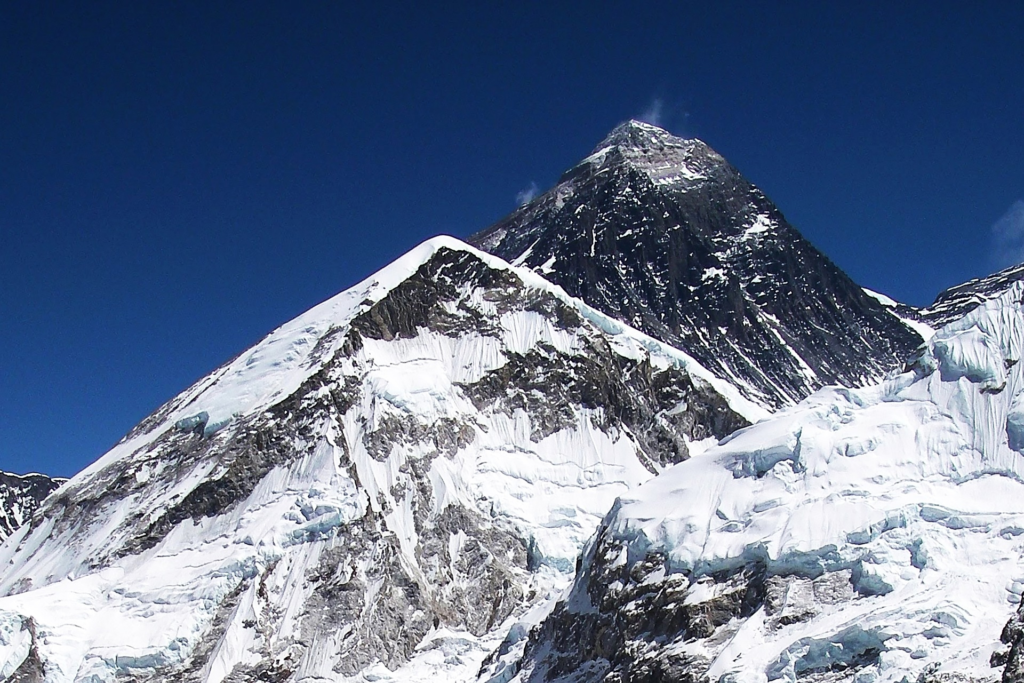
Climbers, to first get started, will require full expedition support, permits, and expert acclimatization. Best season windows are pre-monsoon (April–May) and autumn (October–November), when weather windows for summit attempts or clear trekking days are most reliable.
Kanchenjunga (8,586 m)
Kanchenjunga sits at Nepal’s eastern edge and is less crowded than Everest, given it is in the Taplejung District.
Its approaches enter Taplejung and the Kangchenjunga conservation area, with base-camp trekking routes that are longer and more remote than many popular Nepal treks.

First successfully climbed in 1955 by Joe Brown and George Band. Kanchenjunga is known for its complex ridges and dramatic glaciated faces.
For the enroute, you will typically require internal flights to eastern airfields, followed by extended overland travel and multi-day trekking to reach base areas.

For travelers, the region’s appeal lies in remoteness, strong mountain culture, and scenery. Spring and autumn are again the best windows for visibility and safer travel.
If you pick Kanchenjunga, you are choosing more wilderness and fewer conveniences, and the payoff is a raw, less-touristed mountain landscape.
Lhotse (8,516 m)
Lhotse sits directly adjacent to Everest and shares much of the same trekking approach; South Col and the Everest route are part of its standard ascent path.

The mountain was first climbed in 1956. Lhotse is the world’s fourth-highest peak and is notable for its sheer south face.
Trekkers experience Lhotse visually from the Everest Base Camp route, and climbers approach from the same access points via Lukla.
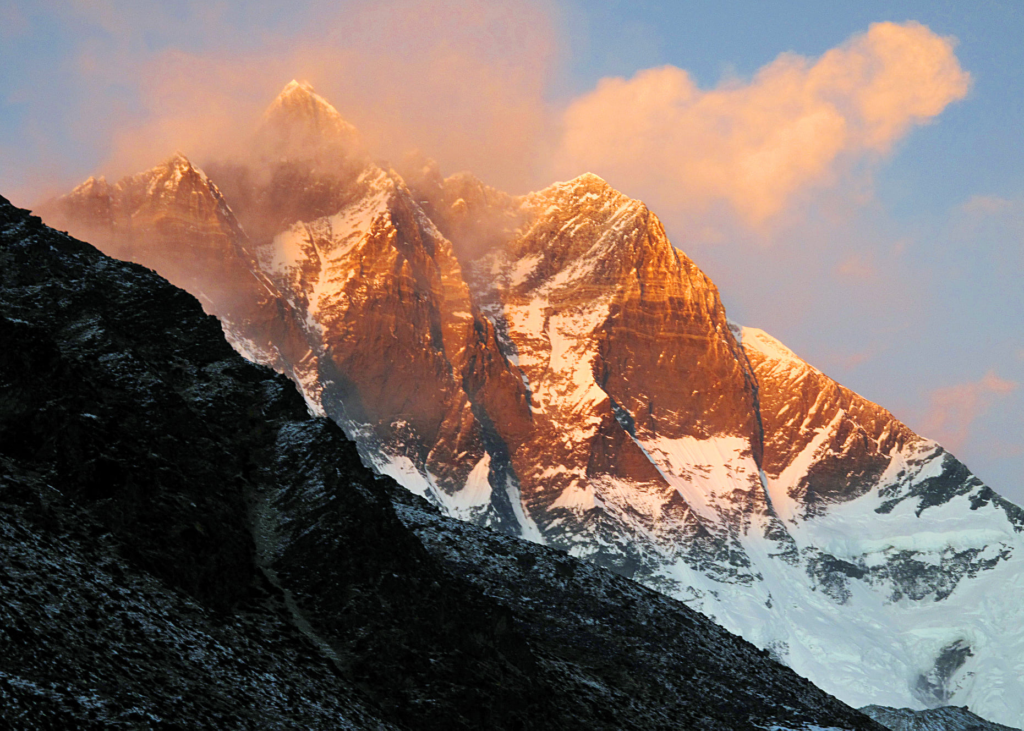
Lhotse’s proximity to Everest makes it one of the most familiar 8,000m summits to visitors in the Khumbu.
Climbers heading for Lhotse use similar camps and acclimatization plans to Everest teams, so the logistics and the idea behind it on the trail feel familiar.

For visitors, Lhotse is mainly a visual presence that deepens the landscape and gives extra scale to the Khumbu skyline.
Makalu (8,485 m)
Makalu lies east of Everest and is famous for its steep, pyramid-like peak profile. First climbed in 1955, Makalu Mountain is technically demanding and sees far fewer attempts than Everest.

Access to Makalu starts with a flight to Tumlingtar or lengthy road travel, followed by an approach trek to Makalu base camp (roughly 5,000–5,200 m depending on route).
The trek’s remoteness preserves pristine alpine terrain and biodiversity; it’s a destination for serious expedition teams rather than casual trekkers.
Spring (pre-monsoon) remains the primary season for climbing and high-altitude access.
Ordinary travelers will usually see the massif from expedition approaches or on longer trekking routes that pass through less frequented areas.

Service points are limited, and trails are rugged, which is why the area feels untamed compared with the busier trekking valleys.
If you plan to visit Makalu, prepare for remote conditions, basic village hospitality, and weather that can change plans quickly.
Cho Oyu (8,188 m)
Cho Oyu, on the Nepal–Tibet border, is often regarded as one of the more “accessible” 8,000-meter peaks technically, and it was first climbed in 1954.
Base-camp approaches can be arranged from the Khumbu/Thame side or from Tibet; on the Nepal side, the trek passes familiar high-valley terrain with views of other giants.

Cho Oyu’s relatively moderate climbing profile (compared with Annapurna or Makalu) makes it a frequent objective for experienced high-altitude climbers preparing for Everest-class expeditions.
The mountain and its approaches still demand careful acclimatization and reliable logistics.
The Nepal side approaches use high valley trails similar to those used for Everest, so the region is familiar to people who have trekked in the Khumbu.

Trekkers can see Cho Oyu from long passes or viewpoint routes, and the area is sometimes used by climbers who want high altitude experience before attempting more technical objectives.
As always, allow rest days and use experienced guides if you spend time above 5,000 meters.
Dhaulagiri I (8,167 m)
Dhaulagiri towers west of the Annapurna range and presents a massively isolated silhouette.
First ascended in 1960, Dhaulagiri’s correct approach begins from the Pokhara-Jomsom side of the Gandaki valley.

Many itineraries start with a transfer to Pokhara, then a road or short flight to the Jomsom area before trekking up to base camp (roughly 4,500–4,700 m depending on the route).
Dhaulagiri’s weather regime and avalanche exposure make it a serious technical objective; for trekkers, the mountain is an imposing landmark on the way to the Dhaulagiri circuit and nearby high passes.

Spring and autumn windows are preferred for visibility and safer conditions. For walkers, the Dhaulagiri circuit gives a strong sense of scale because of long passes, exposed ridges, and wide valleys.
Logistics require careful planning and buffer days for weather because the area is less forgiving than central routes.
Manaslu (8,163m)
Manaslu stands in Gorkha district and gives its name to the Manaslu Circuit trek, which is among Nepal’s most rewarding long treks outside the Annapurna and Everest regions.

First climbed in 1956 by Toshio Imanishi and Sherpa Gyalzen Norbu, the peak’s base areas are accessed via roadheads that include Arughat and then multi-day treks through remote villages and high passes; the common base camp is around 4,500–4,800 m.
Manaslu is loved by trekkers for remote mountain villages, close cultural contact with local communities, and the mountain’s dramatic presence.
The Manaslu Circuit often requires special permits and a guided approach (permit and restricted-area rules may apply), and like other high regions, it’s best visited in spring or autumn.

The circuit is valued for cultural exchanges, steady climbs, and dramatic views as you cross high passes.
Facilities along the route are simpler than on the busiest circuits, and that slower pace is part of the reward because it allows real village contact.
Annapurna I (8,091 m)
Annapurna I completed the list of Nepal’s 8,000-meter giants when first climbed in 1950 by Maurice Herzog and Louis Lachenal.
The Annapurna massif contains a variety of trekking experiences: the well-trodden Annapurna Sanctuary (Annapurna Base Camp) and longer circuit routes that showcase diverse landscapes, from subtropical lowlands up to alpine high passes.
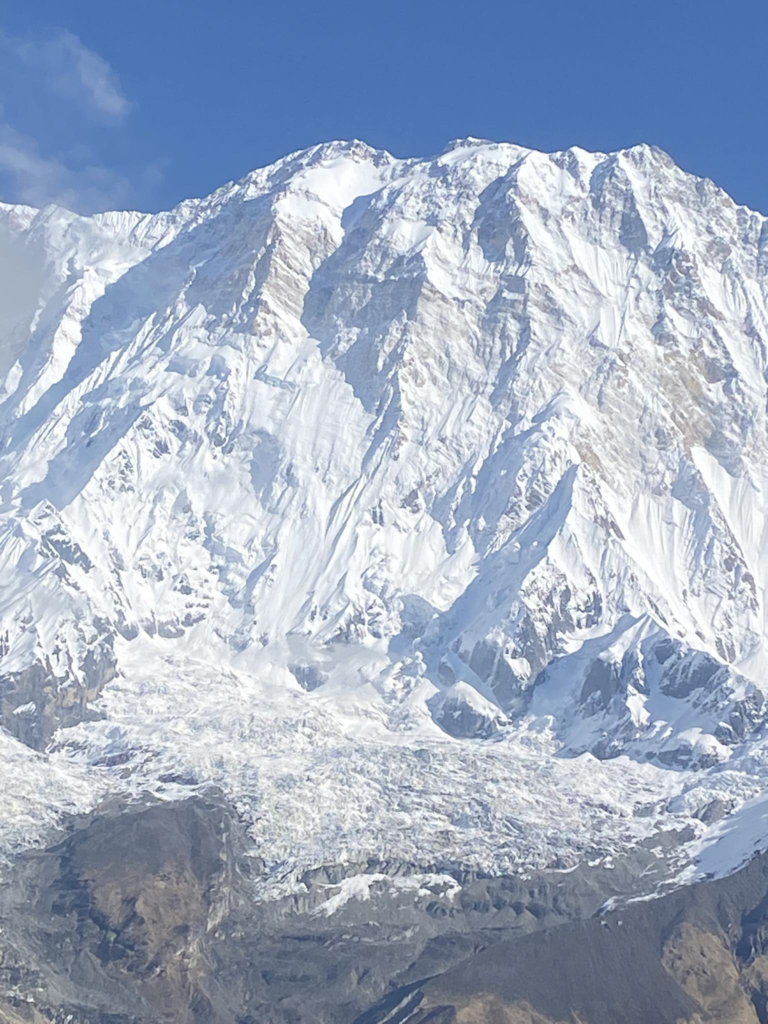
Approaches commonly begin in Pokhara, followed by progressive trekking to high camps and the sanctuary area.
The base camp altitudes may vary as the Annapurna Sanctuary base sits near 4,100–4,300 m, depending on the route.

Annapurna’s climbing history includes significant hazards. Avalanche danger has made it historically one of the more dangerous 8,000-meter peaks, and the mountain has death rate of 20%.
Nonetheless, the region’s trekking trails remain among the most accessible ways to feel an 8,000-meter mountain’s scale.
Spring (April–May) and autumn (October–November) are the most stable times for both high-altitude climbing and high-visibility trekking.
Monsoon months (June–September) bring heavy rain, and many high passes become risky or impassable.
You can also keep an eye on Winter access, which is possible in some regions but involves harsher conditions and shorter daylight.
For most Himalayan approaches, you’ll start in Kathmandu, and then use domestic flights or road transfers to local airfields and trailheads.
You can use Lukla for Everest/Lhotse/Cho Oyu approaches, Pokhara for Annapurna and Dhaulagiri approaches, Tumlingtar for Makalu, and regional roadheads for Kanchenjunga and Manaslu. Book domestic flights early in high season and expect weather delays.
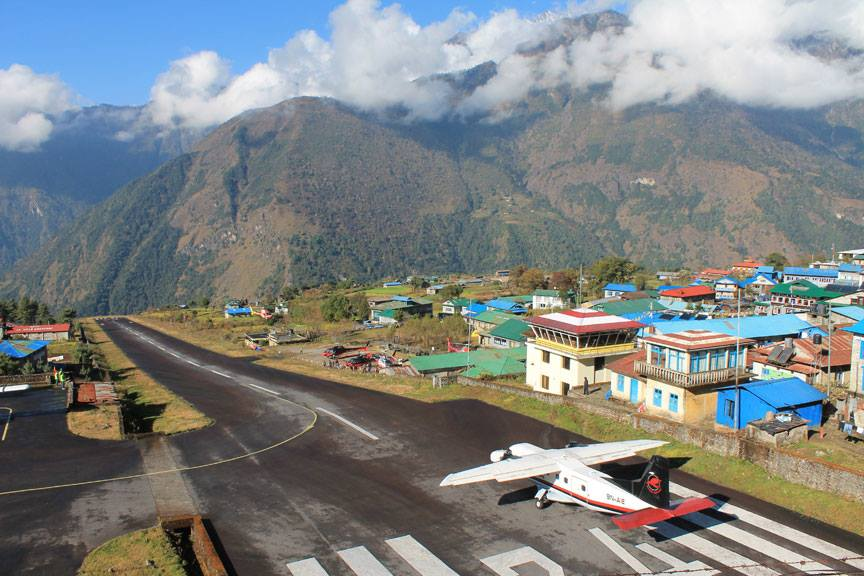
As all 8,000-meter expeditions require Nepal expedition permits and often conservation/entry permits for protected areas.
Treks near 8,000-meter peaks (Everest Base Camp, Manaslu Circuit, Annapurna Sanctuary) require TIMS or local trekking permits and may have restricted-area rules.
If you plan base-camp visits or high passes, arrange guides, porters, and permits in advance.
Moreover, Base camps already sit between roughly 4,000 m and 5,700 m; acclimatization is essential.

Make sure to spend extra nights at intermediate elevations, watch for symptoms of AMS (acute mountain sickness), never rush ascents, and most importantly don’t litter everywhere.
Even trek routes to base camps require responsible pacing and awareness of altitude risks.
These eight peaks are a defining part of why people travel to Nepal, not only for the prestige of summiting but for the village life, high-valley trails, and base-camp experiences that reveal how mountain communities live with extraordinary landscapes.
Whether you plan a trek to a base camp, a helicopter transfer for a quick view, or an expedition, clear planning, proper permits, and a season-aware itinerary are essential.