


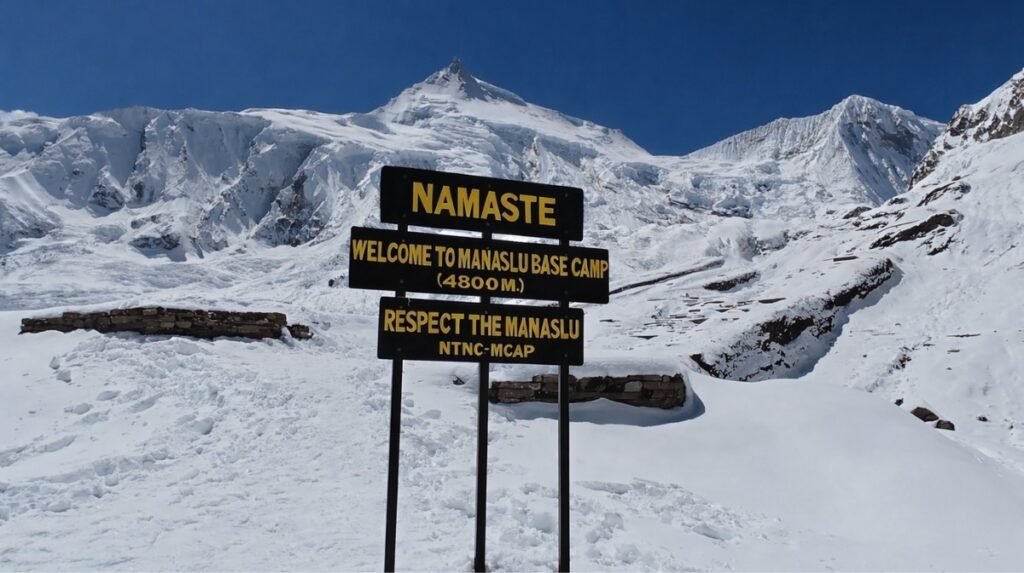
How to Reach Manaslu Base Camp: Routes & Difficulty
Manaslu Base Camp is one of the best mountain side trips in Nepal for trekkers who want a big Himalayan goal without going into the country’s busiest trekking regions.
It sits below Mount Manaslu (8,163 m), the eighth-highest mountain in the world, inside the Manaslu Conservation Area in northern Gorkha.
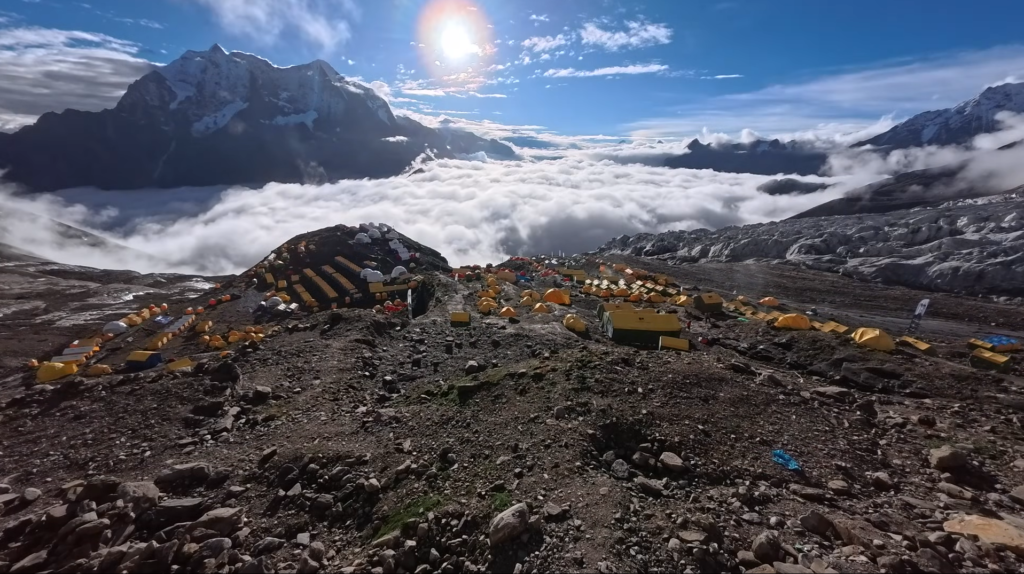
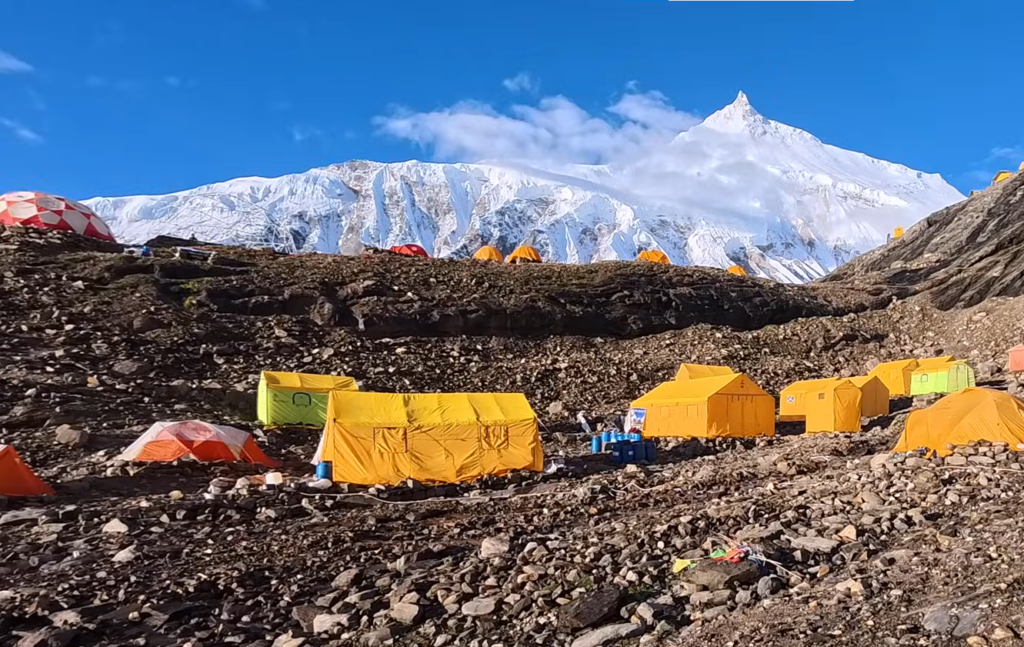
The base camp itself is usually placed at about 4,800 m, and most trekkers reach it from Samagaon, which is the main high village on the route.
The route to Manaslu Base Camp is not a separate road-to-base-camp journey. The normal way is to travel from Kathmandu to Soti Khola or Machha Khola, then walk up the Budhi Gandaki valley through villages like Jagat, Deng, Namrung, Lho, and Samagaon.
From Samagaon, trekkers usually do the base camp hike as a long day trip and return to the village.
Some stop there and go back the same way. Others use the base camp hike as part of the wider Manaslu Circuit, then continue toward Samdo, Dharmashala, and Larkya La Pass before exiting toward Dharapani.
This route is what gives this remote trekking an unforgettable experience for the trekkers.
The first part is all about getting into the valley. The second part is about climbing steadily through changing country.
The last part is about the high mountain landscape above Samagaon. When said clearly, the route is simple, road to the trailhead, trek to Samagaon, hike to base camp, then either return or continue the circuit.
The journey also feels rewarding because the land changes properly as you go. Lower down, you move through river valleys, terraced hills, suspension bridges, and village trails.
Higher up, the villages thin out, the air gets colder, and the trail takes on a much stronger mountain feel.
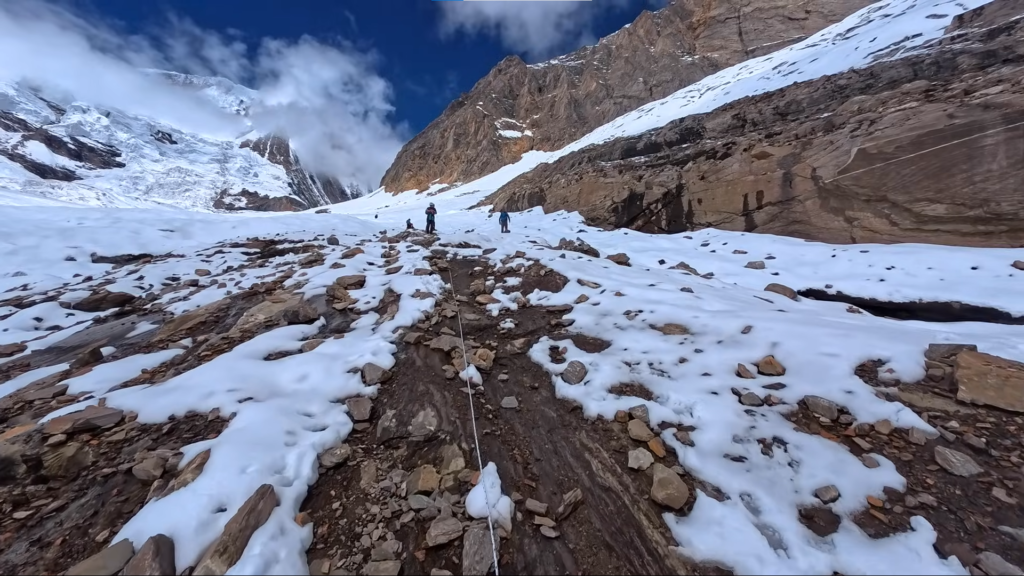
By the time you reach Samagaon, the route already feels far away from the lower world where it began. Above that, the climb toward Birendra Lake and the base camp feels rougher, emptier, and much more alpine.
Getting to the trailhead
The first step is the road journey from Kathmandu. Most itineraries now start with a drive to Machha Khola, though some still begin from Soti Khola.
The exact road time depends on traffic, weather, and road condition, but current route writeups usually place it at around 7 to 8 hours by private jeep and 9 to 10 hours by bus.
The road is better in the early section and rougher farther in, especially after the main highway stretch.

For most trekkers, a jeep is the more practical choice. It is faster, more comfortable, and saves energy before the walking even begins.
Local buses are cheaper, but they take longer and can leave people more tired before the trek starts. On a route like Manaslu, that extra energy matters.
| Stage | Route | Altitude | Approx. Time | Main Point |
|---|---|---|---|---|
| 1 | Kathmandu to Soti Khola or Machha Khola | 710 m / 900 m | 7–10 hrs by road | Jeep is faster and easier than the bus. |
| 2 | Machha Khola to Jagat | 1,340 m | 5–7 hrs | The lower valley trekking begins here. |
| 3 | Jagat to Deng | 1,860 m | 6–7 hrs | Longer climbs and narrower valley sections start to show. |
| 4 | Deng to Namrung | 2,630–2,660 m | 6–8 hrs | The trail begins to feel more open and high. |
| 5 | Namrung to Lho | 3,180 m | 6–7 hrs | The mountain views get much bigger here. |
| 6 | Lho to Samagaon | 3,520–3,530 m | 5–7 hrs | Samagaon is the main base for the base camp hike. |
| 7 | Acclimatization day in Samagaon | Stay at 3,520–3,530 m | Full day | Usually used for Birendra Lake or the base camp hike. |
| 8 | Samagaon to Birendra Lake to Manaslu Base Camp and back | 3,691 m / about 4,800 m | 6–9 hrs round trip | Long day, rougher ground, big height gain. |
| 9 | Continue the circuit or return the same way | Samdo (3,875 m) / Dharmashala (4,460 m) / Larkya La (5,160) | Varies | Base camp is the side hike; Larkya La is part of the full circuit. |
The day above shows the standard of Manaslu Base Camp itinerary, with the base camp hike done from Samagaon. Times and altitudes can vary and customized at Nepal Royal Tourism Holidays, so the numbers are shown in practical ranges.
The base camp hike from Samagaon
Samagaon is the real gateway to Manaslu Base Camp. The village sits just above 3,500 m and is where trekkers normally rest before going higher.
From here, the trail heads toward Birendra Lake, a glacial lake below Manaslu Glacier, then continues upward over rougher, more open ground.
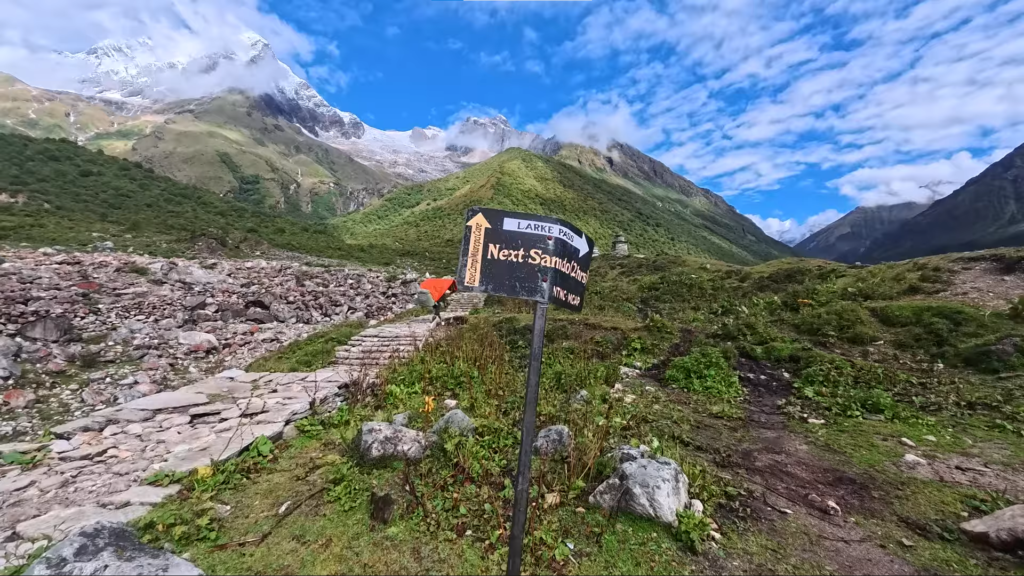
The first part of the walk is easier, but the higher you go, the trail becomes more tiring. That is why the base camp day is usually saved for the acclimatization stop.
If you are expecting this trek to be short scenic walk above the village, you may be wrong.
This is a proper high mountain side hike. For fast walkers the time may take from 6 to 7 hours, while others stretch it closer to 8 or 9 hours depending on pace, conditions, and how far the group goes toward the base camp viewpoint.

The important point is not the exact number but the overall journey in the Himalayas. It is long, steep in places, and much harder than the easy name “side trip” makes it sound.
If your plan is only to reach Manaslu Base Camp, you can return to Samagaon after the hike and walk back down the same valley.
If your plan is the full Manaslu Circuit, then the base camp hike fits naturally before the route continues toward Samdo and Dharmashala, then over Larkya La Pass, which sits at around 5,106 m.
Difficulty
The Manaslu Base Camp route is moderate to challenging. It is not a technical climbing route, so you do not need ropes or mountaineering skills, but it is still a serious trek.
The hard part comes from the mix of long walking days, steady altitude gain, rough trail, and the big push from Samagaon to base camp. Even strong walkers can feel that last climb because they are already high and already carrying fatigue from the days below.
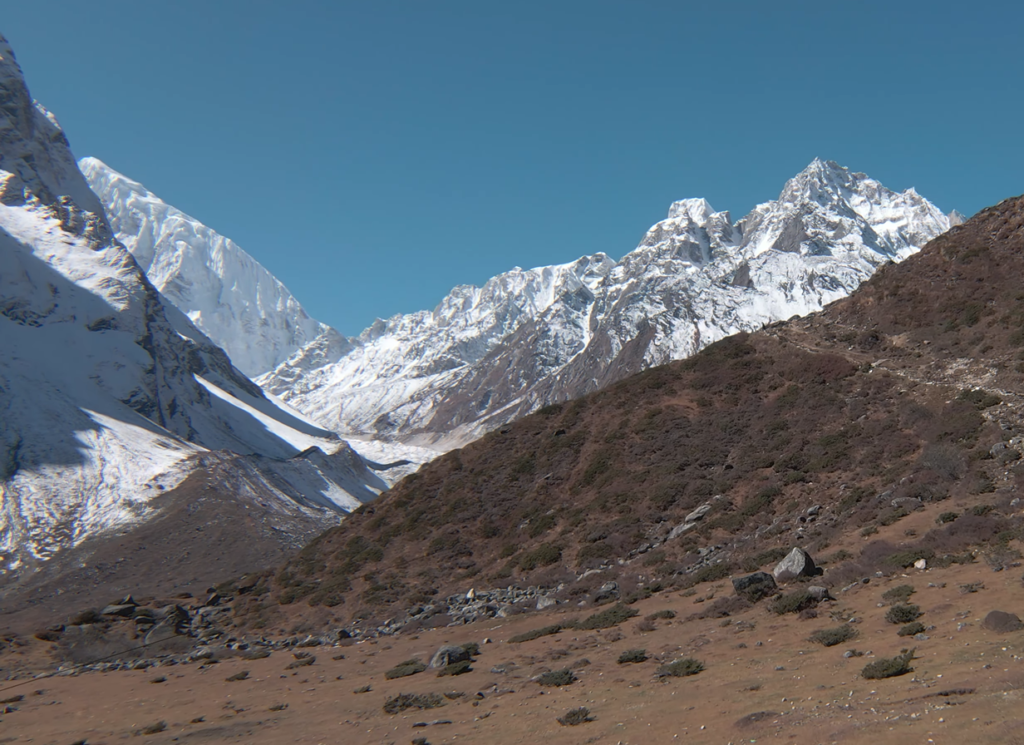
The lower route wears people down in a different way. In the first half of the trek, you deal with long climbs, descents, stone paths, suspension bridges, and narrow sections above the river. Later, the challenge changes.
The air gets thinner, the trail gets rougher, and every uphill step costs more energy. So the difficulty is not about one dramatic moment only. It builds stage by stage.
Altitude is the main risk. Once you are sleeping above 3,500 m in Samagaon, the jump to around 4,800 m at base camp becomes serious enough that you need to pace yourself properly. That is why the acclimatization day is so important.
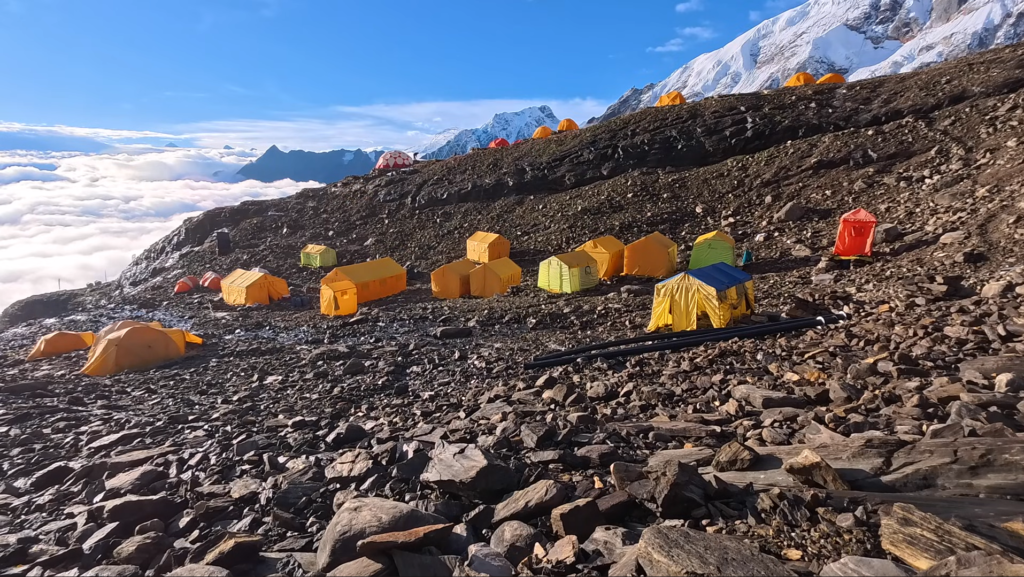
A faster itinerary may look better on paper, but on this route a slower climb is the safer and smarter option, especially if you are a beginner or have low trekking experience.
Best time to Visit Manaslu Base Camp
The best seasons for Manaslu Base Camp are spring and autumn. Spring usually means March to May. Autumn usually means September to November.
These months give the best mix of clearer mountain views, more stable weather, and better trail conditions.
Autumn is often the cleanest season for visibility, while spring adds more color in the lower valleys and forests.
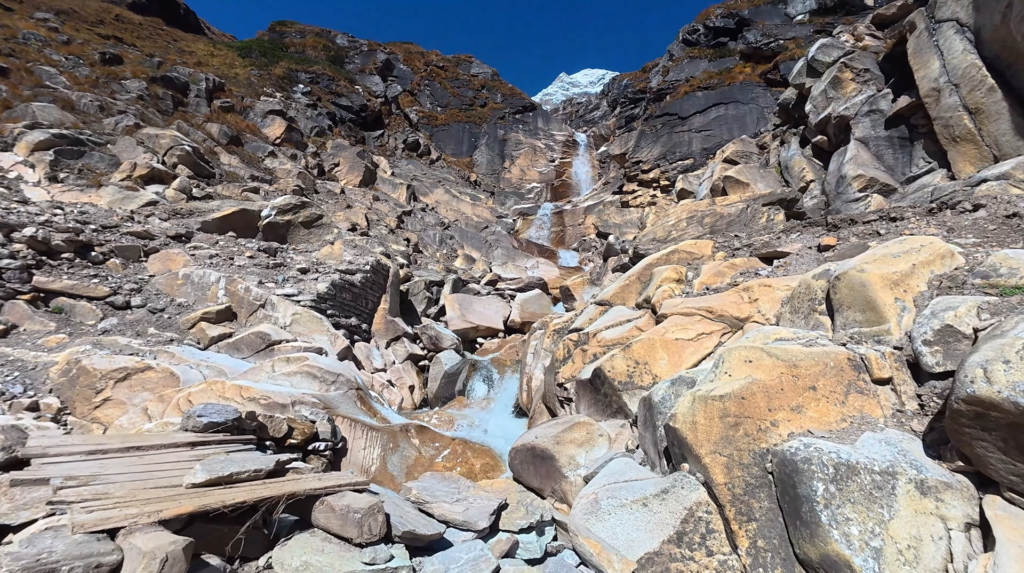
Winter and monsoon are much harder choices. Winter brings colder high camps, more ice, and more difficult trail conditions, especially if the trip continues toward the pass.
Monsoon brings wetter trails, landslide risk, and lower visibility. For most trekkers, spring and autumn are the simple answer.
Permits. rules and accomodations
Because Manaslu is a restricted area, trekkers need a special restricted-area permit from the Department of Immigration.
The cost of Gorkha Manaslu Area at USD 100 per person per week in September to November, then USD 15 per extra day, and USD 75 per person per week from December to August, then USD 10 per extra day.

Th restricted-area trekking permits are obtained through the Department of Immigration in Kathmandu.
The route also runs through the Manaslu Conservation Area, which the National Trust for Nature Conservation says covers 1,663 sq. km.
The trek continues over the full circuit exit toward Dharapani. Nepal Royal Tourism holiday can also arrange the other required conservation permits for the route.
In practical terms, most trekkers handle all of this before departure through their trekking agency, you can contact us rather than trying to sort it on the move.
Accommodation on the route is mostly in teahouses and simple lodges. The farther up you go, the more basic they become.
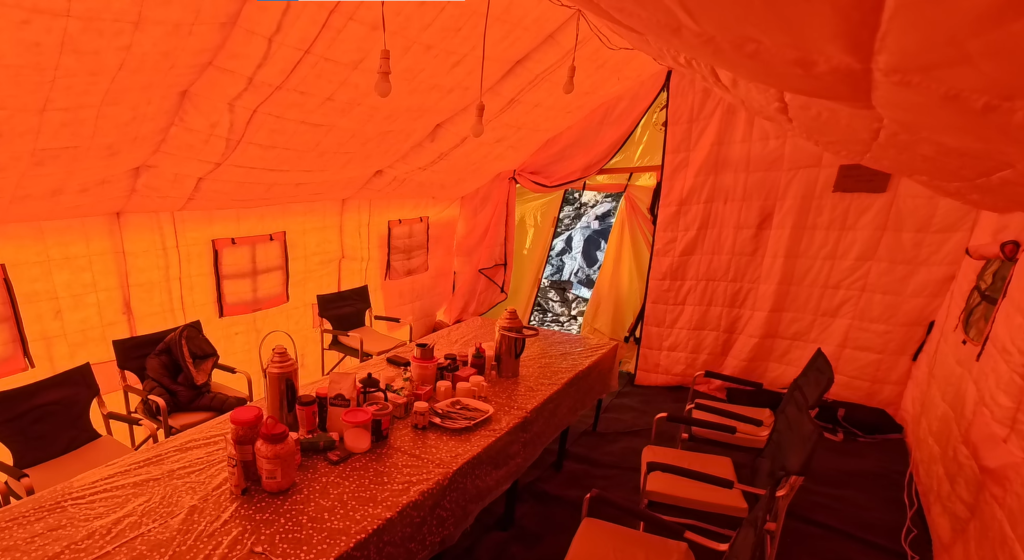
You should not expect luxury, especially above Samagaon. Rooms are usually simple, food is basic too, and the value of the stop is more about warmth, rest, and location than comfort. That is normal for Manaslu, and for many trekkers it is part of the route’s appeal.
Food is usually basic but enough for trekking days. Dal bhat, noodles, soups, fried rice, potatoes, eggs, pancakes, and Tibetan bread are common on the route.
Higher up, choice usually gets smaller. That is another reason it helps to treat this as a real mountain trek rather than a heavily serviced tourist trail.
If you are planning to reach Manaslu Base Camp,. Drive from Kathmandu to Soti Khola or Machha Khola, trek through the Budhi Gandaki valley to Samagaon, then do the base camp hike from there.
| Difficulty Factor | What It Means on This Trek | Why It Matters | Simple Advice |
|---|---|---|---|
| Altitude | Sleeping at Samagaon above 3,500 m, then hiking to base camp around 4,800 m | This is the main risk for headaches, slow pace, and altitude sickness | Use the Samagaon acclimatization day properly and climb slowly |
| Long Days | Several walking days are 6–7 hours, and the base camp hike is a long round trip | Tired legs make the high day feel harder | Train for repeated walking days, not just one long hike |
| Trail Surface | Lower trail has steps and narrow paths; higher up there is moraine and rough ground | Not technical, but tiring on legs and balance | Good boots and trekking poles help a lot |
| Road Access | The first and last travel days are long and often rough | You can start the trek already tired | Choose a jeep if budget allows |
| Season | Spring and autumn are best; winter and monsoon make the route harder | Bad weather adds more risk and more stress | March–May and September–November are the safest windows |
| Permits | Restricted-area and conservation permits are part of the route setup | This is not a casual walk-in trek | Sort the paperwork before you leave Kathmandu |
That is the standard approach. If you want a longer trip, keep going over Larkya La Pass and finish the full circuit. If base camp is the main goal, return the same way from Samagaon.
In terms of difficulty, the route is not technical, but it is still demanding. The hard part comes from altitude, long days, rough ground, and the big jump from Samagaon to base camp.
For trekkers who want a quieter alternative to Everest and Annapurna, though, that effort is exactly what makes Manaslu special. It still feels like a real mountain journey, and that is the reason so many people choose it.