


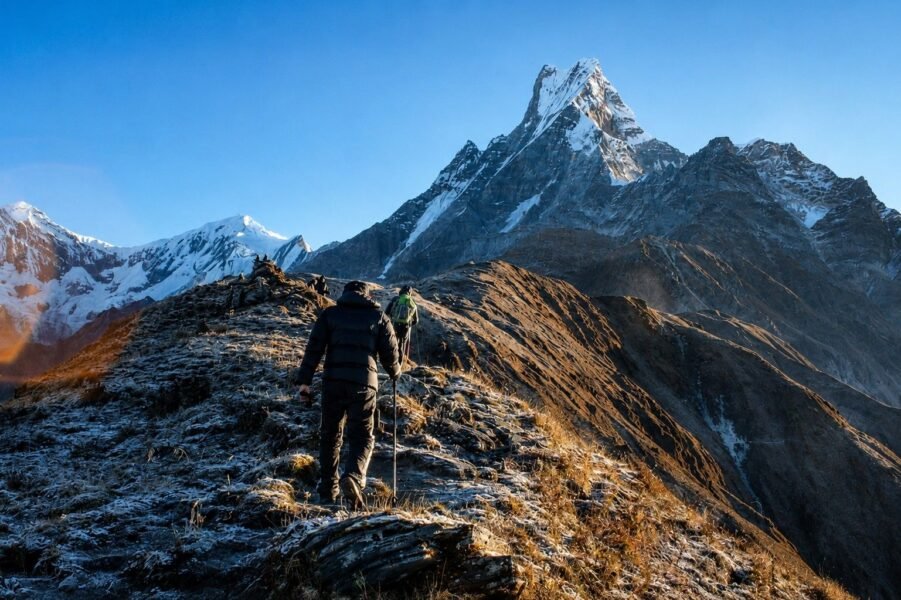
Nepal Trekking Experience: Accommodation, Food, Hygiene and Sanitation
There is a version of Nepal trekking that exists on social media and travel brochures, and then there is the version that actually happens once you are out there.
The real version is not worse than the advertised one, but it is different in ways that matter a lot when you are standing in a cold bathroom at 4,200 metres wondering how the shower is supposed to work.
Nobody who has spent time on Nepal’s trails would trade the experience. But almost everyone who goes wishes they had a clearer picture before they left Kathmandu.
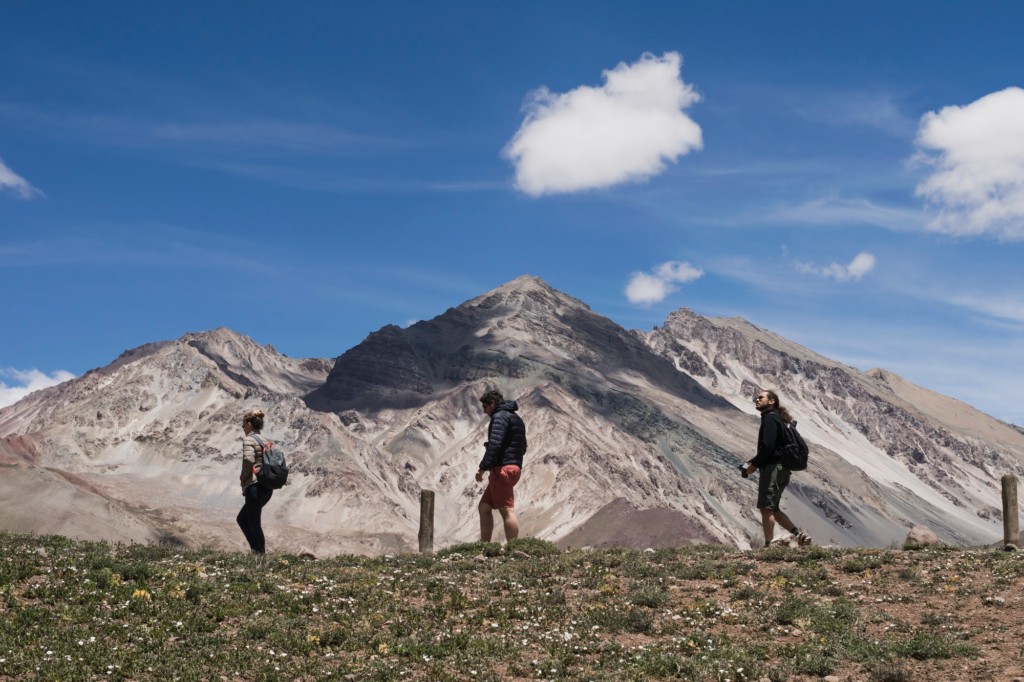
Understanding how accommodation, food, sanitation, and daily hygiene actually work on Nepal’s trekking routes helps you set realistic expectations and realistic expectations are most of what separates trekkers who love every day on the trail from the ones who spend it frustrated by things they could have prepared for.
The Teahouse: What It Actually Is
The backbone of trekking in Nepal is the teahouse, a family-run mountain lodge where you sleep, eat, and recover between walking days.
On the popular routes, the Everest Base Camp trek, Annapurna Base Camp, Langtang Valley, and Ghorepani Poon Hill, teahouses appear reliably every few hours of walking.
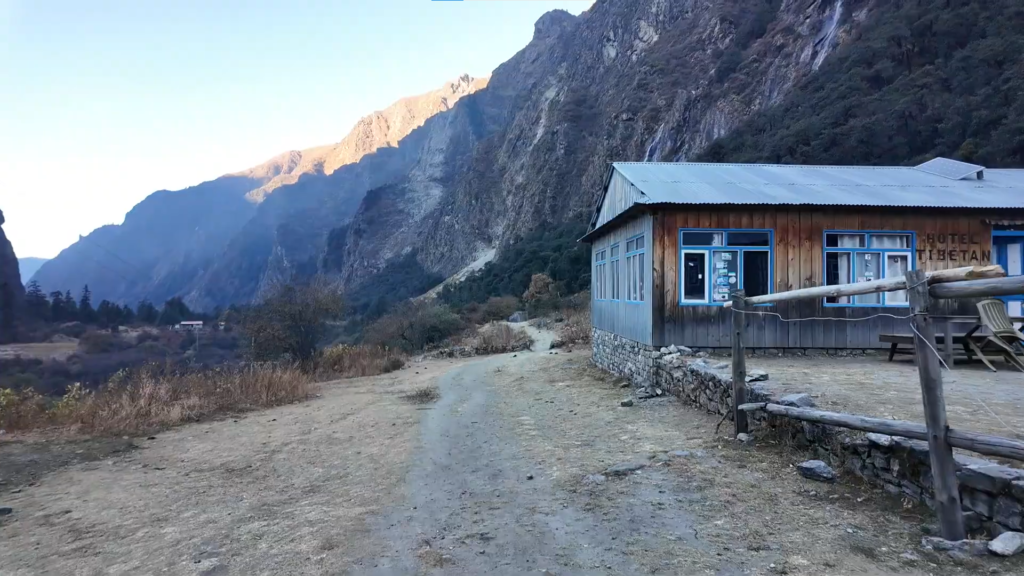
You can move from lodge to lodge without carrying camping equipment, and a bed and a hot meal are waiting at the end of every day.
Accommodation on Nepal’s trekking routes is simple, practical, and designed for mountain travel rather than comfort.
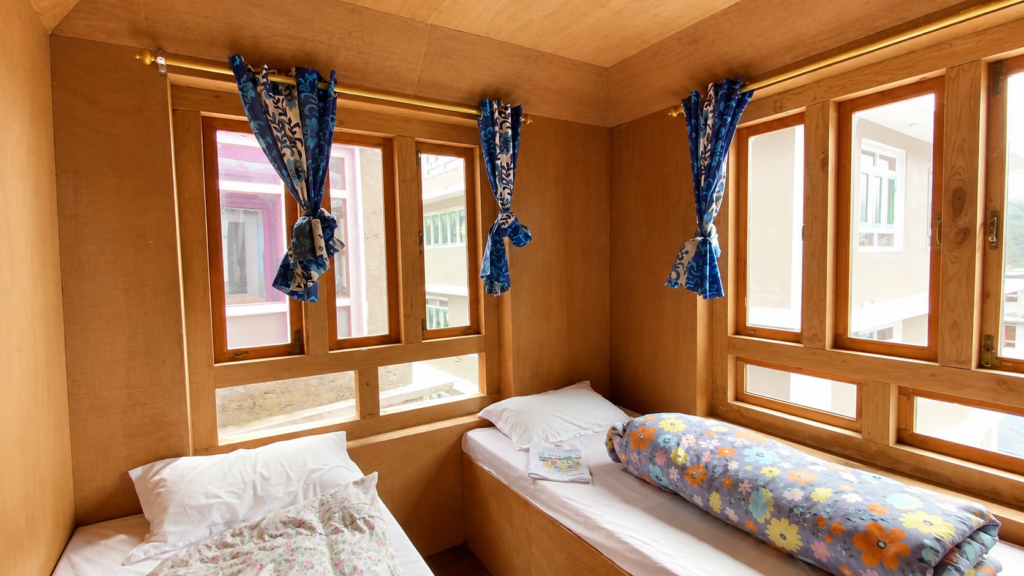
Most teahouse rooms contain two single beds, a thin foam mattress on each, a basic pillow, a blanket, a small window, and a simple lock on the door.
The walls are often plywood. The room is not heated. At altitude in October or November, the temperature inside your room at night can make you genuinely grateful for every layer of clothing you packed.
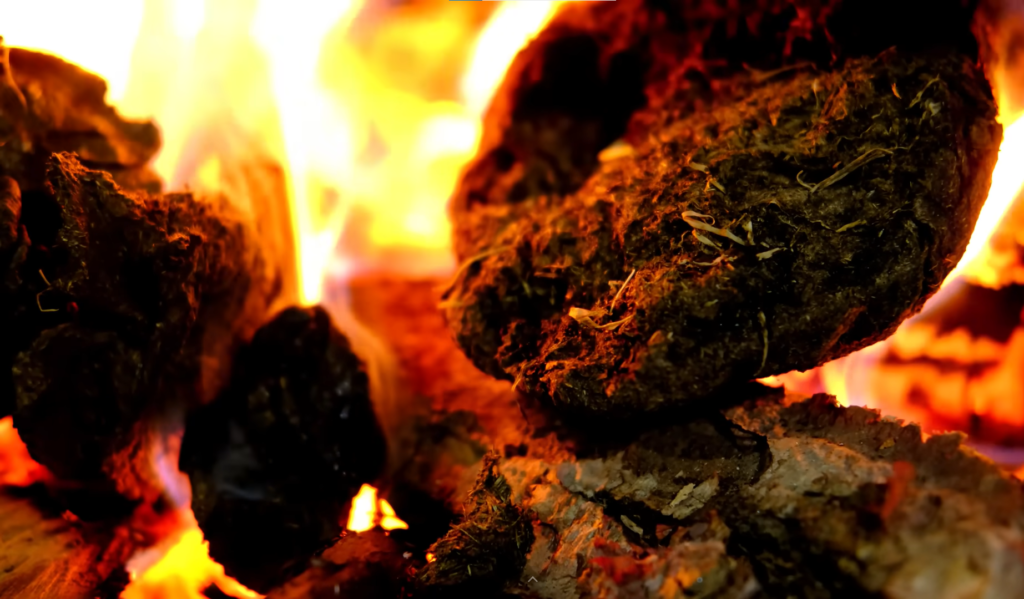
The heart of any teahouse is the dining room, the only space that has any warmth, usually from a central stove burning wood or yak dung, and the social centre of the evening where trekkers from every corner of the world pile in together, eat, share trail notes, and warm up before sleep.
That dining room, not the bedroom, is where the real teahouse experience happens.
How Accommodation Changes as Routes Get More Remote
The pattern is consistent across every region, the more remote the route, the simpler the facilities. It is worth understanding where each route sits on that spectrum before you commit to one.
Everest Region
In Namche Bazaar, at around 3,440 metres, you can find teahouses with attached private bathrooms, reliable hot showers, bakeries serving cappuccinos and fresh apple pie, and menus long enough to cause genuine indecision at dinner.
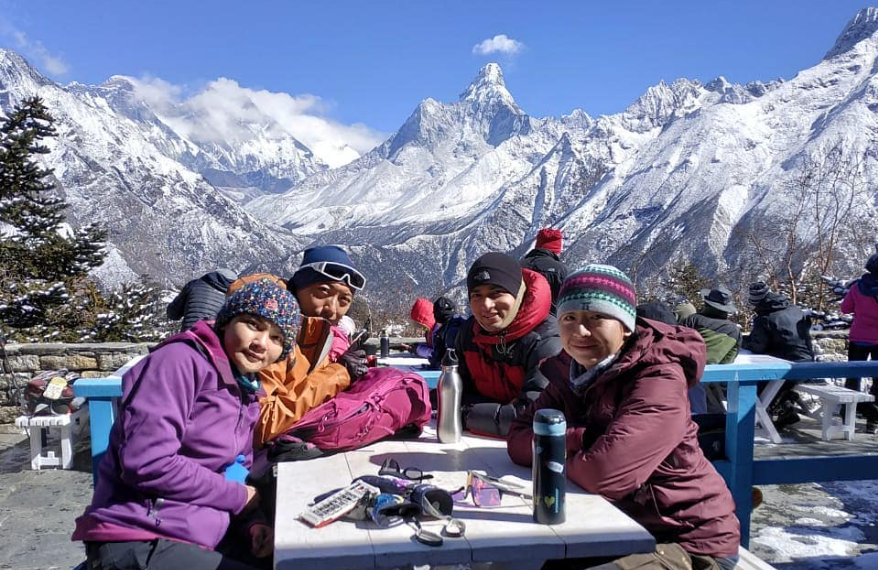
Two days higher, in Dingboche at 4,410 metres, the choices have narrowed and the showers are less reliable. By the time you reach Lobuche and Gorak Shep, nobody is asking about luxury.
The food is still hot, the beds are still there, but comfort has become secondary to the purpose of being that high on the mountain.
Annapurna Region
The Annapurna Base Camp and Annapurna Circuit treks both have strong teahouse infrastructure at most elevations.
The circuit is well-developed enough that you can find reasonable facilities even in smaller villages, and the lower sections around Pokhara and Ghorepani offer some of the most comfortable lodging you will find on any trail in Nepal.
The Mardi Himal trek, a newer route that has opened up in recent years, runs through quieter terrain and has a simpler teahouse setup. comfortable but less developed than the main ABC trail.
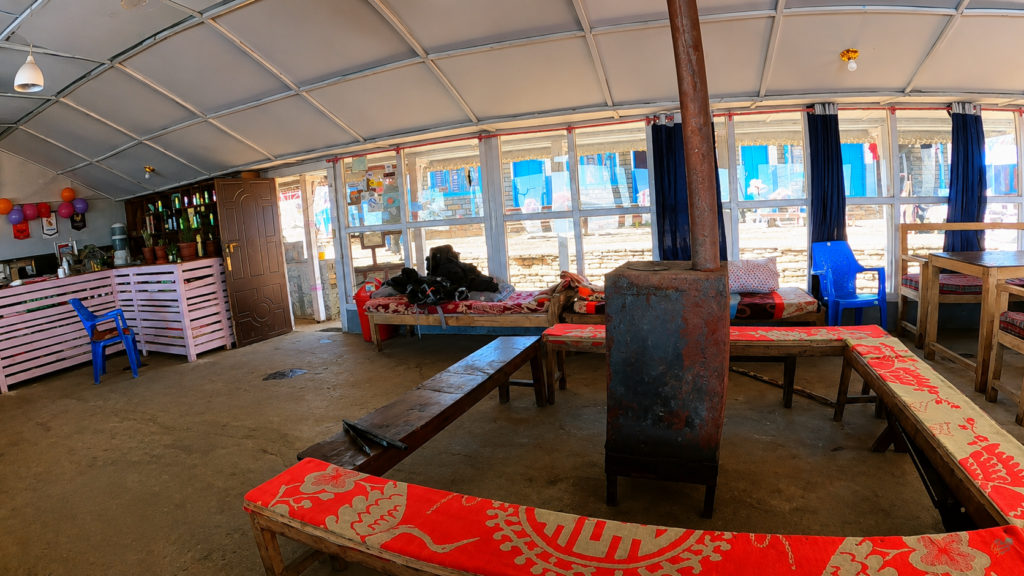
Upper Mustang is a different category altogether. The landscape is high-altitude desert, arid and sparse, and the teahouses and guesthouses in the lower villages are functional but plain.
In Lo Manthang itself, the walled capital of the old Mustang kingdom, accommodation is surprisingly decent by the time you reach it.
But the 10-day approach through isolated villages means many nights in very basic rooms, and water scarcity on this arid plateau makes hygiene more of a conscious daily exercise than it would be elsewhere.
Langtang Region
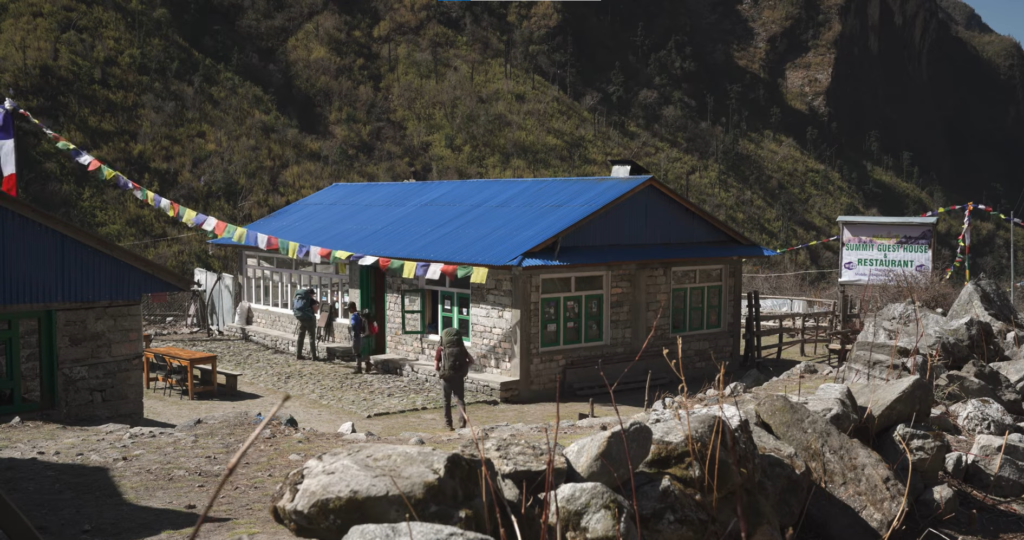
Langtang Valley, Gosaikunda, and Helambu all have solid teahouse infrastructure for most of their routes.
They are less busy than the Everest or Annapurna regions, which means the lodges are quieter and often more personal, but the facilities are generally maintained well.
Ganja La Pass, which connects Langtang and the Helambu region through a high technical crossing, moves closer to expedition-style logistics in its upper sections and should be treated accordingly.
Manaslu Region
The Manaslu Circuit is a stunning route around the world’s eighth highest mountain, but it runs through smaller villages with thinner infrastructure.
The teahouses are basic, rooms are simple, mattresses are thin, bathrooms are almost universally shared, and hot water becomes progressively harder to find the higher you go.
This is not a criticism of the lodges on this route; it is a reflection of where Manaslu sits in terms of development and accessibility.
The Tsum Valley extension, which divides off the Manaslu trail into a remote and rarely-visited Buddhist valley, is even more basic and genuinely feels like stepping back several decades in the best possible way.
Kanchenjunga Region
The Kanchenjunga Circuit, which takes you into the far eastern corner of Nepal toward the border with Sikkim, sits at the further end of the remote spectrum.
The villages are small, the trail sees a fraction of the foot traffic that Everest receives, and the teahouses reflect that. Rooms are plain, options are limited, and facilities are minimal.
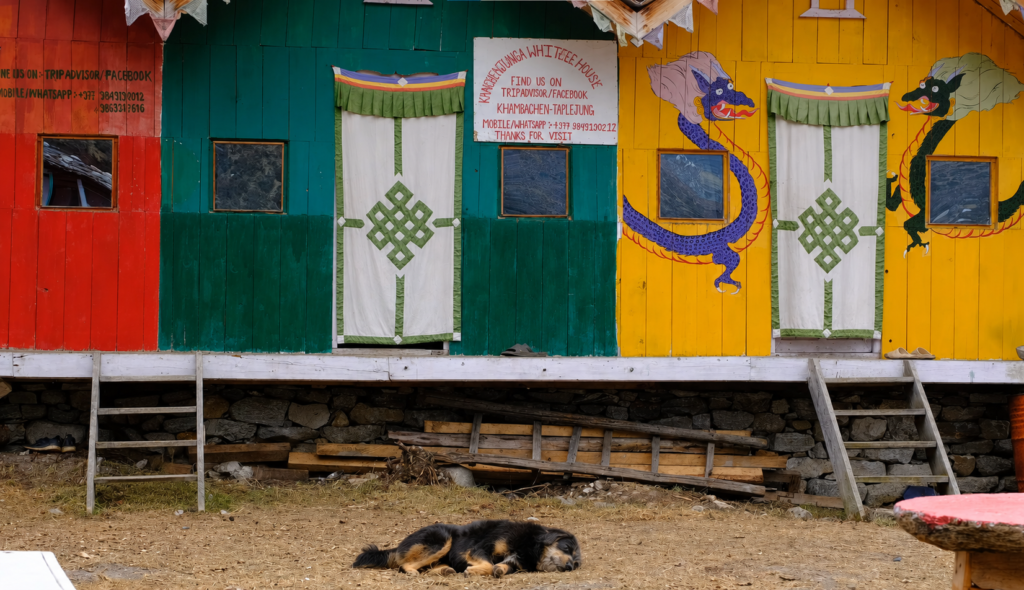
What you get in return is a trail experience that feels almost entirely untouched, and a level of hospitality from the families running those lodges that is hard to find anywhere in more developed trekking areas.
Upper Dolpo and Makalu Regions
Upper Dolpo, which Nepal Royal Tourism Holidays offers as a 24-day expedition through one of Nepal’s most isolated and culturally preserved regions, and the Makalu Base Camp trek through the far east are routes where the infrastructure is thin enough that camping makes up a significant part of the journey.
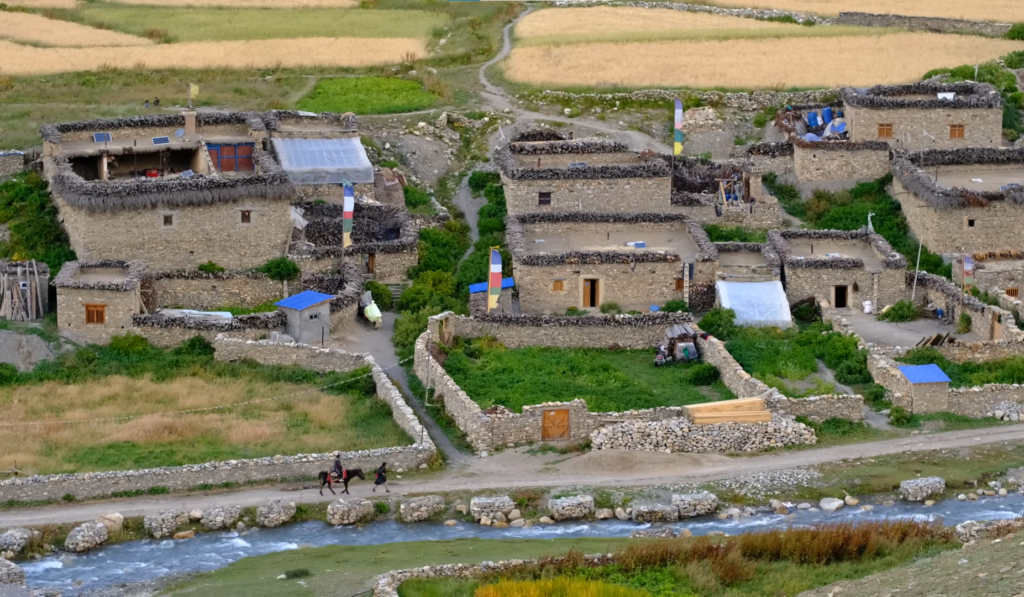
Teahouses exist in the lower villages, but as you move deeper into these regions, expedition logistics, tents, a dedicated cook, a support team, take over from the teahouse model.
If you are booking either of these routes with us, we will brief you fully on what to expect before you leave Kathmandu, because the experience is different enough from a standard teahouse trek that the preparation needs to match.
Dhaulagiri and Ganesh Himal
The Dhaulagiri Circuit, at 19 days, is one of the most technically demanding and remote treks on the Nepal Royal Tourism Holidays roster.
Most of the route is genuine wilderness, and accommodation is primarily camping with teahouses only in the lower approach sections.
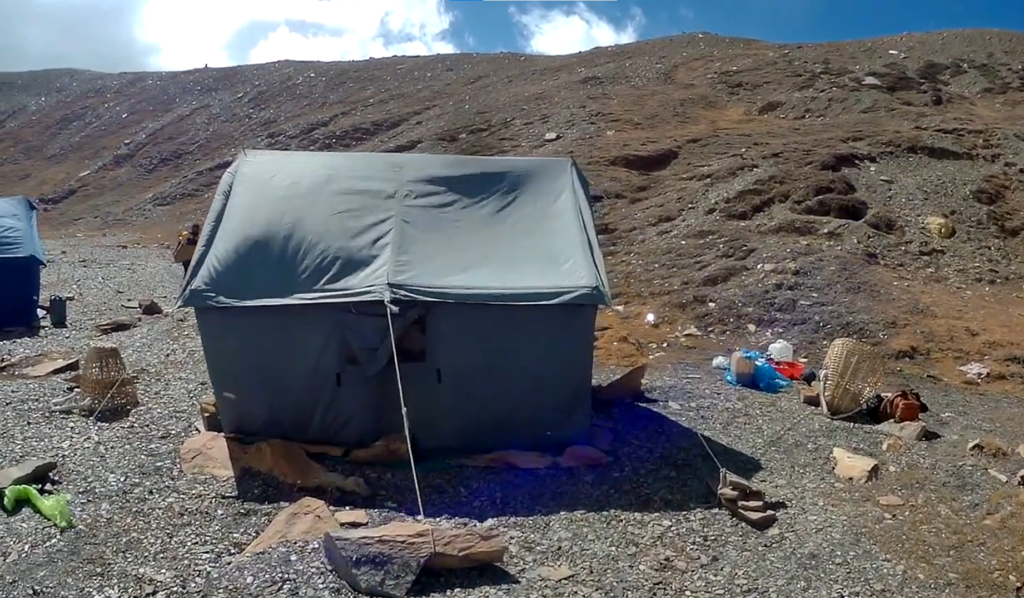
The Ganesh Himal trek, quieter and less-known, has a modest teahouse network through the lower sections that becomes more basic as the route climbs.
Both routes reward the right kind of traveller, the one who is genuinely comfortable with simplicity and remoteness rather than just interested in them in theory.
| Route | Accommodation | Facilities Level | Comfort Rating |
|---|---|---|---|
| Everest Base Camp, Annapurna BC, Circuit, Langtang | Teahouses, good infrastructure | Moderate to comfortable | High |
| Ghorepani Poon Hill, Gosaikunda, Helambu | Well-developed teahouses | Comfortable for mountain travel | High |
| Mardi Himal, Khopra Danda | Simpler teahouses, newer routes | Moderate | Moderate |
| Upper Mustang | Teahouses and guesthouses | Basic to moderate | Moderate |
| Manaslu Circuit, Tsum Valley | Basic teahouses | Simple, shared bathrooms | Moderate–Low |
| Kanchenjunga Circuit | Simple remote lodges | Basic, few options | Low |
| Mera Peak, Island Peak, Lobuche Peak | Teahouses on approach, tents near summit | Expedition logistics above base camp | Mixed |
| Upper Dolpo, Makalu Base Camp | Teahouses lower sections, camping above | Expedition-style | Basic to camping |
| Dhaulagiri Circuit, Ganesh Himal | Primarily camping with limited teahouses | Expedition-style | Camping |
What You Are Actually Eating Out There
Food on Nepal’s trails surprises most trekkers, usually in a good way.
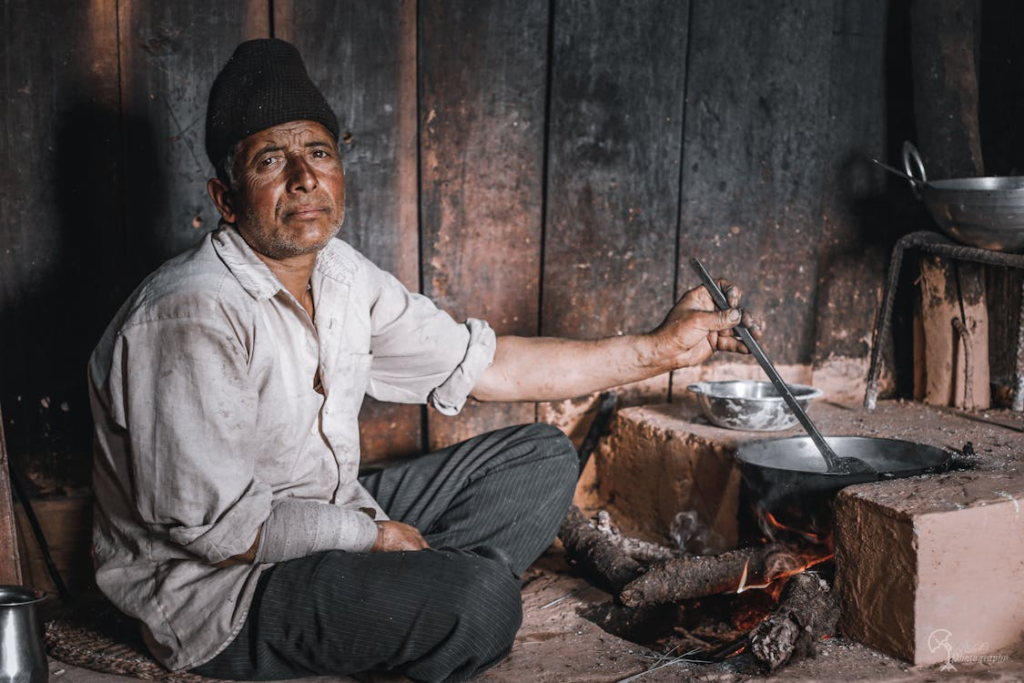
On the popular routes, the laminated menus have grown to accommodate the range of nationalities and appetites walking through: dal bhat, fried rice, noodle soup, pasta, omelettes, pancakes, porridge, momo, roti, Tibetan bread, and a full range of hot drinks including milk tea, lemon tea, black tea, hot chocolate, and coffee that varies dramatically in quality from lodge to lodge.
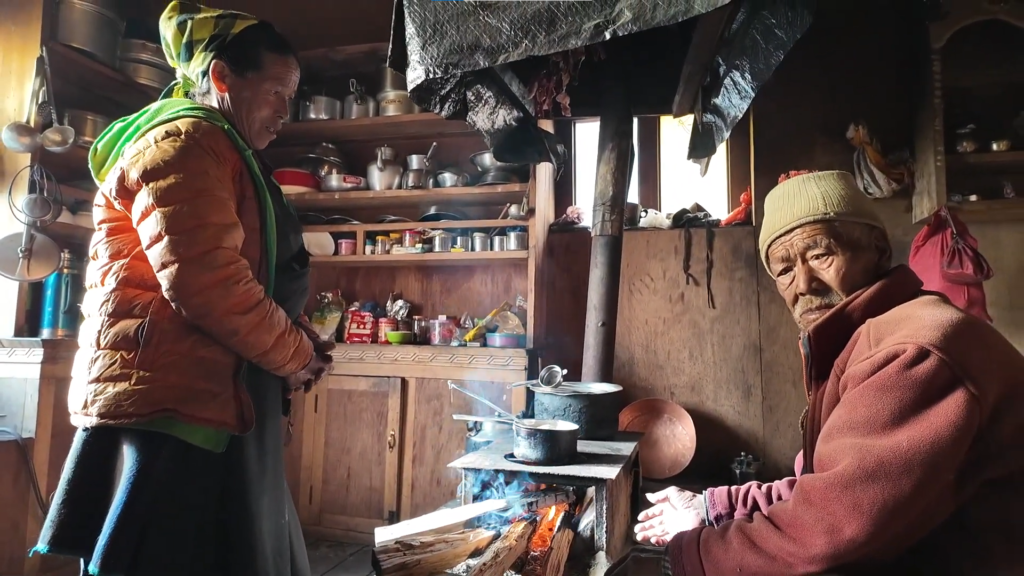
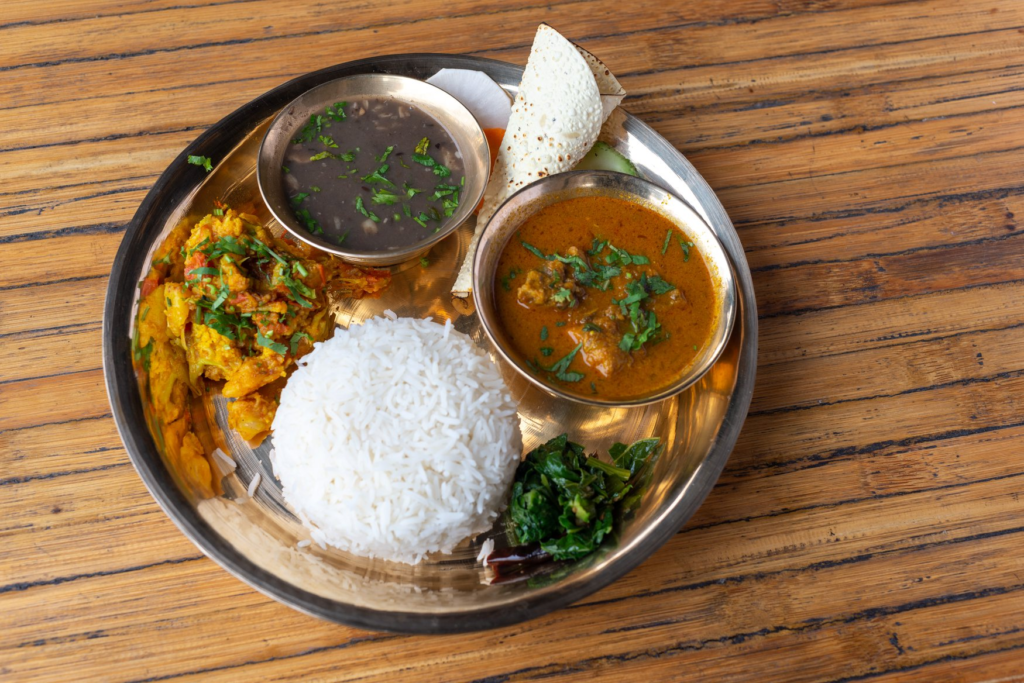
Dal bhat deserves its own conversation. The traditional Nepali meal of lentil soup with rice, vegetable curry, and pickles is almost always cooked fresh and served hot, and most teahouses refill it without extra charge.
That makes a difference more than it sounds after an eight-hour walking day. Dal bhat is the most practical meal on the trail because it is freshly made, filling, reliably safe, and endlessly available.
As altitude increases, two things happen that the menus do not mention. First, your appetite shrinks, sometimes significantly.
This is a normal effect of altitude, and eating enough even when food feels unappealing is something experienced guides actively remind trekkers to do.
Second, experienced guides on routes above Namche Bazaar generally avoid recommending meat dishes.
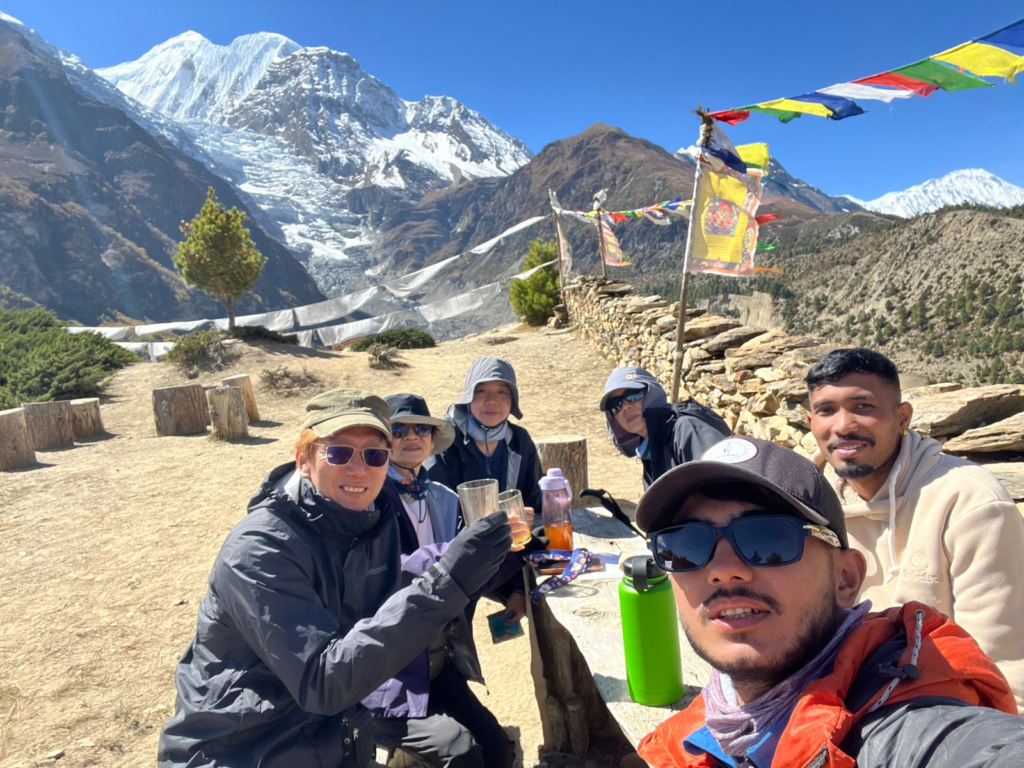
Most meat has to be carried up the trail or transported by mule, and the higher you go, the harder it becomes to guarantee freshness.
Dal bhat, eggs, and carbohydrate-heavy dishes become the sensible defaults above 3,500 metres, and this is not a limitation but a habit worth adopting before altitude enforces it anyway.
By the higher teahouses on Everest and Manaslu, you are eating well but simply, and that is entirely appropriate for where you are.
| Location | Elevation | Typical Meal Cost |
|---|---|---|
| Lukla | 2,840m | NPR 400–600 |
| Namche Bazaar | 3,440m | NPR 600–900 |
| Tengboche / Dingboche | 3,800–4,410m | NPR 800–1,200 |
| Lobuche | 4,940m | NPR 1,000–1,500 |
| Gorak Shep | 5,164m | NPR 1,200–1,800 |
Costs on Annapurna, Manaslu, and Langtang routes follow similar altitude-based patterns. Remote routes like Kanchenjunga and Dolpo tend to run slightly higher even at lower elevations due to supply difficulties.
The Bathroom Situation
Nobody treks to Gorak Shep because of the bathroom situation. The higher you go in Nepal, the more grateful you become for a clean toilet seat and a bucket of warm water, and understanding that reality before you leave is far better than encountering it as a surprise.
On most trekking routes above the lower foothills, bathrooms are shared. This is simply how teahouses are built and it is the norm across almost every trail in Nepal.
Toilets range from western-style seated units in the more developed lower-elevation teahouses to squat toilets further up the trail and in remote areas.
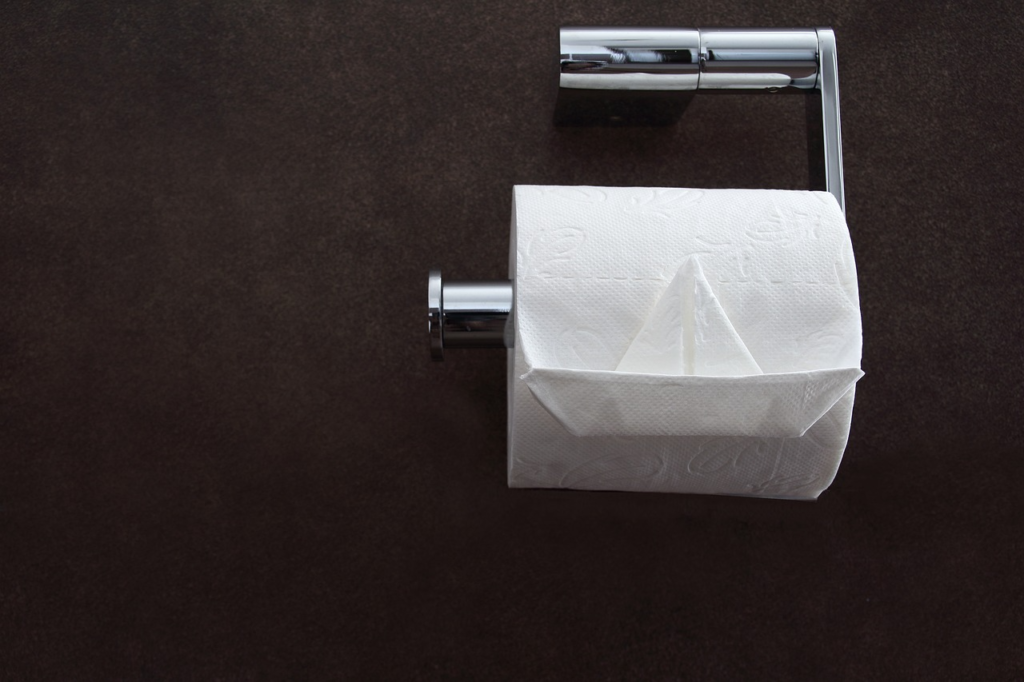
Squat toilets are not uncomfortable once you are used to them, but if you have never encountered one, knowing in advance removes the cognitive friction of figuring it out at 6am in a dark corridor.
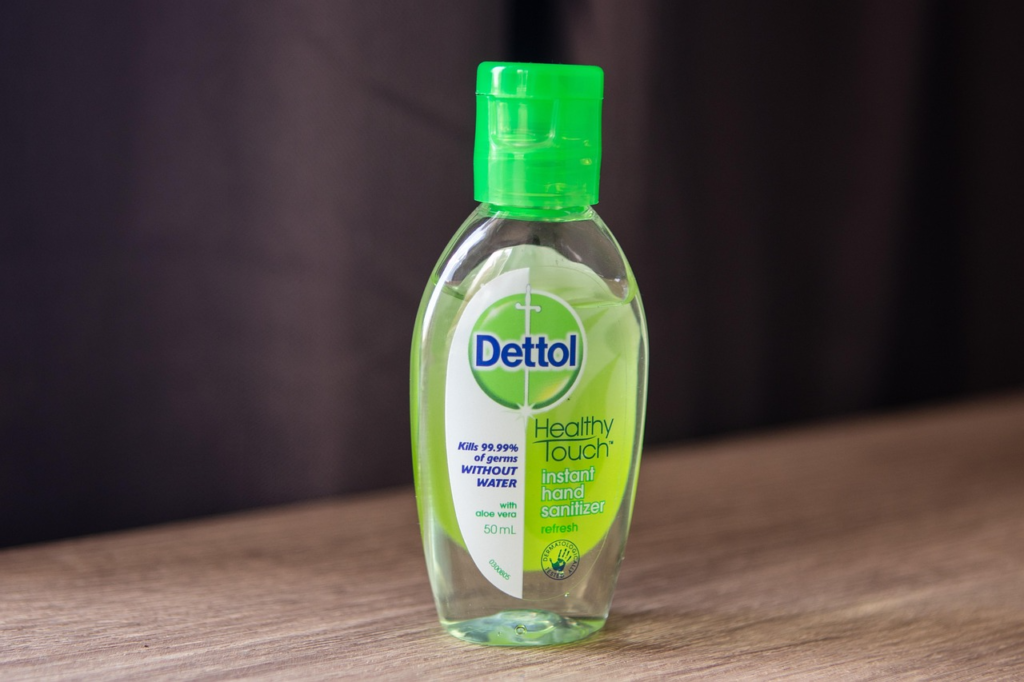
Toilet paper is not reliably provided. Carrying your own supply, along with a small bottle of hand sanitiser, is one of the most practical habits on the trail and one of the simplest things you can do to stay comfortable throughout a two-week trek.
Hot showers are available on many routes but the definition of hot requires some qualification. At lower elevations, you can find a proper hot shower either included in the room rate or available for a small additional fee, typically NPR 200 to 400, or sometimes even free of cost.
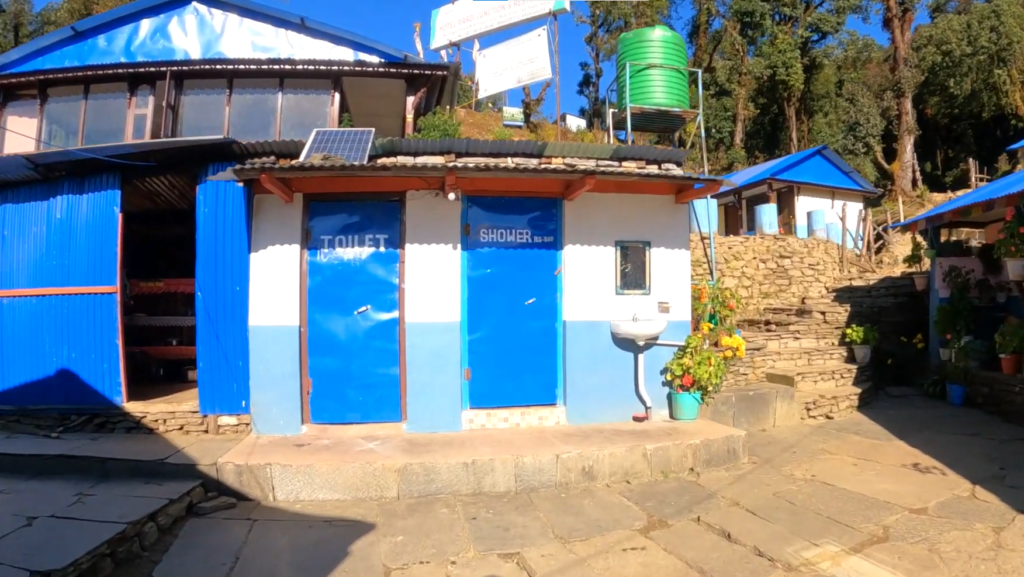
At higher altitudes, the solar-heated trickle that passes for a shower may go cold after two minutes, or may be a bucket of warm water, or in some cases nothing at all.
Above 4,000 metres, most experienced trekkers reduce showering to a minimum and rely on wet wipes, a small basin of warm water for hands and face, and a general acceptance that trail hygiene is a different thing from city hygiene.
This is the situation where most trekkers don’t judge each other, as it is what it is.
Sanitation on Nepal Trekking Routes
Sanitation is a topic that affects both your health on the trail and the health of the mountains themselves, and it is worth treating as its own subject rather than folding it into a general bathroom section.
Waste disposal on popular routes has improved significantly over the past decade through the work of organisations focused on reducing trail impact, but it remains an ongoing challenge.
On the heavily-trafficked Everest and Annapurna routes, some teahouses now participate in filtered or boiled water refill programmes, meaning you can refill your own bottle rather than buying a new plastic one every few hours.
Asking about this when you arrive at a teahouse rather than automatically reaching for a bottled water purchase is both environmentally better and increasingly practical as the network grows.
Biodegradable soap, shampoo, and toiletries are significantly better for the trail ecosystem than standard products, especially on routes where wastewater management is limited.
They are also widely available in Kathmandu before you depart. Carrying a small trowel for emergencies if you find yourself caught between teahouses is a practice the outdoor community calls leave-no-trace, and on the more remote circuits it is genuinely relevant.
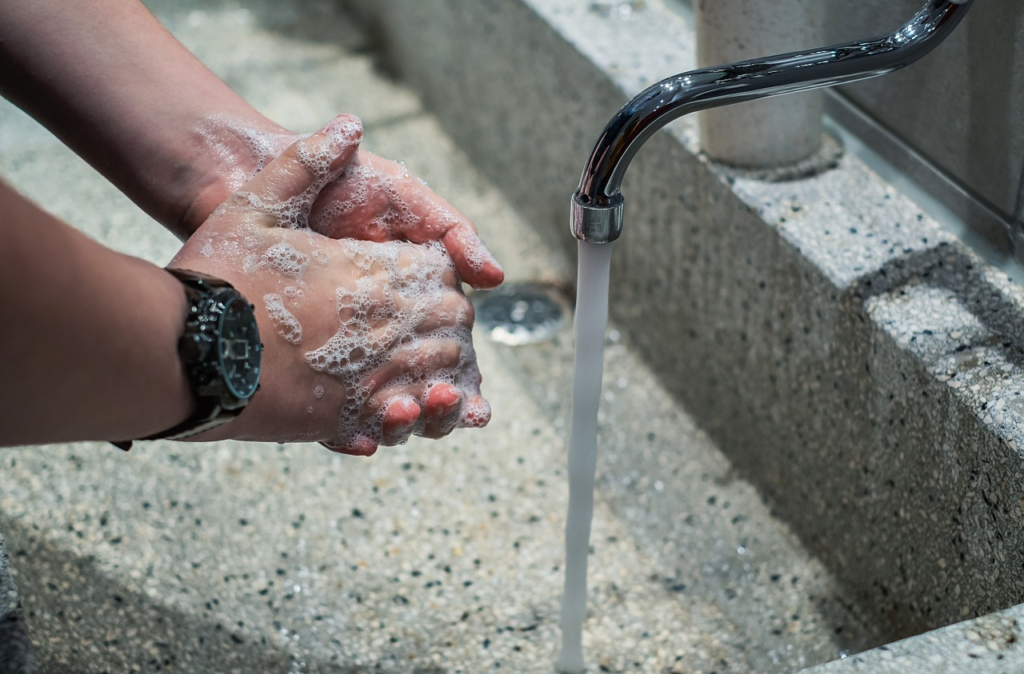
Handwashing facilities exist in most teahouses but vary from proper taps with soap to a shared bowl of water in a shared space.
The consistent habit that makes the most difference is simple, hand sanitiser or hand wash liquid before every meal, every time, regardless of what the washing facilities look like.
| Item | Popular Routes (EBC, ABC, Langtang) | Remote Routes (Manaslu, Kanchenjunga, Dolpo) |
|---|---|---|
| Toilets | Shared western-style common; squat available | Squat toilets standard; basic facilities |
| Showers | Usually available in some form | Limited or unavailable above mid-altitude |
| Toilet Paper | Not provided; carry your own | Not provided; carry your own |
| Handwashing | Available at most teahouses | Basic; often shared bowl |
| Drinking Water | Filtered/boiled refill options available at many lodges | Must be treated carefully; minimal options |
| Laundry | Available at larger villages (NPR 300–600 per load) | Rarely available; hand-wash only |
| Plastic Bottle Refills | Increasingly available on main routes | Very limited |
Water on the Trail and Why It Matters
Tap water, stream water, and river water along Nepal’s trails should not be consumed untreated, regardless of how clear it looks or how high up the mountain you are.
Contamination from upstream settlements, yak pastures, and other trail users is common enough that treating water is not optional, it is the baseline practice every trekker should begin with.
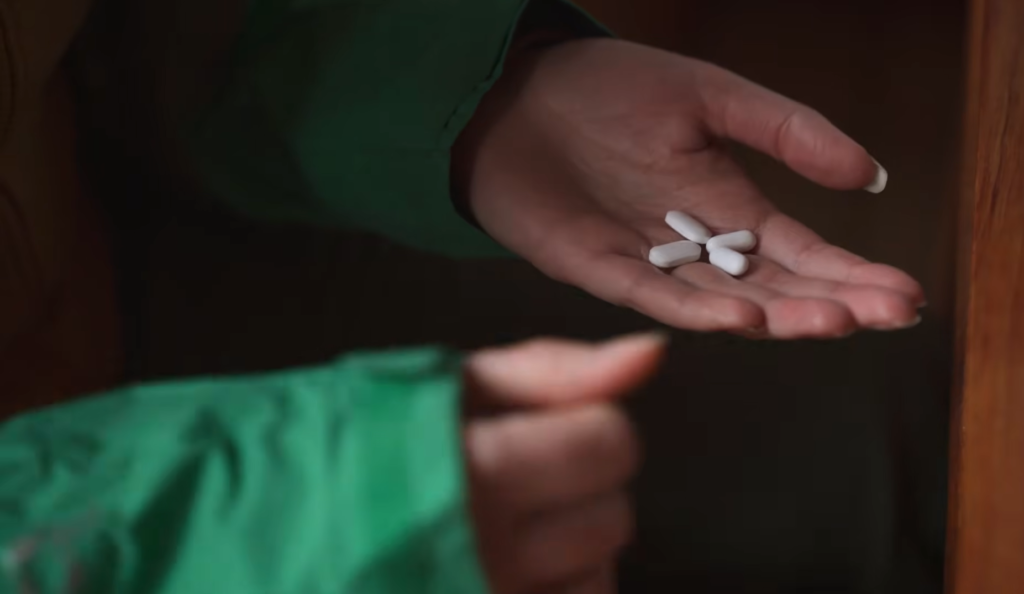
The three practical approaches are purification tablets, a filter or purifier bottle, or buying bottled water from teahouses.
The first two are far better for the environment and, on longer treks, considerably cheaper. Many lodges on the Everest and Annapurna routes now provide filtered or boiled water for bottle refills, which is worth asking about at each stop.
Staying hydrated at altitude is more important than most first-time trekkers expect.

The combination of physical effort, dry mountain air, and the dehydrating effect of altitude means your body needs more water than it would at sea level, and thirst alone is not a reliable signal of how much.
Drinking consistently through the day, before you feel thirsty, is a habit that experienced trekkers develop quickly and that makes a measurable difference to energy and acclimatisation.
What to Carry That Will Actually Help
A sleeping bag liner is probably the single most useful addition to your pack for any teahouse trek.
It solves two problems at once, it adds warmth on cold nights at altitude and gives you a clean layer between yourself and the teahouse bedding, which can vary in freshness depending on how recently things were washed.
A lightweight liner takes almost no space and earns its place many times over across a two-week trek.
On winter treks and high-altitude routes including any of the trekking peak climbs, a proper sleeping bag is necessary rather than optional.
Beyond the liner, the essentials are straightforward: hand sanitiser, your own toilet paper, wet wipes, a reliable water purification system, and a headlamp for the dark bathroom corridors and unlit rooms that are standard at most teahouses above the lower trail sections.
| Item | Why It Is Required |
|---|---|
| Sleeping Bag Liner | Warmth and hygiene layer; essential for most routes |
| Hand Sanitiser | Most important hygiene habit on the trail |
| Personal Toilet Paper | Not provided in most teahouse bathrooms |
| Wet Wipes | Daily hygiene above 4,000m where showers are limited |
| Water Purifier or Tablets | Non-negotiable for health on all routes |
| Headlamp | Shared bathrooms, unlit corridors, pre-dawn starts |
| Biodegradable Toiletries | Better for the mountain environment |
| Small Quick-Dry Towel | Teahouses rarely provide them |
| Extra Cash (NPR) | Showers, hot water, laundry, bottled water are often cash-only |
How the Experience Feels Across Different Routes
On the well-developed commercial routes, the teahouse system runs smoothly enough that you can focus almost entirely on the walking, the scenery, and the experience of being in the mountains.
You will find a bed each evening. The food will be hot and more varied than you expected. The bathroom will be basic but functional.
The hot shower will exist in some form, at least through the middle sections of the trail. This is comfortable mountain travel, not luxury, but entirely manageable for anyone who goes in with the right expectations.
On the remote circuit, Manaslu, Dhaulagiri and Kanchenjunga being the clearest examples, the experience is leaner, quieter, and more self-reliant.
The teahouses are there, the food is available, and the hospitality of the families running those lodges is genuine and warm.
But the infrastructure is thinner, and the daily rhythm of managing your own comfort becomes more conscious and deliberate. You notice the cold bathroom more.
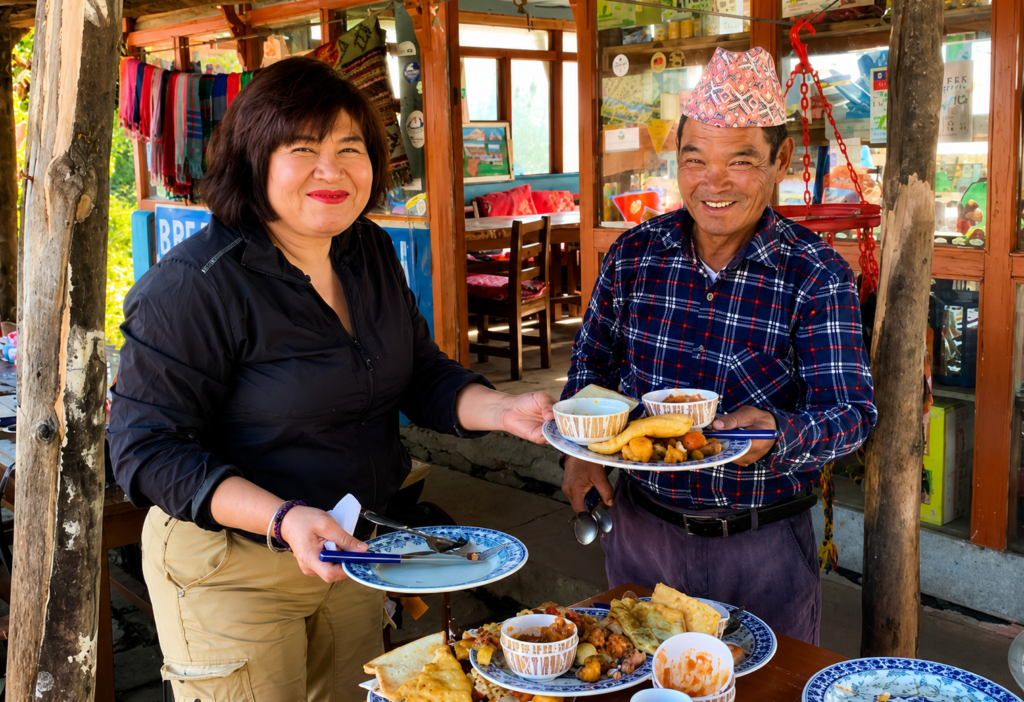
You appreciate a warm meal more. You find yourself being more thoughtful about water and hygiene in ways that feel entirely natural by day three.
On the climbing routes, Mera Peak, Island Peak and Lobuche Peak, the shift into expedition logistics around the upper sections takes some of the daily management off your hands.
The cook handles the food, the support team manages camp, and the focus narrows to the climb itself.
That simplification has its own comfort, even if the physical environment is the most demanding of all.
The Teahouse Is Not a Hotel, and That Is the Point
The teahouses along Nepal’s trails are not trying to be hotels and should not be judged as such.
They are family homes that have opened their doors to travellers and built a simple infrastructure around hospitality.
The family running the teahouse likely grew the potatoes you ate last night in that field you walked past this morning.
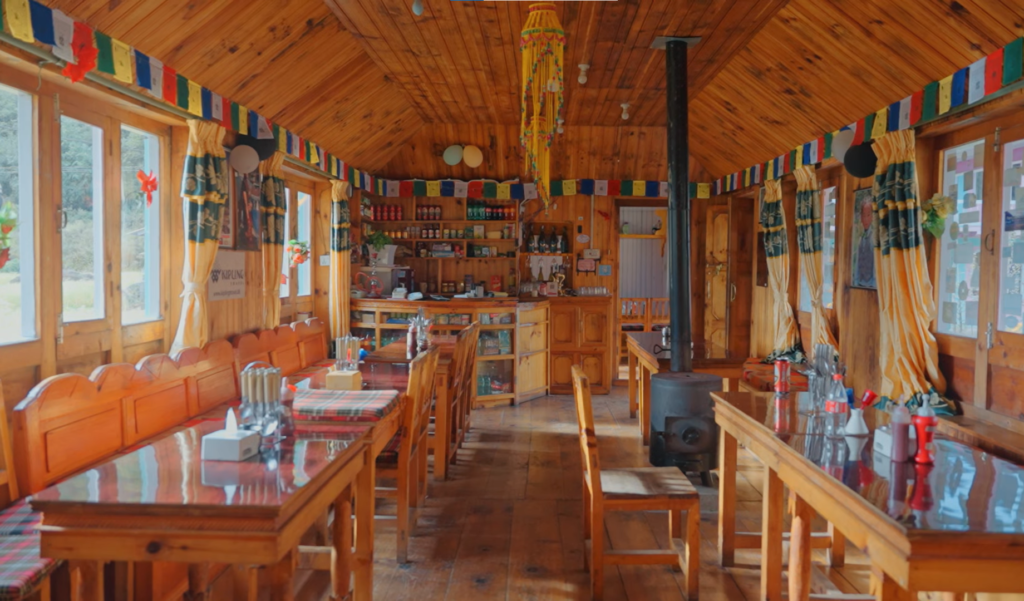
The grandmother in the corner wove the blanket on your bed. The child doing homework at the dining room table has almost certainly never been to Kathmandu and has probably never seen the mountain you are walking toward.
Most trekkers remember the peaks. What surprises them later is how much they remember the teahouses, too, the woman serving dal bhat in a village above the tree line, the stove everyone gathered around after sunset, the simple room where they slept before crossing a high pass the next morning.
Those small details become part of the story just as much as the mountains themselves.