



Dhaulagiri vs Kanchenjunga Circuit Trek: Which One Should You Choose?
Nepal has no shortage of famous treks, but once you move beyond the classic routes and into the remote circuits, two standout trekking routes can come to your mind that i.e., Dhaulagiri Circuit and Kanchenjunga Circuit.
Both of them are Himalayan journeys, long enough to change your rhythm, remote enough to feel far away from ordinary life, and demanding enough to test both your body and your patience.
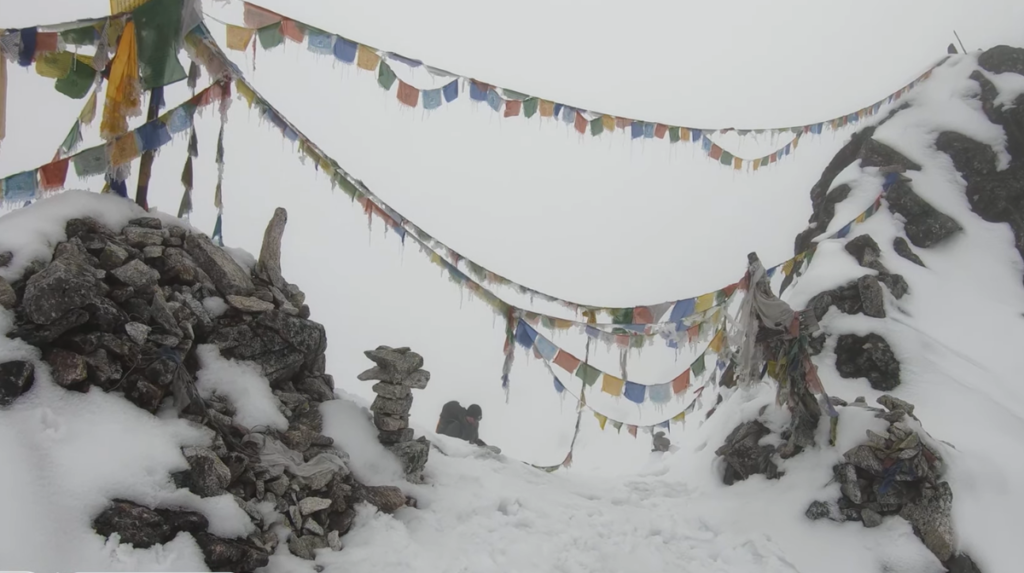
Dhaulagiri Circuit takes you into the wild western Himalayas around Dhaulagiri, the seventh-highest mountain in the world at 8167 meters and the highest point on the trek is French Pass (5360m).
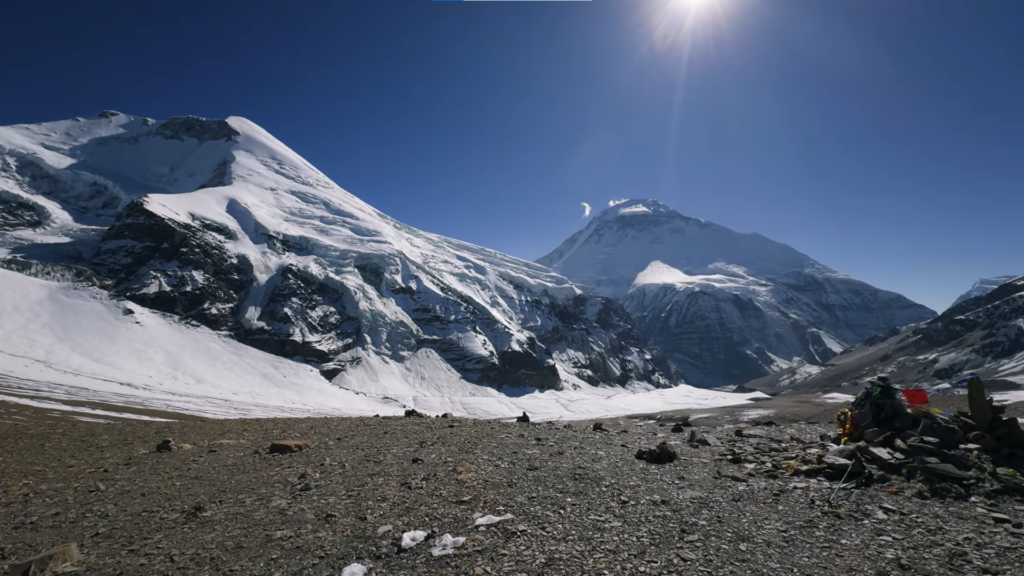
The mountain lies northwest of Pokhara, and the route is known for glacier terrain, high passes, and an atmosphere that feels closer to expedition trekking than a normal tea-house trek.
On the other hand, Kanchenjunga Circuit goes into the far eastern Himalayas around Kanchenjunga, the third-highest mountain in the world at 8,586 meters, and gives you a rare chance to experience both the north and south sides of the same great peak.
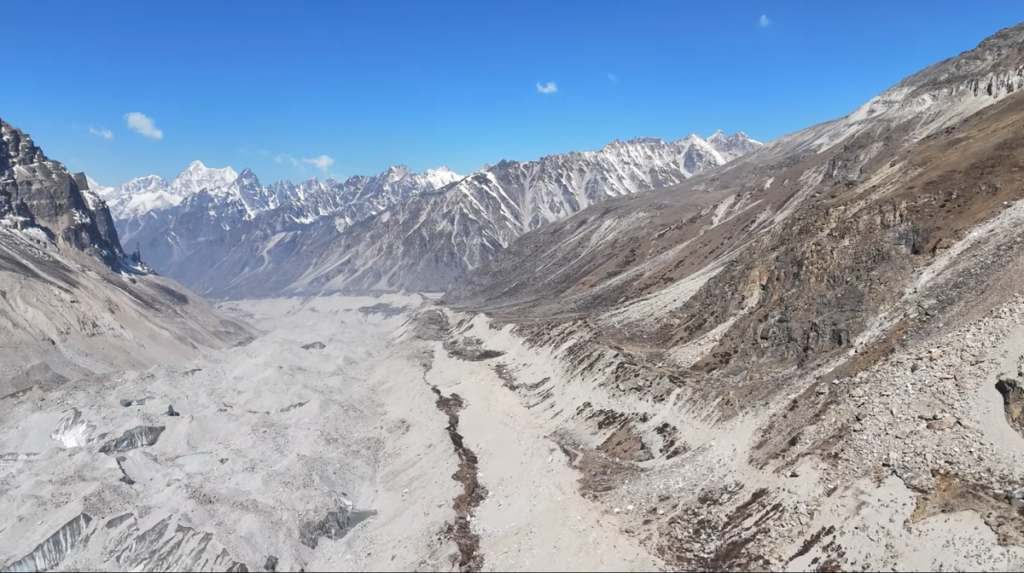
The kanchenjunga Circuit trek, unlike other circuits reaches both Pangpema (North Base Camp, 5143m) and Oktang (South Base Camp, about 4730m), which is one of the reasons it feels so complete and so remote at the same time.
If you are deciding between them, the real question is do you want the harder, more glacier-heavy challenge, or the longer, deeper, more remote mountain journey? The choice is yours.
| Factor | Dhaulagiri Circuit | Kanchenjunga Circuit |
|---|---|---|
| Main feel | Raw, high, glacier-heavy, expedition-like | Remote, long, varied, deeply immersive |
| Centerpiece mountain | Dhaulagiri, 8,167m | Kanchenjunga, 8,586m |
| Signature highlights | French Pass, Hidden Valley, glacial country | Pangpema, Oktang, eastern Himalayan valleys |
| Access style | Western Nepal via Pokhara/Myagdi side | Far eastern Nepal via the Kanchenjunga region |
| Trek character | Shorter but more intense | Longer and more remote |
| Best for | Strong trekkers wanting a harder challenge | Trekkers wanting a full remote Himalayan experience |
The mountains at the center
Dhaulagiri is a mountain that immediately changes the mood of the long trek. It dominates the skyline, and as the mountain lies northwest of Pokhara, it already feels like a giant presence from Nepal’s western trekking heartland.
The mountain’s reputation is not just about height. It sits above an environment that becomes increasingly harsh and dramatic as the trail moves higher.
The Dhaulagiri circuit is one of those routes where the landscape keeps reminding you that you are walking through serious Himalayan country.
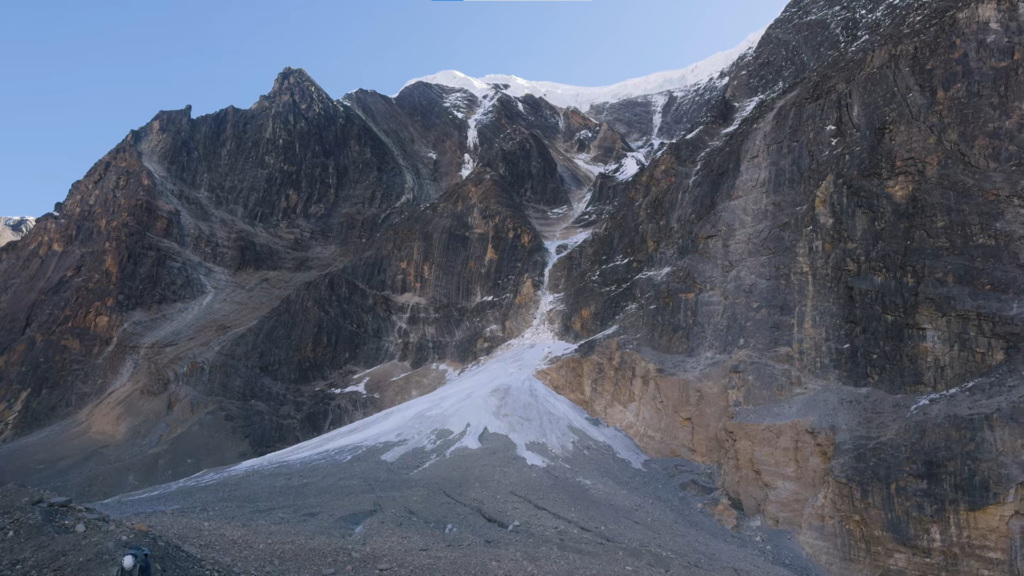
Unlike Dhalagiri, Kanchenjunga has a different personality. It is even higher than Dhaulagiri and sits far to the east, where the trekking world feels quieter and more distant.
As mentioned before, a route that leads into the remote eastern Himalayas and connects both the North Base Camp at Pangpema and the South Base Camp at Oktang.
That dual-sided experience is one of the trek’s strongest appeals which cannot be found in other treks including Manaslu or Annapurna Circuit.
You are not just circling a mountain; you are seeing how an entire massif changes as you move from one valley system to another.
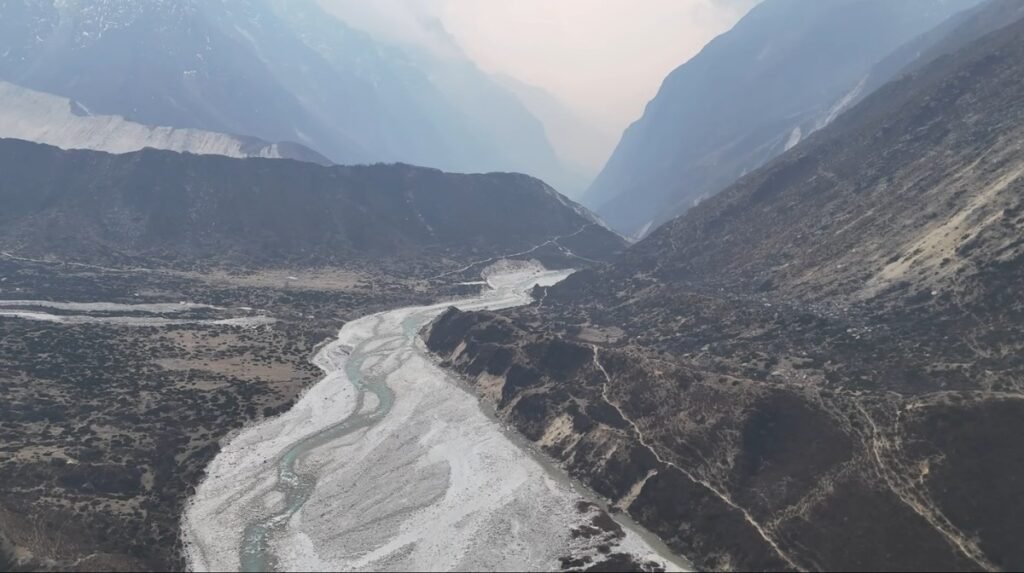
This is where the two treks begin to separate in a meaningful way. Dhaulagiri gives you one sustained, powerful encounter with a huge mountain and its ice-filled surroundings.
Kanchenjunga gives you a broader, more layered experience that feels like two great journeys joined together by serious high-altitude terrain.
Itinerary and Highest Altitude for Both Treks
| Day | Kanchenjunga Circuit | Max Altitude | Dhaulagiri Circuit | Max Altitude |
|---|---|---|---|---|
| 1 | Arrival in Kathmandu | 1,350m | Arrival in Kathmandu | 1,350m |
| 2 | Rest and preparation in Kathmandu | 1,350m | Sightseeing / rest day in Kathmandu | 1,350m |
| 3 | Flight to Bhadrapur, drive to Taplejung | Approx. 1,820m | Drive Kathmandu to Beni | 1,350m |
| 4 | Drive Taplejung to Sekathum | Approx. 1,650m | Drive Beni to Darbang | 1,112m |
| 5 | Trek Sekathum to Amjilosa | 2,510m | Trek Darbang to Muri | 1,853m |
| 6 | Trek Amjilosa to Gyabla | 2,730m | Trek Muri to Bagar | 2,082m |
| 7 | Trek Gyabla to Ghunsa | 3,595m | Trek Bagar to Dobhan Kharka | 2,520m |
| 8 | Trek Ghunsa to Khambachen | 4,145m | Trek Dobhan Kharka to Pina Sallaghari | 3,110m |
| 9 | Acclimatization day at Khambachen | 4,145m | Trek Pina Sallaghari to Italian Base Camp | 3,660m |
| 10 | Trek Khambachen to Lhonak | 4,790m | Acclimatization at Italian Base Camp | 3,660m |
| 11 | Hike to Pangpema North Base Camp and return to Lhonak | 5,143m | Trek Italian Base Camp to Japanese Base Camp | 4,301m |
| 12 | Trek Lhonak back to Ghunsa | 3,595m | Trek Japanese Base Camp to Dhaulagiri Base Camp | 4,750m |
| 13 | Trek Ghunsa to Sele La Base Camp | Approx. 4,200m | Trek Dhaulagiri Base Camp to Hidden Valley via French Pass | 5,360m |
| 14 | Cross Sele La, Mirgin La, and Sinion La to Tseram | Approx. 4,500m | Trek Hidden Valley to Yak Kharka via Thapa Pass | 5,244m |
| 15 | Trek Tseram to Ramche | 4,580m | Trek Yak Kharka to Marpha | 2,667m |
| 16 | Hike to Oktang and Yalung Glacier, then return to Tseram | 4,730m | Trek Marpha to Jomsom | 2,700m |
| 17 | Trek Tseram to Tortong | 2,980m | Flight Jomsom to Pokhara | 822m |
| 18 | Trek Tortong to Yamphudin | 2,080m | Drive Pokhara to Kathmandu | 1,350m |
| 19 | Drive Yamphudin to Kanyam | Approx. 1,660m | Final departure | — |
| 20 | Drive Kanyam to Bhadrapur, evening flight to Kathmandu | 1,350m | — | — |
| 21 | Rest day in Kathmandu | 1,350m | — | — |
| 22 | Final departure | — | — | — |
Access and location
The logistics are different too, and that matters more than people often admit. Dhaulagiri sits in western Nepal, and the trailhead is usually approached from the Pokhara side through Myagdi and Beni.
Beni Bazar is the administrative center of Myagdi district and a gateway point of the trek, with road access from Pokhara.
That fits the Dhaulagiri approach well, because Pokhara is the most practical staging ground for the route.
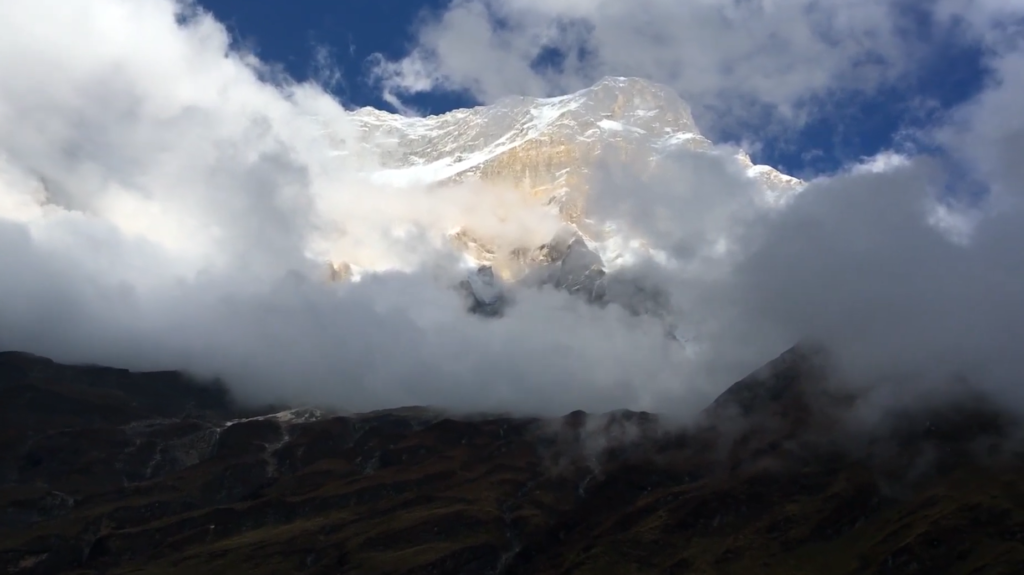
You still need a long drive and proper planning, but the access is relatively simple for a serious mountain trek.
Kanchenjunga is farther away from the main trekking hubs. It sits deep in eastern Nepal, which already gives the trek a more isolated feel.
The Kanchenjunga is placed into a special protected trekking region, and that alone tells you the route is not a casual side trip.
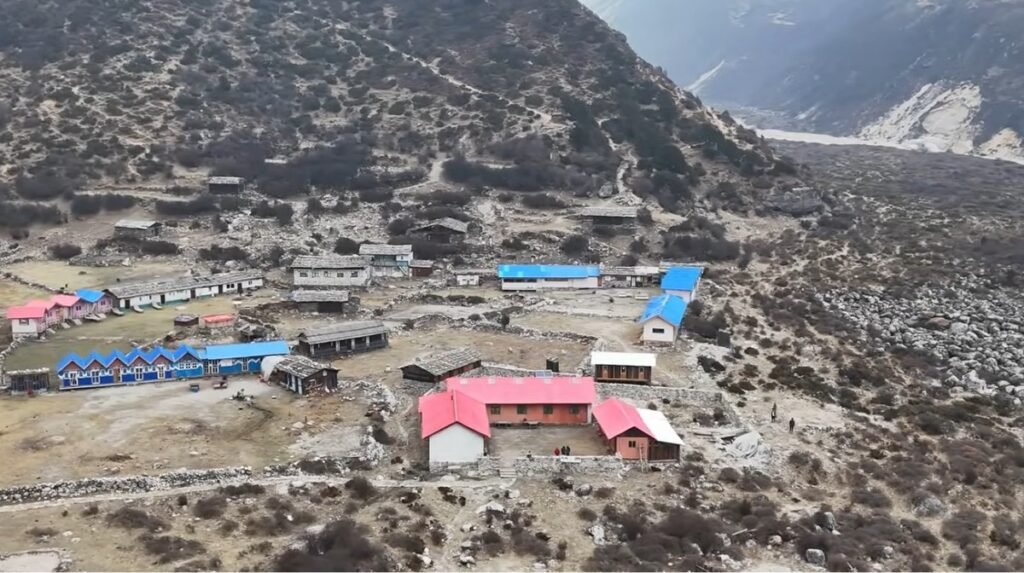
The eastern approach is longer, the region is quieter, and the journey there becomes part of the experience.
You do not just “go trekking” in Kanchenjunga; you travel into a part of Nepal that feels much less touched by mainstream mountain tourism.
That difference in access changes the emotional tone of the trek before you even start walking.
Which trek is harder?
Both treks are hard. That part is non-negotiable, but Dhaulagiri Circuit is definitely more tougher than the Kanchenjunga Circuit if you compare them head to head.
Dhaulagiri is the more intense one in a technical sense. The massif lies northwest of Pokhara, and trekking routes are very hard, with glacier crossing and equipment needs such as crampons and an ice axe for crossing sections of the route.
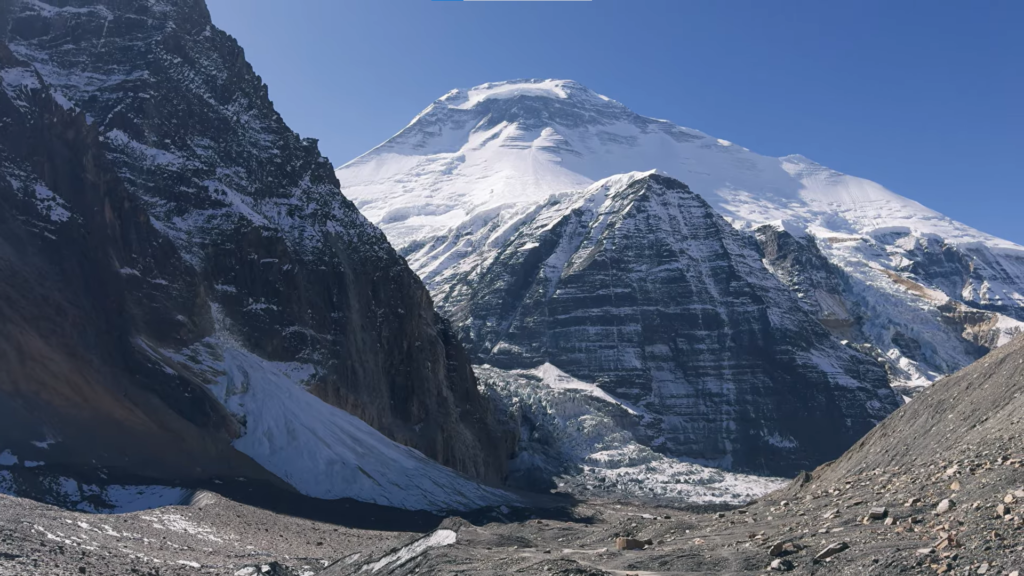
In practice, that means Dhaulagiri is not just about walking uphill. It is about moving through a cold, exposed, high-altitude environment where weather and terrain can both become serious obstacles.
Kanchenjunga is the longer, more remote challenge as it covers North Base Camp at Pangpema, South Base Camp at Oktang, and the remote eastern Himalayan setting.
The nature of the route are long distance, serious terrain, and a level of remoteness that requires more support than a standard trek.
Both route also appears in the revised TIMS list as a protected area trek requiring a licensed guide and agency-issued TIMS card.
So if Dhaulagiri is the sharper test, Kanchenjunga is the longer one. If we keep this simple, Dhaulagiri is more about technicality, whereas Kanchenjunga is about endurance.
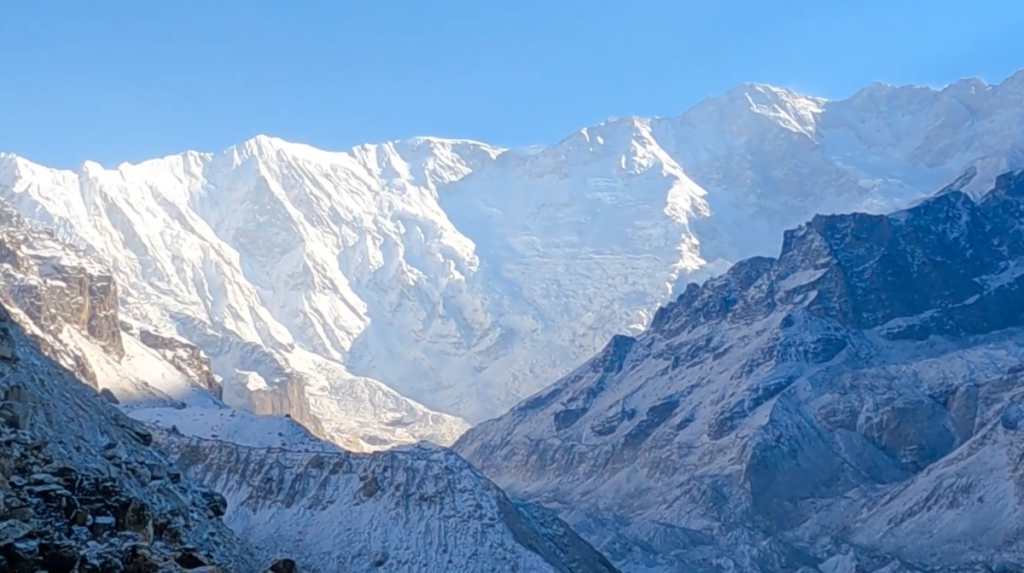
However, Dhaulagiri Circuit is generally considered more difficult and technical than the Kanchenjunga Circuit due to its severe high-altitude, technical glaciated terrain, and necessary tented camping on ice, making it one of Nepal’s toughest treks.
While Kanchenjunga is longer and a “test of endurance,” Dhaulagiri presents greater safety risks and technical challenges.
What the terrain actually feels like
On Dhaulagiri Circuit, the landscape changes in a very dramatic way as you go higher. Lower sections feel like a western Nepal approach trek: villages, river valleys, and mountain views building gradually. Then the route becomes colder, steeper, and more isolated.
By the time you move into the upper circuit, you are dealing with the kind of alpine country that makes trekkers slow down naturally.
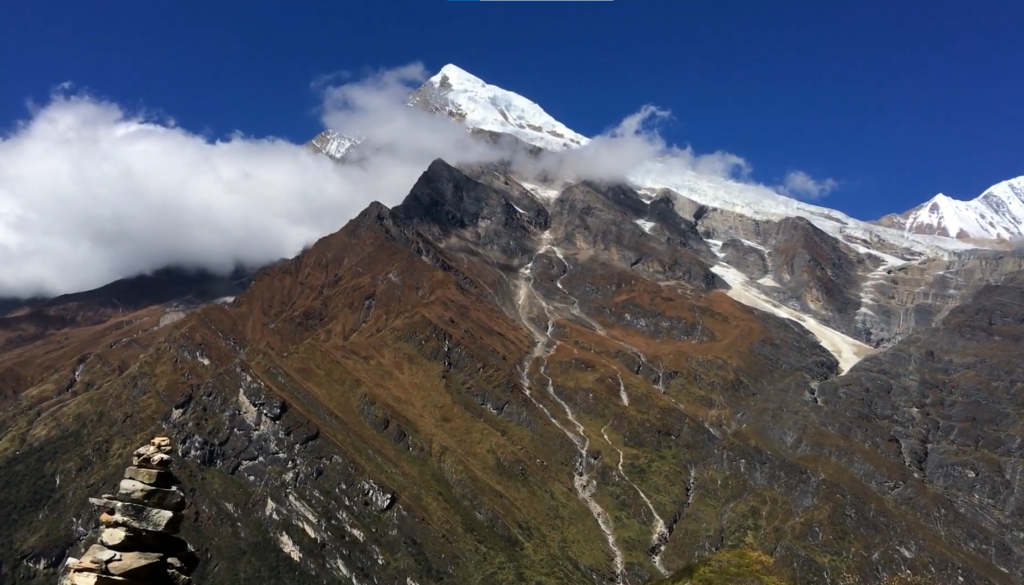
The famous names here are not just names on a map. French Pass and Hidden Valley are the kinds of places that define a trek by themselves.
Hidden Valley in particular gives the route that unforgettable feeling of being far above ordinary trail life.
On Kanchenjunga Circuit, the experience is broader and more layered. The route moves through eastern valleys, village settlements, forest sections, and high mountain country before opening into the base camp zones.
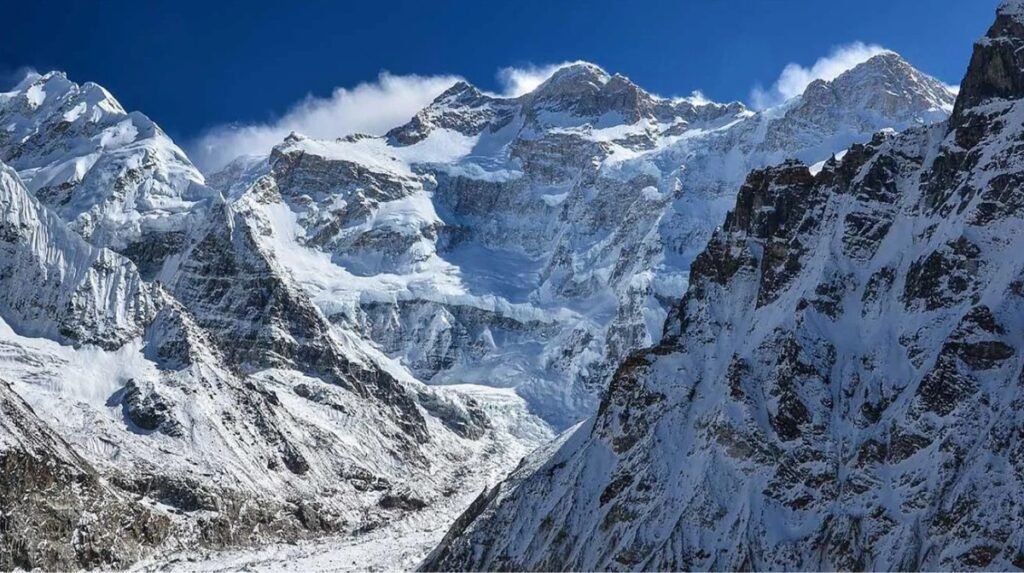
The north side feels raw and remote, while the south side tends to feel softer and greener in places, even though it remains firmly Himalayan in scale.
That contrast is what makes Kanchenjunga so special. You are not just looking at one landscape. You are moving through several, each with a different mood.
If you enjoy treks that keep evolving as you walk, Kanchenjunga is the more layered route. If you prefer a route that feels stripped down, serious, and uncompromising, Dhaulagiri has the stronger edge.
Culture and villages on the route
Dhaulagiri passes through the Myagdi side of western Nepal, where the lower hills and valleys carry a mix of local mountain communities.
Dhaulagiri sits in the same broader western mountain world that links Pokhara, Myagdi, and the Annapurna side of Nepal.
Cultural experience is authentic and rewarding, but the higher you go, the thinner the settlement pattern becomes. By the upper circuit, the mountain itself becomes the main attraction.
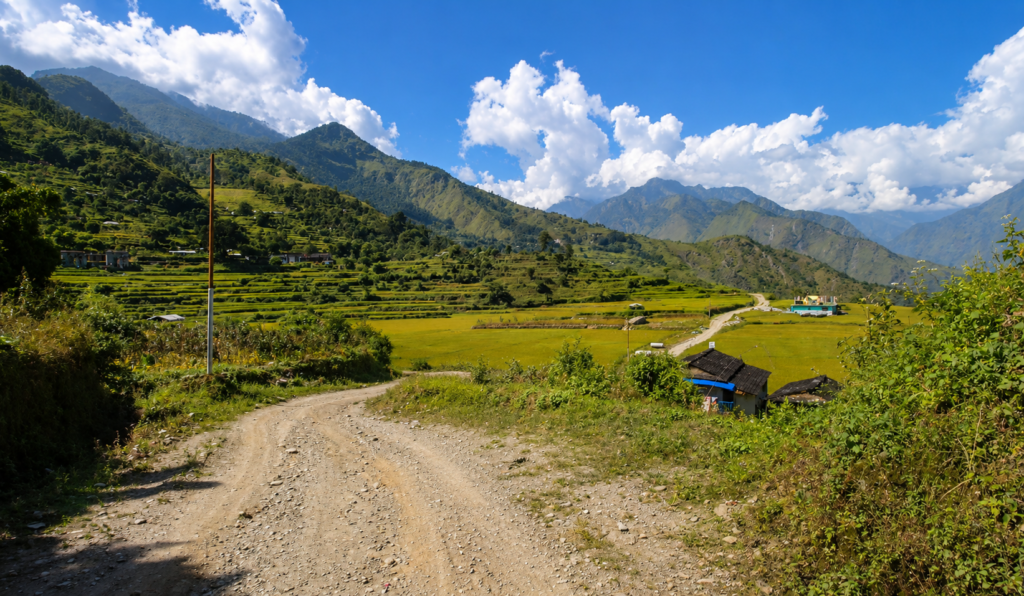
Kanchenjunga offers more cultural variety over the length of the trek. The eastern hills and valleys carry a different atmosphere, and passes through remote trails and the Kanchenjunga Conservation Area.
That means you are moving through communities that are more spread out, less tourist-shaped, and more closely tied to the rhythm of the land itself.
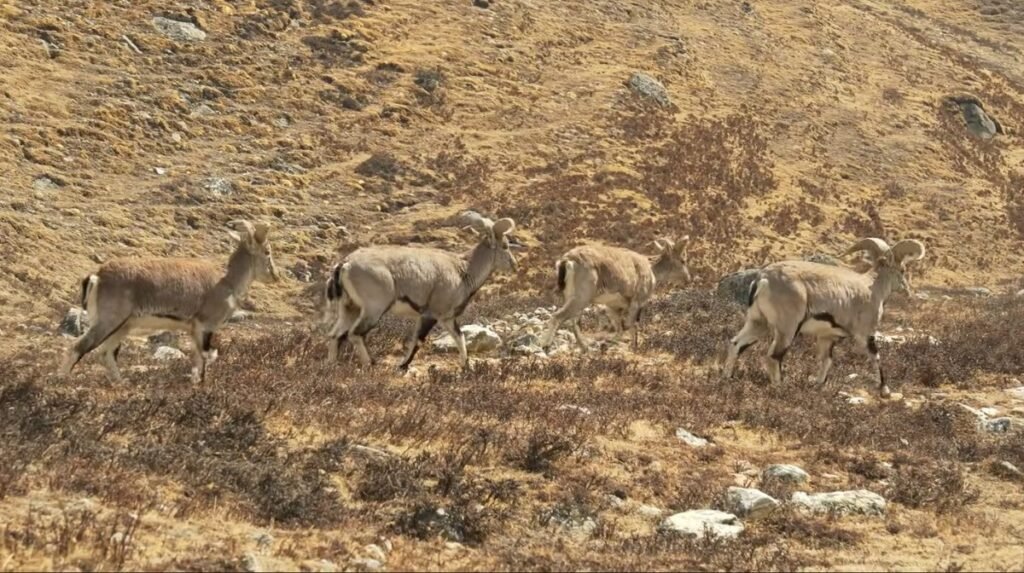
The human side of the route feels present all along the way, from lower villages and terraced terrain to the high yak country near the base camp zones.
Basically, Dhaulagiri is powerful because of its isolation. Kanchenjunga is powerful because of its combination of isolation and diversity.
Best season for both treks
The best seasons are the same for both routes: spring and autumn. That is not just a cliché, because you might have heard this a thousand times, the same trekking seasons for all the treks.
Nepal’s geography is extreme, and the country changes quickly from lowland to mountain conditions. Nepal stretches from the Terai up into the Himalayan region, and that the mountain zone begins at around 3,000 meters, with alpine pastures, temperate forests, and the snow line beginning around 5,000 meters.
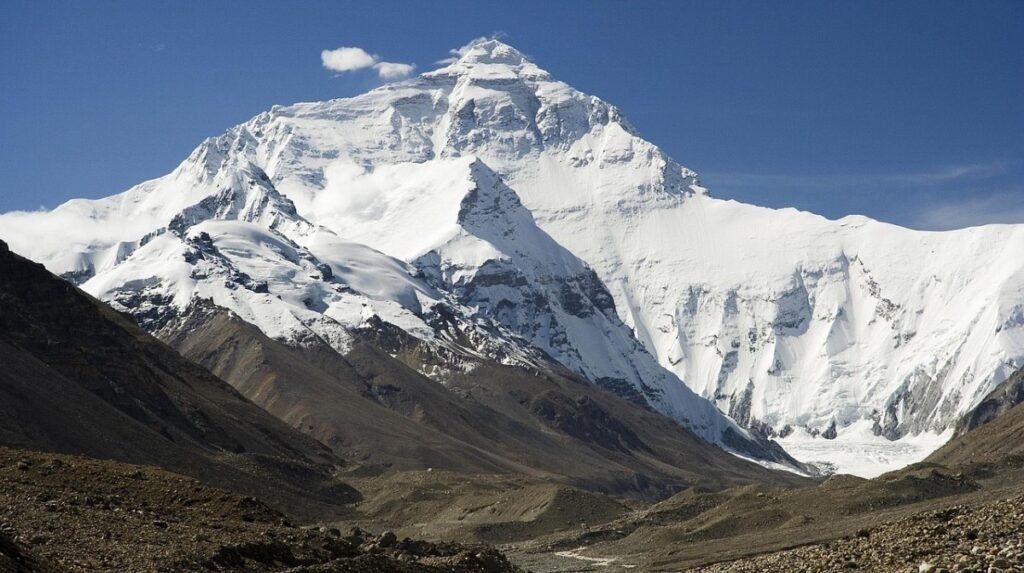
On that kind of terrain, the stable weather windows matter a lot. Spring is valuable for clearer trails, blooming landscapes, and comfortable lower-elevation conditions, while autumn is prized for its crisp air and visibility after the monsoon.
Winter can still be beautiful, but these two circuits are high and cold enough that the season can become harsh very quickly.
Monsoon also makes the trail less practical on many sections. For a trek this serious, spring and autumn are the seasons that allow the route to show its best side without turning the experience into an uphill battle against weather.
Permits, guides, and the practical side
That specific protected-area treks now require a licensed trekking guide and an agency-issued TIMS card and conservation area permits (ACAP and KCAP).
The list includes Kanchenjunga Base Camp via Sele La Pass Trek, Kanchenjunga Basecamp Trek, and Round Dhaulagiri.
In other words, both of these treks sit clearly inside the serious trekking category where paperwork and professional support are part of the route, not an optional extra.
However, if you are going for a solo trek (not independently) with a licensed trekking guide, it is possible. That matters for planning because these routes are not the type you leave vague until the last minute.
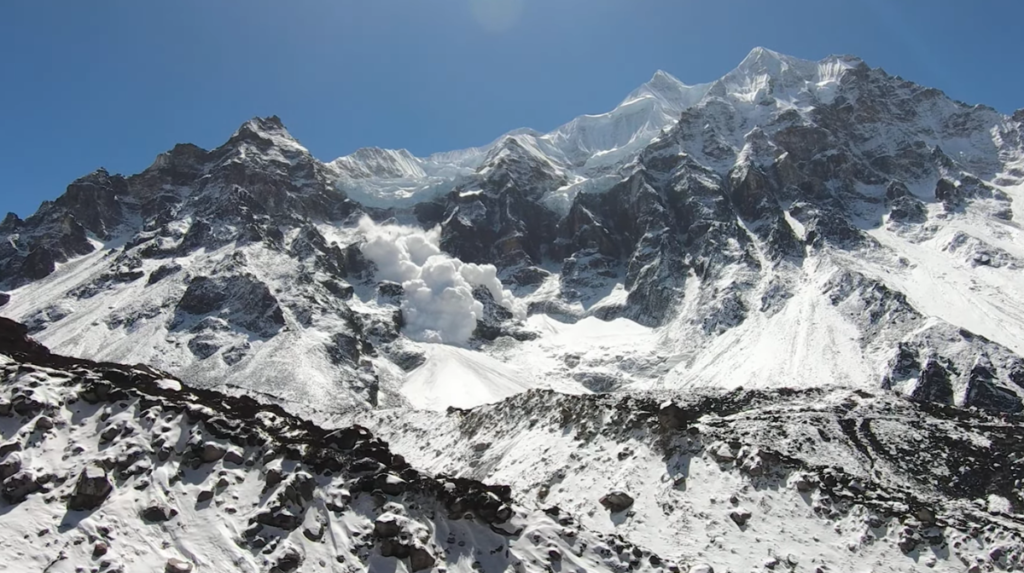
They need route knowledge, timing, local logistics, and the willingness to respect the rules of the trail.
If you are choosing between these treks, part of the decision is also whether you want a route that is more self-contained and structured or one that requires a more fully supported expedition-style setup.
Who should choose Dhaulagiri Circuit?
Choose Dhaulagiri Circuit if you want the more intense mountain challenge in a shorter overall window.
It suits trekkers who are comfortable with altitude, okay with basic conditions, and interested in glacier country, high passes, and a route that feels rugged from start to finish.
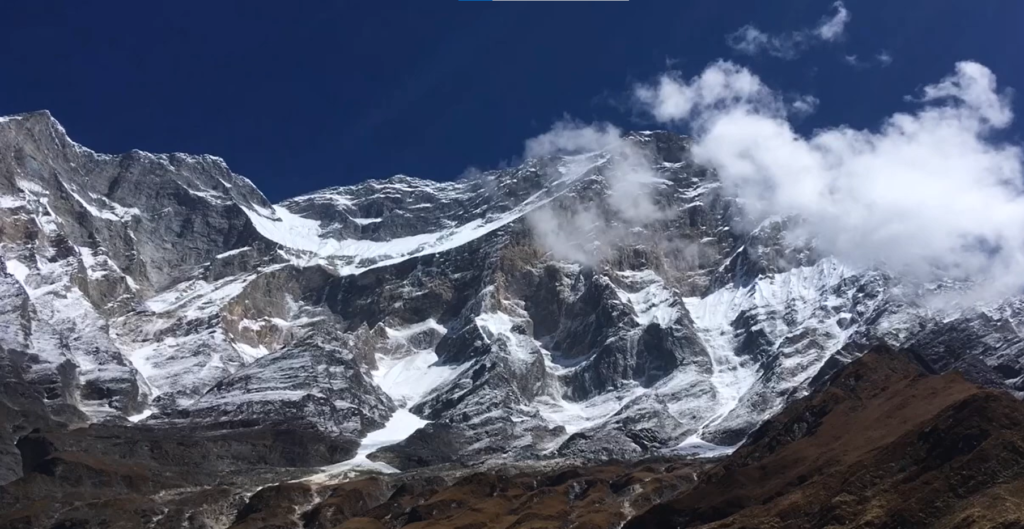
Dhaulagiri is not the trek for someone who wants comfort as the main attraction. It is for trekkers who enjoy seriousness, solitude, and the feeling of being deep inside a hard mountain environment.
If the idea of walking through Hidden Valley and over French Pass sounds exciting rather than intimidating, Dhaulagiri is probably the better fit for you.
Who should choose Kanchenjunga Circuit?
Make sure to choose Kanchenjunga Circuit if you want the more immersive long-distance Himalayan journey.
It suits trekkers who want remoteness, variety, and a route that gives them more time to settle into the mountain rhythm.
Kanchenjunga is the better option if you like the idea of seeing one giant mountain from both the north and south sides, moving through quiet eastern villages, and spending enough time on the trail for the journey to feel fully lived-in.
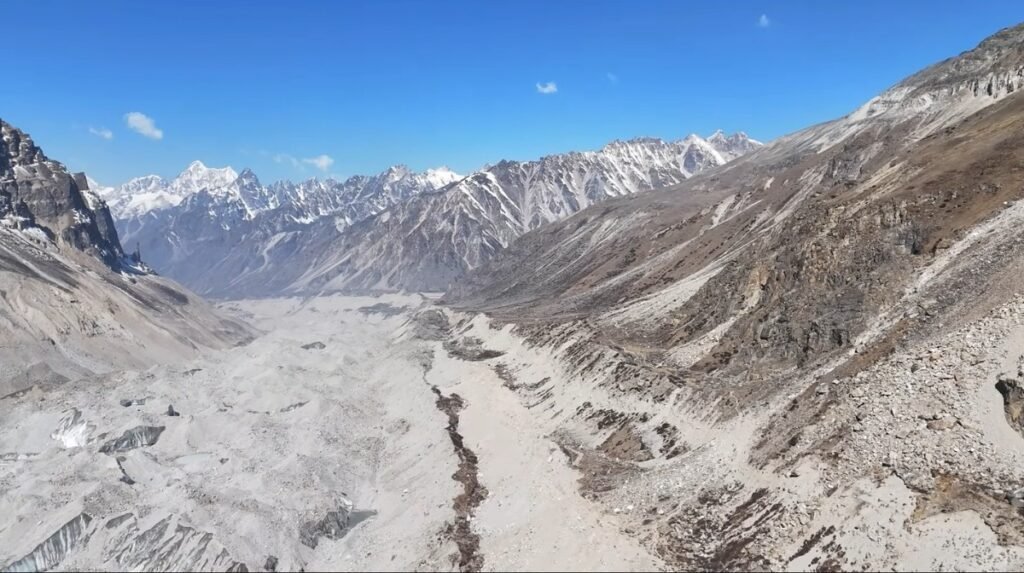
It is still a hard trek, but the challenge comes as much from length and remoteness as it does from altitude. If you want a trek that feels complete, expansive, and very far from the crowded routes of Nepal, Kanchenjunga is the one.
Both treks are world-class and totally different from one another. Both belong in the upper tier of Himalayan trekking. Neither is something to take lightly, and both will stay with you long after the soreness fades and the photos will also be more memorable.
If you want the harder, sharper, more glacial test, go for Dhaulagiri Circuit. If you want the longer, more remote, more layered mountain journey, choose Kanchenjunga Circuit.
Dhaulagiri is the route that feels like a serious challenge every single day. Kanchenjunga is the route that feels like a full expedition through one of Nepal’s quietest and most beautiful corners. Either way, you are not just choosing a trek. You are choosing the kind of mountain memory you want to carry home.