


Why Mountains Are Nothing Without Sherpas: What They Do, How They Train, and Whether You Can Become One
Every summit photo taken on Everest has something in common, and most people looking at those photos miss it completely.
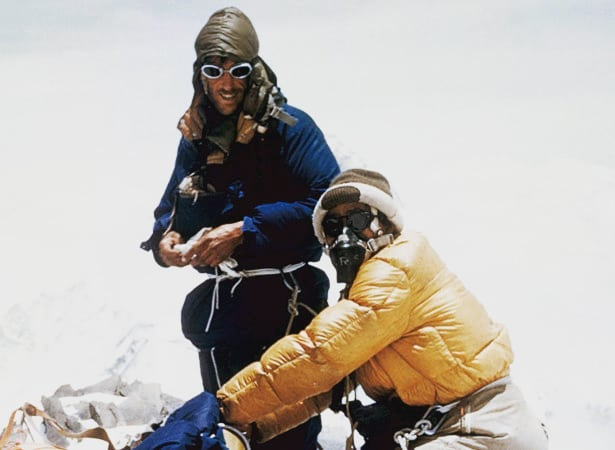
Somewhere behind the person holding the flag, just below them on the fixed rope, or standing quietly just outside the frame, there is almost always a Sherpa.
The climber in the photo spent years training for this moment, but the Sherpa standing next to them was built for it over generations, and that difference is the most important thing to understand before any serious conversation about high-altitude mountaineering in Nepal.
This is not a story about support staff or hired help, and framing it that way misses the point entirely.
It is a story about people who understand the Himalayas in a way that nobody born below 3,000 metres ever fully will, whose relationship with these mountains runs at least five centuries, and without whom the modern history of Himalayan climbing simply wouldn’t be possible.
Who the Sherpa People Actually Are
The word Sherpa comes from the Tibetan terms shar and pa, which together translate mainly as eastern people, and understanding that it is originally an ethnic identity rather than a job title is the foundation of everything else that follows.
The world has spent decades treating Sherpa as a synonym for mountain guide, which is a bit like treating any ethnic group as synonymous with the work they are associated with, and the Sherpa people themselves have been patient about correcting that misunderstanding for a long time.
The Sherpa people bring back their origins to the Kham region of eastern Tibet, and their ancestors made the crossing south across the Himalayas into the somewhere between the thirteenth and sixteenth centuries.
The reasons behind that move is oral history and evidence pointing in the same direction, with some clans likely moving because of political conflict in Tibet and others seeking the space to practice Nyingmapa Buddhism, an older branch of Tibetan Buddhist tradition that had fallen out of favour at the time.
What those early migrants found on the southern side of the Himalayas was the Solu-Khumbu valley, a landscape of deep river gorges, high yak pastures, and peaks that seemed to belong to a different sky entirely.
They settled into it, built villages, established monasteries, and made a full life from herding yaks, growing potatoes and barley at altitude, and trading salt, wool, and rice along the ancient routes connecting Nepal and Tibet.
Four major clans made that original crossing, the Minyagpa, the Thimmi, the Sertawa, and the Chawa, and over the following centuries those four clans expanded into more than twenty sub-groups that eventually spread across the Khumbu and beyond.
Today, Sherpa communities live primarily in the Solu-Khumbu district around Everest, with smaller populations in Rolwaling, Helambu, and Dolakha, and they make up roughly one percent of Nepal’s total population.
Their language belongs to the Tibeto-Burman family and is related to Tibetan but distinct enough to be its own tongue, and their spiritual life is rooted in a form of Tibetan Buddhism where mountains, rivers, and natural formations are understood as living sacred presences rather than just scenery to be photographed.
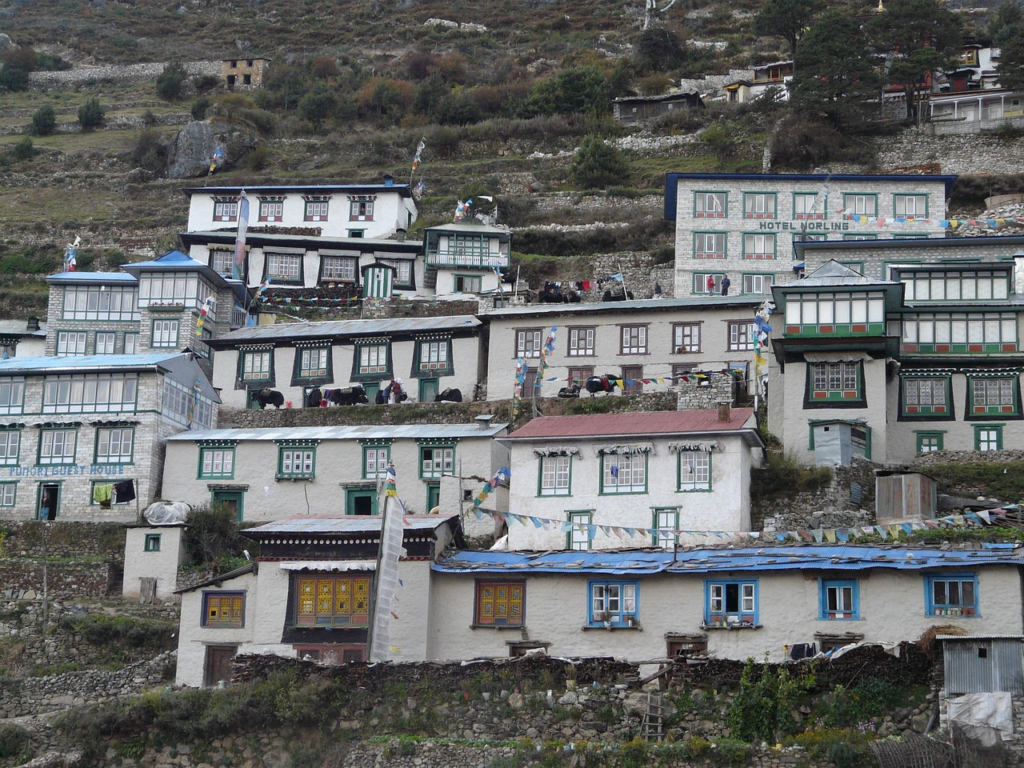
Every village that trekkers pass through on the way to Everest Base Camp, from Phakding to Namche Bazaar to Tengboche to Dingboche and beyond, is a Sherpa village with deep roots in the landscape around it.
Most importantly, walking through them with that awareness changes the experience of the route completely.
Why Their Bodies Work So Differently at Altitude
This is the question that comes up constantly among trekkers in the Khumbu, and the honest answer operates on two distinct levels that are both worth understanding properly.
The first level is cultural and environmental. Sherpas have been living and working at elevations between 3,000 and 5,000 metres for roughly five hundred years, and children in Khumbu villages grow up at altitude, carry loads from a young age, and develop great fitness and mountain awareness as a function of their daily lives.
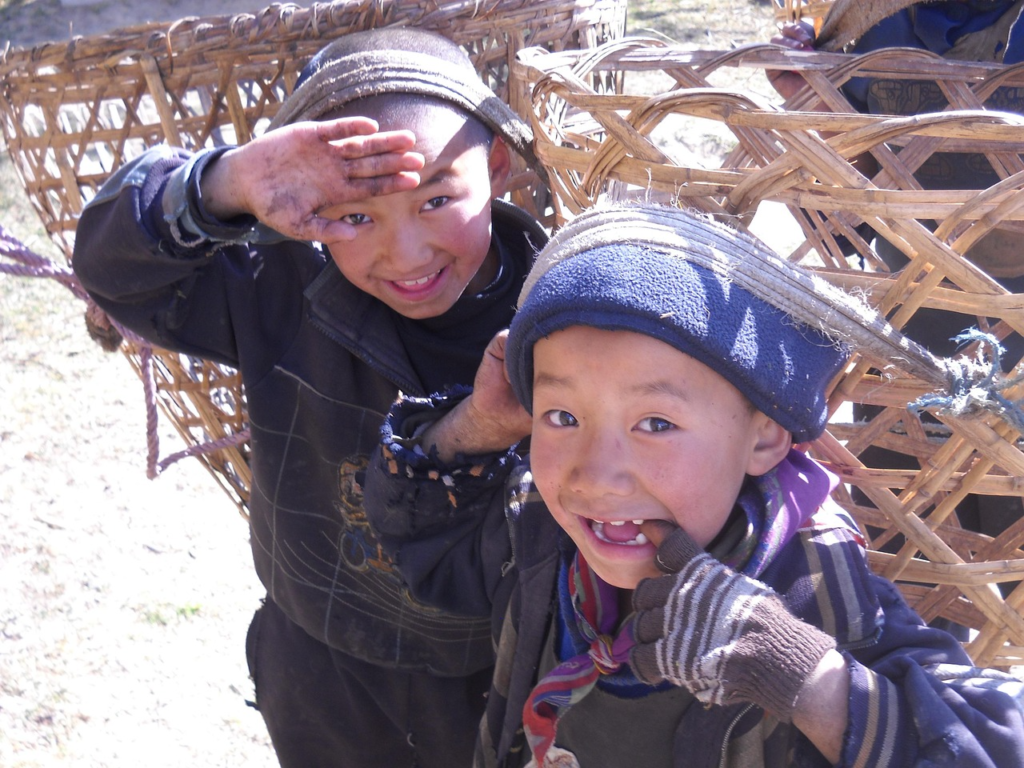
By the time a young Sherpa begins working on expeditions as early as sixteen or eighteen years of age their body has been conditioning itself to thin air for their entire life, and that foundation is something no training programme designed for lowland athletes can fully do.
The second level is genetic and considerably more remarkable. Sherpas carry specific variants of a gene which shows how the human body responds to low oxygen environments.
In most people, travelling to high altitude increase in hemoglobin as the body is filled with the bloodstream with extra red blood cells trying to compensate for thinner air, and that response makes the blood thicker and more prone to clotting
This is a significant part of why altitude sickness and cardiovascular complications are so dangerous for lowland climbers above 7,000 metres.
Sherpa bodies respond to the same conditions in a fundamentally different way, with their haemoglobin levels at altitude staying close to what a lowlander would register at sea level, meaning their blood stays thin and efficient even where the air is at its thinnest.
Rather than producing more red blood cells, their bodies extract more oxygen from each individual breath, which is a far more efficient adaptation to the specific challenge the high Himalayas present.
This did not come from any training protocol, altitude tent, or supplement programme, and it is not something that can be acquired through dedication or willpower alone.
It came from natural selection operating across hundreds of generations of life at the top of the world, and no amount of acclimatisation that a visiting climber can do in a single season will fully close that biological gap.
What Sherpas Actually Do on an Expedition
Most people who have not spent time around Himalayan expeditions picture a Sherpa as a guide walking alongside a foreign climber on a well-maintained mountain trail, and that picture is so far from the reality of expedition work that it is almost a different job entirely.
Before a single paying client sets foot anywhere near the mountain, a team of Sherpas has already spent weeks doing the most dangerous work of the entire season.
On Everest’s Nepal side, that means crossing the Khumbu Icefall repeatedly in conditions that would test even the most experienced climbers in the world.
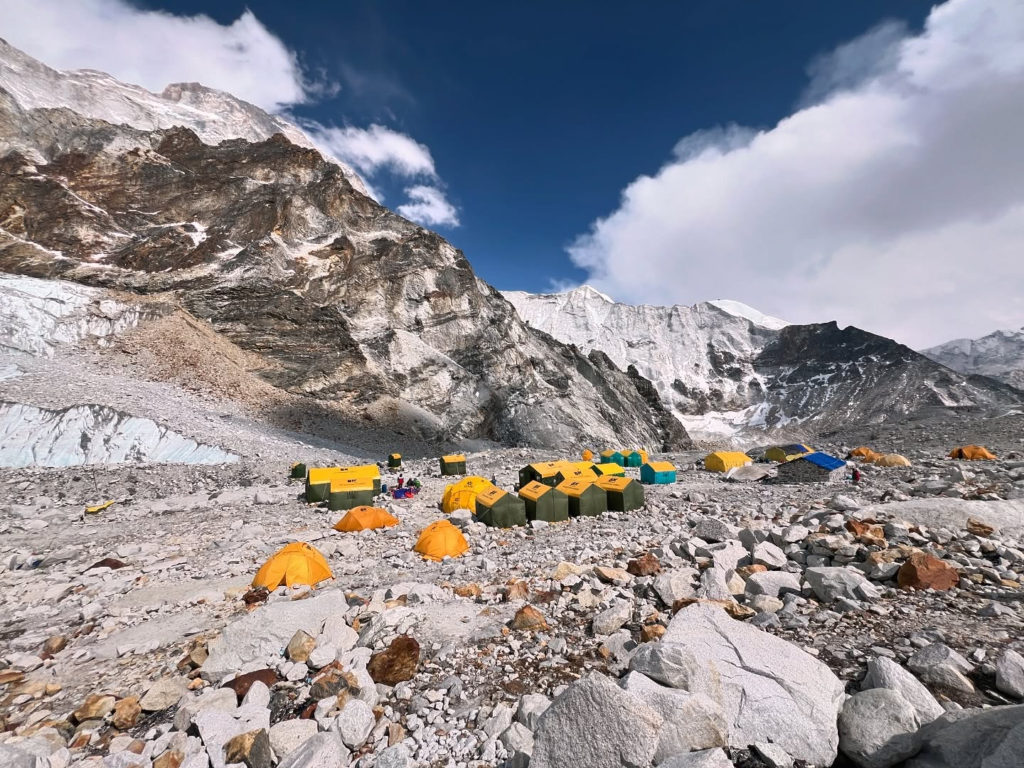
The Khumbu Icefall is a constantly shifting mass of glacial ice that sits between Base Camp and Camp One, filled with seracs the size of buildings that can topple without any warning that open and close according to no reliable schedule.
Moving through it safely requires not just physical skill but a particular quality of calm and judgment that only comes from having done it many times before.
The Icefall Doctors, an elite group of Sherpa climbers who are among the best high-altitude workers on the mountain, spend the weeks before each expedition season fixing the entire route through the Icefall by installing hundreds of metres of rope.
They also place aluminium ladders across the crevasses that make the route passable for the expeditions coming behind them.
All of this labour happens before the international climbing community has even arrived at Base Camp, and it is worth sitting with that fact for a moment.
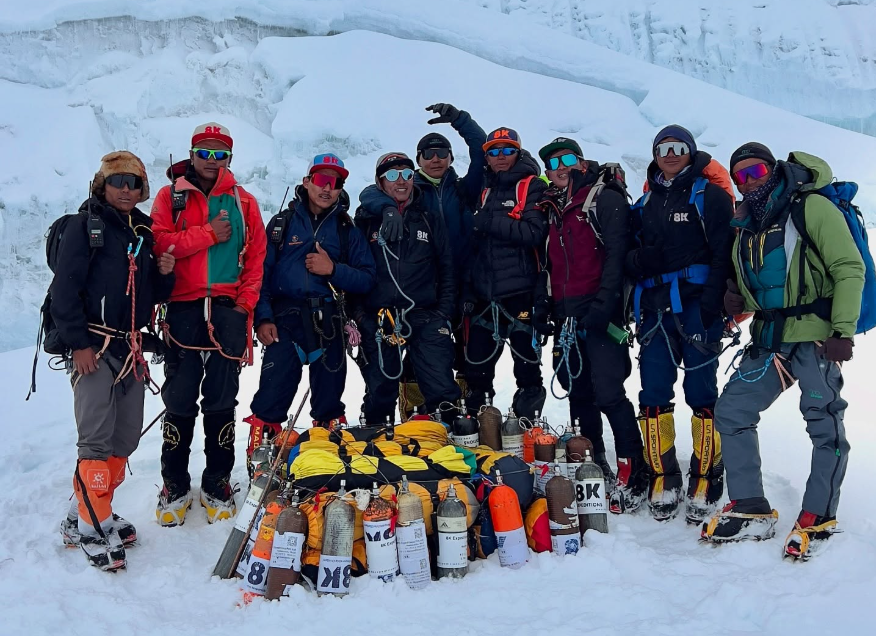
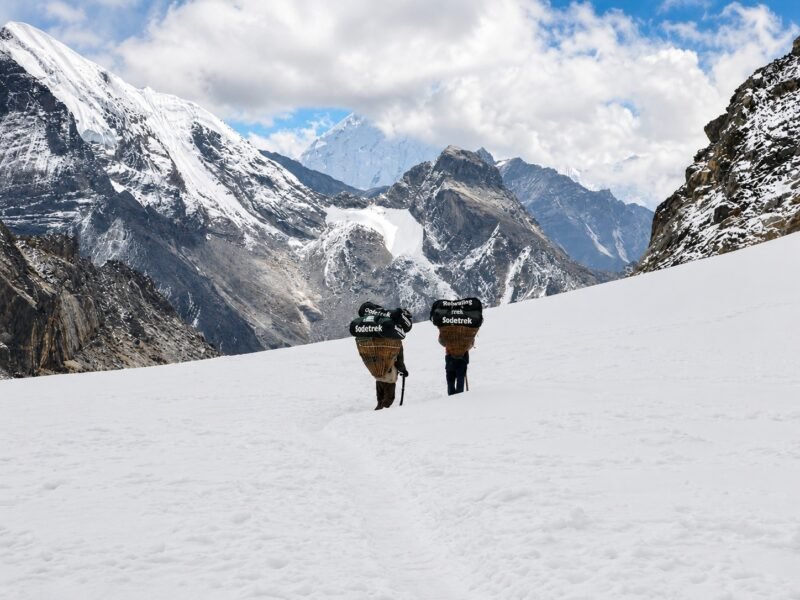
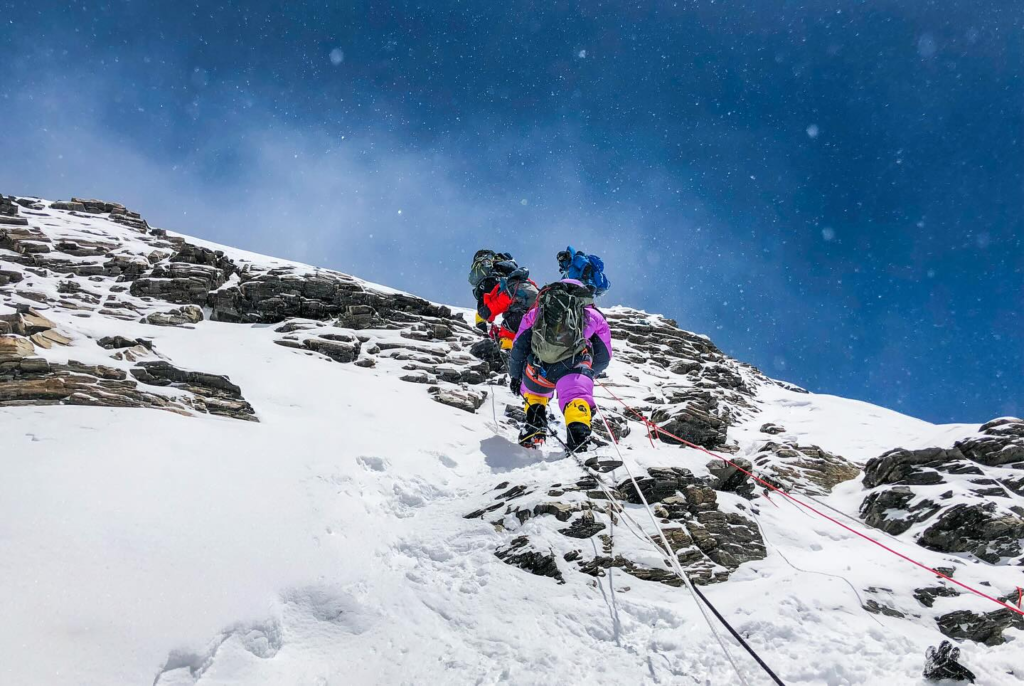
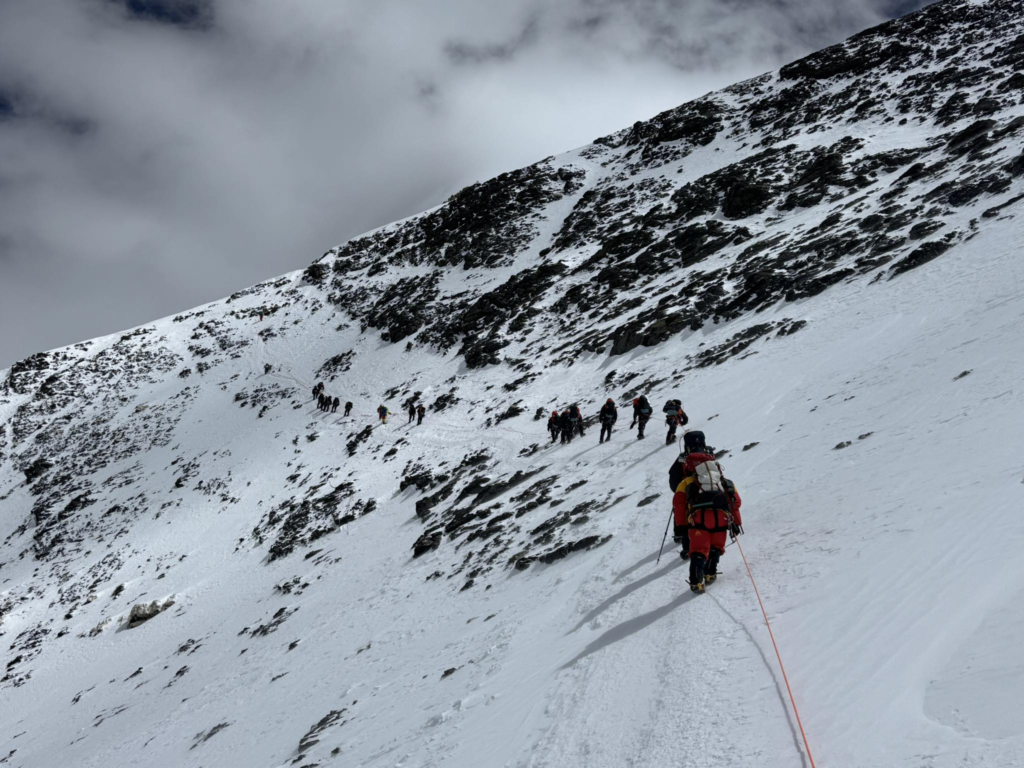
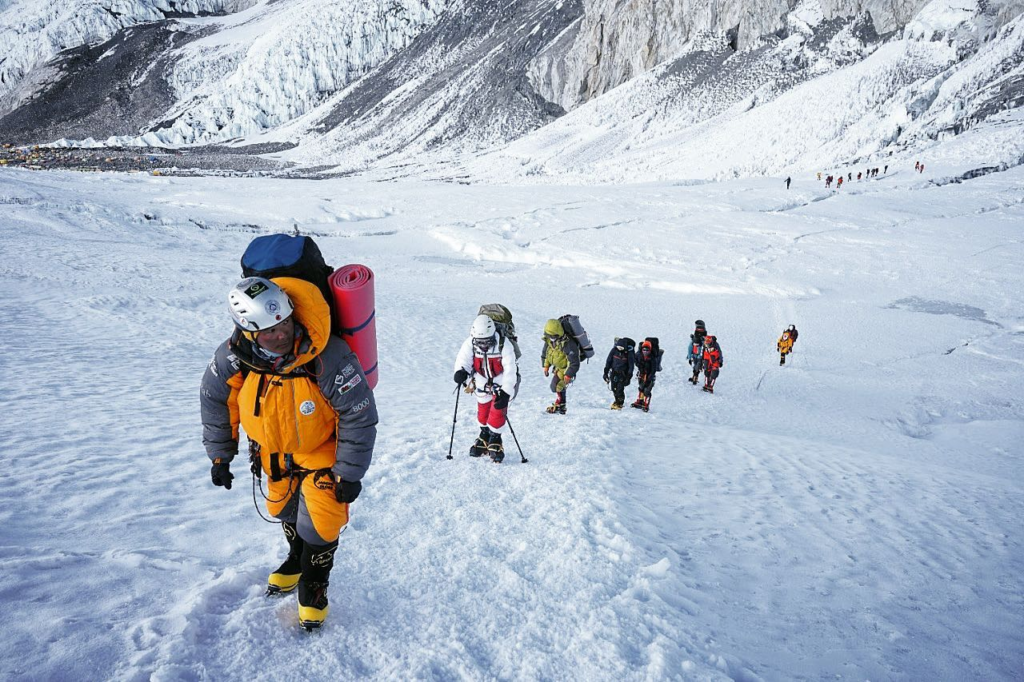
Once expeditions are properly underway, the load carrying begins in earnest. A typical high-altitude Sherpa on an Everest expedition carries between 20 and 30 kilograms of oxygen cylinders, food, tents, and fuel through the same terrain that pushes unloaded foreign climbers to their absolute physical limits.
The sherpas make these carries multiple times in order to stock Camps Two, Three, and Four before the summit window opens.
By the time a guided client makes their single summit push, the Sherpa team assigned to support them has already been to those heights several times over and has effectively done most of the physical preparation that makes the client’s summit attempt possible.
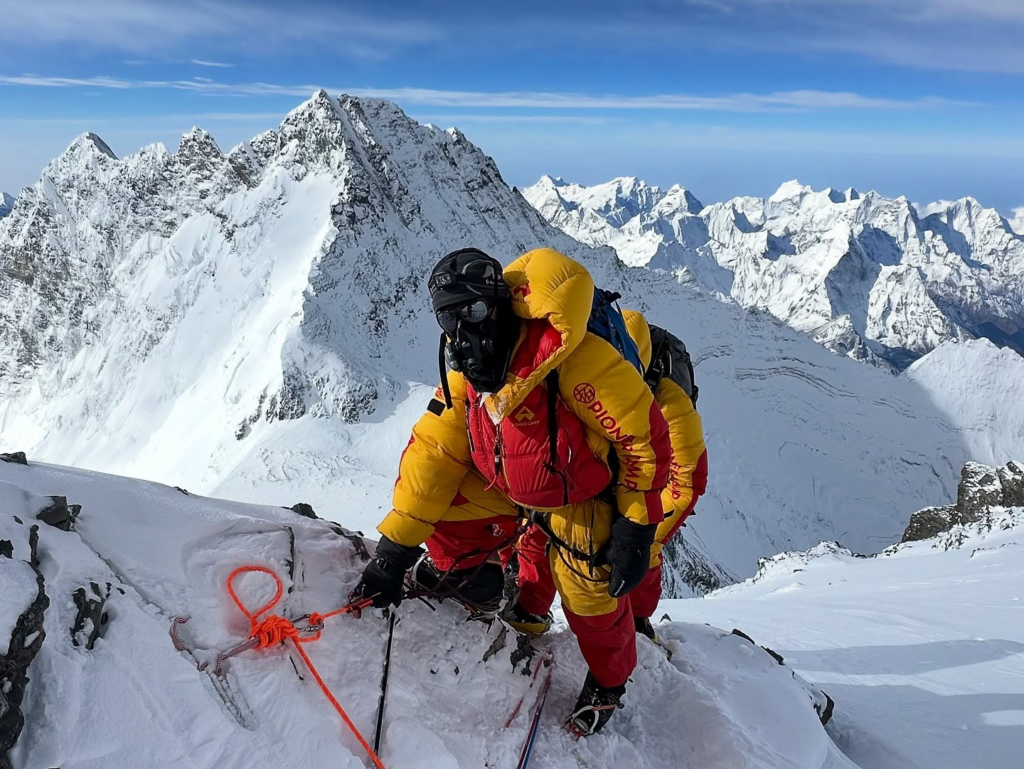
On summit day itself, lead Sherpas head out ahead of the main party in the middle of the night to fix the final ropes above Camp Four.
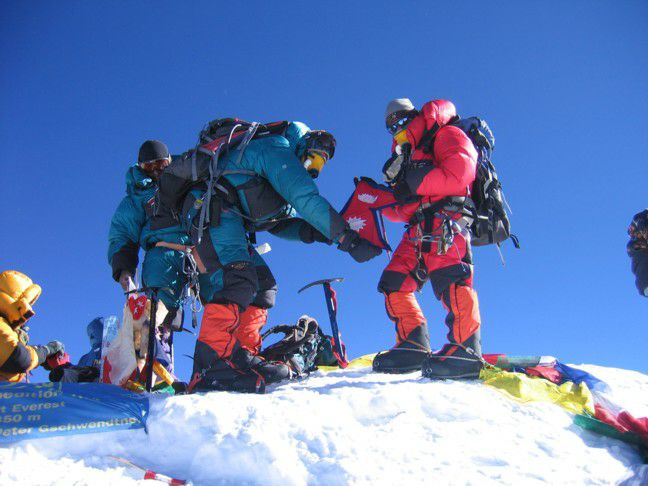
The Sherpas also manage oxygen supply for clients throughout the ascent, monitor pace and conditions, making real-time decisions about when to push and when to wait, and carrying emergency supplies in case anything deteriorates.
On the descent, which is statistically where most serious accidents on Everest occur, they frequently provide physical support to exhausted climbers working their way back down the fixed lines.
A foreign client on a standard guided Everest expedition crosses the Khumbu Icefall approximately four times over the course of the whole trip, while the most active Sherpa climbers in a single season will cross the same section somewhere between thirty and forty times.
| Role | What It Involves | When It Happens |
|---|---|---|
| Icefall Doctor | Fixing ropes and ladders through the Khumbu Icefall | Before the season begins |
| High Altitude Sherpa | Carrying loads to Camps 1 through 4 | Throughout the expedition |
| Summit Sherpa | Final rope fixing, supporting clients to the top and back | Summit push window |
| Base Camp Sherpa | Cooking, logistics, communication, camp management | Entire season |
| Rescue Sherpa | Emergency response and evacuation | As required |
The Risk They Carry Every Season
Any honest conversation about what Sherpas do has to include an honest conversation about what they face in the process of doing it, because the risk profile of expedition Sherpa work is something that the climbing industry took far too long to acknowledge properly.
In April 2014, an avalanche broke loose from the seracs above the Khumbu Icefall and swept through a team of Sherpas who were in the middle of preparing the route for that season, and sixteen men lost their lives in a single morning in what became the deadliest single event in Everest’s history at that point.
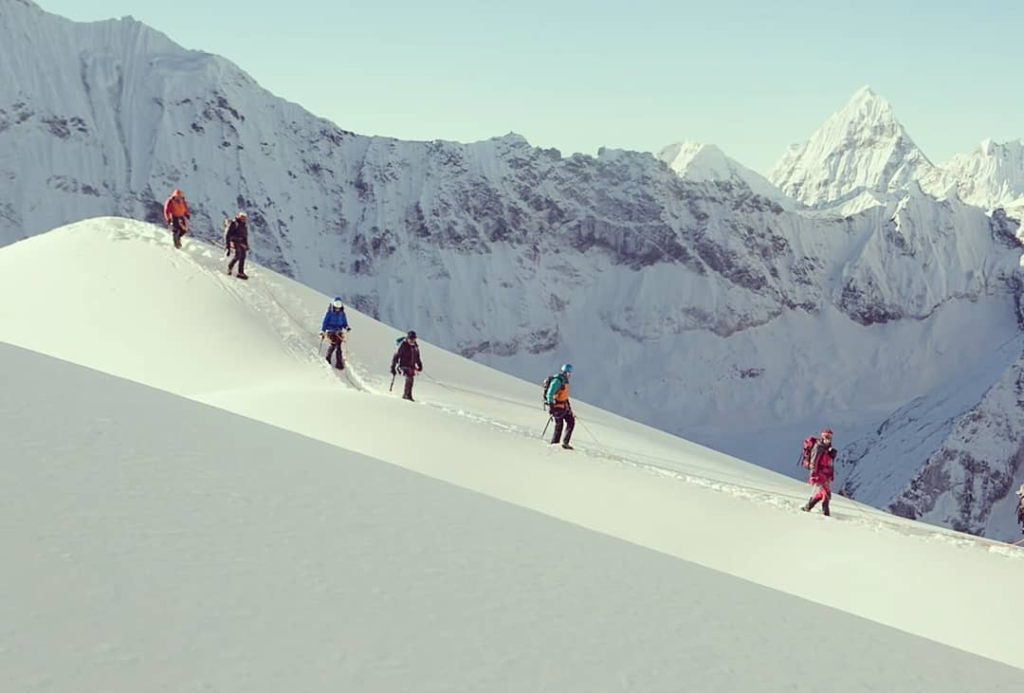
The tragedy triggered a season-wide work stoppage and forced a long-overdue conversation about whether the insurance, compensation, and risk-sharing arrangements for Sherpa workers were anywhere close to appropriate given what those workers were actually being asked to do.
New policies were put in place in the years that followed, with insurance requirements strengthened and compensation for families in cases of serious accident.
But no policy framework changes the fundamental reality that crossing the Khumbu Icefall dozens of times in a single season, or spending consecutive weeks working above 7,000 metres, is genuinely dangerous work that sits in a different category from almost any other occupation in the world.
Kami Rita Sherpa reached the summit of Everest for a record 32nd time in May 2026 and who has been climbing this mountain professionally since 1994.
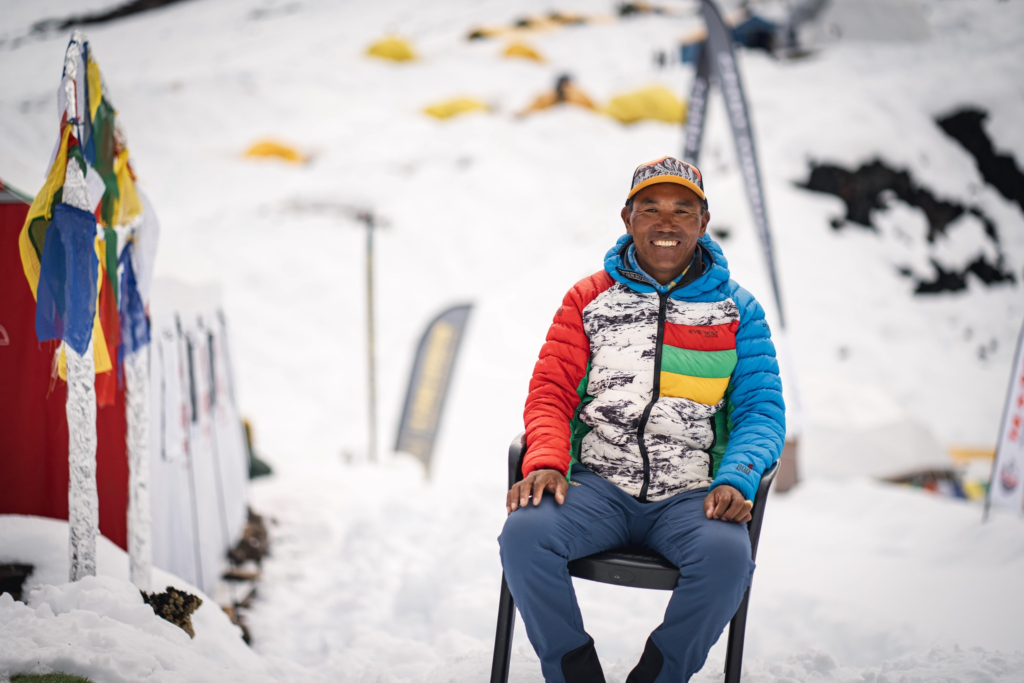
The mountain legend has spoken publicly about his concerns regarding the growing inexperience of some climbers arriving on Everest and the burden that inexperience places on the Sherpa teams responsible for keeping everyone safe.
When the person who has stood on the top of Everest more times than anyone alive raises concerns about where the mountain is heading, that conversation deserves to be taken seriously.
A high-altitude Sherpa on an Everest expedition currently earns somewhere between USD 5,000 and USD 10,000 for the season, with summit bonuses added on top, which is significantly better than what the same work paid two decades ago and reflects the shift in how the industry thinks about this workforce.
But the gap between the contribution Sherpas make to every successful foreign summit on any Himalayan peak and the recognition those climbers extend to them in the stories they tell back home remains genuinely wide, and the summit photo almost never includes the Sherpa’s name.
How Sherpas Are Trained
Most Sherpa climbers are not trained in the way that people who grew up outside Nepal tend to imagine when they hear the word training, and understanding why reveals something important about the nature of mountain knowledge in the Khumbu.
A young person from Namche Bazaar or Thame or Phortse does not complete a mountaineering certification course and receive a diploma before their first season working on the mountain, because their capability was built long before any formal instruction began.
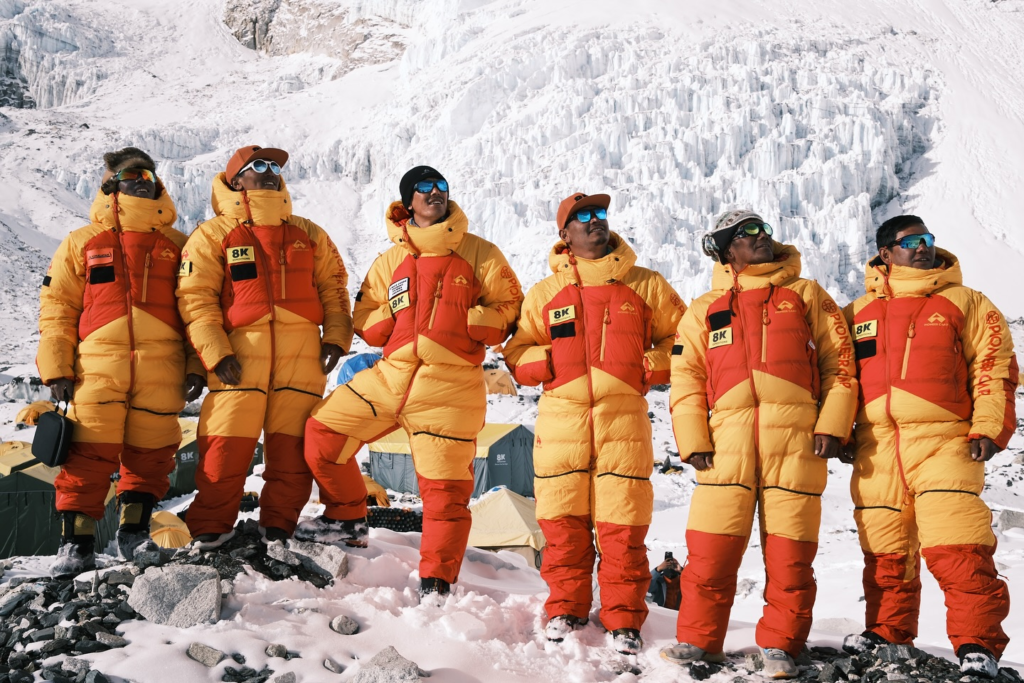
Growing up at altitude, carrying loads on the trekking routes through the Khumbu from their early teens, absorbing the technical and practical knowledge of the mountain from older family members who have spent entire careers on these slopes.
Moreover, developing the route and weather awareness that comes from living inside this landscape year after year.
All of this is training in the truest sense, even if it does not look like training from the outside.
That said, formal training has expanded meaningfully in recent years, and the Khumbu Climbing Centre in Phortse stands as the most significant example of that expansion.
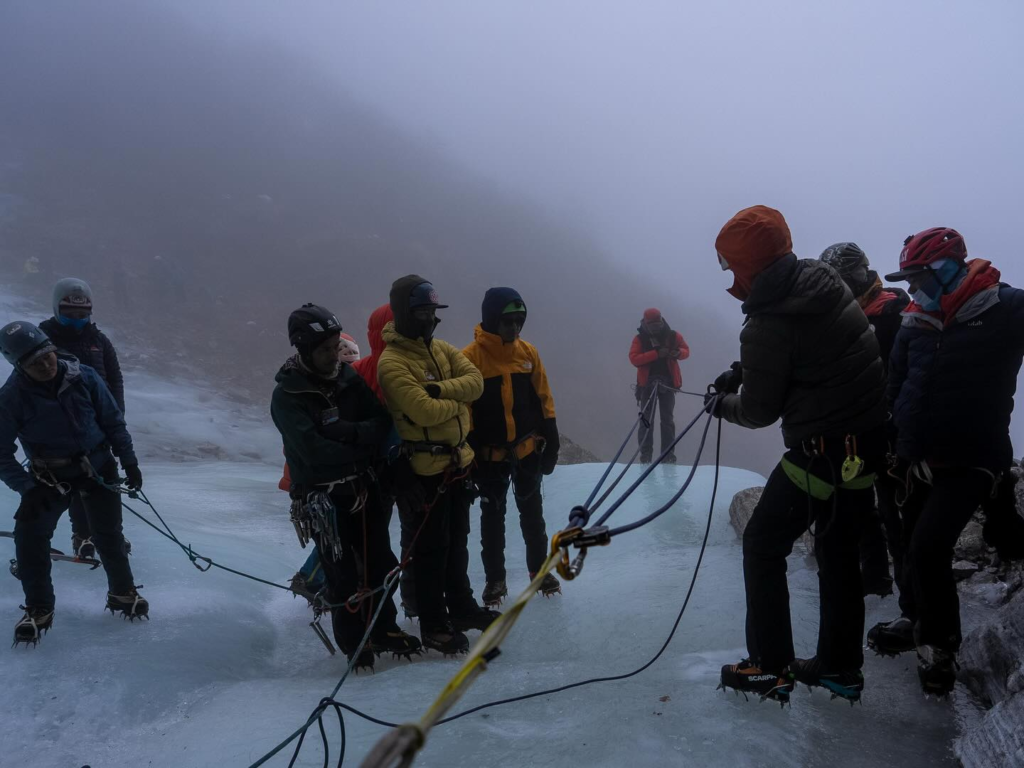
It was established with support from the mountaineering community and run with input from both international guides and experienced Sherpa instructors.
The centre provides structured courses in technical rope work, crevasse rescue, and high-altitude medicine that have raised the baseline competency level across the industry.
The Nepal Mountaineering Association oversees certification frameworks for high-altitude guides at the official level, and the Trekking Agencies Association of Nepal runs the licensing programs that govern trekking guides working on the lower routes.
The most important training, though, has always happened and continues to happen in the field.
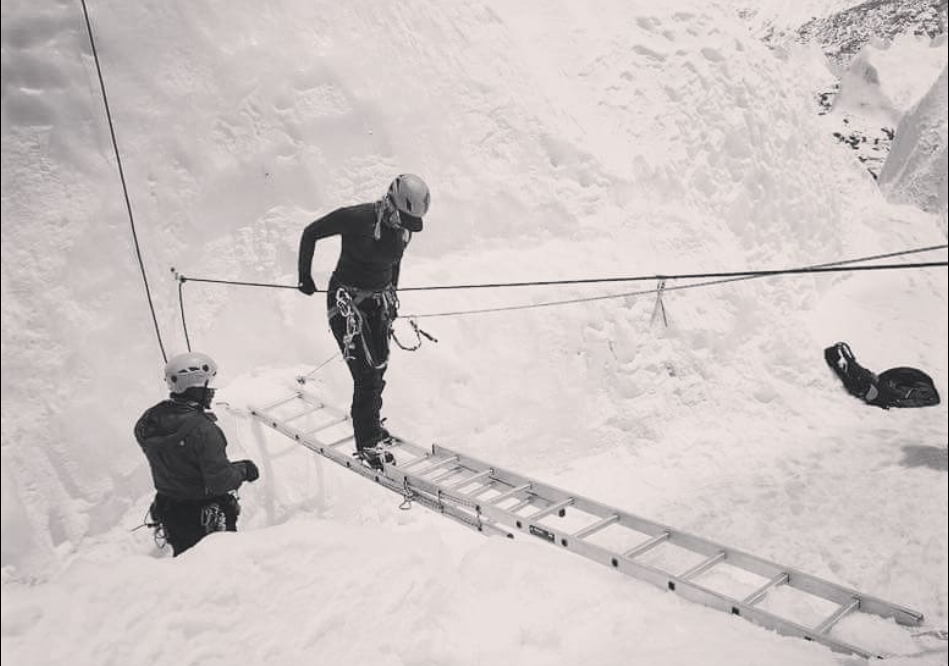
A young Sherpa typically begins as a kitchen assistant or Base Camp helper, then moves to lower mountain carries as their fitness and confidence develop, then to the higher camps, and eventually to the summit route after enough seasons to have built the judgment and experience the work demands.
Every Icefall crossing, every load carried to Camp Three in deteriorating weather, and every summit push with a client who is struggling teaches something that no classroom environment can fully replicate.
| Training Pathway | What It Covers | Who It Is For |
|---|---|---|
| Khumbu Climbing Centre | Rope skills, crevasse rescue, high-altitude medicine | Active and aspiring Sherpa climbers |
| Nepal Mountaineering Association | Alpine skills, expedition management | Aspiring mountaineering guides |
| TAAN Trekking Guide Certification | Route knowledge, safety, first aid, client management | Trekking guides at lower elevations |
| Field Progression on Expeditions | Load carrying, route reading, real-world judgment | Everyone working on commercial expeditions |
Can You Actually Become a Sherpa?
This question comes up more often than you might expect, and it usually arrives from trekkers who have spent a week walking through the Khumbu and come home with a level of respect for the people they met there that they are not quite sure what to do with.
The answer requires separating two things that have been tangled together by decades of usage, and getting them untangled makes the conversation much clearer.
Sherpa as an ethnic identity is something you are born into, with your family coming from the Solu-Khumbu and your ancestors having crossed the Himalayas from Tibet several centuries ago.
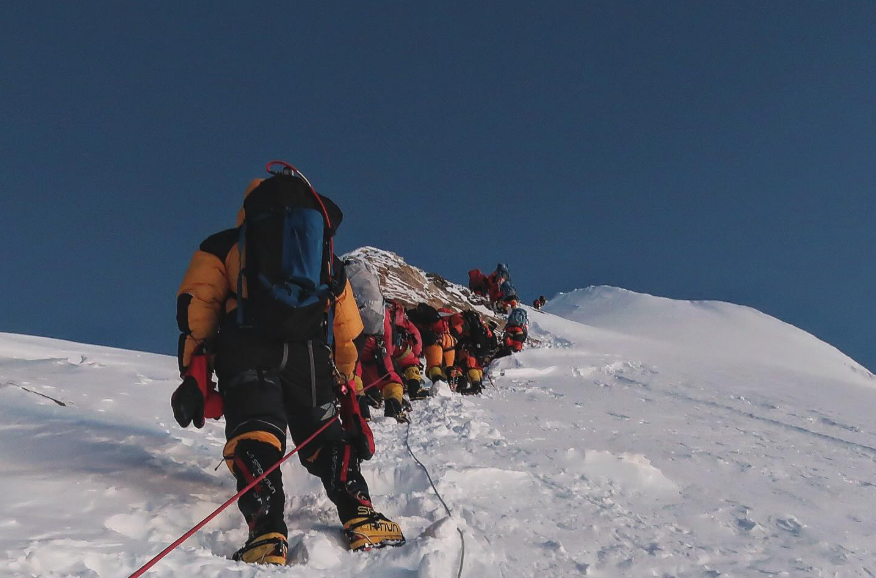
It is not a title anyone earns through training or dedication or time spent in Nepal no matter how genuine their love for the mountains is.
A foreigner cannot become Sherpa in this sense in the same way they cannot become a member of any ethnic group through enthusiasm or effort.
The informal use of the word sherpa to describe a high-altitude climbing guide or expedition support worker is a different conversation, and Nepal’s mountaineering licensing system does allow foreign certified guides to work on Himalayan peaks under certain conditions.
In practice, though, the entire commercial expedition industry in Nepal is built around Nepali workers, and the economic life of Sherpa communities and other mountain communities in the Khumbu depends significantly on expedition income remaining a livelihood for the people who live there.
What any serious mountaineer from outside Nepal can do is train hard, acclimatise properly, develop genuine high-altitude experience on peaks across the world.
They can also learn from Sherpa guides who carry more mountain knowledge in their working memory than most visiting climbers will accumulate in a lifetime.
With enough of all of those things, a foreign climber can operate effectively and safely at high altitude, and the Nepali mountaineering industry welcomes serious practitioners who approach the mountains with appropriate humility and preparation.
What they cannot do is match the ease, the physiological efficiency, and the depth of environmental knowledge that a Sherpa brings to the same terrain, and the mountain tends to make that difference visible fairly quickly to anyone paying attention.
What Walking Through the Khumbu Actually Feels Like
When trekkers walk the Everest Base Camp route through Namche Bazaar, Khumjung, and Tengboche, they are walking through living Sherpa Nepal in a way that is qualitatively different from visiting a cultural attraction or walking through a region where the original culture has been largely replaced by tourism infrastructure.
The monastery at Tengboche was first built in 1916, burned down in a fire in 1989, and rebuilt by the community because the community needed it to exist, and that distinction matters enormously.
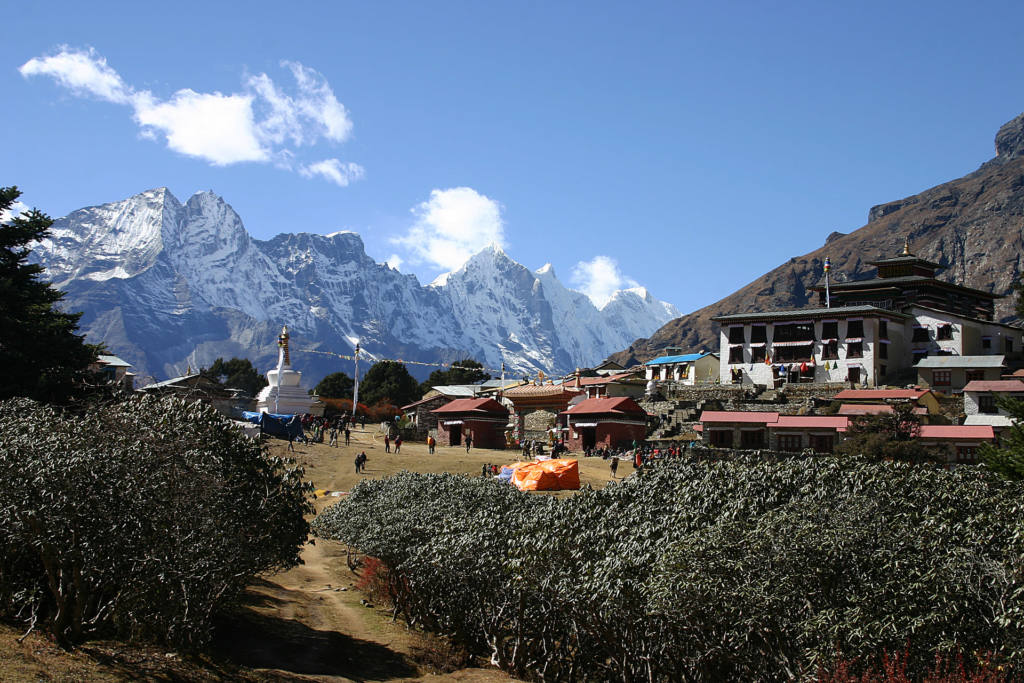
The mani walls lining the trail, the prayer flags strung from every available ridge and high point, and the carved stones marking every junction on the route are all expressions of a spiritual geography that Sherpa communities actively maintain.
It reflects how they understand the landscape they live in, not because it makes a good photograph for passing trekkers, though it does make extraordinary photographs.
What makes the Khumbu feel different from anywhere else in Nepal is genuinely difficult to explain to someone who has not been there, but it has something to do with the sense that the culture you are moving through was not arranged for your benefit.
There are other parts of Nepal with extraordinary mountain scenery, other trekking routes with dramatic elevation gain and spectacular views, other communities with warm hospitality and interesting traditions.
What the Khumbu has that is harder to find is a living culture that has been shaped entirely by its specific relationship with these particular mountains, carrying its own language.
The region has its own festivals like Dumje and Mani Rimdu, its own understanding of what the peaks mean and why they deserve reverence, and none of it was designed to impress visitors.
Trekkers who understand this context before they arrive tend to come away from the Khumbu with something that is harder to explain than a summit certificate or a collection of photographs.
They come away with the feeling of having spent time in a place that has its own unique identity, and understanding where that comes from makes the whole experience land differently.
It comes from the people who have lived in these mountains for five hundred years and built something in that time that is genuinely worth walking toward.