



12 Days Annapurna Base Camp Trek with an Australian Family – A Memorable Himalayan Adventure
We recently completed this 12 day Annapurna Base Camp trek with an Australian family of four, parents with their two children aged 15 and 13, and it turned into a journey that stayed with all of us long after we returned to Pokhara.
The family did not come looking for a short walk or an easy holiday. They wanted a real mountain trip together, something that would challenge them in a good way and give them a proper feel of the Annapurna region.
They wanted villages, forests, tea houses, river valleys, long trail days, and the feeling of reaching a place that had to be earned on foot. That was exactly what this route gave them.
The trek began in the lower hills above Pokhara and gradually moved higher through Ulleri, Ghorepani, Poon Hill, Chuile, Chhomrong, Bamboo, Dovan, Himalaya, Deurali, Machhapuchhre Base Camp, and finally Annapurna Base Camp.
After that, the route came back down through Upper Sinuwa and Jhinu, then crossed Landruk, Tolka, Australian Camp, Dhampus, and Phedi before the drive back to Pokhara.
Annapurna Base Camp sits at 4,130 metres, Poon Hill rises to 3,210 metres, and the wider Annapurna region is known for combining village trails, forests, and high mountain scenery in one route, which is a big part of why this trek feels so complete when you do it properly.

What made this trek special was not only the base camp itself. It was the way the journey changed from day to day.
The lower section had steep stone steps, village trails, and terraced hills. The middle section moved into deep forest and narrower valleys.
Higher up, the trail became colder, quieter, and more dramatic as the family entered the Annapurna Sanctuary. On the way down, the trek softened again with the natural hot spring at Jhinu and the gentler hillside villages near Landruk, Australian Camp, and Dhampus.
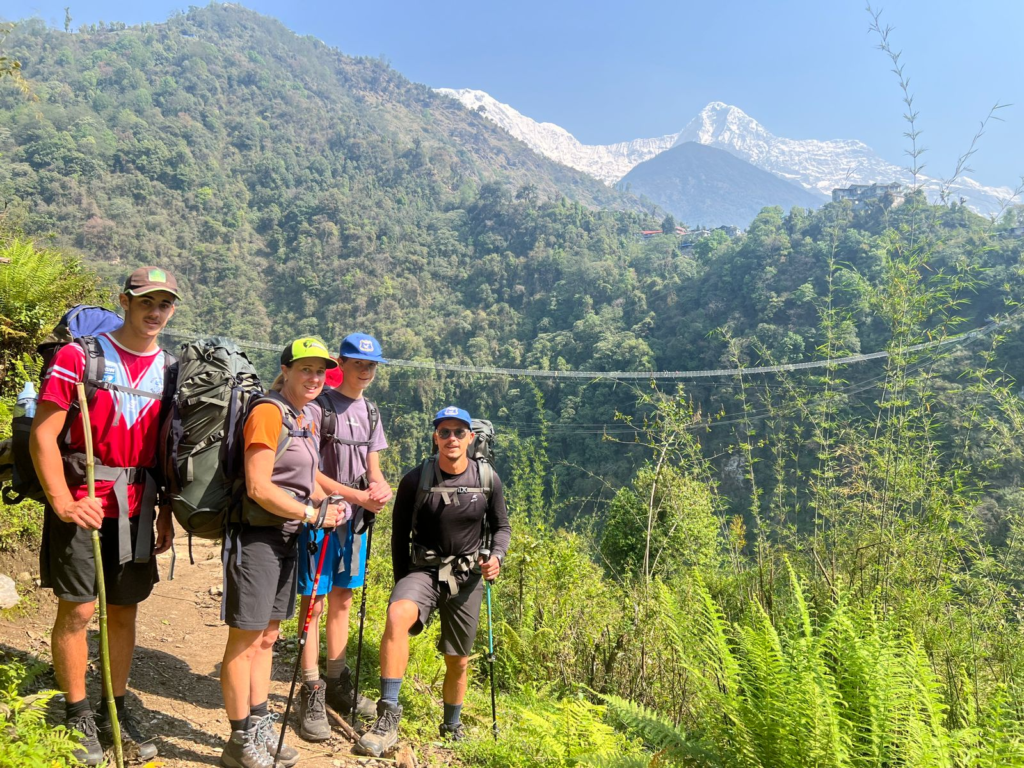
Altogether, the walking distance came to around 95 to 100 kilometres, depending on the exact trail variation and lodge stops.
Most days took around 4 to 7 hours on foot, with a few longer days in the middle and upper part of the trek.
Because the itinerary was spread out well, the family never looked rushed. They had time to walk properly, rest properly, and enjoy each stage of the route.
A family trek that worked very well
One of the nicest parts of this journey was how well it suited the family. The children were 15 and 13, so they were old enough to enjoy the challenge and to understand what they were doing.
They were not just following the adults. They were part of the experience. They felt the climb, enjoyed the villages, noticed the change in scenery, and understood why reaching Annapurna Base Camp meant something.
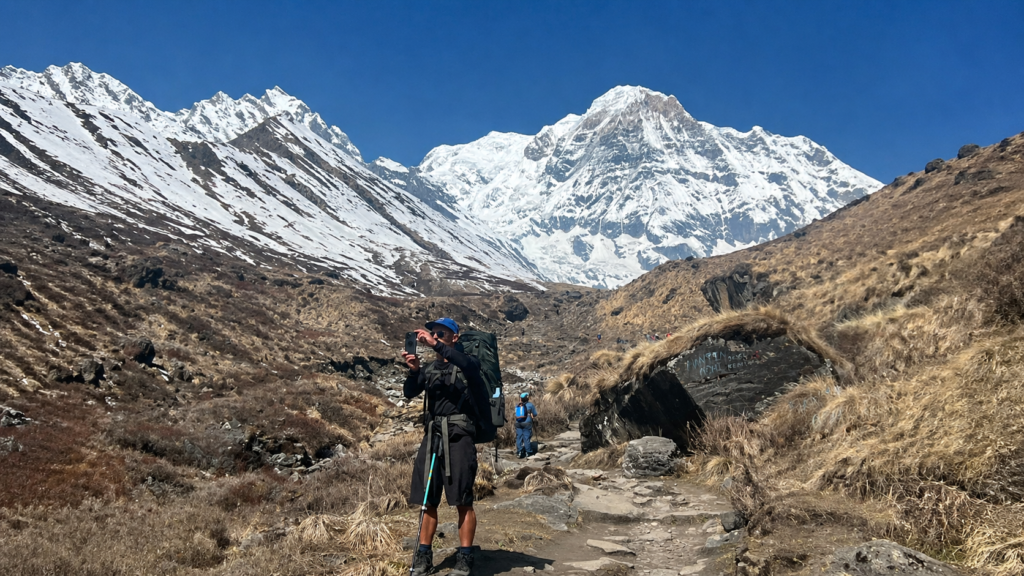
This was not an easy trek in any sense and should not be taken as one. There were long staircases, steep ups and downs, tired legs, cold mornings, and a few big walking days.
But it was very manageable because the route was planned well and the pace stayed sensible from the start. The family did not need to rush, and took every day gradually while enjoying the trail and scenery at the same time.
That is also why this kind of route can work well for families with younger teenagers. The Annapurna Base Camp route is widely treated as a moderate trek, with a steady rise in altitude rather than one sudden jump, which makes pacing and route design very important.
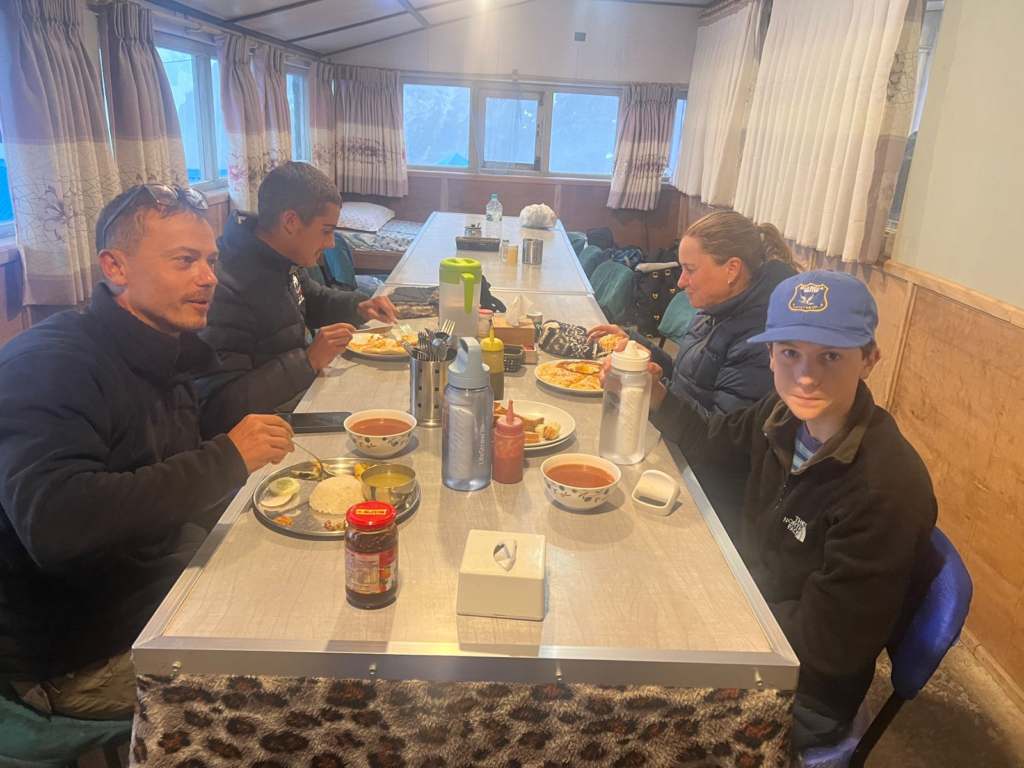
The tea house side of the trek added a lot to the experience too. They kept things simple, which honestly suited the route better.
For drinks, it was mostly masala tea and milk coffee. After a few hours on the trail, those were usually the first things our guests wanted once they sat down.
For food, they mostly went with vegetarian dishes, and that’s a pretty wise choice when you are chasing the Himalayas.
Dal Bhat, spring rolls, french fries, lemon sugar pancake, and Gurung bread kept coming back in a good way, and that simple food rhythm fitted the trek really well.
Another reason this route worked so well was because the views and trails kept changing. There was always something different waiting ahead and the trek is well commercialized.
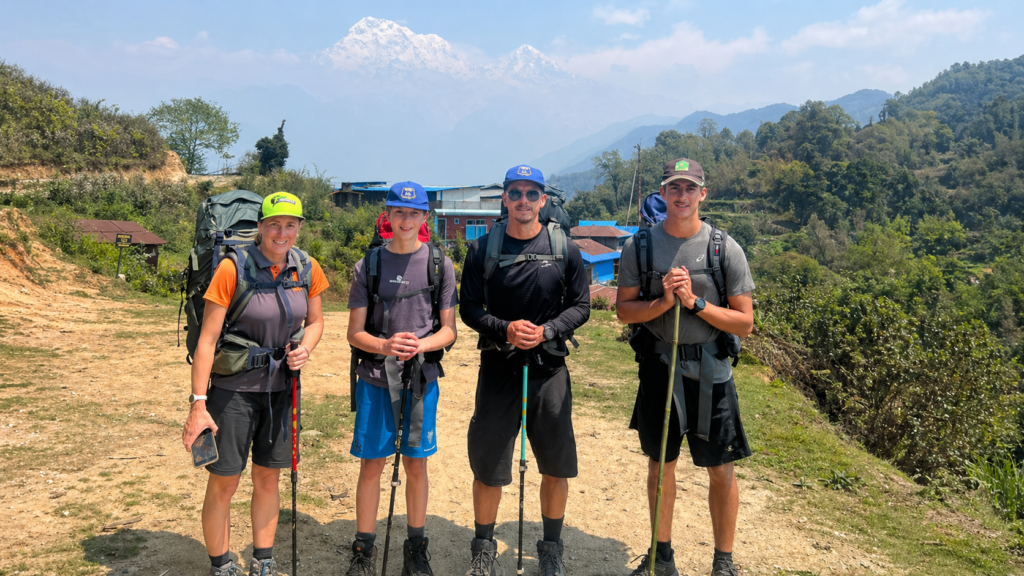
One day brought sunrise from Poon Hill. Another day followed the valley deeper into the mountains. The next day opened into the high basin near base camp.
Then, after all the effort above, the descent to Jhinu and the natural hot spring gave the family a chance to relax before the final scenic days through the villages above Pokhara.
Jhinu’s hot springs are one of the best known rest points on the lower ABC route, which makes that stop feel even better after the longer upper days.
The 12 day route we completed
Day 1 took us from Pokhara to Hille by road, then up to Ulleri on foot
The first day was not very long in distance, but it was steep enough to settle everyone into trekking mode straight away.
From Hille to Ulleri, the trail covered around 4 kilometres and took roughly 2.5 to 3 hours. The famous stone steps did their job early.

By the time the family reached Ulleri, they already knew this was going to be a proper trek and not just a light mountain walk.
The first night ended at Annapurna Guest House, and that felt like the right kind of beginning. Simple rooms, hot drinks, tired legs, and that first real mountain evening when everyone starts to realise the trip is fully underway.
Day 2 took us from Ulleri to Ghorepani
This day gave the family one of the classic Annapurna forest walks. The trail climbed through Banthanti and Nangethanti before reaching Ghorepani.
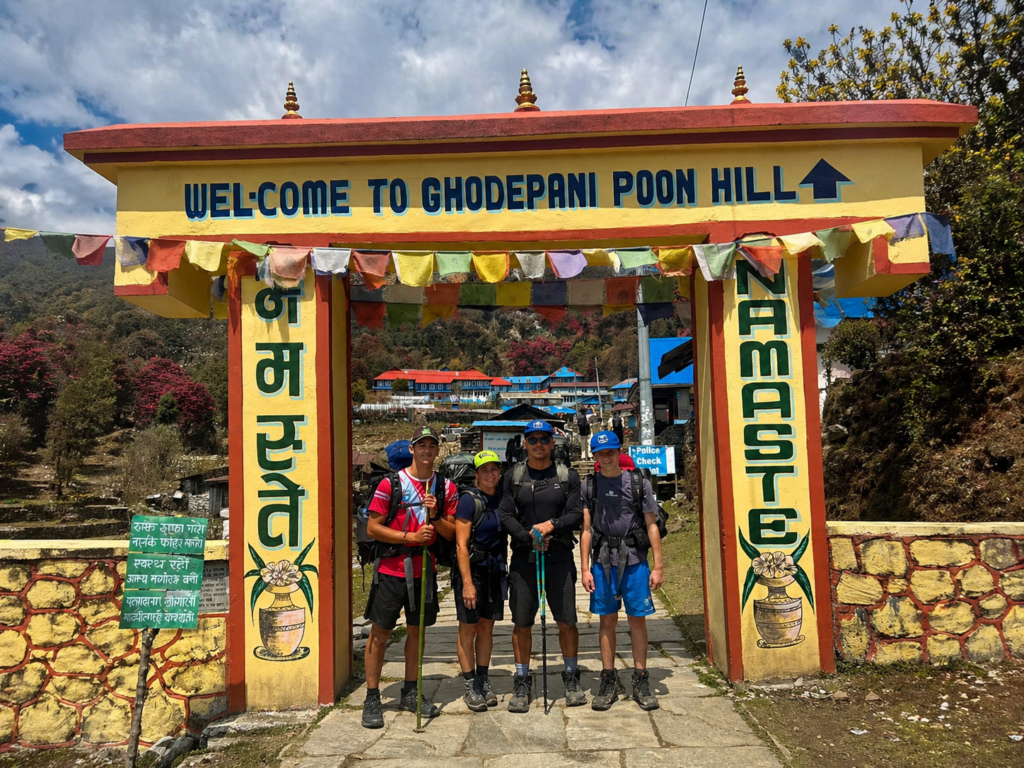
It took around 5 to 6 hours and covered about 8 to 10 kilometres. The forest became cooler and thicker, the air felt fresher, and the route started to feel more and more like the Himalaya people picture in their minds before coming here.
By the time they reached Fishtail Lodge in Ghorepani, the mood had changed from first-day effort to proper trekking rhythm.
Day 3 began with the early morning hike to Poon Hill, then continued to Chuile
This was one of the most enjoyable days of the whole trek. The family started early and climbed to Poon Hill before sunrise.
Watching the first light touch the mountain range gave them one of the best moments of the trip. Poon Hill is famous for exactly that reason, and it still earns that reputation when the weather is clear.
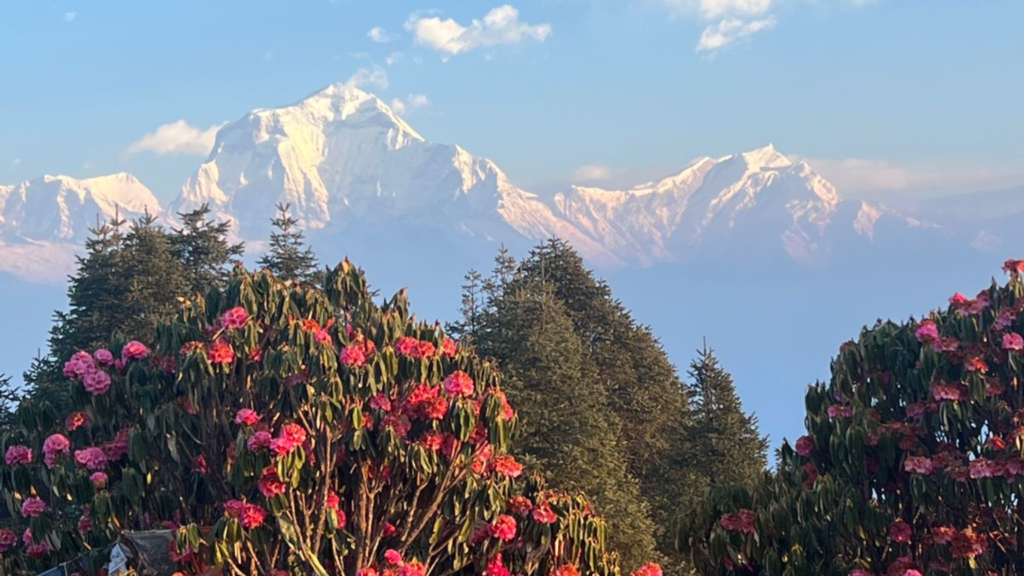
After that, the route continued through the ridge and forest sections toward Tadapani and then down to Chuile.
The full day took around 6 to 7 hours and covered roughly 12 to 13 kilometres. It was a long day, but because the scenery kept changing, it never felt dull.
Chuile was quieter, and Mountain Discovery suited that stop nicely. It was the kind of place where the family could sit down, warm up, and let the day settle in.
Day 4 took us from Chuile to Chhomrong
This part of the trek reminded everyone that mountain trails in Nepal are never simply about going up.
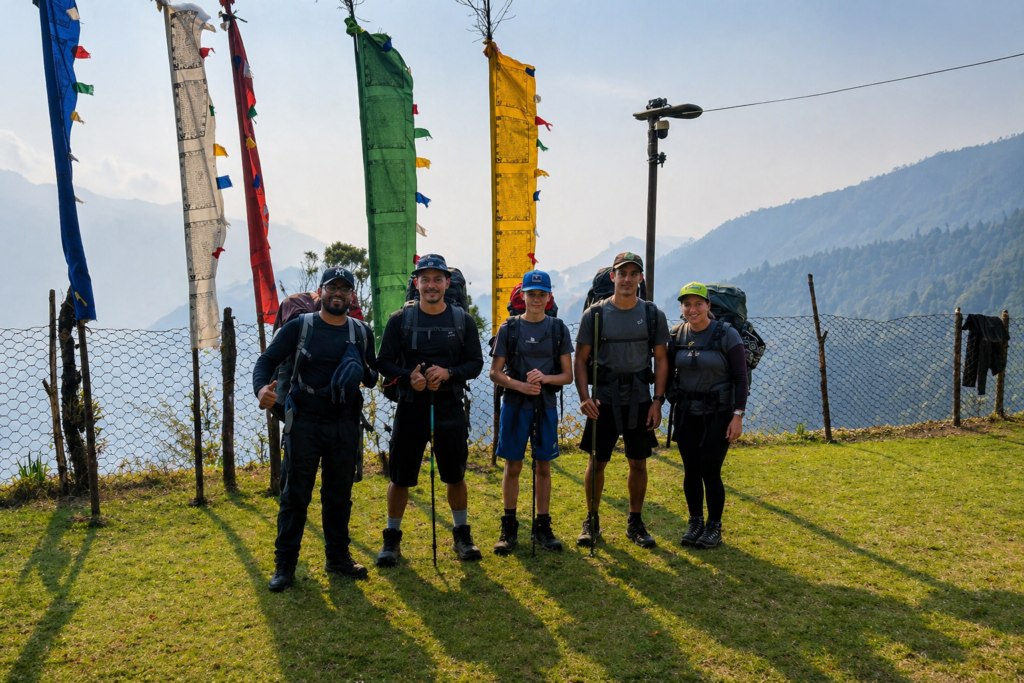
The route dropped toward the Kimrong side and then climbed again to Chhomrong. It took around 5 to 6 hours and covered about 7 to 9 kilometres.
Chhomrong felt like an important stop because it marked the point where the route really began turning toward the Annapurna Sanctuary.
That night in Real Chhomrong gave the family a proper pause before the trail headed deeper into the valley.
Day 5 took us from Chhomrong to Himalaya
This was one of the fuller walking days on the whole trip. The trail dropped steeply to Chhomrong Khola, climbed again through Sinuwa, then continued by Bamboo and Dovan before reaching Himalaya.
Much of this section followed the Modi valley, and the forest became thicker and quieter as the family moved deeper into the mountains. It took around 6 to 7 hours and covered roughly 10 to 12 kilometres.
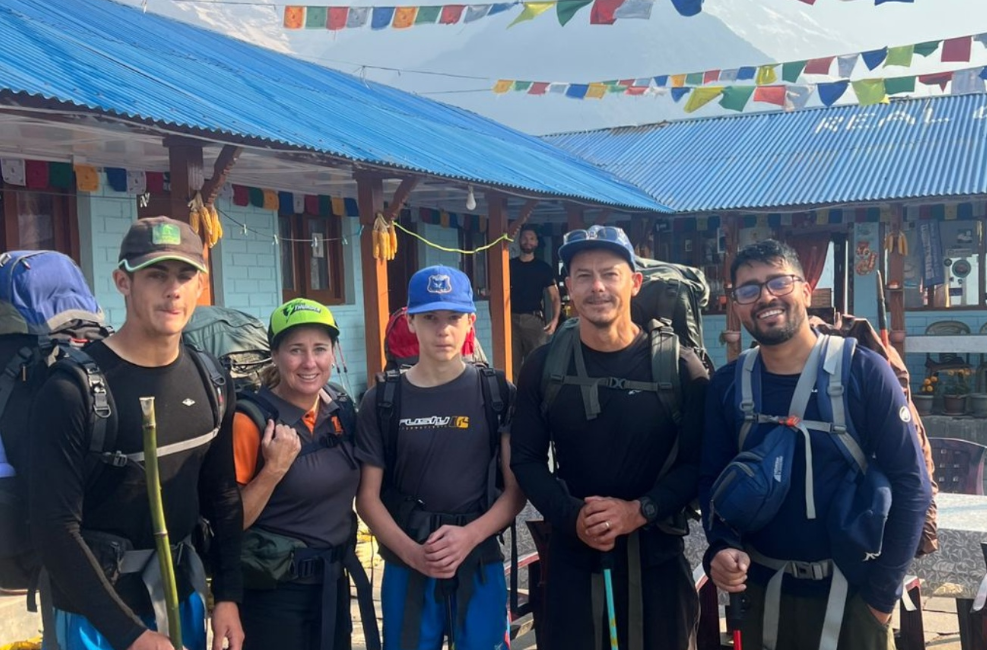
By the end of the day, the lower village world already felt far behind.
They finished that stretch at Himalaya Guest House, and the next morning had exactly the kind of start that feels good on a trek like this, hot masala tea, warm milk coffee, and mountain air that already felt colder than the days below.
Day 6 took us from Himalaya to Machhapuchhre Base Camp
This was the day when the scenery really started to change in a bigger way. The route passed Hinku Cave and Deurali, and after that the upper sanctuary landscape began to open.
Trees thinned out, the valley widened, and the air grew colder. It took around 5 to 6 hours and covered about 8 to 10 kilometres.

Reaching Machhapuchhre Base Camp felt like reaching the doorway to the high mountains.
MBC is placed at around 3,700 metres, and that shift in height is very noticeable when you arrive there after the greener days below.
The family spent the night at Fishtail Lodge, and by then the whole trek had clearly changed character. The evenings were colder, the views were bigger, and base camp no longer felt far away.
Day 7 took us from Machhapuchhre Base Camp to Annapurna Base Camp
This was not the longest day in terms of distance, but it was one of the most meaningful. The climb itself took around 2 to 3 hours and covered roughly 3 to 4 kilometres.

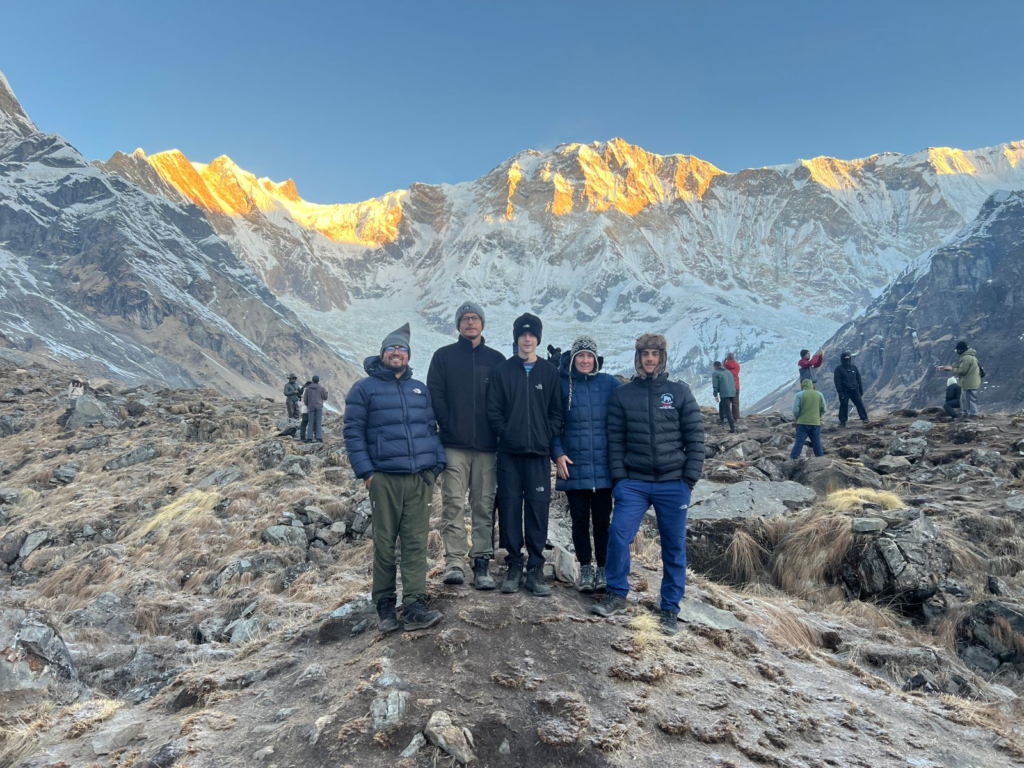
The trail rose steadily into the broad glacial basin of the Annapurna Sanctuary, and then suddenly the family was there, standing at Annapurna Base Camp surrounded by peaks.
After several days on foot, that moment meant a lot to all of them. It was quiet, rewarding, and very real.
They spend few moments clicking pictures with the Himalayas glancing behind them, making it a surreal moment for the Australian Family.
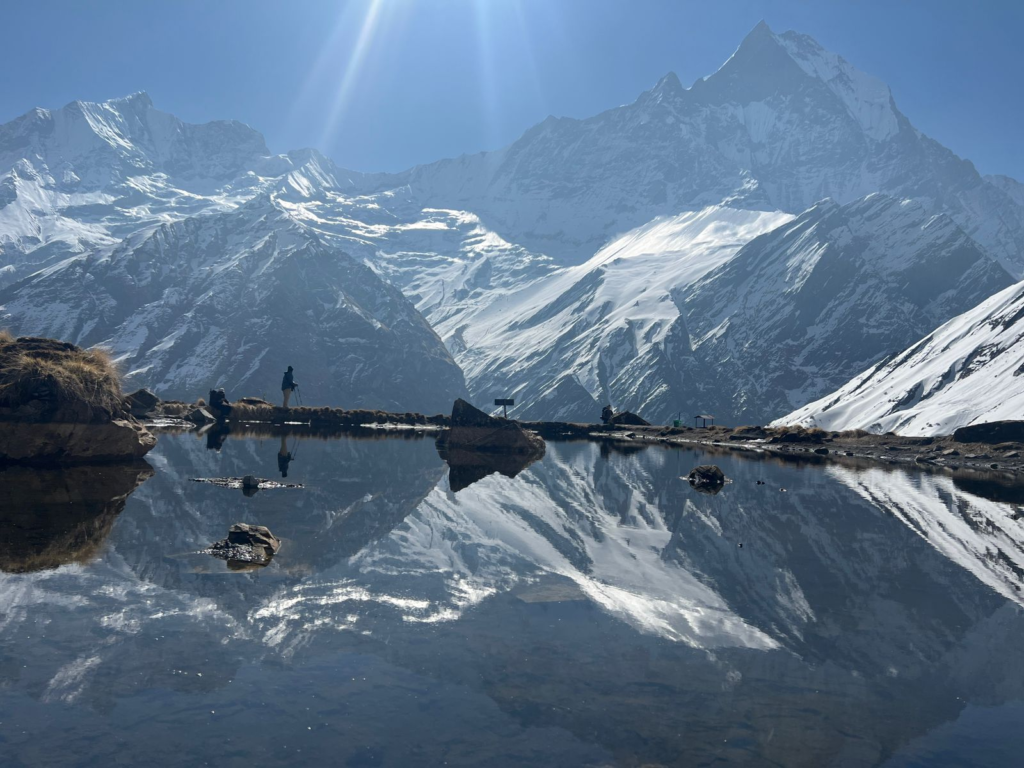
That night they were at Annapurna Centuary, and there is something special about sleeping that high after walking all the way in. The whole place feels still once evening settles.
Day 8 took us down from Annapurna Base Camp to Upper Sinuwa
This was a long descent day. We came back through Machhapuchhre Base Camp, Deurali, Himalaya, Dovan, and Bamboo, then continued toward Upper Sinuwa.

The day took around 7 to 8 hours and covered roughly 18 to 22 kilometres. It was a demanding day in terms of distance, but as the altitude dropped, the family started to feel stronger again.
By evening, there was tiredness of course, but also that good kind of tiredness that comes after a strong day on the trail.
Hilltop Lodge felt like a good finish for that kind of day. Everyone had done a lot of ground, so the simple comfort of stopping there mattered more than anything fancy would have.
Day 9 took us from Upper Sinuwa to Jhinu
This day felt lighter and more relaxed after the effort of the upper mountain days. The route returned through the Chhomrong side and then went down toward Jhinu Danda.
The walk took around 4 to 5 hours and covered about 8 kilometres. The natural hot spring at Jhinu was one of the best rewards of the whole trip.

After days of walking, sitting in the warm water near the river felt exactly right.
The night at Park Himalaya carried that same easier mood. The harder upper section was done, and the family could finally enjoy that feeling properly.
Day 10 took us from Jhinu to Tolka via Landruk
This section brought the family back into greener hills, village paths, and terraced slopes. The route no longer felt harsh or high.
Instead, it felt warm, open, and peaceful again. The walk took around 4 to 5 hours.

Landruk added another lovely village stop to the route, and continuing to Tolka made the whole journey feel broader than a simple up and down base camp trek.
By the time they reached Namaste Guest House in Tolka, the trail had already softened again in a really nice way.
Day 11 took us from Tolka to Dhampus via Australian Camp
This was another very pleasant day. The trail moved through ridge country toward Pothana and Australian Camp, then continued to Dhampus.
It took around 4 to 5 hours. The views were wide, the walking was gentler than in the sanctuary, and the family could really feel that they were bringing the trek to a calm and satisfying close.
Dhampus has that nice final-night feeling on routes like this, and Dhampus Holiday Home and Restaurant fitted that mood well.
Day 12 took us from Dhampus to Phedi, then back to Pokhara by road
The final walk down took around 2 to 3 hours. By then, the mood was very different from the first day.
The family had already completed the trek properly, step by step, and the last descent felt more like a quiet closing chapter than a hard final push.
Returning to Pokhara gave everyone time to slow down, rest, eat well, and look back on everything they had just done together.
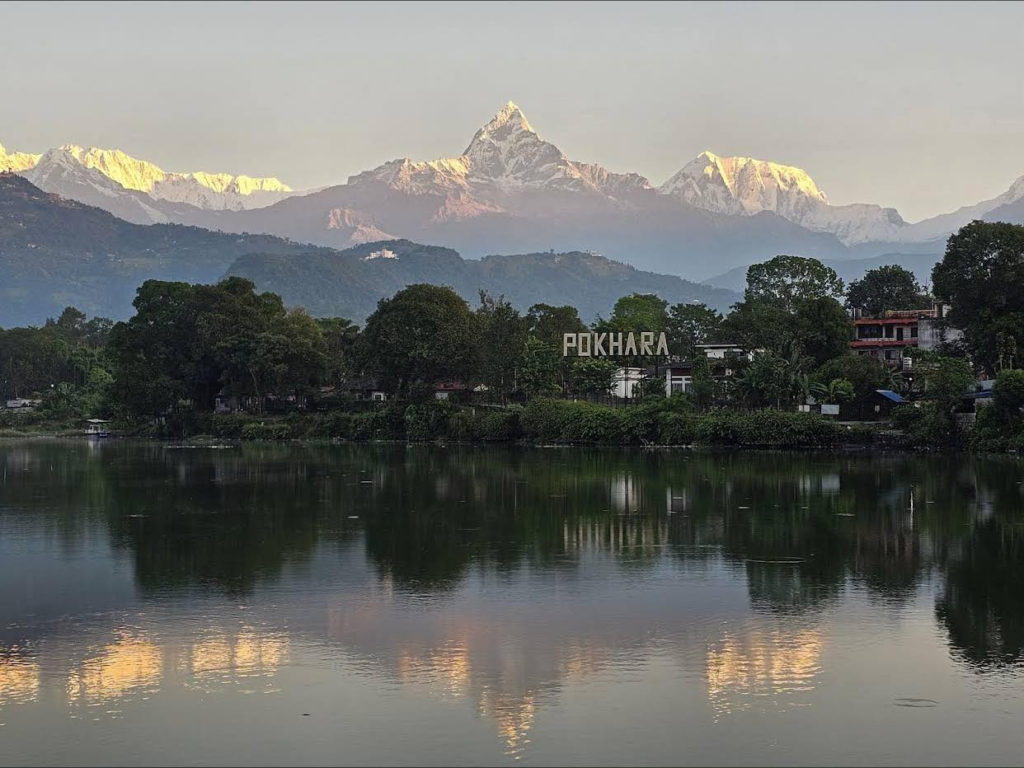
Ending in Pokhara was part of what made the whole journey feel complete. After 12 days on the trail, coming back down to the lake city changes the pace immediately.
The mountains are still there in the distance, but now they are part of the background while the body finally gets to rest.
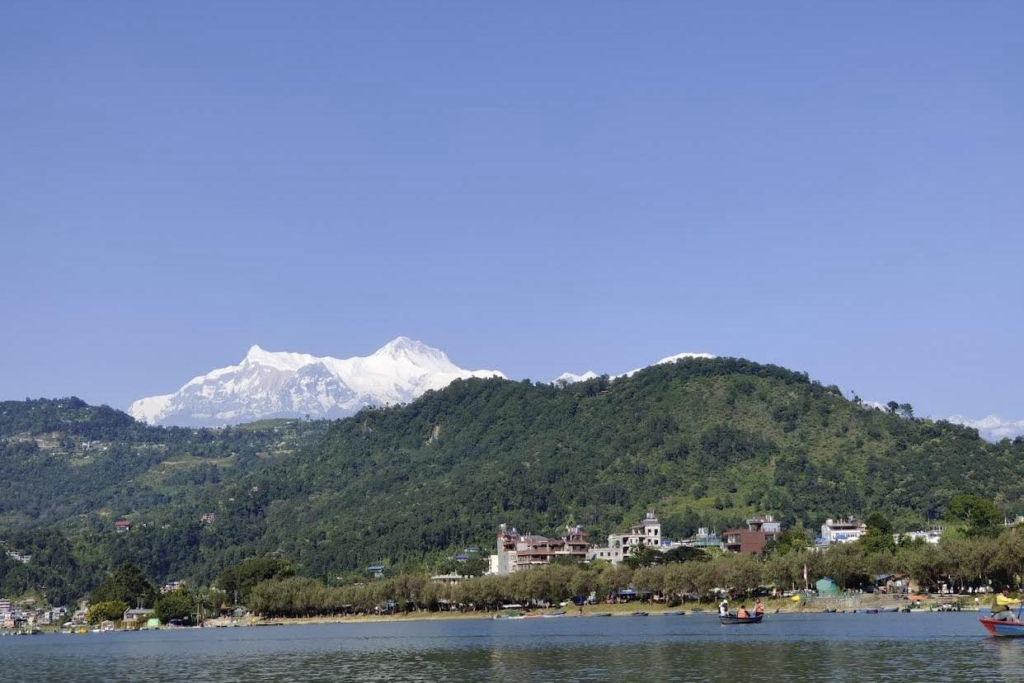
Lakeside, boating on Phewa, the hilltop view from the World Peace Pagoda, and the mountain stories inside the International Mountain Museum all fit naturally after a trek like this.
Pokhara gives the trip a soft landing, which is exactly what many trekkers want after coming out of the Annapurna.
Why this trek stayed with us
The best part of this trip was not only reaching Annapurna Base Camp. It was the complete shape of the journey in the Himalayas.
The family crossed hill trails, forest paths, river valleys, and high mountain ground.
They saw sunrise from Poon Hill, Fishtail Mountain, reached the base camp, relaxed in the hot springs at Jhinu, and finished through some of the nicest lower villages near Pokhara.

That is why this trip felt complete. It did not feel rushed. It did not feel flat. It felt like a real Himalayan journey from beginning to end.
One of the nicest things about this trip was how clearly it showed that a family trek in Nepal does not have to mean choosing the easiest possible route.
With teenagers, decent fitness, proper pacing, and good trail support, a trek like Annapurna Base Camp can be a wonderful shared adventure.
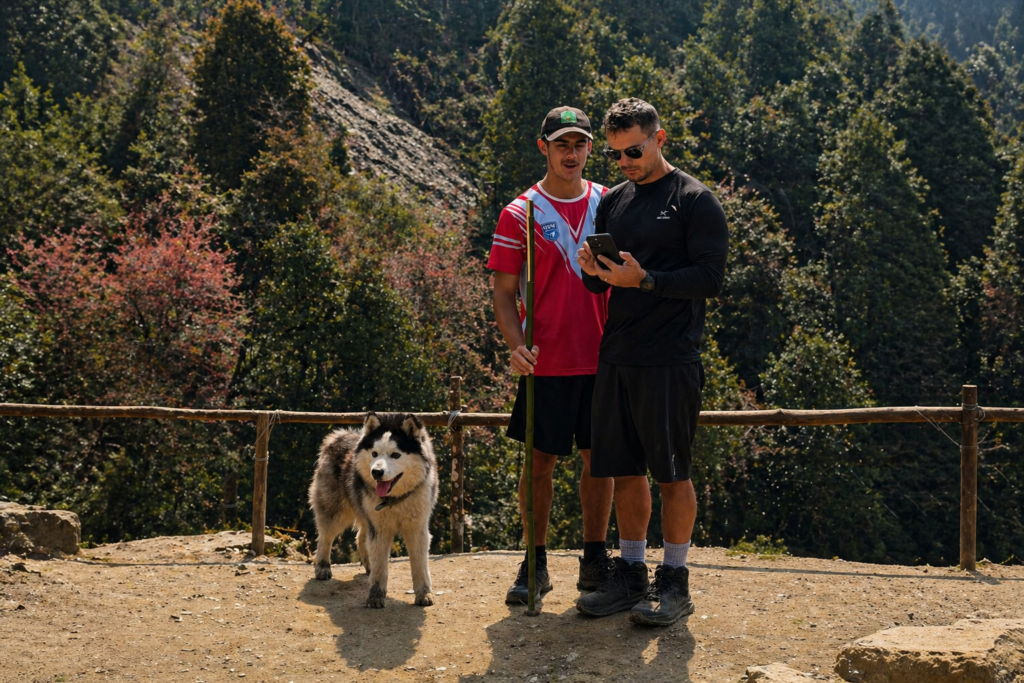
For families with younger teenagers, that matters a lot. When the route is planned well and the pace stays sensible, Annapurna Base Camp becomes much more than a physical challenge.
It becomes a shared experience. This Australian family came looking for a real adventure together, and by the time they returned to Pokhara, that was exactly what they had.

That is a big part of what Nepal Royal Tourism Holidays tries to provide. With proper guidance, careful pacing, and the right overnight stops, a family trek becomes much more enjoyable and far less stressful.
After wrapping up the 12-Days Annapurna Base Camp tour with Poon Hill our Managing Director also handed over the Medals and Certificates to the Australian Family.
This is a worthy and unforgettable journey for our MD and hopefully for our Australian Guests too who flew over 7000 KM to trek in the Himalayas and chose us.
In near future, we hope to serve the Australian family once more and any other families around the globe for trekking, tour or any tourism experience.