


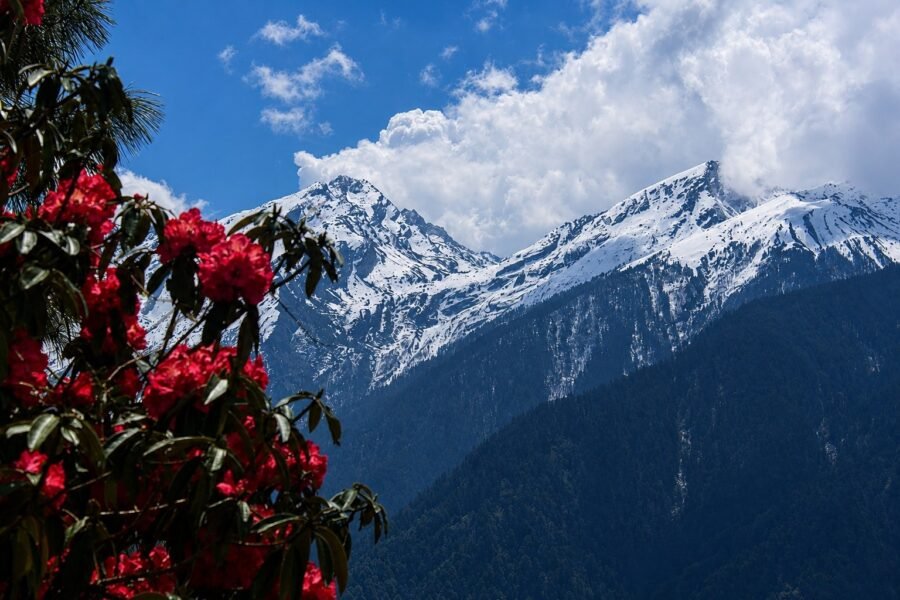
Bhutan vs Nepal vs Tibet Trek: Which Himalayan Experience Is Right for You?
Bhutan, Nepal, and Tibet are often grouped together because they all sit in the Himalayas and are popular tourist destinations in the South/East Asia, but that is really where the similarity ends.
Nepal is open and flexible, Bhutan is quiet and tightly managed, whereas Tibet feels vast, high, and shaped by permits and altitude from the very beginning.
If you choose the wrong one for the kind of trip you actually want, the mountains will still be beautiful, but the trip itself can feel slightly off.
This guide is for travelers who want to understand the difference before they book, not after. The real comparison is not just scenery.
It is also about cost, trail style, food, culture, freedom, and how the days actually feel once you are there.
A quick look at the three
| Destination | What it feels like | Logistics | Cost |
|---|---|---|---|
| Nepal | Flexible, social, trail-based, full of variety | Visa on arrival for most nationalities; many protected areas now require a licensed guide and TIMS card | Lowest overall |
| Bhutan | Quiet, curated, low-volume, intentional | All trips run through licensed operators and the guide system; current SDF is US$100 per person per night | Highest overall |
| Tibet | Vast, spiritual, remote, permit-heavy | Foreign travelers must move with arranged permits and fixed itineraries | Mid-to-high overall |
That is the simplest way to think about it. Nepal gives you room to move, Bhutan gives you space to slow down, and Tibet gives you scale. Once you see them that way, the choice becomes much easier.
Nepal
Nepal is the place for travelers who want a real Himalayan trekking experience without losing their freedom to make decisions.
It is still the most open of the three countries we have listed. Most Foreign tourists can get a visa on arrival at Kathmandu, Pokhara, Lumbini, and several border crossings.
Nepal’s trekking system is built around routes, permits, teahouses, and local guiding support, and it has become more organized in recent years even as it remains much less restrictive than Bhutan or Tibet.
What Nepal does better than almost anywhere else in the Himalayas is variety. You can do a short scenic walk around Poon Hill in a week if that is all you have.
You can go all in on Everest Base Camp for two weeks. You can disappear into a remote circuit like Manaslu, Dhaulagiri or Kanchenjunga for three weeks and barely see another foreigner.
The country has routes that work for first-timers, families, serious high-altitude hikers, and repeat visitors who keep coming back because they still have not run out of terrain to explore.
The trail life while trekking in Nepal or just strolling around is a huge part of the appeal.
Teahouses and small lodges are built into most major routes, which creates a very natural style, wake early, walk, stop for tea or lunch, reach the next village, eat a warm meal, sleep, and do it again.
The walk passes through local life rather than around it. You move through Sherpa villages in the Everest region, Gurung settlements in Annapurna, Tamang communities in Langtang, and the Tibetan-influenced culture of Upper Mustang.
Nepal is not a museum version of the Himalayas. It is a living one, and that distinction matters more than people realize until they are actually on the trail.
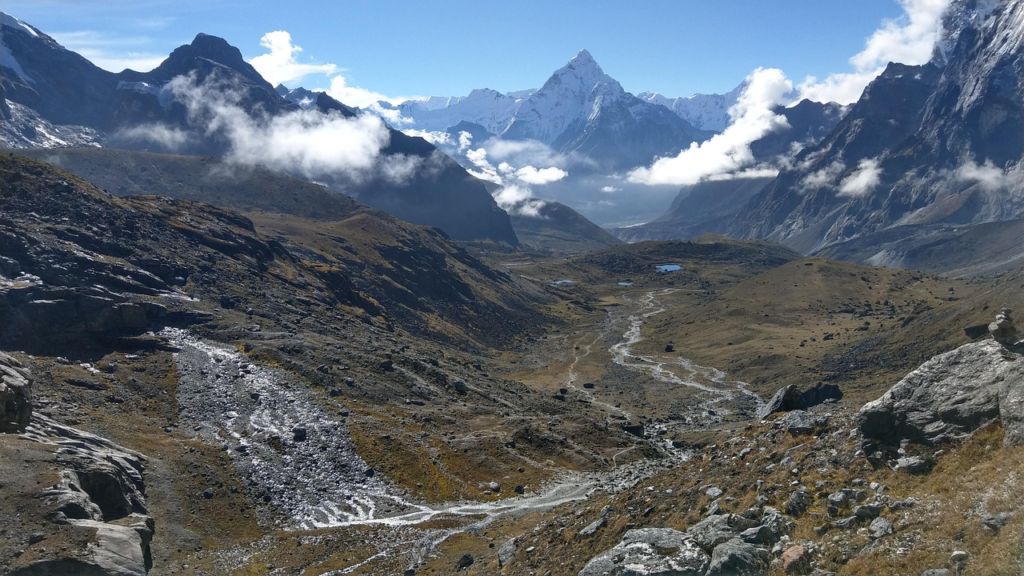
The honest downside is crowds on the famous routes. Everest Base Camp and Annapurna Base Camp can get busy in October–November and March–April, especially on the best weather days.
That is not a problem if you know it is coming, It just means Nepal is best when you are going for the experience itself, not for guaranteed solitude.
However, there are new trekking routes, unexplored treks and hidden trekking regions you can opt if you want a calm trail with little to no noise.
Famous treks in Nepal
| Trek | Duration | Difficulty | Max Altitude | What makes it worth it |
|---|---|---|---|---|
| Everest Base Camp Trek | 12–14 days | Moderate–Hard | 5,364 m (EBC) / 5,545 m (Kala Patthar) | The world’s most iconic mountain approach; Sherpa culture, Namche Bazaar, Khumbu Icefall views |
| Annapurna Circuit Trek | 14–18 days | Moderate–Hard | 5,416 m (Thorong La Pass) | Immense landscape variety; Mustang gorge, Muktinath temple, high desert to subtropical forest |
| Annapurna Base Camp Trek | 10–14 days | Moderate | 4,130 m | The mountain amphitheatre at the top is one of the most dramatic sights in the Himalayas |
| Manaslu Circuit Trek | 14–18 days | Hard | 5,160 m (Larkya La Pass) | Remote, far less crowded than Everest or Annapurna, raw mountain atmosphere |
| Langtang Valley Trek | 7–10 days | Moderate | 3,870 m | Closest major trek to Kathmandu; glaciers, glacial lakes, and strong Tamang culture |
| Gokyo Lakes Trek | 12–15 days | Moderate–Hard | 5,357 m (Gokyo Ri) | Turquoise glacial lakes, Ngozumpa Glacier, quieter than EBC with comparable views |
| Upper Mustang Trek | 10–14 days | Moderate | 3,840 m | Ancient walled kingdom with Tibetan cultural roots; desert landscape unlike anything else in Nepal |
| Kanchenjunga Circuit | 20–24 days | Very Hard | 5,143 m | World’s third-highest peak, genuine wilderness, rarely done and completely worth it |
| Tsum Valley Trek | 18–22 days | Hard | 4,200 m | Restricted area, untouched Buddhist communities, one of the least-visited valleys in Nepal |
| Poon Hill Trek | 5–7 days | Easy–Moderate | 3,210 m | Best first trek in Nepal; sunrise views over Dhaulagiri and Annapurna, accessible from Pokhara |
Key facts before you go to Nepal
| Factor | Nepal |
|---|---|
| Visa | Visa on arrival for most nationalities |
| Permits | TIMS + park/conservation or restricted-area permits depending on route |
| Guide rule | Licensed guide required on most trekking routes in many protected areas and restricted regions |
| Best time | October–November and March–May |
| Budget | Broad range, from budget to luxury, but typically value for money |
The visa and permit system is one of Nepal’s strongest advantages. It is structured enough to be safe, but still flexible enough for different kinds of travelers.
Bhutan
Bhutan feels different the moment you arrive due to a variety of things. The country has made a clear decision about tourism, and that decision runs the whole experience.
International visitors generally need to pre-arrange a visa, and the trip is built around licensed operators rather than independent wandering unlike Nepal.
Bhutan also uses a Sustainable Development Fee, which is currently US$100 per person per night for most visitors, so this is not a budget destination in any normal sense.
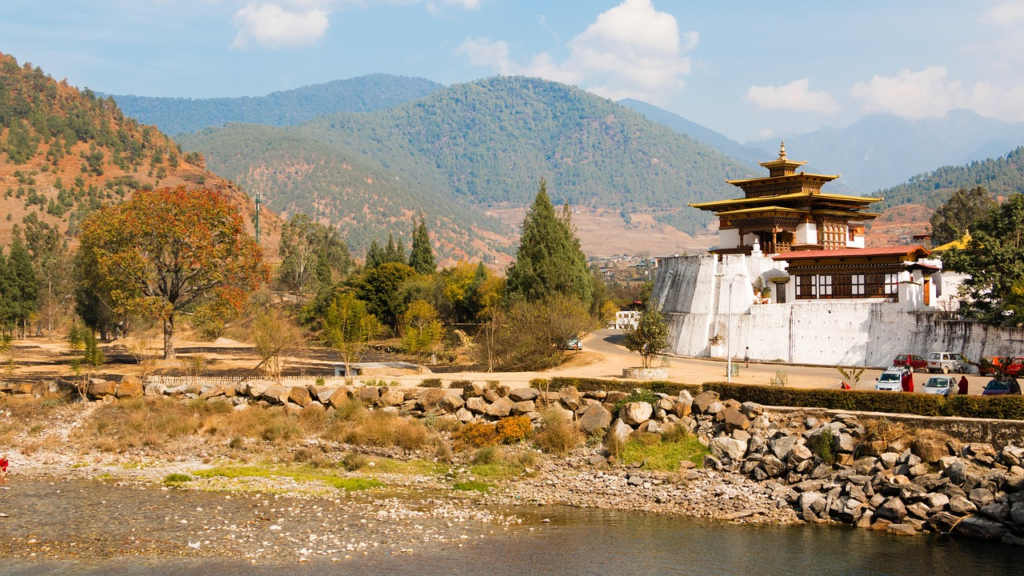
That higher price is part of why Bhutan feels so quiet especially for tourist who want a greater expereicne in a reasonable price.
The trails stay less crowded, the culture feels better protected, and the trip feels more controlled from the start. If Nepal is about freedom and range, Bhutan is about calm and intention.
The trekking itself also has a different rhythm. Bhutan’s famous routes are properly organized and often fully supported, so the experience feels less like trail-to-trail improvisation and more like moving through a carefully managed Himalayan journey.
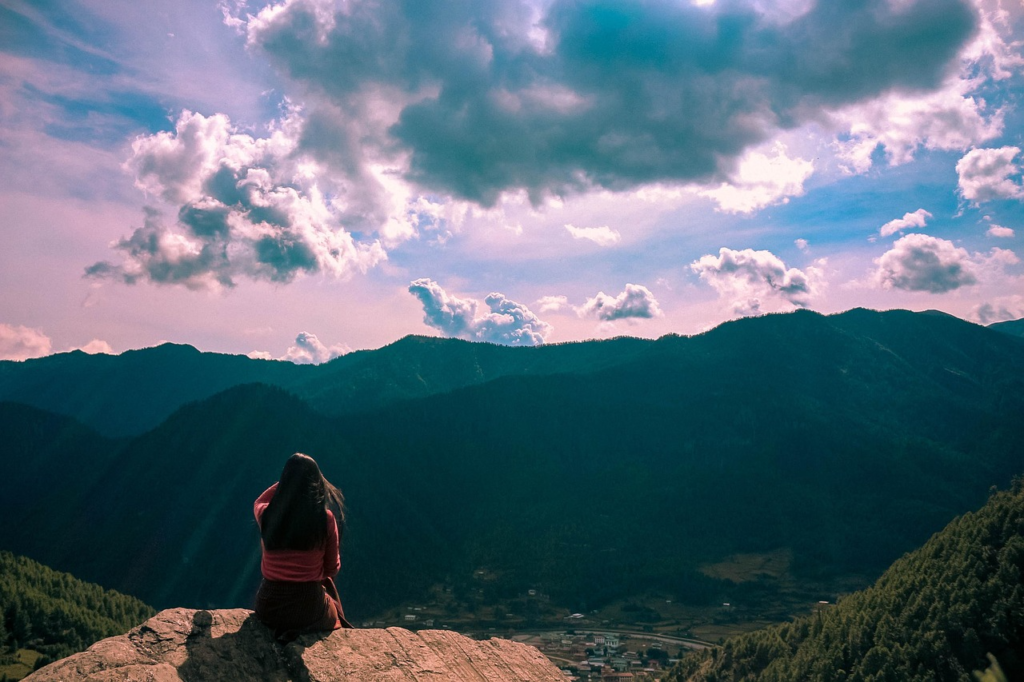
The counry’s trekking highlight routes include Druk Path, Jomolhari, Laya-Gasa, Bumthang Owl Trek, Dagala Thousand Lakes, and the Snowman Trek.
The Jomolhari Trek is one of Bhutan’s best-known routes for good reason. It begins in the Paro Valley, moves through villages and forests, and gives long views of Mount Chomolhari and the surrounding peaks.
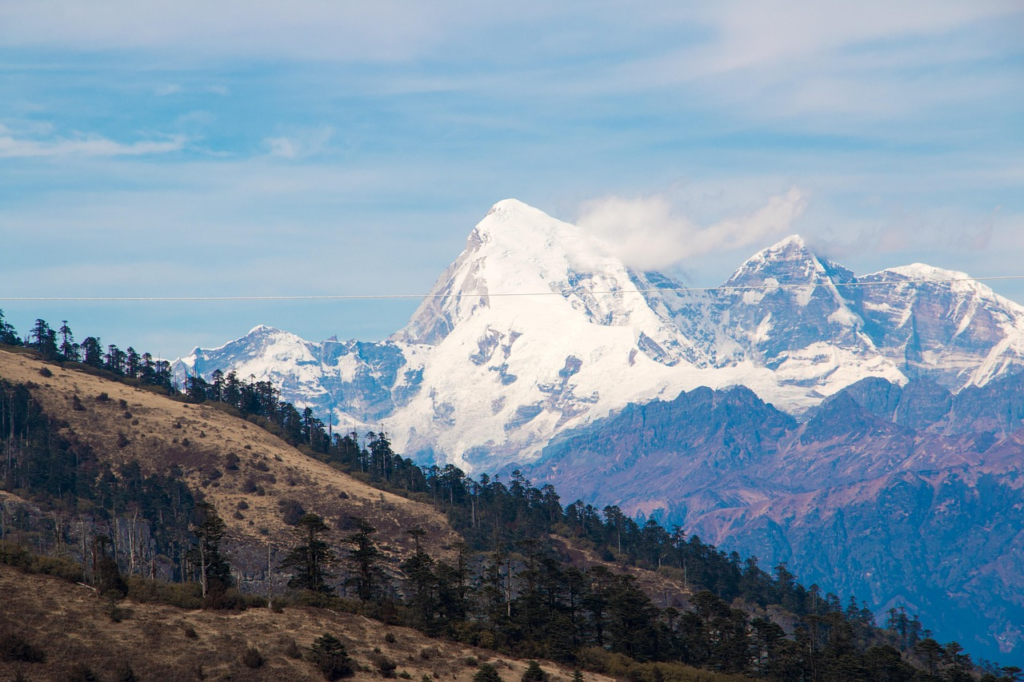
The Snowman Trek is in another league entirely and is known as one of the hardest and most remote treks in the Himalayas.
What Bhutan does especially well is give you a sense of preserved space. The dzongs, valleys, monasteries, and village landscapes are not just attractions.
They are part of an active, living culture that has been protected instead of overrun, making it a big part of the draw for travelers who want quiet, structure, and a journey that feels carefully held together.
Famous treks in Bhutan
| Trek | Duration | Difficulty | Max Altitude | What makes it worth it |
|---|---|---|---|---|
| Druk Path Trek | 5–6 days | Moderate | 4,210 m | Sacred lakes, Himalayan views, a strong first Bhutan trek |
| Jomolhari Trek | 8–10 days | Hard | 4,890 m | Direct views of Jomolhari, yak herders, remote valleys |
| Snowman Trek | 24–28 days | Extreme | 5,320 m | One of the hardest treks in the world, extremely remote |
| Dagala Thousand Lakes Trek | 5–6 days | Moderate | 4,520 m | Alpine lakes and open high-country scenery |
| Gangtey–Bumthang Trek | 4–6 days | Easy–Moderate | 3,360 m | Valleys, cranes, softer pace |
| Nabji–Korphu Trek | 8–10 days | Moderate | 1,700 m | Subtropical lowland trek, rare cultural encounters |
| Bumthang Owl Trek | 3–4 days | Moderate | 3,500 m | Short, scenic, and easy to combine with cultural touring |
Key facts before you go to Bhutan
| Factor | Bhutan |
|---|---|
| Visa | Pre-arranged before arrival through a licensed operator |
| SDF | US$100 per person per night for most visitors |
| Guide rule | Mandatory through licensed operators |
| Best time | March–May and September–November |
| Budget | High, with no true budget option |
Bhutan is the right choice if you want a quieter, more protected Himalayan experience and you are comfortable paying for that structure.
It rewards travelers who care more about depth and calm than about low cost or trail freedom.
Tibet
Tibet feels bigger than the other two. It is less about village-to-village trekking and more about the open plateau, the long horizon, monasteries and pilgrimage routes that have been walked for centuries.
Foreign tourists can visit, but they must do so with permits and arranged travel, not independently.
Tibet is open to foreign tourists provided they travel in groups with the necessary permits, and that remains the basic reality of travel there.
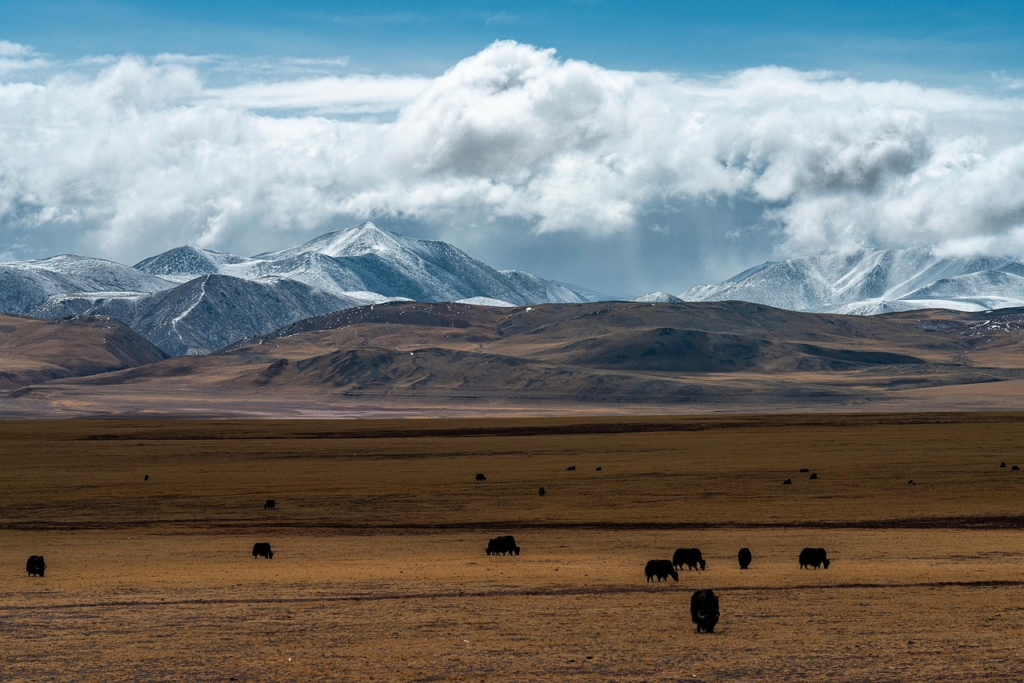
That makes the trip feel very different from Nepal almost immediately. The itinerary is more fixed, the paperwork is heavier, and the planning takes more time.
Tibet is not a casual, last-minute mountain escape, it is a destination you commit to properly, which can be a turn-off for some tourists.
The best-known Tibetan trekking and pilgrimage route is the Kailash circuit. It is sacred to multiple religions and remains one of the most powerful high-altitude journeys in Asia.
For someone wanting a longer journey can also choose Mount Kailash Yatra & Parikrama, and Kailash Manasarovar Yatra with Everest Base Camp and Lhasa.
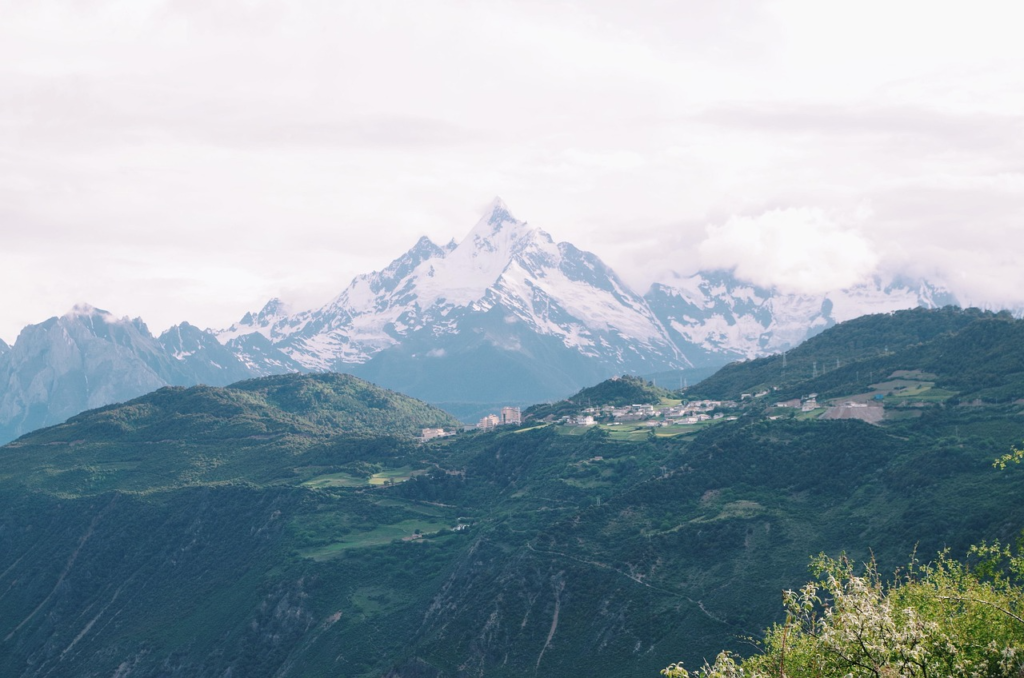
The Ganden to Samye route is another classic, linking two major monasteries through high passes and wide, empty terrain.
These travelers are not just scenic walks, They are indeed journeys with a spiritual center.
Tibet also feels huge because of the altitude. Lhasa itself sits high, and many trekking and pilgrimage routes go far higher.
That means acclimatization matters a lot, and even a short trip can feel physically serious if you rush it.
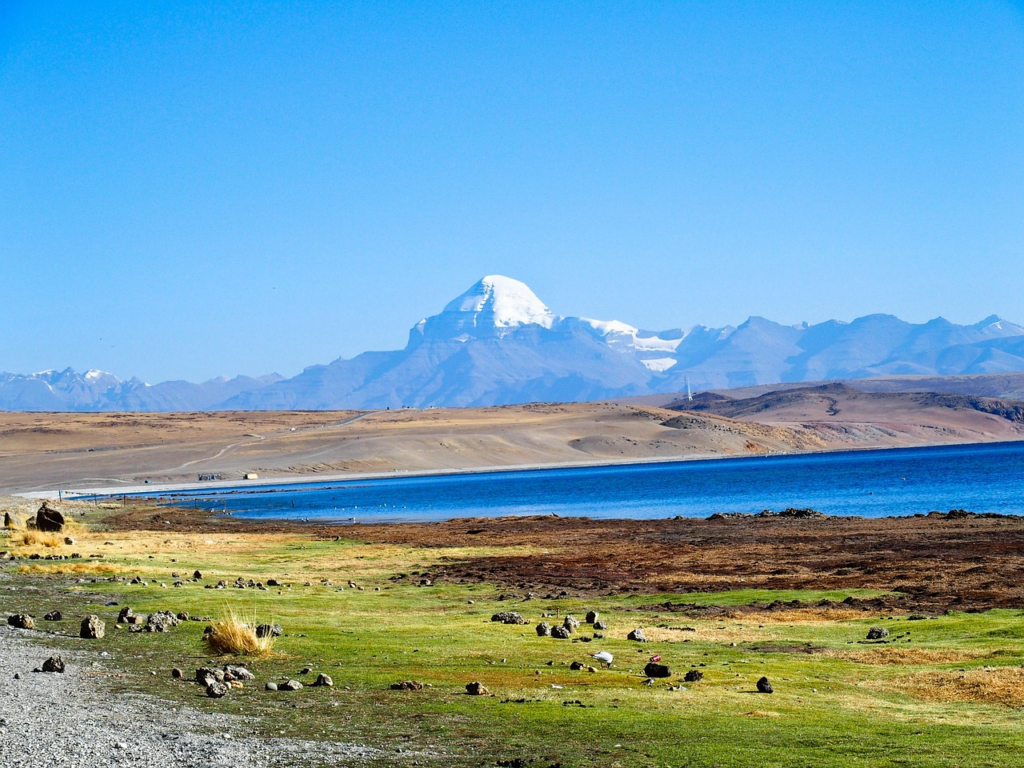
Tibet is not trying to offer the same kind of trail culture Nepal does. There is far less of the tea-house and far more of a structured, permit-led, high-plateau atmosphere.
That is what makes it compelling for some travelers and less appealing for others. It definitely has some Pros and Cons, but totally dependent on travelers who take the chance.
Famous treks and routes in Tibet
| Trek / route | Duration | Difficulty | Max altitude | What makes it worth it |
|---|---|---|---|---|
| Kailash Parikrama | 3 days for the circuit | Hard | 5,636 m | Sacred to multiple religions, spiritually powerful, unforgettable |
| Ganden to Samye Trek | 5–6 days | Moderate–Hard | 5,250 m | Monastery-to-monastery route, high passes, strong cultural depth |
| Everest North Base Camp | 2–3 days from Rongbuk | Easy–Moderate | 5,200 m | North face of Everest from a very different angle |
| Nam Tso Lake routes | 2–3 days | Moderate | 4,718 m | One of the world’s highest lakes, nomad landscapes |
| Shishapangma Base Camp | 2–3 days | Moderate | 5,000 m | Rarely visited, dramatic glacial scenery |
| Yarlung Valley Trek | 3–4 days | Easy–Moderate | 3,600 m | Ancient Tibetan civilization and ruins |
Key facts before you go Tibet
| Factor | Tibet |
|---|---|
| Visa and permits | Chinese visa plus Tibet Travel Permit, arranged through an agency |
| Guide rule | Mandatory organized travel |
| Best time | May–October |
| Budget | Mid-to-high |
| Travel style | Fixed, permit-led, and highly structured |
Tibet is the right choice if you want the plateau, pilgrimage routes, and a spiritual atmosphere that feels larger than life.
It asks more of you in permits, planning, and altitude, but it gives back a very unusual kind of mountain journey.
Trek and Trail life
This is where the three destinations separate most clearly in day-to-day feel.
In Nepal, teahouses are the center of trail life. You eat in them, sleep in them, and spend evenings around the dining room stove with other trekkers from around the world.
The food is simple and warm, and that daily rhythm becomes part of the whole trek.
In Bhutan, the trip feels more curated. The guiding structure, the operator-based system, and the lower visitor numbers give the journey a quieter pace.
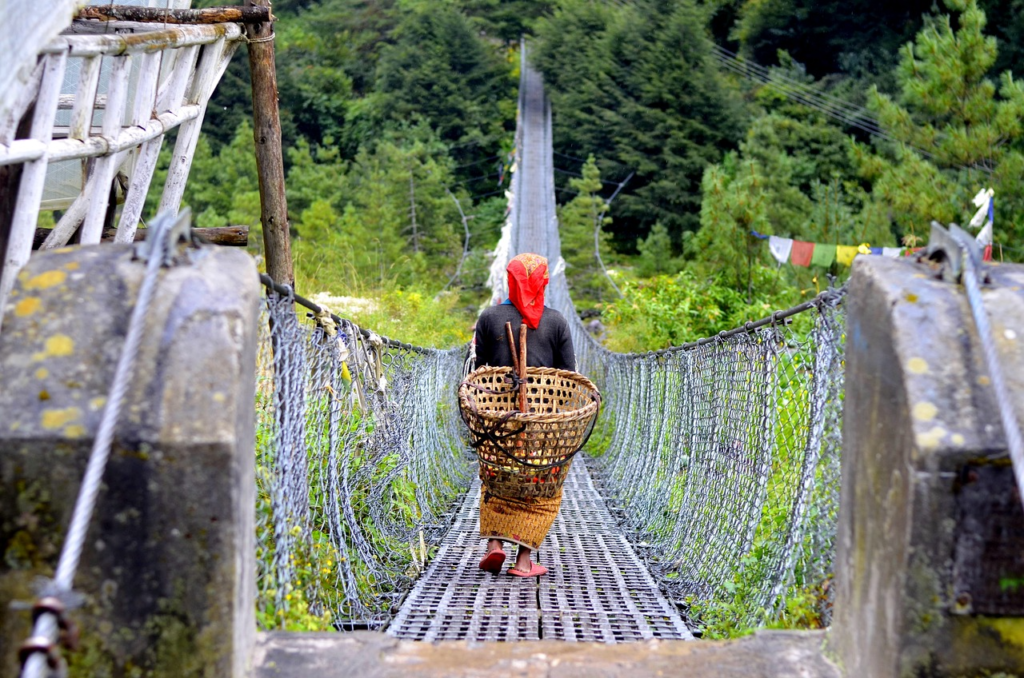
The evenings feel calmer, and the experience is less improvised than in Nepal.
In Tibet, the rhythm is different again compared to Nepal and Bhutan. Travel is shaped by permits, vehicles, towns, and pilgrimage-style movement.
You are not doing the same kind of tea-house trekking that defines Nepal. The journey is more about broad scale, sacred geography, and a high-altitude landscape that feels almost otherworldly.
Side-by-side comparison
| Factor | Nepal | Bhutan | Tibet |
|---|---|---|---|
| Independent trekking | Mostly yes, with guide requirements in protected areas | No | No |
| Cost per day | Lowest overall | Highest overall | Mid-to-high |
| Trail crowds | High on popular routes | Very low | Low to moderate |
| Trail infrastructure | Excellent | Good | Basic in remote areas |
| Altitude challenge | Moderate to high | Moderate | Very high |
| Cultural immersion | High | Very high | High |
| Visa complexity | Simple | Pre-arranged | Complex |
| Good for first-timers | Yes | Possible | Not recommended |
| Spiritual atmosphere | High | Very high | Extremely high |
| Best trekking season | Oct–Nov, Mar–May | Mar–May, Sep–Nov | May–Oct |
Which one should you choose?
If you want the most variety and the easiest logistics, go to Nepal. It is the best all-round trekking country in the Himalayas, and that is because it gives you so many different route styles in one place.
From short scenic walks to serious high-altitude routes, Nepal gives you room to choose your own level.
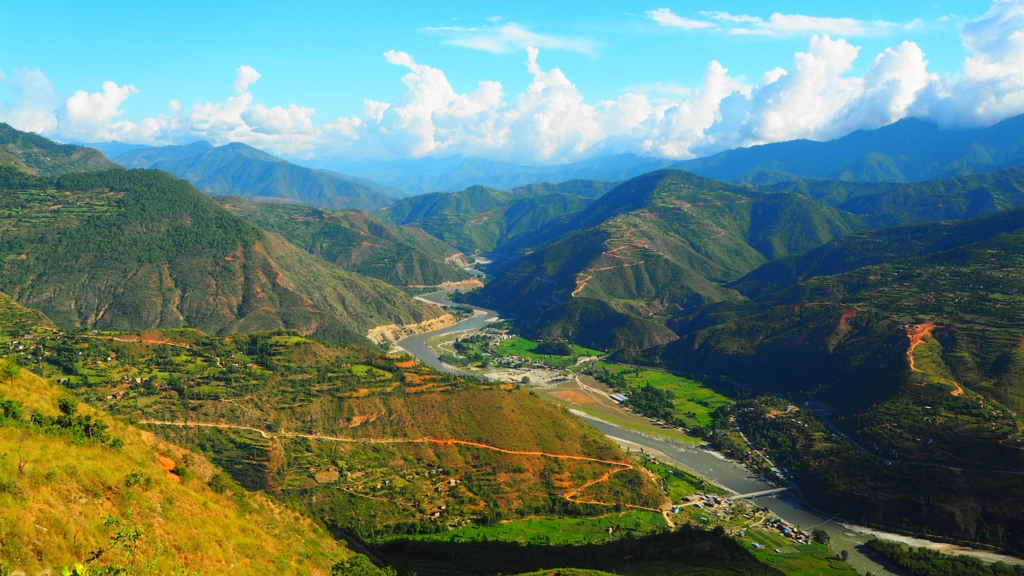
For some one wanting a quiet, premium, culture-heavy mountain trip and you are comfortable paying for it, go to Bhutan.
It rewards travelers who are more interested in depth and silence than in crowded summit views or the social buzz of a busy trail.
On the other side, if you want the plateau, pilgrimage routes, and a spiritual atmosphere that feels like it has its own gravity, go to Tibet.
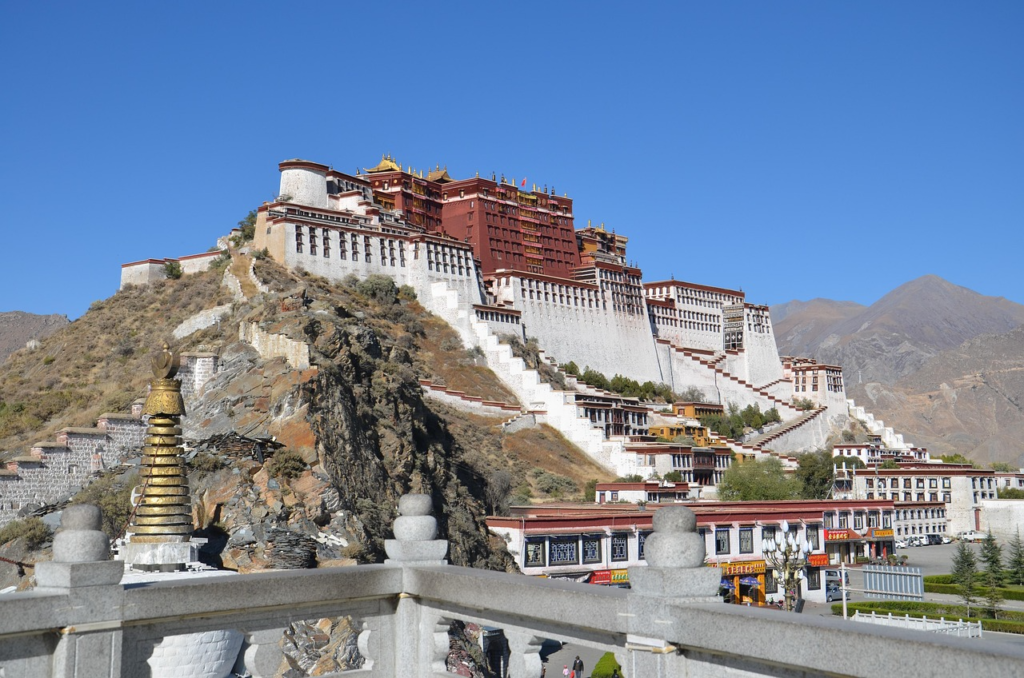
It asks more of you in permits, planning, and altitude, but it gives back a very unusual kind of mountain journey.
The real question is not which one is best. It is which one matches the kind of Himalayan trip you actually want.