


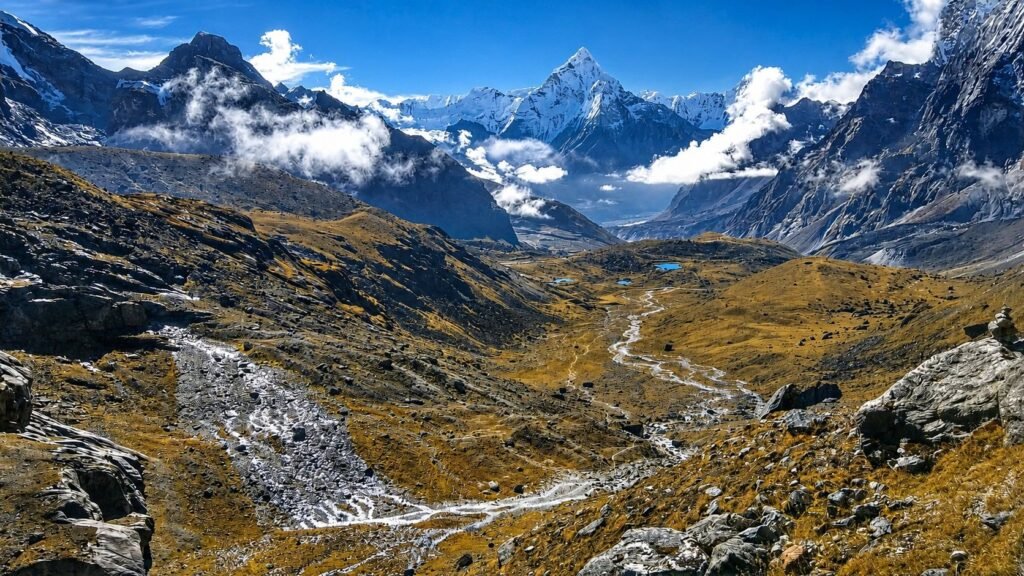
Is Nepal Safe to Travel After the Rasuwa–Tibet Flood? Destinations to Avoid, Treks to Watch and 2026 Travel Advice
Nepal Travel & Trekking Safety Update
Nepal remains open in many parts of the country, but the devastating flash flood that struck the Rasuwa–Tibet border on August 26, 2026 has created a serious and rapidly changing travel situation in several districts. This guide explains what happened, which areas should be avoided for now, which trekking regions require extra checks, and how travellers should approach the coming autumn trekking season.
Important: Do Not Rush Into Flood-Affected Areas
The disaster along the Nepal–Tibet border has caused devastating loss of life and widespread destruction. Hundreds of people have died, more than a thousand people remain unaccounted for across the wider affected region, and search, rescue and recovery operations are still continuing.
For travellers, the message is do not travel toward Rasuwa, Timure, Syabrubesi, Rasuwagadhi or other directly affected corridors simply because you have an upcoming itinerary. Emergency teams and local communities need time to recover, roads and bridges need assessment, and travel conditions can change quickly.
Is Nepal Safe to Travel Right Now?
There is no responsible one-word answer. Nepal is a large country, and the current disaster has not affected every destination in the same way.
The most serious destruction is concentrated around the Rasuwa and Nepal–Tibet border corridor, while floodwaters and debris also affected areas farther downstream through the Trishuli and Narayani river systems.
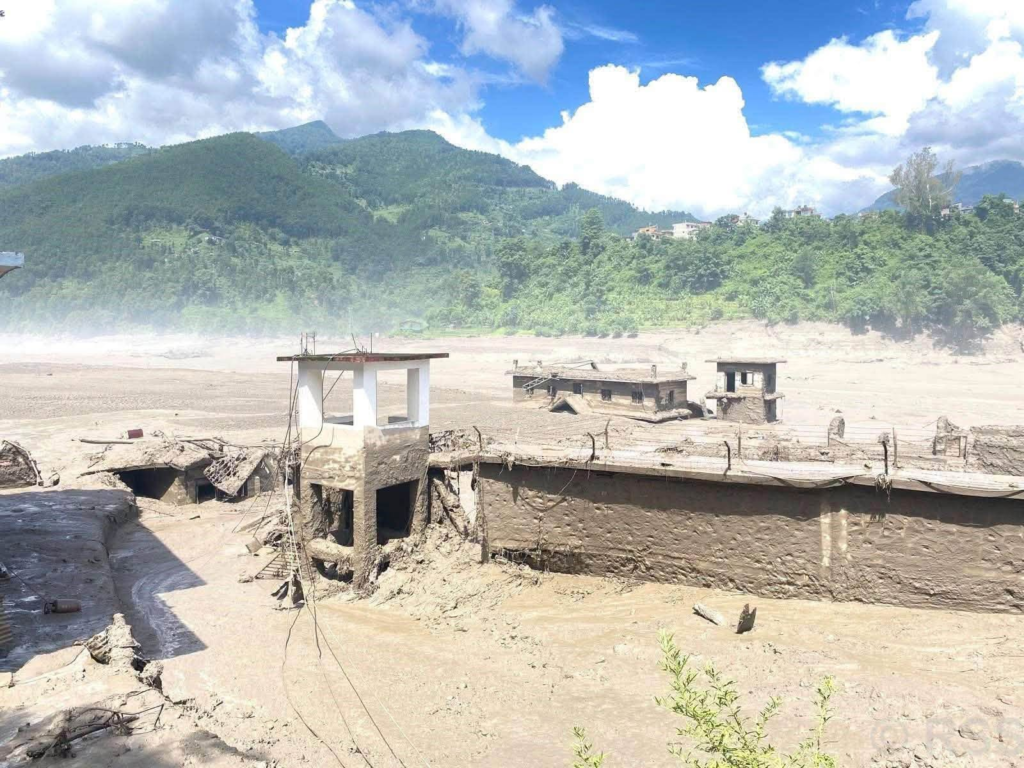
Current reporting has identified significant impacts in districts including Rasuwa, Nuwakot, Dhading, Gorkha, Chitwan, Tanahun, Nawalparasi East and Nawalparasi West.
That means a traveller planning a trip to Nepal should not rely on either extreme message. Saying that “Nepal is completely unsafe” would wrongly treat unaffected regions as though they were inside the disaster zone.
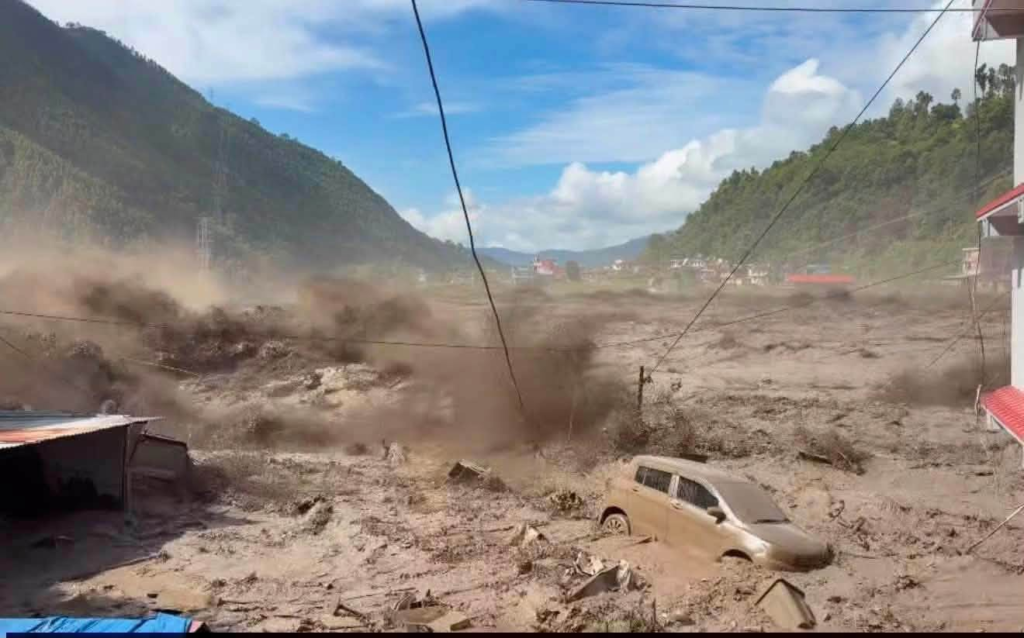
Saying that “Nepal is fully open and safe” would ignore the very real hazards that remain in several districts.
The better approach is to examine the exact destination, the road or flight required to reach it, the current trail condition, and any instructions issued by local authorities.
The Current Situation
| Area / Travel Zone | Current Situation | Traveller Advice |
|---|---|---|
| Rasuwa and Nepal–Tibet Border | Severe flood destruction, damaged infrastructure and continuing recovery and rescue activity | Avoid / Postpone non-essential travel |
| Syabrubesi and Langtang Gateway | The main access corridor through Rasuwa has been seriously disrupted | Postpone until access is confirmed |
| Chitwan and Downstream Areas | Flooding has caused major impacts in parts of the downstream river system | Check local conditions before travel |
| Annapurna Access Corridors | Flood damage has affected roads and access around Birethanti and Ghandruk | Check the exact route before departure |
| Everest Region | Outside the direct Rasuwa flood corridor, but still affected by normal monsoon weather and flight considerations | Potentially possible with current route checks |
| Upper Mustang | Geographically separate from the Rasuwa flood corridor and located in a Himalayan rain-shadow region | Potential alternative, subject to local conditions and logistics |
| Upper Dolpo | Far from the main flood corridor, although remote-flight and weather conditions remain important | Consider only after route-specific confirmation |
Why the Rasuwa Disaster Matters to Travellers
Rasuwa is not simply another district on the map. It contains important trekking gateways, border infrastructure and road connections serving northern Nepal.
The flood therefore created a travel problem that goes beyond the immediate area where the water and debris caused destruction.
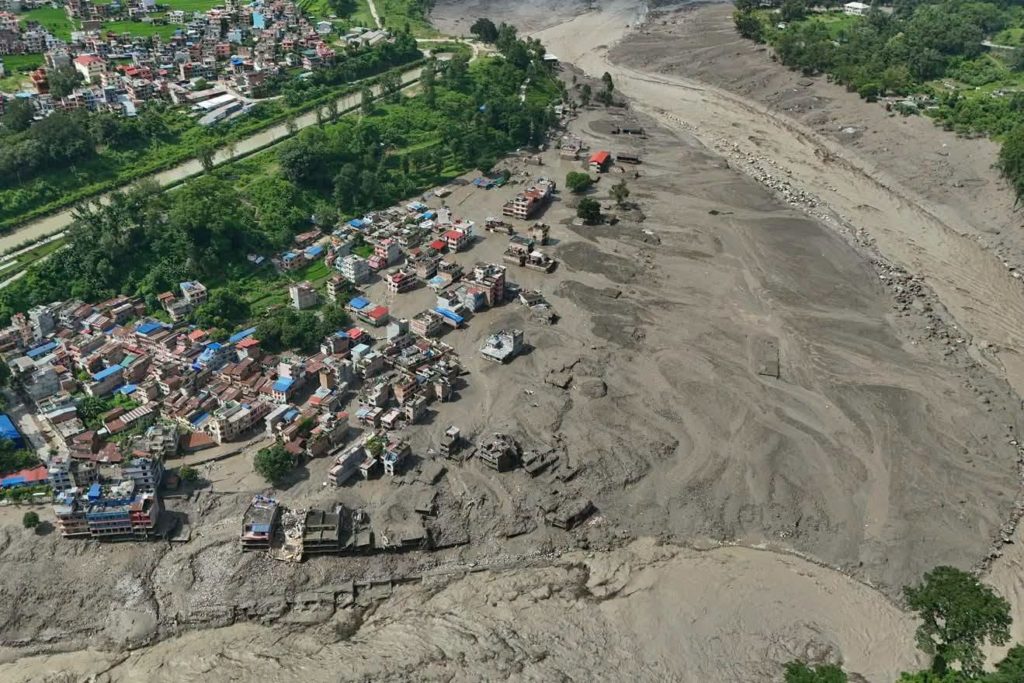
The impact is particularly important for travellers heading toward the Langtang region because access to the valley normally involves the Syabrubesi and Rasuwa corridor.
The current disruption means that an itinerary that was perfectly practical before the disaster may no longer be practical today.
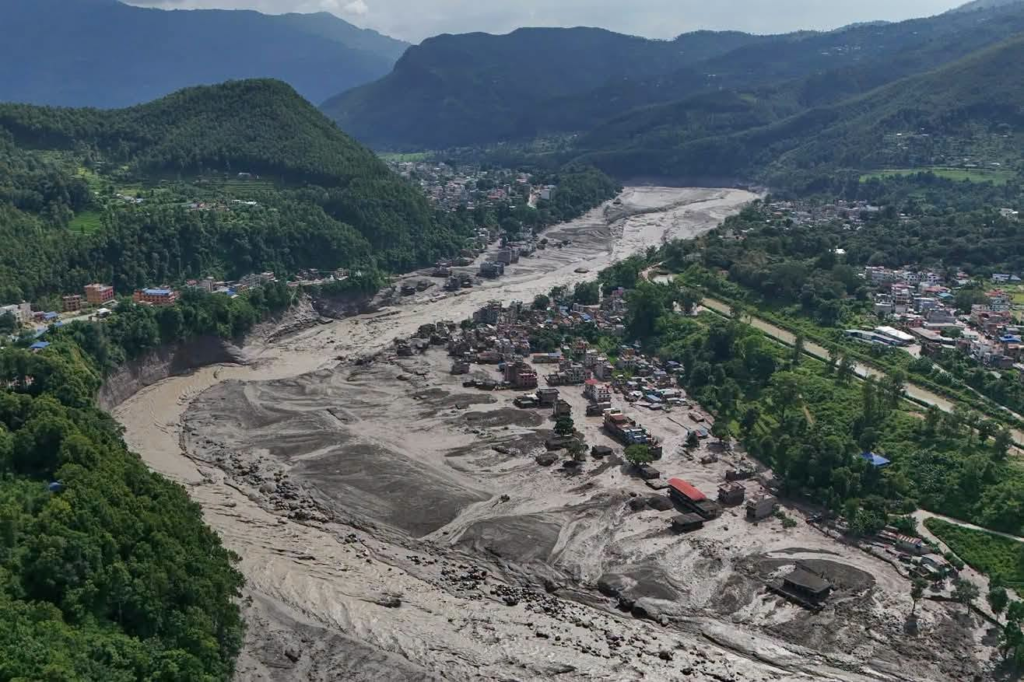
The same principle applies to other destinations. A trekking trail can remain physically present while the road leading to its trailhead has been washed away.
A bridge can be damaged even if the destination itself appears unaffected. That is why travellers should evaluate the complete journey rather than checking only whether a trek appears on a booking website.
The Districts and Corridors Affected Beyond Rasuwa
The effects of the flood were not confined to the Nepal–Tibet border. As the floodwaters travelled downstream, different communities and infrastructure along the river system were affected.
Current reporting has identified deaths and damage in several districts, including Rasuwa, Nuwakot, Dhading, Gorkha, Chitwan, Tanahun, Nawalparasi East and Nawalparasi West.
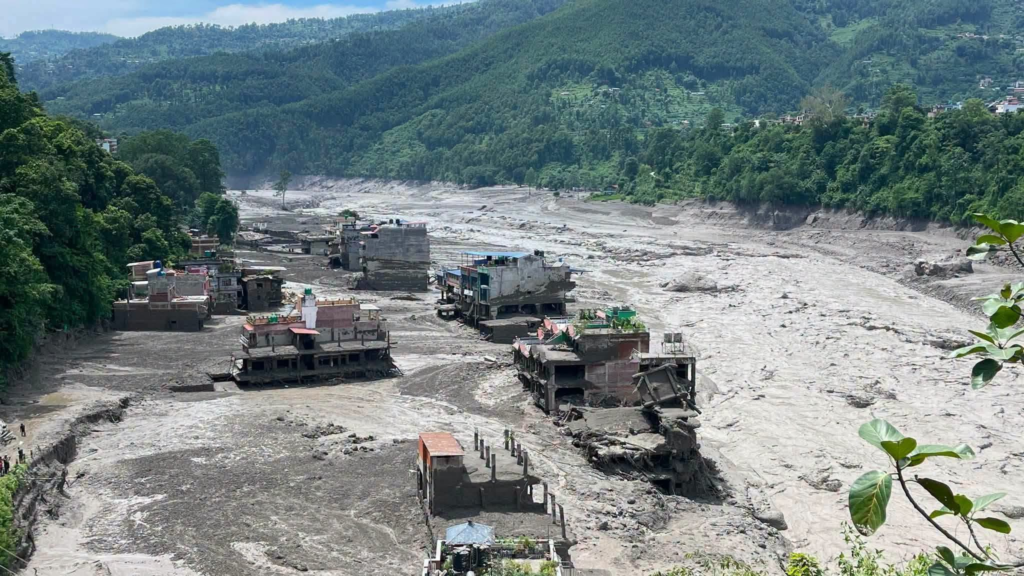
The scale of the impact varies considerably from place to place, so travellers should avoid treating every district on that list as though it has the same level of restriction.
For tourism, the most important distinction is between directly affected travel corridors and destinations where normal tourism may be possible but road access, weather or local services still need to be checked.
| District / Corridor | Conditions | Travel Position |
|---|---|---|
| Rasuwa | Directly affected by the Bhotekoshi flood, including the Timure and Syabrubesi area | Avoid / Postpone |
| Nuwakot | Affected downstream by the wider flood event and river system | Check Conditions |
| Dhading | Downstream impacts and disruption connected to the wider Trishuli system | Check Conditions |
| Gorkha | Part of the wider downstream impact zone | Route Specific |
| Chitwan | Among the hardest-hit downstream districts, with substantial damage and ongoing recovery | Reassess Before Travel |
| Tanahun | Affected by the wider downstream flooding | Check Conditions |
| Nawalparasi East / West | Downstream flood impacts have extended into these areas | Check Local Conditions |
Destinations and Trekking Routes to Avoid for Now
The most important decision for travellers right now is knowing which destinations are directly connected to the flood-affected area.
A route can be a well-known trekking destination and still be unsuitable if the road, bridge or transport corridor leading to the trailhead has been damaged.
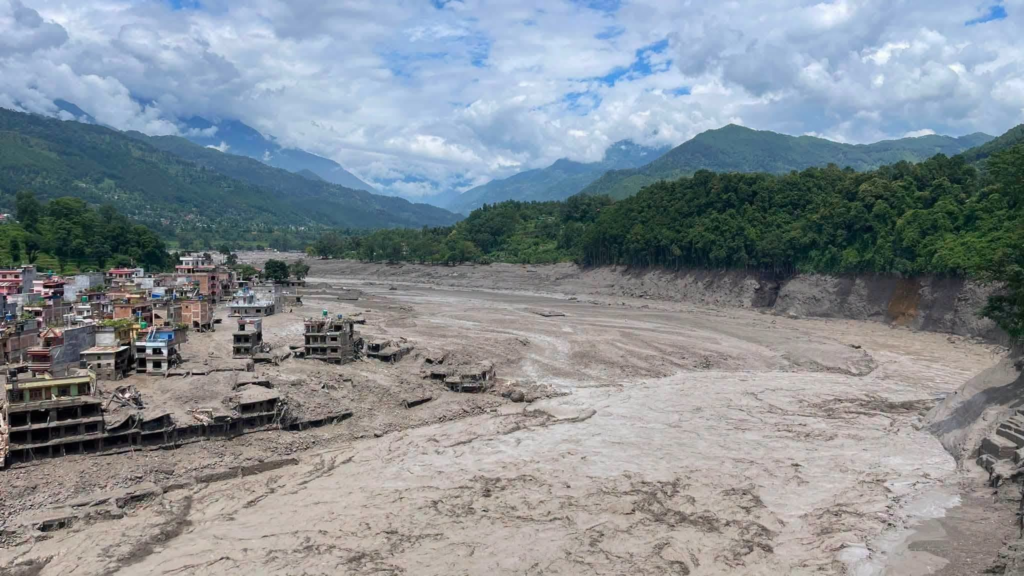
For that reason, the following destinations should be treated with particular caution while rescue, recovery and infrastructure assessment continue.
| Destination / Route | Why It Is Affected | Current Advice | Action |
|---|---|---|---|
| Rasuwa District | The Bhotekoshi flood caused severe destruction around the northern border, including major damage to transport and other infrastructure. | Postpone | Contact Our Team |
| Syabrubesi | The main northern access corridor has been heavily disrupted, affecting travel toward the Langtang region and the border. | Postpone | Check Status |
| Langtang Valley Trek | The usual approach passes through the flood-affected Rasuwa and Syabrubesi corridor, where transport access has been seriously disrupted. | Postpone | Check Trek |
| Rasuwagadhi / Nepal–Tibet Border | The border corridor and sections of the road network have suffered extensive flood damage while recovery and assessment continue. | Avoid | Contact Our Team |
| Gosaikunda via Dhunche | The regular Dhunche access route has been affected, and authorities have advised travellers and pilgrims against using the route until further notice. | Postpone | Check Alternatives |
Planning Langtang or Gosaikunda?
Please do not travel to the trailhead simply because your original itinerary is still available online. Access conditions can change faster than booking pages are updated, and the condition of the complete road and trail network matters just as much as the destination itself.
Areas That Need a Route-by-Route Check
Not every trekking region outside Rasuwa is currently closed, but several destinations still require much more careful planning than they would in a normal autumn season.
Floods and landslides can damage approach roads well away from the actual trekking trail, so checking only the trek itself is not enough.
| Region / Trek | Current Concern | Travel Position | Action |
|---|---|---|---|
| Annapurna Region | Flooding and landslides have affected sections of the access network around Birethanti and Ghandruk, which serve several important Annapurna trekking routes. | Check Before Travel | Check Route |
| Ghandruk / Poon Hill | Recent flood and landslide damage has affected parts of the approach, so older road-based itineraries may no longer reflect current conditions. | Check Before Travel | Check Trek |
| Annapurna Base Camp | Parts of the wider Birethanti access network have been affected, meaning the standard approach should be checked immediately before departure. | Check Before Travel | Check Trek |
| Chitwan National Park | Chitwan has experienced serious downstream flooding and loss of life. Conditions for roads, accommodation and tourism services therefore need to be reassessed. | Check Before Travel | Check Trip |
What About Everest, Upper Mustang and Other Trekking Regions?
The current disaster should not be interpreted as a nationwide shutdown of Nepal. Regions that are geographically separate from the Rasuwa flood corridor can have very different conditions.
That said, being outside the main flood zone does not automatically mean that a trek is ready to go. Nepal is still in the monsoon period, and roads, mountain flights, river crossings and trails can remain sensitive to weather conditions.
| Region / Trek | Relationship to Current Disaster | Current Planning Advice | Action |
|---|---|---|---|
| Everest Base Camp | The Everest trekking corridor is geographically separate from the Rasuwa flood zone. | Potentially possible, but Lukla flights, weather and trail conditions must be confirmed before departure. | View Trek |
| Gokyo Lakes | Not located in the Rasuwa flood corridor. | Potentially possible later in the season, subject to flights, trail and weather conditions. | View Trek |
| Upper Mustang | Located away from the main Rasuwa flood corridor and within a Himalayan rain-shadow environment. | A possible alternative during the monsoon, but access and local weather should still be checked. | View Trek |
| Upper Dolpo | Far from the immediate flood corridor and situated in Nepal’s rain-shadow region. | Possible for experienced travellers once flights, permits, logistics and local conditions are confirmed. | View Trek |
| Manaslu Circuit | Not directly inside the Rasuwa disaster corridor, although monsoon conditions still affect roads and trails. | Wait for route-specific confirmation before fixing your departure. | Check Trek |
What This Means for the Coming Autumn Trekking Season
The autumn trekking season is approaching, but travellers should not assume that every trail will immediately return to normal once the monsoon ends.
Recovery work, road repairs, bridge inspections and trail assessments may continue well beyond the first clear days of September.
For anyone planning an autumn trek, the sensible approach is to book with flexibility, monitor local conditions and make a final route decision closer to departure rather than relying entirely on pre-flood itineraries.
Which Treks Can You Consider as Autumn 2026 Approaches?
For travellers who are planning a trek for September, October or November, the situation needs to be assessed differently from the routes that are directly connected to the Rasuwa disaster.
The coming autumn season is still likely to bring many trekkers into Nepal, but the sensible approach is to separate destinations into three groups.
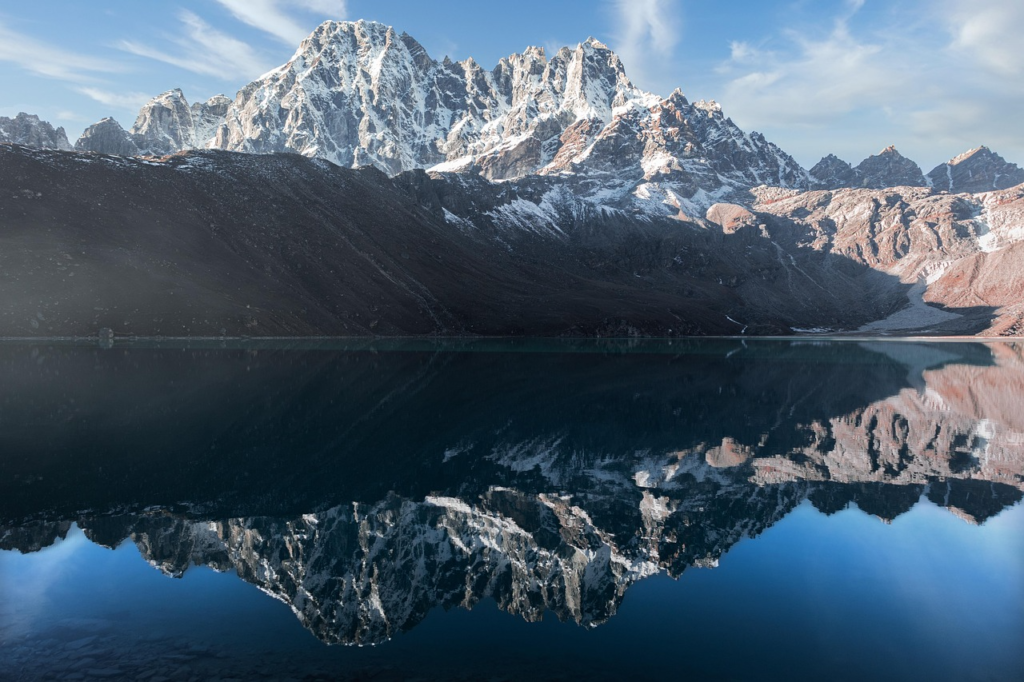
They are, routes that should be postponed because their access is directly affected, routes that need a fresh road and trail assessment, and routes that are geographically separate from the disaster and may be considered once their own transport and weather conditions are confirmed.
The table below is intended as a planning guide rather than a permanent declaration of whether a trek is open or closed. Conditions can change quickly after major floods, particularly while roads, bridges and mountain transport systems are being repaired.
Trekking Routes to Watch for Autumn 2026
| Trek / Region | Current Position | Autumn Outlook | Difficulty | Action |
|---|---|---|---|---|
| Langtang Valley Trek | Postpone | The Syabrubesi and Rasuwa access corridor has been severely affected. Reassess only after road, bridge and local access conditions are confirmed. | Moderate | Check Status With us |
| Gosaikunda via Dhunche | Postpone | The normal Dhunche approach has been affected and official guidance has advised against using the regular route until further notice. | Moderate | Check Alternatives |
| Annapurna Base Camp | Check First | The trek itself is not in the Rasuwa disaster zone, but access around Birethanti and the wider gateway network has been affected. | Moderate to Challenging | Check Trek |
| Ghorepani Poon Hill | Check First | The route is outside the Rasuwa disaster area, but the Birethanti and surrounding access network requires fresh confirmation. | Easy to Moderate | Check Trek |
| Annapurna Circuit | Check First | Different sections have different access conditions, particularly around lower gateways. Route-specific confirmation is essential. | Challenging | Check Trek |
| Everest Base Camp | Potentially Viable | The Khumbu is geographically separate from the Rasuwa disaster. Autumn conditions will depend mainly on Lukla operations, weather and trail conditions. | Challenging | View Trek |
| Gokyo Lakes Trek | Potentially Viable | Outside the main flood corridor. Autumn remains a strong period if flights, trails and local conditions are operating normally. | Challenging | View Trek |
| Everest Three Passes Trek | Potentially Viable | The route is separate from the Rasuwa disaster, but its high passes require stable weather and current trail assessment. | Very Challenging | View Trek |
| Upper Mustang Trek | Potentially Viable | Geographically separate from the Rasuwa disaster and located in the Himalayan rain shadow. Transport and local conditions still need checking. | Moderate to Challenging | View Trek |
| Manaslu Circuit Trek | Check First | The Manaslu region is outside the immediate Rasuwa disaster corridor, but monsoon damage and road conditions on the approach still need confirmation. | Challenging | Check Trek |
| Upper Dolpo Trek | Route Confirmation Required | Far from the Rasuwa flood corridor and within the trans-Himalayan rain-shadow region, but remote flights, permits and logistics must be confirmed. | Very Challenging | Inquire Trek |
| Kanchenjunga Base Camp | Route Confirmation Required | The far eastern region is geographically separate from Rasuwa, but its remoteness and seasonal conditions require fresh confirmation before departure. | Strenuous | Check Trek |
Why Everest May Be Considered Before Langtang
The geographical distinction matters. Everest and Langtang are both famous Himalayan destinations, but the travel corridors serving them are completely different.
The Rasuwa disaster directly affects the approach used for Langtang, particularly around Syabrubesi and the northern road network. Everest Base Camp, by contrast, uses the Khumbu corridor through Lukla and is not located inside that flood-affected area.
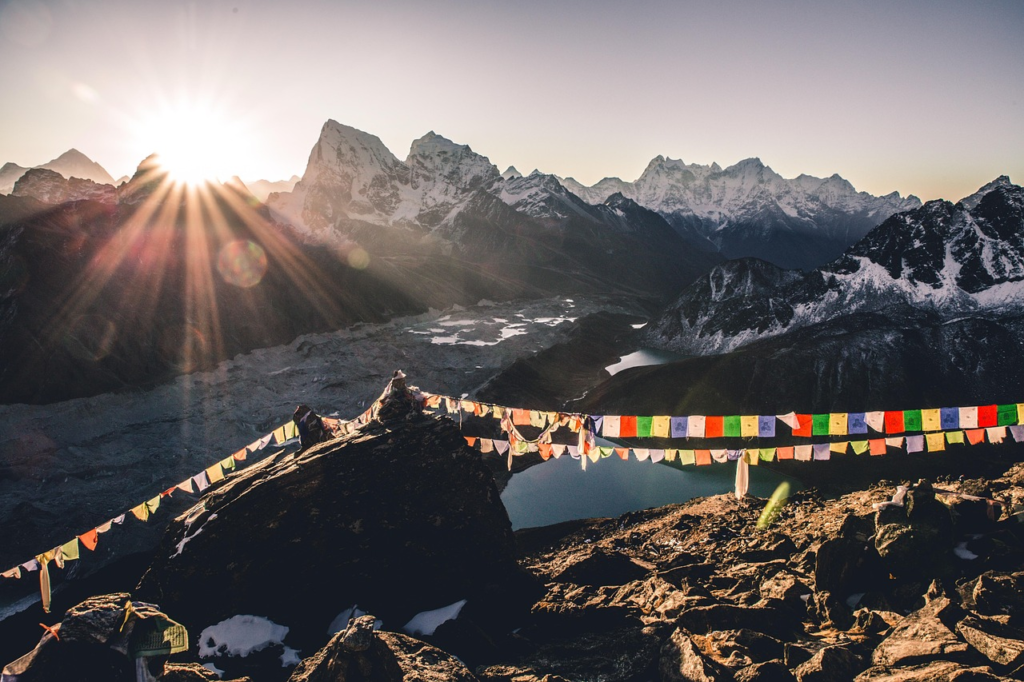
That does not mean Everest is automatically open in every circumstance. August is still monsoon season, and weather can disrupt mountain flights and trekking conditions.
But once the autumn season begins, Everest can be assessed on its own conditions rather than being treated as part of the Rasuwa emergency.
Why Annapurna Needs a Different Kind of Check
Annapurna should not be placed in the same red category as Langtang, but it should also not be described as completely unaffected.
The important issue is access. Birethanti and the surrounding roads serve as gateways toward destinations including Ghandruk, Ghorepani and Annapurna Base Camp.
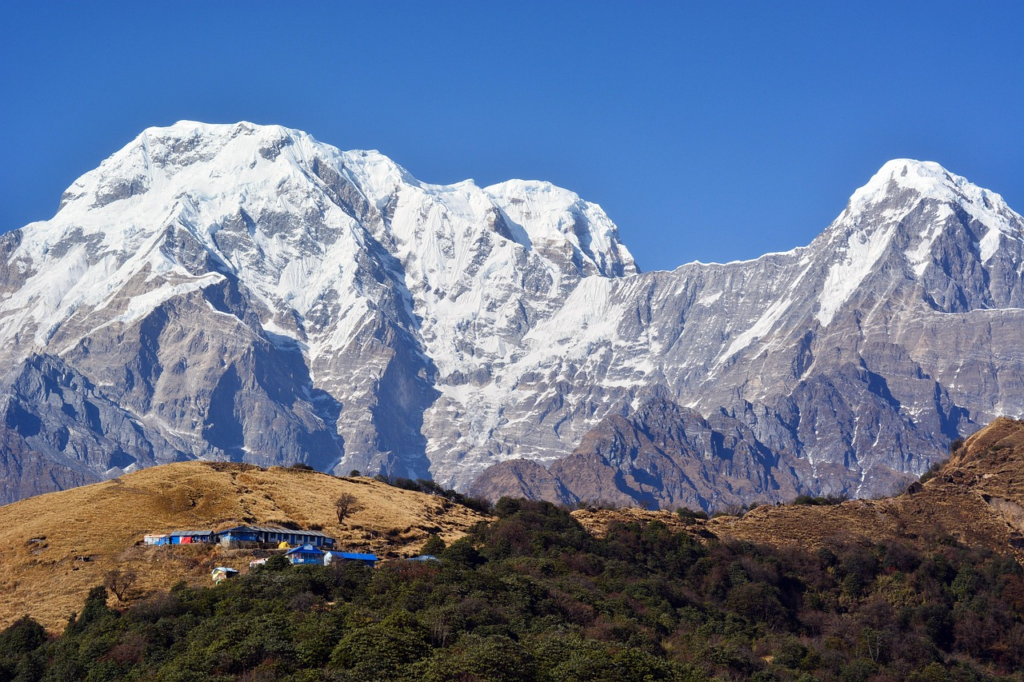
Recent flooding and landslides have affected portions of this network, which means an old itinerary can give a misleading impression of current conditions.
For autumn travellers, the sensible approach is to check the exact trailhead, road access and accommodation situation shortly before departure. A route may become fully practical again after repairs, but that decision should be based on current information rather than assumption.
What About Chitwan National Park?
Chitwan deserves separate treatment because its situation is connected to the wider downstream flood system rather than the mountain disaster zone around the Tibet border.
The district has suffered serious flooding and loss of life, so travellers should not assume that a normal Chitwan safari itinerary is automatically appropriate immediately after the disaster.
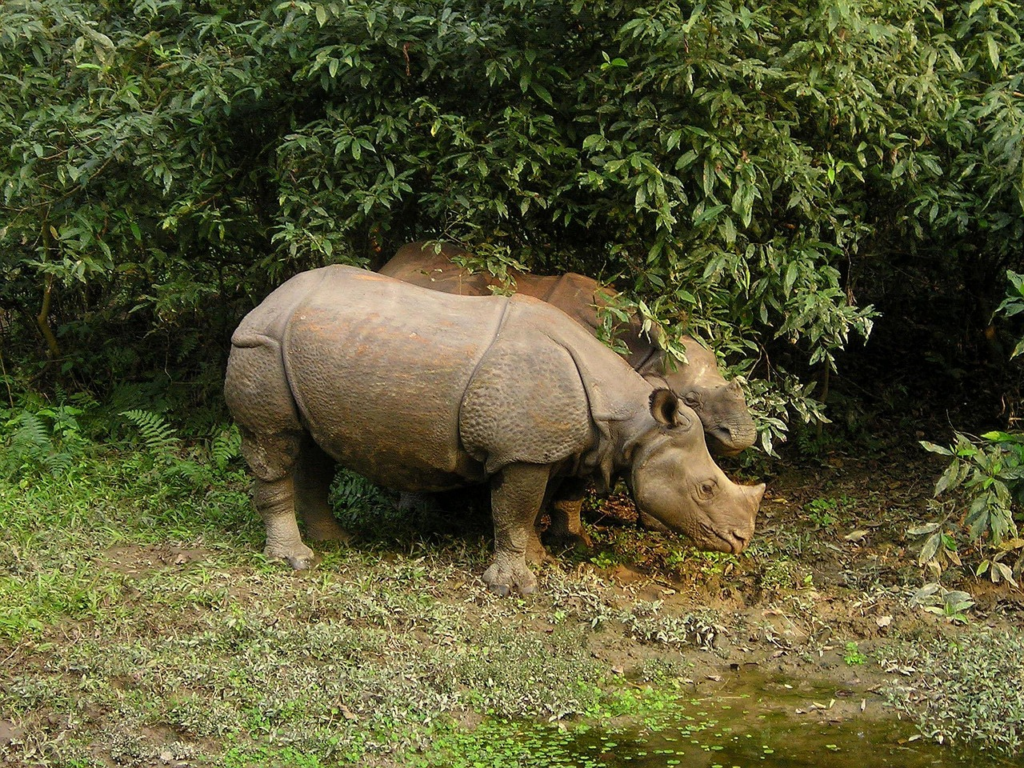
At the same time, it would be misleading to describe Chitwan as permanently closed simply because the district has been badly affected.
The practical question is whether roads, hotels, safari operations and local communities have recovered sufficiently for visitors to return without placing unnecessary pressure on ongoing recovery work.
For this reason, Chitwan should remain in the check before travel category until reliable local information shows that normal tourism can resume responsibly.
Which Treks Should Travellers Consider as Autumn Approaches?
For travellers thinking about Nepal’s autumn trekking season, the most important point is that the situation should be assessed route by route.
The Rasuwa disaster has created serious problems in some northern corridors, but it does not mean that every trekking region in Nepal has been closed.
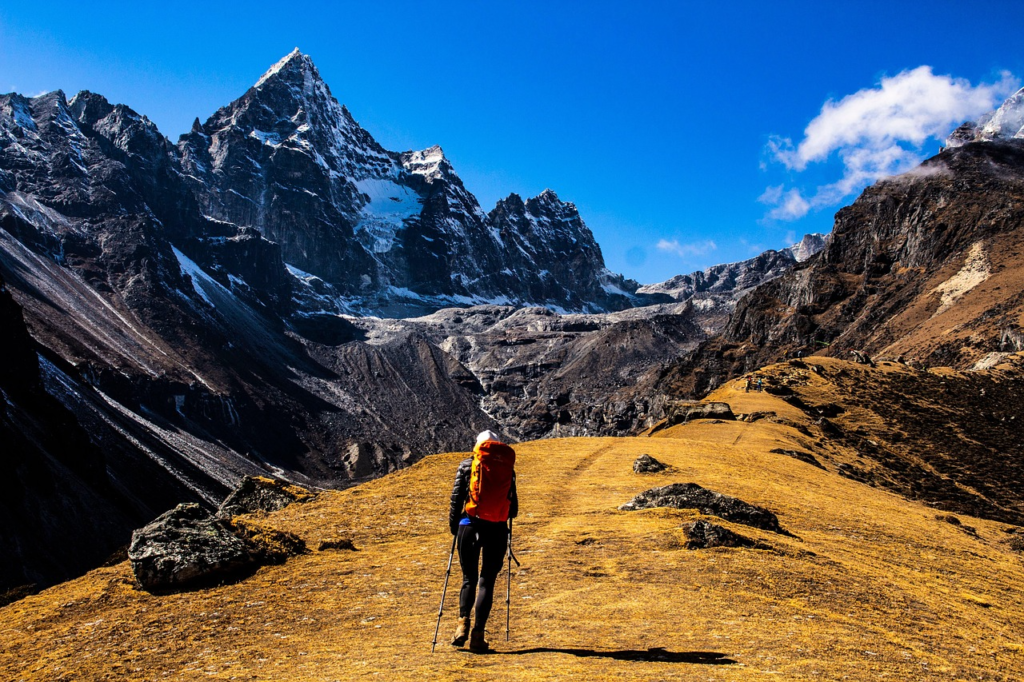
At the same time, a route being outside the immediate flood zone does not automatically make it ready for tourists. Monsoon damage, road conditions, domestic flights, trail repairs and local weather can all affect whether a trek is practical.
The safest approach is therefore to keep plans flexible and confirm conditions before travelling to the trailhead.
The following overview separates the major trekking routes into practical planning categories for travellers looking toward September, October and November.
Trekking Routes to Watch for Autumn 2026
| Trek / Region | Current Position | Autumn Planning Outlook | Difficulty | Action |
|---|---|---|---|---|
| Langtang Valley Trek | Postpone | The normal approach through the Rasuwa and Syabrubesi corridor has been seriously affected. Reconsider only after roads, bridges and local access are confirmed. | Moderate | Check Status |
| Gosaikunda via Dhunche | Postpone | The regular Dhunche corridor has been affected and official guidance has advised against using that route until further notice. | Moderate | Check Alternatives |
| Annapurna Base Camp | Check First | The destination is outside the Rasuwa flood corridor, but access around Birethanti and the lower trekking gateways has recently been disrupted. | Moderate to Challenging | Check Trek |
| Ghorepani Poon Hill | Check First | The trek remains geographically separate from Rasuwa, but roads around the Birethanti and Ghorepani gateway need fresh assessment. | Easy to Moderate | Check Trek |
| Annapurna Circuit | Check First | Different sections have different access conditions. Travellers should confirm the exact approach, road sections and trail conditions before setting out. | Challenging | Check Trek |
| Everest Base Camp | Potentially Viable | The Khumbu is separate from the Rasuwa flood corridor. Autumn planning will still depend on Lukla flights, weather and trail conditions. | Challenging | View Trek |
| Gokyo Lakes Trek | Potentially Viable | Outside the main flood corridor. Autumn conditions can be favourable if flights and trails are operating normally. | Challenging | View Trek |
| Everest Chola Pass Trek | Potentially Viable | The route is separate from Rasuwa, but Cho La conditions depend on snow, ice, weather and the state of the upper trail. | Challenging | View Trek |
| Everest Three High Passes Trek | Potentially Viable | Separate from the Rasuwa flood area, but the three high passes require suitable weather and current trail assessment. | Very Challenging | View Trek |
| Upper Mustang | Potentially Viable | Far from the Rasuwa flood corridor and within the Himalayan rain shadow. Road access and local weather still need confirmation. | Moderate to Challenging | View Trek |
| Manaslu Circuit | Check First | The region is outside the immediate Rasuwa disaster corridor, but monsoon-related road and trail conditions still require route-specific confirmation. | Challenging | Check Trek |
| Upper Dolpo | Route Confirmation Required | Far from the Rasuwa disaster zone and within a rain-shadow environment, but remote flights, permits, logistics and local conditions must be confirmed. | Very Challenging | Inquire Trek |
| Kanchenjunga Base Camp | Route Confirmation Required | The far eastern Himalayas are geographically separate from Rasuwa, but the route is remote and should be assessed independently before departure. | Strenuous | Check Trek |
Why We Are Not Treating Every Trek the Same
It can be tempting to say a simple list of “open” and “closed” treks after a major disaster. In Nepal, that approach can be misleading because a trekking region can cover several districts and depend on a particular road, bridge, airport or trailhead to function.
Langtang is the clearest example. The destination itself may not have been destroyed in the same way as the Rasuwa border settlements, but the normal access route passes through the affected corridor.
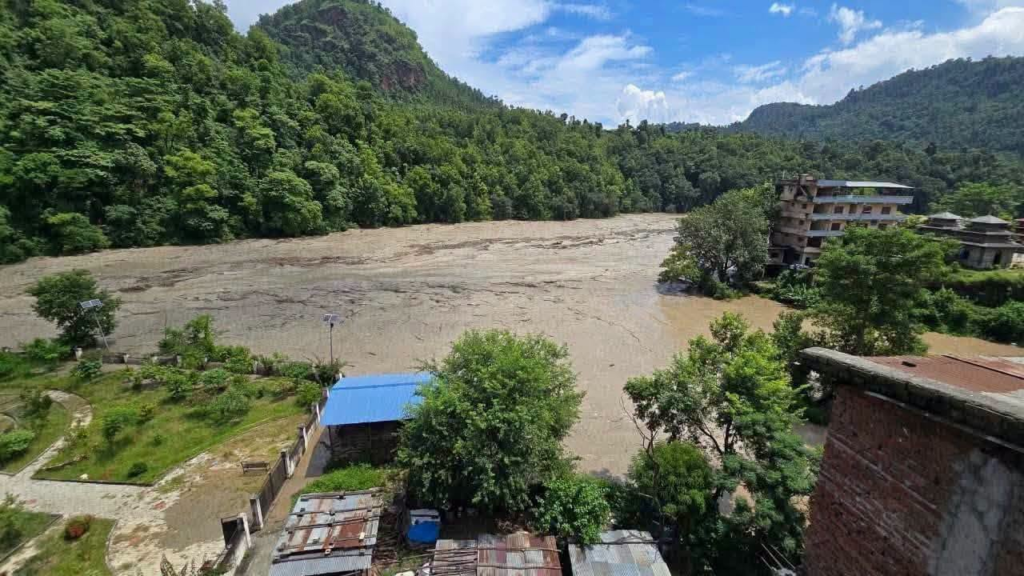
For a traveller, that distinction matters little if the road to the trailhead is not currently suitable.
Annapurna presents a different situation. It is not part of the Rasuwa disaster corridor, but recent flooding has affected access around Birethanti and Ghandruk.
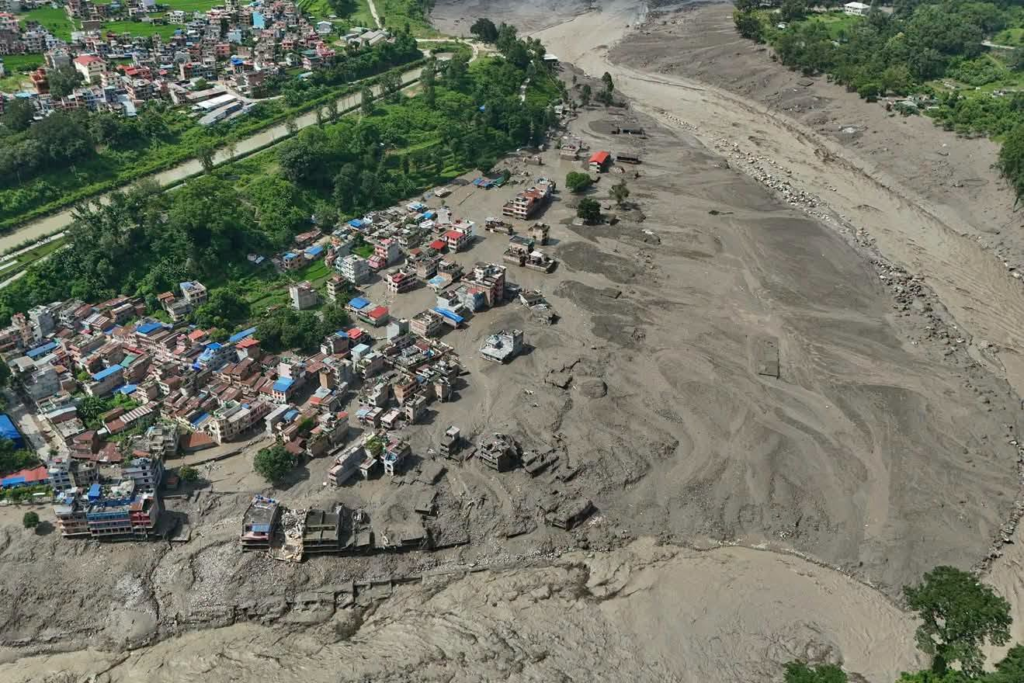
The appropriate response is therefore not to cancel every Annapurna trek indefinitely, but to check the exact itinerary before departure.
Everest is different again. The main Khumbu trekking corridor is geographically separate from Rasuwa, so the current flood disaster should not automatically be treated as a closure of the Everest Base Camp route. The immediate considerations there are the state of Lukla flights, weather and trail conditions.
What Should Travellers Do About Existing Bookings?
If you already have a trek booked for the coming weeks, do not assume that you need to cancel immediately and do not assume that you should travel exactly as planned. Contact the trekking agency handling your trip and ask for a route-specific update.
Ask whether the vehicle can safely reach the trailhead, whether bridges and roads along the itinerary are functioning, whether accommodation is operating, and whether guides have received current information from local authorities.
For affected destinations, postponement may be the most responsible option. For unaffected regions, a flexible departure date can still be valuable because monsoon conditions can change quickly.
Have a Trek Already Booked?
Do not make a last-minute journey to the trailhead without confirming the current road, trail and weather situation. Nepal Royal Tourism Holiday can review your itinerary and help you decide whether to postpone, modify the route or consider another destination.