



Best Glacial Lakes In Nepal: Top 5 destinations that should be on your bucket list
Nepal is usually talked about through its great peaks and famous base camps, but some of its most memorable treks are made just as much by water as by snow and rock.
High in the Himalayas, lakes appear in places that seem too cold, too exposed, and too severe, but its the destination that makes the whole Journey worthy.
That is also what separates a glacial lake trek from an ordinary mountain walk. The destination is not simply a scenic viewpoint or a quiet body of water at the end of a trail.
Imagine you are close to the Lake in decent of high elevation and you see Mountains lurking behind you, how incredible will you feel.

The route itself often tells that story long before you reach the lake as the landscape starts to feel colder, more open, and more stripped back.
Nepal undoubtedly has the magnitude of this type of trekking. In Nepal, the rate of glaciers and glacial lakes is reported to be 3252 and 2323 respectively, which is quite indicative of the extent to which ice has influenced the high-altitude topography of Nepal.
They provide the trekkers with that unforgettable feeling that they are in a land where water and ice are still in the same narrative.
The following treks are exceptional as they all have their own variation of that experience. Gokyo provides you with the glacial lake journey of all round. Tilicho is more bitter and naked.
Tsho Rolpa is quieter and Kapuche is strange in that it does not follow the altitude trend that most tourists would anticipate a glacier lake to follow.
Gosaikunda introduces a spiritual touch and the walk takes a whole new tone. Combined, they demonstrate the diversity that glacial lake trekking in Nepal can be.
Gokyo Lakes
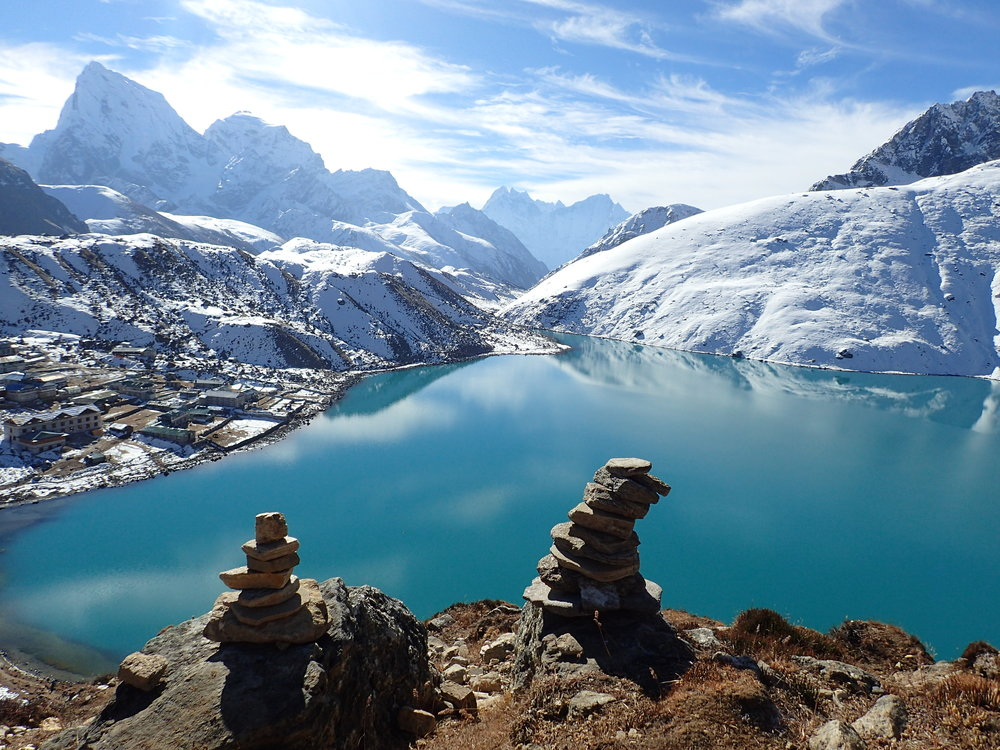
If one trek deserves to lead this list, it is Gokyo. The Gokyo wetland system is officially recognized as a system of glacial lakes lying roughly between 4,710 and 4,950 meters, and that alone makes it one of best
The Gokyo Lakes brings together nearly everything people hope for in a Himalayan lake trek as it has glacier scenery, Sherpa settlements, a long gradual build in the landscape, and one of the best viewpoints in Nepal.
The route usually begins with a flight to Lukla and then follows the familiar Khumbu trail through Phakding and Namche Bazaar before branching toward Dole, Machhermo, and finally Gokyo.

Early on, the trek shares some of the same energy as the Everest region’s classic routes, but once the path turns away from the main Everest Base Camp line, the valley begins to feel wider and quieter.
By the time you reach the lakes, it no longer feels like a variation of another trek. It feels like its own world.
Most itineraries take around 12 to 14 days, depending on pace and acclimatization, and the highest regular viewpoint is Gokyo Ri at 5,357 meters.
What gives Gokyo so much power is the way all the pieces hold together. The lakes themselves are beautiful, but they are only part of what makes the trek memorable.
The valley sits beside the Ngozumpa Glacier, which is described as the longest glacier in Nepal, and that glacier gives the whole region an enormous sense of scale.
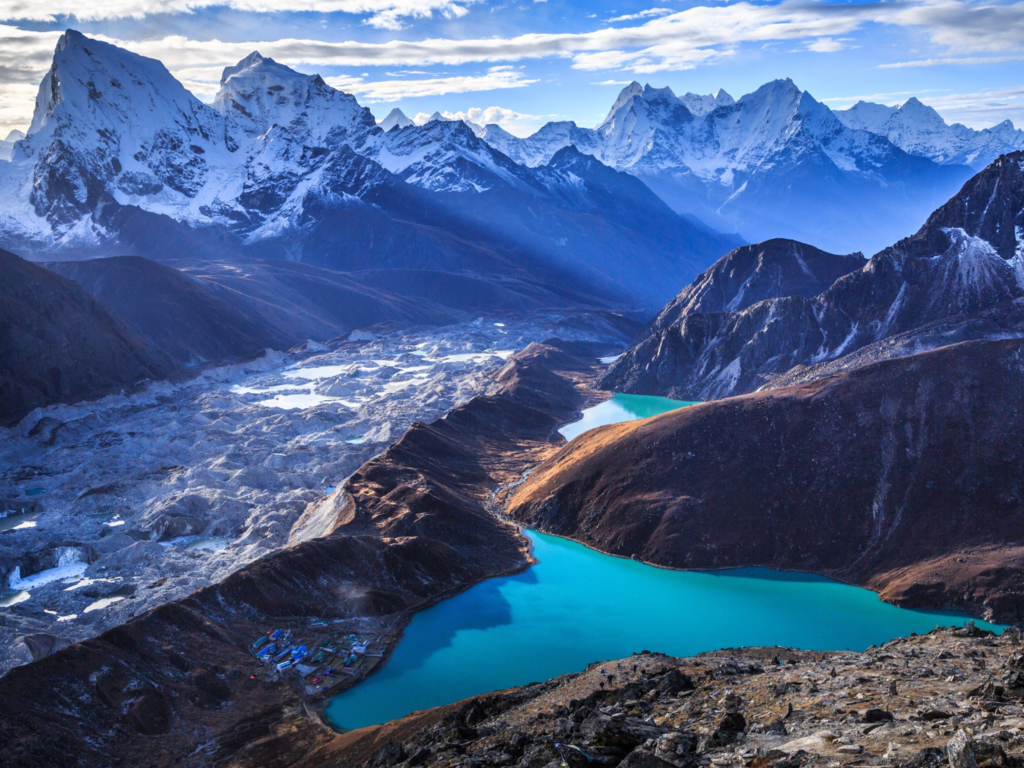
Then there is the climb to Gokyo Ri, where the trek suddenly opens into one of the great Himalayan panoramas, with Everest, Lhotse, Makalu, and Cho Oyu rising above a basin of cold blue lakes and broken glacier terrain.
Even the lakes themselves carry depth in more ways than one Gokyo lakes are deeper than older assumptions suggested, with the fourth lake measured at over 62 meters.
Gokyo feels complete because it is not only scenic. It is layered, high, and genuinely shaped by ice.
Tilicho Lake
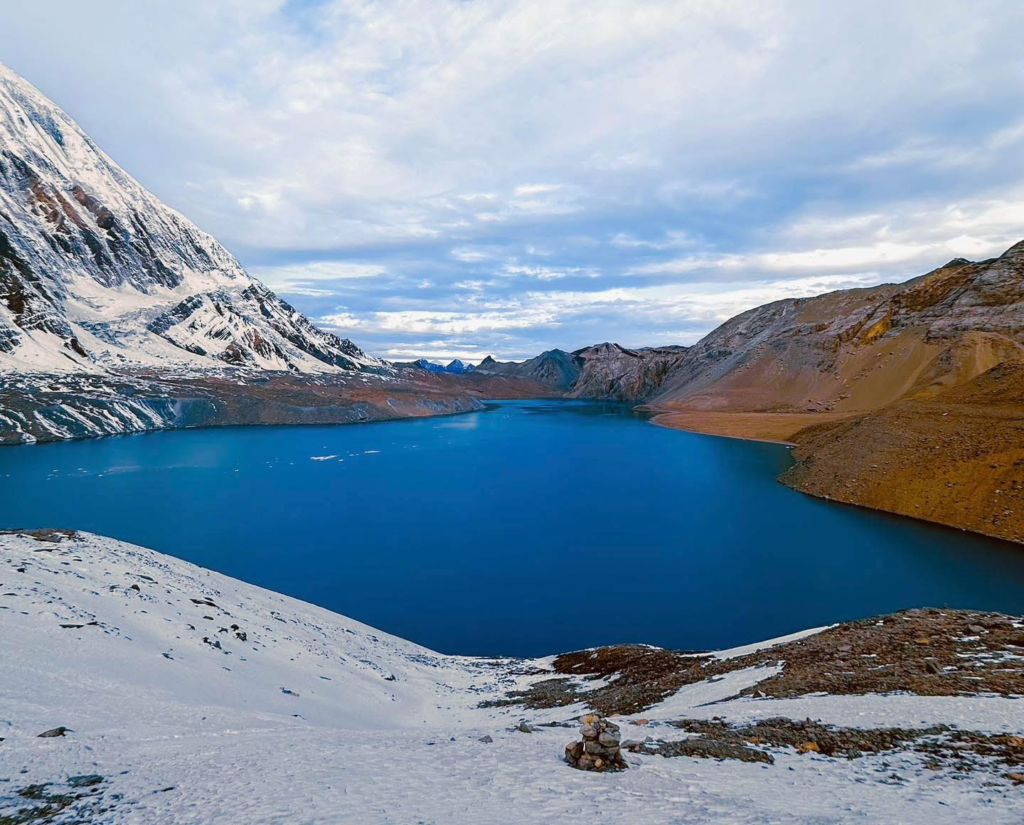
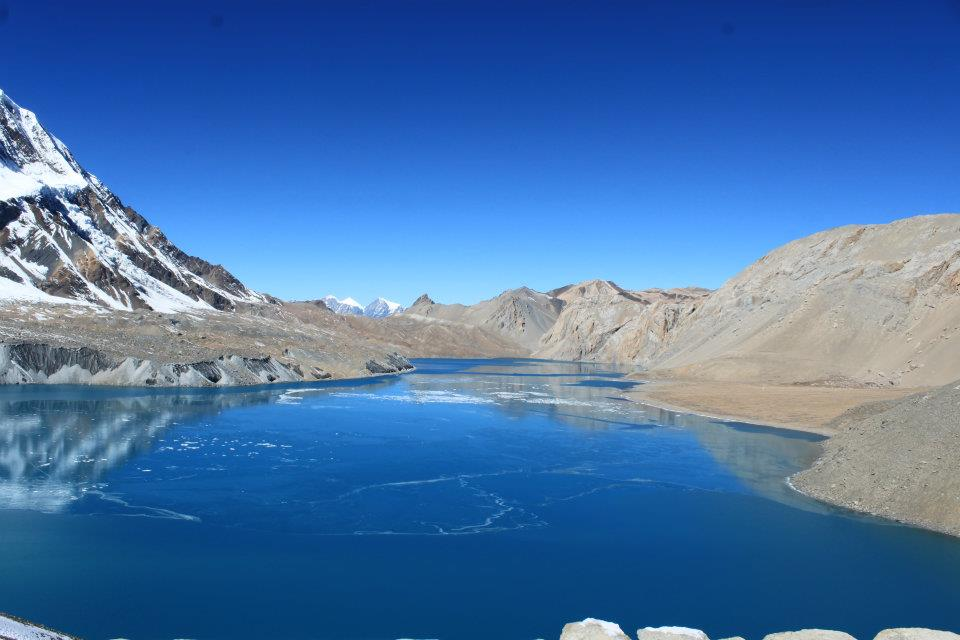
Tilicho Lake offers a very different kind of mountain beauty. The lake sits in Manang at about 4,919 meters, and even before you reach it, the landscape begins to tell you what kind of place you are heading into.
The greener lower sections of the Annapurna region gradually give way to a drier, harsher environment, and that shift is one of the reasons Tilicho leaves such a strong impression.
Most trekkers reach Tilicho through the Annapurna side, passing through places like Chame, Manang, Khangsar, Shree Kharka, and Tilicho Base Camp before making the final push to the lake.
It can be done as a shorter direct trek in about 6 to 7 days, but for many people it works best as part of the wider Annapurna Circuit, where it becomes a high and dramatic side journey rather than a separate route.
The lake itself has a kind of severity that stays with people. It stretches to about 4 kilometers in length and around 1.2 kilometers in width, and roughly 85 meters in depth.
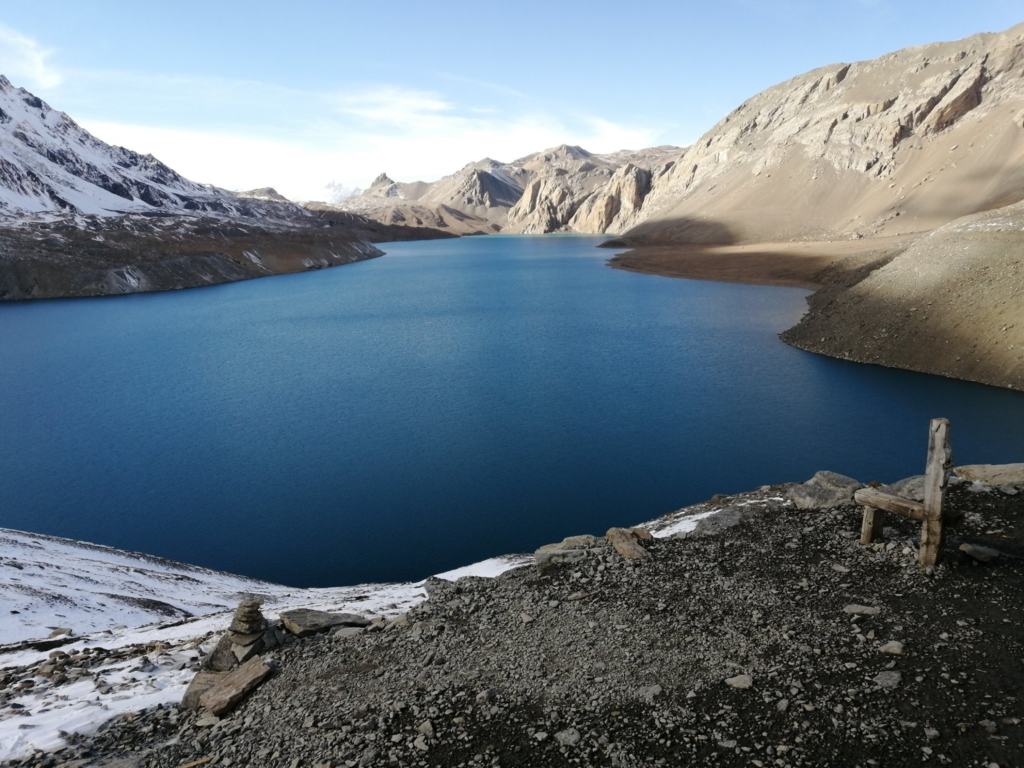
Tilicho does not feel soft or decorative. It feels cold, high, and almost stern in its setting, surrounded by a basin that looks shaped by altitude more than by comfort.
It is one of those places where the environment itself does most of the talking. For trekkers who want a glacial lake route that feels raw and physically honest, Tilicho is one of Nepal’s strongest choices.
Tsho Rolpa
Tsho Rolpa is one of the most compelling lake treks in Nepal because it feels less polished and less expected than the bigger names.
The lake lies in the Rolwaling Valley in Dolakha at around 4,550 to 4,560 meters, and it has long been studied because of its expansion and the risks linked to glacial lake floods.
That does not make the trek less beautiful. If anything, it gives the whole journey a weight that is hard to fake.

You are not just walking toward a scenic lake in a mountain basin. You are walking toward one of Nepal’s most closely watched glacial lakes.
The route usually begins with the drive from Kathmandu toward Chet Chet, then climbs through Simigaon, Dongang, Beding, and Na before reaching the lake zone.
In practical terms, that makes it one of the better treks for someone who want to picture the route clearly rather than just hear that it is “remote.”
Most itineraries run about 8 to 10 days, and the trail has enough time in villages and grazing settlements to keep the journey grounded even as the scenery grows harsher.
The farther you go, the less the route feels like a classic “tourist trek” and the more it begins to feel like a high valley that still keeps some distance from the mainstream.

Tsho Rolpa also has the kind of hard factual detail that strengthens an article like this. It is one of Nepal’s largest glacial lakes, about 3.45 kilometers long, with an average depth around 55 to 56 meters and a maximum depth of roughly 130 to 135 meters.
Yet those numbers alone do not fully explain why the trek matters. What people remember is the mood, the cold openness of the basin, the feeling of being in a place that is still changing, and the sense that the lake belongs to a wilder and more serious Himalayan story.
For trekkers who want something quieter, less commercial, and more geologically dramatic, Tsho Rolpa stands out.
Kapuche Glacier Lake
Kapuche Glacier Lake is the surprise in this list, and that is exactly why it deserves to be here.
Most trekkers imagine glacier lakes as very high, harsh destinations well above 4,000 meters, but Kapuche breaks that pattern.
The glacial lake that emerges at roughly 2,450 meters above sea level, which is remarkably low compared with the usual elevation band for newly formed Himalayan glacial lakes.
That single fact makes it unusual before you even begin talking about the trek itself.
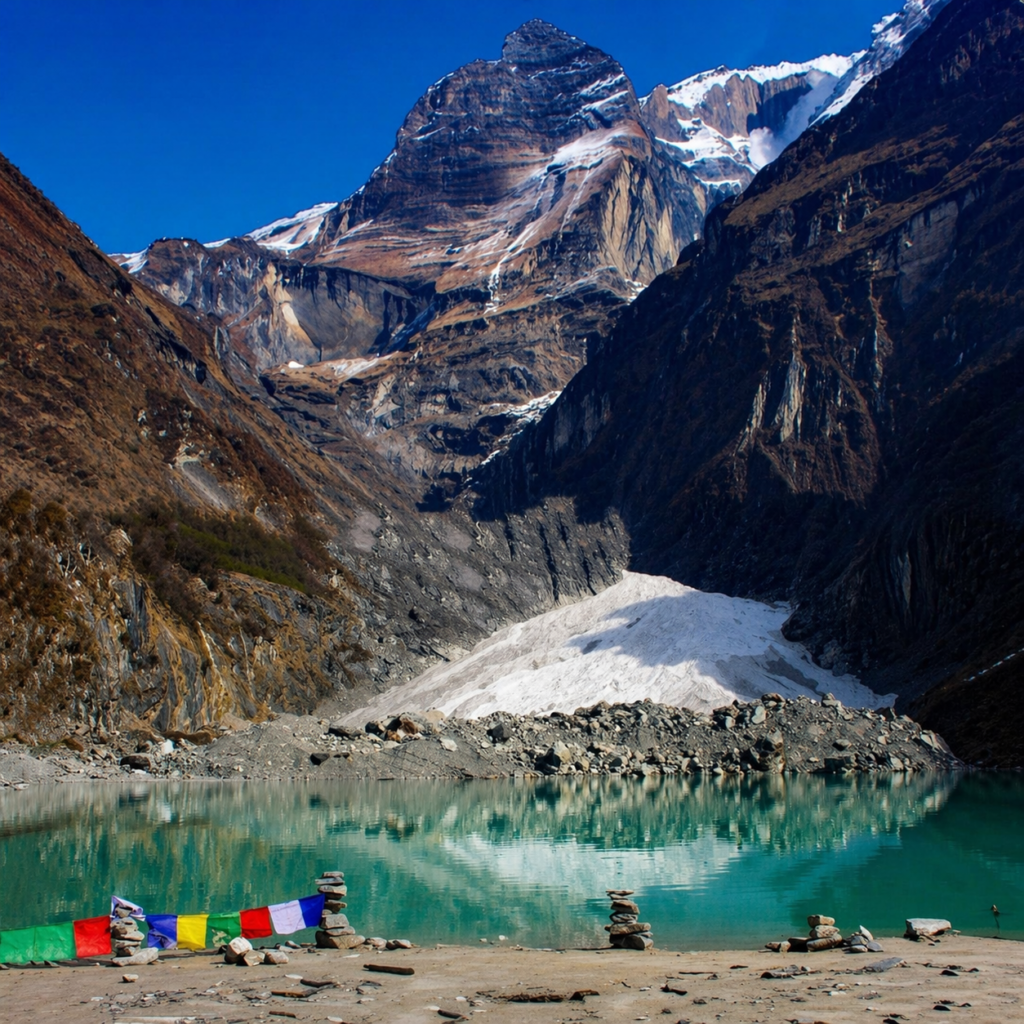
The route to Kapuche usually begins from Pokhara, then heads toward Sikles, followed by Hugu Goth, before reaching the lake and returning. In route terms, that makes it far easier to picture.
It is not a huge expedition-style trek. Most itineraries run around 4 to 5 days, which makes it one of the more accessible glacier-lake journeys in Nepal for people who want something distinctive without committing to a long, high-altitude itinerary.
Because the trek passes through Gurung country and shepherd settlements before opening up near the lake, it carries a more intimate scale than the giant glacier valleys farther east.

What makes Kapuche worth trekking is not only that it is different, but that it proves Nepal’s glacial-lake story is unique than most travelers assume.
The lake’s maximum depth somewhere around 32 to 40 meters, and although it is much smaller than Gokyo or Tsho Rolpa, it has real character.
Gosaikunda Lake
Gosaikunda belongs on this list for a slightly different reason. It is not usually the first lake people think of when they hear the phrase glacial lake, yet it absolutely deserves its place because the trek combines high-altitude water, glacier-shaped terrain, and spiritual meaning in a way few other routes can match.
The lake sits at 4,380 meters in Rasuwa, in the Langtang region, and it as a major pilgrimage site for Hindus and Buddhists. and the source of the Trishuli River. That already gives it more depth than a simple “beautiful alpine lake” label.

The trek itself can begin either from Dhunche or, on longer linked itineraries, from the Sundarijal side, but the direct route most trekkers know usually climbs through Deurali, Chandanbari or Sing Gompa, and Lauribina before reaching Gosaikunda.
That route structure is part of what makes the journey satisfying. The lake is not thrown at you quickly.
You feel the ecological shift as you climb. Forest gives way to harsher alpine terrain, and by the time the water comes into view, the whole atmosphere already feels elevated and stripped back.
What truly sets Gosaikunda apart is mood. Some treks impress through sheer scale, some through remoteness, but Gosaikunda leaves its mark through feeling.
The lake is part of a wider sacred landscape with 108 lakes in the vicinity, and has a maximum depth of about 26 meters.

Even for people who arrive without religious intent, the route has an emotional quietness that is hard to miss. It may not be the harshest lake on this list, but it is one of the few that feels powerful in both a natural and spiritual sense.
The best glacial lake treks in Nepal work because they give more than just a nice finish line. They bring together water, altitude, route character, and mountain atmosphere in a way that ordinary scenic treks often do not. Each of these journeys has its own identity.
Gokyo feels panoramic and complete. Tilicho feels stark and exposed. Tsho Rolpa feels colder and more serious. Kapuche feels fresh and unusual. Gosaikunda feels spiritual in a way that changes the tone of the entire walk.
And maybe that is the real reason these treks stay in people’s minds. They do not give the same kind of memory. One person will remember dawn over Gokyo Ri. Another will remember the raw cold stillness of Tilicho.
Someone else will remember how Tsho Rolpa felt farther away from the rest of the world than expected, or how Gosaikunda carried more emotion than they thought a lake could hold.