


When Is Teej 2026 in Nepal? History, Significance, Traditions and How It Is Celebrated
There are festivals in Nepal that you can watch from a distance, and then there are festivals that seem to change the atmosphere of an entire city. Teej belongs to the second group.
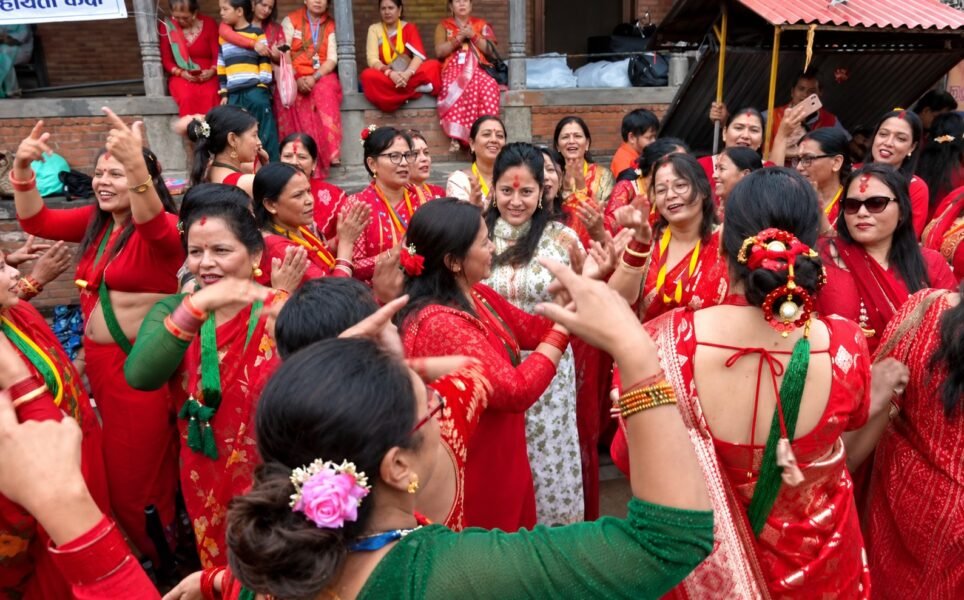
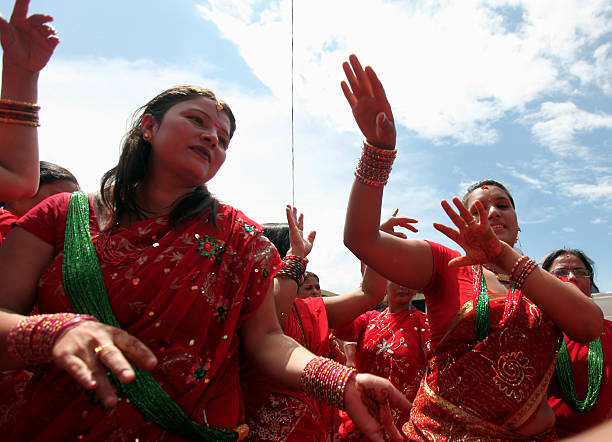
As the festival approaches, Kathmandu begins to look different. Red saris appear everywhere, women gather with sisters, friends and relatives, Teej songs play from homes and community halls, and temples become noticeably busier.

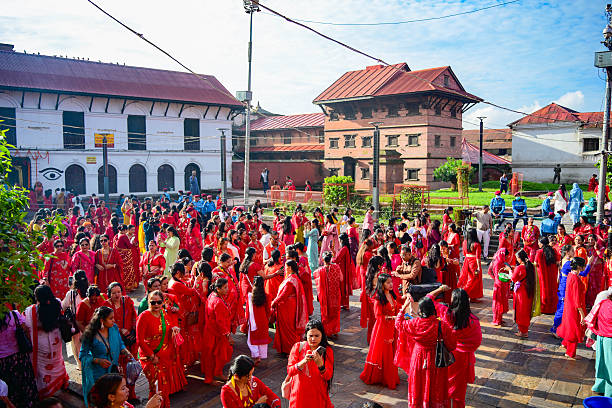
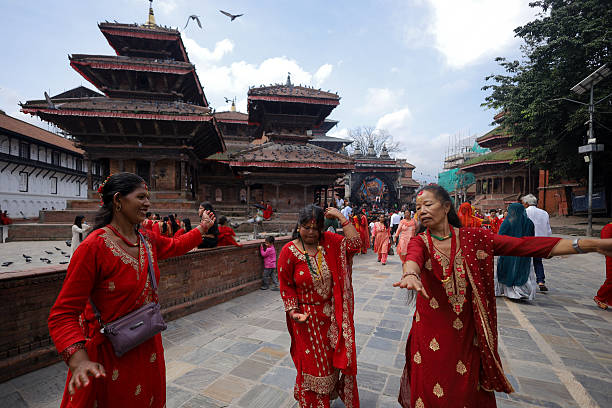
Nowhere is this more visible than around Pashupatinath. On the main day of Teej, thousands of women come to worship Lord Shiva, many dressed in red and wearing the jewellery traditionally associated with married Nepali women.
But if Teej is explained only as a day when women wear red and fast for their husbands, a large part of the festival is missed.
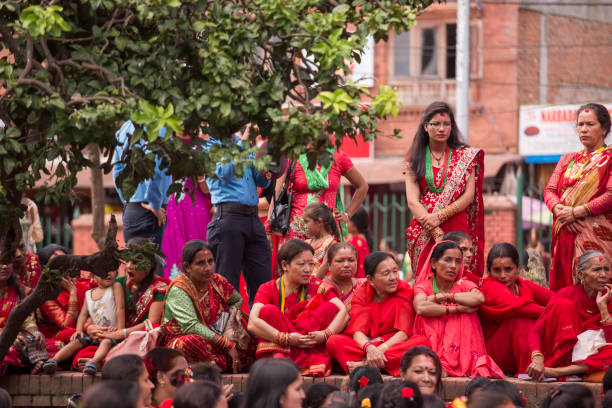
Teej is also about mothers and daughters, returning to the maternal home, sisters meeting after long periods apart, food, music, dancing, religious devotion and the stories women have shared with one another for generations.
For travellers who happen to be in Nepal during the festival, it can be one of the most interesting times to experience the country’s living culture.
When is Teej in Nepal in 2026?
Haritalika Teej falls on Monday, September 14, 2026, corresponding to Bhadra 29, 2083 BS. Dar Khane Din is observed the previous day, Sunday, September 13, while Rishi Panchami falls on Tuesday, September 15.
Teej 2026 Dates in Nepal
| Festival Stage | 2026 Date | What Happens |
|---|---|---|
| Dar Khane Din | Sunday, September 13 | Family gatherings, the traditional Dar feast, singing and dancing before the main fast. |
| Haritalika Teej | Monday, September 14 | The main festival day with fasting, Shiva-Parvati worship, temple visits, songs and dancing. |
| Rishi Panchami | Tuesday, September 15 | A traditional observance associated with ritual purification and worship of the Saptarishi. |
A small point worth remembering: Teej follows the Hindu lunar calendar, so its Gregorian date changes every year. Family customs can also differ between communities and regions of Nepal.
What Is Teej?
Teej is one of Nepal’s best-known Hindu festivals associated with women and with the story of Goddess Parvati and Lord Shiva.
The central religious day is Haritalika Teej, observed during Shukla Tritiya in the month of Bhadra. Traditionally, married women pray for the health and well-being of their husbands and families, while unmarried women may pray for a suitable life partner.
That religious explanation is important, but it is only one side of Teej.
For many Nepali families, Teej is also a homecoming. Married daughters who may be living with their husband’s family traditionally return to their maternal home. Mothers prepare food. Sisters meet again. Friends gather. Women sing songs that they may have known since childhood.
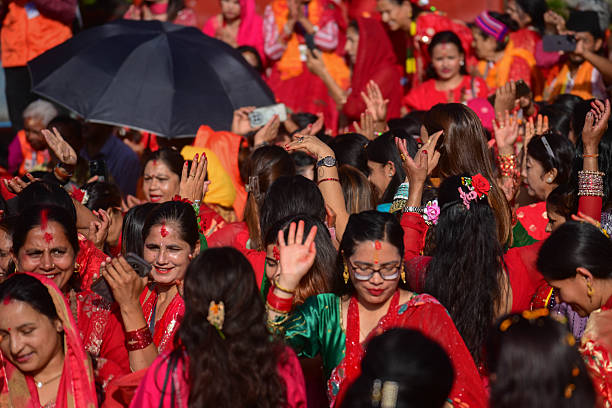
Some women observe the fast very strictly. Others drink water or follow a lighter form of fasting. Some participate mainly through worship and family traditions, while others are most excited about the gatherings, music and dancing.
There is no single Teej experience that applies to every Nepali woman.
Why Is Teej Celebrated?
The religious story behind Haritalika Teej centres on Parvati’s determination to marry Shiva.
According to the traditional story, Parvati wanted Shiva as her husband, but her father intended another marriage for her. A female friend helped Parvati leave and hide in the forest, where she continued her devotion and penance.
Parvati’s commitment eventually led to Shiva accepting her as his wife. The name Haritalika is traditionally connected with this part of the story: a female companion taking Parvati away so that she could follow the path she had chosen for herself.
This is one reason Teej has layers of meaning. The story is certainly about devotion, but it can also be read as a story about determination, friendship and a woman refusing to accept a marriage she did not want.
Teej does not mean exactly the same thing to everyone
For one woman, the religious fast may be the most important part. For another, Teej may mean going back to her mother’s house and seeing her sisters. Someone else may remember the festival mainly through songs, dancing and childhood family gatherings.
Dar Khane Din: The Night Before Teej
Ask many Nepali women about their favourite part of Teej and the answer may come before the fasting day itself.
Dar Khane Din is the traditional gathering held before Haritalika Teej. In many families, daughters and sisters come home and share a generous meal together before the following day’s fast.

There is no universal Dar menu. Different homes prepare different things: rice dishes, vegetables, curries, roti, sweets, dairy foods, fruit and whatever special dishes the family enjoys.
The point is not really to create an official Teej menu. Traditionally, the food helped prepare women for the following day’s fasting, while the gathering itself gave families a reason to be together.

Today, especially in Kathmandu and other cities, Dar has also become a much larger social event. Restaurants, offices, women’s groups and community organisations may hold Teej gatherings well before the festival itself.
That change is not without debate. Some people enjoy the extended celebration; others feel weeks of expensive parties have moved too far from the quieter family tradition they remember.Both opinions are part of Teej in modern Nepal.
What Happens on the Main Teej Day?
The atmosphere changes on Haritalika Teej itself.
Women wake early, bathe, dress in festive clothes and prepare for worship. Many visit Shiva temples, with Pashupatinath becoming the country’s most famous gathering point.
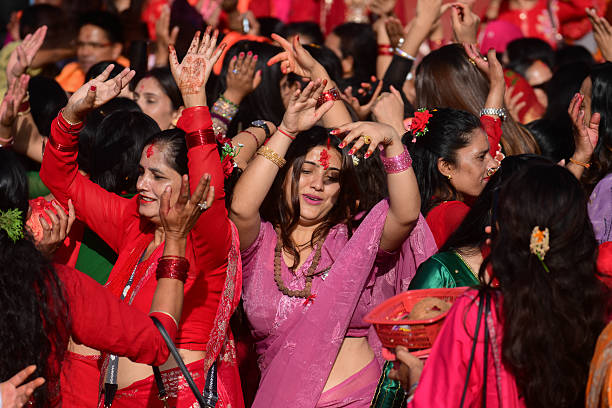
Some women observe a strict fast without food or water. Others drink water or adapt the fast according to health, age and personal practice. Religious observance is not identical from one household to another. And despite the fasting, Teej is not quiet.
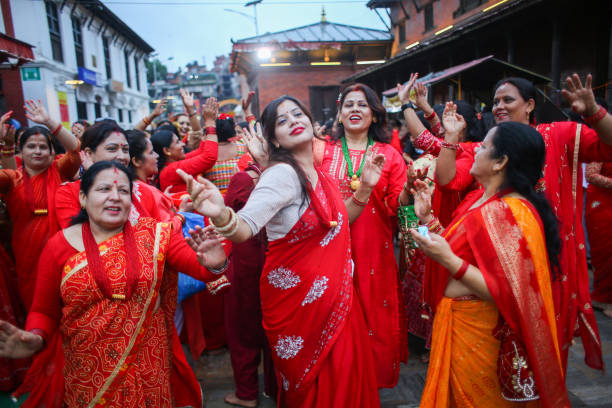
Women sing. They dance. Friends find one another in temple courtyards. Families take photographs. Groups dressed in red move through the streets together.
This mix of devotion and celebration is one of the things that makes Teej unusual to someone experiencing it for the first time.
Why Do Women Wear Red During Teej?
Red is probably the first visual detail a visitor notices during Teej.
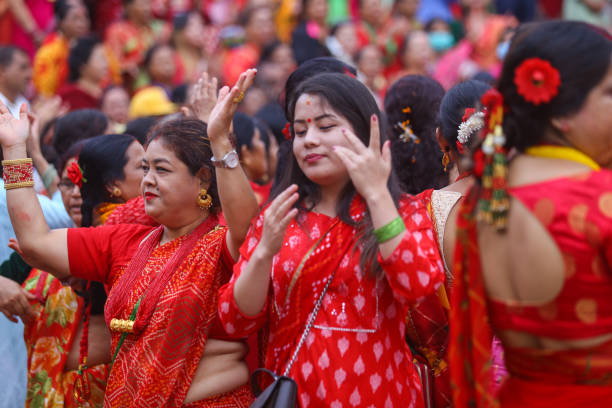
Red saris, kurtas, blouses, shawls and bangles appear everywhere. In Nepali Hindu culture, red has strong associations with marriage, auspiciousness, fertility and celebration.
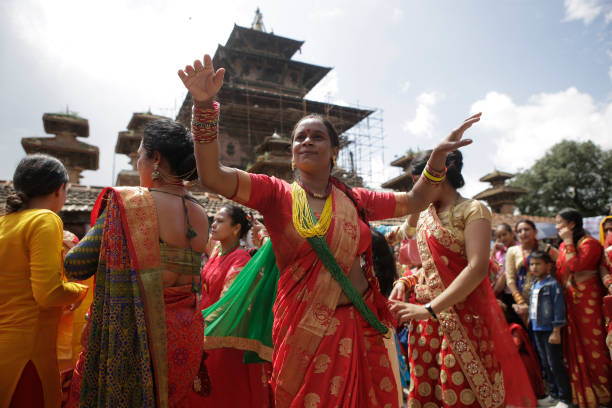
Married women may also wear pote necklaces, sindur, glass bangles and traditional jewellery.
What makes the colour especially striking during Teej is the scale. A single woman in a red sari is familiar in Nepal. Thousands of women dressed in variations of red around a temple such as Pashupatinath create something completely different.
The clothing becomes part of the identity of the festival itself.
Teej Songs: Celebration, Memory and Women’s Voices
It would be difficult to understand Teej properly without listening to the songs.
Traditional Teej songs are not simply background music for dancing. For generations, they gave women a space to talk about their own lives.
Women sang about leaving their parental homes after marriage, missing their mothers, difficult relationships, household responsibilities, poverty, husbands working far away and problems that could be difficult to discuss openly during ordinary life. Other songs were playful, teasing or simply joyful.
That tradition continues, although the sound of Teej has changed. New songs now appear every year on television, YouTube and social media. Modern lyrics may discuss employment, education, migration, relationships and women’s rights alongside older family themes.
Some people miss the older folk style. Others see the new music as evidence that Teej is still alive and changing with the women who celebrate it.
What Is Teej Like at Pashupatinath?
For a traveller in Kathmandu, Pashupatinath is the most obvious place to see Teej on a large scale.
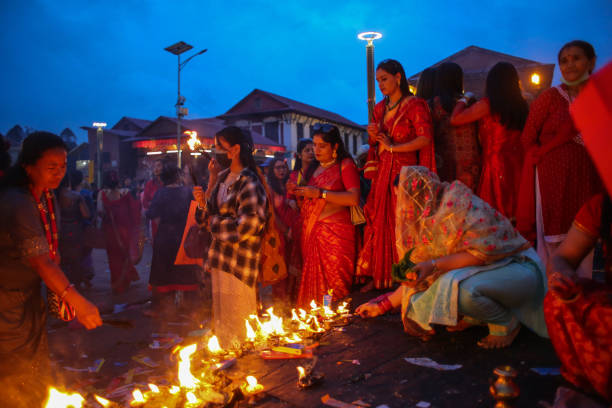
The wider temple area becomes exceptionally busy. Women arrive from Kathmandu and from other parts of Nepal, many dressed in red and carrying offerings for worship.
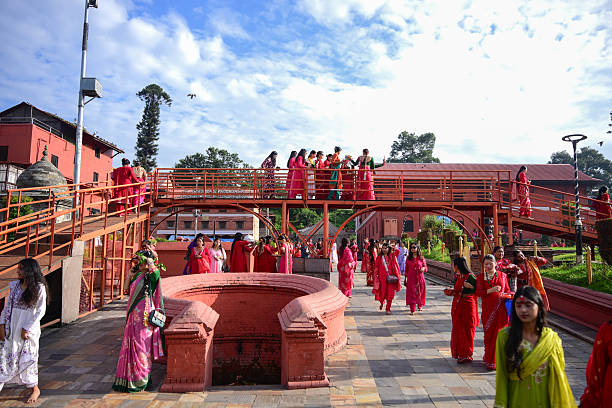
There can be long queues for darshan. Groups sing and dance while waiting. Friends who have not seen each other for months meet among the crowds. Volunteers, police and temple staff help manage the enormous movement of devotees.
Visitors should remember that Pashupatinath is not a festival venue created for sightseeing. It remains one of Nepal’s most sacred Hindu sites.
Visiting Pashupatinath during Teej
Non-Hindu visitors may visit permitted areas of the wider Pashupatinath complex but cannot enter the main sanctum. Dress modestly, follow temple instructions and avoid interrupting people who are praying or performing rituals.
Can Foreign Women Join Teej Celebrations?
Yes, but the best experiences usually happen naturally rather than by trying to copy every ritual.
A foreign woman can attend a public Teej programme, watch songs and dancing, wear appropriate traditional clothing, visit permitted temple areas and join a dance when invited.
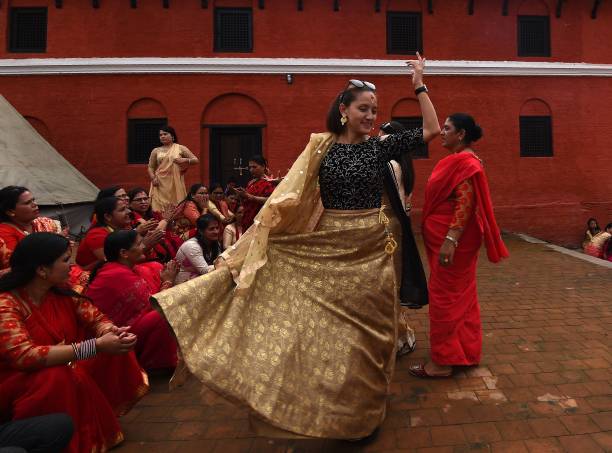
If a Nepali family or group invites you to a Dar gathering, that can be an especially memorable way to experience the social side of the festival.
You do not need to fast simply because you are attending Teej. You also do not need to imitate religious rituals you do not understand.
Listening, asking questions and allowing your hosts to explain what is happening is usually far more meaningful.
Can Visitors Wear Red During Teej?
Yes. Wearing red or traditional Nepali clothing is generally fine, particularly when you are attending a cultural gathering with Nepali friends or hosts.
A sari is not compulsory. A red kurta, shawl or another modest outfit can be much easier for someone who has never worn a sari before.
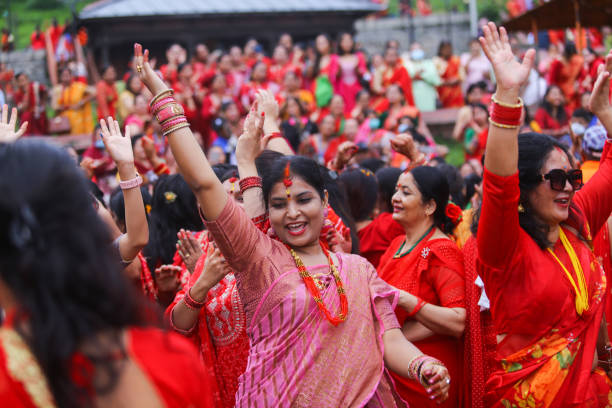
If you do want to wear traditional clothing, asking a Nepali friend to help is a good idea. That turns the experience into something shared rather than treating the clothing as a costume.
Photography During Teej
Teej is extremely photogenic. That does not mean every moment should be photographed.
At Pashupatinath, photography is not permitted inside the main sanctum or during restricted religious ceremonies. In exterior and public areas where photography is permitted, temple instructions should still be followed.
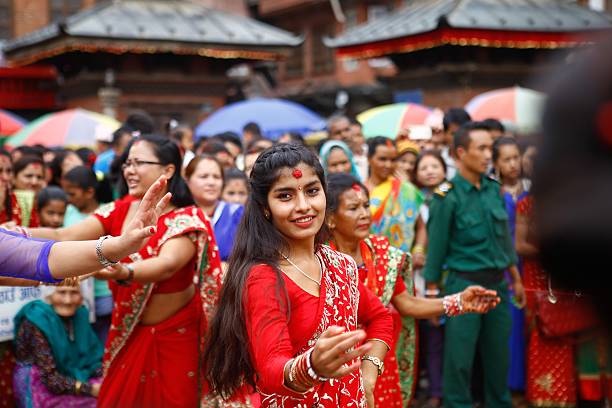
Outside the temple, use the same judgement you would use anywhere else. A wide photograph of a public celebration is different from putting a camera close to the face of someone who is praying, crying or receiving a blessing.
When you want a close photograph of an individual, ask. That one habit solves most of the problem.
What Is Rishi Panchami?
The Teej period does not finish with the main fasting day.
In 2026, Rishi Panchami falls on Tuesday, September 15. It is associated with worship of the Saptarishi, the seven sages of Hindu tradition, along with ritual cleansing and purification practices.
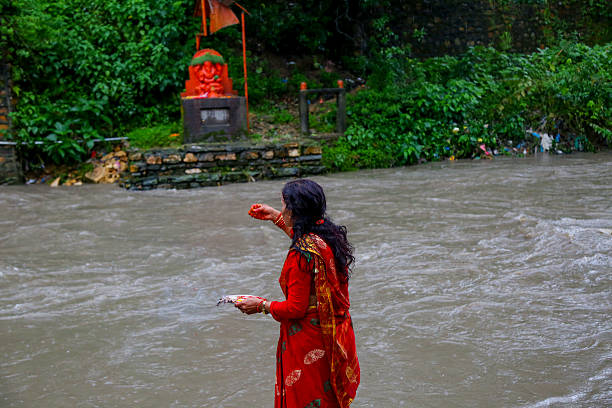
Traditional observances may include ritual bathing and the use of datiwan, a plant traditionally used during cleansing rituals. Customs vary between families, and many modern urban households do not follow every older practice in exactly the same way.
For visitors, the important thing is simply to understand that Teej is not only the famous day of red saris and dancing. It belongs to a wider sequence of religious and family traditions.
| If You Are Visiting During Teej | A Good Approach |
|---|---|
| Temple visits | Dress modestly and follow local access rules. |
| Photography | Ask before taking close photographs of individuals. |
| Private gatherings | Join when invited rather than assuming every Dar celebration is public. |
| Dancing | Joining is usually great when the group welcomes you. |
| Fasting | There is no need for a visitor to fast in order to show respect. |
How Teej Is Changing in Modern Nepal
A festival can remain traditional without remaining unchanged. That is clearly happening with Teej.
Urbanisation means daughters may no longer live in the same kind of extended households as earlier generations. Overseas migration means some families celebrate through video calls. Restaurants host Dar events. Offices organise Teej programmes. Songs spread online within hours.
At the same time, older parts of the festival remain immediately recognisable: the colour red, visits to Shiva temples, family reunions, the story of Parvati and Shiva and groups of women singing together.
The interesting part is not deciding whether modern Teej is “better” or “worse.” It is watching an old festival adjust to the way Nepali women live today.
When Is Teej in 2027?
After Teej 2026, the next Haritalika Teej in Nepal falls on Friday, September 3, 2027. Rishi Panchami follows on Saturday, September 4, 2027.
The important thing to remember is that Teej does not fall on the same Gregorian date every year. It follows the lunar calendar, so the date can move considerably from one year to another.
| Year | Haritalika Teej | Planning Note |
|---|---|---|
| 2026 | Monday, September 14 | Main 2026 Teej day in Nepal. |
| 2027 | Friday, September 3 | Next year’s main Teej date. |
| 2028 | Tuesday, August 22 | The date moves earlier again because Teej follows the lunar calendar. |
Planning ahead? Future festival dates should always be checked against the current Nepali calendar once the relevant year’s official calendar is published, particularly when arranging international flights or a fixed cultural itinerary.
Where Is the Best Place to Experience Teej in Nepal?
If you want to see Teej on a large scale, Kathmandu is the easiest choice.
Pashupatinath provides the most famous public scene, but Teej is not limited to one temple. Neighbourhood shrines, streets, community halls, homes and restaurants across the Kathmandu Valley can all become part of the celebration.
Outside Kathmandu, the atmosphere may feel more personal. In smaller towns and villages, family gatherings and local temples can be more central than large organised programmes.
A visitor with a local invitation may learn more from one evening with a Nepali family than from standing among thousands of people at a famous temple.
Is Teej a Good Time to Visit Nepal?
For travellers interested in culture, yes.
September is an interesting transitional period in Nepal. The monsoon is moving toward its end, hills are green, and important festivals begin returning to the calendar before the main autumn travel season.
Planning a trip around Teej can work particularly well if you want to combine Kathmandu’s cultural life with sightseeing elsewhere in the country.
You might spend several days in Kathmandu during the festival, then continue to Pokhara, Chitwan or another part of Nepal depending on your interests and the weather.
The easiest way to recognise Teej is through the colour red. The better way to understand it is through the people celebrating it.
Behind the saris, jewellery and temple crowds are daughters returning home, sisters meeting again, women carrying religious traditions from one generation to another and songs that have documented family life for decades.
That is why Teej remains important even as Nepal changes. For a traveller, the best approach is not to try to become part of every ritual. Observe, ask questions, accept invitations when they come and remember that you are witnessing a festival that belongs first to the people celebrating it.
If you are in Nepal on September 14, 2026, Teej will give you a side of the country that ordinary sightseeing rarely can.
Frequently Asked Questions About Teej in Nepal
When is Teej in Nepal in 2026?
Haritalika Teej is on Monday, September 14, 2026. Dar Khane Din is September 13 and Rishi Panchami is September 15.
Is Teej a public holiday in Nepal?
Haritalika Teej is observed as a public holiday for women in Nepal. Travellers should expect government offices, local schedules and some services to operate differently on the festival day.
Why do Nepali women celebrate Teej?
The festival is traditionally connected with Goddess Parvati’s devotion to Lord Shiva. It is also an important occasion for family reunion, friendship, women’s gatherings, singing, dancing and cultural expression.
Do all women fast without food and water?
No. Some women observe a strict fast, while others drink water or follow less restrictive practices. Individual traditions and health considerations vary.
Why is red important during Teej?
Red is strongly associated with marriage, auspiciousness and celebration in Nepali Hindu culture. Red clothing and jewellery have become some of the most recognisable visual features of Teej.
Can foreign women participate?
Yes. Visitors can attend appropriate public events, wear festive clothing, enjoy the music and join dancing when invited. There is no need to copy every religious ritual or undertake the traditional fast.
Can non-Hindus enter Pashupatinath Temple?
Non-Hindus may visit permitted areas of the wider Pashupatinath complex but cannot enter the main Hindu sanctum. During Teej, follow signs, security staff and temple instructions because crowd-management arrangements may change.
What is Dar Khane Din?
It is the traditional feast held before the main Teej fast and an important occasion for women to gather with family and friends.
Planning to Experience Teej in Nepal?
Nepal Royal Tourism Holiday can help you plan a Kathmandu cultural journey around Teej and combine the festival with heritage sightseeing and other destinations in Nepal.