


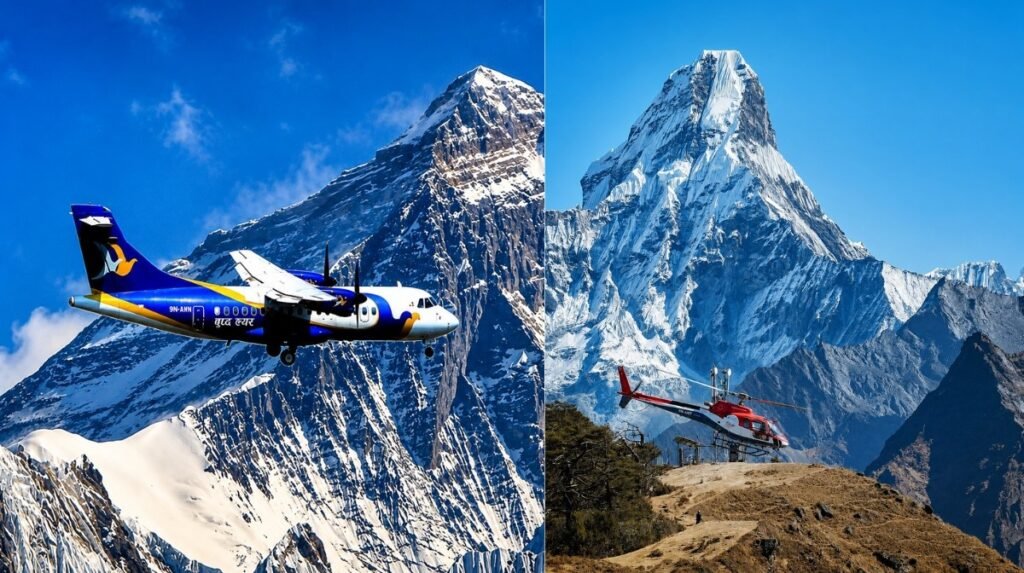
Mountain Flight vs Helicopter Tour in Nepal: Which One Is Better for Everest Views?
This gets asked a lot, usually by people who have already decided they want to see Everest without trekking and are now trying to figure out which option actually makes sense for them.
Both options put you above the Himalaya from Kathmandu. Beyond that the similarities start to thin out quickly.
What they deliver on the mountain, how close they get, how long they run, and what they cost are different enough that choosing the wrong one genuinely leaves people disappointed.
This is what both options look like from someone who has sent a lot of guests on each one.
Two Different Experiences, Not Two Price Tiers
A mountain flight is a fixed wing aircraft tour departing from Kathmandu’s domestic terminal.
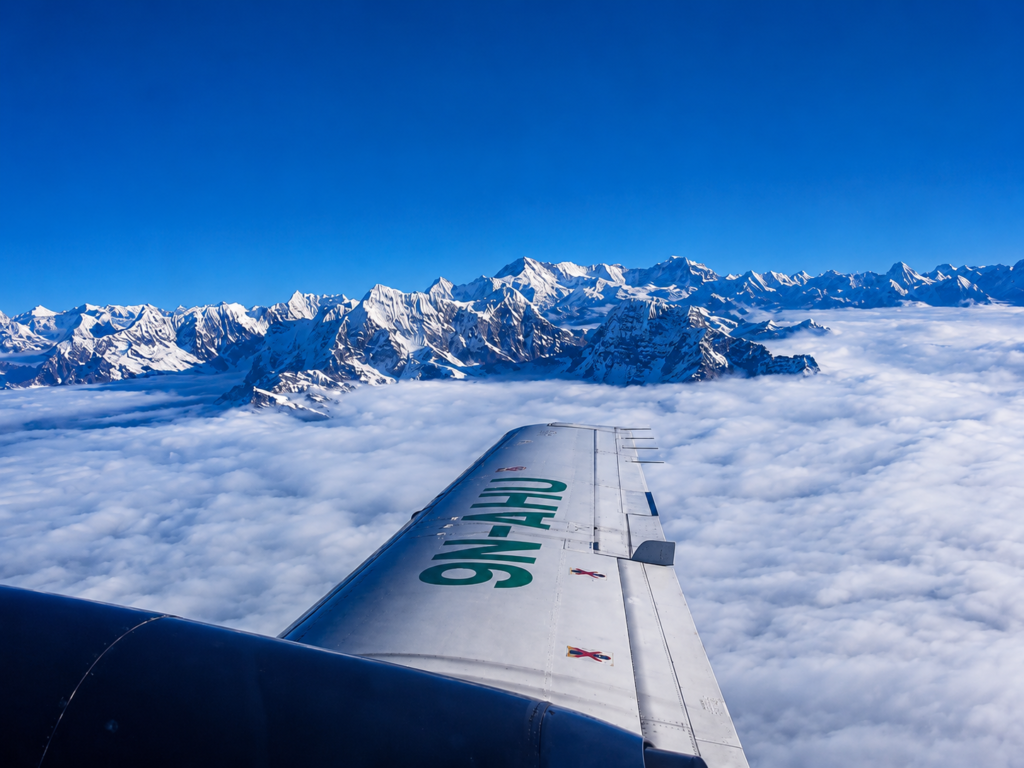
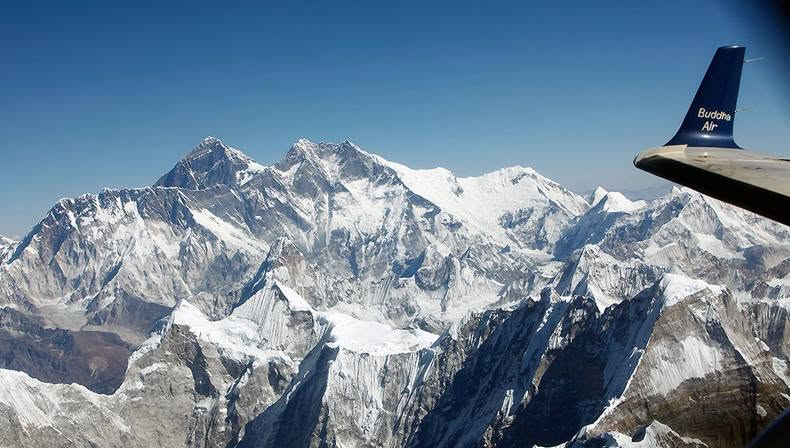
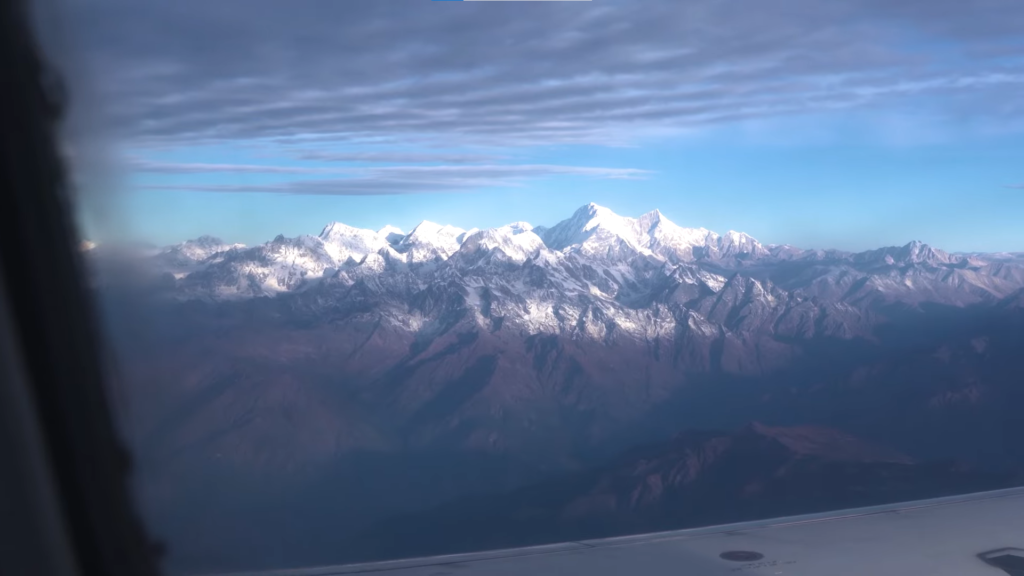
The flight follows the Himalayan range for roughly an hour, every seat has a window, and the crew takes the plane close enough to the peaks that you can see Everest, Lhotse, Nuptse, Ama Dablam, Makalu, and Cho Oyu in a single eastward pass.
Nothing lands, nothing stops here. You are watching the range through an aircraft window as the plane moves along it. The helicopter tour does something structurally different.
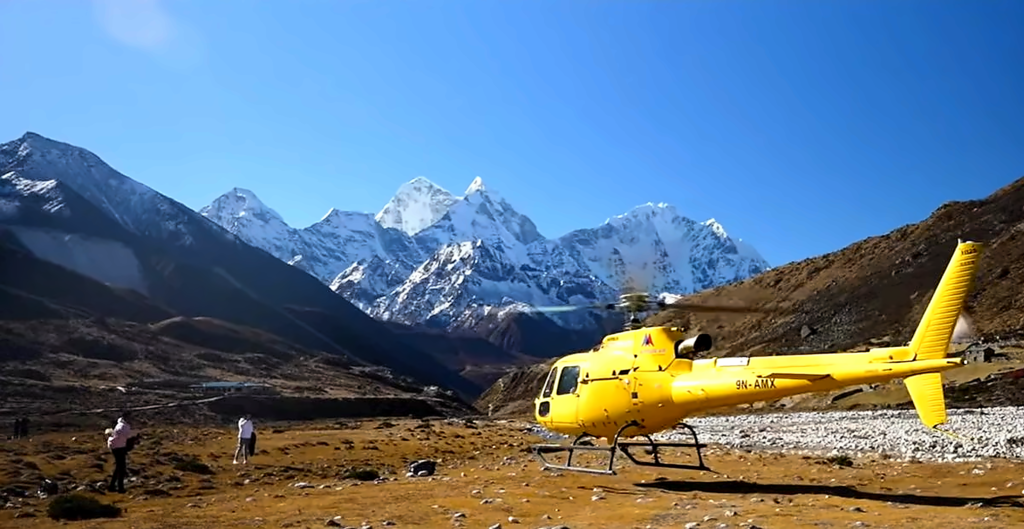
You take off from Kathmandu, stop briefly at Lukla for refueling, fly into the Khumbu valley, land at Kala Patthar at 5545 metres, fly over Everest Base Camp and the Khumbu Glacier, then have breakfast at the Everest View Hotel in Syangboche at 3880 metres before returning to Kathmandu.
The whole thing takes four to five hours and you step out of the aircraft on the mountain.
That is the core difference and everything else in this comparison follows from it.
The Mountain Flight
Mountain flights run every morning in clear weather from Kathmandu. Operators like Buddha Air, Yeti Airlines, and Tara Air run the service on small passenger aircraft holding fifteen to nineteen people.
Departure is early, usually between six and seven in the morning, before Kathmandu valley haze builds and before afternoon cloud develops over the peaks.
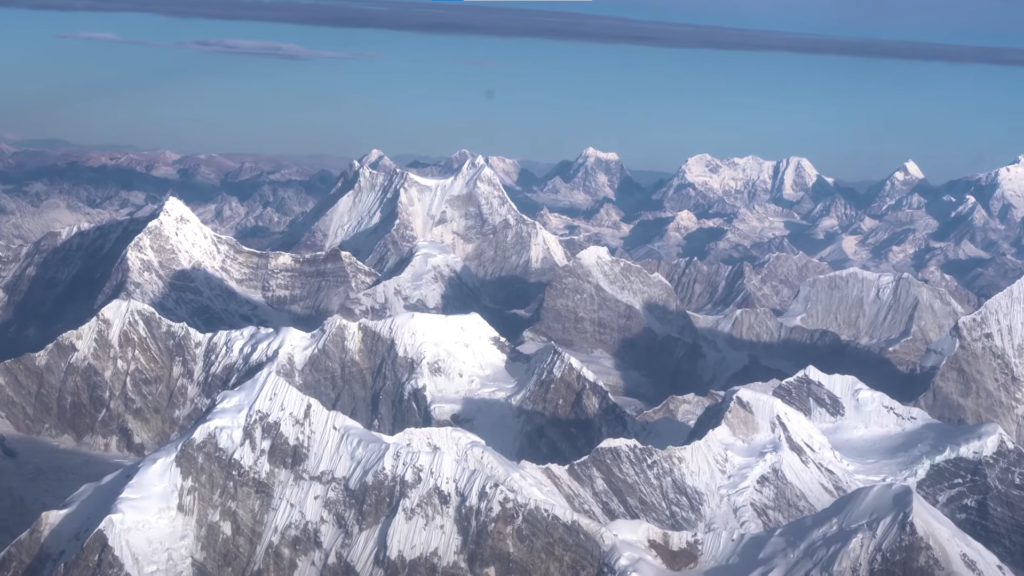
The aircraft climbs to around 6600 metres and heads east along the range. Pilots bring the plane close enough that ridgelines and glacier systems are clearly visible.
The cabin crew walks passengers to windows on both sides during the flight so you are not fixed to one angle throughout.
What you see is real. The mountain flight covers an extraordinary stretch of high Himalaya and on a clear day the views can genuinely stop people mid-sentence.
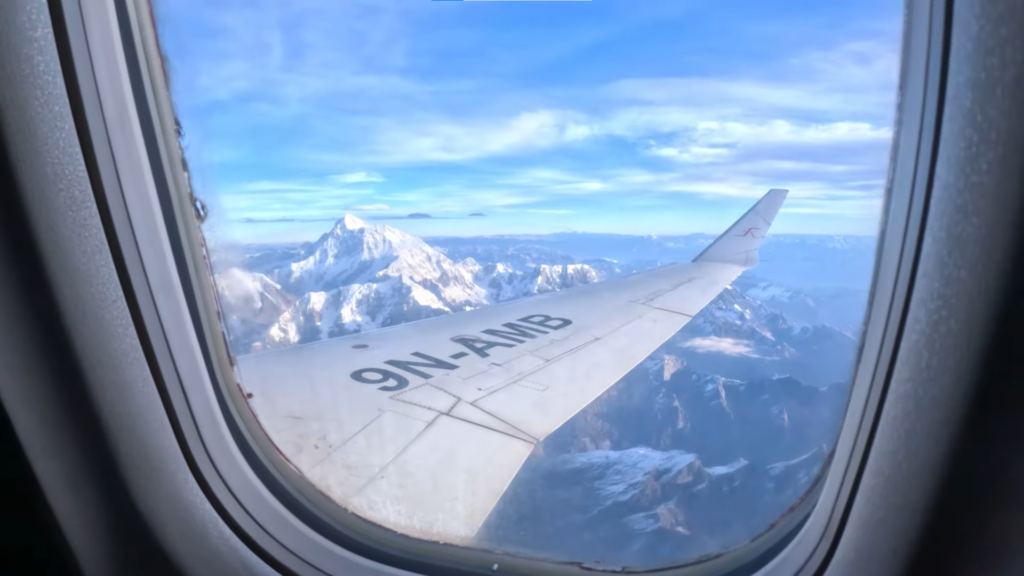
The limitation is that you are experiencing the range as a moving panorama from a lateral perspective, looking at the mountains rather than being among them.
Visibility is the variable that determines everything on a mountain flight. A clear October or November morning delivers something memorable.
A morning with heavy haze in the Kathmandu valley or thin cloud at altitude can feel like considerably less, and there is no way to know before you are airborne.
Weather cancellations are common in monsoon and unpredictable in winter. Pricing sits at roughly $150 to $250 per person across most operators.
The Helicopter Tour
The Nepal Royal Tourism Holiday Everest Heli Tour follows a more layered route. The flight departs Kathmandu, stops at Lukla to refuel, and heads into the Khumbu valley toward Kala Patthar.
One detail worth knowing upfront is that helicopters are not permitted to land at Everest Base Camp. The glacier moves and the surface is not stable enough for consistent landings.
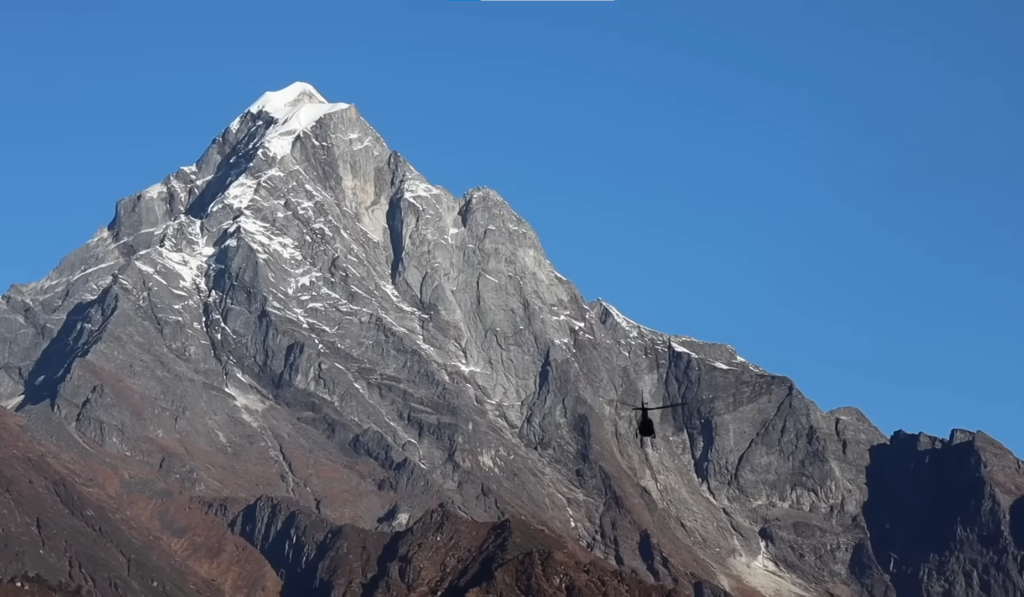
The helicopter does a flyover of Base Camp, giving you a clear look down onto the camp and the Khumbu Icefall above it, but the landing itself happens at Kala Patthar at 5545 metres.
This is actually the better position for seeing Everest. From Base Camp the mountain is largely blocked by surrounding ridges.
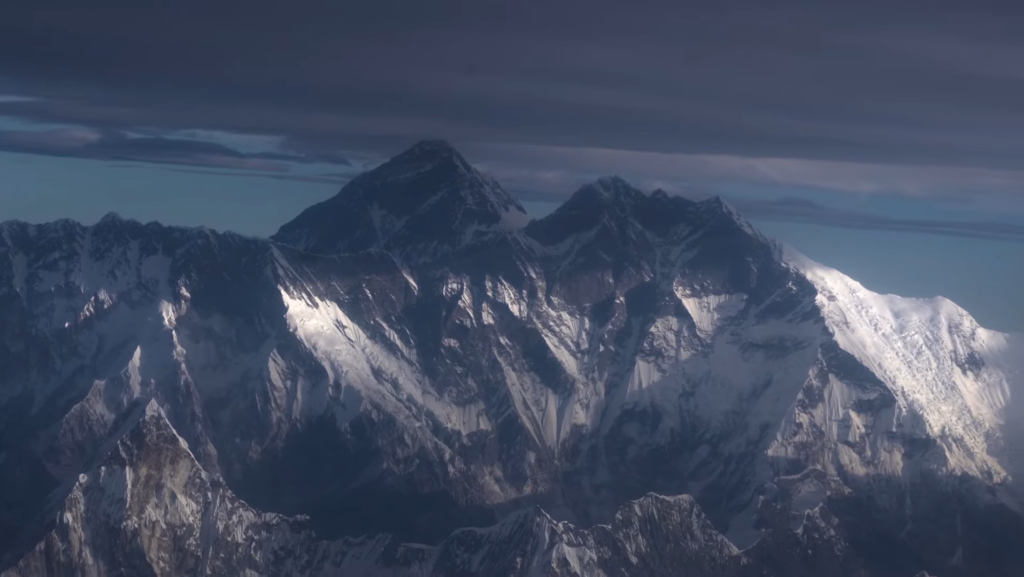
Kala Patthar is where the summit becomes fully visible above you, which is why virtually every serious photograph of Everest taken from the Nepal side comes from this ridge.
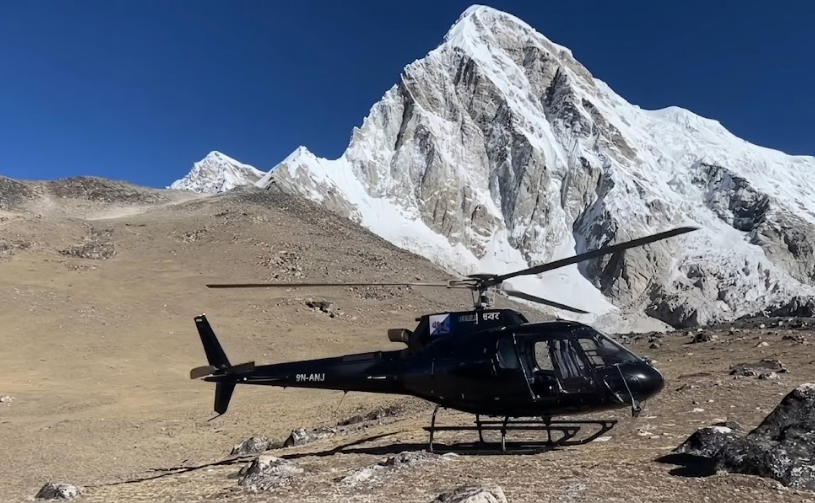
The stop at Kala Patthar lasts about ten to fifteen minutes. At that altitude that is about right.
After that the helicopter drops to Syangboche for breakfast at the Everest View Hotel, which sits at 3880 metres with a terrace looking directly at Ama Dablam and the Everest massif.
It is one of the genuinely good moments of the whole trip. We had a couple on the private charter last autumn. They were the only ones at Kala Patthar that morning.
What the Views Are Actually Like
For Everest specifically, the helicopter delivers a more personal and immediate experience.
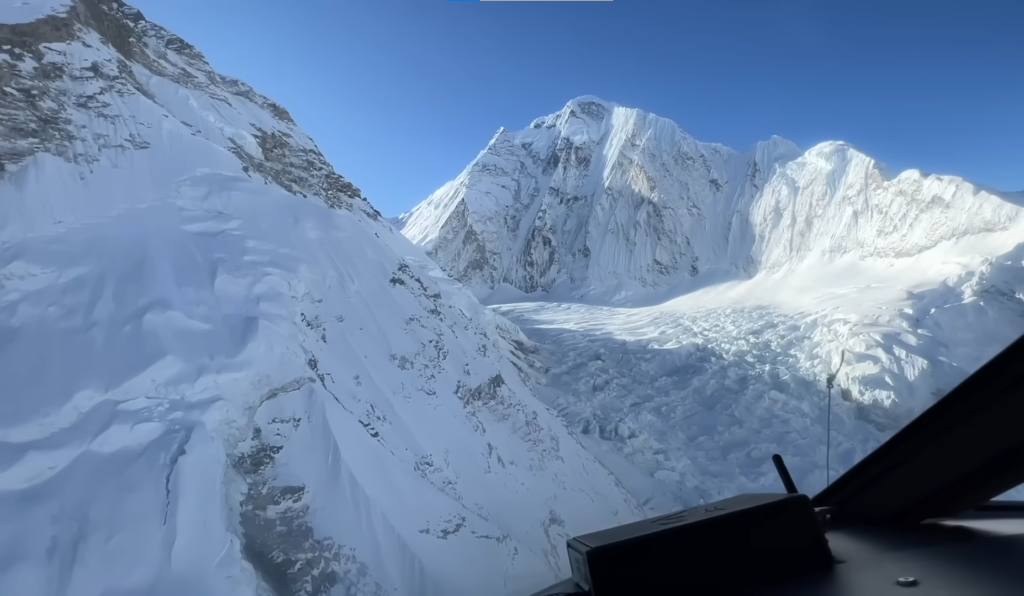
The mountain flight passes Everest from a lateral angle while moving. The helicopter lands you on the ridge in front of the summit with nothing blocking the view.
Most people who have done both describe them as being in different categories rather than on a quality spectrum.
That said, the mountain flight gives you a breadth of mountain viewing that the helicopter does not quite replicate.
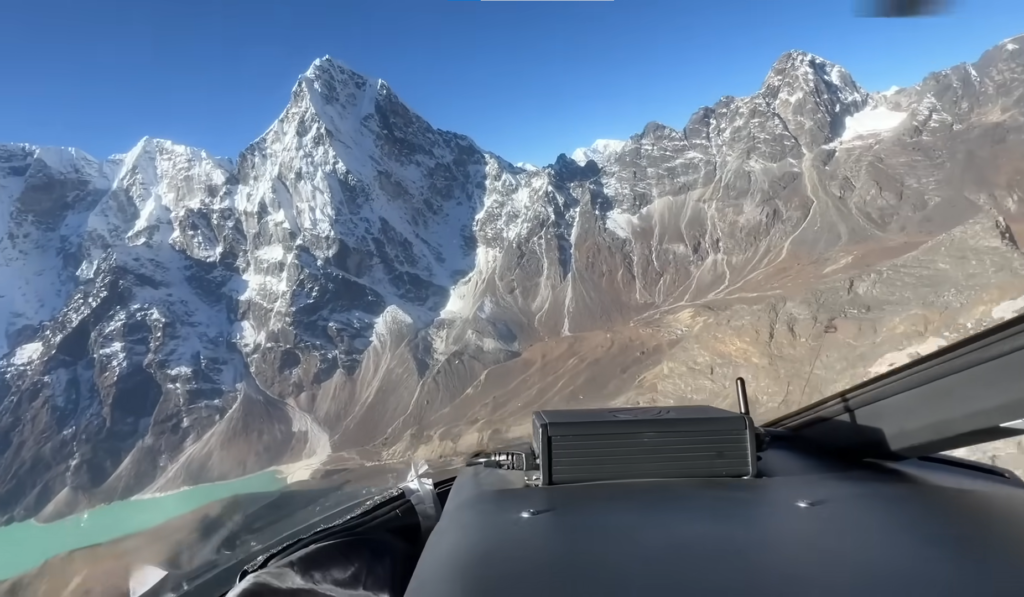
The flight covers the whole eastern Himalayan range in one pass and on a clear day you see peaks from Manaslu all the way toward Kangchenjunga.
The helicopter is more focused, more intimate, and more intense, but it is not the broad sweeping panorama the mountain flight delivers.
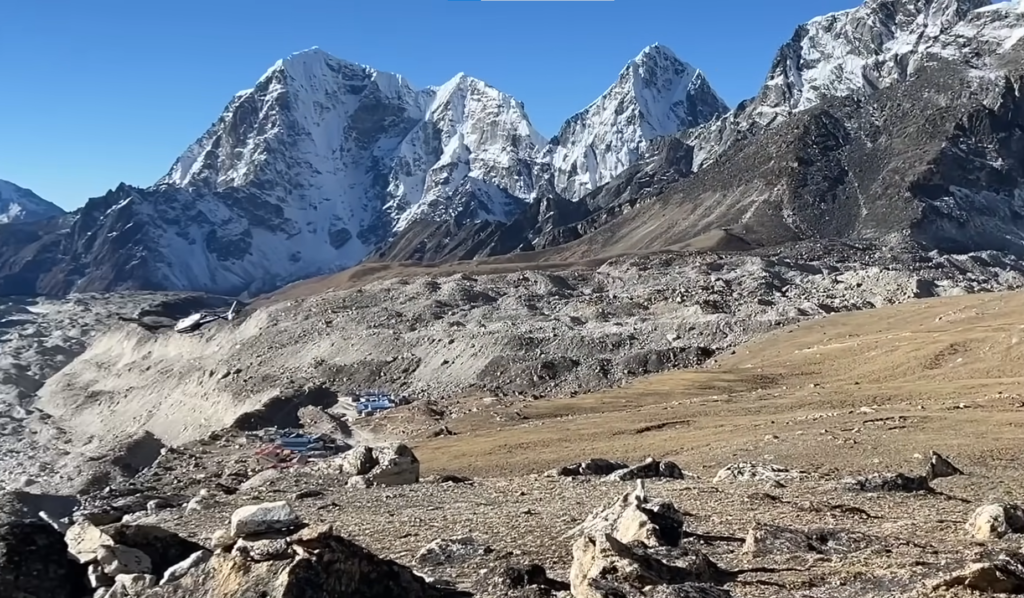
For someone whose main goal is a close personal encounter with Everest, the helicopter is the stronger experience.
For someone who wants to see the full scale of the Himalayan range in one aerial sweep, the mountain flight does something the helicopter does not.
Comparing the Two
| Feature | Mountain Flight | Helicopter Tour |
|---|---|---|
| Duration | About 1 hour | 4 to 5 hours |
| Aircraft type | Fixed wing, 15 to 19 seats | Helicopter, max 5 passengers |
| Mountain landing | None | Kala Patthar (5,545m) and Syangboche |
| EBC visit | None | Flyover from the air |
| Closest Everest proximity | Lateral view at around 6,600m | On the ground at Kala Patthar, 5,545m |
| Meal included | No | Breakfast at Everest View Hotel (3,880m) |
| Private option | Not typically available | Full helicopter from $6,500 to $7,000 |
The Cost Gap
Mountain flights run between $150 and $250 per person. Our tour prices from $1,395 per person for a group of five sharing the aircraft, to $1,490 for a solo traveller on a shared departure.
A private charter runs $6,500 to $7,000 for the whole helicopter regardless of group size.
| Format / Tour Option | Price Per Person |
|---|---|
| Mountain flight | $150 to $250 |
| Helicopter, solo or pair | $1,445 to $1,490 |
| Helicopter, group of 3 to 5 | $1,395 to $1,410 |
| Private helicopter charter | $6,500 to $7,000 total |
The gap is large and worth acknowledging plainly. The helicopter is a premium experience and it is priced that way.
For a lot of travelers the mountain flight is the right choice simply because the helicopter is not within budget for their trip, and that is a completely reasonable decision.
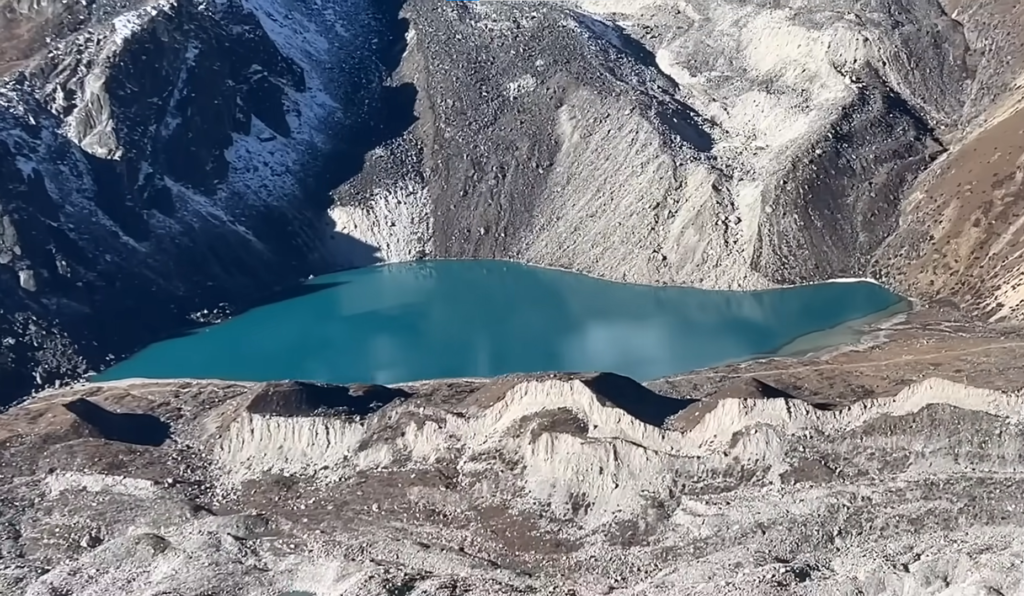
The mountain flight is not a lesser version of the helicopter. It is a different product at a very different price point, and it does some things well in its own right.
Which One Makes Sense for You
The mountain flight tends to work best for travelers who have limited time in Nepal and want some aerial engagement with the Himalaya without a major commitment.
It also suits people doing an EBC trek who want an aerial orientation of the peaks before walking toward them, first-time Nepal visitors who want to understand the scale of the range, and families with very young children where high altitude exposure at Kala Patthar is not appropriate.
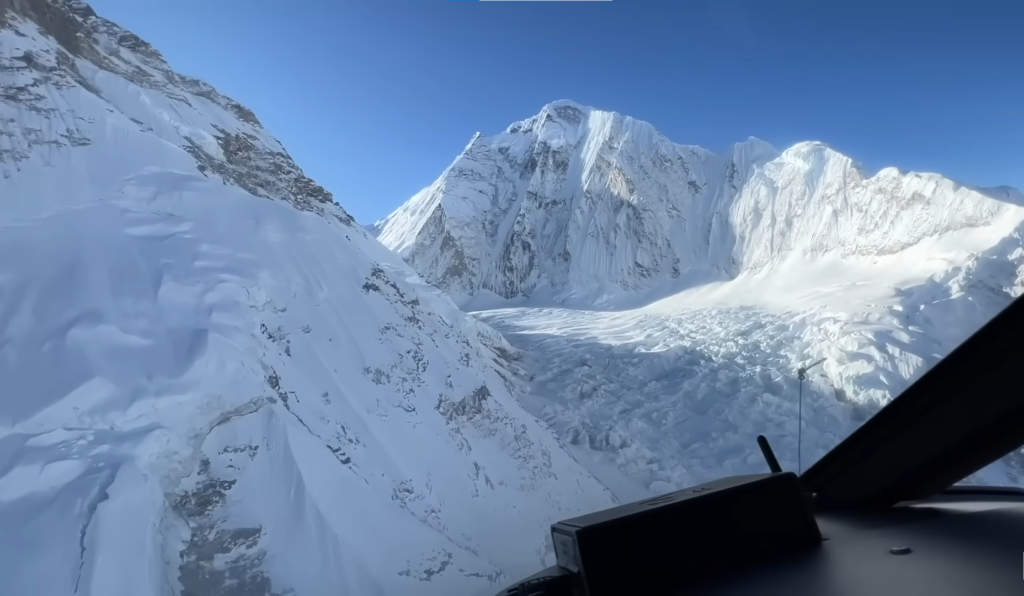
The helicopter suits anyone who cannot trek for reasons of time, health, fitness, or age and wants to genuinely be in the Everest region rather than observe it from a passing aircraft.
It is also the natural choice for milestone trips. Honeymooners, anniversaries, corporate experiences, and families where one member cannot trek but nobody wants to split up all work well in the helicopter format.
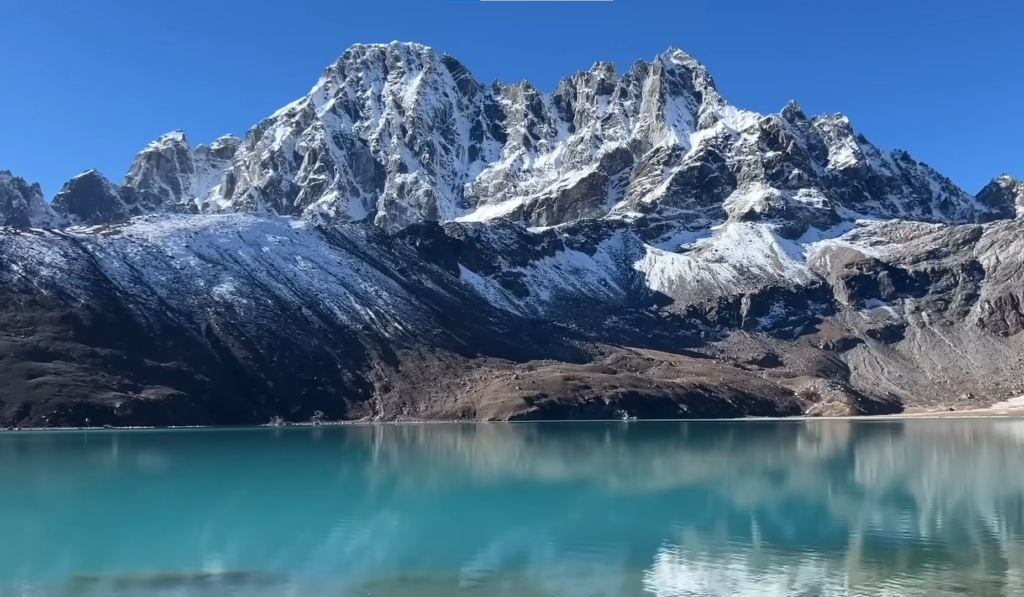
For photographers specifically, the helicopter is the only option that puts you in a position to take photographs that feel like they were taken on the mountain.
When to Go
Both options are weather dependent and both run best in the same two seasons.
| Season | Mountain Flight | Helicopter Tour |
|---|---|---|
| Autumn, October to November | Best visibility of the year | Best overall season |
| Spring, March to May | Good, some morning haze possible | Reliable, operationally busy |
| Winter, December to February | Possible on clear days, some haze risk | Cold at Kala Patthar, fewer crowds |
| Monsoon, June to September | Frequent cancellations | High cancellation rate, not recommended |
Whichever option you book, the earliest departure available is always the better choice. Cloud builds over the mountains through the morning on most days and visibility at altitude tends to drop significantly by midday.
An early slot is not just preferable on paper, it is the practical difference between a clear experience and a frustrating one.
So Which Is Better for Everest Views?
For most people asking this question, the helicopter gives you the stronger encounter.
The experience of standing at Kala Patthar with Everest in front of you is closer, quieter, and more direct than what a mountain flight delivers.
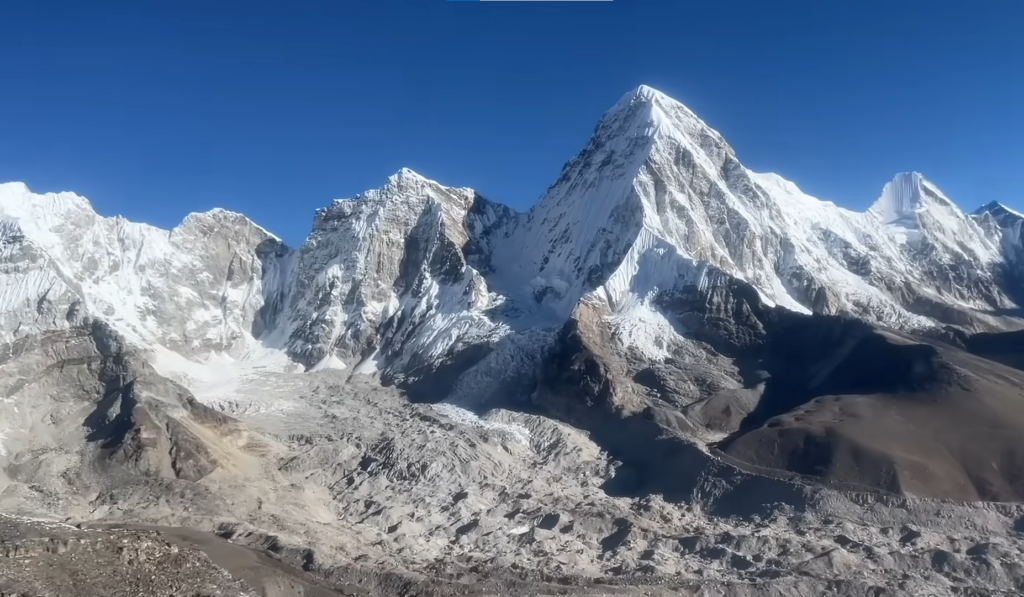
The anecdote above about the couple at sunrise captures something that comparison tables cannot.
But the mountain flight is not the wrong answer if the budget is what it is, or if you want the broader panoramic view of the full Himalayan range.
The honest difference comes down to this: the helicopter puts you in the story. The mountain flight lets you watch it from outside.
Both are real things. Most people, given the choice without budget constraints, would choose to be inside the story.
If you want a straight recommendation for your specific trip and group, reach out to the team at Nepal Royal Tourism Holiday and we will tell you what makes sense.