-
 Duration
18 Days
Duration
18 Days
-
 Difficulty
Very Challenging
Difficulty
Very Challenging
-
 Max Elevation
6,189m
Max Elevation
6,189m
-
 Group Size
2 pax Person
Group Size
2 pax Person
-
 Accommodation
Tea House/Camping
Accommodation
Tea House/Camping
-
 Start/End
Kathmandu Airport/Kathmandu
Start/End
Kathmandu Airport/Kathmandu
-
 Destination
Everest Region
Destination
Everest Region
-
 Best Season
Spring and Autumn
Best Season
Spring and Autumn
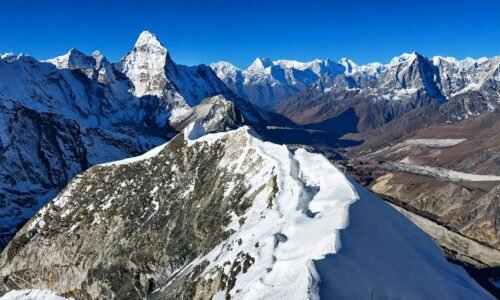
Island Peak Climbing is one of the most rewarding adventures in Nepal for trekkers who want to take the next step into the world of Himalayan mountaineering.
Rising to 6,189 metres in the heart of the Everest region, Island Peak, locally known as Imja Tse, offers far more than simply standing on another summit.
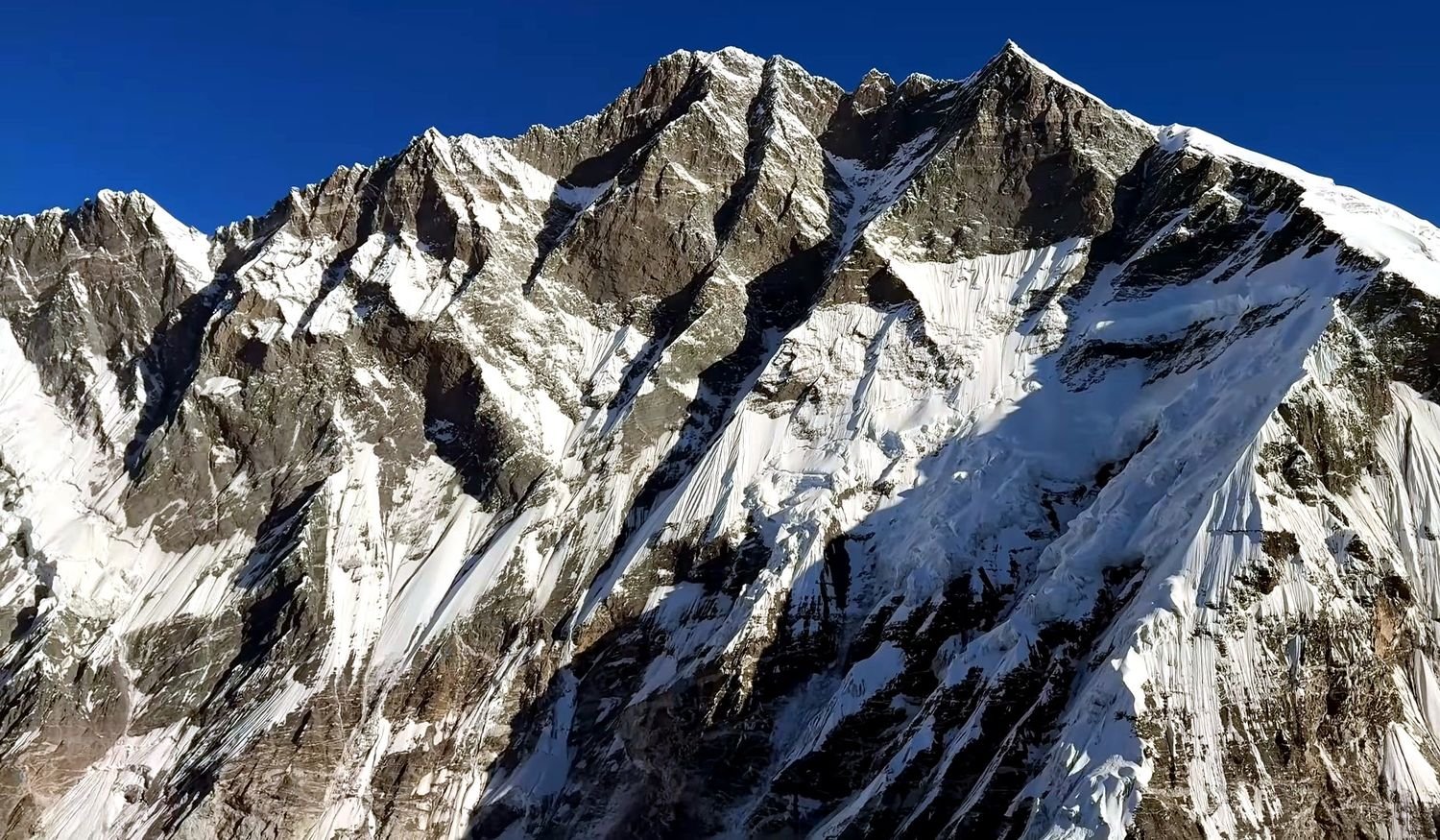
This particular itinerary combines the the legendary Everest Base Camp Trek with the excitement of climbing a real Himalayan peak, creating a journey that has breathtaking landscapes, Sherpa culture, high mountain adventure, and the unforgettable feeling of reaching a 6,000-metre summit.
Unlike many expedition-style climbs that require weeks of technical experience, Island Peak has become the preferred choice for fit trekkers looking to experience genuine alpine climbing for the first time.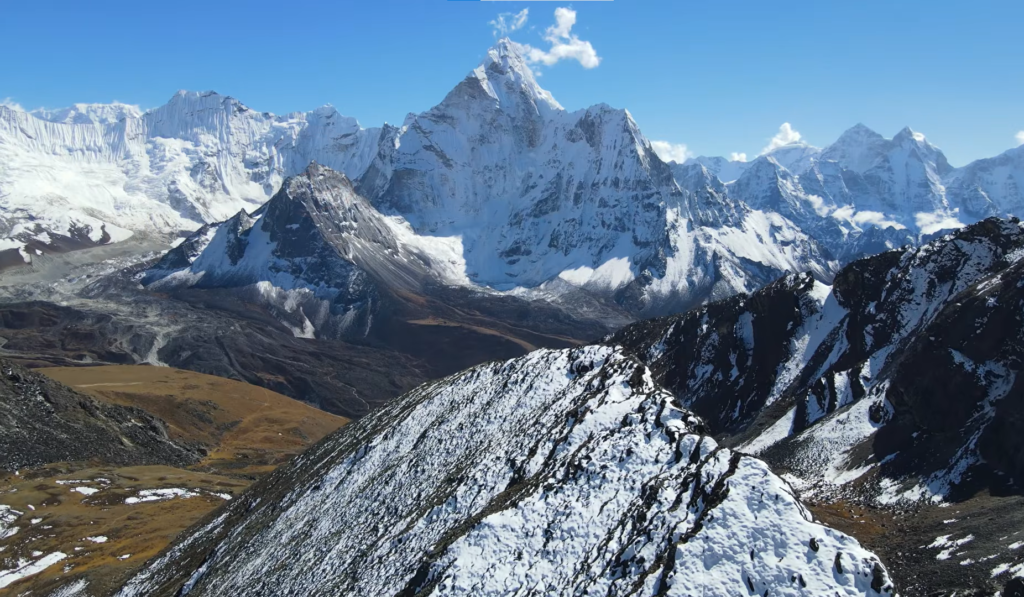
The mountain introduces you to glacier travel, fixed ropes, crampons, harnesses, and ice axes, yet remains achievable for determined adventurers under the guidance of experienced climbing professionals.
It is challenging enough to feel like a true mountaineering achievement while remaining accessible to those with strong fitness, good preparation, and a passion for the Himalayas.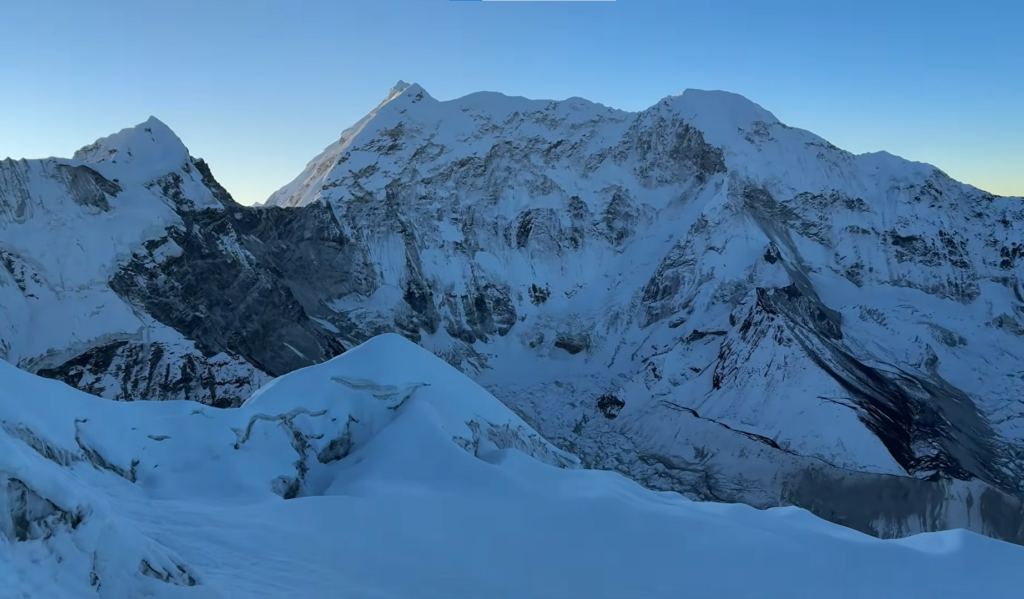
One of the reasons this climb is so popular is the incredible journey leading to the summit.
Rather than heading directly to the mountain, the route follows the famous Everest Base Camp trail through Sagarmatha National Park, allowing your body to acclimatize naturally while experiencing some of Nepal’s most spectacular scenery.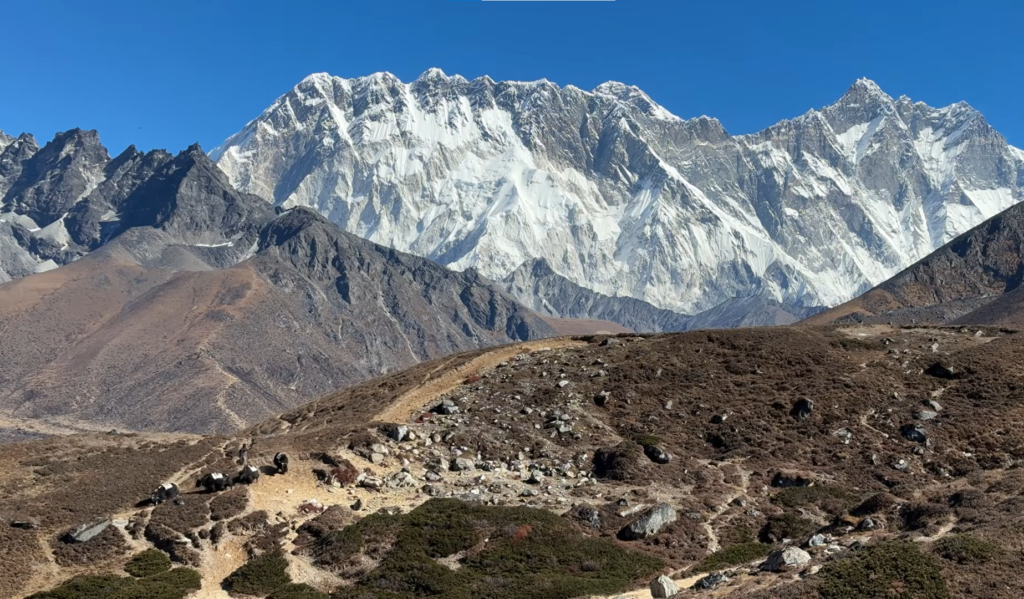
Every day introduces something new, whether it is crossing swinging suspension bridges above the Dudh Koshi River, walking through colourful Sherpa villages, exploring ancient monasteries, or standing beneath some of the highest mountains on Earth.
The adventure begins with the thrilling flight to Lukla before following the classic Everest trail through Phakding, Namche Bazaar, Tengboche, Dingboche, Lobuche, Gorakshep, and Everest Base Camp itself.
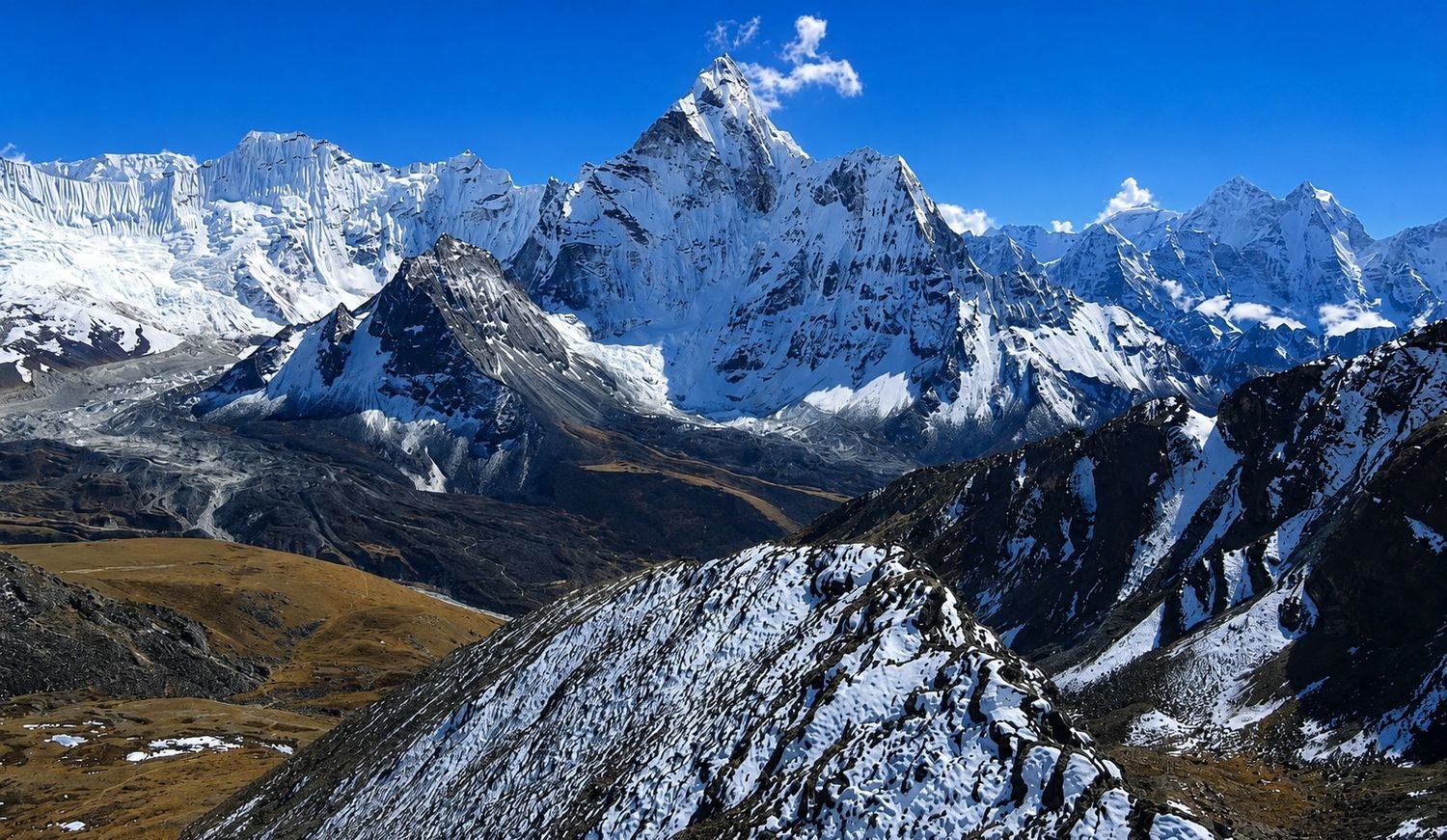
These places are more than overnight stops. Namche Bazaar is the vibrant gateway to the Khumbu, filled with cafés, mountaineering shops, and Sherpa hospitality. Tengboche is home to the region’s most famous monastery, surrounded by magnificent views of Ama Dablam and Everest.
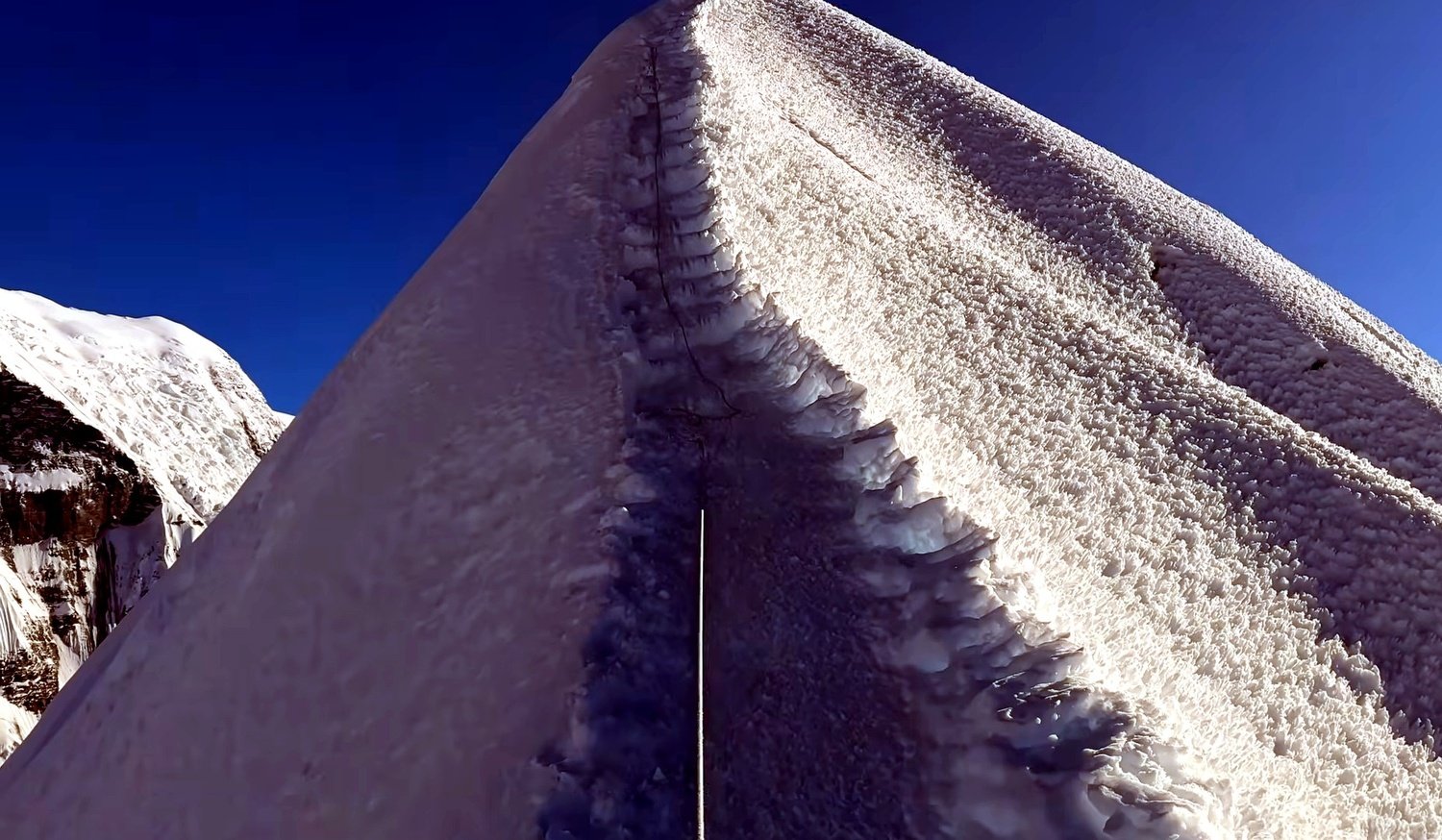
Dingboche marks the transition into the alpine world, while Lobuche and Gorakshep reveal the raw beauty of glaciers, rocky moraines, and towering Himalayan walls that define the upper Khumbu.
Reaching Everest Base Camp is already a dream for many travelers, but your journey continues even higher.
Standing beside the Khumbu Icefall, surrounded by colourful expedition tents during the climbing season, offers a glimpse into the world of Everest expeditions.

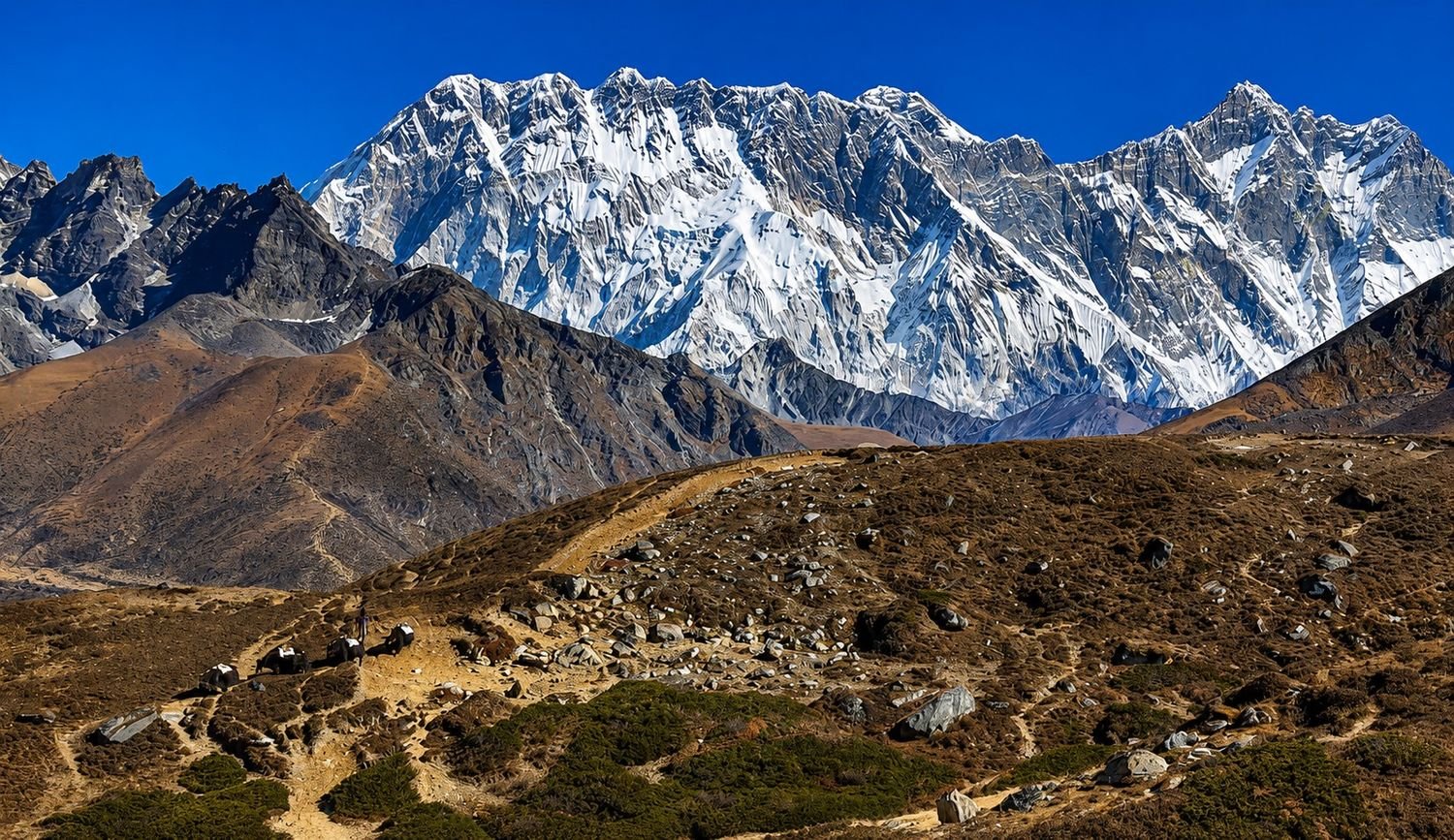
Shortly afterwards, the climb to Kala Patthar rewards you with the finest panoramic view of Mount Everest, Lhotse, Nuptse, Pumori, and countless surrounding peaks.
Watching the world’s highest mountain rise above the Khumbu Glacier from this famous viewpoint is an experience that stays with you forever.
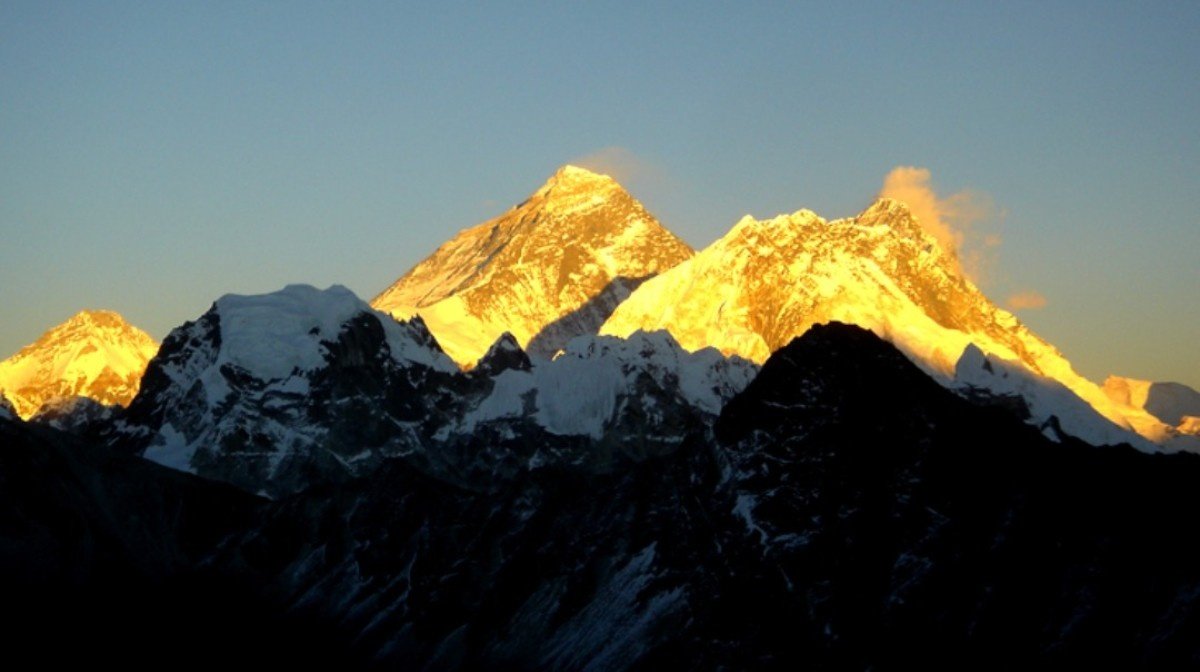
After completing the Everest Base Camp section, the route leaves the main trekking trail and enters the quieter Imja Valley.
Crossing the spectacular Khongma La Pass before reaching Chhukung brings a noticeable change in atmosphere.
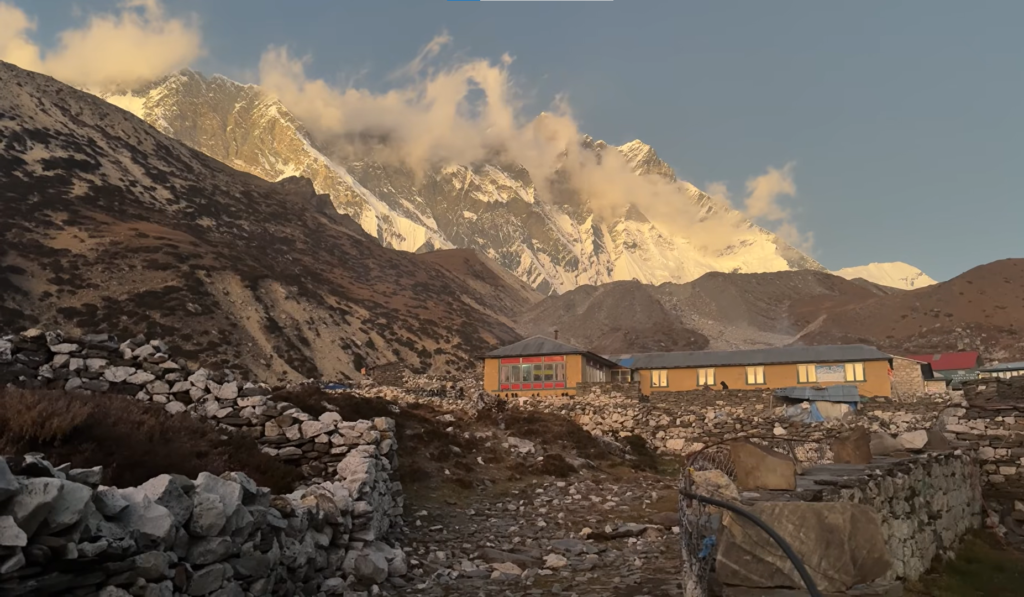
The crowds gradually disappear, the landscape becomes wilder, and the journey begins to feel more like a genuine climbing expedition.
Surrounded by glaciers and towering Himalayan giants, you start preparing for the mountain that has been waiting ahead since the beginning of the journey.
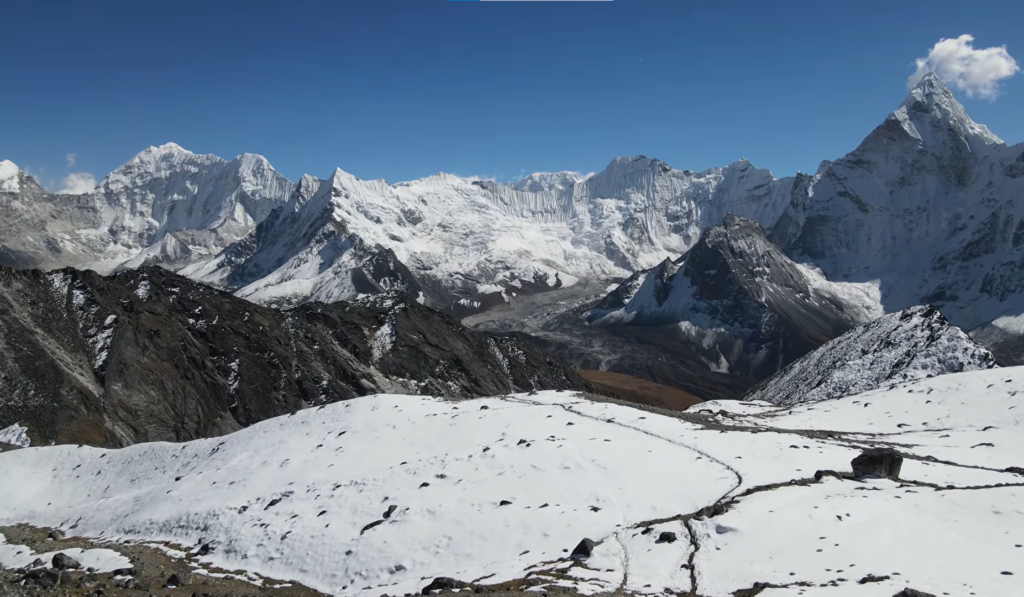
Before the summit attempt, your climbing guide conducts a practical training session at Island Peak Base Camp.
Even if you have never used crampons or ascenders before, you will receive instruction on essential climbing techniques, safety procedures, rope travel, and the proper use of mountaineering equipment.
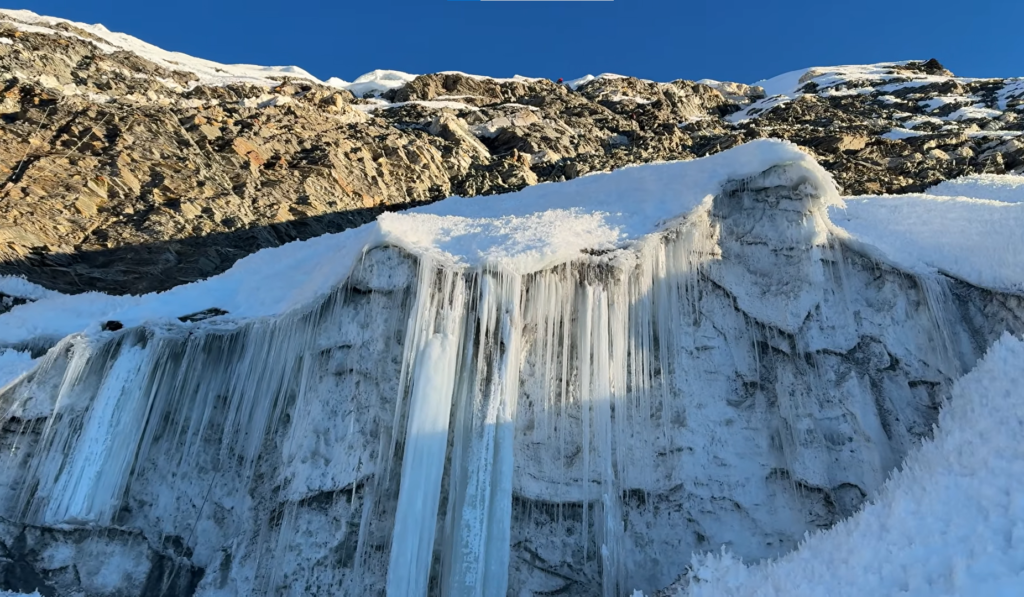
This training not only builds confidence but also ensures everyone understands the climbing system before moving onto the glacier.
Summit day begins long before sunrise, as the team climbs through rocky terrain to the glacier under the light of headlamps.
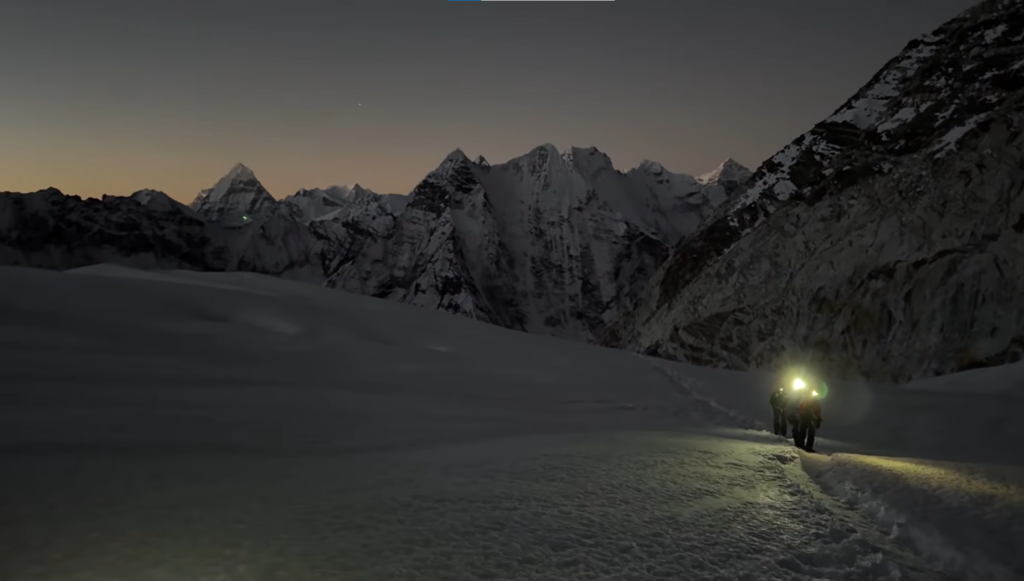
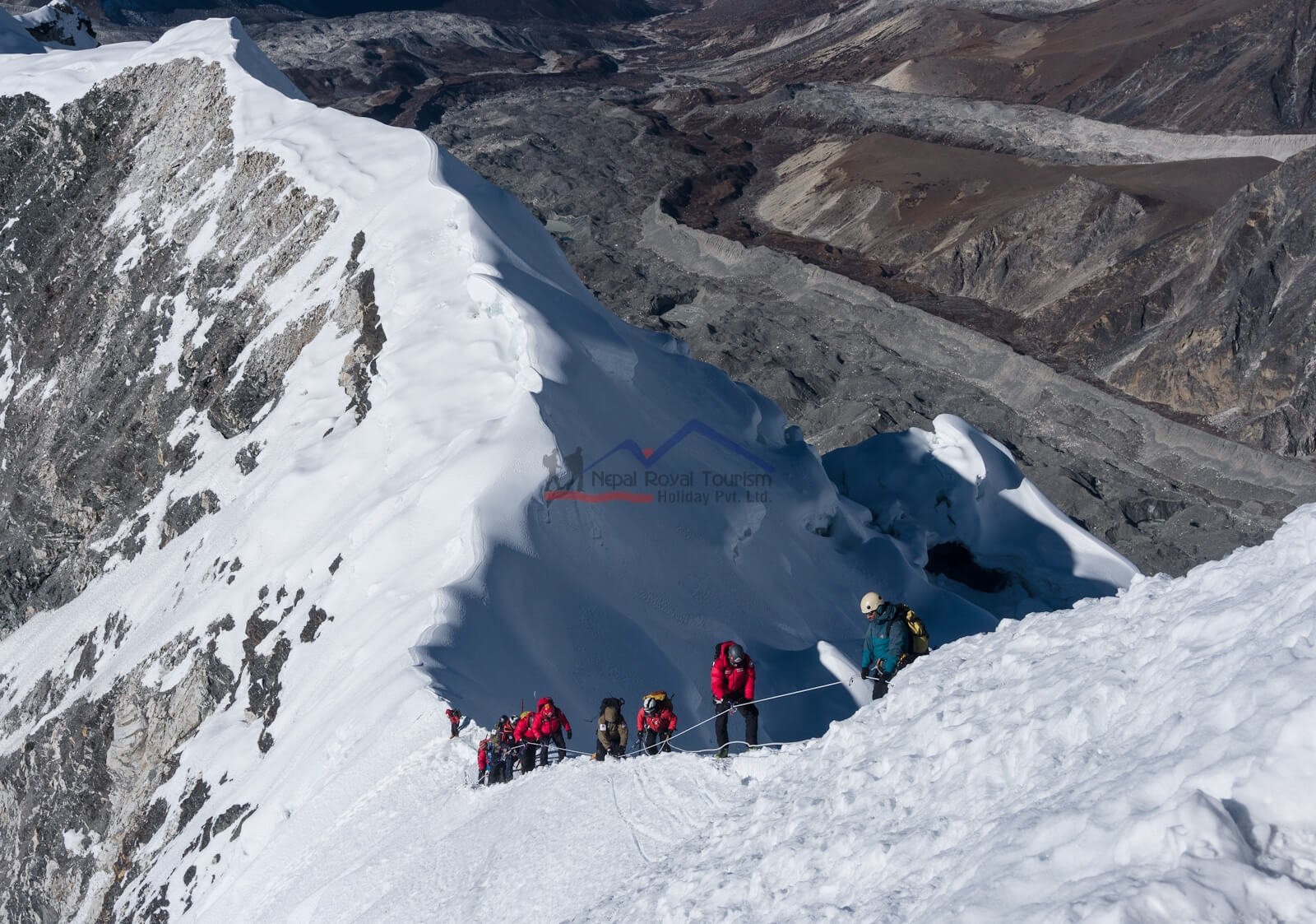
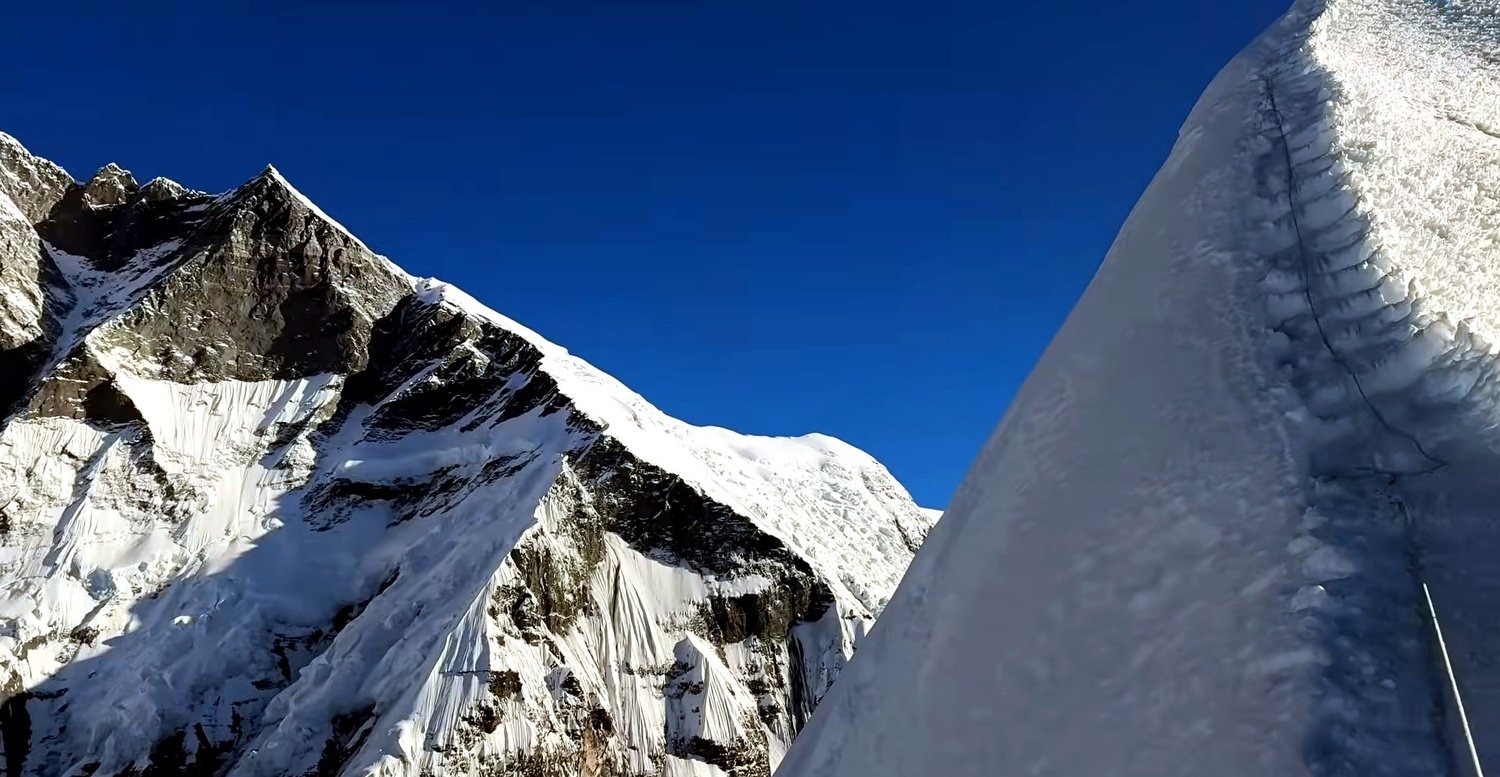
The route then crosses snowfields, carefully navigates crevasses, and follows fixed ropes up the steep headwall that protects the summit ridge.
It is physically demanding, but every step brings increasingly spectacular views across the Himalayas.
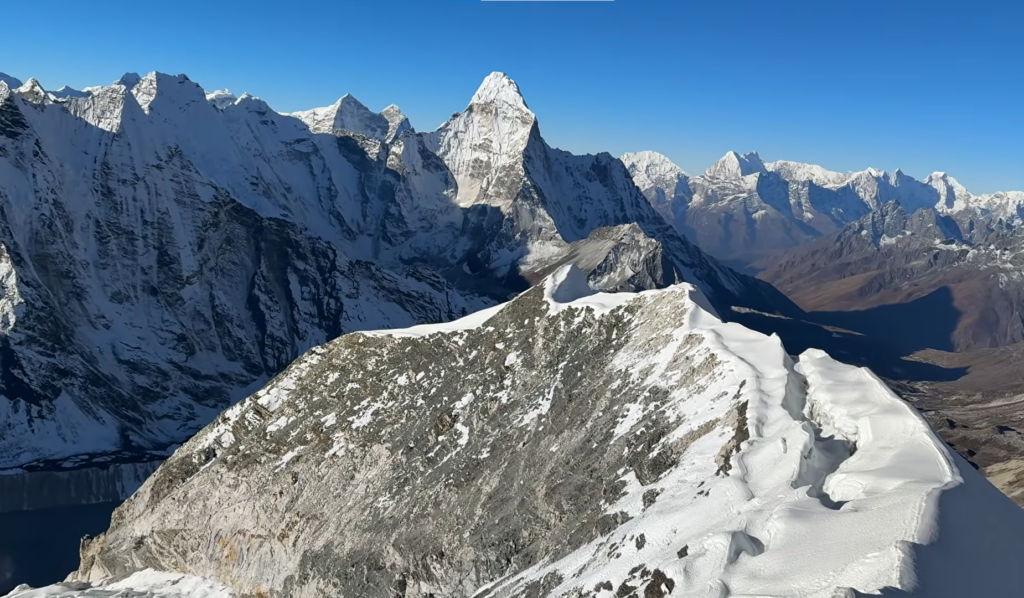
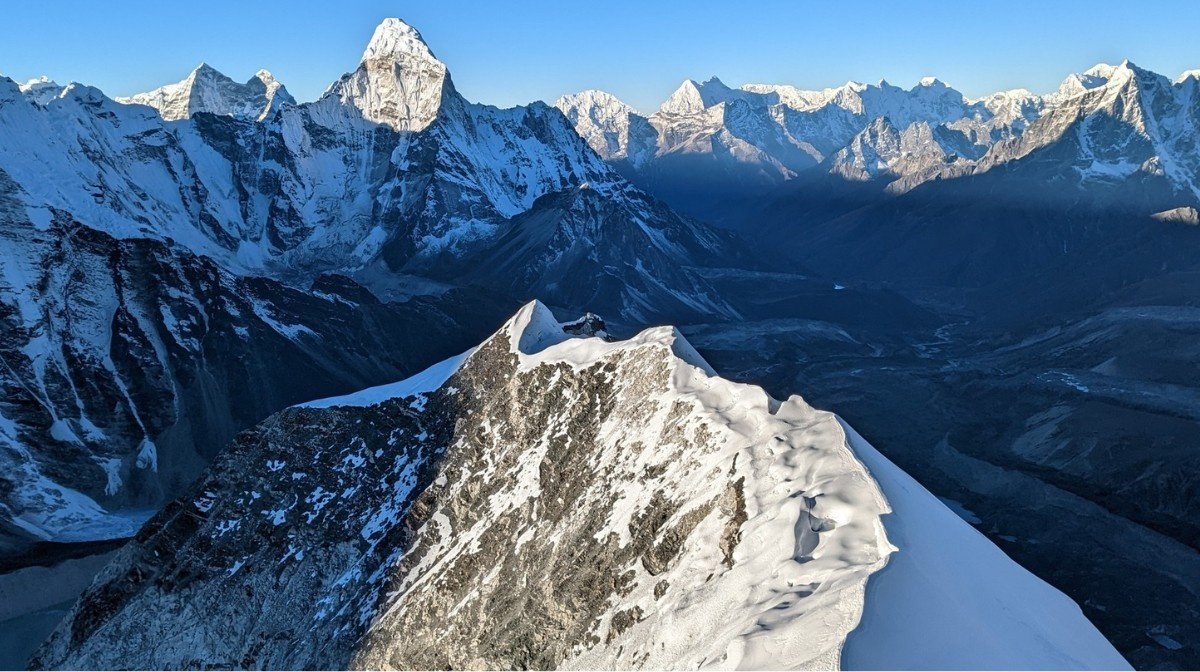
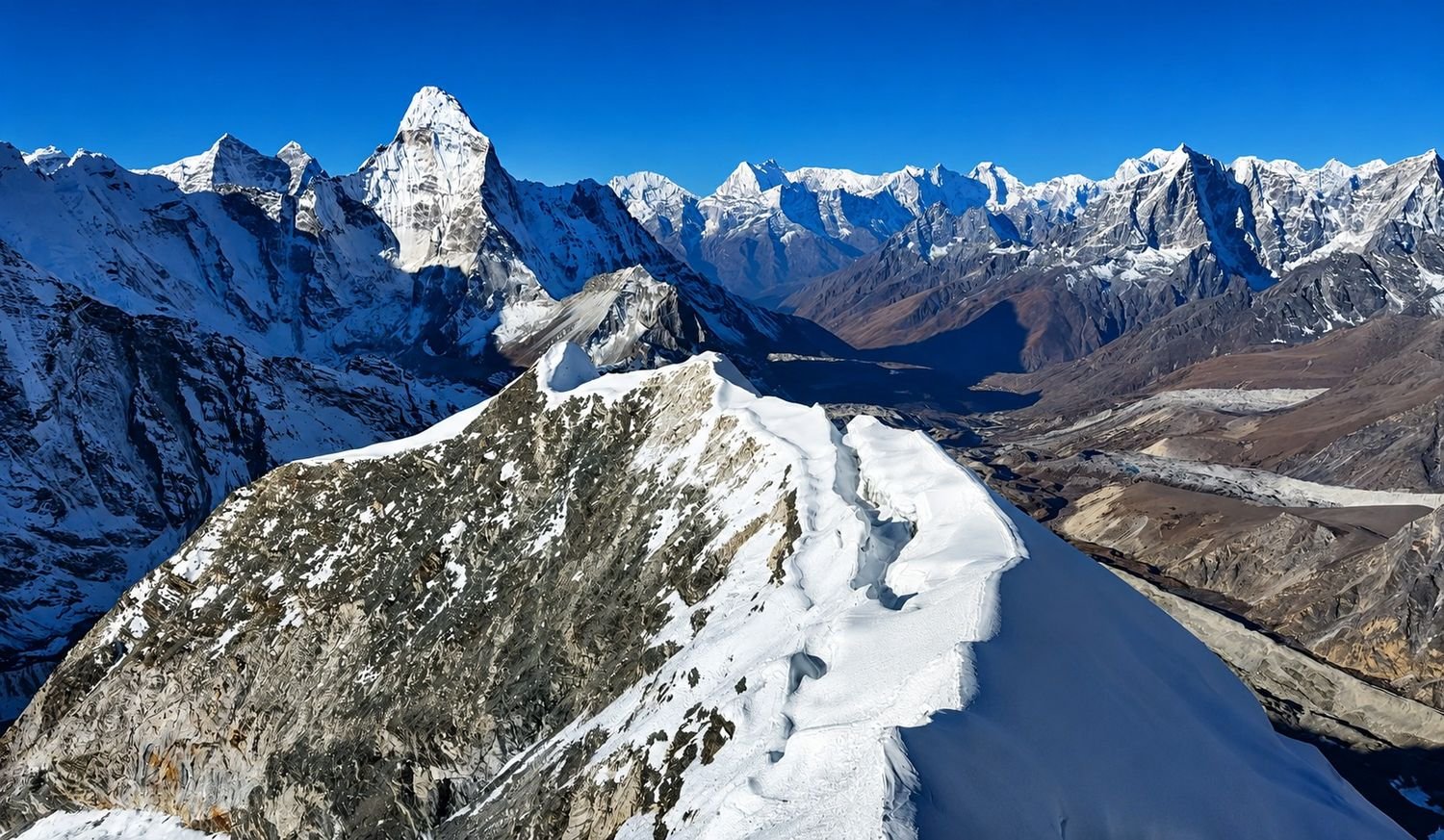
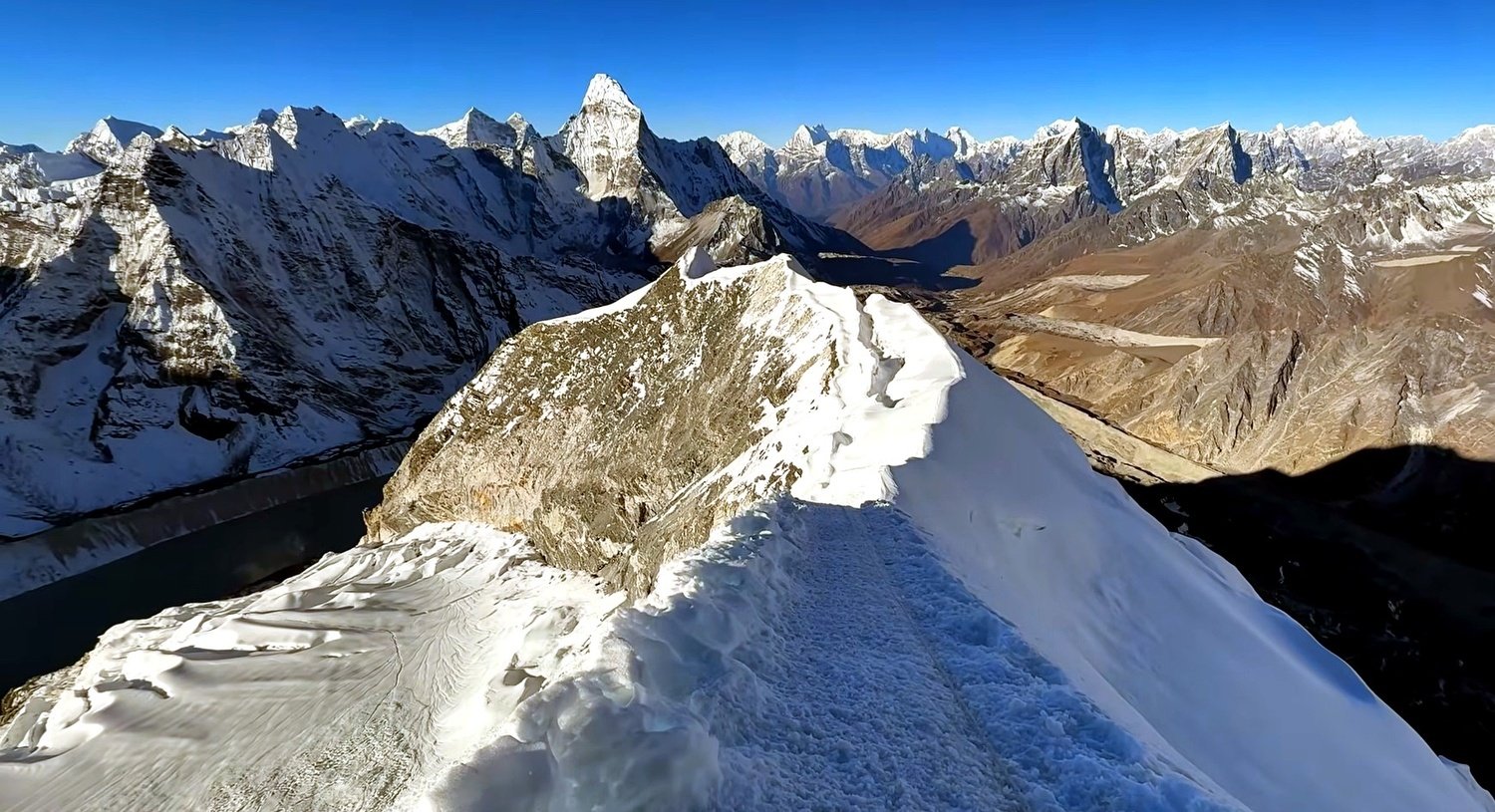
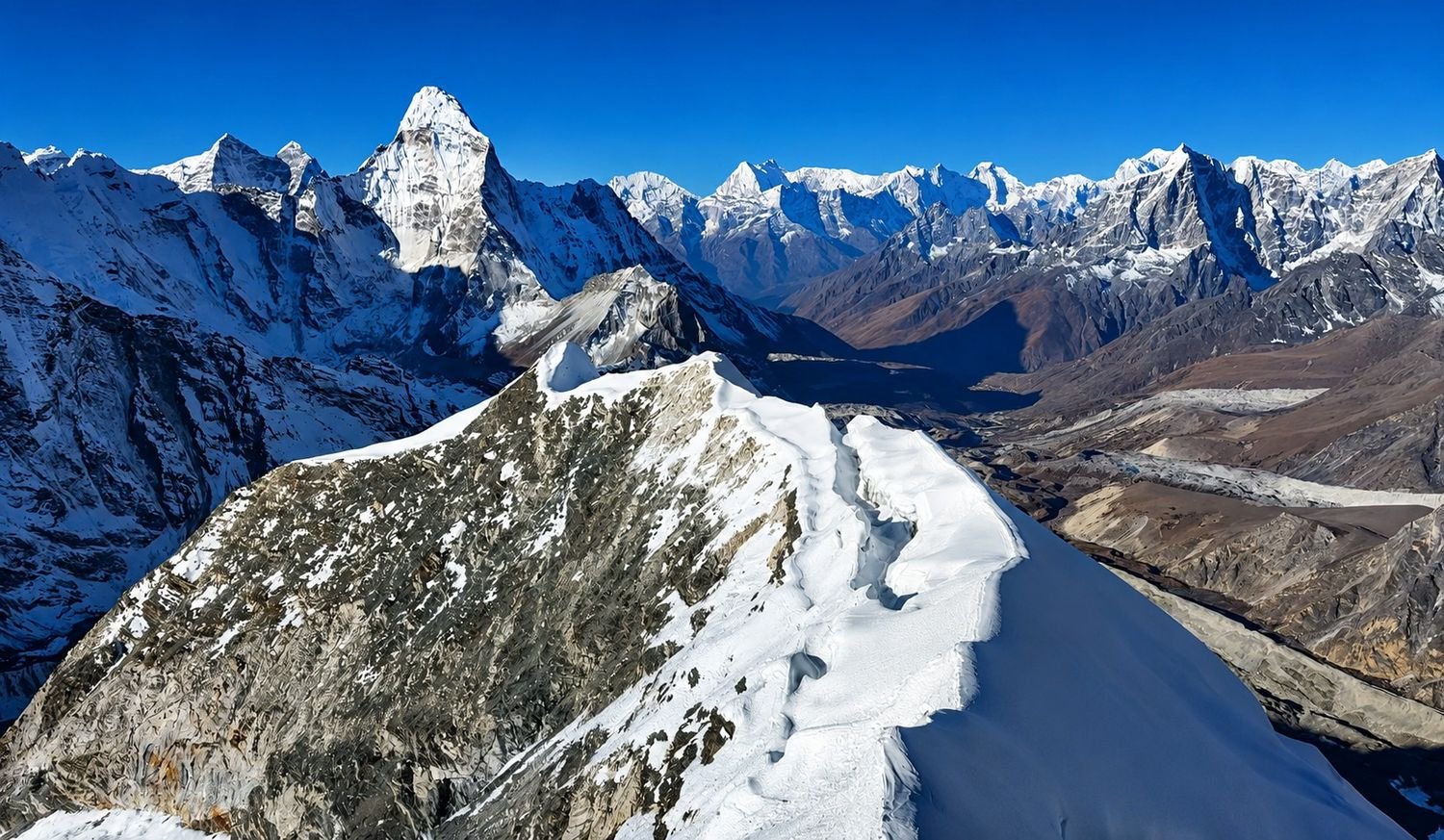
Standing on the summit of Island Peak at 6,189 metres is an unforgettable achievement, with uninterrupted views stretching across Lhotse, Makalu, Baruntse, Ama Dablam, Cho Oyu, and dozens of other snow-covered peaks that dominate eastern Nepal.
What makes this itinerary especially rewarding is that it is not simply a climb to one mountain.
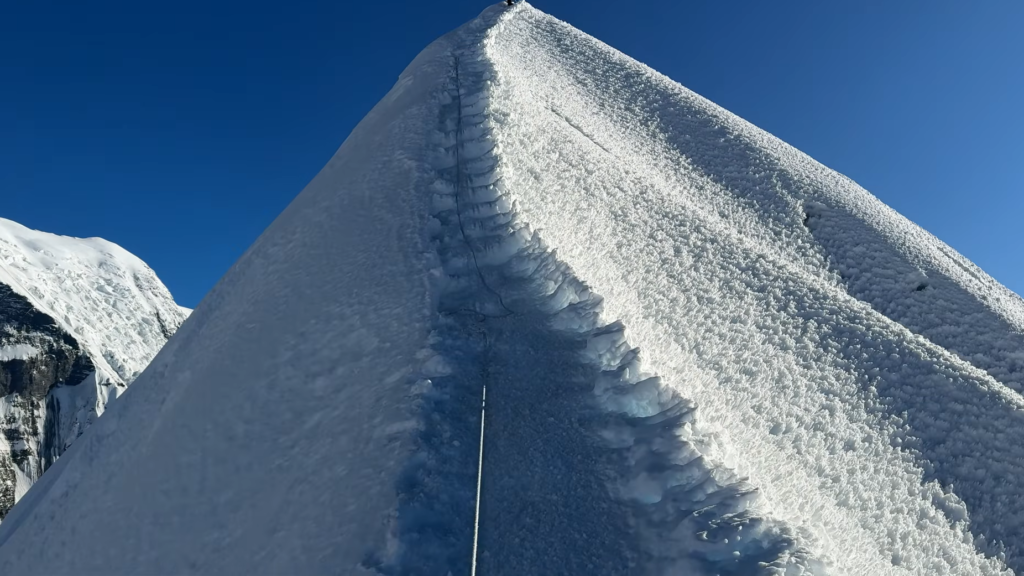
It is a complete Himalayan experience that combines world-famous trekking routes, Sherpa culture, UNESCO-listed Sagarmatha National Park, Everest Base Camp, Kala Patthar, a high Himalayan pass, glacier travel, and the thrill of summiting one of Nepal’s most iconic trekking peaks.
Every stage of the journey builds naturally toward the final ascent, making the summit feel earned rather than rushed.
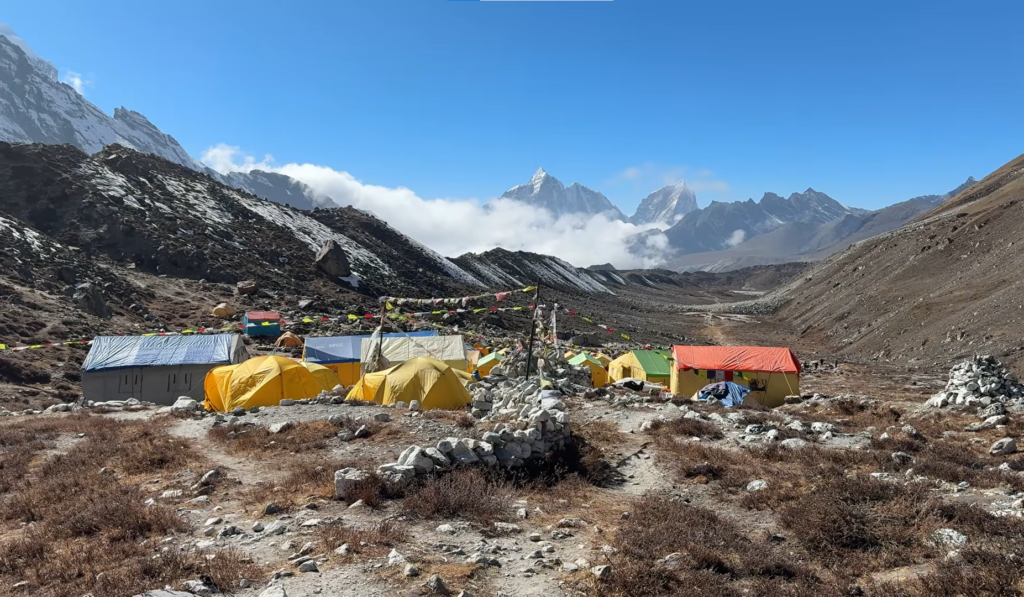
Spring from March to May and autumn from September to November are the best seasons for Island Peak Climbing, offering stable weather, clearer skies, and excellent climbing conditions.
Throughout these months, the mountains reveal their finest colours, visibility is exceptional, and the combination of trekking and climbing creates one of the most unforgettable adventures available in the Himalayas.
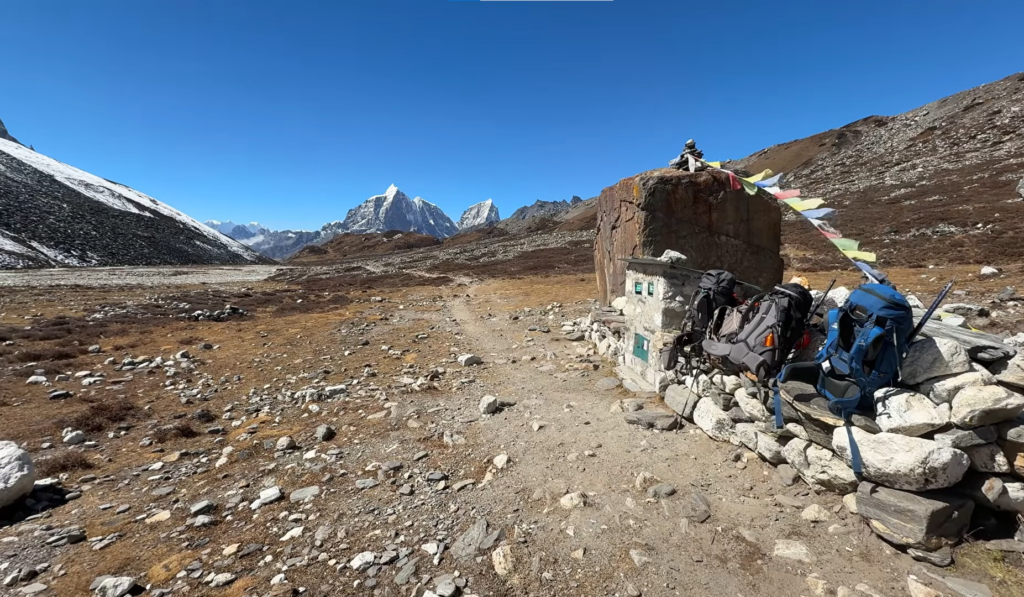
Whether your goal is to climb your first Himalayan peak, prepare for higher expeditions in the future, or simply experience the Everest region from a different perspective, Island Peak Climbing delivers an adventure that few journeys can match.
From the lively streets of Namche Bazaar to the silence of the glacier beneath Island Peak, every day offers new landscapes, new challenges, and memories that will remain with you long after you leave Nepal.
Island Peak Climbing Permit Costs
| Permit Type | Season | Cost (USD) |
|---|---|---|
| Island Peak Climbing Permit | Spring (March–May) | $350 |
| Island Peak Climbing Permit | Autumn (September–November) | $175 |
| Island Peak Climbing Permit | Winter (December–February) | $175 |
| Island Peak Climbing Permit | Summer/Monsoon (June–August) | $175 |
Additional Required Permits
| Permit | Fee | Issuing Authority |
|---|---|---|
| Sagarmatha National Park Entry Permit | NPR 3,000 (approx. USD 25) | Nepal Tourism Board / Sagarmatha National Park Office (Monjo) |
| Khumbu Pasang Lhamu Rural Municipality Permit | NPR 3,000 (approx. USD 25) | Khumbu Pasang Lhamu Rural Municipality |
Clothing Layers
| Layer | Items |
|---|---|
| Base layer | Moisture wicking shirts, thermal long sleeves, thermal bottoms |
| Mid layer | Fleece jacket, heavy fleece or softshell |
| Outer shell | Waterproof jacket, waterproof trousers, windproof layer |
| Summit layer | High loft down jacket, insulated bib trousers for summit day |
| Hands | Liner gloves, fleece gloves, expedition mitts for summit |
| Head | Warm hat, balaclava, neck gaiter, sun hat for lower sections |
| Feet | Thermal socks multiple pairs, liner socks |
Essential Trekking Gear
| Category | Items |
|---|---|
| Footwear | Plastic double boots or insulated mountaineering boots compatible with crampons, camp sandals |
| Backpack | 35 to 45 litre summit pack, duffel bag for porter |
| Sleeping | Sleeping bag rated to minus 20°C for base camp and high nights |
| Hydration | Insulated water bottles (water freezes on summit day), thermos, purification tablets |
| Safety | Sunscreen SPF 50, full-coverage glacier glasses or goggles, personal first aid kit |
| Navigation | Headlamp with lithium batteries (cold weather), spare batteries |
| Extras | Trekking poles, power bank, camera with spare batteries |
Technical Climbing Gear
| Category | Items |
|---|---|
| Footwear | Mountaineering boots compatible with crampons (rentable in Chhukung or Dingboche) |
| Crampons | 12-point crampons compatible with your boots (rentable in Chhukung) |
| Harness | Sit harness (rentable in Chhukung) |
| Ice axe | Standard mountaineering ice axe (rentable in Chhukung) |
| Ascender | Mechanical ascender (jumar) for fixed rope sections (rentable) |
| Protection | Helmet, locking carabiners, prusik cord |
| Rope | Provided by climbing guide for roped glacier sections |
Trip Highlights
- Reach the summit of Island Peak (6,189 m) and enjoy breathtaking views of Lhotse, Makalu, Baruntse, Cho Oyu, Ama Dablam, and countless Himalayan peaks
- Follow the legendary Everest Base Camp Trek through Namche Bazaar, Tengboche, Dingboche, and the heart of the Khumbu region
- Visit Everest Base Camp (5,364 m) and witness the mighty Khumbu Icefall up close during the world's most famous trekking route
- Climb Kala Patthar (5,545 m) for the finest panoramic view of Mount Everest and the surrounding Himalayan giants
- Cross the spectacular Khongma La Pass (5,535 m), one of the highest and most rewarding mountain passes in the Everest region
- Explore Sagarmatha National Park, a UNESCO World Heritage Site rich in Himalayan wildlife, glaciers, and Sherpa culture
- Visit the famous Tengboche Monastery, the spiritual centre of the Khumbu, surrounded by unforgettable views of Ama Dablam
- Experience real Himalayan mountaineering with glacier travel, crampons, fixed ropes, and a thrilling summit climb led by experienced climbing guides
- Learn essential climbing techniques at Island Peak Base Camp, including rope work, ice axe use, harness systems, and crampon walking.
- Celebrate your successful summit before descending through the beautiful Khumbu Valley with unforgettable memories of one of Nepal's finest trekking peaks.
Island Peak Climbing – 18 Days ~ Itinerary
Day 1
Arrival day in Kathmandu.
- Altitude: 1,350 m
- Accommodation: Standard Three Star Hotel in Thamel
Upon arrival at the airport, a team member will greet you and transfer you to the hotel in Thamel. Thamel, situated in the heart of Kathmandu, is a lively area filled with restaurants, bars, and shops selling unique Nepalese products and trekking gear. You’ll have the opportunity to explore this vibrant area. You’ll also meet our guide on the same day, who will address any questions or concerns you may have about your Island Peak Climbing.
Day 2
Fly from Kathmandu to Lukla and trek to Phakding
- Altitude: 2,840 m
- Flight Duration: 30 to 35 minutes
- Trek Duration: 3 to 4 hours
- Trek Distance: 7 to 8 km
- Meal: Breakfast, Lunch and Dinner
- Accommodation: Teahouse in Phakding
We will take a flight above the breathtaking green and white mountains, we reach Tenzing-Hillary Airport at Lukla. This is one of the most beautiful air routes in the world culminating in a landing on a hillside surrounded by high mountains. Upon our arrival at Lukla, we start our trek through the prosperous village of Lukla until we reach Phakding.
Day 3
Trek from Phakding to Namche Bazaar
- Altitude: 3,440 m
- Trek Duration: 5 to 7 hours
- Trek Distance: 11 km
- Meal: Breakfast, Lunch and Dinner
- Accommodation: Teahouse in Namche Bazaar
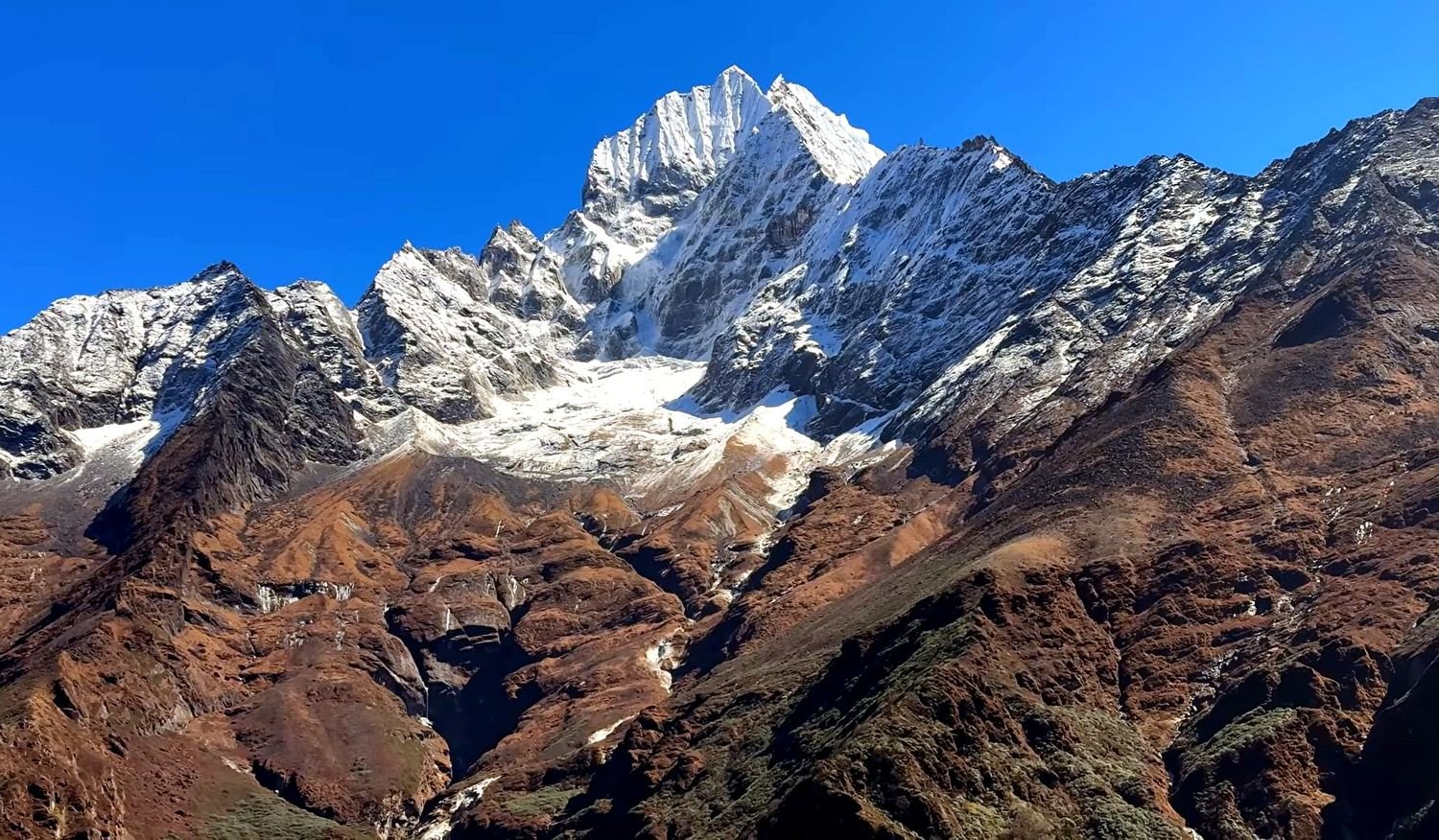
We walk through beautiful pine forests and then along Dudh Koshi River ending our nature-filled journey at Namche Bazaar. After walking for almost over an hour, we come across the glistening Mt. Thamserku (6,608m) on our right and also experience the serenity of pine, fir and juniper forests throughout our journey.
Day 4
Acclimatize day and Excursion in Namche Bazaar
- Altitude: 3,880 m
- Trek Duration: 2 to 4 hours (optional hikes)
- Trek Distance: 4 to 8 km (depending on route)
- Meal: Breakfast, Lunch and Dinner
- Accommodation: Teahouse in Namche Bazaar
This is the day set aside for acclimatization. Health experts recommend that we stay active and move around even during the rest day instead of being idle. There are a few options set aside for this day. We can either stroll around Namche’s quaint villages or come in contact with the Sherpa people and their rich culture, or we can hike up to the Everest View Hotel and enjoy an up-close view of the mighty Everest.
Day 5
Trek from Namche Bazaar to Tengboche
- Altitude: 3,867 m
- Trek Duration: 5 to 6 hours
- Trek Distance: 9.5 km
- Meal: Breakfast, Lunch and Dinner
- Accommodation: Tea house in Tengboche
The trail descends from Namche to the Dudh Koshi at Phunki before climbing steeply through rhododendron forest to Tengboche monastery at 3,867 metres. The monastery sits on a high ridge with Ama Dablam directly to the southeast and the Khumbu glacier system spread below to the north. Arriving before dusk and watching the last light move across Ama Dablam from the monastery courtyard is the visual highlight of the lower approach section.
Day 6
Trek from Tengboche to Dingboche
- Altitude: 4,410 m
- Trek Duration: 6 to 7 hours
- Trek Distance: 13 km
- Meal: Breakfast, Lunch and Dinner
- Accommodation: Teahouse in Dingboche
The trail passes through Debuche and Pangboche before crossing the Imja Khola and climbing into the wide upper valley at Dingboche. Pangboche at 3,985 metres is the highest permanently inhabited village in the valley and has the oldest gompa in the Khumbu. Above Pangboche the vegetation thins and the terrain opens into the classic high Himalayan landscape of moraine, boulder, and sky that defines the upper Khumbu from here to the summit.
Day 7
Acclimatization Day in Dingboche
- Altitude: 4,410 m
- Activity: 4 to 5 hours hike (optional)
- Meal: Breakfast, Lunch and Dinner
- Accommodation: Teahouse in Dingboche
The second altitude hold. The standard acclimatization hike climbs to Nangkartshang Peak at approximately 5,083 metres above Dingboche, delivering the first views of Makalu at 8,485 metres to the east and a full sight line down the Chhukung valley toward Island Peak above. The altitude push to over five thousand metres and the return to sleep at 4,410 metres gives the body its first serious exposure to the oxygen levels it will face on summit day.
Day 8
Trek from Dingboche to Lobuche
- Altitude: 4,940 m
- Trek Duration: 5 to 6 hours
- Trek Distance: 10 km
- Meal: Breakfast, Lunch and Dinner
- Accommodation: Teahouse in Loboche
We start the day with a gradual climb to Duglha at the end of the terminal moraine of the Khumbu Glacier. From here, we climb up a steep trail to Chupki Lhara, where we find an array of stones with prayer flags used as memorials to Scott Fischer and 10-time Everest submitter Babu Chiri Sherpa who perished on a mission to climb Everest.
Day 9
Trek from Lobuche to Gorakshep, Everest Base Camp and Kala Patthar
- Altitude: 5,545 m at Kala Patthar and overnight 5,164 m at Gorakshep
- Trek Duration: 7 to 9 hours
- Trek Distance: 14 km
- Meal: Breakfast, Lunch and Dinner
- Accommodation: Teahouse in Gorakshep
Todays is the longest and highest day of the trekking approach. The trail reaches Gorakshep before continuing to Everest Base Camp at 5,364 metres, where the Khumbu Icefall rises directly above the prayer flags and the scale of the surrounding walls makes the camp feel simultaneously enormous and fragile. The return to Gorakshep is followed by the afternoon climb to Kala Patthar at 5,545 metres for the clearest available ground-level view of Everest’s summit. Sunset from Kala Patthar is worth the extra hour.
Day 10
Trek from Gorakshep to Lobuche
- Altitude: 4,940 m
- Trek Duration: 3 to 4 hours
- Trek Distance: 8 km
- Meal: Breakfast, Lunch and Dinner
- Accommodation: Teahouse in Lobuche
The trail retraces the route back to Lobuche and the descent of five hundred metres from Gorakshep is enough to make a noticeable difference in how the body feels by afternoon. The views back down the Khumbu valley from the moraine above Lobuche carry a different quality now than on the way up, with the full distance walked across the previous nine days visible in the landscape behind.
Day 11
Trek from Lobuche to Chukung via Khongma La Pass
- Altitude: 5,535 m at Khongma La Pass and overnight 4,730 m at Chhukung
- Trek Duration: 7 to 9 hours
- Trek Distance: 14 km
- Meal: Breakfast, Lunch and Dinner
- Accommodation: Teahouse in Gorakshep
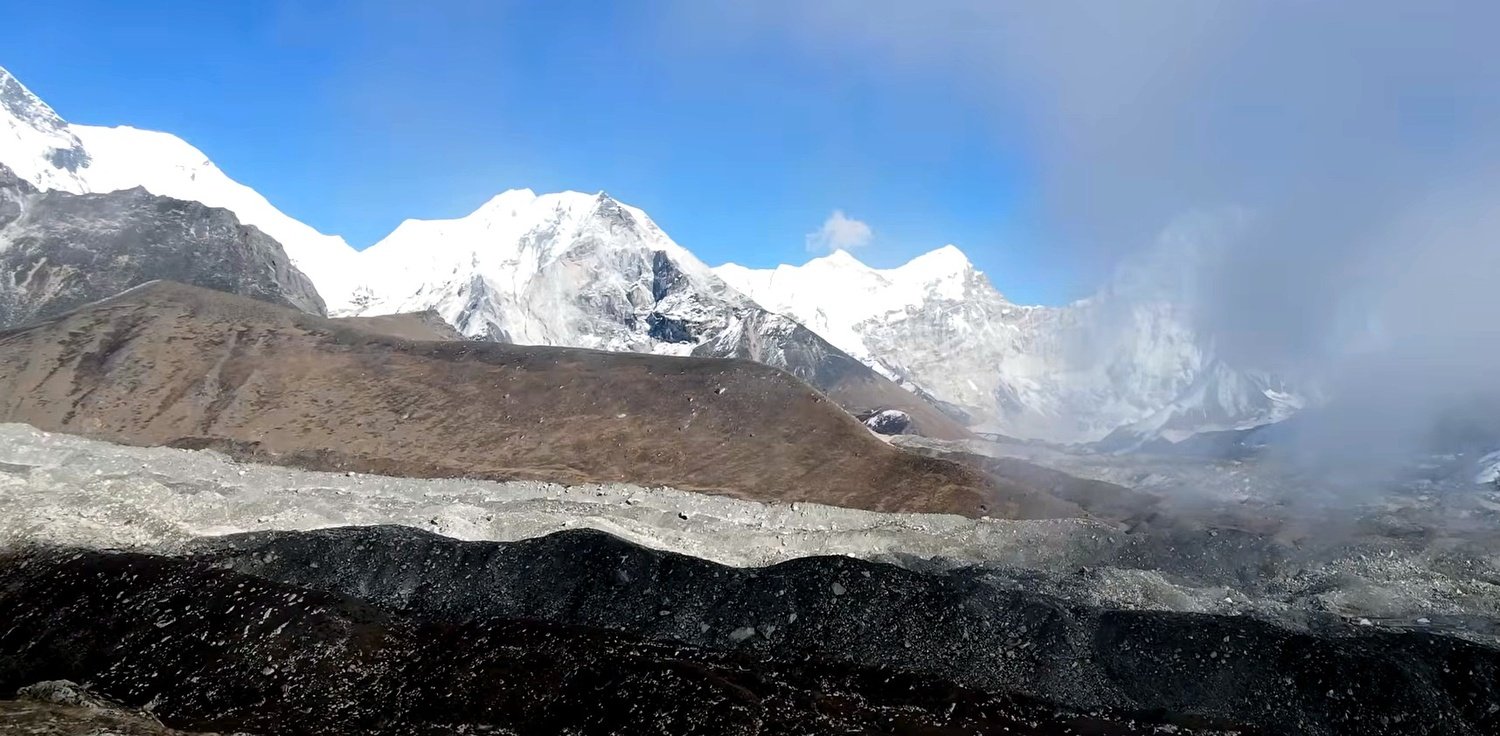
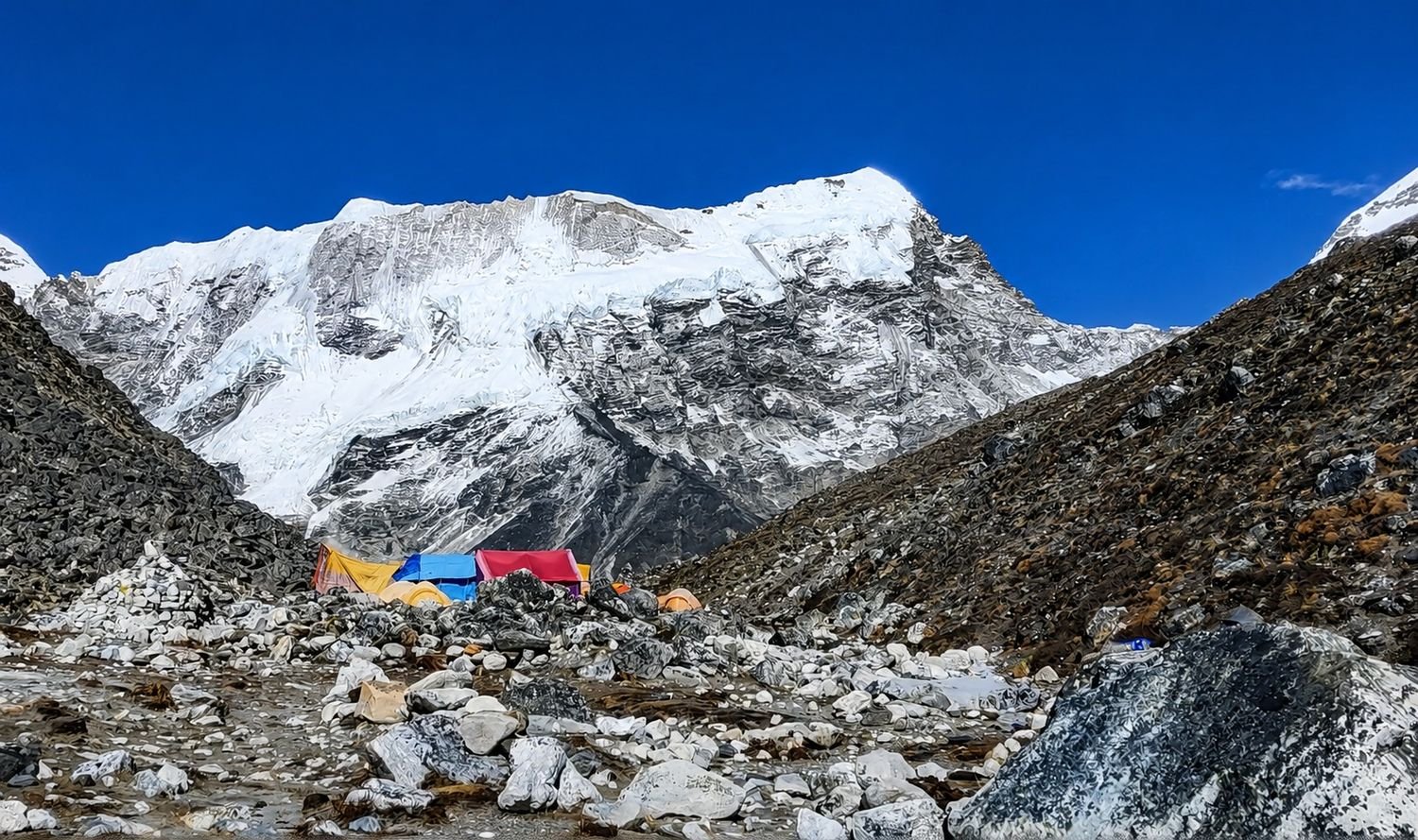
The Khongma La crossing at 5,535 metres is both an acclimatization asset and the route connector between the Lobuche valley and the Chhukung drainage. The ascent from Lobuche is steep and the pass itself is exposed with the Khumbu glacier system visible to the north and Chhukung Ridge to the south. The descent to Chhukung at 4,730 metres passes the Imja Glacial Lake and brings the first clear view of Island Peak’s east face above the valley. The body is now five days acclimatized above four thousand metres with two pushes above five thousand. The profile for the summit attempt is solid.
Day 12
Trek Chhukung to Island Peak Base Camp
- Altitude: 5,087 m
- Trek Duration: 3 to 4 hours
- Trek Distance: 5 km
- Meal: Breakfast, Lunch and Dinner
- Accommodation: Tented camp at Island Peak Base Camp
A short morning walk from Chhukung across moraine and glacial runoff to Island Peak Base Camp. The route passes through rocky terrain below Imja Tse’s east face with the summit ridge visible above. The afternoon is spent on gear preparation and a pre-climb training session with the climbing guide covering crampon fitting, ice axe arrest technique, and the jumar system used on fixed ropes. The headwall is visible from base camp and the training session is a direct rehearsal for what happens on it tomorrow.
Day 13
Island Peak Base Camp to Summit and Down to Chukung
- Altitude: 6,189 m at Island Peak Summit and overnight 4,730 m at Chhukung
- Trek Duration: 7 to 9 hours
- Trek Distance: 14 km
- Meal: Breakfast, Lunch and Dinner
- Accommodation: Teahouse in Gorakshep
We will summit Island Peak today with the correct weather conditions (6,189m/ 20,305ft). It’s an early start – 2 am and a long hard climb. There is a rocky scree and steep rocks to scramble over. When we reach around 5,700m, experience has told us that the high altitude slows the progress considerably. Finally, we reach a narrow ridge, the start of the glacier, put on crampons and harnesses, and get ice axes and ropes ready to climb across the glacier. There may be ladders to cross and steep climbing sections to go up and down. This point can take around 1 to 2 hours before we reach the base of the Headwall. At the Headwall, it’s possible to take a break while the team fixes climbing ropes. Finally, climbing up the Headwall, you will reach the summit of Island Peak. Views are astounding – this is what you have been working towards. Still roped in because the summit is very small, we abseil down the Headwall, then at the foot, rope together again, and retrace the trail through the glacier. At High Camp, there is time for a short rest. The gear will be packed up, and we will trek down to Island Peak Base Camp, where we will stay for the night. Job well done!
Day 14
Trek from Chukung to Pangboche
- Altitude: 3,985 m
- Trek Duration: 4 to 5 hours
- Trek Distance: 11 km
- Meal: Breakfast, Lunch and Dinner
- Accommodation: Teahouse in Pangboche
Following the same route through the valley of Khumbu Khola, today is a much easier day on the body as the altitude gets lower. We pass Orsho and Shomare villages, both Sherpa settlements. Depending on the group’s interest, we can visit the gompa in upper Panchoche or take a different trail to reach Pangboche. Pangboche is a lovely village surrounded by mountains: Everest in the north, Ama Dablam, Kangtaiga, and Thamserku in the east, and to the south, the Kongde range. We can also see the Imja Tse River flowing through a fertile valley.
Day 15
Trek from Pangboche to Namche Bazaar
- Altitude: 3,440 m
- Trek Duration: 5 to 6 hours
- Trek Distance: 15 km
- Meal: Breakfast, Lunch and Dinner
- Accommodation: Teahouse in Namche Bazaar
We retrace our steps down to the Imja Khola and up through the forest to Tengboche. If interested, we can also visit nuns at the Tengboche monastery. After lunch at Tengboche, we continue through the hillside blanketed by rhododendron and juniper trees. After crossing the bridge over the Dudh Koshi River, our trail follows the Dudh Koshi gorge descending rapidly through the pine forests before reaching Sansa.
Day 16
Trek from Namche to Lukla
- Altitude: 2,860 m
- Trek Duration: 6 to 7 hours
- Trek Distance: 18 km
- Meal: Breakfast, Lunch and Dinner
- Accommodation: Tea house in Lukla
The final walking day descends steeply from Namche through Jorsale and Monjo, crossing and recrossing the Dudh Koshi on suspension bridges before the long valley walk back to Phakding and then the climb to Lukla. The legs feel the sustained descent on the lower sections. Lukla in the evening has a particular celebratory atmosphere during trekking season, with summit teams, trekking groups, and returning expeditions all converging on the few streets around the airport.
Day 17
Flight from Lukla to Kathmandu
- Max altitude: 1,350 m
- Flight Duration: 30–35 minutes
- Meal: Breakfast, Lunch, Dinner
- Accommodation: Standard three star hotel in Kathmandu
We’ll catch an early morning flight from Lukla to Kathmandu. Upon arrival, you’ll be taken to your hotel in Kathmandu where you can unwind and rejuvenate. Afterwards, take the opportunity to explore the city, shop for souvenirs, or visit any nearby attractions you might have missed at the start of your journey.
Day 18
Final Departure day
- Meal: Breakfast
The Island Peak Climbing expedition concludes today. After breakfast, a Nepal Royal Tourism representative transfers you to Tribhuvan International Airport. Trek completion and summit certificates are presented before departure. You leave Kathmandu having climbed a six-thousand-metre Himalayan peak through one of the most complete and genuine mountain approaches available on the continent.
Island Peak Climbing – 18 Days Fixed Departures Dates
Trip Cost Includes/Excludes
Cost Includes
- Airport drop and Pickup by private car
- Kathmandu Lukla Kathmandu domestic Flight. Sagarmatha National Park Tims and Permit.
- Guide and Porter according to group size.
- 4 Climbing Guide for every groups of 10 climber groups.
- 2 night accommodation in Kathmandu standard three star hotel.
- Teahouse accommodation on all trekking days and 1 night tented accommodation at Base Camp
- All Climbing Equipment, such as Tent, Ice Axe, Rope, Ices Crow, Snow bar.
- Packed meal on the summit day
- All cooked meals at base camp with complementary hot water, tea and coffee
- Staff insurance and necessary ground transport for support staff
- Island Peak climbing permit (Nepal Mountaineering Association)
- All Breakfast, Lunch and Dinner with tea or coffee while on the Trek
- Peak Climbing Complete Certificate with Nepali Palpali Topi.
- Trek and summit completion certificate
- All government taxes and service charges
Cost Excludes
- International flight ticket and Nepal entry visa
- Personal travel insurance
- Tips to Guide and Porter
- Drinking water, Hot shower, WiFi, and charging fees at teahouses
- Expenses arising from weather delays, flight cancellations, or illness
- Any personal expenses not listed under What Is Included
Trip Photo/Video Gallery

Route Map for Island Peak Climbing – 18 Days
Frequently Asked Questions
No prior glacier or technical climbing experience is required. The pre-climb training session at base camp on Day 12 covers everything needed for the summit attempt. That said, prior experience with crampons or any mountaineering course gives you a meaningful advantage on summit day, and the headwall is a serious physical challenge regardless of fitness level.
Summit success depends heavily on weather, fitness, and acclimatization. Well-prepared climbers with a proper approach schedule like this one and good weather windows have high success rates. Turning around due to weather, exhaustion, or altitude response is always an option and guides make that call based on conditions.
Yes. Crampons, harness, ice axe, and helmet are all available for rent in places including, Dingboche and Chhukung, which are the last resupply points before base camp. Nepal Royal Tourism Holidays can advise on what to rent versus bring from home. Your mountaineering boots must be crampon-compatible, check with the guide before departure.
Khongma La at 5,535 metres connects the Lobuche valley to the Chhukung drainage and is used here as both a route connector and a deliberate altitude push before the summit attempt. It is a serious high-altitude crossing that takes six to seven hours and is the highest point reached before the summit itself.
The guide monitors conditions closely and the decision to attempt the summit is made on the day based on weather, wind, and group condition. If conditions are not safe, the attempt is postponed by one day if possible.
Two permits are required: the Sagarmatha National Park entry permit and the Island Peak climbing permit issued by the Nepal Mountaineering Association. Nepal Royal Tourism Holidays arranges both as part of the package. The climbing permit cost is included in the price.
Teahouses up to and including Chhukung are well-established with reliable meals and basic rooms. Gorakshep is functional but basic. Base camp is tented. From Lobuche upward, facilities are limited and the menu simplifies significantly. Sleeping bags rated to minus 20 degrees Celsius are strongly recommended for the upper section and base camp night.
Lukla flights operate only in the early morning when visibility allows and are frequently delayed or cancelled by weather, particularly cloud building in the valley. Delays of one to two days at Lukla are not unusual, especially in spring. Do not book international connections out of Kathmandu on the same day as the scheduled Lukla flight.
Kala Patthar at 5,545 metres is the highest point on this itinerary outside of the summit itself and provides the clearest and most complete view of Everest available to any non-climbing visitor. It is reached the same day as Everest Base Camp, which makes Day 9 a long and demanding effort, but both objectives together justify the day fully. Most people describe it as the most memorable single day of the trip.
Six months of consistent aerobic training is the baseline recommendation. Running, cycling, swimming, and stair training all build the cardiovascular base the approach demands. Hiking with a loaded pack over consecutive days is the most specific preparation. The summit day involves ten to fourteen hours of sustained effort including technical climbing at altitude, and physical fitness is the factor most directly within your control before departure.
You may also like

Menu