-
 Duration
1 Day
Duration
1 Day
-
 Difficulty
Moderate
Difficulty
Moderate
-
 Max Elevation
5,545m
Max Elevation
5,545m
-
 Group Size
1 to 5 Pax Person
Group Size
1 to 5 Pax Person
-
 Accommodation
None
Accommodation
None
-
 Start/End
Kala Patthar/Kathmandu
Start/End
Kala Patthar/Kathmandu
-
 Destination
Kathmandu
Destination
Kathmandu
-
 Best Season
Spring and Autumn
Best Season
Spring and Autumn
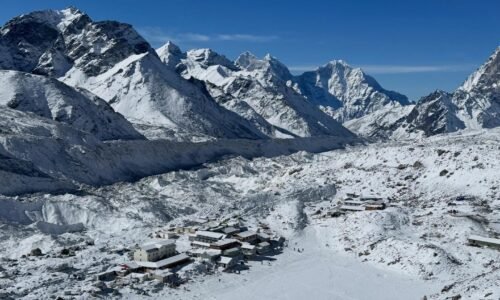
The Kala Patthar to Kathmandu Helicopter Flight is a fast way to leave the upper Everest region after standing at one of the most famous viewpoints on the Everest Base Camp trail.
At approximately 5,545 m, Kala Patthar sits high above Gorakshep and provides one of the closest commonly visited viewpoints for Mount Everest.
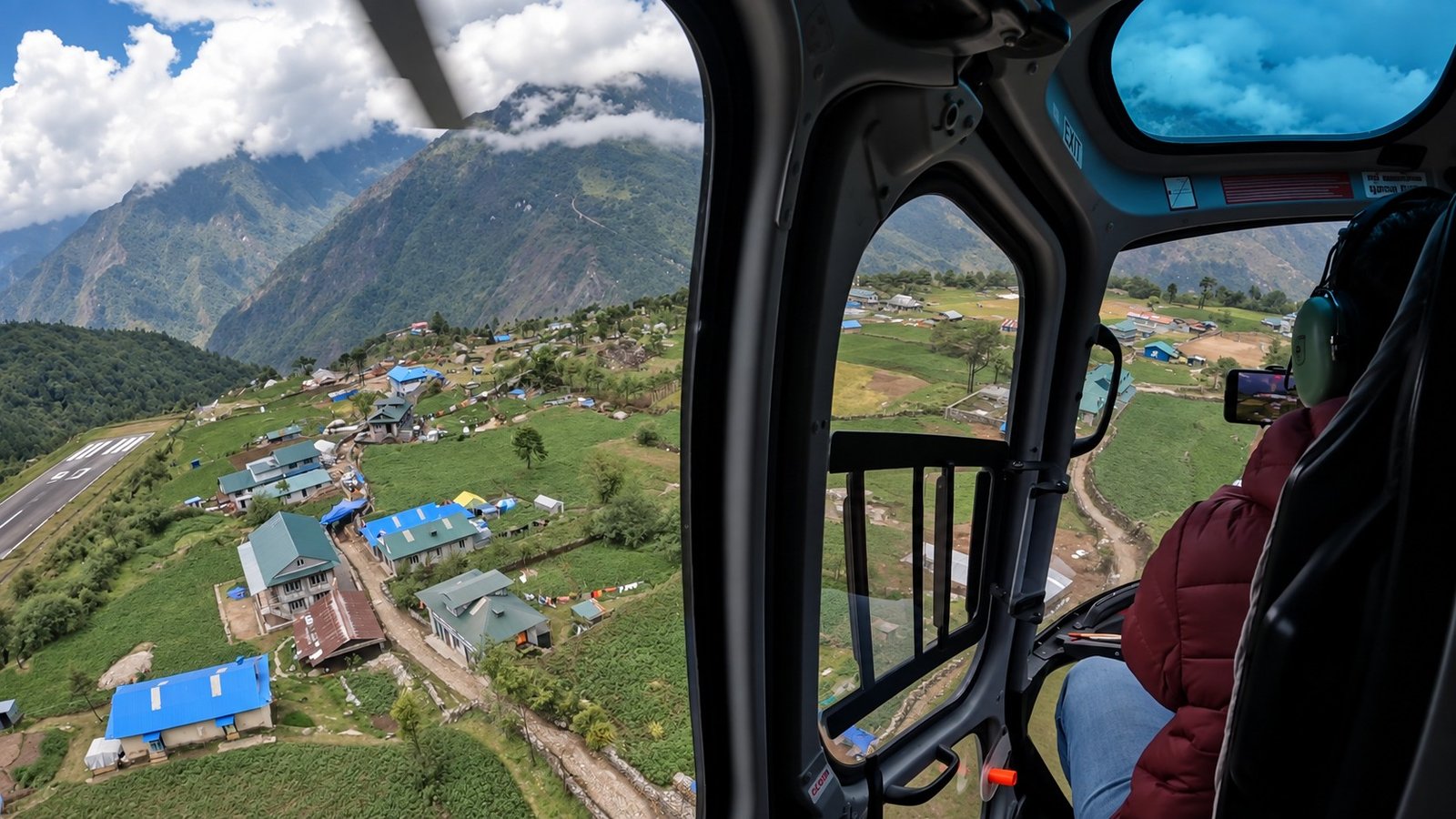
Rather than walking back through the Khumbu Valley for several more days, travelers can arrange a helicopter transfer from the Kala Patthar area and make their way toward Kathmandu within the same day.
The journey begins among the barren rocks, snow and glacial terrain of the upper Khumbu before descending toward lower valleys and eventually the Kathmandu Valley.
The first part of the flight is particularly striking because the helicopter leaves the high-altitude landscape around Kala Patthar, Gorakshep and the Khumbu Glacier behind.
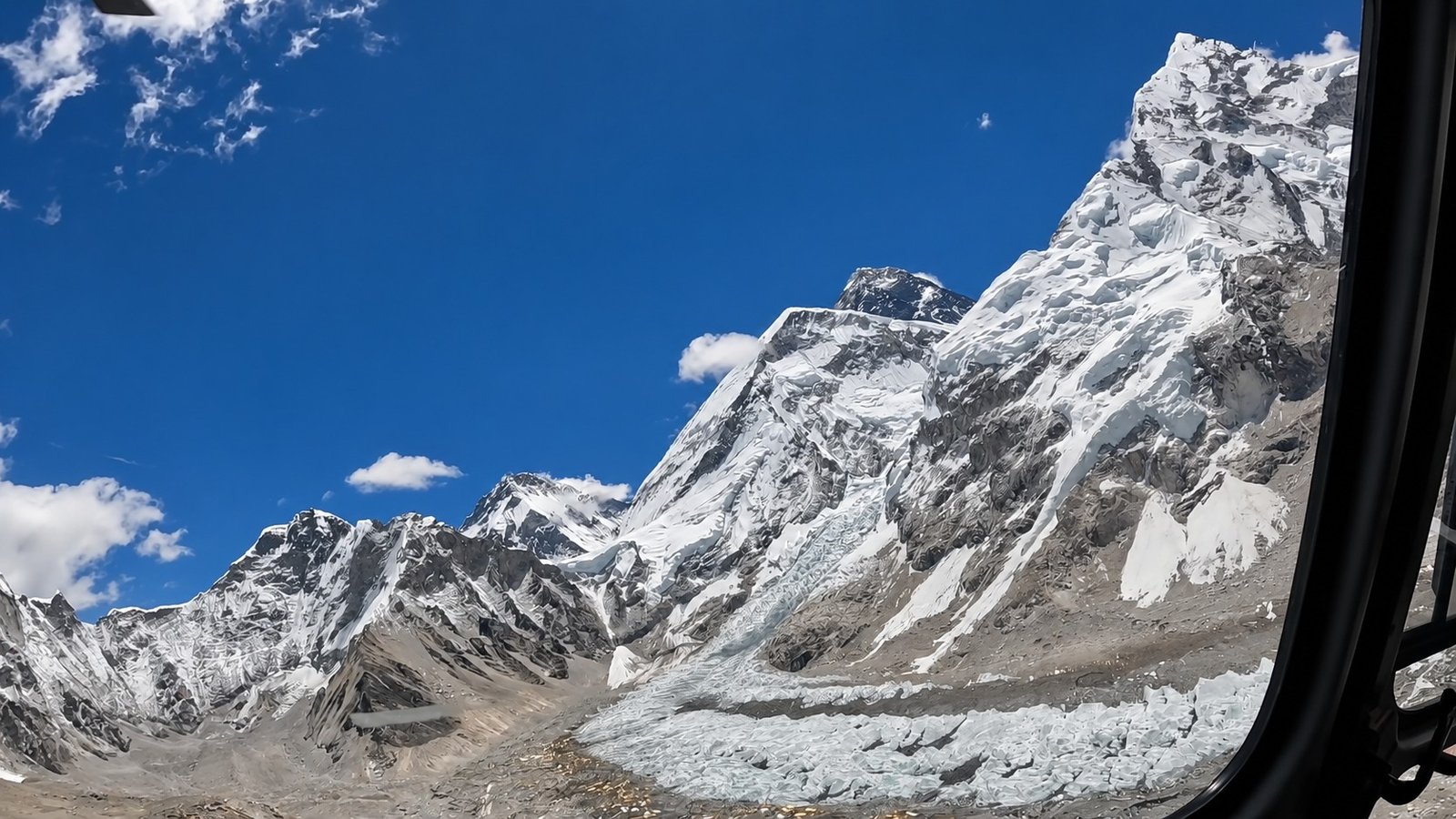
Depending on weather and the flight path, passengers may see Mount Everest, Lhotse, Nuptse, Pumori and other peaks that form the dramatic skyline around Everest Base Camp.
Kala Patthar itself is noted for its broad views toward Everest, while the surrounding Everest route includes major landmarks such as Lobuche, Pheriche, Tengboche and the Dudh Koshi valley system.
As the helicopter descends, the scenery changes quickly. The exposed upper Khumbu gives way to deeper valleys and Sherpa settlements, followed by greener hills and the lower Solukhumbu landscape.
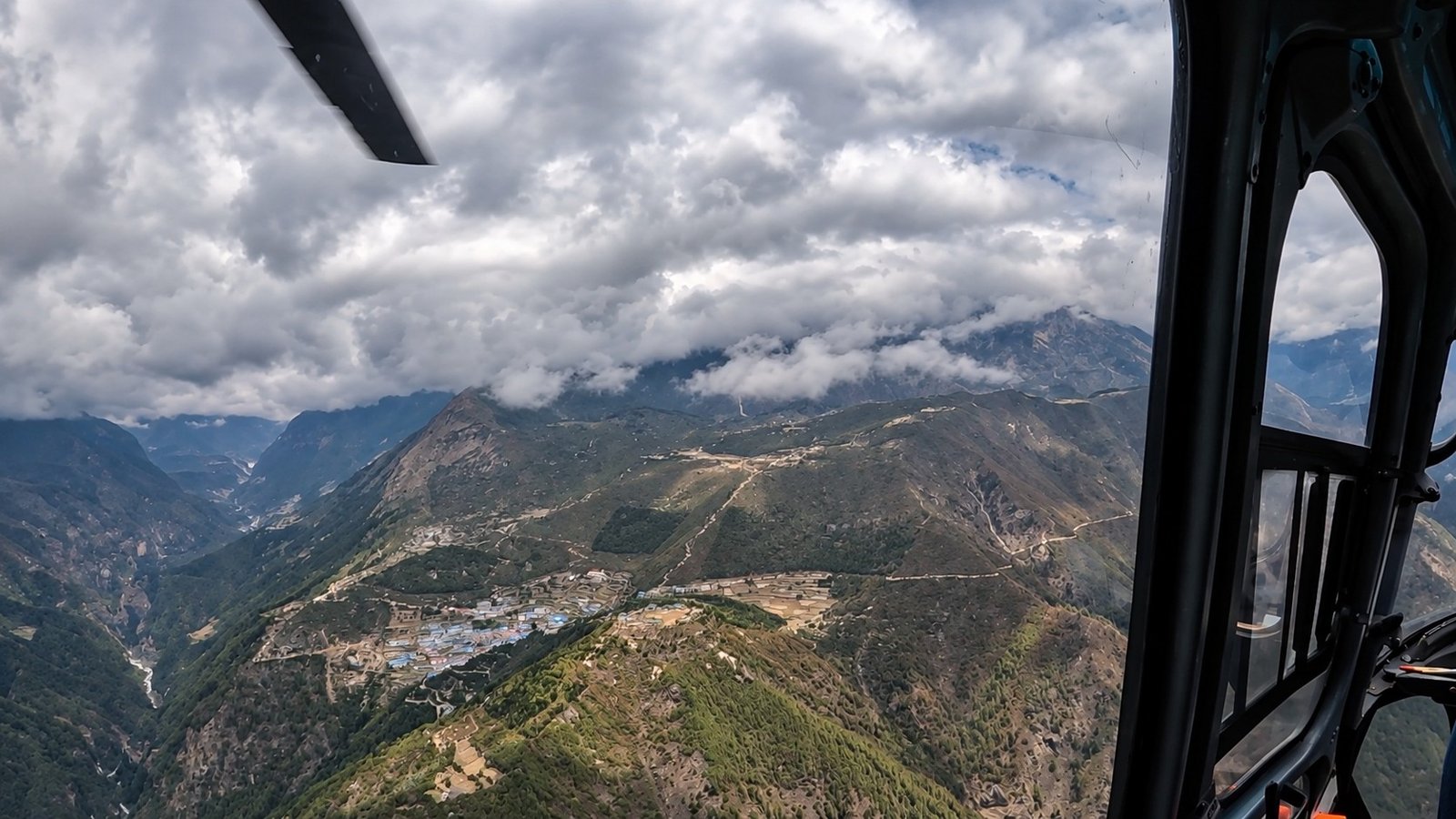
Depending on the operating route, the flight may involve an intermediate stop or passenger shuttle, particularly because Kala Patthar is an extreme-altitude departure point where aircraft payload and performance are closely affected by altitude, temperature, passenger weight, baggage and fuel requirements.
This is why the package is described as a 3-hour helicopter journey rather than three hours of continuous flying. Actual airborne time is considerably shorter, while intermediate arrangements can make the complete transfer longer.
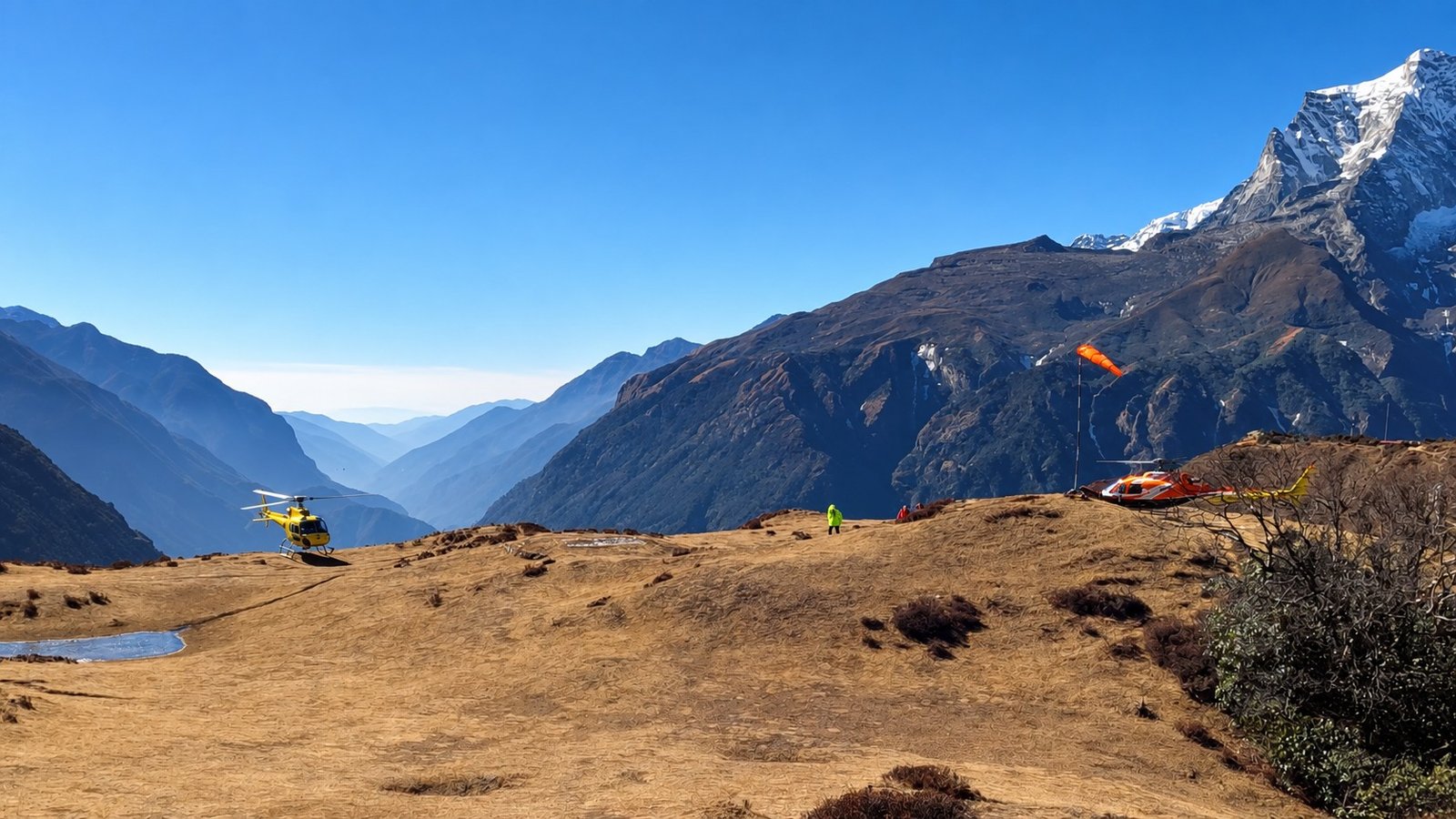
For trekkers who have already completed Everest Base Camp and Kala Patthar, the biggest advantage is that you do not have to spend several additional days walking downhill simply to return to the road and airport network.
The helicopter turns the final part of the adventure into an aerial journey, while allowing travelers to get back toward Kathmandu much sooner.
Flight Information
| Flight Detail | Information |
|---|---|
| Route | Kala Patthar to Kathmandu |
| Departure Area | Kala Patthar / Upper Khumbu |
| Departure Altitude | Approximately 5,545 m |
| Final Destination | Kathmandu |
| Total Journey Time | Approximately 2–3 hours, depending on operating arrangements |
| Actual Flying Time | Shorter than the total journey time and dependent on routing |
| Possible Stops | Pheriche and/or Lukla, depending on passenger load, refuelling and operational requirements |
| Typical Operation | Morning preferred, subject to weather and operational clearance |
| Booking Type | Shared / Group Joining or Private Charter |
| Best For | EBC Trekkers, Tired Trekkers, Time Sensitive Travelers, Families and Private Groups |
Flight Route and Possible Views
| Flight Section | Possible Views |
|---|---|
| Kala Patthar Departure | Kala Patthar ridge, Gorakshep, surrounding high-altitude terrain and dramatic Himalayan peaks |
| Upper Khumbu | Khumbu Glacier, glacial valleys, Pumori, Nuptse, Lhotse and possible Everest views |
| Lobuche to Pheriche Area | Trekking valleys, mountain settlements, ridges and the changing terrain of the central Khumbu |
| Lower Khumbu | Sherpa villages, forested slopes, river valleys and landscapes around the Dudh Koshi corridor |
| Kathmandu Approach | Lower Himalayan hills, terraces, settlements and the Kathmandu Valley |
Why Take the Flight?
The appeal of this service is not simply the helicopter itself. It is what comes after Kala Patthar. After reaching Everest Base Camp and climbing Kala Patthar, many trekkers are ready for the descent.
Walking back through the same valleys can take several more days, even though most of the major trekking objective has already been completed.
A helicopter allows you to replace that long return with a much shorter aerial transfer.
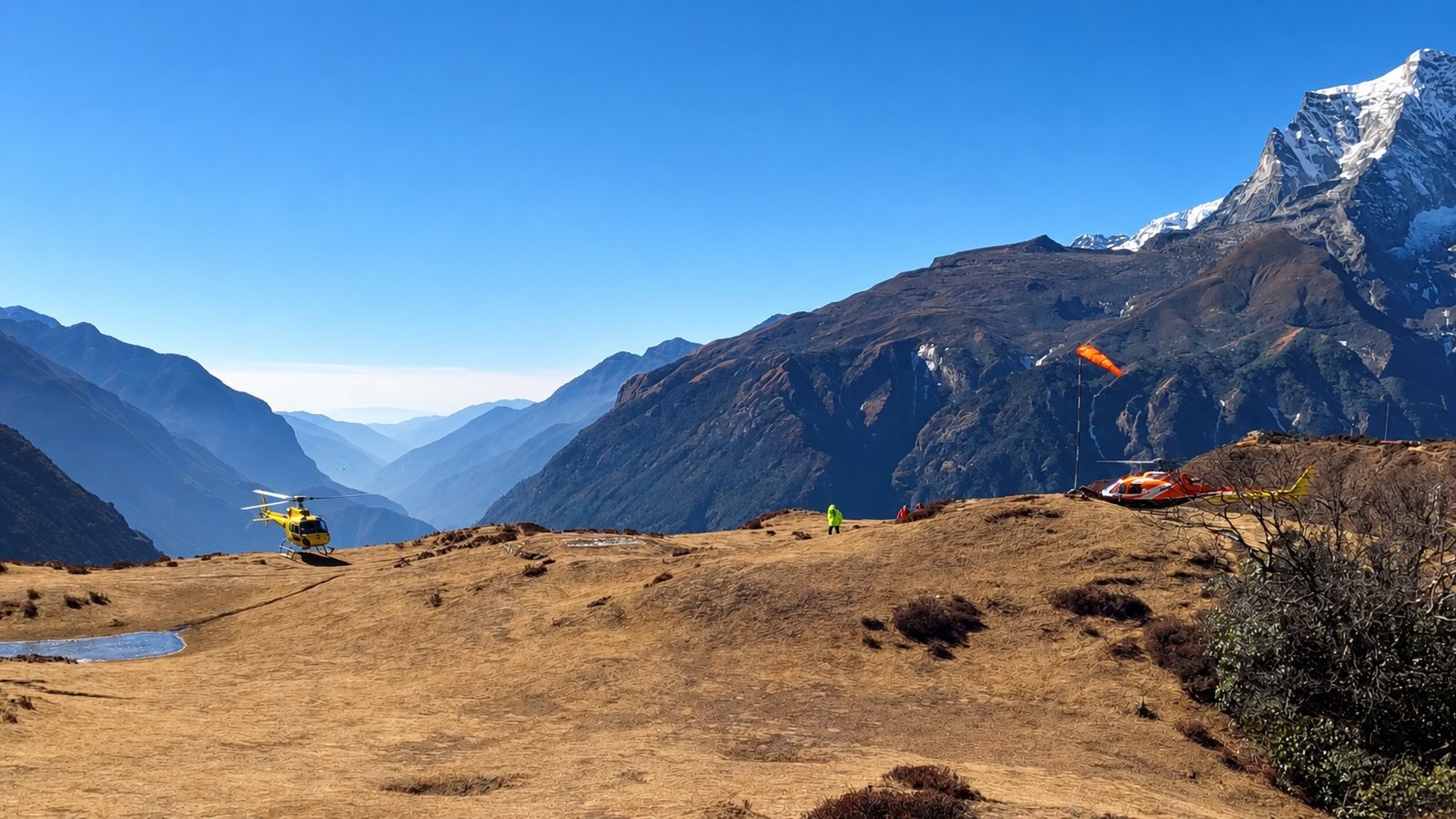
It is particularly practical for travelers who are tired after the trek, have limited leave, need to reach Kathmandu for another journey, or simply do not want several more days of downhill walking.
The flight also changes the perspective of the Everest region. Places that took days to reach on foot become part of a single aerial panorama, from the glacial landscape around Gorakshep and Kala Patthar through the Khumbu valleys and lower hills toward Kathmandu.
When to Plan the Flight
For travelers who are mainly interested in clear Himalayan visibility, October and November are generally the strongest months.
The post-monsoon atmosphere is typically drier and clearer, providing good conditions for seeing the mountains from the air. March and April are another favorable window, although cloud can become more noticeable later in the day.
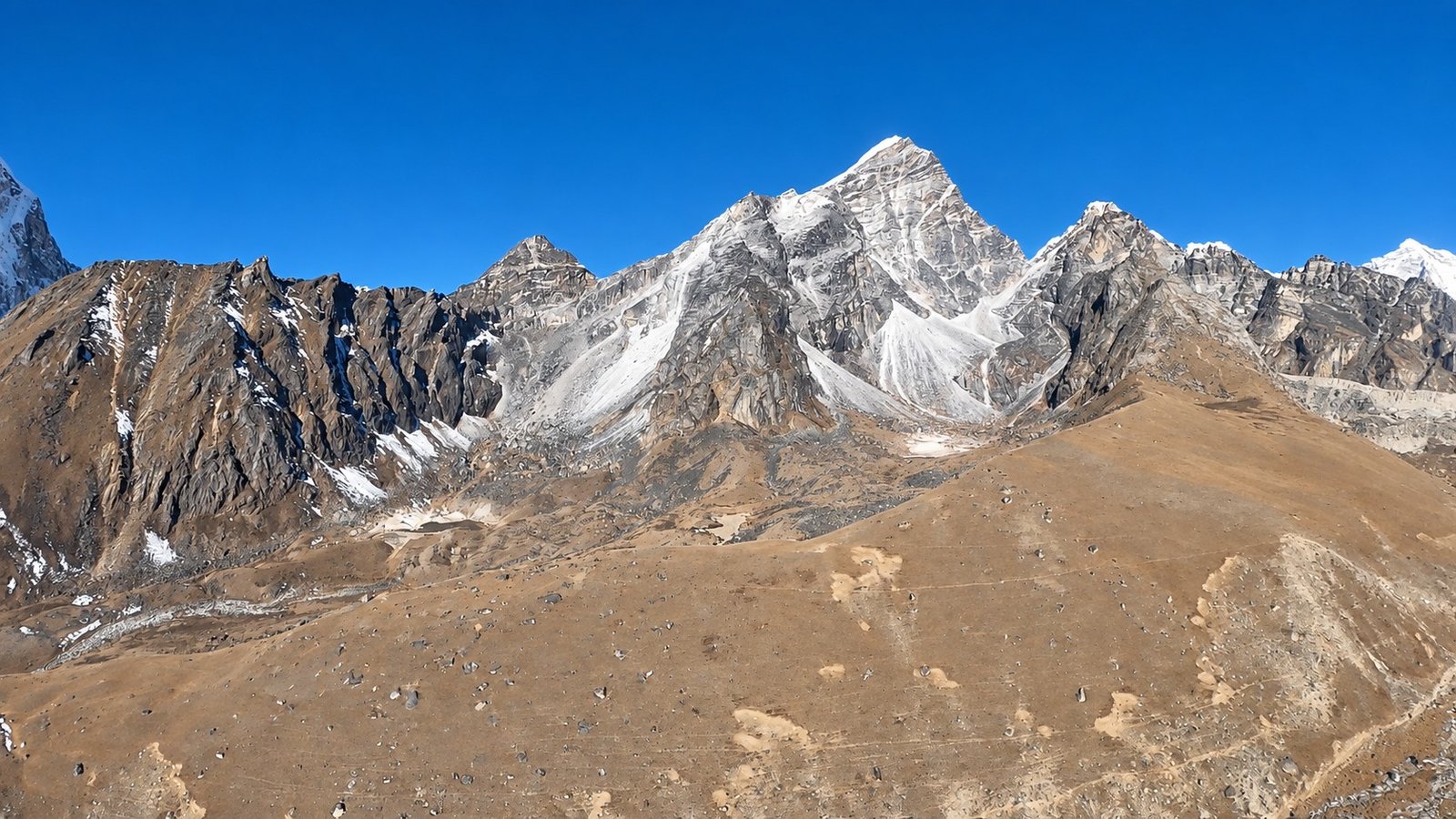
Winter can also bring very clear mornings, but the combination of extreme cold at Kala Patthar and stronger high-altitude winds can affect operations.
The June to August monsoon period presents the greatest challenge for this type of flight because cloud and rain can significantly reduce visibility and cause delays or rescheduling.
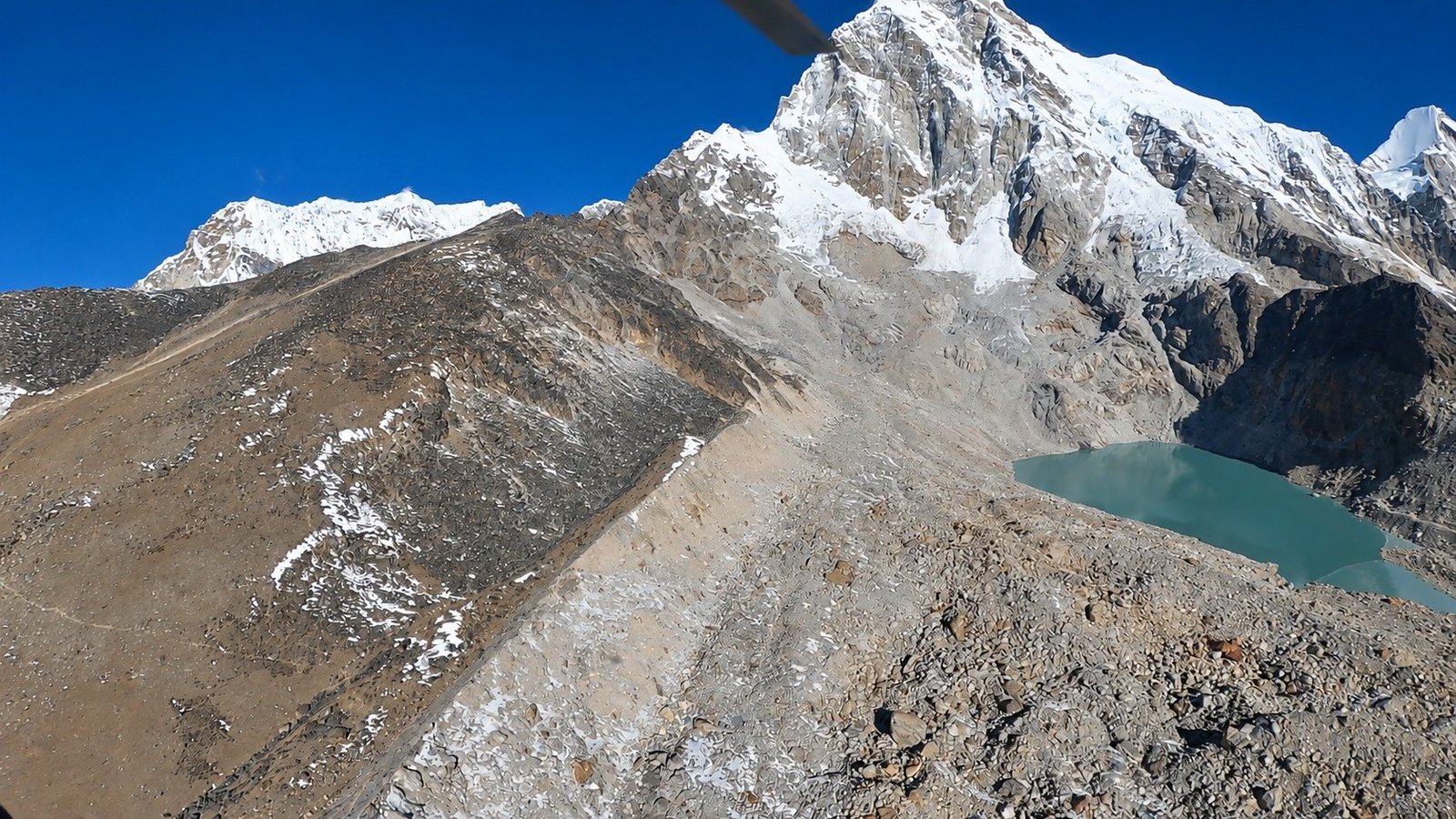
For this particular departure, the morning window matters considerably. Mountain weather can deteriorate as the day progresses, so flights are generally planned earlier when conditions are more favorable.
A Different Kind of Mountain Journey
A Kala Patthar helicopter departure feels different from simply booking transportation out of the Everest region. You have just reached one of the highest viewpoints on the classic EBC route, and within a short time the trail below becomes an aerial landscape.
The route gives you a chance to see how dramatically the Khumbu changes with elevation, from the exposed, rocky terrain around Kala Patthar and Gorakshep to the villages, forests and river valleys farther south.
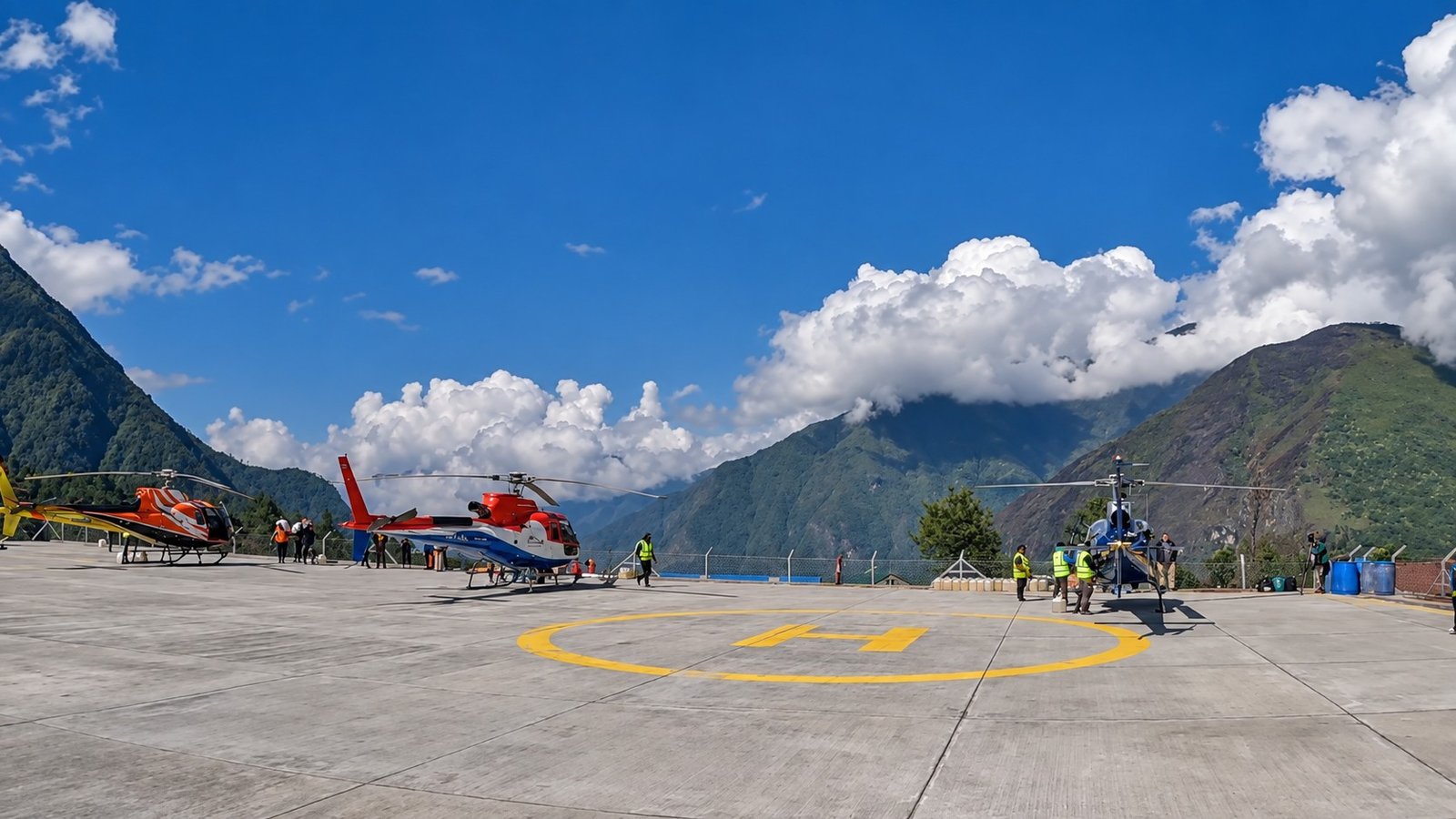
It is particularly useful for trekkers who have finished Everest Base Camp and Kala Patthar, are physically tired from the return walk, or have limited time remaining in Nepal.
High Altitude and Operational Considerations
Kala Patthar is significantly higher than Gorakshep, so aircraft payload becomes especially important.
Passenger weight, baggage, temperature, fuel and aircraft performance can all influence whether the helicopter can carry passengers directly from the high-altitude departure area.
For that reason, the final operating arrangement can differ between individual flights. A passenger shuttle toward Gorakshep or Pheriche may be required, followed by the onward helicopter journey.
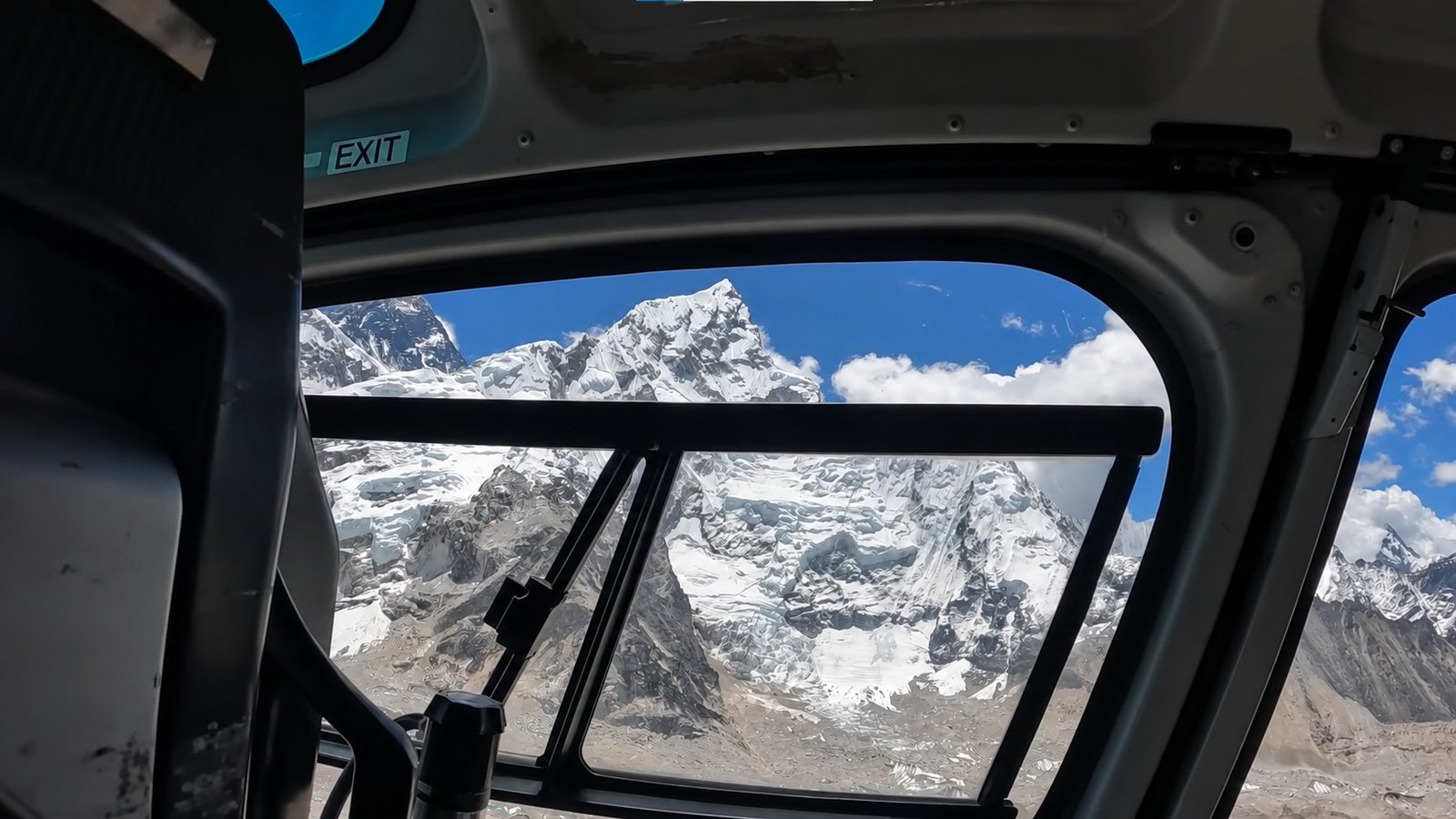
Similarly, Lukla can be used for refuelling or passenger arrangements when required. These are normal operational considerations for high-altitude helicopter travel and should not be presented as guaranteed stops.
The pilot and operator determine the safe route and landing arrangements on the day. Travelers should also allow flexibility after the flight. A helicopter leaving Kala Patthar can be affected by changing cloud, wind and visibility, so it is unwise to schedule an extremely tight onward connection in Kathmandu.
Shared or Private?
This route can be arranged as a shared/group joining flight or a private charter, depending on availability.
A shared arrangement works well for individual trekkers, couples and smaller groups who are comfortable traveling alongside other passengers.
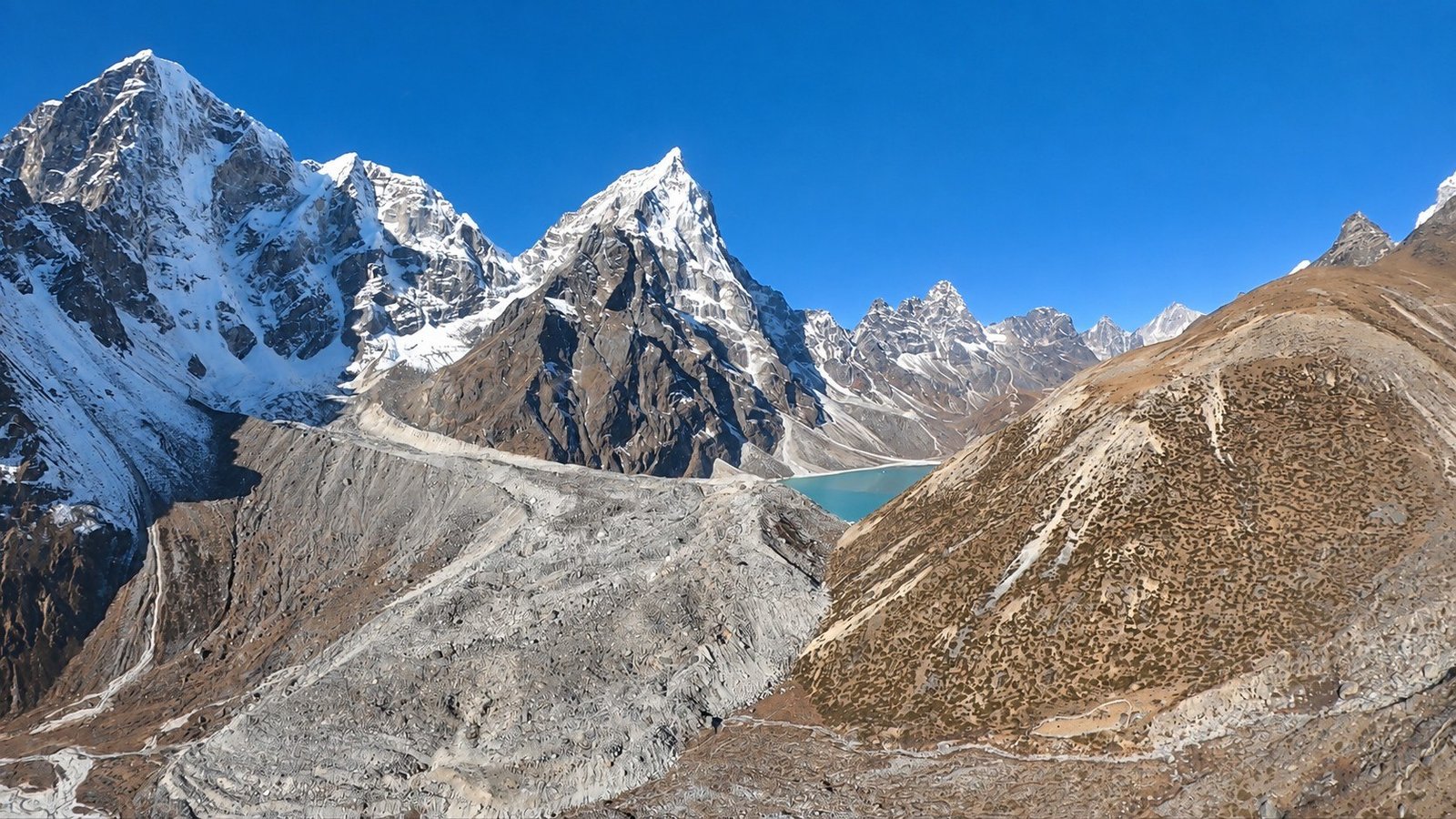
A private charter is more suitable for families, friends or trekking groups that want the helicopter reserved for their own party. The two arrangements naturally have different pricing structures.
Private charter costs more because the helicopter is reserved exclusively for the group, while shared arrangements distribute the flight among multiple passengers. Final arrangements remain subject to aircraft capacity, payload and weather.
| Booking Type | Suitable For | How It Works | Important Point |
|---|---|---|---|
| Shared / Group Joining | Solo Travelers, Couples and Smaller Trekking Groups | Passengers share available helicopter capacity on the same service | Passenger and baggage arrangements depend on the aircraft’s high-altitude payload limits |
| Private Charter | Families, Friends and Trekking Groups | The helicopter is reserved exclusively for the booked group | Higher cost structure and still subject to aircraft, payload and weather limitations |
Book Your Kala Patthar to Kathmandu Helicopter Flight
Nepal Royal Tourism Holiday operates helicopter flights every day between the Everest region and Kathmandu, including Kala Patthar to Kathmandu, subject to weather, aircraft availability and operational clearance. We arrange both shared/group joining flights and private helicopter charters.
Shared flights are generally more economical, while private helicopter charters cost more because the aircraft is reserved exclusively for your group. We also arrange Everest region helicopter transfers, sightseeing flights and helicopter services in other parts of Nepal.
Contact Nepal Royal Tourism Holiday for the latest availability and best available rate for your preferred travel date and helicopter arrangement.
Contact Nepal Royal Tourism Holiday Chat on WhatsAppTrip Highlights
- Begin your return journey from the Kala Patthar area at approximately 5,545 m, one of the highest points on the Everest Base Camp trekking route
- Save several days of descending on foot after completing the Everest Base Camp and Kala Patthar sections
- Look back across the Khumbu Glacier, Gorakshep and the upper Everest landscape from the air
- Enjoy possible views of Mount Everest, Lhotse, Nuptse, Pumori, Ama Dablam and other Khumbu peaks when weather and routing allow
- Follow the beautiful transition from the high alpine Khumbu to greener valleys and lower Solukhumbu
- Travel through the general landscape around Lobuche, Pheriche, the lower Khumbu and Dudh Koshi corridor, depending on the operating route
- Particularly useful for tired trekkers and travelers trying to save time at the end of an Everest adventure
- Choose between shared/group joining or private charter arrangements depending on your group and schedule
- Reach Kathmandu within the same day instead of spending several more days descending toward Lukla
- Finish the Everest journey with a final aerial perspective of the mountains and valleys you experienced on foot
Kala Patthar to Kathmandu Helicopter Flight – 3 Hours ~ Itinerary
Day 1
Kalapatthar to Kathmandu Helicopter Flight
- Departure Point: Kala Patthar area
- Altitude: Approximately 5,545 m
- Destination: Kathmandu
- Total Journey Time: Around 2–3 hours, depending on operating arrangements
- Actual Flying Time: Shorter than the total journey time and dependent on routing
- Possible Intermediate Stops: Gorakshep, Pheriche and/or Lukla depending on aircraft and operating conditions
- Departure: Generally planned in the morning, subject to weather and flight clearance
The journey begins after completing your Kala Patthar experience, with the helicopter arrangement coordinated from the upper Khumbu. Because Kala Patthar is at an extreme elevation, the exact departure procedure can depend on aircraft performance, passenger weight, baggage and the conditions on the day. In some arrangements, passengers may first be moved from the Kala Patthar area toward Gorakshep before the longer helicopter leg begins.
Once airborne, the landscape around Gorakshep, the Khumbu Glacier and the upper Everest region unfolds below. When visibility allows, this is an opportunity for a final aerial look at the terrain experienced during the trek, with possible views toward Mount Everest, Lhotse, Nuptse and Pumori.
The helicopter then descends through the Khumbu, passing the mountain valleys and settlements around the Lobuche and Pheriche areas before reaching lower elevations. Depending on the route, passenger arrangements and aircraft requirements, Pheriche or Lukla may form part of the journey. These stops can be operational rather than sightseeing stops.
Once the aircraft leaves the high Khumbu, the scenery becomes progressively greener, with forests, terraced slopes, villages and river valleys appearing below. The final section continues toward the Kathmandu Valley, completing the journey in Kathmandu.
Trip Cost Includes/Excludes
Cost Includes
- Helicopter transfer from the Kala Patthar area toward Kathmandu, according to the confirmed flight arrangement
- Flight planning and operational coordination with the helicopter operator
- Standard baggage handling within the confirmed helicopter allowance
- Arrival coordination in Kathmandu as part of the scheduled helicopter service
- Support from Nepal Royal Tourism Holiday before departure and during the transfer
Cost Excludes
- Travel insurance and medical expenses
- Private charter charges where a private helicopter is requested
- Extra baggage or overweight baggage charges where applicable
- Any service not listed under the inclusions
Frequently Asked Questions
The departure arrangement depends on the helicopter, passenger load, weather and aircraft performance at high altitude. In some extra-ordinary case, passengers may need to move toward Gorakshep before the main helicopter transfer continues.
Kala Patthar is around 5,545 m, so the aircraft is operating in very thin air. Temperature, passenger weight, baggage, fuel and aircraft performance all become important when determining what can safely be carried.
No. Travelers should not expect a normal airport-style landing on the summit itself. The departure arrangement is determined by the available landing area, operating conditions and the helicopter operator’s flight plan.
The package is described as a 3-hour journey, but that does not mean three hours of continuous flying. The complete time can include passenger shuttling, refuelling and other operational arrangements.
It can save several days of downhill trekking. Instead of continuing on foot through the Khumbu toward Lukla, travelers can use the helicopter to leave the upper Everest region much sooner.
It is especially useful for trekkers who are tired after Everest Base Camp and Kala Patthar, travelers with limited time, families, and groups that prefer not to spend several additional days descending the trail.
Depending on the weather and route, travelers may see Mount Everest, Lhotse, Nuptse, Pumori, Ama Dablam and other Khumbu peaks. The first part of the journey can be especially rewarding because the aircraft leaves from very close to the main Everest mountain group.
Yes, sections of the Khumbu Glacier and surrounding glacial terrain may be visible during the flight when weather and routing allow.
No. This service is primarily a return transfer from the Everest region to Kathmandu. Mountain views are an added part of the journey rather than the purpose of a dedicated sightseeing tour.
Not necessarily. The final arrangement depends on the helicopter’s high-altitude payload capacity. A larger group may need to be shuttled in smaller loads toward a lower altitude such as Gorakshep or Pheriche before continuing onward.
The departure may be delayed, rescheduled or cancelled if the pilot determines that visibility, wind, cloud or other conditions are unsuitable. The route and any intermediate stop can also change according to the conditions on the day.
You may also like

Menu