-
 Duration
32 Days
Duration
32 Days
-
 Difficulty
Strenuous
Difficulty
Strenuous
-
 Max Elevation
7,126m
Max Elevation
7,126m
-
 Group Size
1 to 10 People Person
Group Size
1 to 10 People Person
-
 Accommodation
Teahouse/Camping
Accommodation
Teahouse/Camping
-
 Start/End
Kathmandu/Kathmandu
Start/End
Kathmandu/Kathmandu
-
 Destination
Manang/Peri Himal
Destination
Manang/Peri Himal
-
 Best Season
Spring and Autumn
Best Season
Spring and Autumn
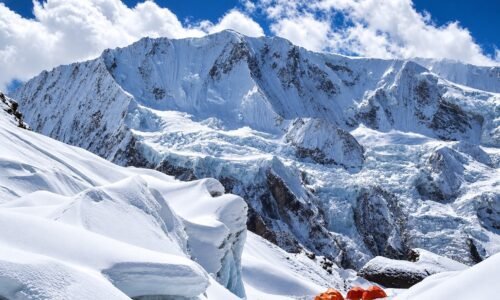
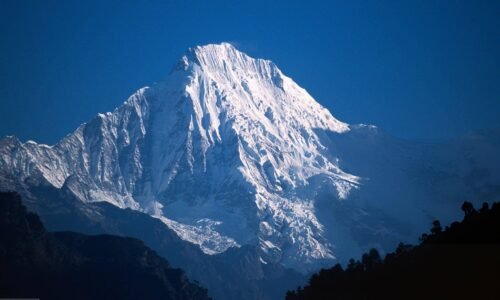
The Himlung Himal Expedition takes you deep into the remote northern side of Nepal before rising onto a 7,126-meter Himalayan summit.
Located in the Peri Himal of Manang near the Nepal–Tibet border, Himlung combines the cultural journey through the restricted Nar Phu Valley with a genuine high-altitude expedition involving glacier travel, acclimatization rotations, high camps and a weather-dependent summit attempt.
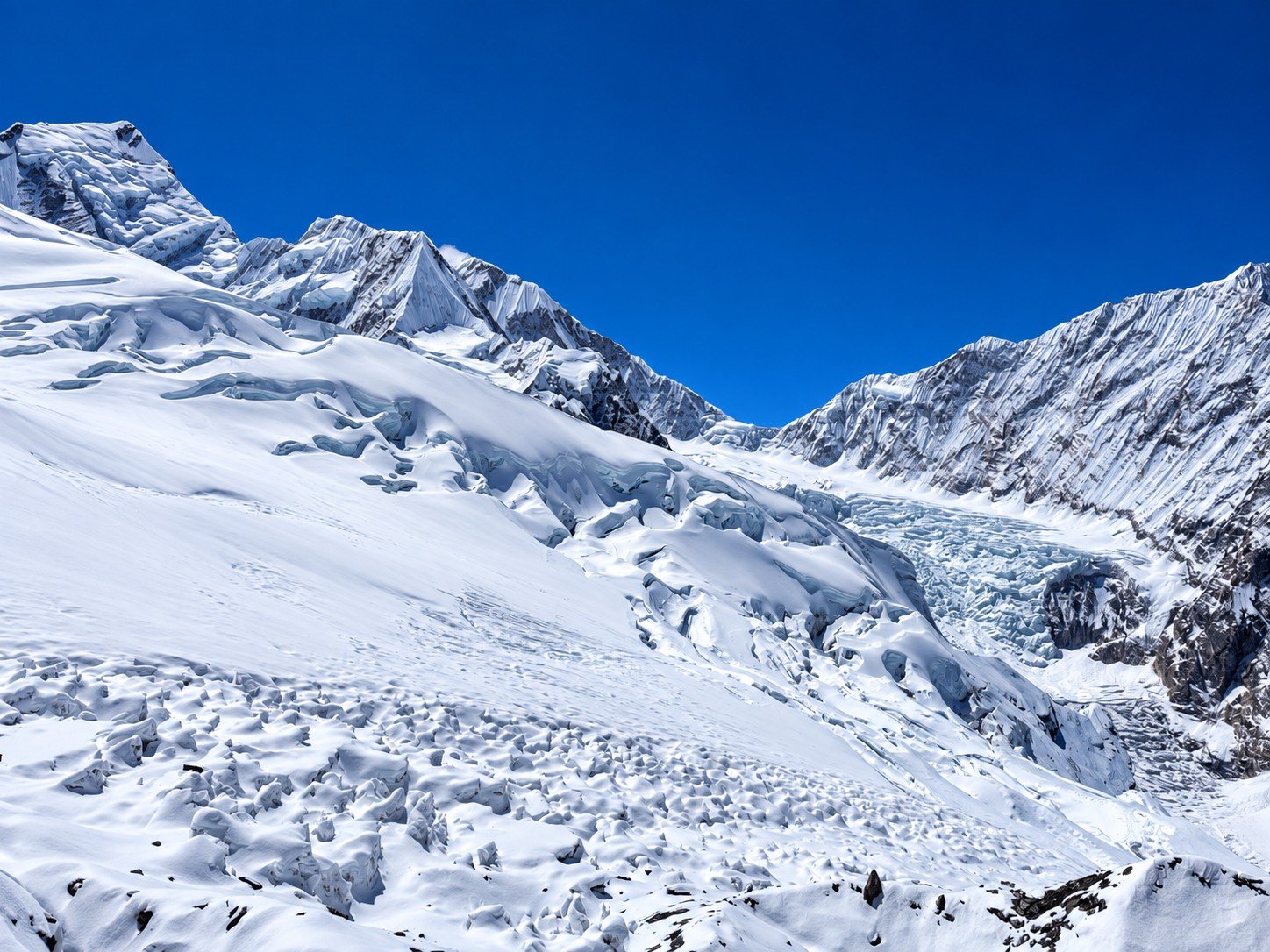
The journey begins in Kathmandu before travelling overland toward Besisahar and Koto. From Koto, you leave the more established Annapurna Circuit corridor and enter the Nar Phu Valley, where the landscape becomes increasingly isolated.
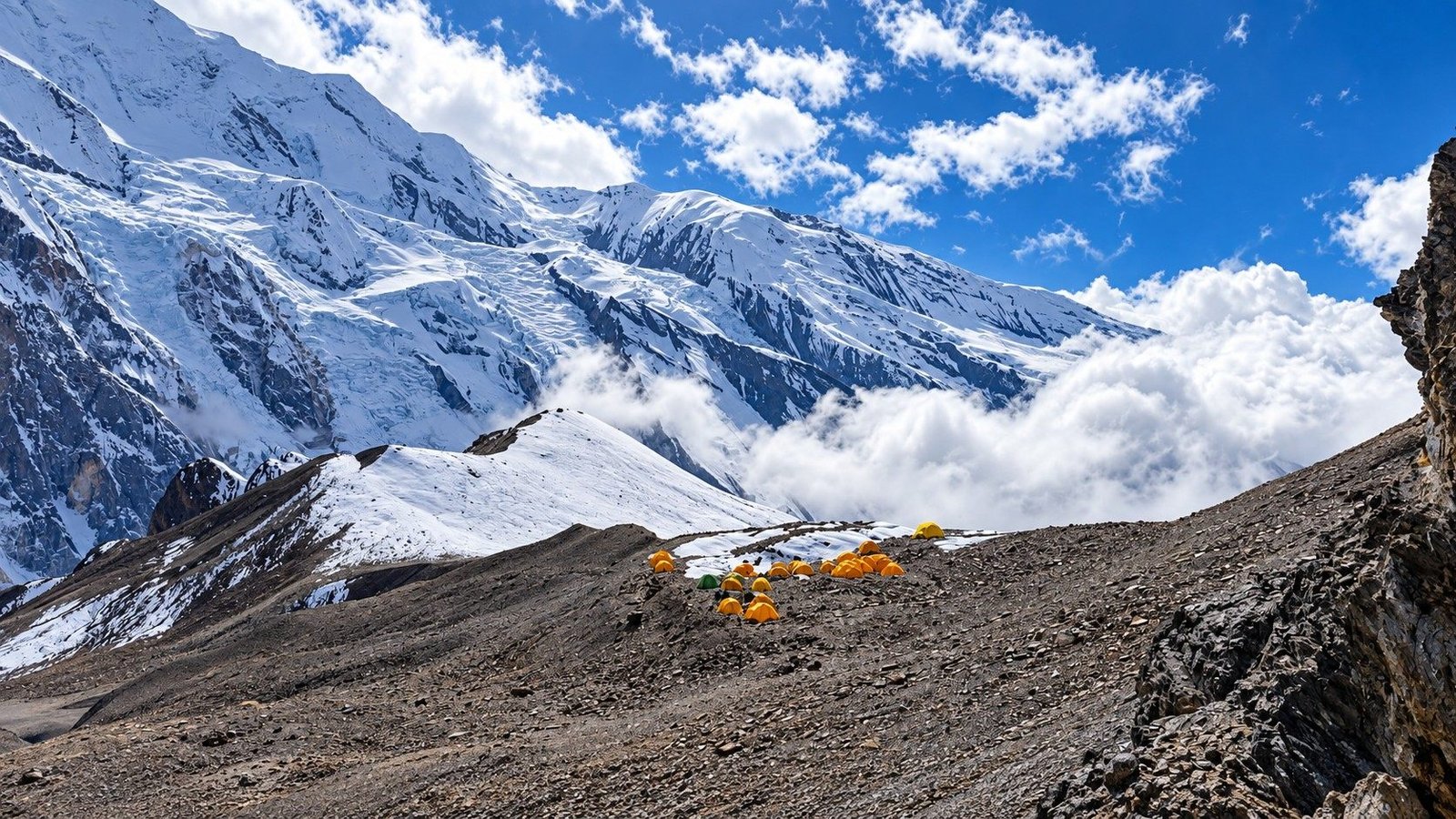
The route continues through Meta, Kyang and Phu Gaon before climbing toward Himlung Himal Base Camp at approximately 4,850–4,900 m.

The approach is an important part of the expedition rather than simply a way of reaching the mountain.
As you move higher through Nar Phu, dense lower valleys gradually give way to dry Himalayan terrain, ancient settlements and increasingly open alpine landscapes.
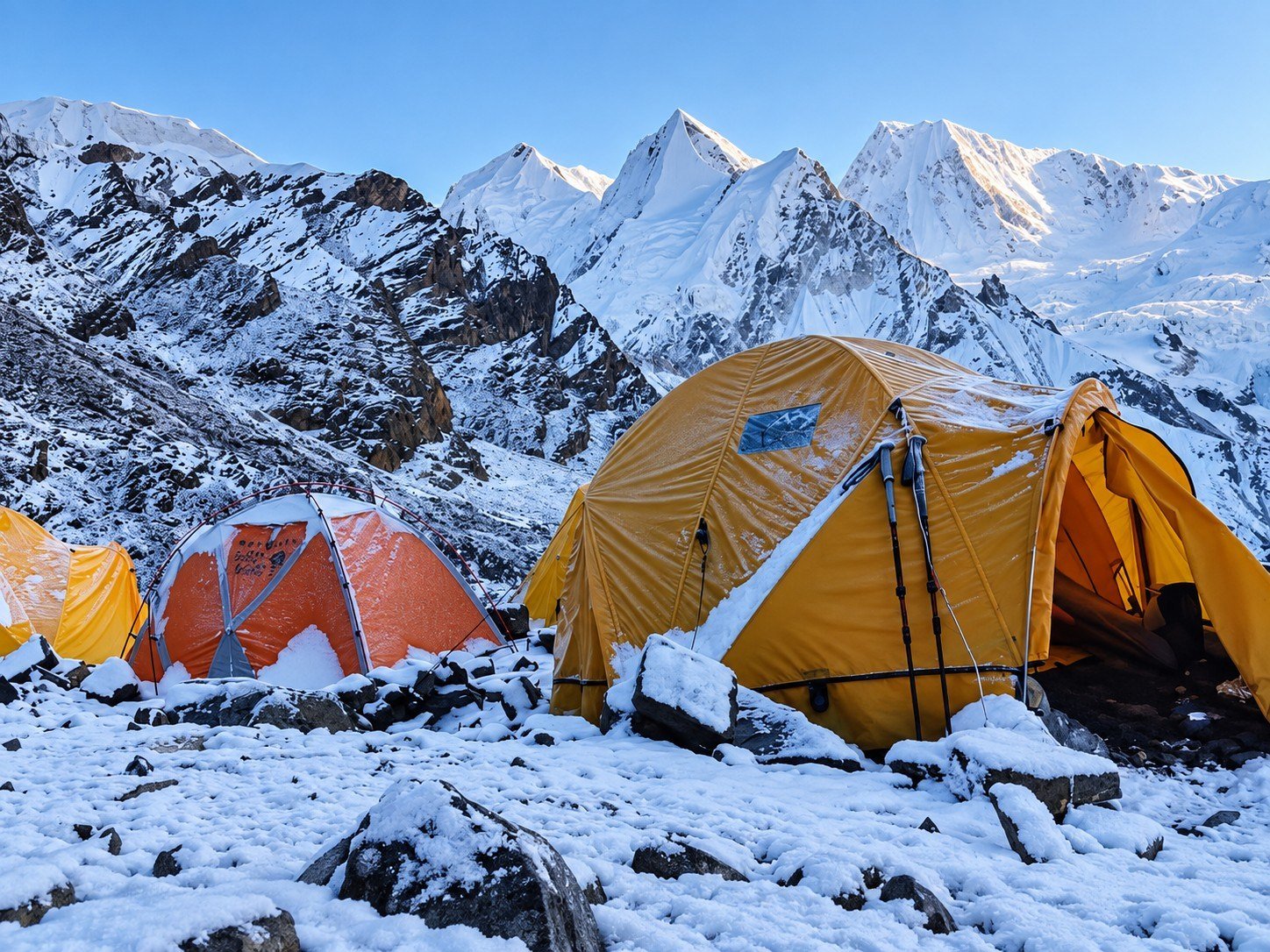
Phu Gaon provides a valuable acclimatization stop before the expedition leaves the village environment behind and enters the high mountain.
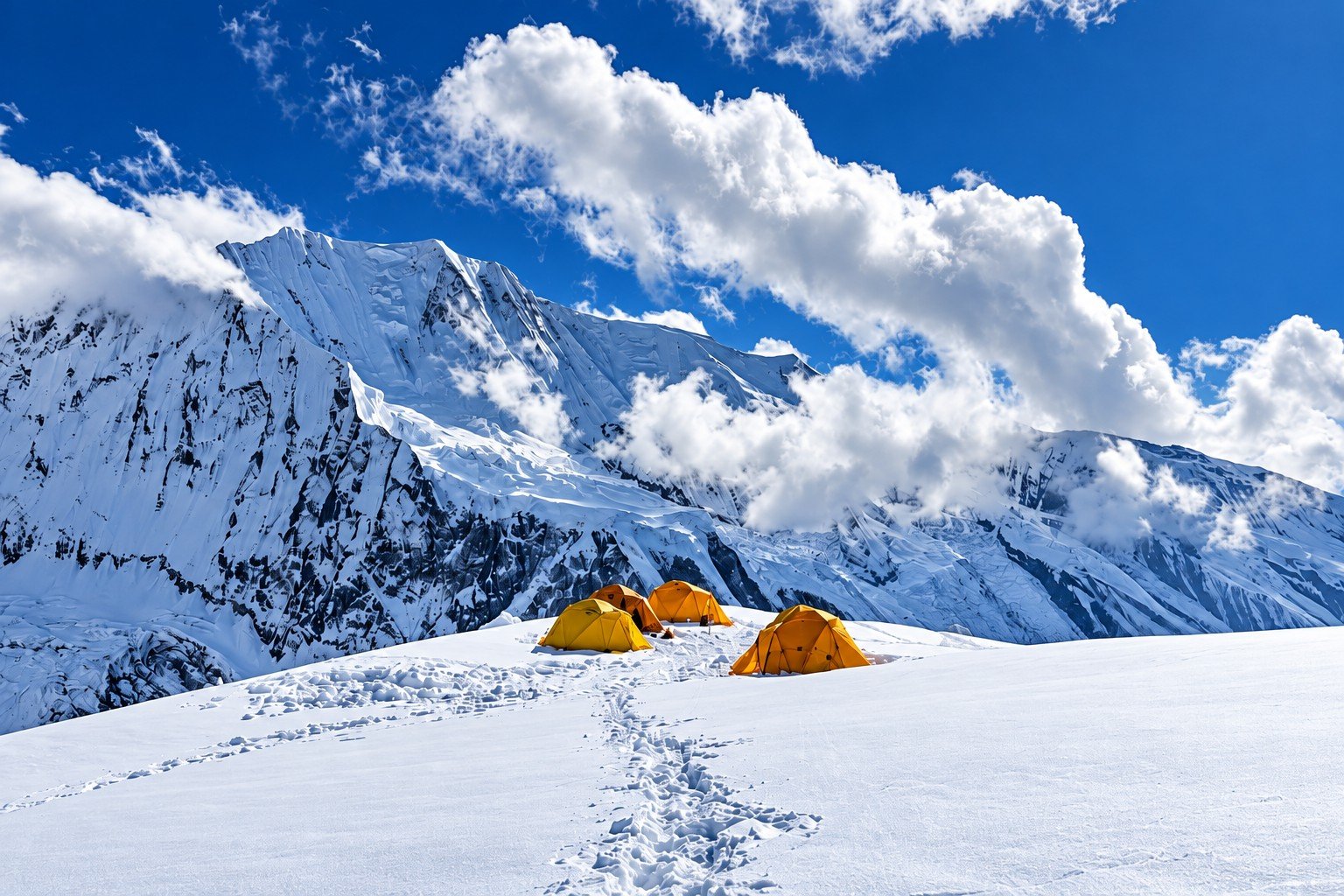
Once you reach Base Camp, the focus changes completely. Trekking gives way to mountaineering, and the team begins working through planned acclimatization rotations toward Camp I, Camp II and an upper camp when required.
Snow, glacier terrain and crevasses become part of the route, while fixed ropes may be used on steeper or more exposed sections according to seasonal conditions.

Himlung Himal is often chosen by climbers who want meaningful experience above 7,000 meters without beginning on one of Nepal’s most technically concentrated rock-and-mixed routes. That does not make the mountain easy.
The primary challenge is the combination of extreme altitude, glacier travel, cold, long climbing days, repeated high-camp rotations and the need to function efficiently above 6,000 m.
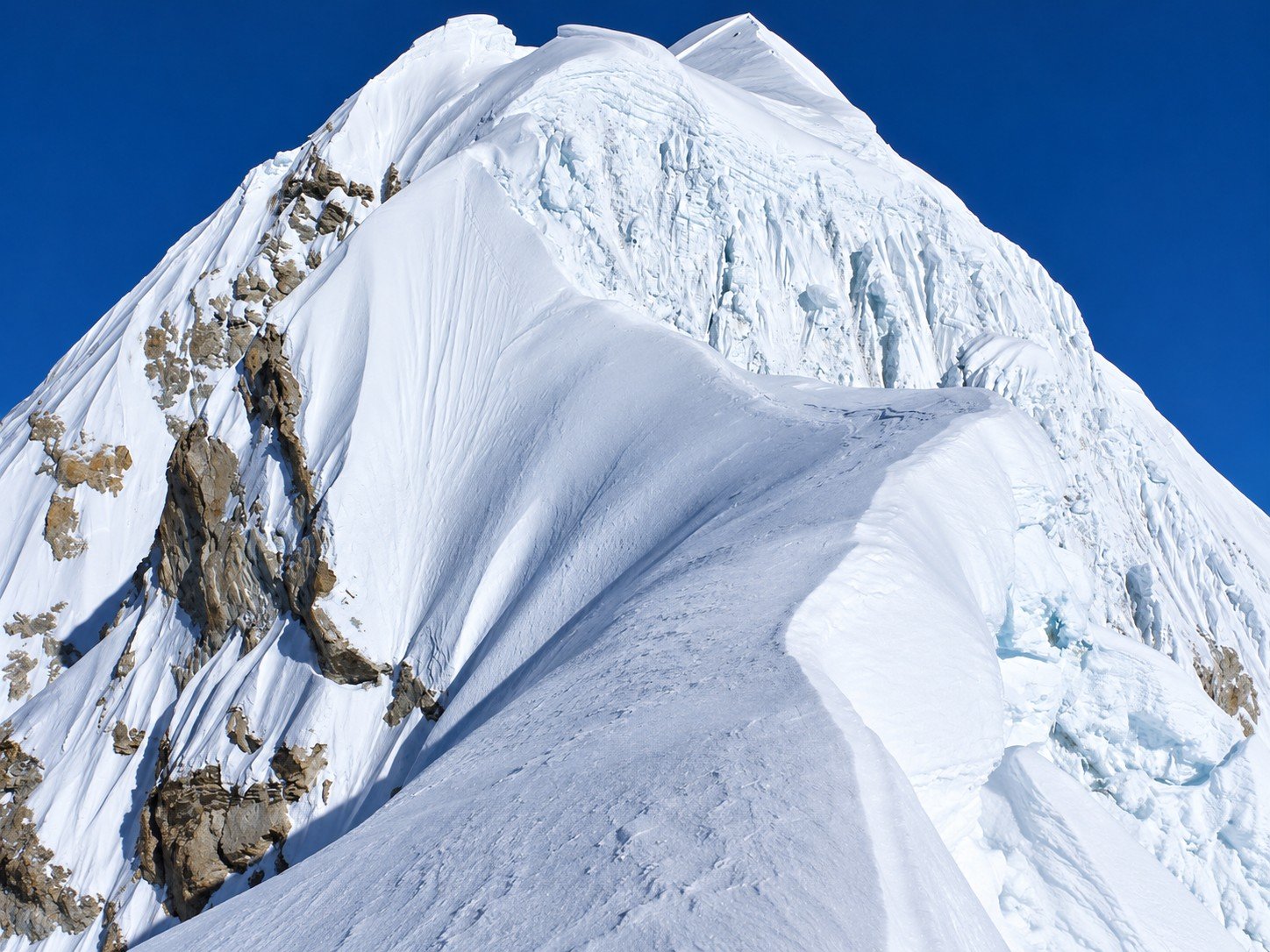
Previous mountaineering experience is therefore important. Climbers should already be comfortable using crampons, an ice axe, harness, ascender and fixed-line systems and should understand basic glacier and rope-team procedures.
Base Camp training is used to refresh these skills and ensure everyone is working with the same expedition systems before moving higher.
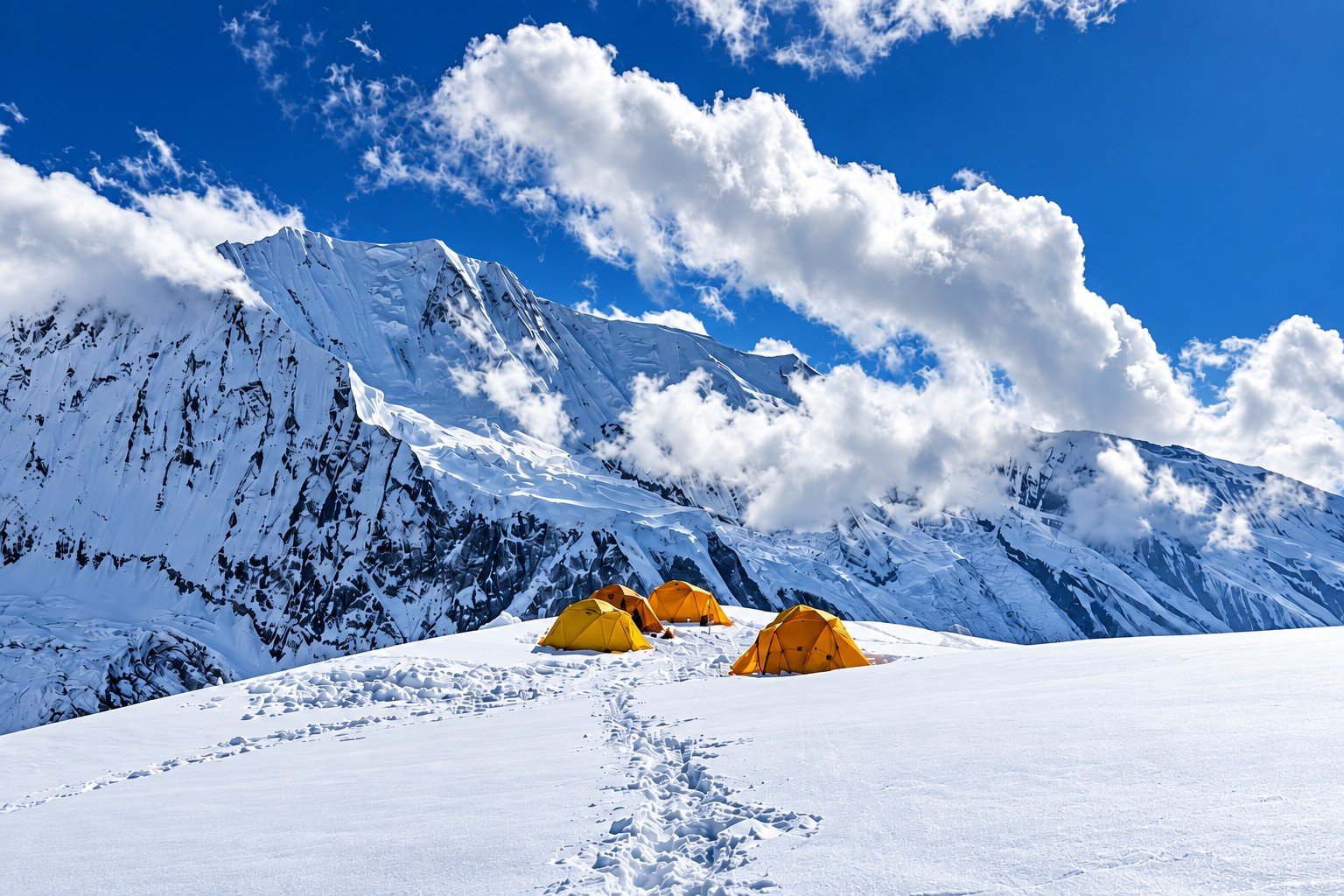
The expedition follows a gradual acclimatization strategy rather than climbing directly toward the summit. You move higher, spend time at altitude and return lower for recovery before progressing onto the next stage.
This allows the body to adapt while also giving you an opportunity to learn the climbing route before the final summit rotation.
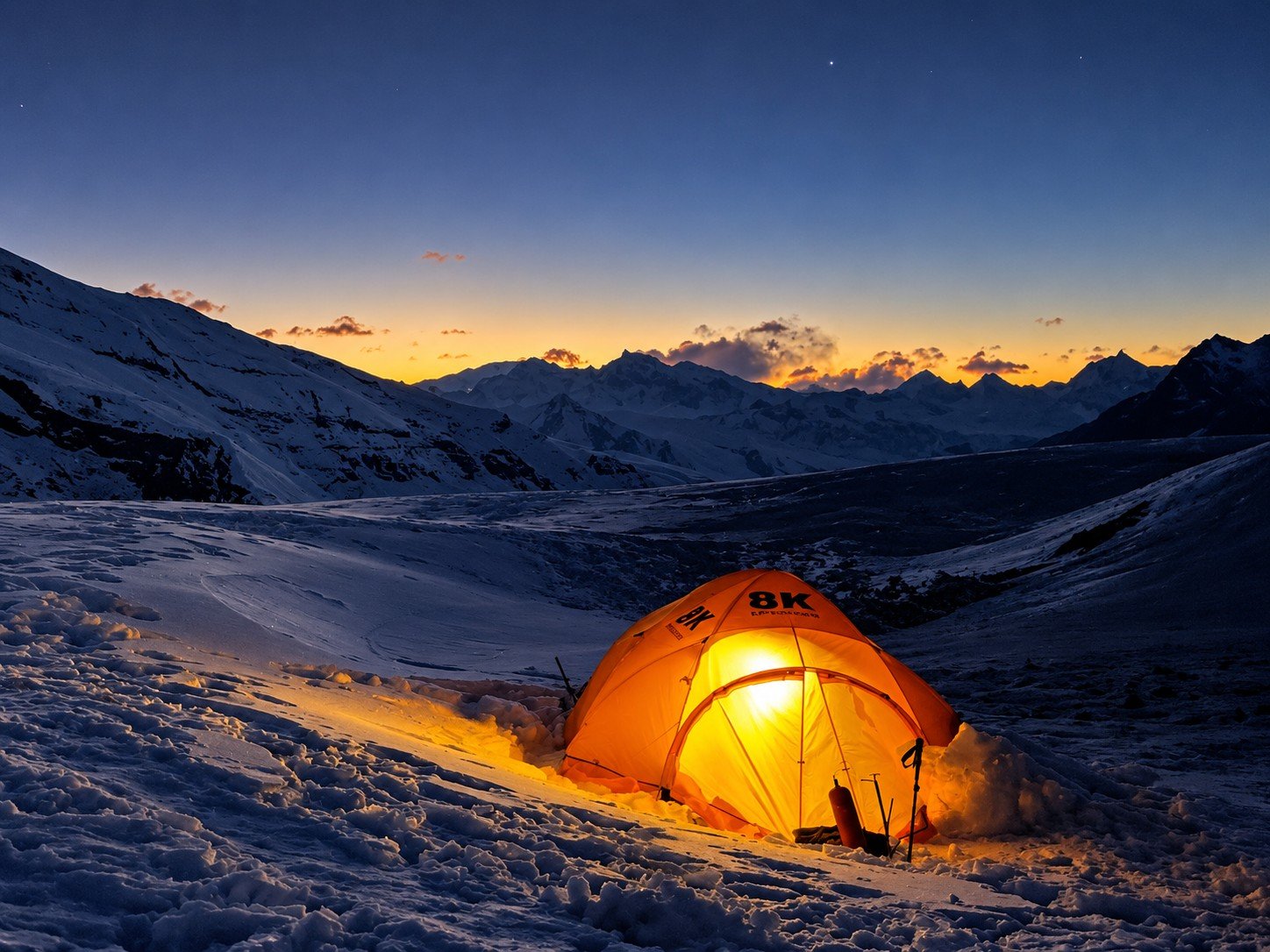
When acclimatization is complete and an appropriate weather window develops, the team returns to the high camps for the summit push.
The final ascent normally begins during the night or very early morning so there is enough time to climb through the upper mountain and begin descending before conditions deteriorate later in the day.
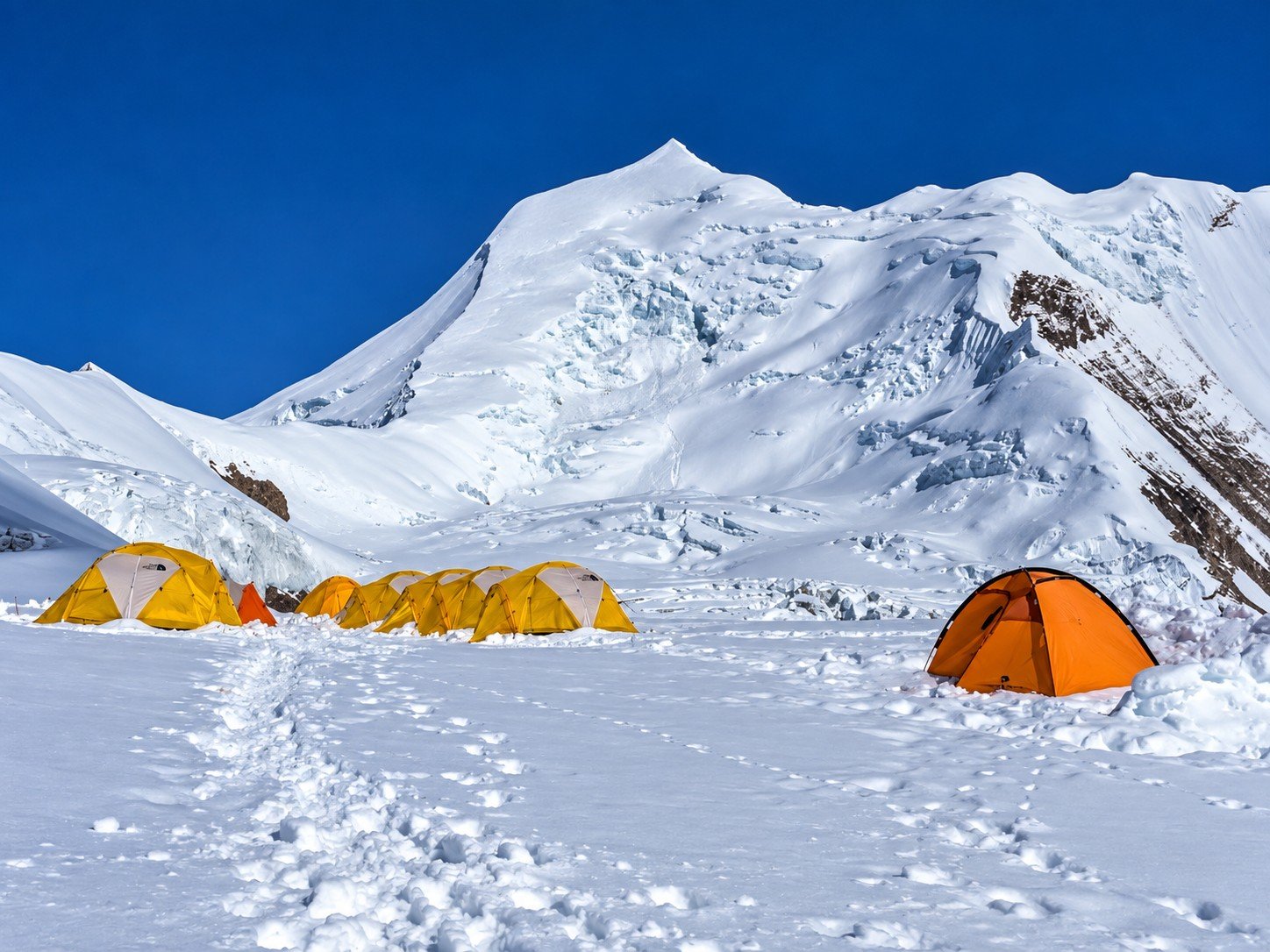
The summit at 7,126 m / 23,379 ft is only half of the objective. Climbers must still descend safely while dealing with fatigue, cold and the effects of prolonged altitude exposure.
The climbing schedule is therefore kept flexible, with weather, snow conditions, individual acclimatization and route safety taking priority over a fixed calendar date.
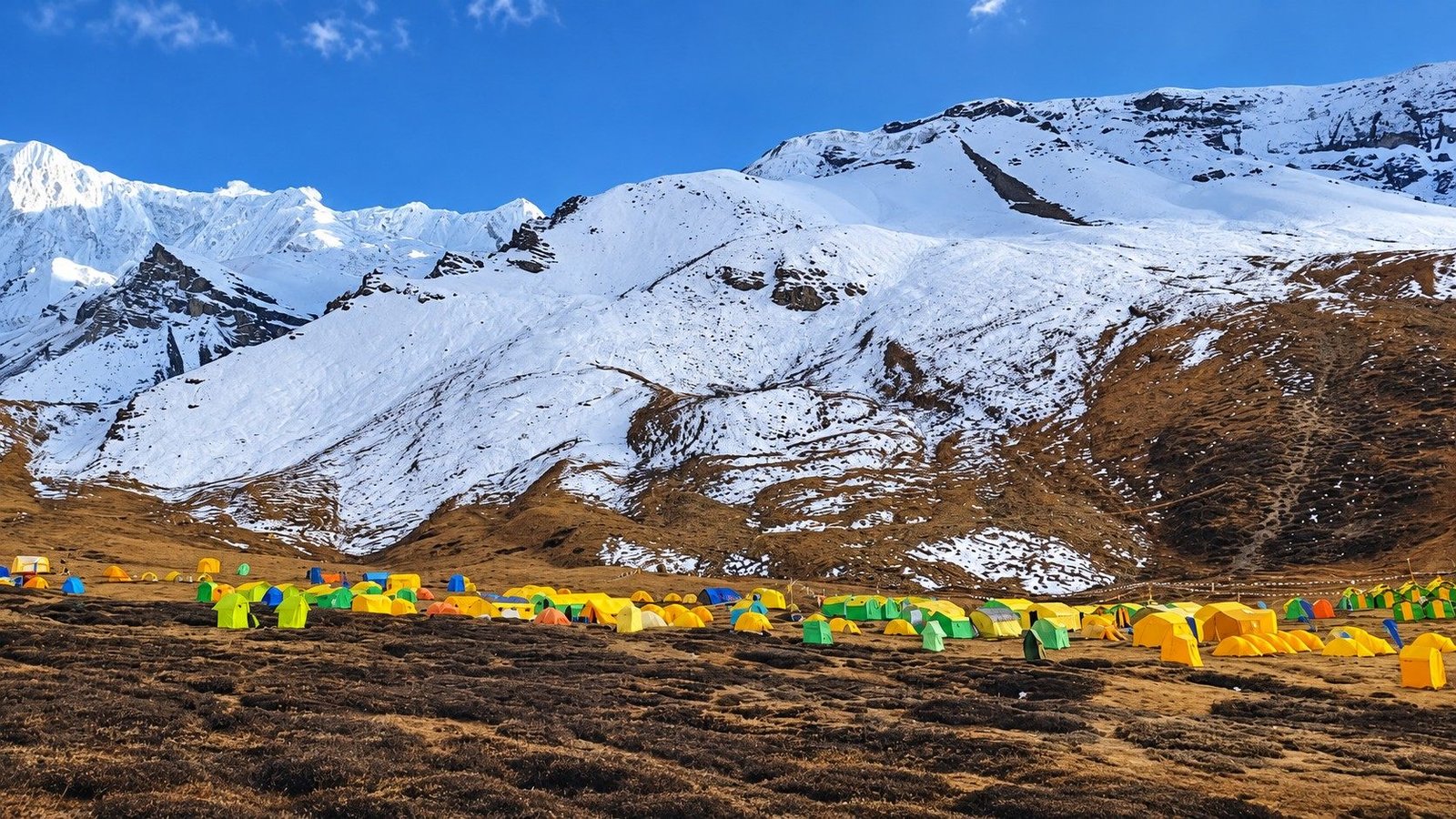
For experienced mountaineers, Himlung provides a complete Himalayan expedition experience, a remote cultural approach, Base Camp life, high-altitude camping, glacier climbing, repeated rotations and a summit above 7,000 meters.
It can also provide useful preparation for climbers building experience toward larger Himalayan objectives.
Himlung Himal Expedition Highlights
| Expedition Detail | Information |
|---|---|
| Mountain | Himlung Himal |
| Summit Elevation | 7,126 m / 23,379 ft |
| Region | Peri Himal, Northern Manang / Nar Phu Region |
| Expedition Duration | 32 Days |
| Approach Route | Kathmandu – Besisahar – Koto – Meta – Kyang – Phu Gaon – Himlung Base Camp |
| Base Camp | Approximately 4,850–4,900 m |
| Camp I | Approximately 5,400–5,450 m |
| Camp II | Approximately 6,000–6,050 m |
| Camp III / Upper Camp | Approximately 6,300–6,350 m when used |
| Climbing Terrain | Moraine, Glacier, Snow and Ice, Crevassed Terrain and Fixed-Rope Sections where required |
| Difficulty | Challenging High-Altitude Expedition |
| Best Seasons | Spring and Autumn |
| Accommodation | Hotel, Teahouse and Expedition Camping |
| First Ascent | 3 October 1992 – Osamu Hanai, Akio Koizumi and Nima Sherpa |
| Start / End | Kathmandu / Kathmandu |
Through the Restricted Nar Phu Valley
One of the features that separates Himlung from many other Nepalese expeditions is the approach. Instead of beginning directly from a busy commercial climbing corridor, you travel through the restricted Nar Phu Valley of northern Manang.
After reaching Koto, the route turns away from the main Annapurna Circuit and follows the narrower valley toward Meta. The landscape becomes progressively drier and more isolated as you continue through Kyang and eventually reach Phu Gaon.

Phu is one of the most distinctive high settlements of the region, with stone-built houses, monasteries, agricultural terraces and a landscape shaped by long-standing Tibetan Buddhist cultural influences.
Spending time here also provides an important acclimatization stage before moving toward Base Camp.
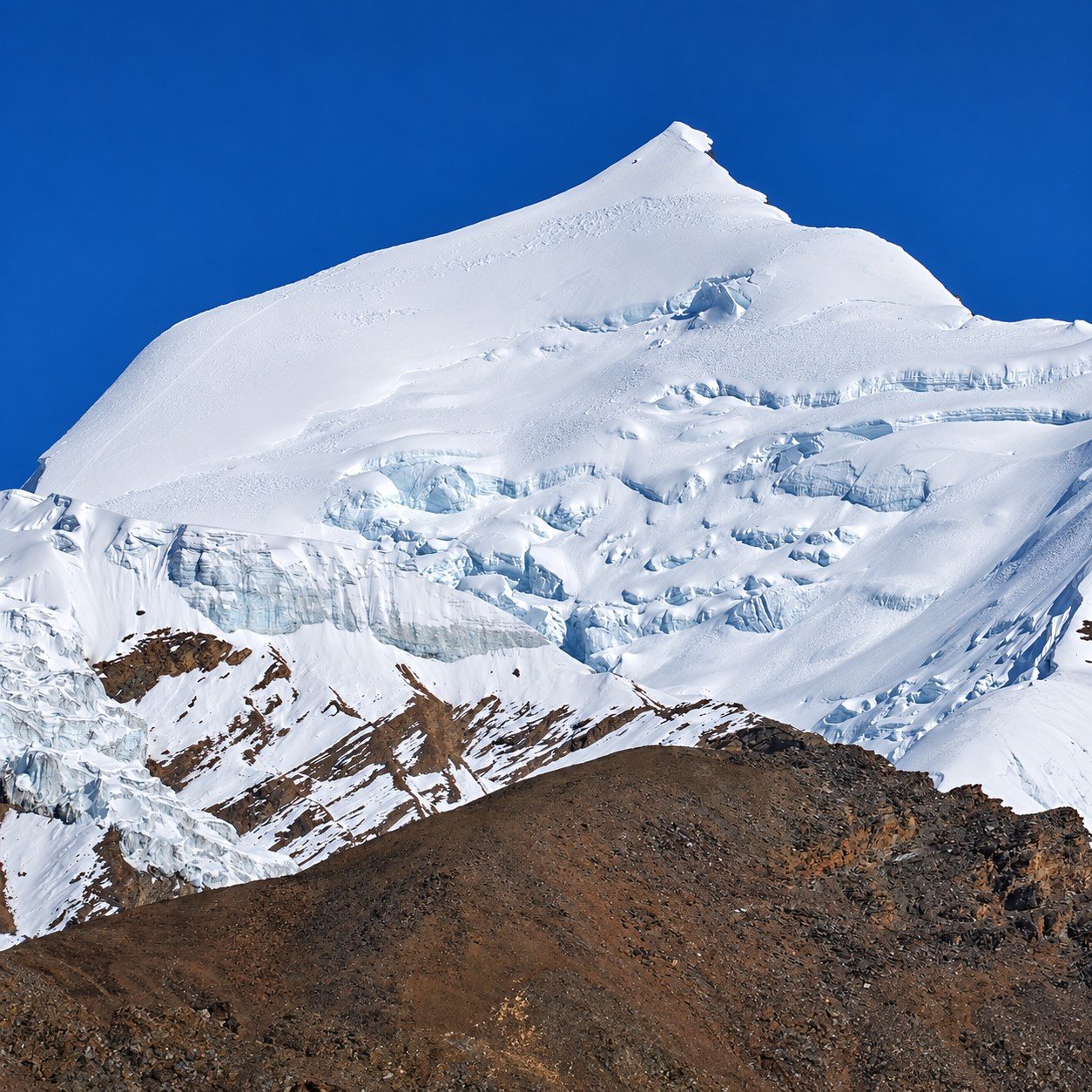
Beyond Phu Gaon, the expedition gradually leaves permanent settlements behind.
You enter a much more open alpine environment and eventually reach the glaciated surroundings below Himlung Himal, where organised expedition camping replaces the teahouse-based approach.
Himlung Himal Approach Route
| Stage | Approximate Altitude | Main Character |
|---|---|---|
| Kathmandu | 1,350 m | Arrival, expedition preparation and gear checks |
| Besisahar | ~760 m | Road journey into the lower Himalayan foothills |
| Koto | ~2,600 m | Entrance point for the restricted Nar Phu approach |
| Meta | ~3,560 m | Remote valley trekking and major altitude gain |
| Kyang | ~3,840 m | Dry high-Himalayan terrain and increasingly open landscapes |
| Phu Gaon | ~4,080 m | Cultural stop and important acclimatization location |
| Himlung Base Camp | ~4,850–4,900 m | Main expedition base for rotations, recovery and summit preparation |
Himlung Himal Climbing Route and High Camps
From Base Camp, the expedition enters a dedicated glacier and snow-climbing environment.
Climbers move progressively higher through a series of planned camps while the route team evaluates crevasses, snow stability, fixed-line requirements and suitable camp positions.
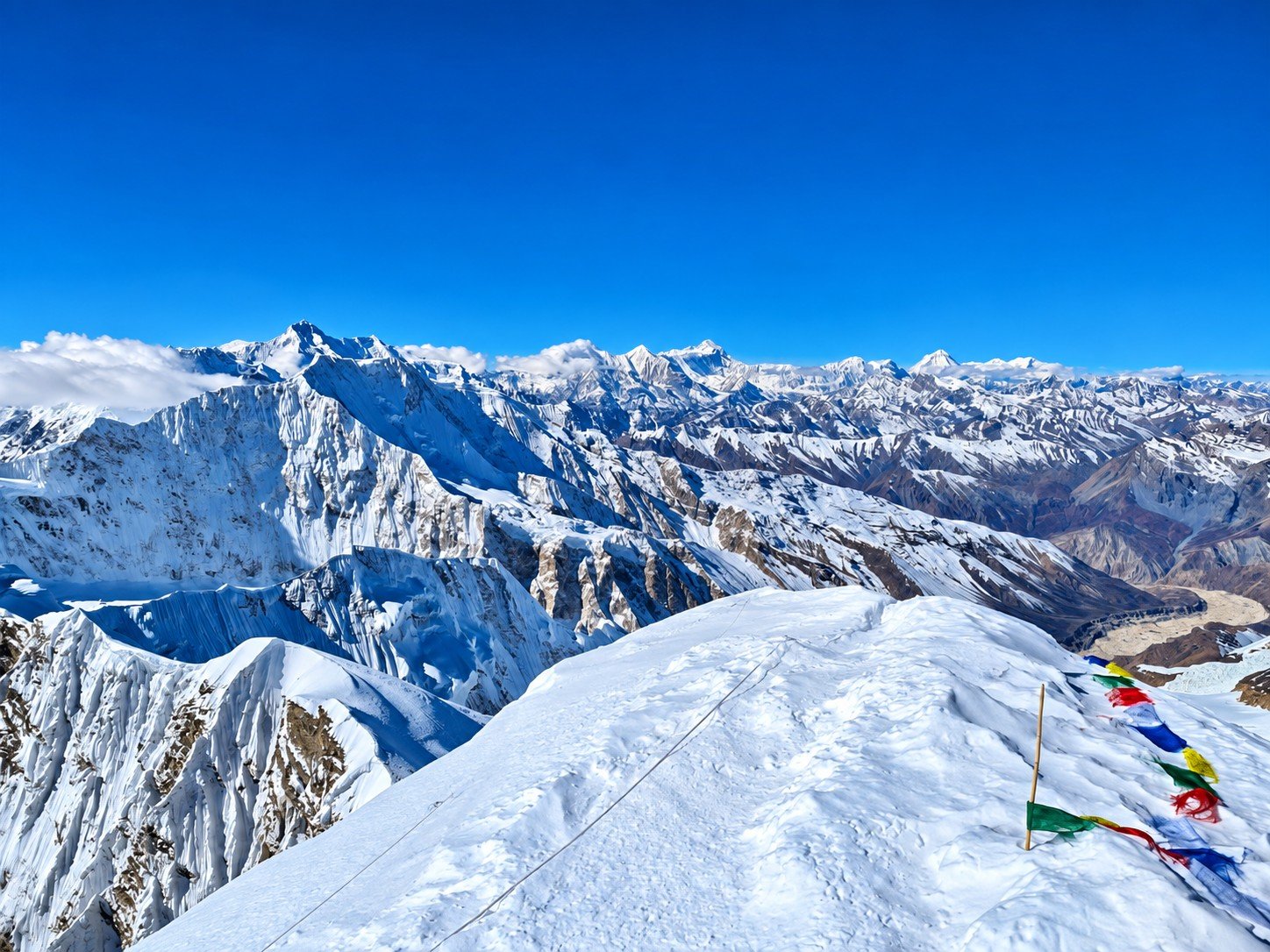
High-camp elevations should always be treated as approximate. Glaciers change, crevasses open and snow conditions vary between seasons, so the final camp positions can move higher or lower than figures shown on a published itinerary.
| Mountain Stage | Approximate Elevation | Main Purpose / Terrain |
|---|---|---|
| Base Camp | 4,850–4,900 m | Main expedition operations, acclimatization, training, meals and recovery between rotations |
| Camp I | ~5,400–5,450 m | Lower glacier and snow terrain; first major overnight altitude exposure |
| Camp II | ~6,000–6,050 m | Higher glacier, snow and steeper sections with more significant altitude exposure |
| Camp III / Upper Camp | ~6,300–6,350 m | Upper-mountain staging position used before the summit when required by the expedition strategy |
| Summit | 7,126 m | Final high-altitude snow and glacier ascent followed by a long descent toward the high camps |
The expedition leader may modify the camp sequence, combine stages or move the camps according to actual conditions on the mountain. The published layout should therefore be understood as the planned operating system rather than a permanently fixed route.
How Difficult Is Himlung Himal?
Himlung Himal is a serious 7,000-meter expedition, but its difficulty is different from a mountain dominated by steep rock climbing or sustained technical mixed terrain.
Much of the normal route is based on glacier, snow and high-altitude movement, with fixed ropes used where required.
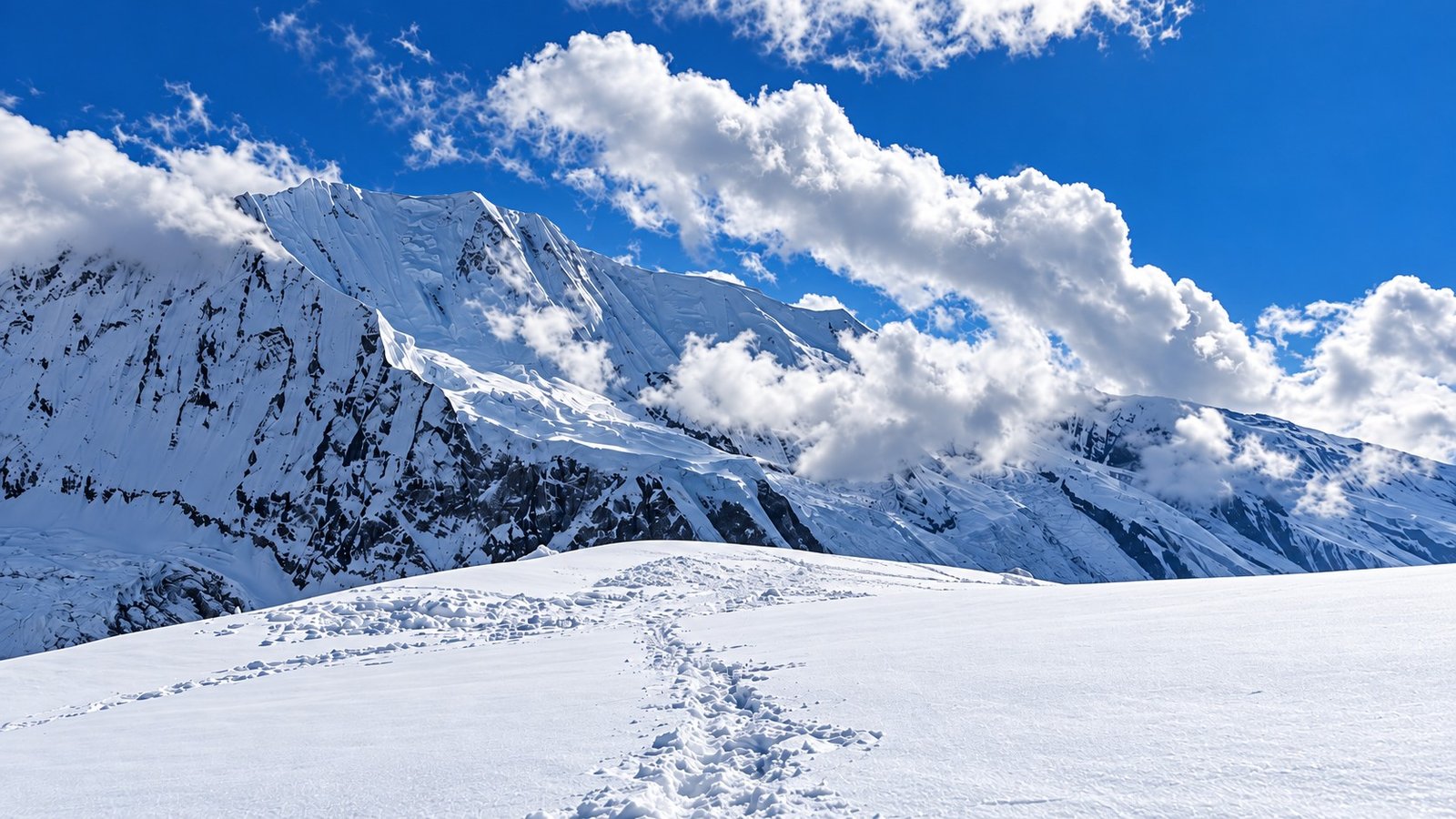
The greatest challenge is the altitude. Above 6,000 m, normal tasks such as walking, changing equipment, melting water and recovering after a climbing day become considerably harder.
Climbers must continue making careful decisions while tired, cold and operating with far less available oxygen than at lower elevation.
| Challenge | What It Means on Himlung Himal |
|---|---|
| Extreme Altitude | The summit reaches 7,126 m, where movement slows considerably and physical recovery becomes difficult |
| Glacier Travel | The route crosses glaciated terrain where rope procedures, route selection and crevasse awareness are essential |
| Snow and Ice | Efficient crampon movement and confident ice-axe use are required above the lower mountain |
| Fixed Ropes | Steeper sections can require ascender use and controlled movement on protected lines |
| Cold | High camps and pre-dawn summit climbing can involve severe cold and significant wind exposure |
| Endurance | Repeated climbing rotations require you to recover sufficiently to perform again several days later |
| Weather | Strong winds, snowfall and changing snow conditions can delay the summit rotation |
| Remote Location | The Nar Phu approach makes logistics and emergency response more complicated than in heavily developed trekking areas |
Who Should Attempt Himlung Himal?
Himlung Himal is intended for climbers with previous mountaineering experience rather than first-time trekkers looking for an introductory summit.
Strong fitness is necessary, but endurance alone is not enough for a glacier expedition above 7,000 m.

You should already understand the basic climbing equipment and techniques that will be used on the mountain.
Previous experience around 5,500–6,500 m is particularly valuable because it provides some understanding of how your body responds to sleeping and climbing at altitude.
| Skill / Experience | Why It Matters |
|---|---|
| Crampon Technique | Allows secure and efficient movement on snow, ice and hard glacier surfaces |
| Ice Axe Use | Required for controlled movement and appropriate snow-climbing techniques |
| Glacier Travel | Important for moving as part of a rope team and understanding crevasse hazards |
| Fixed-Rope Movement | Climbers need to move efficiently while clipping, ascending and descending protected sections |
| Ascender / Jumar | Used for progressing efficiently on fixed lines without wasting unnecessary energy |
| Rappelling / Descending | Safe descent skills are important when returning through steeper protected terrain |
| High-Altitude Experience | Previous experience above 5,500–6,000 m helps you understand personal pacing, recovery and altitude response |
Acclimatization and Summit Strategy
You do not move directly from Base Camp toward the summit. The expedition is built around progressive altitude exposure, followed by periods of recovery at lower elevation.
The approach through Meta, Kyang and Phu Gaon already begins the acclimatization process before you reach Base Camp. Once on the mountain, the first rotation introduces you to Camp I and the lower glacier.

A later rotation moves higher toward Camp II, giving the body meaningful exposure around 6,000 m before descending again for recovery.
After these rotations, the team spends time at Base Camp resting, eating and preparing for the final summit period. This recovery phase is important because simply spending more days climbing does not automatically improve performance.

The final summit rotation normally progresses through Camp I and Camp II before moving toward Camp III or another suitable upper staging position. The exact sequence can be changed according to acclimatization, weather, route conditions and the physical condition of the team.
The summit attempt begins only when the expedition leader considers the route and weather suitable. If conditions deteriorate, the climbing schedule can be delayed rather than forcing the team upward simply to match the original calendar.
Best Time for the Himlung Himal Expedition
Spring and autumn are the principal climbing periods for Himlung Himal. The exact conditions on the glacier and upper mountain still depend on recent snowfall, wind and temperature rather than the season alone.
| Season | General Conditions | Expedition Consideration |
|---|---|---|
| Spring March–May |
Pre-monsoon expedition season with gradually longer days as spring develops | Established climbing window, although the high mountain remains cold and snowfall can affect the route |
| Autumn September–November |
Generally drier post-monsoon period with good opportunities for clear mountain conditions | One of the principal expedition periods for Himlung Himal |
| Winter December–February |
Severe cold and more demanding high-camp conditions | Requires specialised preparation and a winter-specific expedition strategy |
| Summer / Monsoon June–August |
Cloud, rain and monsoon moisture can affect the lower approach and mountain conditions | Not normally used for a standard commercial summit program |
Himlung Himal Permits and Expedition Documentation
The expedition combines a regulated 7,000-meter climb with travel through the restricted Nar Phu Valley and the Annapurna Conservation Area. Several permits and expedition documents therefore have to be arranged before the team begins the approach.
| Permit / Requirement | Current Arrangement |
|---|---|
| Himlung Himal Royalty – Spring | USD 800 per foreign climber |
| Himlung Himal Royalty – Autumn | USD 400 per foreign climber |
| Winter / Summer Royalty | USD 200 per foreign climber |
| Nar Phu Restricted Area Permit | Required for the restricted Manang approach; seasonal fee confirmed according to the expedition dates when the permit is processed |
| Annapurna Conservation Area Permit | NPR 3,000 per foreign visitor |
| Expedition Administration | Mountaineering documentation, liaison arrangements, staff requirements and other expedition formalities applicable to the confirmed climbing program |
| Garbage Management | Required expedition waste-management documentation and deposit arrangement according to the government classification applied to the expedition |
Important: Permit fees and administrative requirements can change. Nepal Royal Tourism Holiday reconfirms the applicable restricted-area fee, conservation fee and expedition documentation when the permits are processed for the actual climbing dates.
Technical Climbing Gear for Himlung Himal
A 7,126-meter expedition requires dedicated mountaineering equipment rather than a normal trekking kit. Personal technical gear should already be familiar, correctly fitted and tested before the expedition leaves Kathmandu.
| Technical Equipment | Recommended Personal Gear |
|---|---|
| Climbing Harness | Adjustable mountaineering harness that fits comfortably over high-altitude clothing |
| Mountaineering Helmet | Certified climbing helmet suitable for snow, ice and glacier travel |
| Crampons | 12-point steel mountaineering crampons compatible with expedition boots |
| Ice Axe | Mountaineering ice axe suitable for snow and glacier climbing |
| Mechanical Ascender / Jumar | Personal ascender for progressing on fixed ropes where required |
| Belay / Rappel Device | Appropriate descent and belay device compatible with the expedition rope system |
| Carabiners and Safety System | Locking carabiners, appropriate non-locking carabiners, slings, safety lanyard and prusik cord |
| High-Altitude Boots | Insulated expedition mountaineering boots suitable for severe cold above 7,000 m |
Personal Clothing and Packing List
Your clothing and sleeping system must work across a wide range of conditions, from the lower road journey and Nar Phu approach to exposed camps above 6,000 m.
| Category | Recommended Personal Equipment |
|---|---|
| Base Layers | Moisture-wicking thermal tops and bottoms for trekking, Base Camp and high-altitude climbing |
| Mid Layers | Fleece, softshell and insulated layers suitable for active movement in cold conditions |
| Outer Shell | Waterproof and windproof shell jacket and trousers |
| High-Altitude Insulation | Expedition down suit or suitable high-altitude down parka and insulated trouser system |
| Head and Face | Warm hat, balaclava, sun hat and suitable face protection for cold and wind |
| Eye Protection | Glacier glasses and ski or expedition goggles |
| Hands | Liner gloves, technical climbing gloves, insulated gloves and high-altitude mittens |
| Trekking Footwear | Comfortable trekking boots or shoes, trekking socks and insulated camp footwear |
| Sleeping System | Expedition sleeping bag rated for severe cold, liner if preferred and personal sleeping pad where required |
| Climbing Pack | Approximately 45–60 L technical backpack suitable for personal equipment above Base Camp |
| Expedition Duffel | Durable duffel bag for porter or pack-animal transport to Base Camp |
| Hydration | Insulated wide-mouth bottles, bottle covers, thermos flask and personal water-treatment system where required |
| Lighting and Electronics | Powerful headlamp, spare batteries, power bank, cables and cold-protected electronics |
| Personal and Medical | Personal medication, basic first-aid supplies, blister treatment, sunscreen, lip protection and toiletries |
A complete personal gear check should be carried out in Kathmandu before departure. Any unsuitable, missing or rental equipment should be dealt with before travelling toward Manang and the Nar Phu Valley.
Group Expedition Equipment and Support
Personal climbing equipment remains separate from the shared systems required to operate Base Camp and the high mountain. The exact group equipment depends on the confirmed Nepal Royal Tourism Holiday expedition package.
| Expedition System | Typical Arrangement |
|---|---|
| Base Camp | Sleeping tents, dining tent, kitchen facilities, tables, chairs and organised expedition living areas |
| Sanitation | Organised toilet and basic washing or shower facilities according to the Base Camp setup |
| High-Altitude Tents | Technical tents positioned at the planned high camps according to the mountain strategy |
| Ropes and Route Equipment | Group ropes, anchors and fixed-line systems where required by the active climbing route |
| High-Camp Cooking Equipment | Stoves, fuel and essential cooking equipment for rotations and summit days |
| Expedition Food | Base Camp meals and appropriate high-altitude rations according to the confirmed program |
| Communication | Radio and/or satellite communication for expedition coordination and emergency use |
| Emergency Equipment | Shared first-aid and emergency systems appropriate to the expedition plan |
| Emergency Oxygen | Emergency oxygen may be carried according to the expedition medical and safety arrangement |
| Climbing Sherpa Support | High-altitude load carrying, camp support and climbing assistance according to the confirmed Sherpa-to-climber arrangement |
| Approach Logistics | Porter and/or pack-animal transport for expedition food, fuel and equipment moving toward Base Camp |
Travel Insurance and Emergency Planning
Travel insurance for Himlung Himal must cover considerably more than an ordinary trek.
Climbers should confirm that their policy specifically covers high-altitude mountaineering to at least 7,126 m, together with emergency medical treatment and helicopter evacuation where evacuation is operationally possible.
The wording of the policy matters. A plan that covers trekking at altitude may still exclude technical mountaineering, fixed-rope climbing or expeditions above a specified elevation.

The remote location must also be understood realistically. Helicopter evacuation is dependent on weather, visibility, altitude, terrain and aircraft availability and cannot be guaranteed directly from every high camp.
In some situations, a climber may first need to descend to a suitable evacuation point.
A 7,000-Meter Expedition Built Around Patience
Himlung Himal rewards climbers who understand that expedition climbing is not about moving upward every day.
Sometimes the most useful decision is to climb higher for acclimatization; on another day, remaining at Base Camp and allowing the body to recover may provide more benefit.
The final climbing plan is influenced by weather, snow conditions, glacier changes, fixed-line preparation, acclimatization and the physical condition of each climber.
The 32-day itinerary therefore provides a clear structure while allowing the expedition leader enough flexibility to respond to the mountain itself.
Plan Your Himlung Himal Expedition
A 7,126 m expedition through the restricted Nar Phu Valley requires careful planning, appropriate climbing experience and a properly organised mountain-support system.
Nepal Royal Tourism Holiday coordinates the road journey, restricted-area permits, trekking approach, Base Camp logistics, high camps, climbing support and summit-period planning required for the expedition.
Send us your preferred climbing season, group size and previous mountaineering experience so our team can confirm the current expedition arrangement and quotation.
Trip Highlights
- Climb Himlung Himal at 7,126 m, a major 7,000-meter expedition objective in the remote Peri Himal of northern Nepal
- Travel through the restricted Nar Phu Valley, combining a serious mountaineering expedition with one of Nepal's most isolated high-Himalayan approaches
- Leave the main Annapurna Circuit at Koto and trek through Meta, Kyang and Phu Gaon before entering the mountain environment
- Spend time in Phu Gaon at around 4,080 m, experiencing its stone-built settlement, monasteries and Tibetan-influenced Himalayan culture while acclimatizing
- Experience expedition life at Himlung Base Camp around 4,850–4,900 m before beginning the high-altitude climbing rotations
- Progress through planned Camp I, Camp II and Camp III / Upper Camp positions according to glacier, snow and seasonal route conditions
- Enjoy genuine glacier, snow and ice climbing, including crevasse management and fixed-rope movement where required
- Follow a gradual climb-high, recover-lower acclimatization strategy before committing to the final summit rotation
- Attempt the 7,126 m summit during a suitable weather window, with enough flexibility to adjust the climbing schedule when mountain conditions change
- Experience several nights above 5,000 and 6,000 meters, developing practical high-altitude camp skills and expedition endurance
- Go on a quieter expedition setting away from Nepal's busiest climbing corridors, with broad views across the northern Manang and Peri Himal landscape
- - Build valuable experience in high-altitude logistics, glacier travel, summit pacing and multi-camp expedition climbing for future Himalayan objectives
Himlung Himal Expedition – 32 Days ~ Itinerary
Day 1
Arrival in Kathmandu
- Maximum Altitude: Kathmandu – 1,350 m
- Overnight Altitude: Kathmandu – 1,350 m
- Accommodation: Standard Three Star Hotel in Thamel
Your Himlung Himal Expedition begins when you arrive at Tribhuvan International Airport in Kathmandu. A Nepal Royal Tourism Holiday representative will meet you at the airport and transfer you to your hotel in Thamel.
The remainder of the day is kept relaxed after your international journey. Once you have settled in, you can meet members of the expedition team and receive an initial introduction to the 32-day program ahead.
Day 2
Expedition Briefing, Gear Check and Permit Preparation
- Maximum Altitude: Kathmandu – 1,350 m
- Overnight Altitude: Kathmandu – 1,350 m
- Meal: Breakfast
- Accommodation: Standard Three Star Hotel in Thamel
You spend today completing the practical preparation required before leaving Kathmandu. The expedition team reviews the Nar Phu approach, acclimatization strategy, climbing rotations, high-camp system, communication procedures and the general summit plan.
Your personal climbing equipment is checked carefully, including high-altitude boots, crampons, harness, helmet, ice axe, ascender, rappel device, technical clothing and sleeping equipment. The remaining climbing and restricted-area documentation is also organised before departure.
Day 3
Drive from Kathmandu to Besisahar
- Maximum Altitude: Kathmandu – 1,350 m
- Overnight Altitude: Besisahar – 760 m
- Drive Duration: 6 to 7 hours
- Drive Distance: Around 175 km
- Meal: Breakfast, Lunch and Dinner
- Accommodation: Hotel or Lodge in Besisahar
You leave Kathmandu and begin the overland journey west toward Besisahar. The road follows the main highway through the middle hills before turning north toward the Marsyangdi Valley and the gateway to the Manang region.
The day provides a gradual transition from the busy Kathmandu Valley into the lower Himalayan foothills. You spend the night in Besisahar before continuing onto the much rougher mountain road toward Koto.
Day 4
Drive from Besisahar to Koto
- Maximum Altitude: Koto – 2,600 m
- Overnight Altitude: Koto – 2,600 m
- Drive Duration: 6 to 7 hours
- Drive Distance: Around 62 km
- Meal: Breakfast, Lunch and Dinner
- Accommodation: Teahouse in Koto
You continue from Besisahar toward Koto by mountain road, following the Marsyangdi Valley deeper into Manang. The road becomes considerably rougher as you pass waterfalls, steep valley walls and mountain settlements on the way toward the upper district.
Koto sits beside the main Annapurna Circuit route but also marks the gateway to the restricted Nar Phu Valley. From tomorrow, you leave the better-developed trekking corridor and begin travelling into a much quieter part of northern Manang.
Day 5
Trek from Koto to Meta
- Maximum Altitude: Meta – 3,560 m
- Overnight Altitude: Meta – 3,560 m
- Trek Duration: 6 to 8 hours
- Trek Distance: 14 to 16 km
- Meal: Breakfast, Lunch and Dinner
- Accommodation: Teahouse in Meta
You leave Koto and officially enter the restricted Nar Phu Valley. The trail follows the Phu Khola through forest, narrow gorges and steep-sided mountain terrain while gradually climbing away from the main Annapurna Circuit.
The altitude gain is considerable today, so a controlled pace becomes important. As you approach Meta, the forest begins to thin and the landscape starts changing into the drier, more open terrain characteristic of the upper Nar Phu region.
Day 6
Trek from Meta to Kyang
- Maximum Altitude: Kyang – 3,840 m
- Overnight Altitude: Kyang – 3,840 m
- Trek Duration: 4 to 5 hours
- Trek Distance: 7 to 9 km
- Meal: Breakfast, Lunch and Dinner
- Accommodation: Teahouse or Expedition Camp in Kyang
You continue north from Meta through a much drier and more exposed Himalayan landscape. The route passes open pastures, weathered cliffs and traces of old settlements while the surrounding mountains become increasingly prominent.
The shorter walking day helps control the increase in sleeping altitude. By the time you reach Kyang, you are approaching 4,000 m and the colder, thinner air of the upper valley becomes noticeably more important.
Day 7
Trek from Kyang to Phu Gaon
- Maximum Altitude: Phu Gaon – 4,080 m
- Overnight Altitude: Phu Gaon – 4,080 m
- Trek Duration: 4 to 5 hours
- Trek Distance: 8 to 10 km
- Meal: Breakfast, Lunch and Dinner
- Accommodation: Teahouse in Phu Gaon
You follow the upper valley toward Phu Gaon, gradually climbing through barren slopes and dramatic rock formations. The surrounding terrain feels increasingly isolated as you move closer to one of the highest permanent settlements in the Nar Phu region.
Phu Gaon appears above the valley as a tightly packed settlement of stone houses, prayer walls and monasteries. You spend the night here at 4,080 m, giving your body another important stage of acclimatization before moving toward Himlung Base Camp.
Day 8
Acclimatization and Exploration at Phu Gaon
- Maximum Altitude: Phu Gaon Area – 4,080 m and above depending on the acclimatization walk
- Overnight Altitude: Phu Gaon – 4,080 m
- Activity Duration: 3 to 4 hours
- Walking Distance: Around 5 km depending on the selected route
- Meal: Breakfast, Lunch and Dinner
- Accommodation: Teahouse in Phu Gaon
You remain in Phu Gaon for an important acclimatization day before moving nearly 800 m higher toward Base Camp. Rather than remaining completely inactive, you can take a light walk around the village and surrounding slopes to gain some additional altitude before returning to sleep lower.
The day also gives you time to explore the narrow stone lanes, Buddhist monuments and surrounding landscape of Phu. In the afternoon, you rest, hydrate and prepare the equipment needed for the transition from trekking into the expedition phase.
Day 9
Trek from Phu Gaon to Himlung Himal Base Camp
- Maximum Altitude: Himlung Himal Base Camp – 4,900 m
- Overnight Altitude: Himlung Himal Base Camp – 4,900 m
- Trek Duration: 4 to 5 hours
- Trek Distance: 9 to 10 km
- Altitude Gain: 820 m
- Meal: Breakfast, Lunch and Dinner
- Accommodation: Expedition Tent at Himlung Himal Base Camp
You leave the last permanent settlement behind and continue into the high alpine environment beneath Himlung Himal. The route climbs through increasingly barren terrain, moraine and the glacial landscape surrounding the Pangir Glacier.
Reaching Base Camp at 4,900 m marks the transition from the Nar Phu approach into the dedicated mountaineering phase. You settle into your expedition tent, organise personal equipment and become familiar with the dining, kitchen and communication systems that will support the climbing period.
Day 10
Base Camp Acclimatization, Puja and Technical Training
- Maximum Altitude: Acclimatization Walk – up to 5,050 m
- Overnight Altitude: Himlung Himal Base Camp – 4,900 m
- Activity Duration: 3 to 5 hours
- Meal: Breakfast, Lunch and Dinner
- Accommodation: Expedition Tent at Himlung Himal Base Camp
Your first full day at Base Camp allows your body to adjust before the climbing rotations begin. A short acclimatization walk can take you above camp before you return to the lower sleeping altitude.
The team also completes the traditional climbing puja and reviews the technical systems required on the mountain. You practise crampon movement, harness setup, ascender use, fixed-rope transitions, rappelling and glacier procedures so that everyone is working with familiar systems before moving higher.
Day 11
First Acclimatization Rotation toward Camp I
- Maximum Altitude: Camp I Area – 5,450 m
- Overnight Altitude: Himlung Himal Base Camp – 4,900 m
- Altitude Gain: 550 m
- Climbing Duration: 6 to 8 hours round trip
- Climb Distance: Route-dependent; varies with moraine and glacier conditions
- Meal: Breakfast, Lunch and Dinner
- Accommodation: Expedition Tent at Himlung Himal Base Camp
You make your first meaningful climb above Base Camp and begin learning the lower route toward Camp I. The terrain initially follows moraine before reaching the glacier and snow environment that defines the upper expedition.
The purpose today is altitude exposure rather than speed. You climb toward the Camp I area, spend time higher on the mountain and then return to Base Camp, allowing your body to benefit from the altitude gain while recovering at the lower camp overnight.
Day 12
Climb from Base Camp to Camp I
- Maximum Altitude: Camp I – 5,450 m
- Overnight Altitude: Camp I – 5,450 m
- Altitude Gain: 550 m
- Climbing Duration: 4 to 6 hours
- Climb Distance: Route-dependent; varies with glacier conditions
- Meal: Breakfast, Lunch and High Camp Dinner
- Accommodation: High-Altitude Tent at Camp I
You leave Base Camp again and follow the now-familiar lower mountain route toward Camp I. The move provides your first planned overnight stay substantially above 5,000 m.
After reaching camp, you organise the tent, prepare water and food and minimise unnecessary activity. Sleeping at 5,450 m is an important part of the acclimatization process before the expedition moves toward the 6,000-meter level.
Day 13
Descend from Camp I to Base Camp
- Maximum Altitude: Camp I – 5,450 m
- Overnight Altitude: Himlung Himal Base Camp – 4,900 m
- Altitude Loss: 550 m
- Descent Duration: 3 to 4 hours
- Climb Distance: Route-dependent; varies with glacier conditions
- Meal: Breakfast, Lunch and Dinner
- Accommodation: Expedition Tent at Himlung Himal Base Camp
You descend from Camp I after completing the first overnight altitude rotation. The glacier still requires careful movement, even though the direction of travel is now downhill.
Returning to Base Camp allows you to recover in thicker air and a more comfortable environment. The remainder of the day is spent eating, drinking and resting before the next higher rotation.
Day 14
Rest and Route Preparation at Base Camp
- Maximum Altitude: Himlung Himal Base Camp – 4,900 m
- Overnight Altitude: Himlung Himal Base Camp – 4,900 m
- Meal: Breakfast, Lunch and Dinner
- Accommodation: Expedition Tent at Himlung Himal Base Camp
You take a full recovery day after the first high-camp rotation. Rest, food, hydration and sleep are the priorities while your body adapts to the previous exposure above 5,000 m.
Meanwhile, the climbing team checks route conditions, prepares equipment and positions the supplies needed for the next rotation toward Camp II.
Day 15
Climb from Base Camp to Camp I
- Maximum Altitude: Camp I – 5,450 m
- Overnight Altitude: Camp I – 5,450 m
- Altitude Gain: 550 m
- Climbing Duration: 4 to 6 hours
- Climb Distance: Route-dependent; varies with glacier conditions
- Meal: Breakfast, Lunch and High Camp Dinner
- Accommodation: High-Altitude Tent at Camp I
You begin the second major acclimatization rotation by returning from Base Camp to Camp I. Because you already know the route, you can move more efficiently while conserving energy for the climb toward Camp II the following day.
Once at Camp I, you settle into the high-altitude routine of melting water, eating simple meals and preparing equipment while keeping physical effort to a minimum.
Day 16
Climb from Camp I to Camp II
- Maximum Altitude: Camp II – 6,000 m
- Overnight Altitude: Camp II – 6,000 m
- Altitude Gain: 550 m
- Climbing Duration: 5 to 6 hours
- Climb Distance: Route-dependent; varies with crevasses and snow conditions
- Meal: Expedition Rations
- Accommodation: High-Altitude Tent at Camp II
You leave Camp I and continue toward the 6,000-meter level. The terrain becomes more glaciated, with snow, crevasses and steeper sections requiring greater attention to rope systems and efficient movement.
Camp II marks a major step in the acclimatization program. At this altitude, simple tasks take more energy and recovery becomes slower, so once you reach camp the focus shifts immediately toward hydration, food and rest.
Day 17
Camp II Acclimatization
- Maximum Altitude: Above Camp II – up to 6,150 m depending on route conditions
- Overnight Altitude: Camp II – 6,000 m
- Activity Duration: 2 to 4 hours
- Climb Distance: Route-dependent
- Meal: Expedition Rations
- Accommodation: High-Altitude Tent at Camp II
You spend additional time around Camp II to increase your exposure to altitude rather than immediately descending. Depending on conditions, the team may climb a short distance higher before returning to camp.
The day also gives you practical experience managing hydration, food, clothing and equipment while living around 6,000 m. These high-camp routines become increasingly important during the final summit rotation.
Day 18
Descend from Camp II to Base Camp
- Maximum Altitude: Camp II – 6,000 m
- Overnight Altitude: Himlung Himal Base Camp – 4,900 m
- Altitude Loss: 1,100 m
- Descent Duration: 5 to 7 hours
- Climb Distance: Route-dependent; varies with glacier conditions
- Meal: Breakfast, Lunch and Dinner
- Accommodation: Expedition Tent at Himlung Himal Base Camp
You descend from Camp II through Camp I and continue toward Base Camp, completing the main acclimatization rotation. The long descent still demands concentration because glacier hazards and fixed-line sections remain important even when losing altitude.
Returning to 4,900 m gives your body a significant recovery advantage. You can eat properly, rehydrate and rest while the expedition moves into the final summit-preparation phase.
Day 19
Rest and Recovery at Base Camp
- Maximum Altitude: Himlung Himal Base Camp – 4,900 m
- Overnight Altitude: Himlung Himal Base Camp – 4,900 m
- Meal: Breakfast, Lunch and Dinner
- Accommodation: Expedition Tent at Himlung Himal Base Camp
You take a full recovery day after sleeping around 6,000 m. Rather than adding unnecessary climbing, the day allows your body to absorb the acclimatization gained during the previous rotation.
Clothing and climbing equipment can be dried and reorganised while the expedition team continues assessing weather, snow conditions and the route toward the upper mountain.
Day 20
Weather Review and Summit Preparation
- Maximum Altitude: Himlung Himal Base Camp – 4,900 m
- Overnight Altitude: Himlung Himal Base Camp – 4,900 m
- Activity: Rest, Weather Monitoring and Summit Preparation
- Meal: Breakfast, Lunch and Dinner
- Accommodation: Expedition Tent at Himlung Himal Base Camp
You remain at Base Camp while the expedition team reviews weather forecasts, wind, snowfall and the actual condition of the route. The final summit rotation begins only when both climbers and mountain conditions are considered suitable.
You organise your summit clothing, technical equipment, headlamp, food and essential personal supplies. Any final issues with boots, crampons or climbing systems should be resolved before leaving Base Camp.
Day 21
Summit Rotation: Base Camp to Camp I
- Maximum Altitude: Camp I – 5,450 m
- Overnight Altitude: Camp I – 5,450 m
- Altitude Gain: 550 m
- Climbing Duration: 4 to 6 hours
- Climb Distance: Route-dependent; varies with glacier conditions
- Meal: Breakfast, Lunch and High Camp Dinner
- Accommodation: High-Altitude Tent at Camp I
You begin the final summit rotation by climbing once again toward Camp I. The route is now familiar, allowing you to concentrate on steady pacing and conserving energy rather than learning new terrain.
From this point onward, every decision is made with the summit period in mind. After reaching Camp I, you eat, hydrate and rest while preparing for the move to Camp II.
Day 22
Climb from Camp I to Camp II
- Maximum Altitude: Camp II – 6,000 m
- Overnight Altitude: Camp II – 6,000 m
- Altitude Gain: 550 m
- Climbing Duration: 5 to 6 hours
- Climb Distance: Route-dependent; varies with glacier and crevasse conditions
- Meal: Expedition Rations
- Accommodation: High-Altitude Tent at Camp II
You continue through the established glacier route toward Camp II. The climbing becomes slower as the altitude increases, and efficient use of rope systems, clothing and equipment becomes increasingly important.
Once you reach the 6,000-meter camp, you minimise unnecessary activity and focus on preparing your body for the move toward the upper staging camp.
Day 23
Climb from Camp II to Camp III / High Camp
- Maximum Altitude: Camp III / High Camp – 6,300 to 6,350 m
- Overnight Altitude: Camp III / High Camp – 6,300 to 6,350 m
- Altitude Gain: 300 to 350 m
- Climbing Duration: 2 to 3 hours
- Climb Distance: Route-dependent; varies with snow and ice conditions
- Meal: Expedition Rations
- Accommodation: High-Altitude Tent at Camp III / High Camp
You climb from Camp II toward the expedition’s upper staging camp. Although the vertical gain is smaller than on previous days, movement above 6,000 m remains slow and every task requires greater effort.
The upper camp shortens the summit-day vertical gain and provides a more practical starting point for the final ascent. After arrival, you organise equipment carefully and conserve as much energy as possible.
Day 24
Rest and Summit Preparation at High Camp
- Maximum Altitude: Camp III / High Camp – 6,300 to 6,350 m
- Overnight Altitude: Camp III / High Camp – 6,300 to 6,350 m
- Activity: Rest, Hydration and Final Summit Preparation
- Meal: Expedition Rations
- Accommodation: High-Altitude Tent at Camp III / High Camp
You remain at the upper camp while preparing for the summit attempt. Movement is kept to a minimum so that you can conserve energy, melt enough water and organise the equipment needed for the night departure.
The expedition leader reviews the latest wind, temperature, visibility and route conditions before confirming the summit attempt. If conditions are unsuitable, the climbing schedule can be delayed rather than forcing the team upward.
Day 25
Summit Himlung Himal – 7,126 m
- Maximum Altitude: Himlung Himal Summit – 7,126 m
- Overnight Altitude: Camp II – 6,000 m, depending on descent progress
- Altitude Gain: 776 to 826 m from High Camp to the summit
- Climbing Duration: 9 to 12 hours for the summit climb and descent
- Climb Distance: Route-dependent; varies with the active summit line
- Meal: Expedition Rations
- Accommodation: High-Altitude Tent at Camp II or another safe high camp according to descent progress
You begin the summit climb during the night or very early morning, leaving High Camp under headlamps while the surrounding mountains remain in darkness. The route continues across high snow and glacier terrain, with fixed ropes used where required by the condition and angle of the slope.
As you move beyond 7,000 m, every step requires significantly more energy. You climb at a deliberate pace while managing clothing, hydration and cold exposure and following the instructions of the climbing team.
If weather, route conditions and your physical condition remain suitable, you reach the summit of Himlung Himal at 7,126 m. After a short period on the summit, you begin the long descent toward Camp II or another safe high camp according to progress and conditions.
Day 26
Descend from the High Camps to Base Camp
- Maximum Altitude: Camp II – 6,000 m
- Overnight Altitude: Himlung Himal Base Camp – 4,900 m
- Altitude Loss: 1,100 m
- Descent Duration: 5 to 7 hours depending on the starting camp
- Climb Distance: Route-dependent; varies with glacier conditions
- Meal: Breakfast, Lunch and Dinner
- Accommodation: Expedition Tent at Himlung Himal Base Camp
You continue descending from the high camps after the summit period. Although the route now leads downward, fatigue and glacier hazards mean you still need to move carefully through crevassed and fixed-line sections.
Returning to Base Camp at 4,900 m brings a major improvement in breathing, warmth and recovery. You can enjoy a proper meal, rehydrate and begin resting after several demanding days on the upper mountain.
Day 27
Contingency, Recovery and Base Camp Cleanup
- Maximum Altitude: Variable up to Himlung Himal Summit – 7,126 m if required
- Overnight Altitude: Himlung Himal Base Camp – 4,900 m when the summit rotation is complete
- Activity: Weather Reserve, Recovery and Expedition Pack-Up
- Meal: Breakfast, Lunch and Dinner or Expedition Rations according to location
- Accommodation: Expedition Tent at Base Camp or High Camp if required
This day remains flexible within the expedition program. If weather or route conditions delayed the summit attempt, it can be used as part of the extended climbing window rather than forcing the ascent on an unsuitable day.
When the climbing period has already been completed, you use the day to recover while the expedition team begins dismantling camp equipment, organising loads and collecting waste before leaving the mountain.
Day 28
Trek from Himlung Base Camp to Phu Gaon
- Maximum Altitude: Himlung Himal Base Camp – 4,900 m
- Overnight Altitude: Phu Gaon – 4,080 m
- Trek Duration: 3 to 5 hours
- Trek Distance: 9 to 10 km
- Meal: Breakfast, Lunch and Dinner
- Accommodation: Teahouse in Phu Gaon
You leave Himlung Base Camp and begin retracing the approach toward Phu Gaon. After several weeks focused on the mountain, the descent back toward a permanent settlement brings a noticeable change in atmosphere.
The lower altitude makes breathing easier, and by the time you reach Phu you return to the stone-built village and teahouse environment that you last experienced before entering the expedition phase.
Day 29
Trek from Phu Gaon to Meta
- Maximum Altitude: Phu Gaon – 4,080 m
- Overnight Altitude: Meta – 3,560 m
- Trek Duration: 6 to 8 hours
- Trek Distance: 15 to 19 km via Kyang
- Meal: Breakfast, Lunch and Dinner
- Accommodation: Teahouse in Meta
You leave Phu Gaon and retrace the upper Nar Phu Valley through Kyang toward Meta. The trail gradually loses altitude as you move back through the dry, open landscape that formed the approach earlier in the expedition.
The day is longer than the individual outward stages because you combine the descent through Kyang into one continuous trek. Reaching Meta brings you considerably lower and into a more comfortable sleeping altitude.
Day 30
Trek from Meta to Koto and Drive to Besisahar
- Maximum Altitude: Meta – 3,560 m
- Overnight Altitude: Besisahar – 760 m
- Trek Duration: 5 to 6 hours
- Trek Distance: 14 to 16 km
- Drive Duration: 6 to 7 hours
- Drive Distance: Around 62 km
- Meal: Breakfast, Lunch and Dinner
- Accommodation: Hotel or Lodge in Besisahar
You descend from Meta through the narrow Phu Khola gorge and return to Koto, completing the trekking section of the Himlung Himal Expedition.
From Koto, you transfer to a vehicle and continue down the rough mountain road toward Besisahar. This is a long combined trekking and driving day, but reaching the lower Marsyangdi Valley allows the final journey to Kathmandu to begin the following morning.
Day 31
Drive from Besisahar to Kathmandu
- Maximum Altitude: Kathmandu – 1,350 m
- Overnight Altitude: Kathmandu – 1,350 m
- Drive Duration: 6 to 7 hours
- Drive Distance: Around 175 km
- Meal: Breakfast and Lunch
- Accommodation: Standard Three Star Hotel in Thamel
You leave Besisahar after breakfast and begin the final overland journey back to Kathmandu. The road follows the Marsyangdi and Trishuli river corridors through Nepal’s middle hills before gradually returning toward the Kathmandu Valley.
After several weeks in the remote Nar Phu region and on Himlung Himal, arriving back in Kathmandu brings you into a very different environment. You are transferred to your hotel in Thamel, where the remainder of the day is free for rest, a hot shower, unpacking and recovering from the long return journey.
This additional night in Kathmandu also provides a sensible buffer after the mountain expedition, avoiding the need to combine a long road journey from Besisahar with an international departure on the same day.
Day 32
Final Departure from Kathmandu
- Maximum Altitude: Kathmandu – 1,350 m
- Meal: Breakfast
Your 32-day Himlung Himal Expedition comes to an end today. After breakfast, you have time to prepare your luggage and complete any final arrangements before leaving the hotel.
A Nepal Royal Tourism Holiday representative will transfer you to Tribhuvan International Airport according to your international flight schedule, completing the journey after the Nar Phu Valley approach, Base Camp acclimatization, high-altitude climbing rotations and summit period on Himlung Himal.
Trip Cost Includes/Excludes
Cost Includes
- Himlung Himal climbing permit and the required expedition administration for the confirmed climbing season
- Nar Phu Restricted Area Permit for the approach through the restricted northern Manang region
- Annapurna Conservation Area Permit for the trekking section of the expedition
- Arrival airport pickup and final airport transfer in Kathmandu
- Hotel accommodation in Kathmandu as per itinerary
- Ground transportation from Kathmandu to Besisahar and onward to Koto
- Return transportation from Koto through Besisahar to Kathmandu after the expedition
- Teahouse accommodation during the Nar Phu approach wherever suitable facilities are available
- Organised camping when required along the remote approach and expedition route
- Breakfast, lunch and dinner during the included trekking and expedition sections
- Full Base Camp setup at Himlung Himal, including sleeping tents and common expedition facilities
- Dining and kitchen arrangements at Base Camp
- Basic sanitation facilities at the expedition camp
- High-altitude tents for the planned climbing camps
- High-camp food, cooking fuel and essential cooking equipment during rotations and the summit push
- Experienced expedition leader and climbing team
- High-altitude Climbing Sherpa assistance according to the confirmed expedition support arrangement
- Base Camp cook, kitchen crew, porters and other required expedition staff
- Porter and/or pack-animal support for moving group equipment, food and expedition supplies toward Base Camp
- Shared climbing ropes, anchors and route equipment needed for the expedition
- Fixed-rope preparation on sections where mountain conditions require it
- Technical climbing practice and equipment review at Base Camp before the main rotations
- Radio and/or satellite communication used for expedition coordination and emergency purposes
- Weather monitoring and summit-window assessment during the climbing period
- Shared first-aid, emergency equipment and oxygen carried as part of the expedition setup
- Expedition staff insurance and staff-related arrangements required for the operating program
- Base Camp management, logistics coordination and expedition support by Nepal Royal Tourism Holiday
- Nepal Royal Tourism Holiday expedition completion certificate and T-shirt
Cost Excludes
- International flights to and from Nepal
- Nepal tourist visa and related personal immigration charges
- Personal travel insurance and specialist high-altitude mountaineering insurance
- Helicopter evacuation, medical care and other rescue expenses
- Personal mountaineering equipment such as high-altitude boots, crampons, helmet, harness, ice axe, ascender, descender and carabiners
- Expedition down suit, personal technical clothing and other individual cold-weather gear
- Personal sleeping bag and individual sleeping equipment unless specifically stated otherwise
- Personal supplemental oxygen
- Personal satellite-phone calls, data use or other private communication charges
- Equipment rental or purchases made in Kathmandu
- Laundry, battery charging, Wi-Fi, snacks, bottled drinks and other personal purchases
- Alcoholic beverages
- Meals in Kathmandu that are not mentioned in the itinerary
- Extra accommodation caused by arriving before the scheduled program or remaining in Nepal after it ends
- Additional expenses resulting from personal changes to the agreed itinerary
- Costs resulting from voluntary withdrawal or an early return from the expedition
- Extra accommodation, transport or meals required because of unusual road disruption, weather delays or circumstances outside the confirmed package
- Tips and gratuities for guides, Climbing Sherpas, porters, cooks and other expedition staff
- Summit bonus or additional payments to Climbing Sherpa staff
- Any service, equipment or expense not specifically listed under the confirmed expedition inclusions
Trip Photo/Video Gallery



Frequently Asked Questions
Himlung Himal reaches 7,126 m / 23,379 ft. The mountain lies in the Peri Himal of northern Nepal, close to the Nepal–Tibet border and reached through the Nar Phu region of Manang.
The Nepal Royal Tourism Holiday program is planned over 32 days from arrival in Kathmandu to final departure. The schedule includes the Nar Phu approach, acclimatization at Phu Gaon, Base Camp preparation, climbing rotations, summit period, contingency time and the return to Kathmandu.
Himlung should not be treated as a beginner climb. The normal route may be less technically concentrated than some steep rock-and-ice Himalayan peaks, but you still need to manage glacier travel, fixed ropes, snow climbing, severe cold and prolonged exposure above 6,000 m.
Previous 7,000-meter experience is not essential for every climber, but strong previous high-altitude experience is highly recommended. Experience on mountains around 5,500–6,500 m, combined with good technical skills and expedition fitness, provides much better preparation.
You should be comfortable wearing crampons, using an ice axe, travelling with a harness, ascending fixed ropes with a Jumar or similar device and descending safely on a rope system. Basic glacier travel and crevasse awareness are also important.
The expedition travels overland from Kathmandu through Besisahar to Koto. From Koto, you enter the restricted Nar Phu Valley and trek through Meta, Kyang and Phu Gaon before continuing to Himlung Himal Base Camp at around 4,900 m.
The planned climbing system uses Base Camp around 4,900 m, Camp I near 5,450 m and Camp II around 6,000 m. An additional Camp III or High Camp around 6,300–6,350 m may be used before the summit attempt. Exact locations can change with glacier and snow conditions.
Spring and autumn are the main expedition periods. Spring generally runs through the pre-monsoon months, while autumn provides the principal post-monsoon climbing window. Weather on the upper mountain can still change quickly in either season.
The expedition requires a Himlung Himal climbing permit, the Nar Phu Restricted Area Permit and the Annapurna Conservation Area Permit. Additional expedition documentation is arranged according to the regulations applying to the confirmed climbing season.
Not every climber automatically uses supplemental oxygen on Himlung Himal. The oxygen strategy depends on the expedition plan and individual requirements. Emergency oxygen may also be carried as part of the expedition safety system.
The summit schedule can be moved. Wind, snowfall, route conditions, visibility and the physical condition of the team are evaluated before committing to the upper mountain. A printed summit date is therefore a planning target rather than a guaranteed climbing date.
Your insurance should specifically cover mountaineering to at least 7,126 m, not simply trekking at altitude. It should also provide suitable emergency medical and helicopter evacuation coverage for remote areas of Nepal, subject to the conditions of the policy and operational availability.
You may also like
Menu