

-
 Duration
17 Days
Duration
17 Days
-
 Difficulty
Very Challenging
Difficulty
Very Challenging
-
 Max Elevation
6119m
Max Elevation
6119m
-
 Group Size
1 to 10 People Person
Group Size
1 to 10 People Person
-
 Accommodation
Tea House/Camping
Accommodation
Tea House/Camping
-
 Start/End
Kathmandu Airport/Kathmandu
Start/End
Kathmandu Airport/Kathmandu
-
 Destination
Everest Region
Destination
Everest Region
-
 Best Season
Spring and Autumn
Best Season
Spring and Autumn
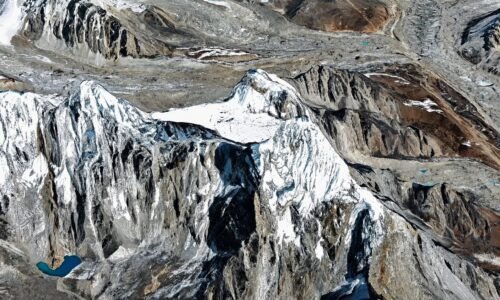
Lobuche East Peak Climbing is one of the finest Himalayan adventures for trekkers who want to move beyond high-altitude hiking and experience genuine alpine climbing without committing to a full-scale expedition.
Rising to 6,119 metres above sea level, Lobuche East stands beside the mighty Khumbu Glacier in Nepal’s Everest region, offering an unforgettable combination of trekking, mountaineering, and some of the most spectacular mountain scenery anywhere on Earth.
Unlike a standard Everest Base Camp trek, this journey rewards you with the rare opportunity to stand on a Himalayan summit after following one of the world’s most iconic trekking routes.
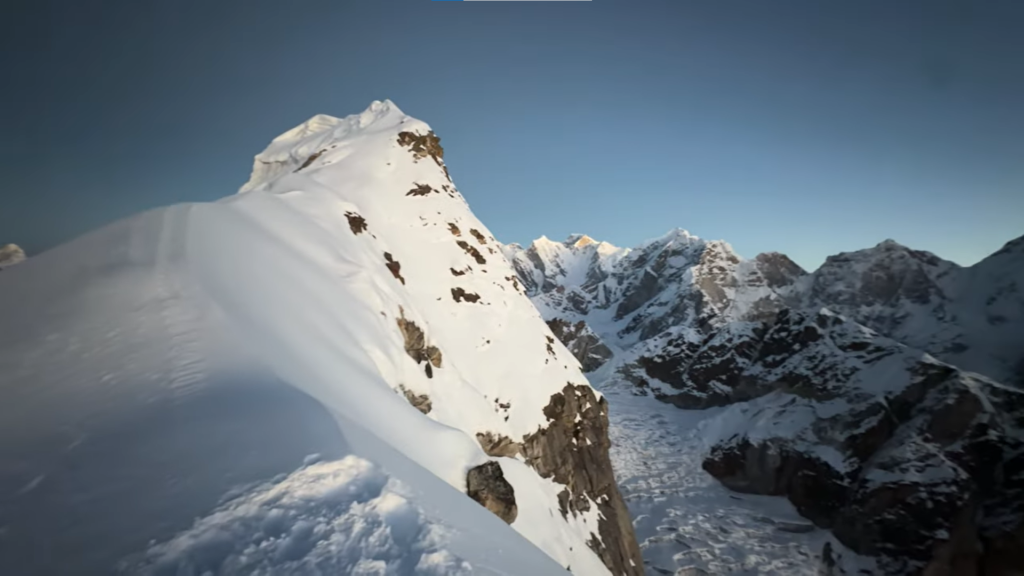
Although Lobuche East is officially classified as a trekking peak by the Nepal Mountaineering Association, the climb itself is far more adventurous than the name suggests.
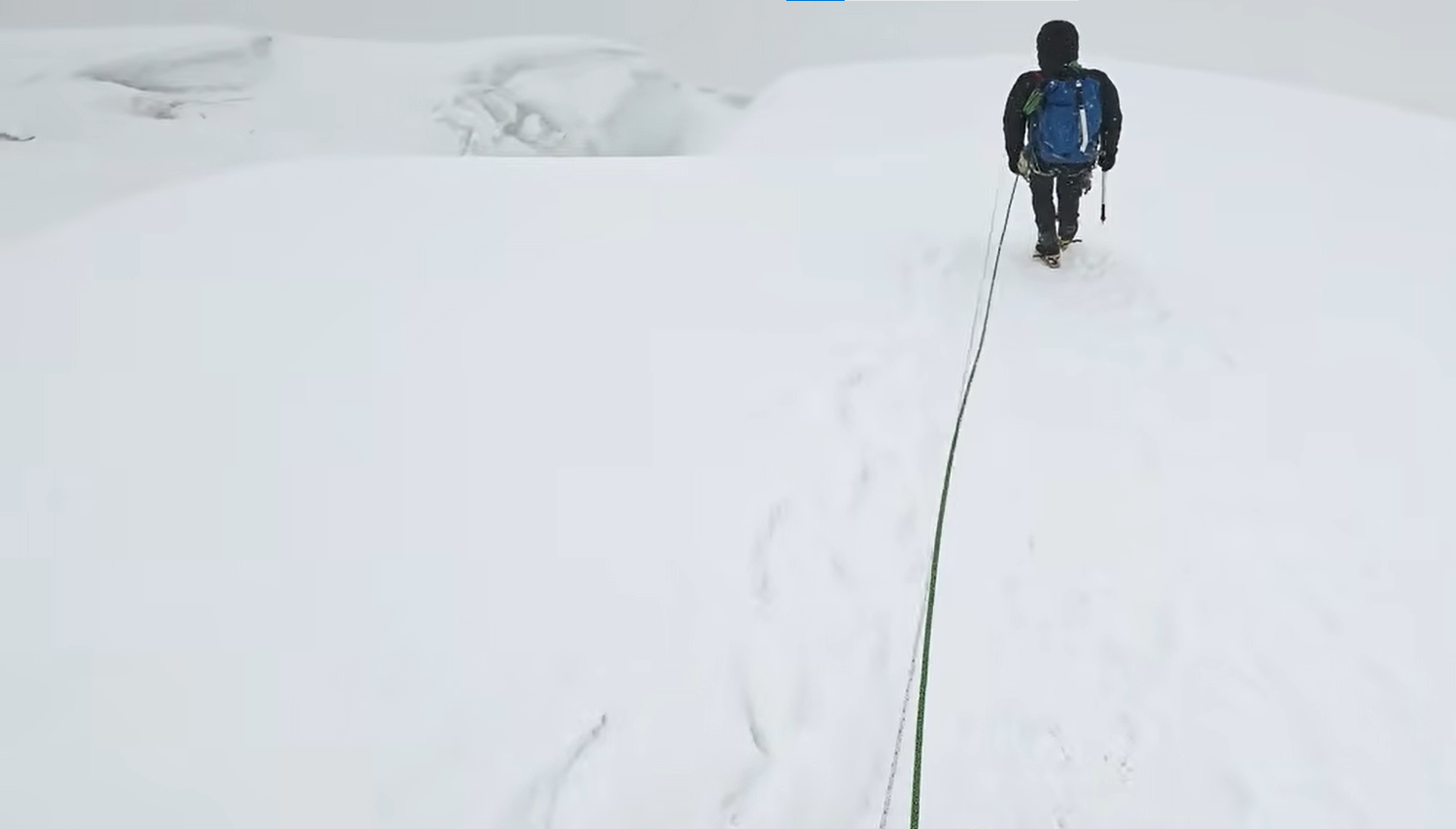
The final ascent involves glacier travel, steep snow slopes, fixed ropes, crampons, harnesses, and careful footwork across exposed alpine terrain.
It is challenging enough to provide a real sense of achievement while remaining accessible to fit trekkers who are ready to take their first serious step into Himalayan mountaineering under the guidance of experienced climbing professionals.
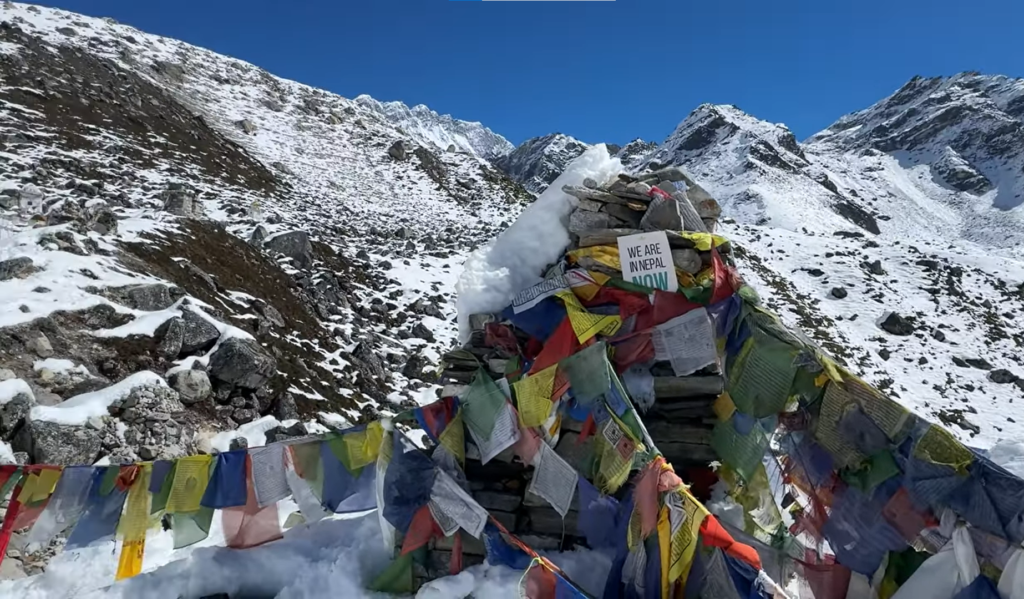
The adventure begins with the famous mountain flight to Lukla, one of the most exciting airports in the world.
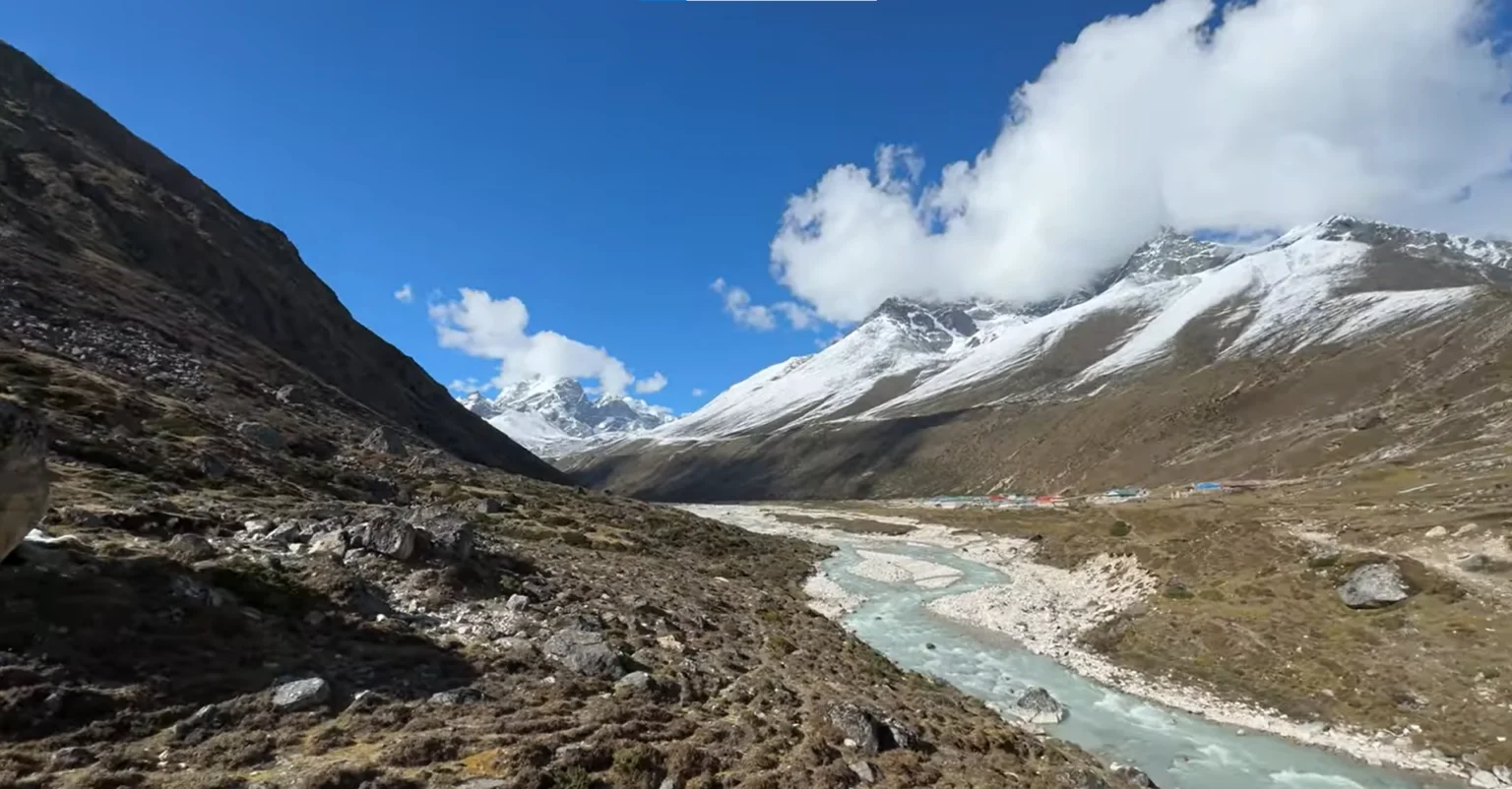
From there, the trail follows the Dudh Koshi River through pine forests, traditional Sherpa villages, colourful prayer wheels, suspension bridges, and centuries-old monasteries before gradually climbing deeper into the Khumbu Valley.
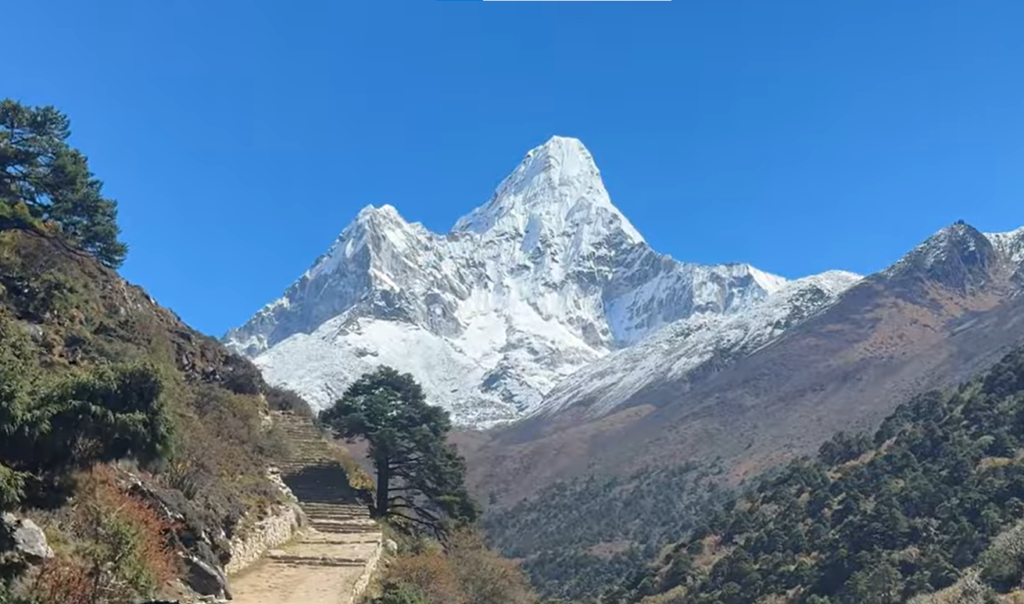
Each day introduces new landscapes, changing vegetation, and increasingly dramatic mountain views, making the approach as rewarding as the climb itself.
One of the greatest strengths of this itinerary is that it never rushes the mountains. Proper acclimatization plays a vital role throughout the journey, allowing your body to adjust naturally as you gain altitude.
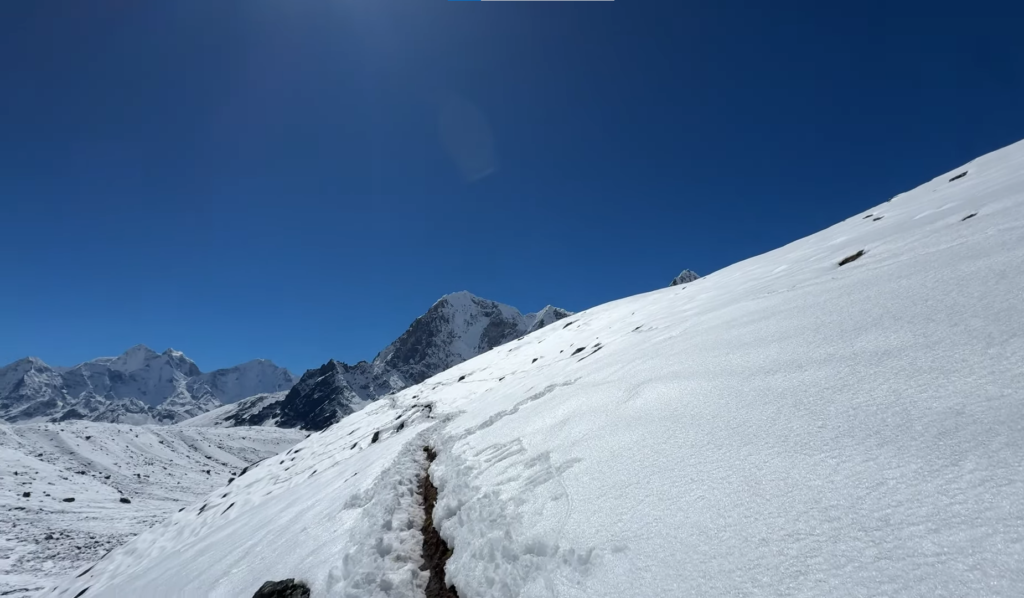
Rest days in Namche Bazaar and Dingboche are not simply breaks from walking. They are carefully planned opportunities to hike higher during the day before returning to lower elevations to sleep, following the proven mountaineering principle of climb high, sleep low.
This gradual approach significantly improves comfort while increasing the chances of a successful summit
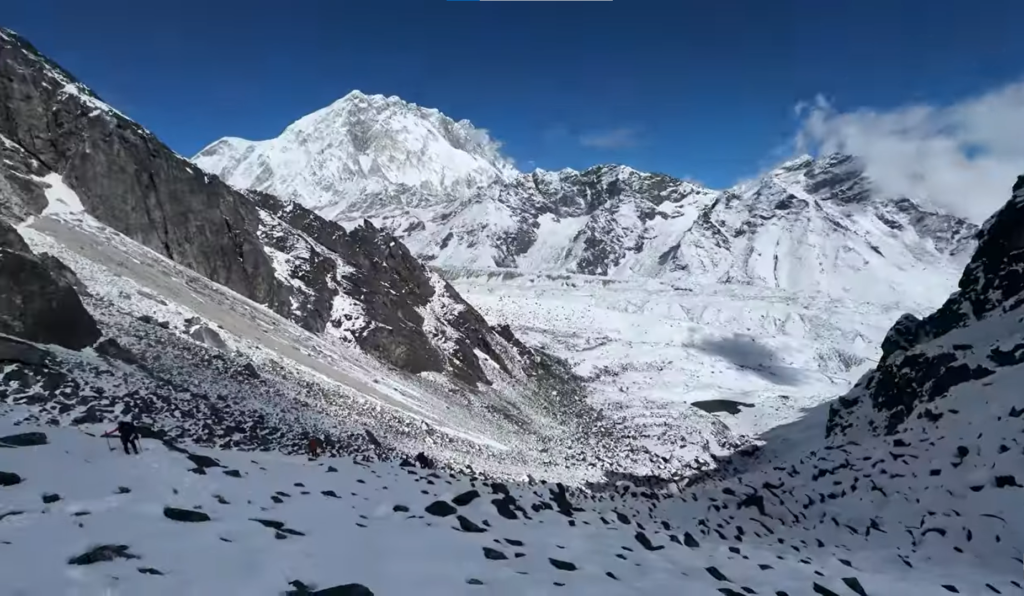
Along the way, you will pass through some of the most famous locations in the Everest region. Namche Bazaar serves as the vibrant trading centre of the Khumbu, where traditional Sherpa culture goes hand in hand with modern trekking life.
Higher on the trail, Tengboche Monastery welcomes visitors with peaceful surroundings and magnificent views of Ama Dablam rising behind the monastery.
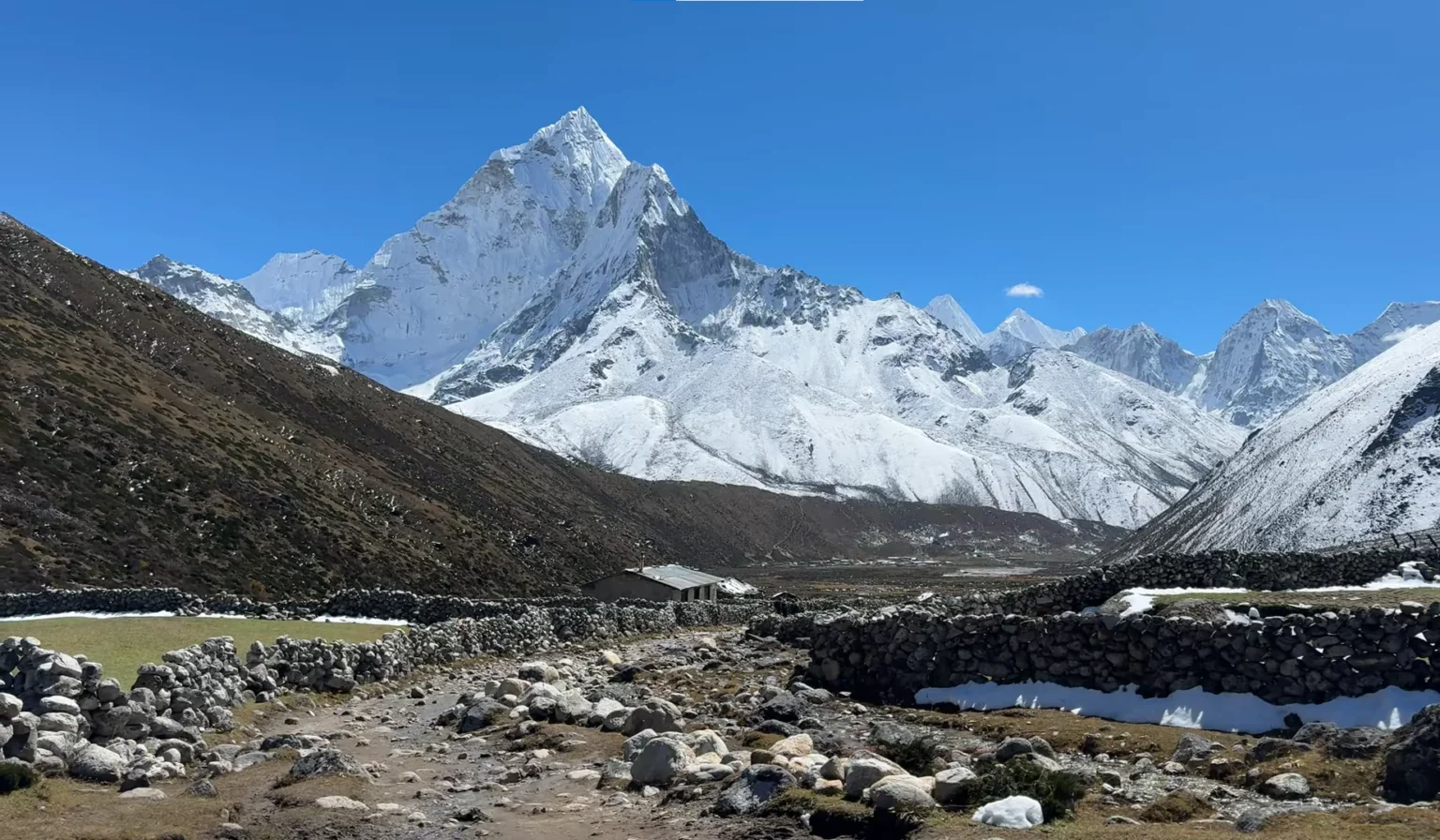
Dingboche introduces the wide alpine valleys of the upper Khumbu, where stone-walled fields gradually disappear beneath towering snow-covered peaks.
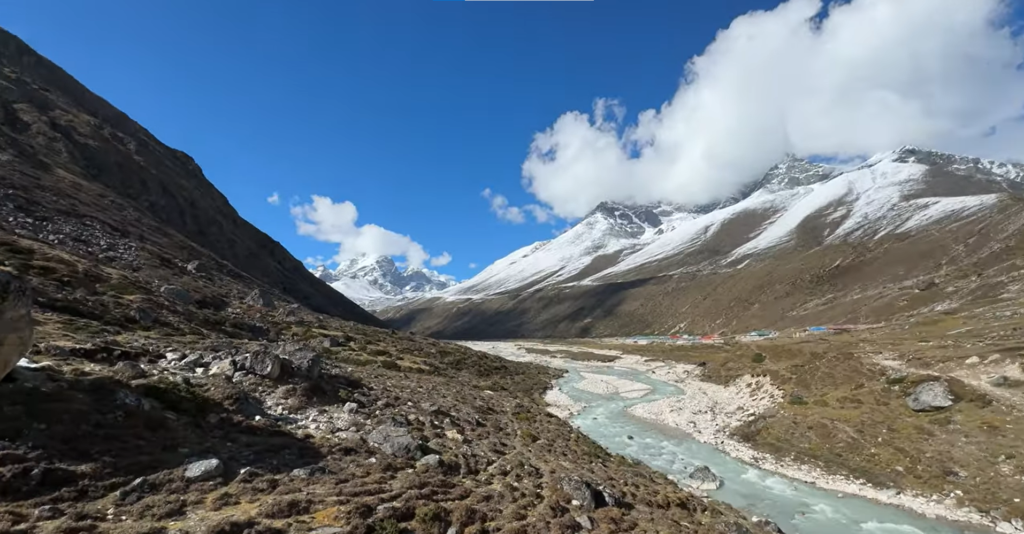
Before focusing entirely on Lobuche Peak, this itinerary also includes visits to Everest Base Camp and Kala Patthar, allowing you to experience two of the Everest region’s greatest highlights.
Standing beside the Khumbu Icefall at Everest Base Camp offers a fascinating glimpse into the world of Himalayan expeditions, where colourful tents, climbing equipment, and towering walls of moving ice create an unforgettable atmosphere during the climbing season.
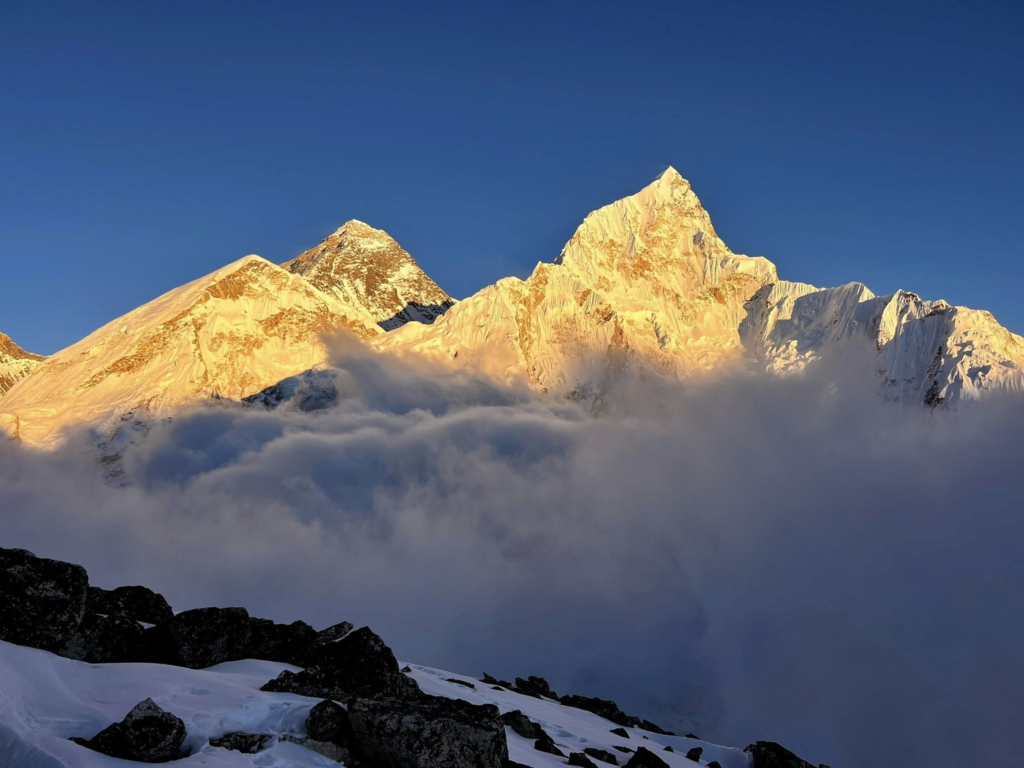
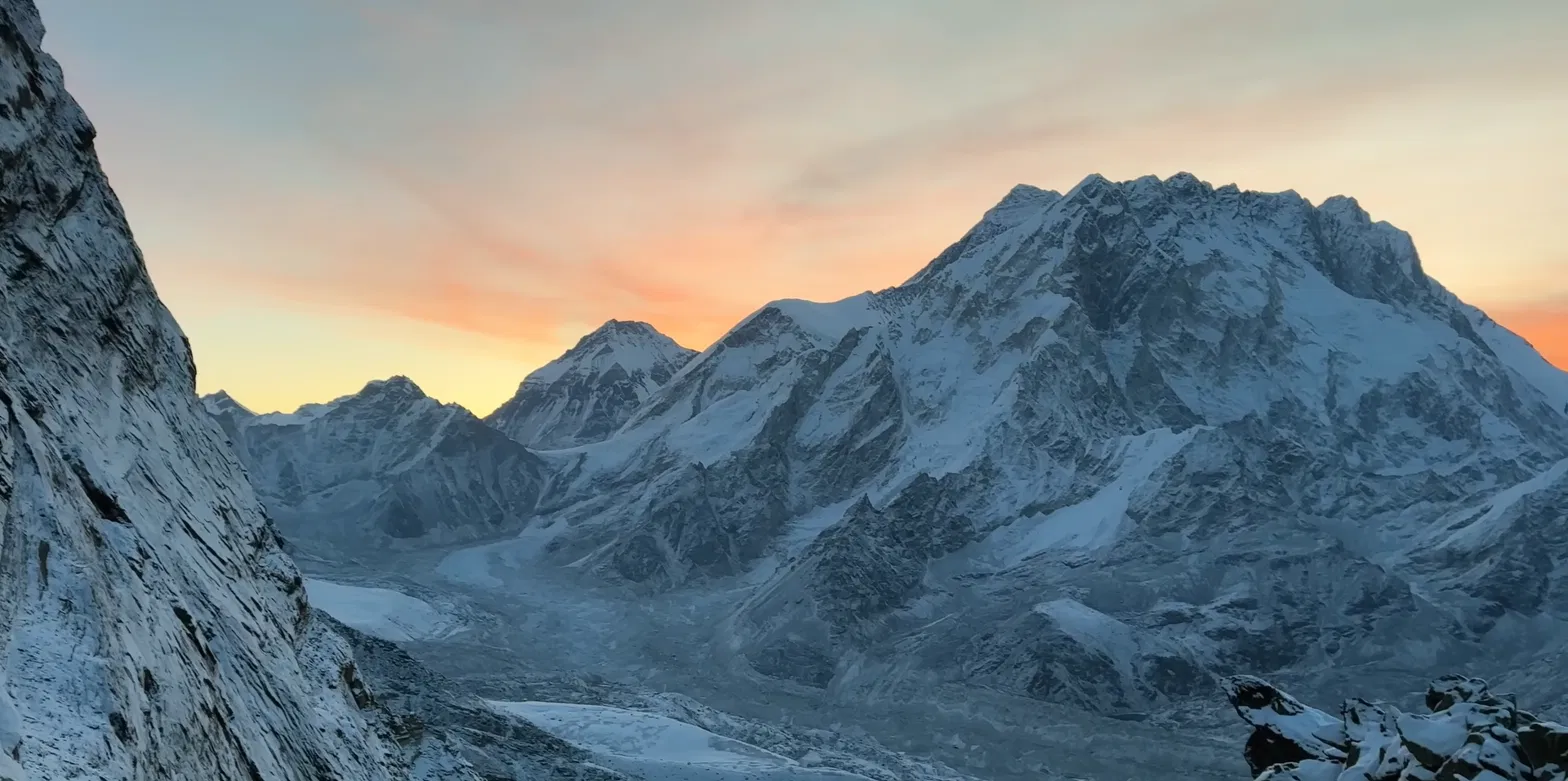
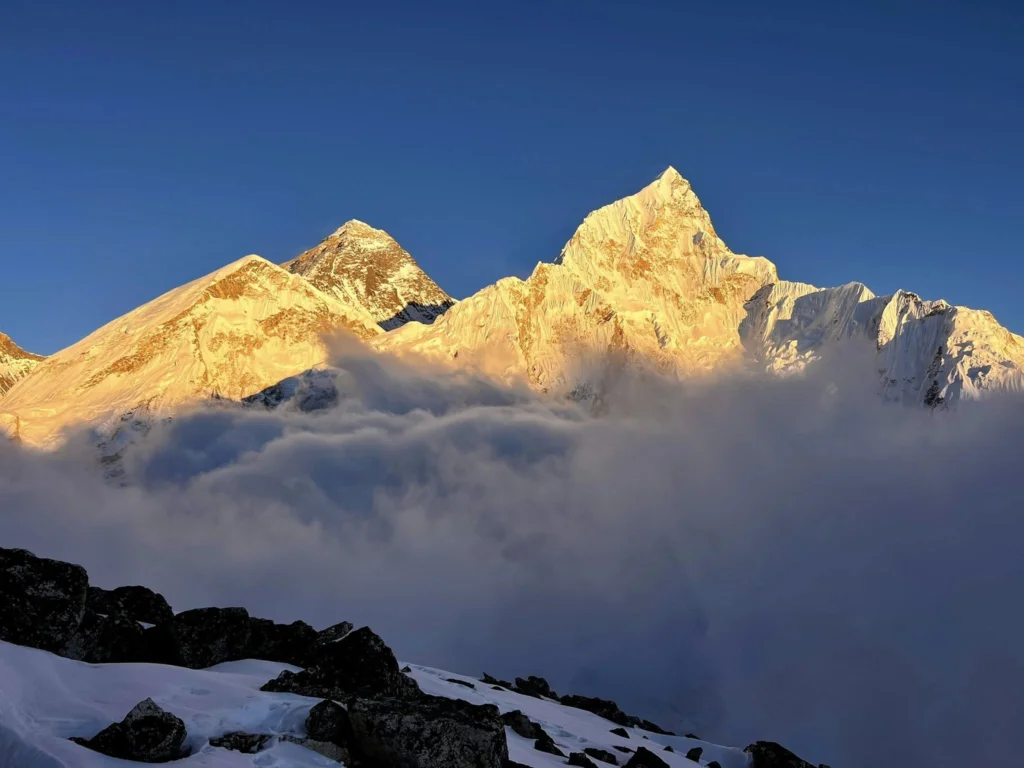
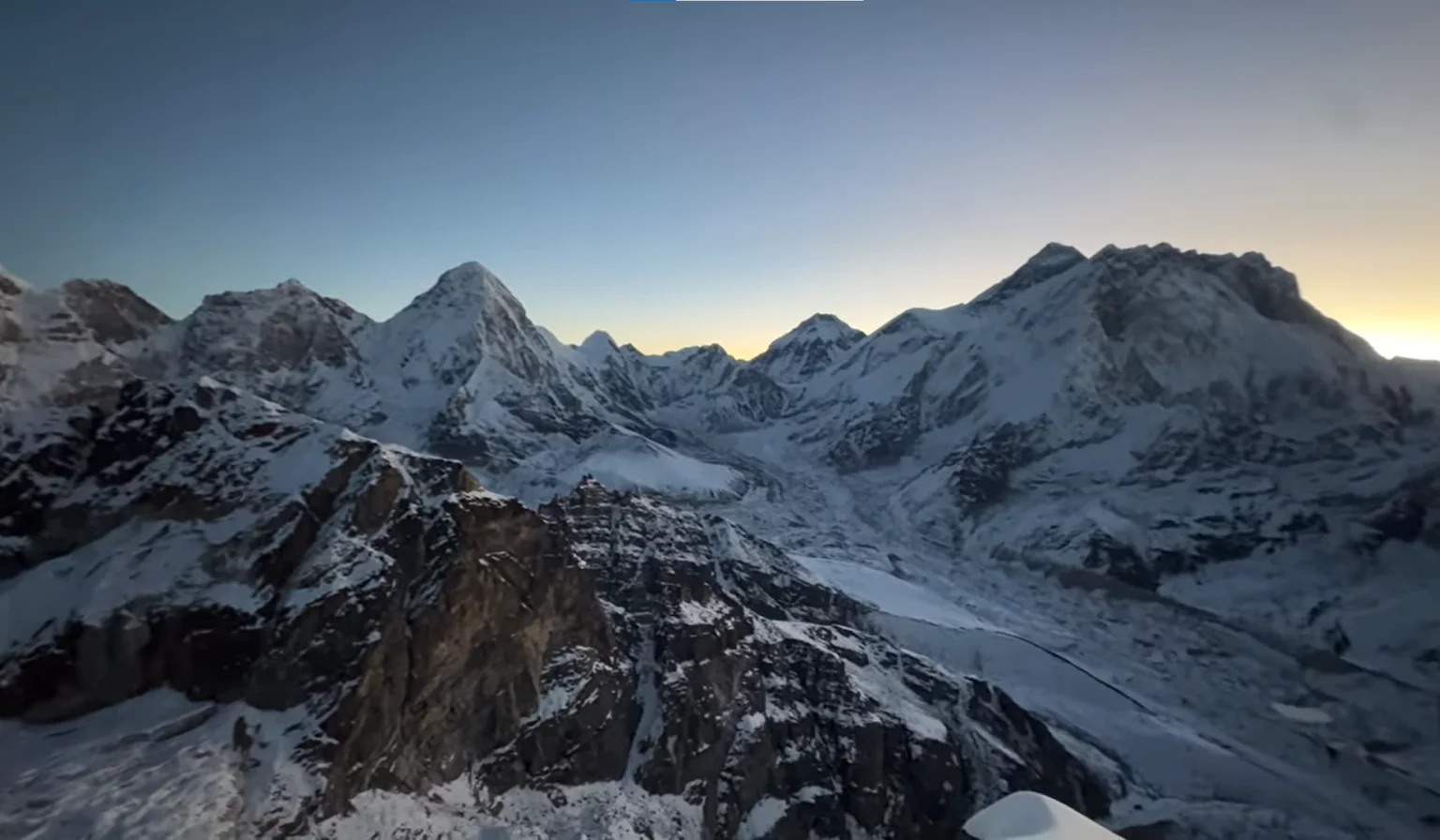
Later, the climb to Kala Patthar provides what many consider the finest viewpoint in the Everest region, with Mount Everest rising directly above Nuptse alongside Lhotse, Pumori, Lingtren, and countless surrounding peaks.
After returning to Lobuche village, the expedition enters its climbing phase.
The trail leaves the main Everest Base Camp route and heads toward Lobuche East Base Camp across rocky moraine, glacial debris, and increasingly rugged alpine terrain. The atmosphere changes immediately.
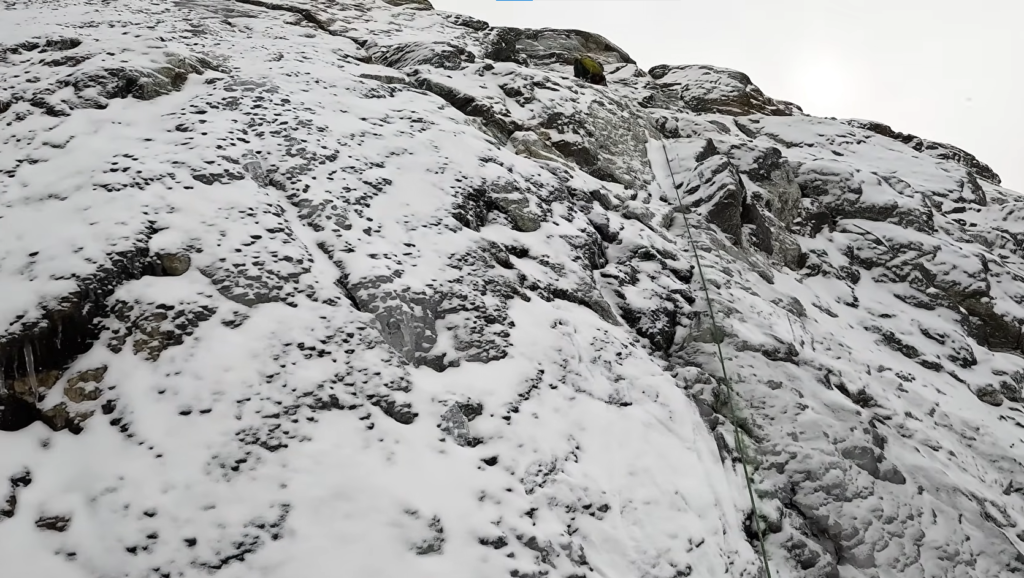
Trekking gives way to expedition life as climbing equipment is unpacked, guides review safety procedures, and everyone begins preparing for the summit attempt.
Reaching High Camp is one of the most memorable parts of the journey. Surrounded by towering rock walls, glaciers, and endless Himalayan peaks, this remote camp offers a genuine mountaineering experience rarely found on ordinary trekking routes.
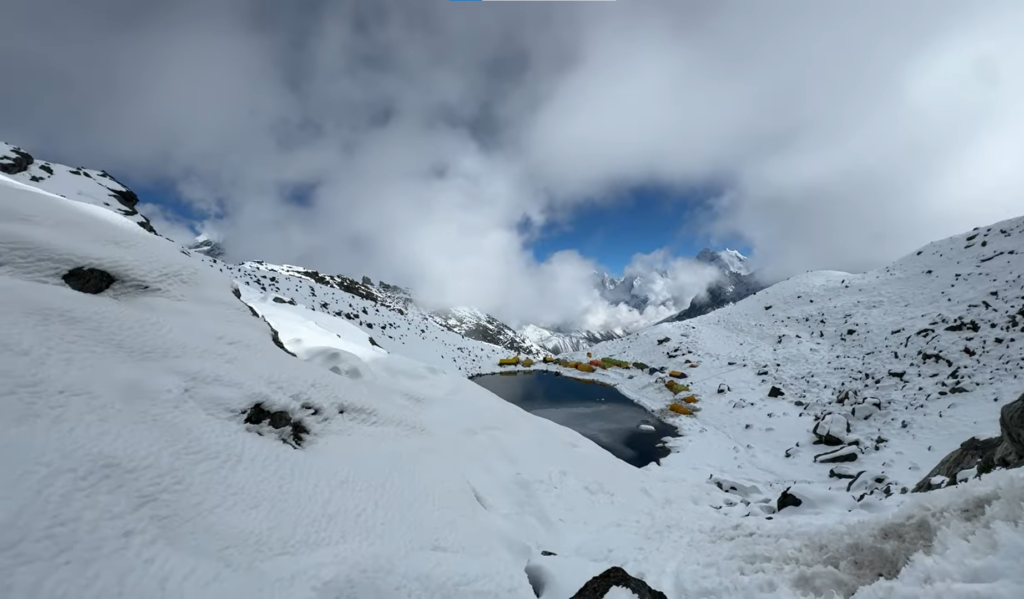
Here, your climbing guides provide practical instruction on using crampons, harnesses, fixed ropes, ascenders, helmets, and ice axes. Even trekkers with limited climbing experience quickly gain confidence through hands-on practice before summit day.
The summit push begins well before sunrise under a sky filled with stars. Wearing headlamps, the team gradually climbs toward the glacier before reaching steeper snow and ice slopes where fixed ropes provide additional security.
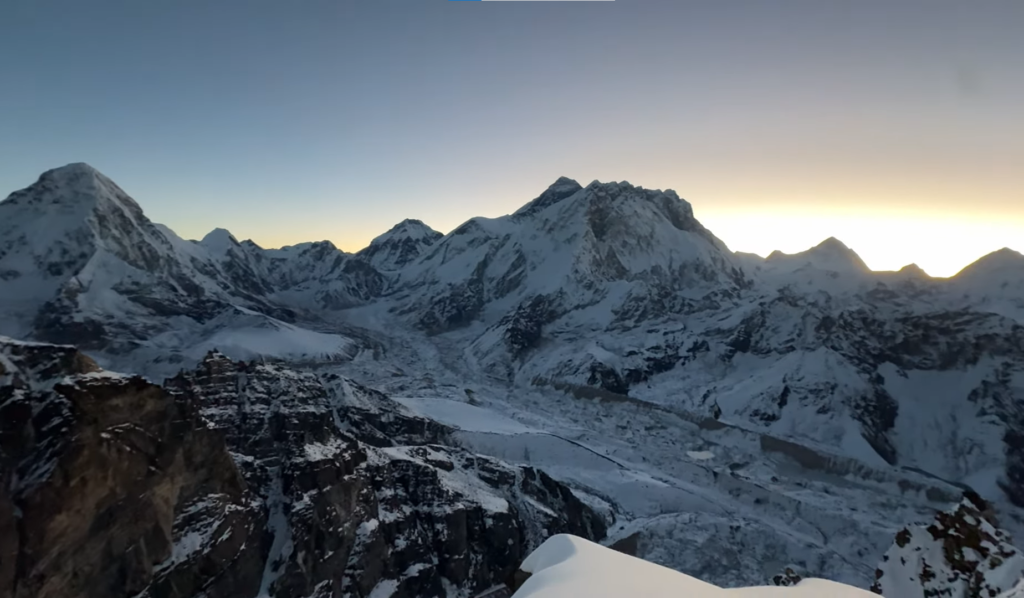
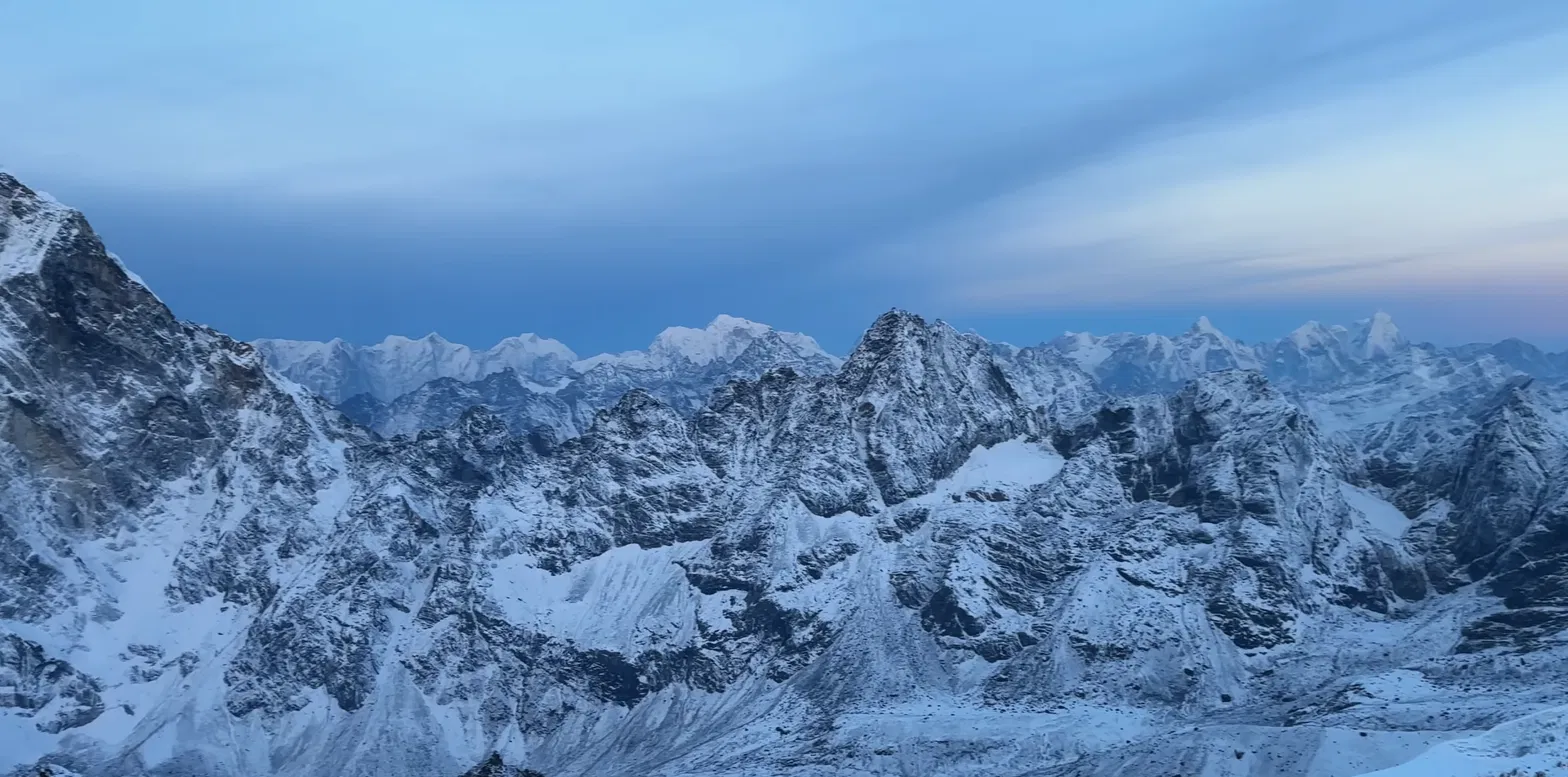
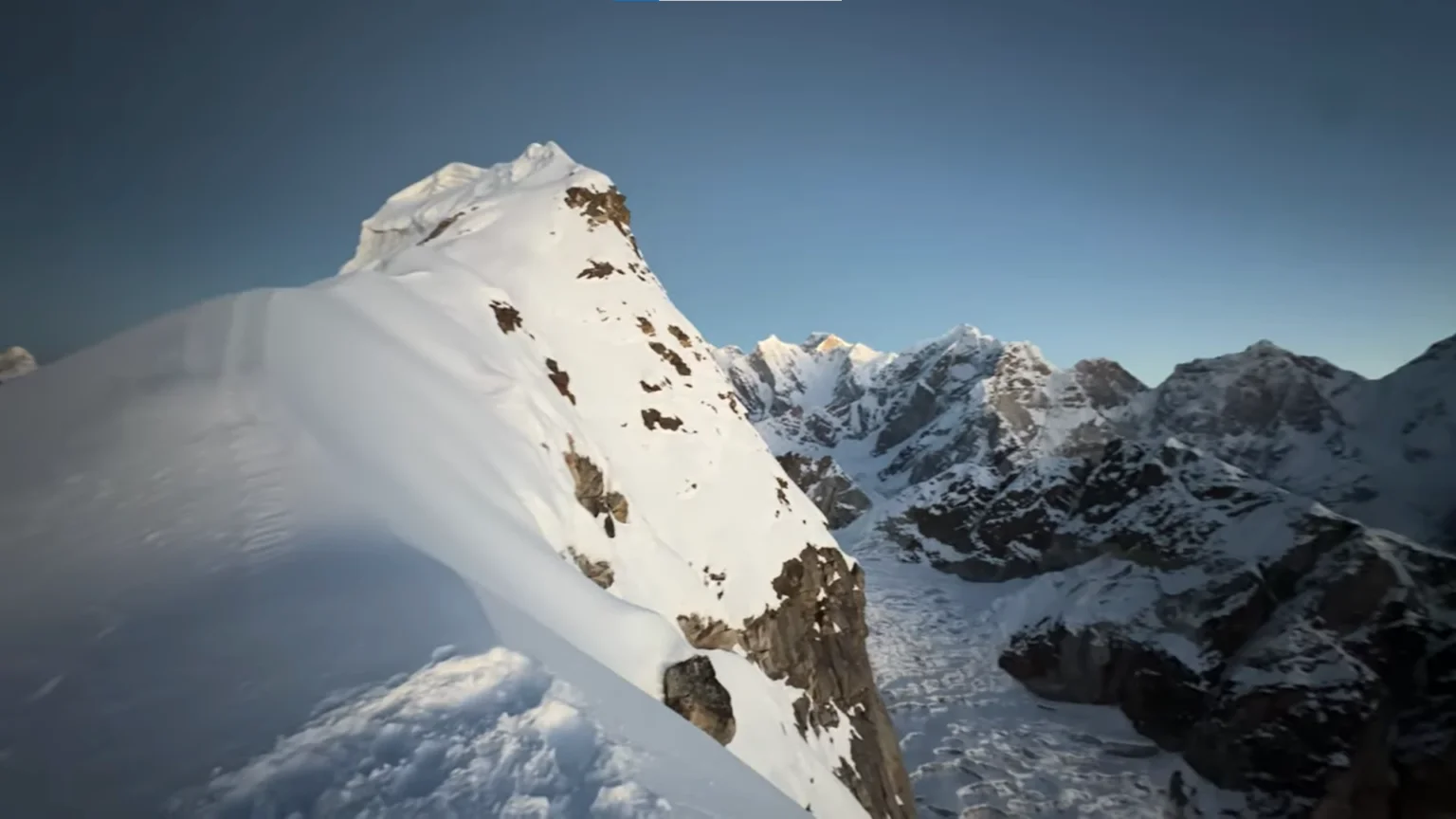
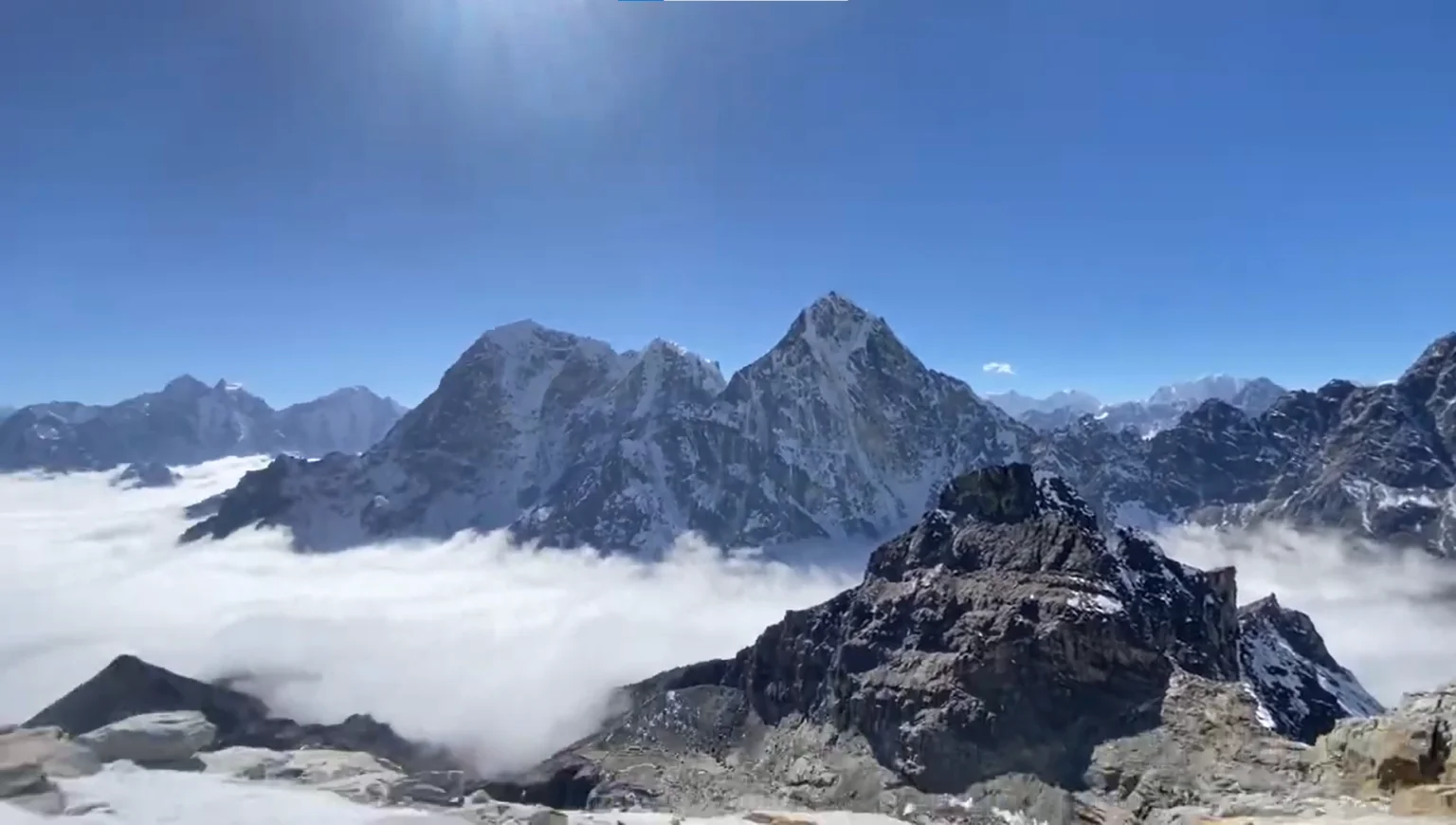
As daylight spreads across the Himalayas, the surrounding landscape transforms into an extraordinary panorama of glaciers, ridgelines, and towering peaks.
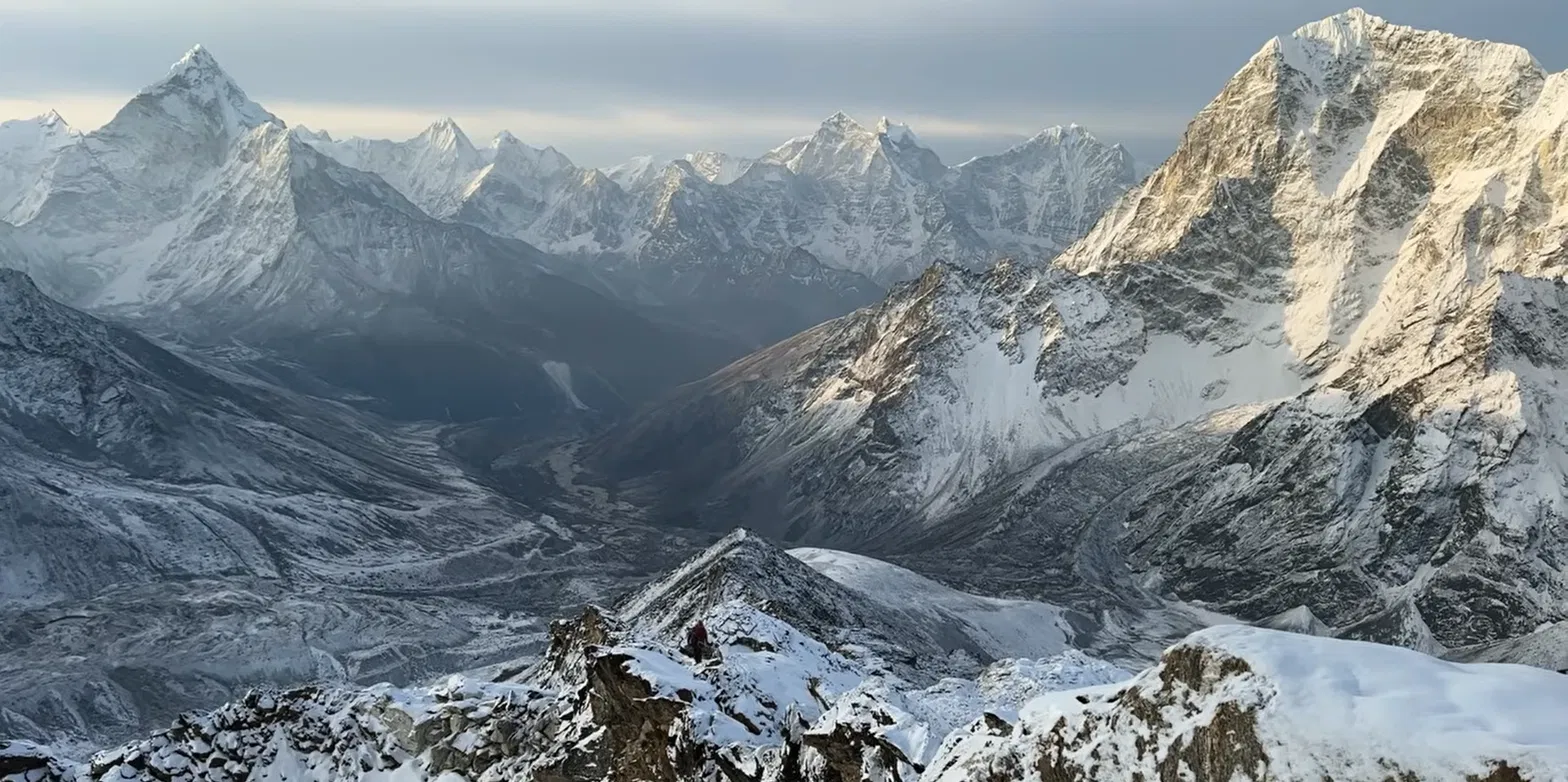
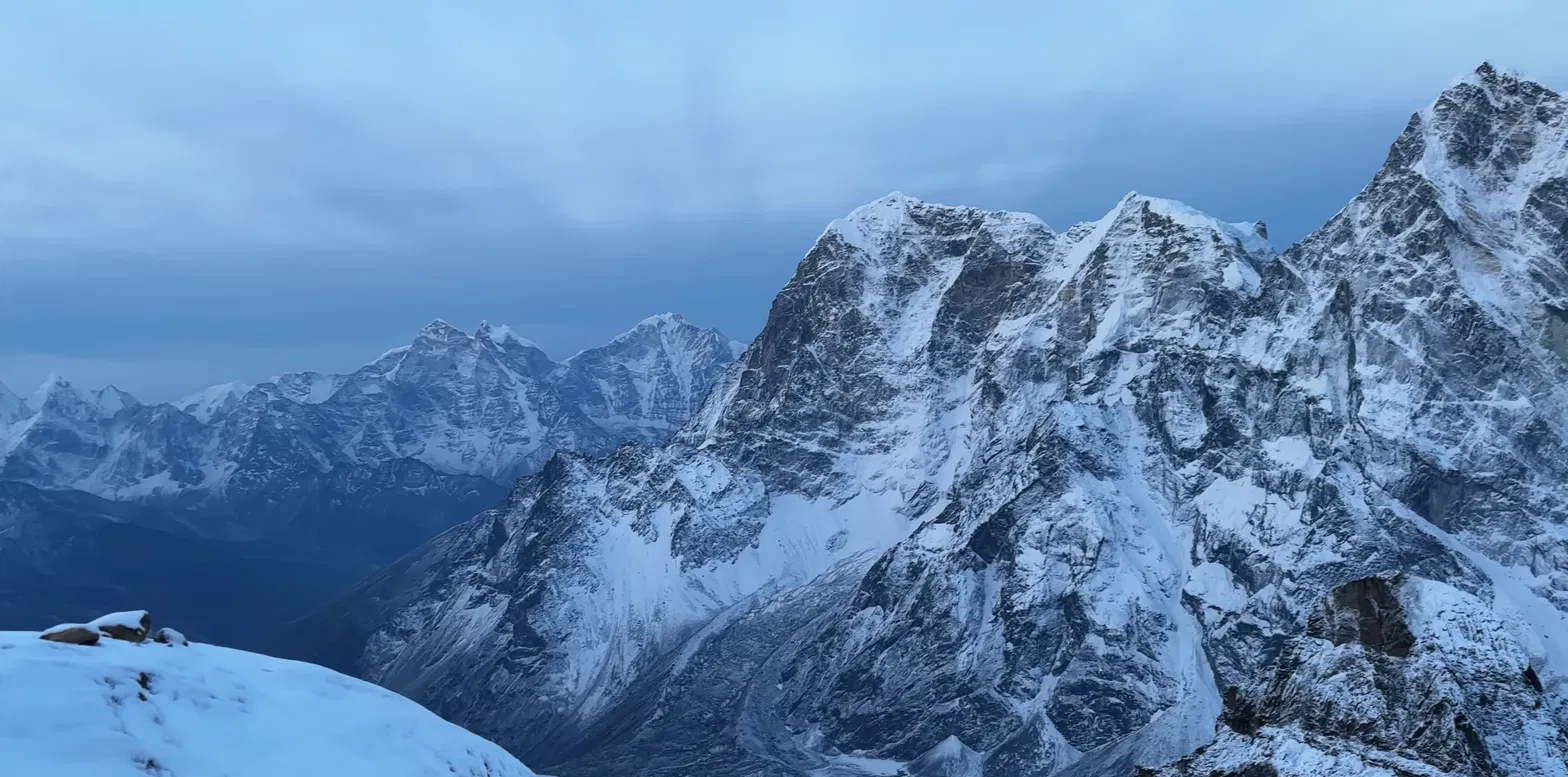
Every step becomes increasingly rewarding as Everest, Lhotse, Nuptse, Ama Dablam, Makalu, Cho Oyu, Pumori, Baruntse, and many lesser-known Himalayan giants emerge above the clouds.
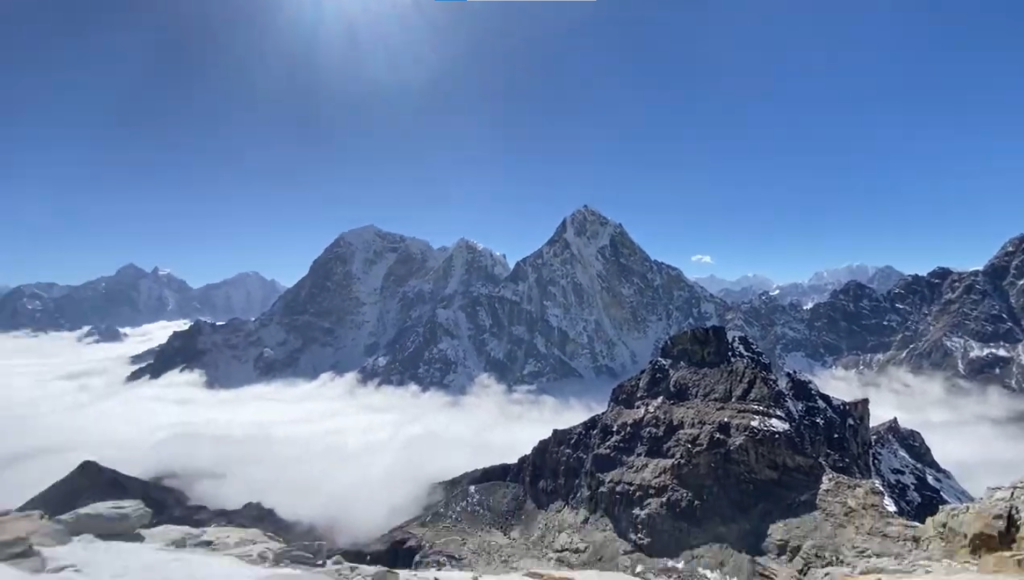
Standing on the summit of Lobuche East is a moment few people ever experience. Unlike viewpoints reached by trekking alone, this summit represents days of steady acclimatization, technical climbing, determination, and teamwork.
Looking across the Khumbu Glacier toward Everest while standing on your own Himalayan summit creates memories that remain long after the journey has ended.
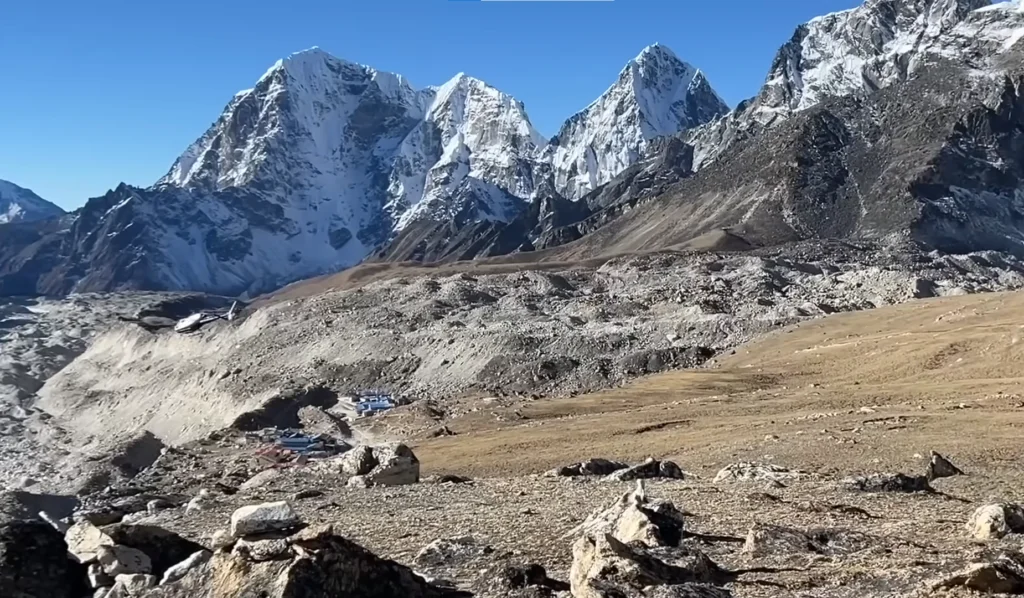
After celebrating the achievement, the descent follows the same carefully managed route back through High Camp before continuing toward Pangboche.
Descending through familiar villages often feels completely different after reaching the summit.
Places that once marked progress toward the mountain now become reminders of everything accomplished throughout the expedition.
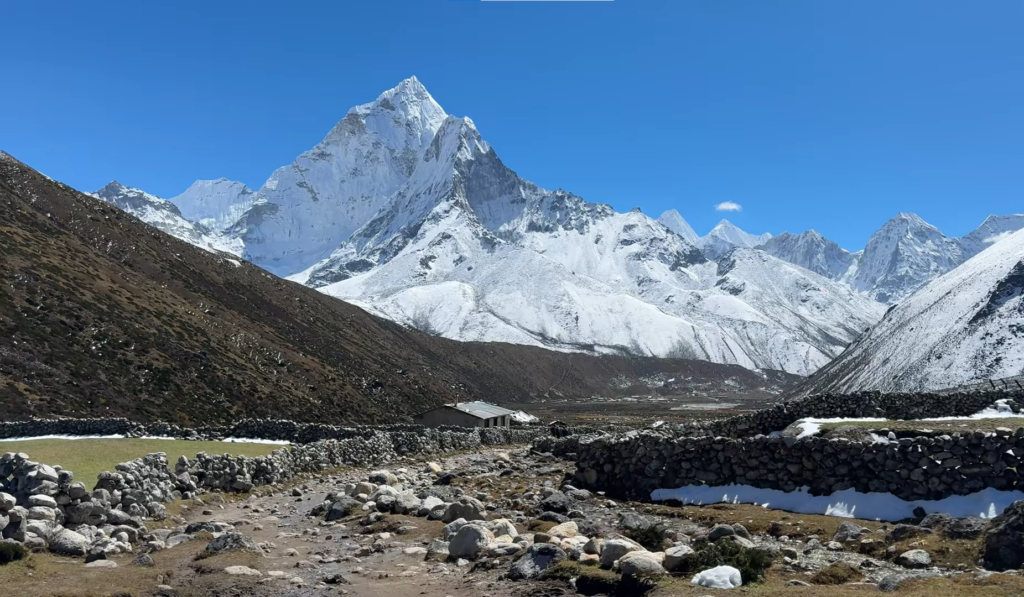
Spring and autumn remain the best seasons for Lobuche Peak Climbing, offering stable weather, excellent mountain visibility, and favourable climbing conditions.
During these months, clear skies reveal uninterrupted views across the Everest region while temperatures remain suitable for both trekking and summit attempts.
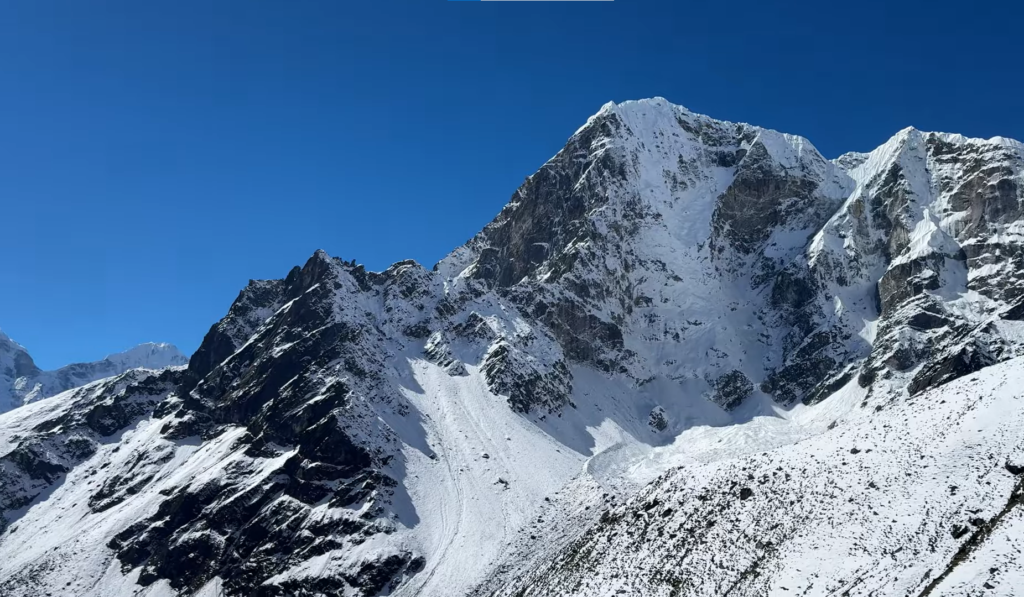
Every season brings its own character, but careful planning and experienced local guidance ensure the safest possible experience whenever conditions allow.
Lobuche East Peak Climbing is more than simply reaching another Himalayan summit.
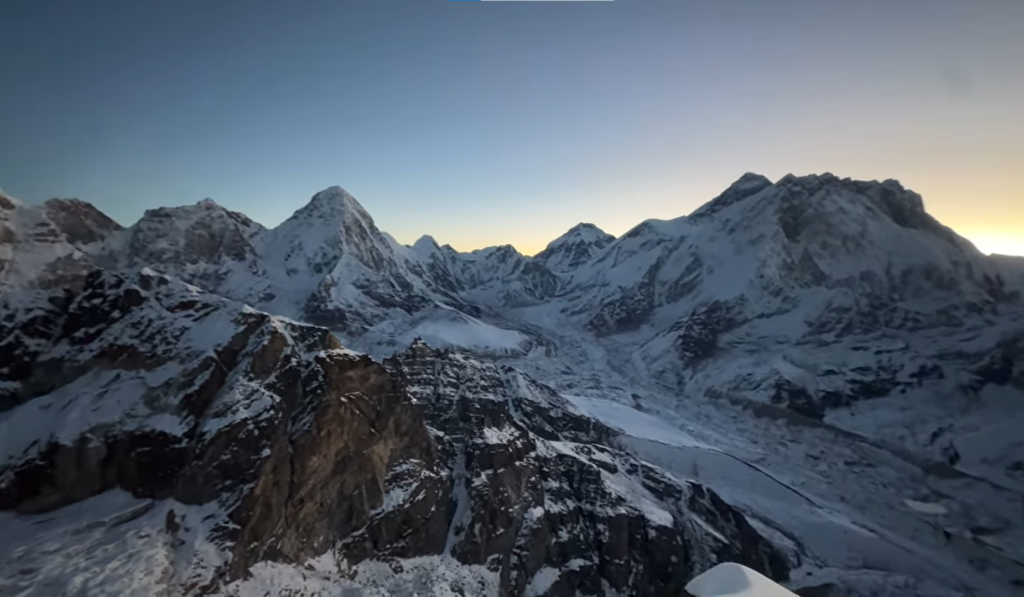
It combines the legendary Everest Base Camp Trek, the breathtaking viewpoint of Kala Patthar, traditional Sherpa culture, glacier travel, technical mountaineering, and one of Nepal’s most rewarding trekking peaks into a single unforgettable adventure.
Whether your goal is to develop mountaineering skills, challenge yourself beyond trekking, or stand among the world’s highest mountains, this expedition offers an experience that continues to inspire long after you return home.
Lobuche East Peak Climbing Permit Costs
| Permit Type | Season | Cost (USD) |
|---|---|---|
| Lobuche East Peak Climbing Permit | Spring (March–May) | $350 |
| Lobuche East Peak Climbing Permit | Autumn (September–November) | $175 |
| Lobuche East Peak Climbing Permit | Winter (December–February) | $175 |
| Lobuche East Peak Climbing Permit | Summer/Monsoon (June–August) | $175 |
Additional Required Permits
| Permit | Fee | Issuing Authority |
|---|---|---|
| Sagarmatha National Park Entry Permit | NPR 3,000 (approx. USD 25) | Nepal Tourism Board / Sagarmatha National Park Office (Monjo) |
| Khumbu Pasang Lhamu Rural Municipality Permit | NPR 3,000 (approx. USD 25) | Khumbu Pasang Lhamu Rural Municipality |
Altitude Character
| Section | Altitude Range | Terrain Character |
|---|---|---|
| Kathmandu and Lukla | 1,350 m to 2,860 m | City exploration, mountain flight, Sherpa villages, and the beginning of the Everest trekking route. |
| Lower Khumbu Valley | 2,610 m to 3,867 m | River valleys, suspension bridges, pine forests, monasteries, and traditional Sherpa settlements. |
| Upper Khumbu Region | 4,410 m to 5,545 m | Alpine valleys, glacial moraine, Everest Base Camp, Kala Patthar, and dramatic mountain scenery. |
| Lobuche East Climbing Zone | 5,050 m to 6,119 m | Base Camp, High Camp, glacier travel, snow slopes, fixed ropes, summit ridge, and technical climbing terrain. |
| Return Journey | 3,985 m down to 1,350 m | Sherpa villages, monastery trails, forests, Lukla flight, and return to Kathmandu. |
Difficulty Overview
| Factor | Level | Notes |
|---|---|---|
| Physical demand | Strenuous | Long trekking days combined with a demanding summit push require excellent endurance. |
| Maximum altitude | Very High | The expedition reaches 6,119 metres on Lobuche East Summit where altitude becomes a major challenge. |
| Technical difficulty | Moderate to Challenging | Snow climbing, glacier travel, fixed ropes, crampons, ice axe, and harness use are part of the summit climb. |
| Altitude risk | High | The itinerary includes several nights above 4,500 metres and multiple excursions beyond 5,000 metres before summit day. |
| Weather exposure | High | Conditions around High Camp and the summit ridge can change rapidly with snow, wind, and low temperatures. |
| Experience level | Experienced Trekker | Suitable for fit trekkers with previous high-altitude trekking experience. Basic climbing experience is helpful but not mandatory. |
Climbing Gear and Equipment
| Gear Type | Items | Purpose During Expedition |
|---|---|---|
| Personal climbing gear | Mountaineering boots, crampons, climbing harness, helmet, ice axe, ascender, descender, locking carabiners, safety sling, and gaiters | Used during the High Camp approach, glacier travel, fixed rope climbing, and the Lobuche East summit ascent. |
| Group technical equipment | Fixed ropes, dynamic climbing ropes, snow anchors, ice screws, snow bars, anchor systems, and safety equipment | Installed and managed by the climbing guides to protect technical sections and ensure safe movement on the summit route. |
| Camping equipment | Expedition tents, sleeping mats, kitchen tent, dining tent, cooking equipment, tables, chairs, and camp supplies | Provides shelter and logistical support at Lobuche East Base Camp and High Camp. |
| Cold weather protection | Down jacket, insulated gloves, thermal layers, balaclava, neck gaiter, wool socks, and windproof outer shell | Essential for High Camp, summit morning, exposed ridges, and freezing temperatures above 5,500 metres. |
Clothing Layers for All Seasons
| Layer | Recommended Clothing |
|---|---|
| Base layer | Moisture-wicking thermal tops, thermal leggings, quick-dry trekking shirts, breathable underwear, and trekking socks. |
| Mid layer | Fleece jacket, lightweight insulated jacket, trekking trousers, and comfortable clothing for evenings at the teahouses. |
| Outer layer | Waterproof jacket, windproof shell, waterproof trousers, and weather-resistant mountaineering clothing for snow and strong winds. |
| Summit clothing | Expedition down jacket, insulated gloves or mittens, warm hat, balaclava, neck buff, thick wool socks, and insulated mountaineering boots. |
| Sun and weather protection | Category 4 glacier sunglasses, sun hat, sunscreen SPF 50+, lip balm, UV buff, and lightweight windproof gloves. |
Trip Highlights
- Reach the summit of Lobuche East (6,119 m) and enjoy spectacular views of Everest, Lhotse, Nuptse, Ama Dablam, Pumori, and the vast Khumbu Glacier from one of Nepal's finest trekking peaks
- Visit Everest Base Camp (5,364 m) before climbing Kala Patthar (5,545 m), the region's most famous viewpoint for panoramic views of Mount Everest and the surrounding Himalayan giants
- Climb the South Ridge of Lobuche East using crampons, fixed ropes, and basic mountaineering techniques on sustained snow and ice slopes, making the summit both physically and technically rewarding
- Follow the classic Everest Base Camp trail through Lukla, Namche Bazaar, Tengboche, Dingboche, and Lobuche, passing Sherpa villages, ancient monasteries, suspension bridges, and dramatic alpine landscapes
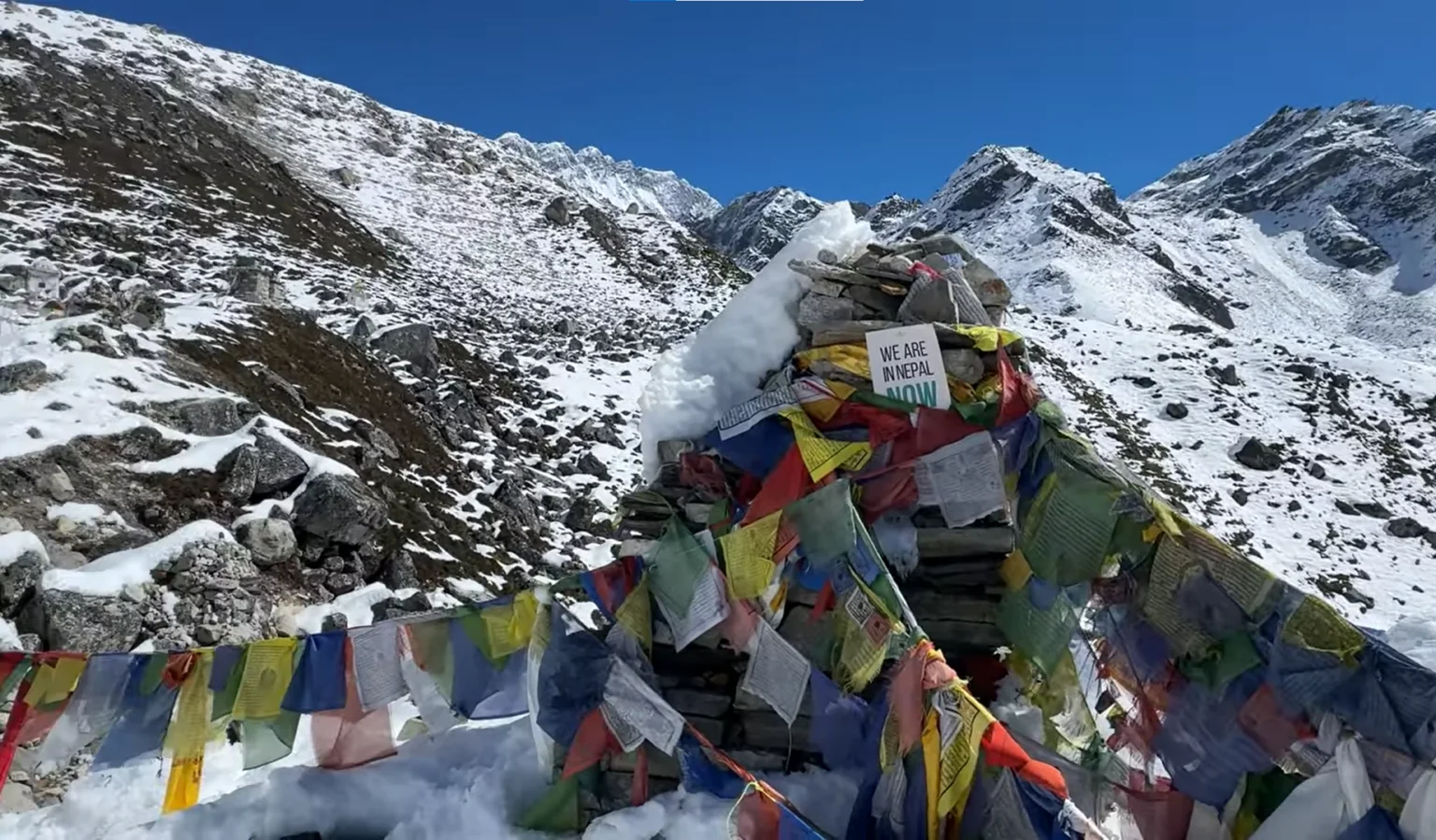
- Walk past the Chupki Lhara memorials, where climbers and Sherpas who lost their lives in the Himalayas are remembered beside the Khumbu Glacier
- Acclimatize in Dingboche with a hike into the Chhukung Valley, surrounded by outstanding views of Ama Dablam, Island Peak, Lhotse, and the Imja Glacier before beginning the climbing phase
- Spend a night at Lobuche East High Camp (5,400 m), preparing for an early summit attempt from a glacier camp beneath the mountain's upper slopes
- Visit Tengboche Monastery (3,867 m), the spiritual heart of the Khumbu, set against the unforgettable backdrop of Ama Dablam and the surrounding Himalayan peaks
- Complete a carefully planned 17-day expedition that combines Everest Base Camp, Kala Patthar, proper acclimatization, technical peak climbing, and authentic Sherpa culture in one unforgettable journey
- Descend through the beautiful Khumbu Valley, retracing the legendary Everest trail as changing forests, rivers, and mountain villages mark your return from one of Nepal's most rewarding climbing adventures
Lobuche Peak Climbing – 17 Days ~ Itinerary
Day 1
Arrival in Kathmandu
- Altitude: 1,350 m
- Accommodation: Standard Three Star Hotel in Thamel
Upon arrival at the Tribhuvan International Airport, a team member will greet you and transfer you to the hotel in Thamel. Thamel, situated in the heart of Kathmandu, is a lively area filled with restaurants, bars, and shops selling unique Nepalese products and trekking gear. You will have the opportunity to explore this vibrant area. You will also meet our guide on the same day, who will address any questions or concerns you may have about your Lobuche Peak Climbing.
Day 2
Fly from Kathmandu to Lukla Lukla from Kathmandu and trek to Phakding
- Altitude: 2,840 m
- Flight Duration: 30 to 35 minutes
- Trek Duration: 3 to 4 hours
- Trek Distance: 7 to 8 km
- Meal: Breakfast, Lunch and Dinner
- Accommodation: Teahouse in Phakding
We will take a flight above the breathtaking green and white mountains, we reach Tenzing-Hillary Airport at Lukla. This is one of the most beautiful air routes in the world culminating in a landing on a hillside surrounded by high mountains. Upon our arrival at Lukla, we start our trek through the prosperous village of Lukla until we reach Phakding.
Day 3
Trek from Phakding to Namche Bazaar.
- Altitude: 3,440 m
- Trek Duration: 5 to 7 hours
- Trek Distance: 11 km
- Meal: Breakfast, Lunch and Dinner
- Accommodation: Teahouse in Namche Bazaar
The trail follows the Dudh Koshi north through mixed forest, crossing and recrossing the river on suspension bridges before the final steep climb of six hundred metres into Namche Bazaar. The last hour from the river junction at the Hillary Bridge is the most demanding section of the day, climbing through rhododendron and pine forest on a broad stone path. Namche sits in a natural bowl above the valley with the Kongde range on the opposite ridge and Kwangde Peak overhead.
Day 4
Acclimatization day at Namche Bazaar
- Altitude: 3,880 m at Everest View Hotel and 3,440 overnight
- Optional Hike Duration: 3 to 4 hours
- Optional Hike Distance: 4 to 8 km (depending on route)
- Meal: Breakfast, Lunch and Dinner
- Accommodation: Teahouse in Namche Bazaar
The body needs this day. The hike to the Everest View Hotel at 3,880 metres above Namche pushes above the sleeping altitude and provides the first clear view of Everest above the Lhotse Nuptse ridge, along with Lhotse itself, Ama Dablam, and Thamserku from a single vantage point. The Saturday market in Namche runs through the morning and draws traders from surrounding valleys. The afternoon back in town is free to visit gear shops, check equipment, and rest before the altitude increases again tomorrow.
Day 5
Trek from Namche Bazaar to Tengboche
- Altitude: 3,867 m
- Trek Duration: 5 to 6 hours
- Trek Distance: 9.5 km
- Meal: Breakfast, Lunch and Dinner
- Accommodation: Tea house in Tengboche
The trail from Namche drops to the Dudh Koshi at Phunki Tenga and then climbs steeply through birch and rhododendron forest to Tengboche monastery. The monastery sits on a broad ridge at 3,867 metres rebuilt after fire and earthquake, with Ama Dablam at 6,812 metres visible directly to the southeast. The view from the monastery courtyard in the late afternoon, when the light shifts on Ama Dablam’s southwest ridge, is something most people photograph more than once without capturing what it actually looks like.
Day 6
Trek from Tengboche to Dingboche
- Altitude: 4,410 m
- Trek Duration: 6 to 7 hours
- Trek Distance: 13 km
- Meal: Breakfast, Lunch and Dinner
- Accommodation: Teahouse in Dingboche
The trail descends from Tengboche through Debuche and climbs through Pangboche, the highest permanently inhabited village in the Khumbu valley, before crossing the Imja Khola and ascending to Dingboche. The Pangboche gompa is worth a brief stop. Above Pangboche the vegetation thins and the wide upper valley opens ahead with Lhotse and the Nuptse wall increasingly dominant to the north. Dingboche at 4,410 metres sits in a bowl of stone walls and terraces with the Chhukung ridge behind it.
Day 7
Day Trip to Chhukung Valley and Return to Dingboche
- Altitude: 4,410 m overnight and 4,730 at Chuukung
- Trek Duration: 6 to 7 hours
- Trek Distance: 13 km
- Meal: Breakfast, Lunch and Dinner
- Accommodation: Teahouse in Dingboche
The day trip into the Chhukung valley pushes the body above 4,500 metres for the first time and provides views of the East Face of Ama Dablam and the Imja Glacier that are not visible from the main Khumbu trail. Chhukung village at 4,730 metres sits below Island Peak’s east face, and the surrounding terrain on three sides gives a clear sense of the glacial world that begins here and extends all the way to the Lobuche summit above. Returning to Dingboche to sleep lower is the correct physiological move after this day.
Day 8
Trek from Dingboche to Lobuche
- Altitude: 4,410 m
- Trek Duration: 6 to 7 hours
- Trek Distance: 13 km
- Meal: Breakfast, Lunch and Dinner
- Accommodation: Teahouse in Dingboche
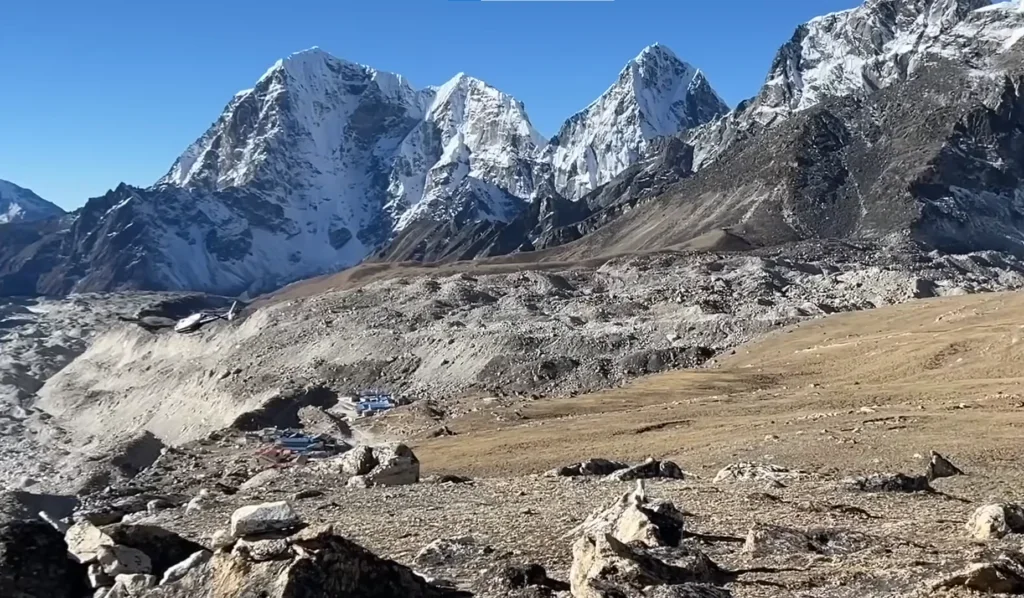
The trail climbs through Duglha at the terminal moraine edge and then up to the Chupki Lhara memorial site at 4,830 metres, where cairns bearing the names of climbers and Sherpas lost on the surrounding peaks line the path. Babu Chiri Sherpa and the 1996 Everest season dead are among those marked here. The memorial changes the register of the walk in a way that is impossible to dismiss. From the cairns the trail follows the lateral moraine of the Khumbu Glacier to the cluster of teahouses at Lobuche village, where the peak sits directly above.
Day 9
Trek from Lobuche to Gorakshep, Everest Base Camp
- Altitude: 5,364 m at Everest Base Camp and overnight 5,164 m at Gorakshep
- Trek Duration: 6 to 7 hours
- Trek Distance: 12 km
- Meal: Breakfast, Lunch and Dinner
- Accommodation: Teahouse in Gorakshep
From Lobuche the trail follows the Khumbu Glacier moraine to Gorakshep at 5,164 metres before continuing to Everest Base Camp at 5,364 metres. The camp sits below the Khumbu Icefall, a fractured glacier of seracs and pressure ridges that moves and occasionally cracks from within. The colour of the prayer flags against the grey moraine and the sounds of the icefall above make the camp feel entirely different from any other stopping point on the approach. The return to Gorakshep for the night is a deliberate descent to a slightly more comfortable sleeping altitude.
Day 10
Hike from Goarkshep to Kala Patthar and
- Altitude: 5,545 m at Kala Patthar and overnight 4,840 m in Lobuche
- Trek Duration: 6 to 7 hours
- Trek Distance: 12 km
- Meal: Breakfast, Lunch and Dinner
- Accommodation: Teahouse in Lobuche
An early start from Gorakshep climbs to Kala Patthar at 5,545 metres for the most complete ground-level view of Everest available without a climbing permit. Lingtren, Khumbutse, Changtse, and Pumori are all visible from the top before Everest dominates the eastern skyline. The descent from Kala Patthar to Lobuche is long but straightforward, and arriving back at the Lobuche teahouses with two nights above 5,500 metres now in the acclimatization record puts the body in a reasonable position for the summit attempt.
Day 11
Trek from Lobuche to Lobuche Peak Base Camp
- Altitude: 4,950 m
- Trek Duration: 2 to 3 hours
- Trek Distance: 4 km
- Meal: Breakfast, Lunch and Dinner
- Accommodation: Tented camp at Lobuche Peak Base Camp
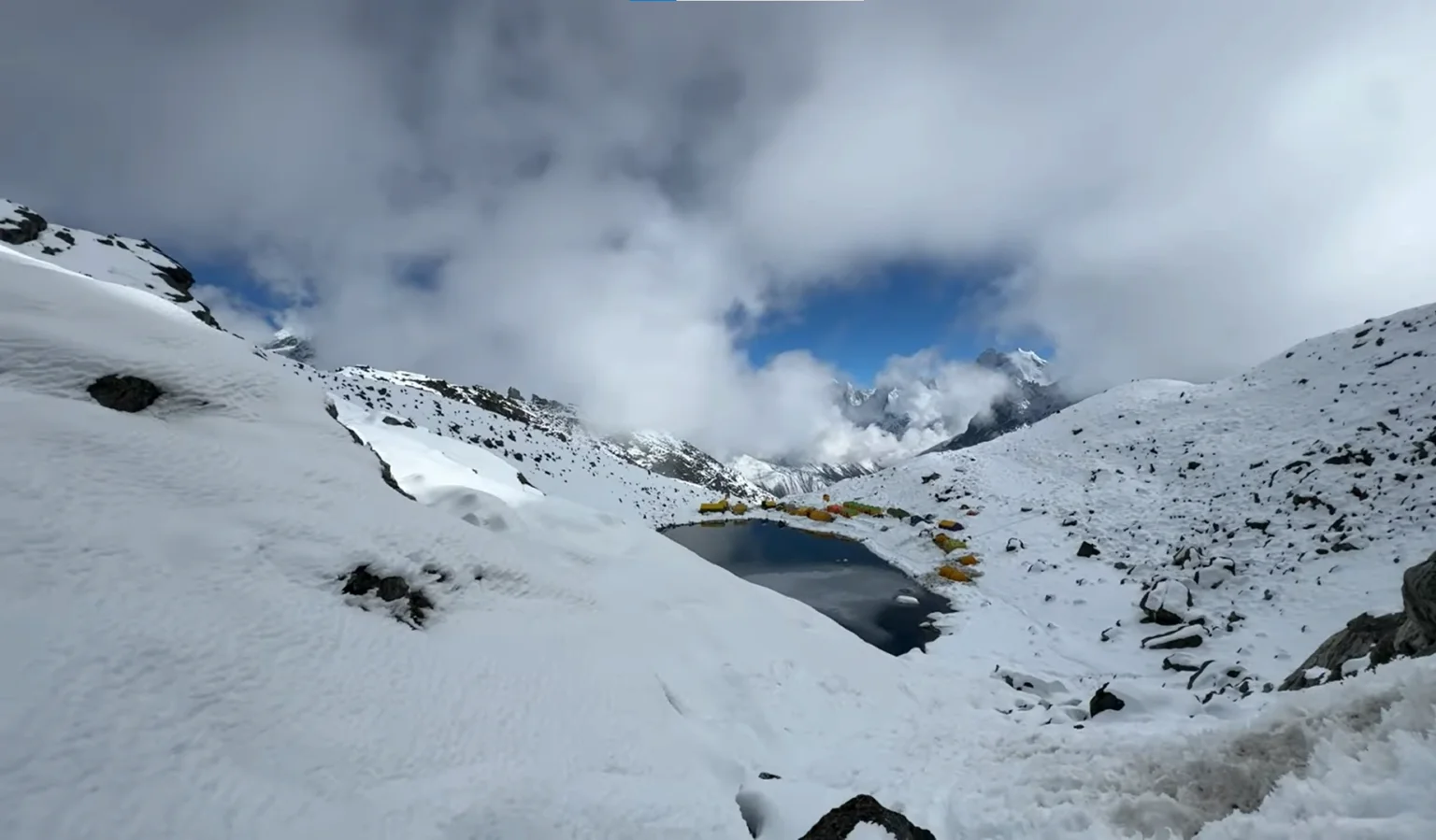
A short walk from Lobuche village across rocky valley brings the group to base camp at 4,950 metres below the South Ridge of Lobuche East. The afternoon covers camp setup, gear preparation, and the pre-climb technical session with the climbing guide on crampon technique, ice axe use on steep snow, and rope management. The slopes above the camp are visible from the tents and the training session is a direct introduction to what the gradient of the upper section actually looks like up close. Early rest is important tonight.
Day 12
Summit Lobuche East, Return to Base Camp
- Altitude: 6,119 m (Lobuche East Summit) and Overnight 4,950 m (Base Camp)
- Climb Duration: 11 to 13 hours
- Meal: Breakfast, Lunch and Dinner
- Accommodation: Tented camp at Lobuche Peak Base Camp
We start the climb pre-dawn. The route moves from base camp through rocky moraine to the glacier, where crampons go on and the technical climbing begins. The approach to high camp at around 5,400 metres takes three to four hours on mixed terrain that becomes increasingly glaciated. From high camp the summit slopes steepen to the forty to forty-five degree gradients that define the upper section of Lobuche East, sustained enough that the pace slows and the technique matters. The summit plateau opens before the true summit, and the panorama from the top is immediate and complete Khumbu Glacier directly below, Everest and Nuptse at close range to the northeast, Pumori and Cho Oyu to the northwest, Makalu to the east. The descent to base camp is careful on the steep upper section and faster once the glacier gives way to moraine.
Day 13
Trek from Base Camp to Pangboche
- Altitude: 3,985 m
- Trek Duration: 6 to 7 hours
- Trek Distance: 14 km
- Meal: Breakfast, Lunch and Dinner
- Accommodation: Teahouse in Pangboche
The descent from base camp joins the main EBC trail at Lobuche village and continues south through Pheriche and Dingboche before dropping through Orsho and Shomare toward Pangboche. The altitude loss over the day is nearly a thousand metres and the air noticeably thickens with each hour of descent. The Ama Dablam view from the trail above Pangboche is the one that appears in most photography of the Khumbu, and it arrives at the end of a long but satisfying day.
Day 14
Trek from Pangboche to Namche Bazaar
- Altitude: 3,440 m
- Trek Duration: 6 to 7 hours
- Trek Distance: 15 km
- Meal: Breakfast, Lunch and Dinner
- Accommodation: Teahouse in Namche Bazaar
We retrace our steps down to the Imja Khola and up through the forest to Tengboche. If interested, we can also visit nuns at the Tengboche monastery. After lunch at Tengboche, we continue through the hillside blanketed by rhododendron and juniper trees. After crossing the bridge over the Dudh Koshi River, our trail follows the Dudh Koshi gorge descending rapidly through the pine forests before reaching Sansa.
Day 15
Trek from Namche Bazaar toLukla
- Altitude: 2,860 m
- Trek Duration: 6 to 7 hours
- Trek Distance: 18 km
- Meal: Breakfast, Lunch and Dinner
- Accommodation: Tea house in Lukla
The final walking day descends steeply from Namche through Jorsale and Monjo before the long valley walk to Phakding and the sustained climb back to Lukla. The trail is familiar in both directions and the legs feel every metre of the long descent on the knees. Lukla in the evening is livelier than most trekking towns, with summit groups and returning trekkers converging on the streets around the airport.
Day 16
Flight from Lukla to Kathmandu
- Max altitude: 1,350 m
- Flight Duration: 30–35 minutes
- Meal: Breakfast, Lunch, Dinner
- Accommodation: Standard Three star hotel in Thamel
An early morning flight back to Kathmandu, weather permitting. Lukla flights operate only in the morning window and delays are a routine part of this leg of any Khumbu journey, factor buffer time into any onward travel from Kathmandu. Arriving in the capital by late morning, the rest of the day is free for shopping, sightseeing, or simply sitting somewhere comfortable at fourteen hundred metres with the altitude no longer an active consideration. The farewell dinner in the evening marks the end of the expedition.
Day 17
Final Departure day
- Meal: Breakfast
Depending on your flight schedule, you might have some leisure time to further explore Kathmandu after breakfast. One of our team members will then accompany you to the airport a few hours before your departure time, carrying with you unforgettable memories from your Lobuche Peak Climbing. As your reliable travel partner, Nepal Royal Tourism, we’re thankful for the opportunity to have shared this extraordinary journey with you. Until we meet again, travel safely!
Lobuche Peak Climbing – 17 Days Fixed Departures Dates
Trip Cost Includes/Excludes
Cost Includes
- Airport drop and Pickup by private car
- Kathmandu Lukla Kathmandu domestic Flight
- Sagarmatha National Park Tims and Permit
- Lobuche Peak climbing permit (Nepal Mountaineering Association)
- Guide and Porter according to your group size
- Climbing Guide for 2 days
- Two nights standard three star hotel at Kathmandu
- 14 nights accommodation in mountain teahouses
- Three times meal (Breakfast, Lunch and Dinner) with a cup of Tea/Coffee
- 2 night tented accommodation at Base Camp
- Packed lunch on the summit day
- All cooked meals at base camp with complementary hot water, tea or coffee
- Complete camping equipment including tents, dining tent, kitchen tent, tables, chairs, sleeping mattress, and cooking equipment during the climbing section.
- Pulse oximeter for regular health and oxygen saturation monitoring during the expedition.
- Staff insurance and necessary ground transport for support staff
- Peak Climbing Complete Certificate
- All government taxes and service charges
Cost Excludes
- International flight ticket and Nepal entry visa
- Lunch and dinner while staying in Kathmandu
- Comprehensive travel insurance covering trekking and climbing above 6,000 metres, including emergency helicopter evacuation
- Tip to Guide and Porter
- Personal climbing equipment such as mountaineering boots, crampons, harness, helmet, ice axe, ascender, descender, climbing gloves, and trekking poles
- Personal trekking clothing and equipment
- Hot showers, Wi-Fi, battery charging, laundry, and personal expenses during the trek
- Bottled drinks, alcoholic beverages, snacks, desserts, and extra food ordered outside the set meals
- Tips for trekking guides, climbing guides, porters, and support staff
- Costs resulting from flight delays, bad weather, natural disasters, illness, or any circumstances beyond our control
- Personal medical expenses and rescue costs not covered by insurance
- Additional accommodation or meals due to early return or changes to the itinerary
- Any service not specifically mentioned under the Trip Includes section.
Trip Photo/Video Gallery
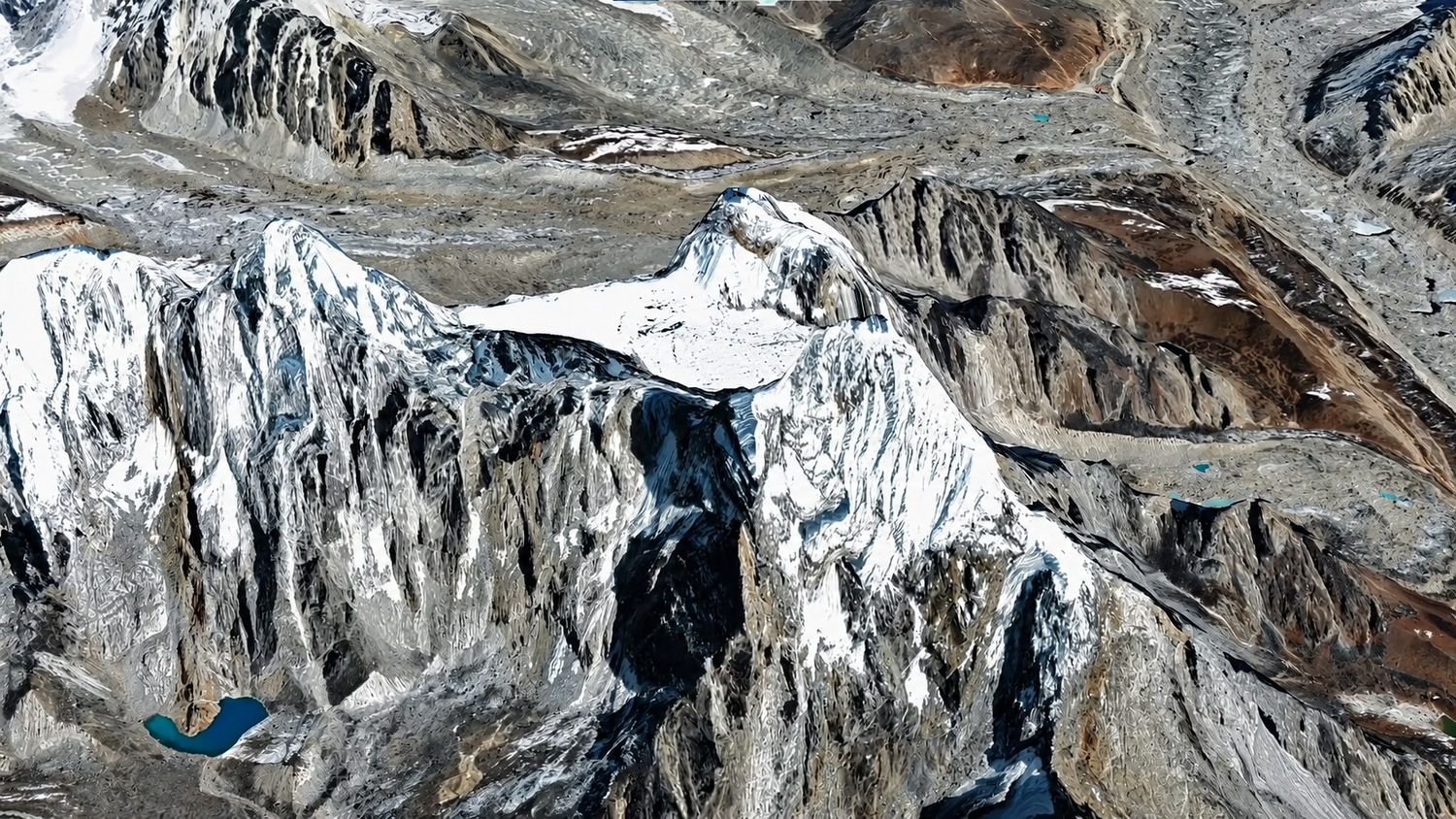
Route Map for Lobuche Peak Climbing – 17 Days
Frequently Asked Questions
Lobuche East is generally considered a step above Island Peak. The sustained ice slopes on the upper section reach forty-five degrees and require confident crampon technique across a longer stretch of climbing than Island Peak’s headwall.
It is not a strict requirement but it is a genuine advantage. The pre-climb training session at base camp covers the essentials, and the climbing guide will manage the route.
It starts before dawn from base camp. The route moves through moraine to the glacier, then climbs to high camp at around 5,400 metres before the sustained upper slopes begin. The steepest section is between high camp and the summit ridge. Total duration including descent to base camp is typically eleven to thirteen hours. It is a long and physically serious day.
Yes. Double mountaineering boots, crampons, harness, ice axe, and helmet are all available for rent in Dingboche. Nepal Royal Tourism Holidays can advise on what to rent versus bring from home. Confirm crampon compatibility with your boots before departure.
The Sagarmatha National Park entry permit and the Lobuche Peak climbing permit issued by the Nepal Mountaineering Association. Both are arranged by Nepal Royal Tourism Holidays as part of the package.
Solid and well-run in Namche and Tengboche. Comfortable and functional in Dingboche and Lobuche. Gorakshep is basic but adequate. Base camp is tented with all meals provided. A sleeping bag rated to minus 20 degrees Celsius is strongly recommended for the high camp night and the base camp stay.
Everest, Lhotse, Nuptse, Makalu, Cho Oyu, Pumori, Ama Dablam, Cholatse, and Tawache are all visible from the summit. The Khumbu Glacier runs through the centre of the view directly below. The proximity of Everest and Nuptse from this angle is one of the defining characteristics of the summit experience.
Safety always comes first. If weather or snow conditions make the climb unsafe, the climbing guide may postpone or cancel the summit attempt. Mountain decisions are always based on safety rather than schedule.
The highest point is the summit of Lobuche East at 6,119 metres (20,075 feet), while Kala Patthar reaches 5,545 metres, providing one of the finest viewpoints of Mount Everest.
Absolutely. Many experienced climbers choose to combine Lobuche East with Island Peak or Mera Peak for a longer Himalayan mountaineering expedition. We can customize the itinerary based on your available time, experience, and climbing goals.
Nepal Royal Tourism Holidays offers experienced local trekking and climbing guides, carefully designed itineraries with proper acclimatization, quality logistics, transparent pricing, and personalized support from arrival in Kathmandu until your departure, ensuring a safe and rewarding Himalayan climbing experience.
Leave a Review
Lobuche Peak Climbing – 17 Days
11 Reviews to Lobuche Peak Climbing – 17 Days
You may also like

Menu

Michael Andersen
at 9:49 pm
Outstanding Lobuche Peak Climbing Experience
Climbing Lobuche Peak with Nepal Royal Treks was the highlight of my trip to Nepal. The guides were experienced, patient, and always focused on safety. The journey through Everest Base Camp and the summit day were unforgettable. I highly recommend this company to anyone planning a Himalayan climbing adventure.
Emily Carter
at 7:22 am
Professional Team and Excellent Service
Everything was perfectly organized from Kathmandu to the summit. Our climbing guide explained every step clearly and made us feel confident throughout the expedition. The mountain views from Lobuche Peak were beyond imagination. Thank you, Nepal Royal Tourism!
Hannah Fischer
at 11:20 am
Perfect Organization
From airport pickup to the final farewell, everything was arranged professionally. The climbing training before the summit gave me confidence. Nepal Royal Tourism truly knows how to organize a successful Lobuche Peak expedition.
Lucas Moreau
at 6:15 am
Worth Every Step
The views from Lobuche Peak were simply breathtaking. The support from our guide and porter helped us complete the climb safely. If you’re looking for a reliable trekking and climbing company in Nepal, Nepal Royal Tourism is the one.
Ethan Miller
at 11:18 pm
Excellent Local Guides
Our guide knew every part of the trail and shared interesting stories about Sherpa culture and the Himalayas. The summit push was challenging but incredibly rewarding. Thank you for making this expedition so memorable.
Sophie Martin
at 11:18 am
Safe, Friendly, and Memorable
The guides were knowledgeable, friendly, and always encouraging. I appreciated how seriously they took safety while still making the journey enjoyable. I will definitely return for another Himalayan adventure.
David Thompson
at 9:25 am
A Dream Expedition
Reaching the summit of Lobuche Peak was a lifelong dream. The acclimatization schedule was well planned, and the entire team took great care of us. I couldn’t have asked for a better climbing company in Nepal.
James Walker
at 4:24 am
Highly Recommended for Peak Climbers
This was my first trekking peak in Nepal, and Nepal Royal Tourism exceeded my expectations. Their attention to detail, quality equipment, and experienced guides made the climb successful. I would happily recommend them to friends.
Olivia Rodriguez
at 11:17 pm
Amazing Everest Region Adventure
The combination of Everest Base Camp, Kala Patthar, and Lobuche Peak made this trip truly special. Every day offered incredible scenery and warm hospitality. It was one of the best adventures I’ve ever experienced.
Isabella Costa
at 10:55 am
Exceptional Himalayan Experience
The Everest region is spectacular, and Nepal Royal Tourism Holiday made the entire experience stress-free. The itinerary was well designed, allowing enough time for acclimatization. I would book with them again without hesitation.
Daniel Svensson
at 4:25 am
An Adventure I'll Never Forget
Lobuche Peak challenged me both physically and mentally, but the reward was incredible. The professionalism of the climbing guides and the kindness of the entire team made this one of the best trips I’ve ever taken. I strongly recommend Nepal Royal Tourism for anyone planning a peak climbing adventure.