

-
 Duration
14 Days
Duration
14 Days
-
 Difficulty
Medium
Difficulty
Medium
-
 Max Elevation
4,130m
Max Elevation
4,130m
-
 Group Size
1 to 10 pax Person
Group Size
1 to 10 pax Person
-
 Accommodation
Tea House/Lodge
Accommodation
Tea House/Lodge
-
 Start/End
Kathmandu airport / Kathmandu airport
Start/End
Kathmandu airport / Kathmandu airport
-
 Destination
Annapurna Region
Destination
Annapurna Region
-
 Best Season
Mar - May and Sep - Nov
Best Season
Mar - May and Sep - Nov
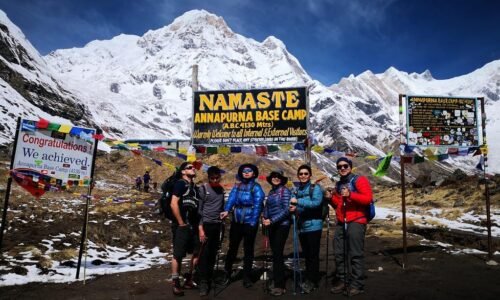
The Annapurna Base Camp Trek via Poon Hill is one of the most fulfilling trekking experiences in Nepal, ideal for those seeking a well-rounded Himalayan adventure. This 14-day journey blends the renowned Ghorepani Poon Hill viewpoint with the traditional Annapurna Base Camp path, offering a complete and meaningful trek from beginning to end. Starting in warm, village settings and forested trails, the trek gradually leads to awe-inspiring high-altitude scenery surrounded by snow-capped peaks, introducing the Annapurna region in a natural and unforgettable way.
The Annapurna region is located in central Nepal and is celebrated for its variety — not only in landscapes but also in culture, climate, and the trekking experiences it offers. Unlike other high-altitude treks that focus solely on one destination, this route provides something new and exciting each day. Mornings bring breathtaking sunrises over the Himalayas, afternoons involve peaceful walks through villages and forests, and evenings are spent in welcoming teahouses where mountain life unfolds in a calm and authentic setting.
The unique appeal of combining Poon Hill with Annapurna Base Camp lies in how the journey builds gradually. Poon Hill provides an early reward with sweeping mountain views, offering trekkers a sense of accomplishment from day one. From there, the trail takes them deeper into the Annapurna Sanctuary, where the mountains appear more imposing and majestic. This steady progression keeps the trek engaging without being too intense or overwhelming.
Another important feature of this itinerary is its gradual increase in altitude. The walking days are carefully planned to allow the body to adapt naturally to the rising elevation. This makes the Annapurna Base Camp via Poon Hill 14-day trek suitable for beginners who are physically fit and well-prepared. Rather than rushing into high altitudes, the route allows time to grow more confident, enjoy the surroundings, and truly immerse oneself in mountain life.
Ultimately, this trek is about more than just reaching Annapurna Base Camp. It is about the entire journey — the evolving landscapes, the people you meet, and the quiet, meaningful moments that linger long after the trek is over.
The Annapurna Region Through a Trekker’s Eyes
Walking in the Annapurna region feels like moving through several worlds in one journey. The lower hills are alive with terraced farms, flowing rivers, and villages where daily life continues at a gentle pace. As the trail climbs higher, forests grow thicker, the air cooler, and the sound of rushing water follows you along stone steps and shaded paths. Every turn feels intentional, as if the mountains are slowly introducing themselves rather than revealing everything at once.
What stands out most in this region is the sense of openness. Unlike narrow valleys where views appear only occasionally, the Annapurna landscape frequently opens into wide horizons. Snow peaks appear between hills, disappear behind forests, and then return closer and more dramatically as the days pass. This constant change keeps the trek engaging and prevents it from feeling repetitive, even over two full weeks of walking.
The Annapurna Base Camp Trek via Poon Hill allows trekkers to experience this region in layers. Instead of heading straight toward higher elevations, the route explores the mid-hills first, building familiarity with the terrain and culture. By the time you reach the heart of the Annapurna Sanctuary, the surroundings feel earned, not rushed. This gradual unfolding is what makes the journey emotionally satisfying, not just physically rewarding.
Why Choose Annapurna Base Camp Trek via Poon Hill?
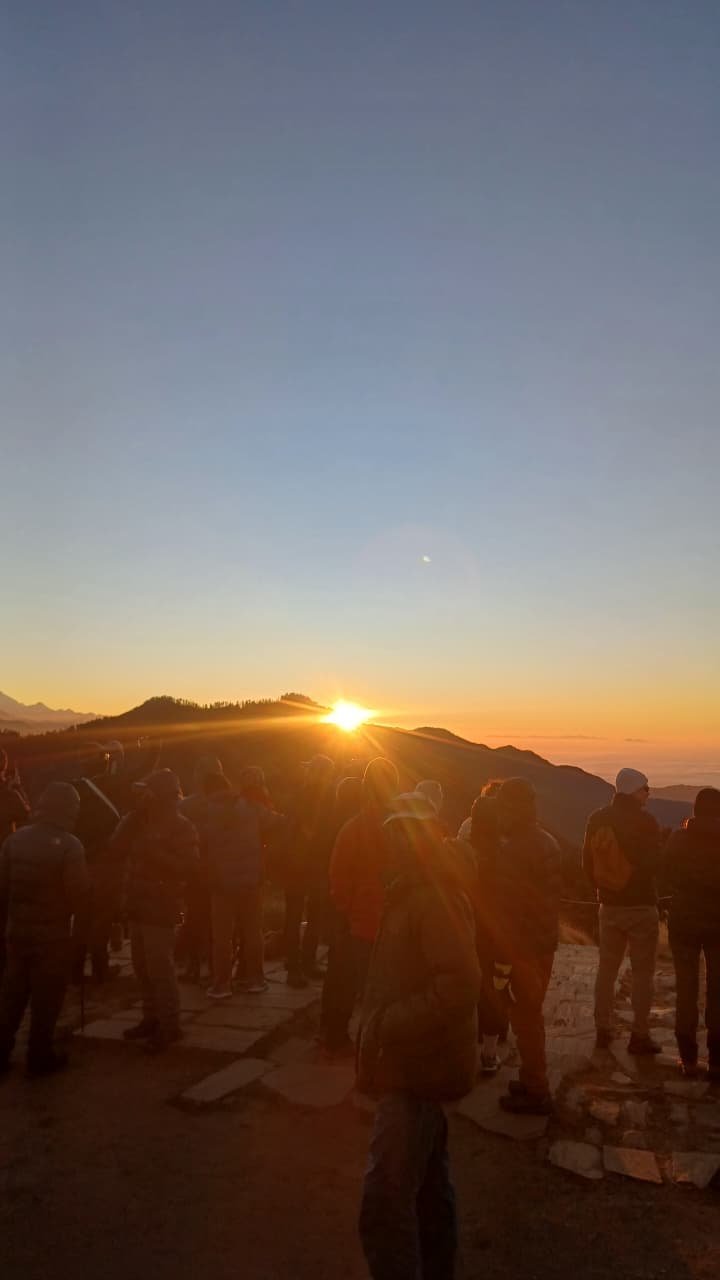
Choosing the Annapurna Base Camp Trek via Poon Hill means experiencing a journey that offers diversity, balance, and depth. One of the top highlights of this route is the sunrise from Poon Hill, where the first light of day gradually lights up Annapurna I, Dhaulagiri, Nilgiri, Hiunchuli, and Machhapuchhre. This is often the first real Himalayan sunrise many trekkers witness, and it leaves a deep and memorable impression
Beyond the viewpoints, the trek travels through villages that are rich in culture, such as Ulleri, Ghorepani, Chhomrong, and Jhinu. These communities are inhabited by the Gurung and Magar people, and their traditional stone houses, terraced fields, and warm hospitality are a significant part of daily life. Walking through these villages gives an insight into how people live in the mountains, far away from the fast pace of city life.
The trek is also known for its natural beauty. Along the trail, you will encounter dense rhododendron forests, bamboo groves, river valleys, waterfalls, and alpine landscapes. Each section of the route is distinct, which helps keep the experience interesting and prevents the journey from feeling monotonous.
Most importantly, this route provides a safer and more comfortable way to reach Annapurna Base Camp. The gradual climb, regular rest stops, and well-established teahouses make it an ideal choice for first-time trekkers in Nepal.
A Route That Builds Confidence Day by Day
One of the quiet strengths of this route is how confidence naturally develops throughout the trek. The early days involve shorter and gentler walks, allowing trekkers to acclimate to the pace without undue stress. The villages are close together, the trails are clearly marked, and teahouses are frequent, which gives a sense of security, particularly for those who are new to trekking in the Himalayas.
As the trek progresses, the terrain becomes more challenging, but at this point, both the body and mind are prepared. Features like stone staircases, suspension bridges, and forest climbs feel manageable because they come after days of gradual training. This steady progression is deliberate, and it is one reason why many trekkers finish the route feeling stronger and more capable than when they began.
Another reason this combination works exceptionally well is the contrast it offers. Poon Hill Trek delivers an early reward with breathtaking panoramic views, while Annapurna Base Camp offers a powerful conclusion surrounded by towering peaks. Between these two highlights are countless small but meaningful moments—shared meals, peaceful forest walks, and conversations in teahouses—that together create a unique and unforgettable experience.
Who Is This Trek For?
The Annapurna Base Camp Trek via Poon Hill is a great option for a wide variety of travelers. It works well for those who are new to mountain trekking and want a classic Himalayan experience without the need for extreme technical skills. It is also suitable for people who are moderately active and enjoy walking, nature, and exploring different cultures.
This trek is best for travelers who prefer a steady pace rather than fast-moving destinations. It is ideal for those who want to enjoy breathtaking sunrise views, peaceful village life, and stunning mountain scenes equally. Solo travelers, couples, and small groups all find this route rewarding because of its welcoming teahouse culture and the supportive environment for trekking.
Even though some trekking experience can be helpful, it is not necessary. With proper preparation, guidance, and a positive attitude, this trek is both achievable and very satisfying.
A Journey That Adapts to Different Travel Styles
This trek is suitable for more than one type of traveler. Some come for their first Himalayan adventure, while others return to Nepal seeking a route that feels deeply immersive but not overly challenging. The Annapurna Base Camp Trek via Poon Hill is adaptable for both.
For newcomers, the route offers comfort through its well-developed infrastructure and manageable pace. For more experienced hikers, the varied terrain, altitude, and scenery keep the journey interesting. Photographers love the changing light and scenery, and cultural travelers appreciate the time spent in traditional villages.
Even those who usually prefer to travel on their own often find that guided trekking here is more rewarding. A local guide provides context, explaining village life, mountain names, and trail history, making the trek into a more enriching experience than just a physical activity.
Weather & Temperature Throughout the Year
Weather plays an important role in shaping the Annapurna Base Camp trek experience. In spring (March to May), days are mild and colorful, with rhododendrons in bloom and clear mountain views. Daytime temperatures range between 10°C – 20°C in lower areas, while nights at base camp can be quite cold.
Autumn (September to November) offers the most stable weather. Skies are clear, visibility is excellent, and temperatures are ideal for trekking. This is the most popular season due to ideal trail conditions.
During winter (December to February), the trail is quieter and colder. Snow may cover higher areas, and night temperatures can drop well below freezing. However, clear skies and fewer crowds appeal to experienced trekkers.
The monsoon season (June to August) brings lush greenery and fewer visitors. Rainfall is frequent at lower elevations, but mornings often remain clear. This season suits trekkers who prefer solitude and are okay with some rain.
Trek Route Description: From Lower Hills to the Annapurna Sanctuary
The Annapurna Base Camp Trek via Poon Hill follows a carefully planned route that moves from low-altitude foothills into the heart of the Himalayas. The journey begins around Pokhara’s warmer valleys and gradually climbs through farming villages, stone staircases, and forested ridgelines.
From Nayapul and Tikhedhunga, the trail winds through terraced fields and riverbanks, where villages continue their daily lives alongside the trekkers. As you move toward Ulleri and Ghorepani, the landscape becomes greener and cooler, with dense rhododendron forests covering the hillsides.
Beyond Poon Hill and Tadapani, the trail takes on a different character. Forest paths narrow, villages become quieter, and the mountains feel closer. The route through Chhomrong and Bamboo follows river valleys carved by glacial melt, creating dramatic scenery beneath towering cliffs.
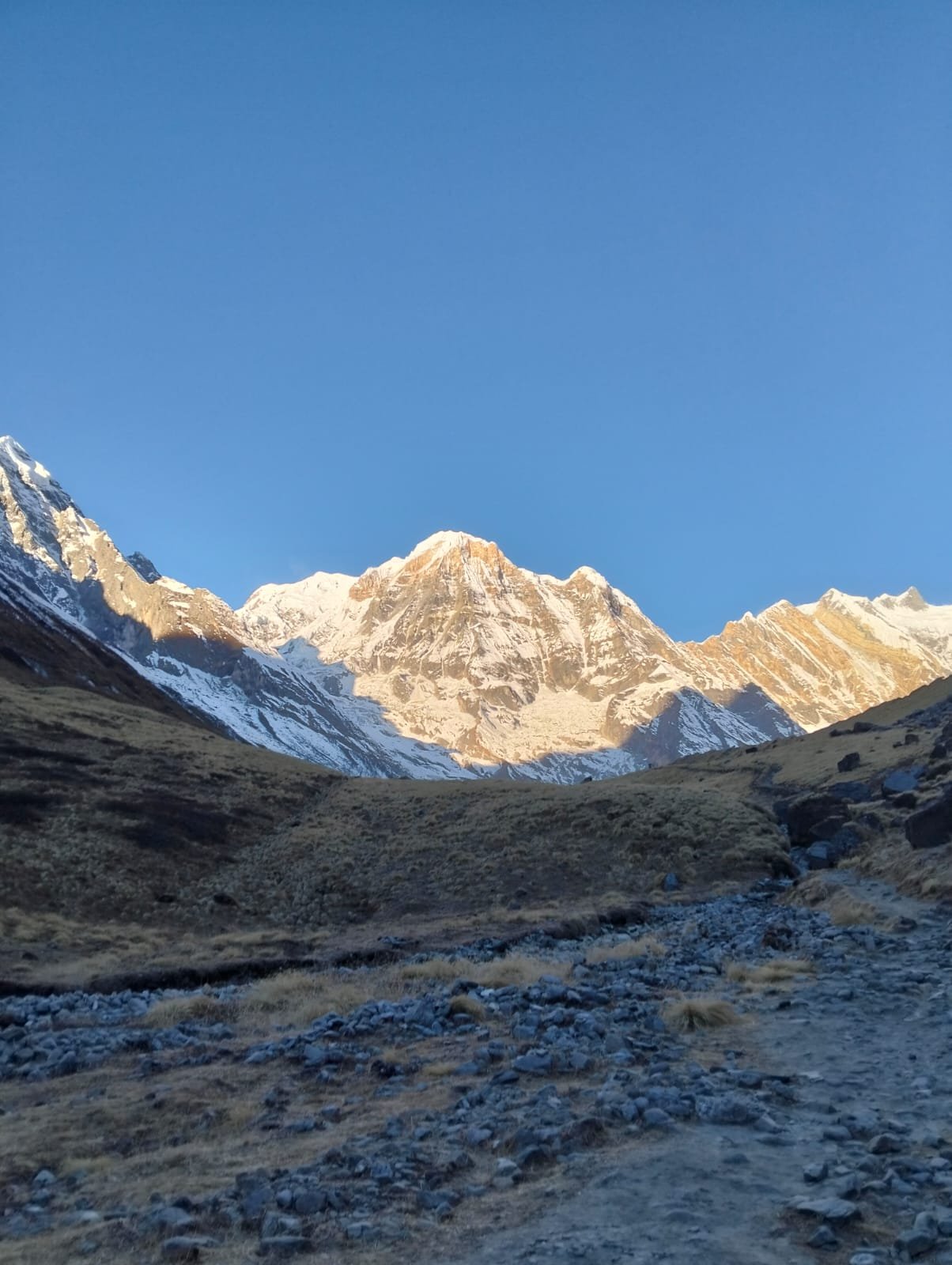
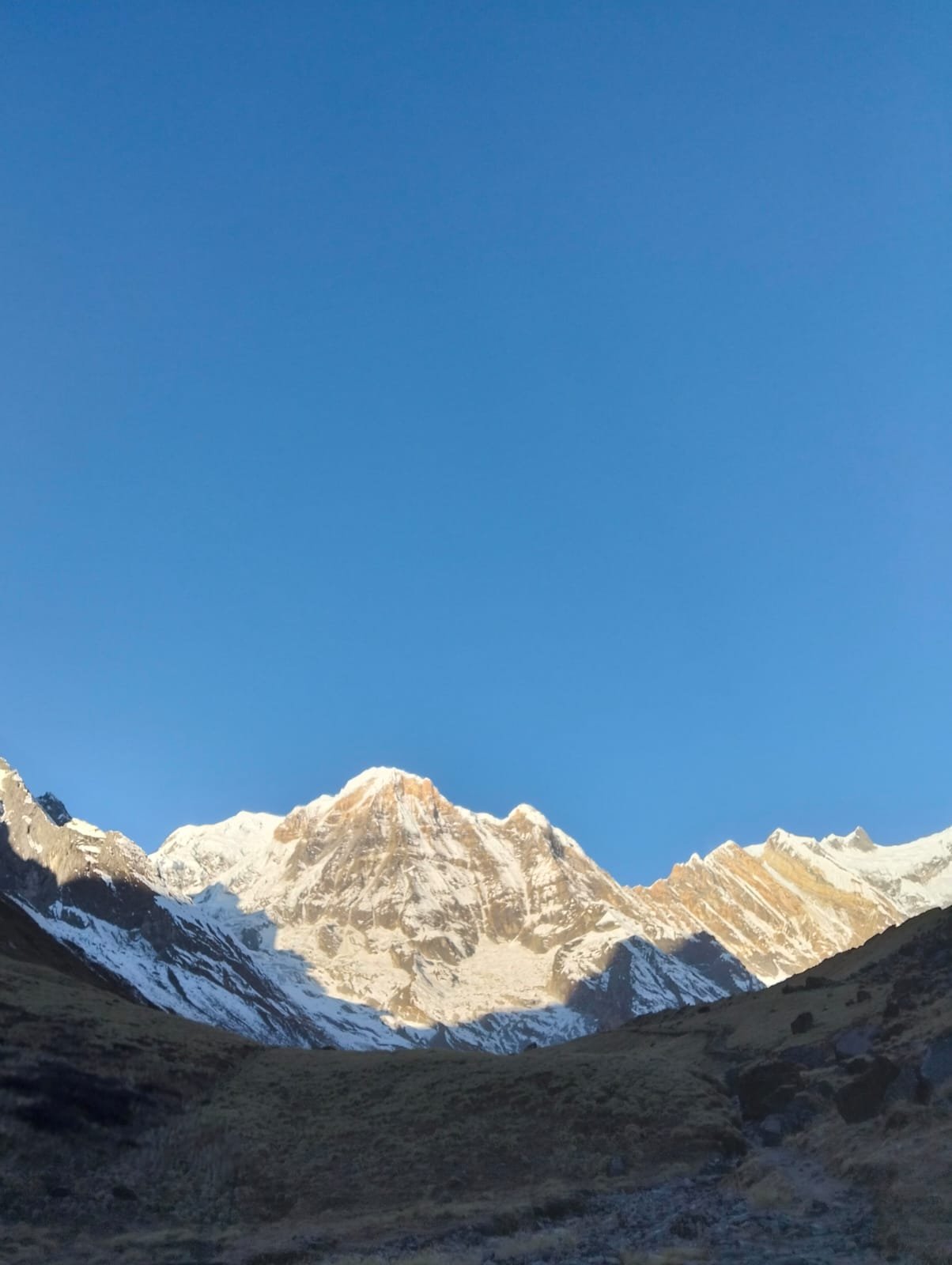
Entering the Annapurna Sanctuary is a defining moment of the trek. The terrain opens into a wide alpine basin, surrounded by steep mountain walls. The final approach to Annapurna Base Camp feels calm and spacious, with glaciers, moraine paths, and snow-dusted peaks shaping the landscape. This gradual transformation of terrain is what makes the route so rewarding.
Trek Difficulty & Fitness Level
The Annapurna Base Camp Trek via Poon Hill is classified as a moderate Himalayan trek, suitable for beginners who are reasonably fit and prepared. There is no technical climbing involved, and the trails are well-marked and widely used.
Daily walking hours typically range from 5 to 7 hours, depending on terrain and altitude. Some days involve long stone staircases, particularly between Tikhedhunga and Ghorepani, while other days follow gentle forest paths or open valleys.
What makes this trek manageable is the gradual increase in altitude. The itinerary avoids sudden elevation changes, allowing your body to adjust naturally. Rest stops, teahouses, and villages are frequent, giving plenty of opportunities to slow down when needed.
If you can walk comfortably for several hours a day, climb stairs without rushing, and maintain a steady pace, you can complete this trek successfully. Mental readiness is just as important as physical fitness—patience, hydration, and listening to your guide go a long way in the mountains.
Accommodation & Meals on the Trek
During the Annapurna Base Camp Trek via Poon Hill, you will stay in local mountain teahouses. These are family-run lodges that provide simple yet warm hospitality. The rooms are usually for two people with basic bedding, pillows, and blankets. As you go higher, the facilities may be simpler, but they remain clean and comfortable.
Bathroom facilities are often shared, and hot showers are usually available for an extra fee. The dining areas are heated in the evenings, becoming a cozy place where trekkers relax, eat, and share stories after their hikes.
Meals at the teahouses are freshly cooked and served. Breakfast typically includes eggs, porridge, pancakes, Tibetan bread, and hot drinks. For lunch and dinner, you can expect traditional dishes such as dal bhat, noodles, fried rice, soups, pasta, potatoes, vegetables, and seasonal specialties.
As you climb higher, meals tend to be simpler to aid digestion. Dal bhat is the most reliable option, offering good energy and nutrition. Staying hydrated is important, and guides often remind trekkers to eat well even when their appetite decreases at higher altitudes.
Safety, Altitude & Health Considerations
Your safety is our top priority on this trek. The Annapurna Base Camp via the Poon Hill route is designed to minimize risks from altitude. It includes a controlled ascent and proper acclimatization.
Altitude sickness is less common on this route compared to faster ones, but it’s important to remain aware. Symptoms may include headaches, tiredness, nausea, and shortness of breath. Guides check on trekkers throughout the day and adjust the pace as needed.
Staying hydrated, eating regularly, and walking at a comfortable pace help prevent altitude sickness. All guides are trained in altitude awareness and carry first-aid kits. In case of emergencies, evacuation procedures are well in place in the Annapurna region.
It is strongly recommended to have travel insurance that covers high-altitude trekking and emergency evacuation. Trekking with an experienced guide adds safety, local knowledge, and reassurance throughout your journey.
What to pack and trekking Suggestions
Packing properly makes a big difference on this trek. Layered clothing is essential since temperatures change during the day.
Important items to include are:
- Comfortable, well-broken-in hiking boots
- Lightweight down jacket
- Thermal layers
- Waterproof jacket and pants
- Trekking poles
- Warm hat, gloves, and sun protection
- Reusable water bottles and purification tablets
- Personal first-aid supplies and toiletries
- Headlamp and power bank
- Pack lightly but thoughtfully.
Porters carry the main load, but a daypack should contain water, snacks, a camera, and extra clothing.
Trekking tips from experience:
- Walk slowly and steadily; speed doesn’t help at altitude
- Drink water even if you don’t feel thirsty
- Eat well, especially in the evenings
- Follow your guide—they know the trail and conditions
- Take time to enjoy the villages, not just the mountains
When the Trail Ends, the Experience Continues
As the trail slowly descends from the Annapurna Sanctuary and the mountains begin to sit behind you, there is a quiet sense of completion that is hard to put into words. The early mornings at Poon Hill, the long stone steps, the forests, the villages, and finally the open bowl of Annapurna Base Camp—each moment stays with you, even as the trek comes to an end.
What makes the Annapurna Base Camp Trek via Poon Hill—14 Days memorable isn’t just reaching a destination. It’s the way the journey unfolds. The gradual walk, the friendly teahouses, the familiar faces you meet along the trail, and the changing landscapes make the return feel as meaningful as the ascent. Many trekkers say the final days, walking back through Chhomrong or soaking in Jhinu Danda, are when the experience truly settles in.
By the time you return to Pokhara and Kathmandu, the mountains may no longer be in front of you, but they stay in your thoughts. The quiet confidence you gain from completing the trek, the simplicity of mountain life, and the sense of connection to the Himalayas remain long after the bags are unpacked.
This Annapurna Base Camp Trek via Poon Hill 14-day itinerary is one of the most popular and well-balanced routes in the Annapurna region.
If you’re looking for a Himalayan trek that feels complete, balanced, and deeply rewarding from start to finish, this route offers exactly that—not just an adventure, but a journey worth remembering.
When you’re ready to walk the trail, book the Annapurna Base Camp Trek via Poon Hill and experience the Himalayas in a way that feels thoughtful, balanced, and truly rewarding.
Trip Highlights
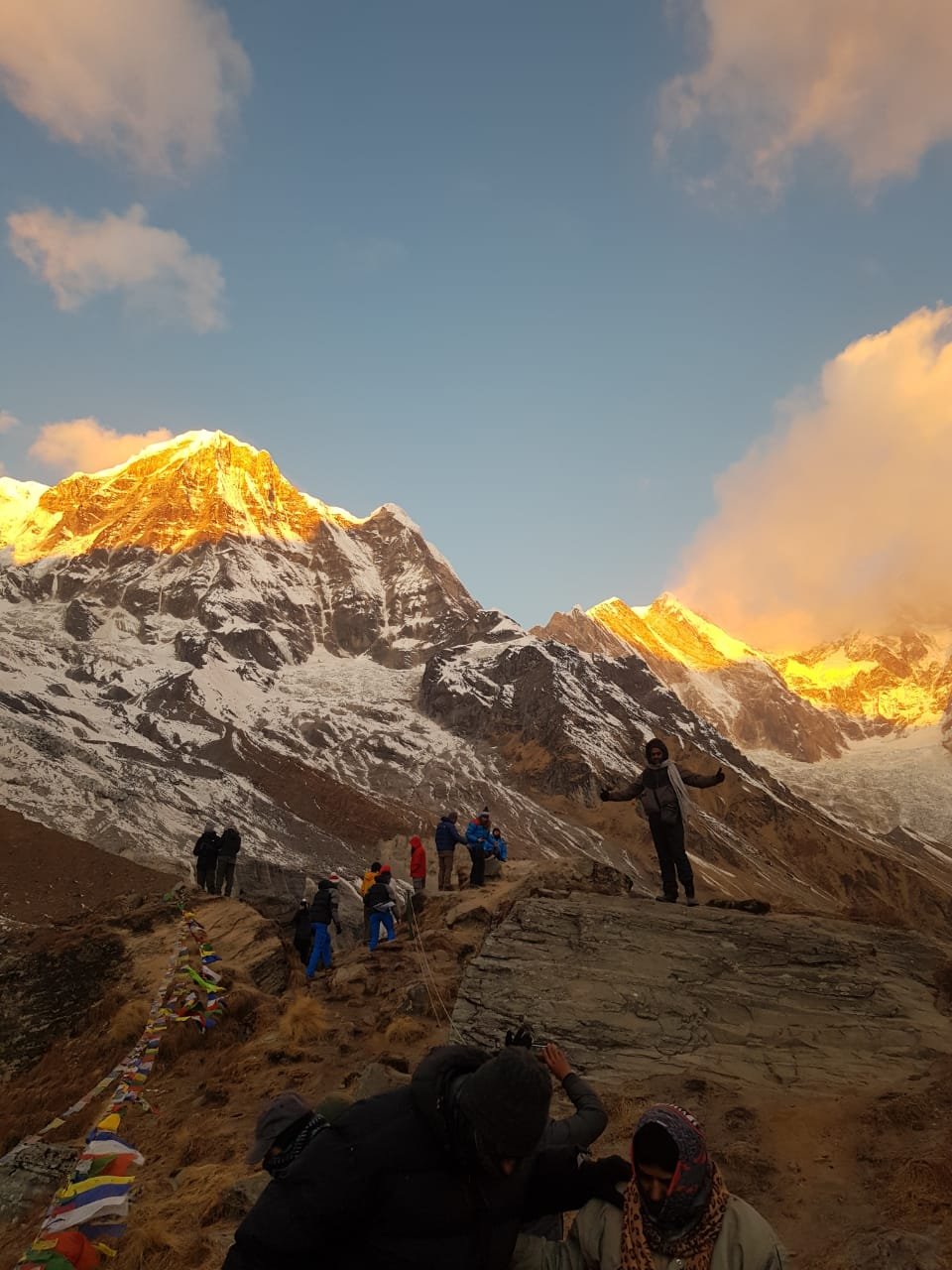
- Sunrise views from Poon Hill (3,210m) offering sweeping panoramic view of Annapurna I, Dhaulagiri, Nilgiri, Hiunchuli, and the iconic Machhapuchhre glowing in early morning light
- Walking through traditional Magar and Gurung villages such as Ulleri, Ghorepani, Chhomrong, and Jhinu, where mountain life unfolds at a calm and welcoming pace
- A gradual and scenic ascent through rhododendron forests, stone staircases, river valleys, and alpine landscapes that make the trek accessible and enjoyable
- Entering the natural amphitheater of the Annapurna Sanctuary, surrounded by towering Himalayan peaks on all sides
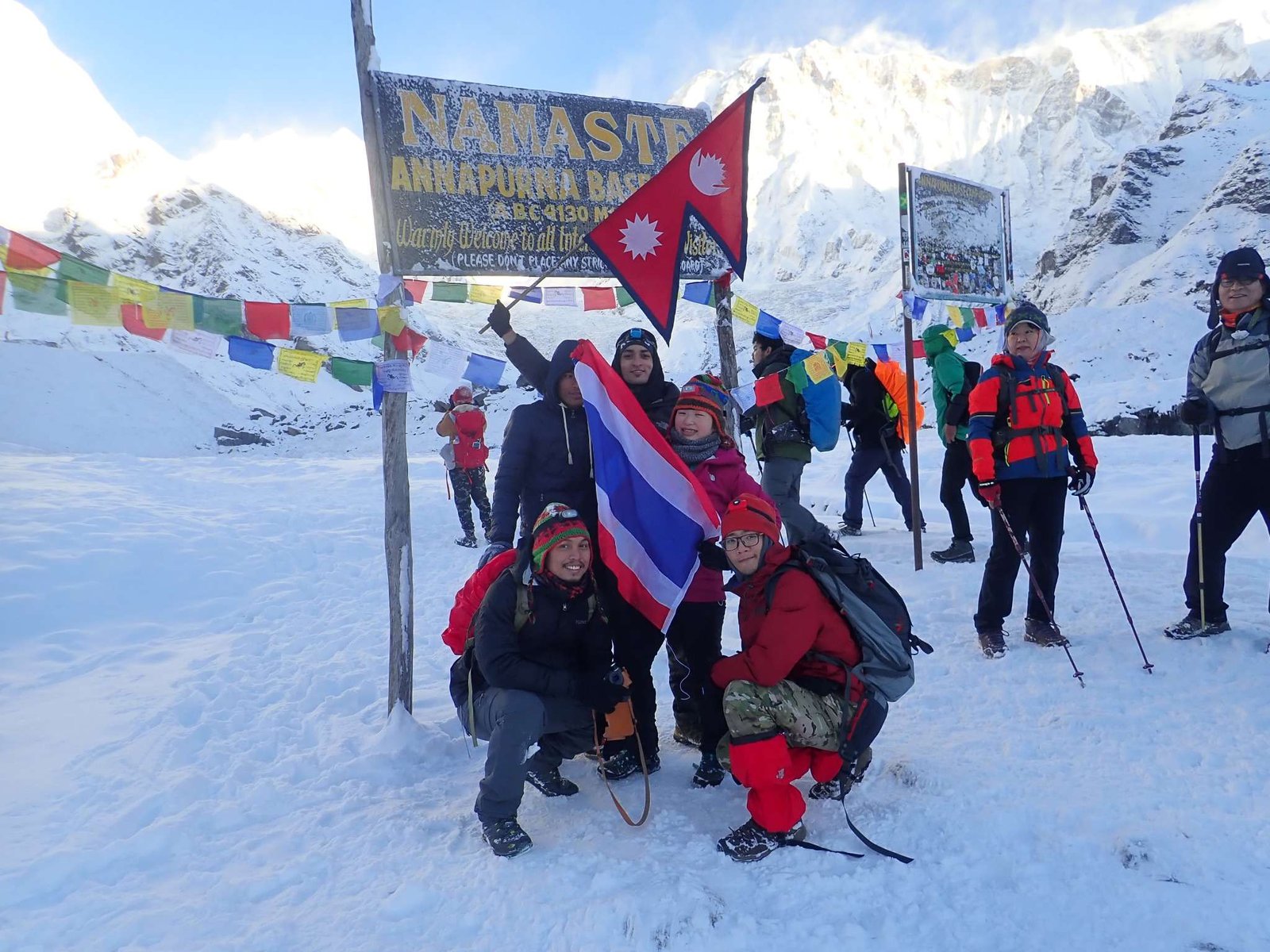
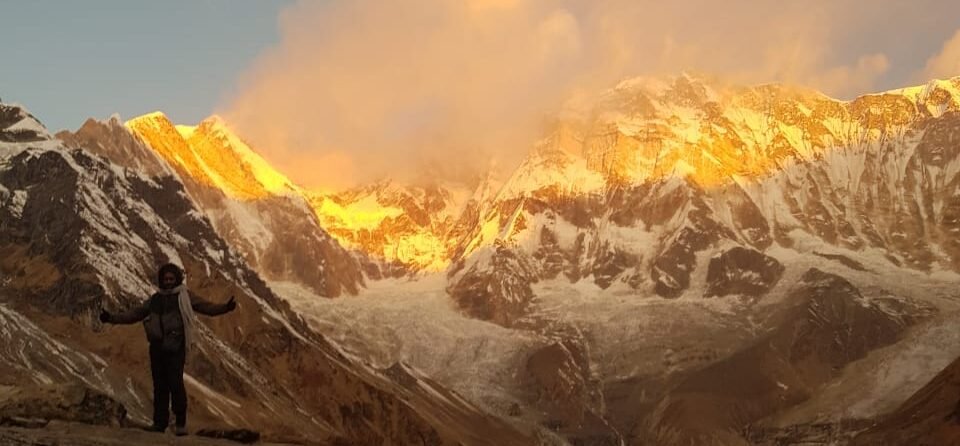
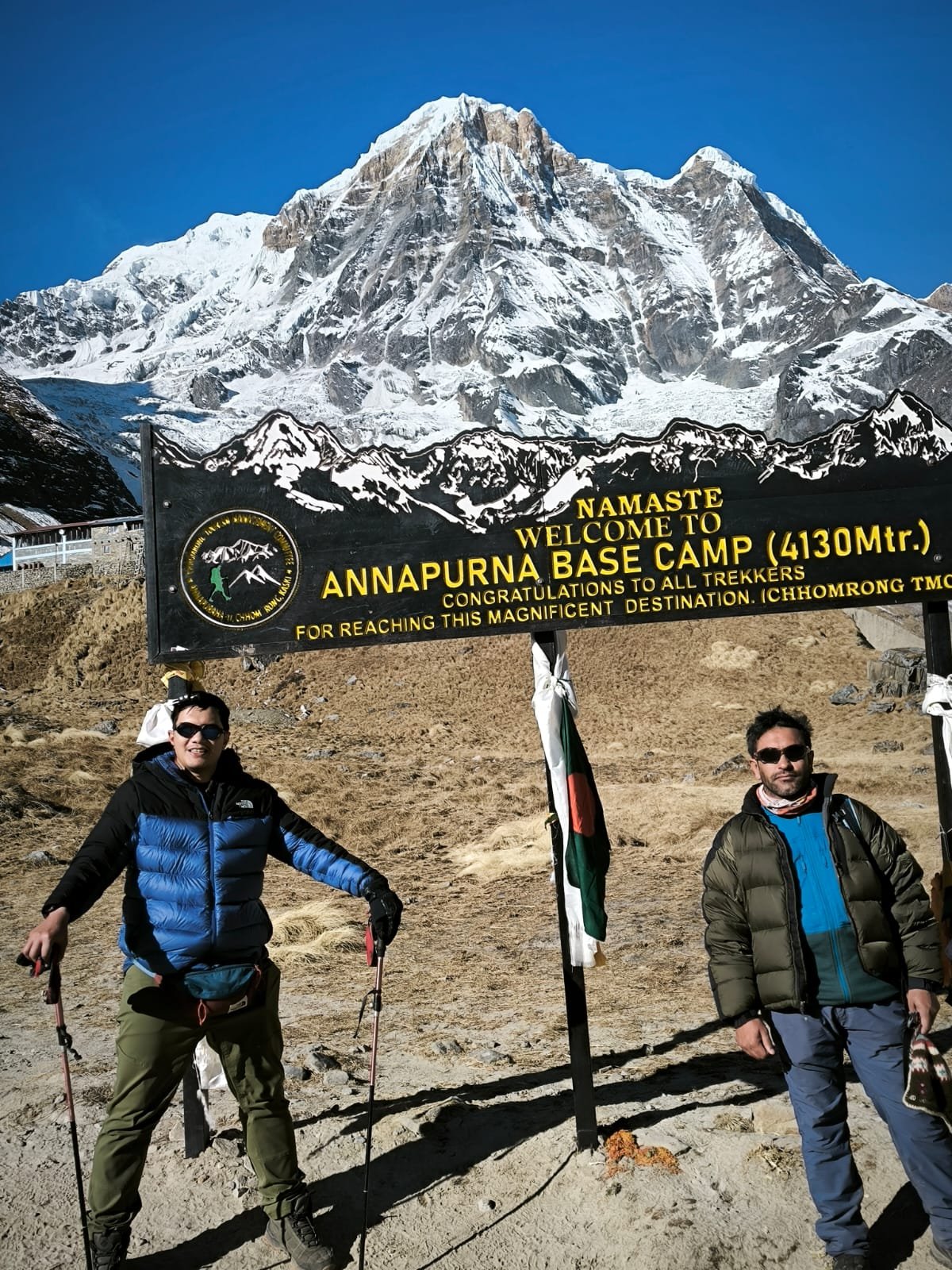
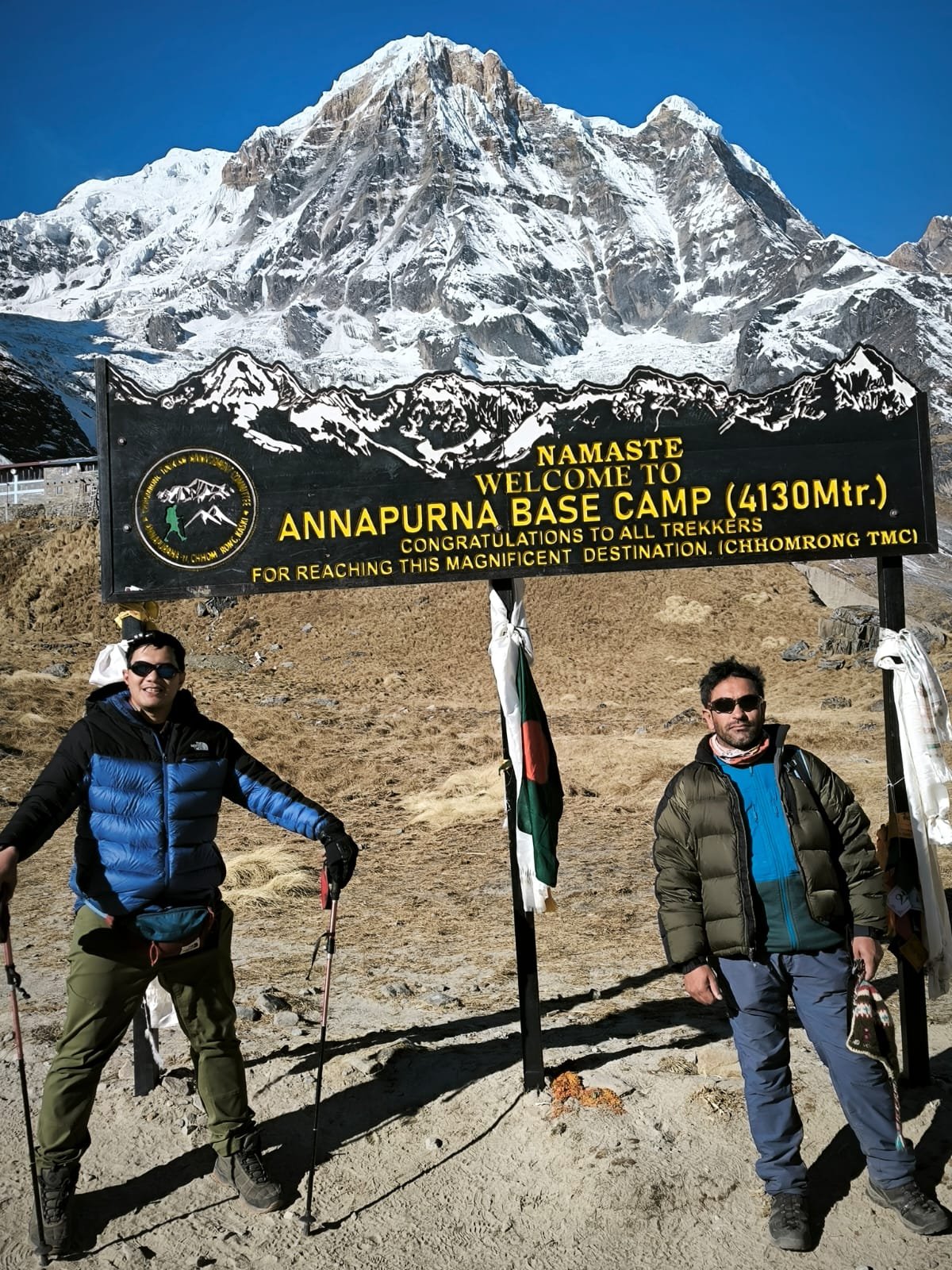
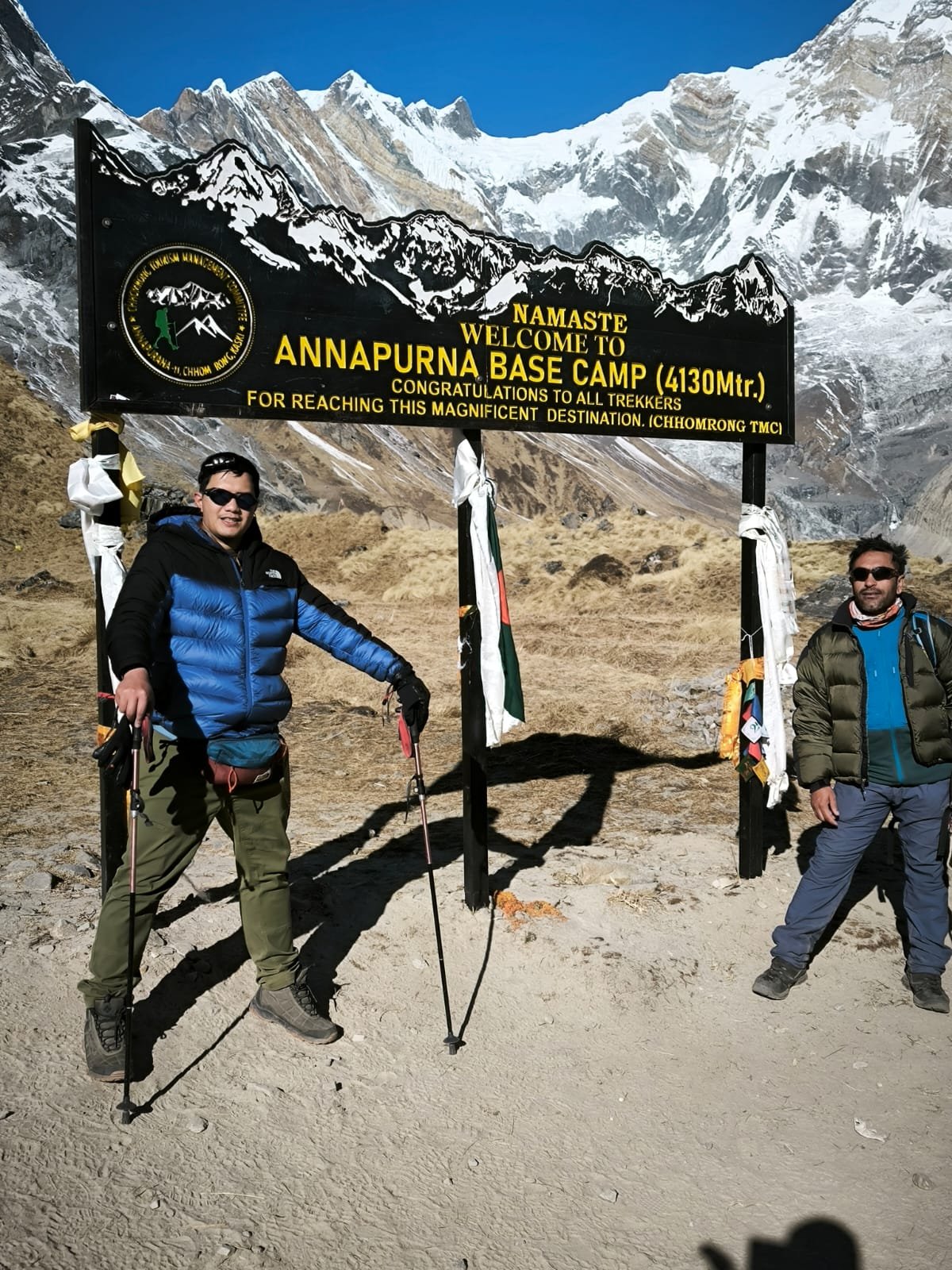
- Standing at Annapurna Base Camp (4,130m), a place where glaciers, mountains, and silence combine to create a truly unforgettable setting
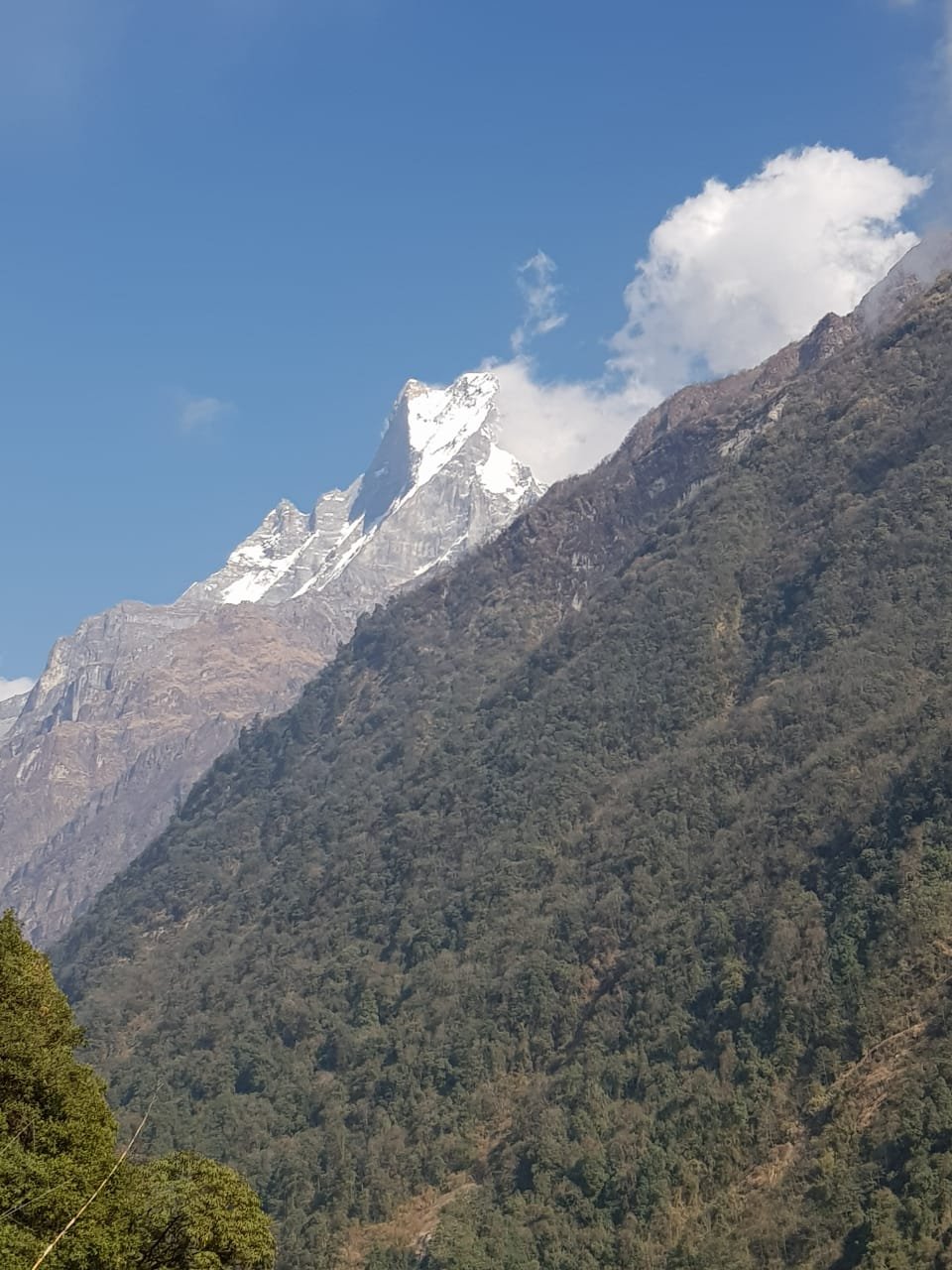
- Close-up views of Machhapuchhre (Fishtail Mountain) from Machhapuchhre Base Camp, one of the most striking mountain perspectives in the region
- Relaxing your tired legs at the natural hot springs of Jhinu Danda, a comforting reward after days of mountain walking
- Daily trekking routes that balance effort and scenery, offering changing landscapes without rushed or extreme altitude gain
- A rich mix of nature, culture, and mountain adventure packed into a single route, making the journey feel complete from start to finish
- Evenings spent in cozy teahouses, sharing meals, mountain stories, and quiet moments beneath star-filled Himalayan skies
Annapurna Base Camp with Poon Hill Trek-14 days ~ Itinerary
Day 1
Arrival in Kathmandu- Welcome to Nepal
- Altitude: 1,350m
- Accommodation: Standard Three Star Hotel
When you land at Tribhuvan International Airport in Kathmandu, Nepal Royal Tourism will meet you to take care of your arrival formalities. Then they will make sure you get transferred to your hotel in Thamel. Thamel is a vibrant neighborhood and the main area for trekkers. This place is brimming with local eateries, trekking gear shops, coffee places, and parts that display culture.
Once you have checked in, you may rest or simply enjoy a short stroll around Thamel to familiarize yourself with the surroundings first. The next activity is to have your trekking guide who will give you a briefing of the 14 days Annapurna Base Camp trek through Poon Hill, check your equipment, and answer any questions you might have. You will have free time in the evening to relax and get ready for the trip ahead.
Day 2
Drive from Kathmandu to Pokhara (Tourist Bus).
- Altitude: 822 m
- Travel Time: Approximately 7 Hours
- Accommodation: Standard Three Star Hotel
Wake up early to a serene morning and have a leisurely breakfast at the hotel before getting ready for the trip to Pokhara. You’ll take a tourist bus for a scenic journey that will be full of sights of mountains, rivers, temples, and villages that are typical of the countryside, all along the way.
When you get to Pokhara, check-in at your hotel. If you feel like it, you can also go for a stroll at the lakeside area. This night you will stay at a three-star hotel which is located at Pokhara Lake.
Day 3
Drive to Hille - trek to Ulleri
- Altitude: 1,960 m
- Drive: Approximately 3 hours
- Trek Duration: 3-4 hours
- Trek Distance: 9.2 km
- Accommodation: Tea house
Commence your journey with a picturesque drive up to the Hille village, passing through the green beauties and traditional settlements. At Hille start your journey into the rhododendron forests, flower fields, and the remote Gurung villages. The walking route slowly goes up to Ulleri at 1,960 height meters, where you can get Himalayan snow-capped mountain views and meet the local people. The way to Ulleri is a good example of what the Annapurna area has to offer, giving a nice balance of the level of exertion and the grandness of the view. Staying overnight in a local tea house will be the time when you get to know warm hospitality and real mountain life. Suitable for both fans of nature and lovers of adventure.
Day 4
Trek from Ulleri to Ghorepani
- Altitude: 2,880 m
- Trek Duration: 6-7 hours
- Trek Distance: 12.9 km
- Accommodation: Tea house
Trekking from Ulleri to Ghorepani is a beautiful and satisfying Himalayan journey through rhododendron and oak forests. After leaving Ulleri village, the path slowly goes up on neatly laid stone steps, passing through quaint villages like Banthanti and Nangethanti. Trekkers can be delighted with cool forest shades, birds, and the glimpse of mountains from time to time. When you get to Ghorepani (2,860m), you are greeted by the spectacular mountain views of Annapurna and Dhaulagiri ranges.
This moderate day trek is perfect for acclimatization and a highlight of the Annapurna and Poon Hill trekking routes.
Day 5
Sunrise at Poon Hill (3,210m) – Trek to Tadapani
- Altitude of Poonhill: 3,210m
- Altitude: 2,630 m
- Trek Duration: 5-6 hours
- Trek Distance: 10.7 km
- Accommodation: Tea house
Early in the morning, you hike up to Poon Hill, one of the most famous viewpoints in Nepal. From here, you witness a breathtaking sunrise over Annapurna I, Dhaulagiri, Nilgiri, and Machhapuchhre.
After returning to Ghorepani for breakfast, the trek continues through forested trails toward Tadapani. The path is peaceful and scenic, with occasional mountain views. You reach Tadapani by afternoon and spend the night surrounded by nature.
Day 6
Trek from Tadapani to Chhomrong
- Altitude: 2,165 m
- Trek Duration: 5-6 hours
- Trek Distance: 9 km
- Accommodation: Tea house
Today’s trail descends through forests and small settlements before crossing rivers and climbing toward Chhomrong, one of the largest villages in the region.
Chhomrong sits on a hillside facing Annapurna South and Machhapuchhre. From here, you can clearly see the path leading deeper into the Annapurna Sanctuary. The village has teahouses, shops, and beautiful views, making it an important resting point.
Day 7
Trek from Chhomrong to Dovan
- Altitude: 2,600 m
- Trek Duration: 5-6 hours
- Trek Distance: 8.6 km
- Accommodation: Tea house
After the 7th Day at Annapurna Base Camp, you will depart Chomrong and proceed upwards through the forests of rhododendron and bamboo adorned with the fresh green leaves. The trail enables you to see the peaks of Annapurna South, Machapuchhre (Fishtail), and Hiunchuli closely. During the walk, you will come across small hamlets, waterfalls, and suspension bridges which will make your walk more varied and attractive.
By the end of the day, you will get to Dovan, which is a serene place surrounded by lovely mountains.This portion of the trek is wonderful for acclimatization and, at the same time, you can enjoy the natural beauty of the Annapurna region.
Day 8
Trek from Dovan to Deurali.
- Altitude: 3,230 m
- Trek Duration: 4-5 hours
- Trek Distance: 7.5 km
- Accommodation: Tea house
Take a beautiful trek through the Himalayas along the Dovan to Deurali trail. You will be walking in the shadows of high Himalayan mountains and forests of rhododendron trees. Walking through beautiful small villages with peaceful natural surroundings, , you will be treated to excellent views of Annapurna and Machapuchare. Besides that, you can also see various kinds of animals living in the wild. Deurali is a great place to rest overnight. The houses for hikers are nice and have a great view of the sunset.
The walk is great for people who like excitement and the beauty of nature. It is a perfect blend of culture, peace, and magnificent Himalayan landscapes which makes for a memorable experience.
Day 9
Trek to Annapurna Base Camp (ABC) via Machhapuchhre Base Camp (3,700m)
- Altitude: ABC – 4,130 m
- Altitude of MBC: 3,700 m
- Trek Duration: 5-6 hours
- Trek Distance: 7 km
- Accommodation: Tea house
Today is a special day. You first trek to Machhapuchhre Base Camp (3,700m), where stunning views of Fishtail Mountain appear right in front of you.
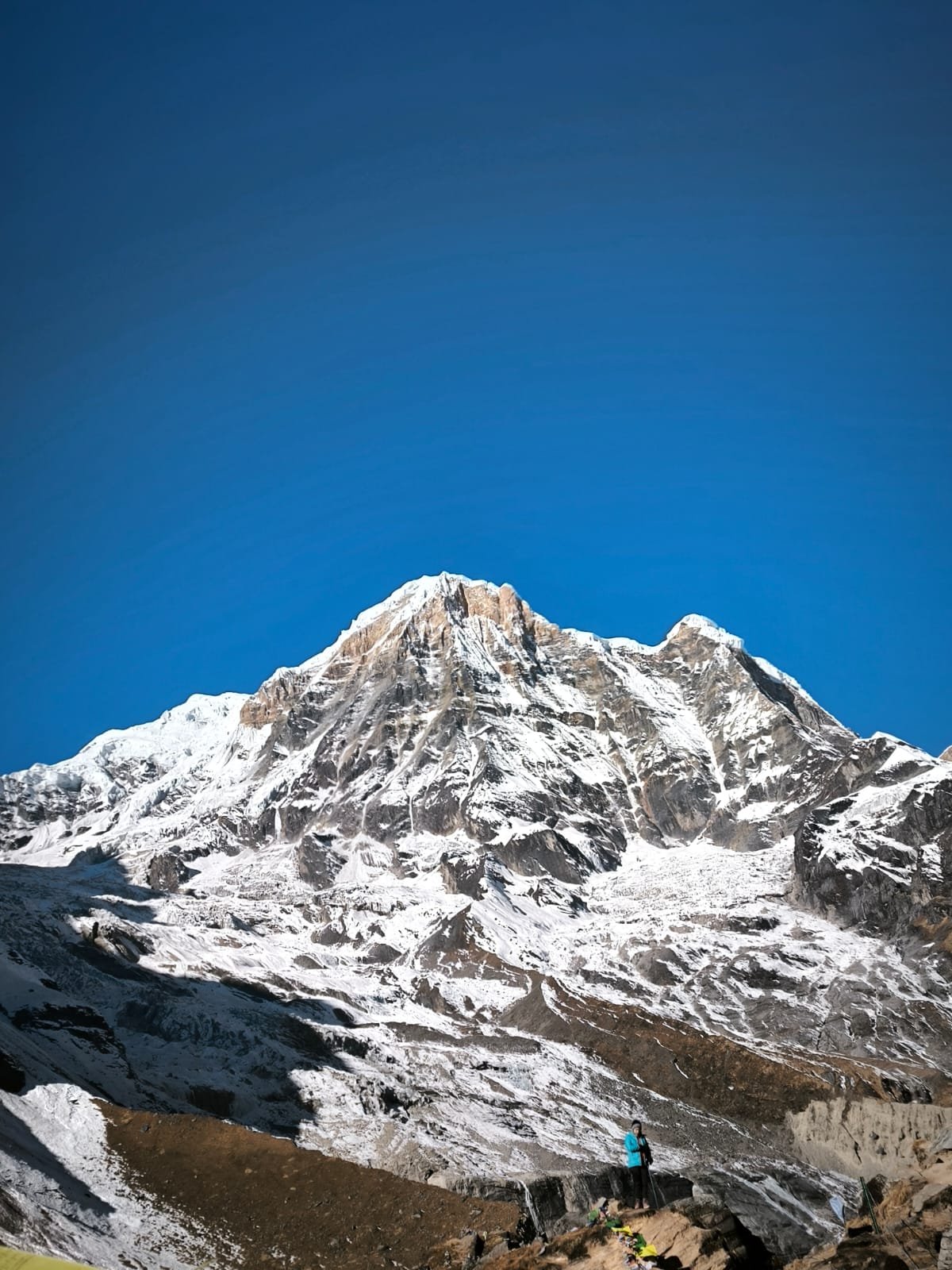
From there, the trail continues gently into the Annapurna Sanctuary, leading you to Annapurna Base Camp. Surrounded by towering peaks like Annapurna I, Annapurna South, Hiunchuli, and Machhapuchhre, the setting feels truly magical.
You’ll spend the night at base camp, experiencing one of the most iconic locations in the Himalayas.
Day 10
Trek from Annapurna Base Camp to Bamboo.
- Altitude: 2,310 m
- Trek Duration: 7-8 hours
- Trek Distance: 16.7 km
- Accommodation: Tea house
After enjoying sunrise views at Annapurna Base Camp, you begin your descent along the same trail. Walking downhill feels easier, allowing you to enjoy the scenery at a relaxed pace.
You pass Machhapuchhre Base Camp and Deurali before reaching Bamboo, where you rest for the night surrounded by forest and flowing streams.
Day 11
Trek from Bamboo to Jhinu Danda.
- Altitude: 1,780 m
- Trek Duration: 5-6 hours
- Trek Distance: 8.5 km
- Accommodation: Tea house
Today’s walk takes you back through Chhomrong, followed by a descent to Jhinu Danda. This village is famous for its natural hot springs.
In the afternoon, you can walk down to the riverside hot springs and relax your muscles after days of trekking. It’s a perfect place to unwind and reflect on the journey so far.
Day 12
Back to Pokhara from Jhinu by Jeep
- Altitude: 822 m
- Trek Duration: 5-6 hours
- Trek Distance: 8.5 km
- Accommodation: Standard Three Star Hotel
After breakfast, you can take a picture drive from Jhinu Dona to Pokhara, the last part of your Annapurna trip. The route is along the winding mountain roads flanking the Modi and Seti rivers, through villages with traditional houses, terraced fields, and green slopes. When you get down, the scenery slowly turns into the beautiful Pokhara Valley. When you get there, check in at your hotel and unwind either by Phewa Lake or go and see the lovely lakeside district. It is a very nice trip which provides a good change from the mountains to the city life which is not very stressful.
Day 13
Pokhara to Kathmandu (Tourist Bus).
- Altitude: 1,350m
- Travel Time: Approximately 7 Hours
- Accommodation: Standard Three Star Hotel
After breakfast, you drive back from Pokhara to Kathmandu, once again following scenic rivers and hills. Upon arrival in Kathmandu, you’ll have free time for shopping, sightseeing, or relaxing in Thamel. This is a great opportunity to pick up souvenirs or revisit your favorite spots.
Day 14
Final Departure from Kathmandu
Depending on your flight schedule, our team will transfer you to Tribhuvan International Airport for your departure. As you leave Nepal, you carry memories of mountain sunrises, welcoming villages, and the unforgettable journey through the Annapurna region.
As your trusted travel partner, Nepal Royal Tourism Holiday Pvt. Ltd. (www.nepalroyaltreks.com), we are grateful for the opportunity to have shared this extraordinary journey with you. Until we meet again, travel safely!
Annapurna Base Camp with Poon Hill Trek-14 days Fixed Departures Dates
Trip Cost Includes/Excludes
Cost Includes
- Airport arrival and departure transfers in private, comfortable vehicle
- 2 night's Standard hotel accommodation in Kathmandu and 2 night's Pokhara on a twin-sharing basis, including daily breakfast
- All meals during the trek (Breakfast, Lunch, and Dinner) served at local teahouses along the trail
- Mountain teahouse accommodation throughout the trekking days in the Annapurna region
- An experienced, government-licensed trekking guide with strong knowledge of the route, altitude, and local culture
- Porters as required based on group size, ensuring a comfortable trekking experience
- Ground transportation between Kathmandu and Pokhara to Kathmandu in a comfortable luxurious tourist bus
- Private SUV transfers between the trek starting/ending points (Pokhara to Hille and Jhinu to Pokhara ) or equivalent
- All required trekking permits, including Annapurna Conservation Area Permit (ACAP) and TIMS card
- Use of a trekking duffel bag and sleeping bag for the duration of the trek (to be returned after completion)
- A complimentary company T-shirt as a trekking souvenir
- Trekking completion Certificate upon successful completion of the itinerary
- All applicable government taxes and service charges
Cost Excludes
- Personal expenses of any kind, including hot or cold drinks, bottled water, snacks, alcoholic beverages, cigarettes, laundry, and toiletries
- Lunch and dinner while staying in Kathmandu and Pokhara
- Travel and medical insurance, including emergency evacuation coverage
- Any expenses not clearly mentioned in the Cost Includes section
- Additional costs caused by circumstances beyond control, such as weather delays, road conditions, or itinerary changes for safety reasons
- Tips for trekking guide and porter (not mandatory, but customary and appreciated)
Trip Photo/Video Gallery


Route Map for Annapurna Base Camp with Poon Hill Trek-14 days
Frequently Asked Questions
Yes. The gradual altitude gain and well-paced itinerary make it one of the safest ABC routes for first-time trekkers.
It is a moderate trek. Daily walks range from 5–7 hours on well-established trails.
The highest point is Annapurna Base Camp at 4,130 meters.
Temperatures vary by season. At higher altitudes, nights can fall below freezing, especially in winter.
No prior experience is required, but regular walking and basic fitness are recommended.
You’ll stay in local teahouses with simple but comfortable rooms.
Less common compared to faster routes, but proper pacing and hydration are essential.
Meals include dal bhat, noodles, soups, rice, vegetables, eggs, and seasonal options.
Spring and autumn offer the best weather and mountain views.
While possible, trekking with a guide improves safety, navigation, and cultural understanding.
Water is available, but purification tablets or filters are recommended.
Costs vary by service level, group size, and season. Agencies usually provide transparent breakdowns.
Network is available in lower villages but becomes limited at higher altitudes.
Yes, vegetarian options are widely available throughout the trek.
Not mandatory, but highly recommended for stone steps and downhill sections.
ATMs are only in Pokhara. Carry enough cash for personal expenses
You may also like


Menu

Leon C
at 3:01 pm
An unforgettable trip!
We trekked to ABC with a group of 7 which was a beautiful contrast of climates, cultures and stunning natural landscape. The trails were well-developed and we stopped at several traditional Tea Houses on the way. Naresh and his team of porters were excellent! They ensured we were safe and had a great time, and Naresh’s experience and connections was most appreciated to provide a premium experience
Gautam B
at 2:57 pm
Great Experience with Nepal Royal Tourism
I have been Annapurna base camp trek with Nepal Royal Tourism. The guide Pradip and the team is very excellent. I will highly recommend Nepal Royal Tourism.
Yee Mon O
at 2:46 pm
Exploring Nepal with a Local Friend
I recently had the chance to visit Nepal, and while I didn’t formally use his tour services, I got to know him during the trip. He is genuinely friendly, easy to talk to, and has a deep passion for Nepal.
What I appreciated most is how naturally he shares insights about the culture, places, and local experiences—just like a friend guiding you along the way. If you’re looking for someone approachable and knowledgeable to help you explore Nepal, he would be a great choice.
Wishing him all the best with his business!
Joe R
at 2:45 pm
12-day ABC trek with kids – highly recommended
Our family recently completed a 12-day Annapurna Base Camp trek with Nepal Royal Tourism, and we were very happy with the experience.
The whole trip was easy to organise from Australia using WhatsApp and email, and communication was always clear and straightforward. Once we arrived in Nepal, everything ran smoothly and we felt well looked after throughout.
Our guide, Pradip, was outstanding. He was calm, capable, and incredibly supportive, and made the trek much easier for all of us. We really appreciated his flexibility when we wanted to adjust parts of the itinerary, and he always made sure we were comfortable and confident with each day’s plan.
The trek itself was amazing, although definitely challenging at times, especially travelling with kids and dealing with the higher altitude. Pradip handled every situation very well and helped us through the tougher parts in a way that made us feel safe and supported.
We were also very happy with the itinerary and the teahouses arranged along the way.
We would happily recommend Nepal Royal Tourism to anyone considering a trek in Nepal.
Philip Mireles
at 6:58 pm
Annapurna trek via Poonhill
I completed my 14 days trip to ABC end of Dec 2025 with my family (my son 10 years old). It’s not an easy journey, since this is winter and their first time walking in high altitude. Guide Kumar and porter Saroj was really professional and helpful during the trip. Even with my wife condition dislocated knee 1 month post recovery, walking very slowly but Kumar really patient to assist her. Also Kumar help to bring my son’s backpack while he feel tired. Beside that, he’s connecting us with local people for horse riding.
Thank you for taking care my family!
I wish can be back to Nepal for another Himalaya trekking someday 🙂
Emily Carter (UK)
at 2:07 pm
Best Trekking Experience in Nepal
I had an incredible time on the ABC trek. The views of Annapurna and Machapuchare were breathtaking. Everything was well organized, from accommodation to food. Our guide was friendly and knowledgeable. Thank you for such a wonderful trip!
G-Jee
at 1:54 pm
14 days ABC trek
Our journey to Annapurna Base Camp surpassed all expectations, leaving us with unforgettable memories. The awe-inspiring landscapes, the mix of challenging and rewarding trails, and the immersion in local culture made it an extraordinary experience. We extend our heartfelt thanks to Nepal Royal Tourism Holiday Pvt. Ltd. for their exceptional service and assistance, which contributed to making this trek an unforgettable adventure.
Sarah Thompson
at 2:09 pm
Highly Professional Team
The staff made this trek special. They were supportive, caring, and always made sure we were comfortable. Safety was clearly their priority. This is the best trekking company in Nepal!
Kieow G
at 2:32 pm
First Trip to Nepal – Nature, Views & Awesome Support!
It was my first time traveling in Nepal and it was such an amazing experience. I felt well taken care of the whole trip — from the planning stage all the way through my time there. Everything went super smoothly, which made the whole journey so much easier.
This time, I chose to do the ABC trek through Poon Hill, and wow… the views along the way were just stunning. Every single day I was surrounded by incredible nature — so grand and magical. It’s definitely one of the most memorable trips I’ve ever had.
If I get the chance to visit Nepal again, I’d totally go with Nepal Royal Tourism Holiday again — no doubt. If you’re planning a trip to Nepal, I highly recommend them. Seriously, they’re great!
Oliver Brown
at 2:11 pm
Great Value for Money
This package offers excellent value. Everything promised was delivered. No hidden costs, and the service was top quality. Perfect choice for anyone planning the Annapurna Base Camp trek.