-
 Duration
1 Day
Duration
1 Day
-
 Difficulty
Easy
Difficulty
Easy
-
 Max Elevation
5,164 m
Max Elevation
5,164 m
-
 Group Size
1 to 4 pax Person
Group Size
1 to 4 pax Person
-
 Start/End
Gorakshep/Lukla
Start/End
Gorakshep/Lukla
-
 Destination
Khumbu Region
Destination
Khumbu Region
-
 Best Season
12 Months
Best Season
12 Months
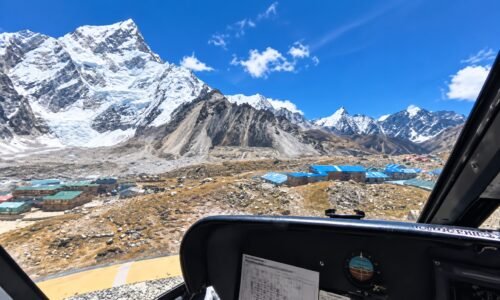
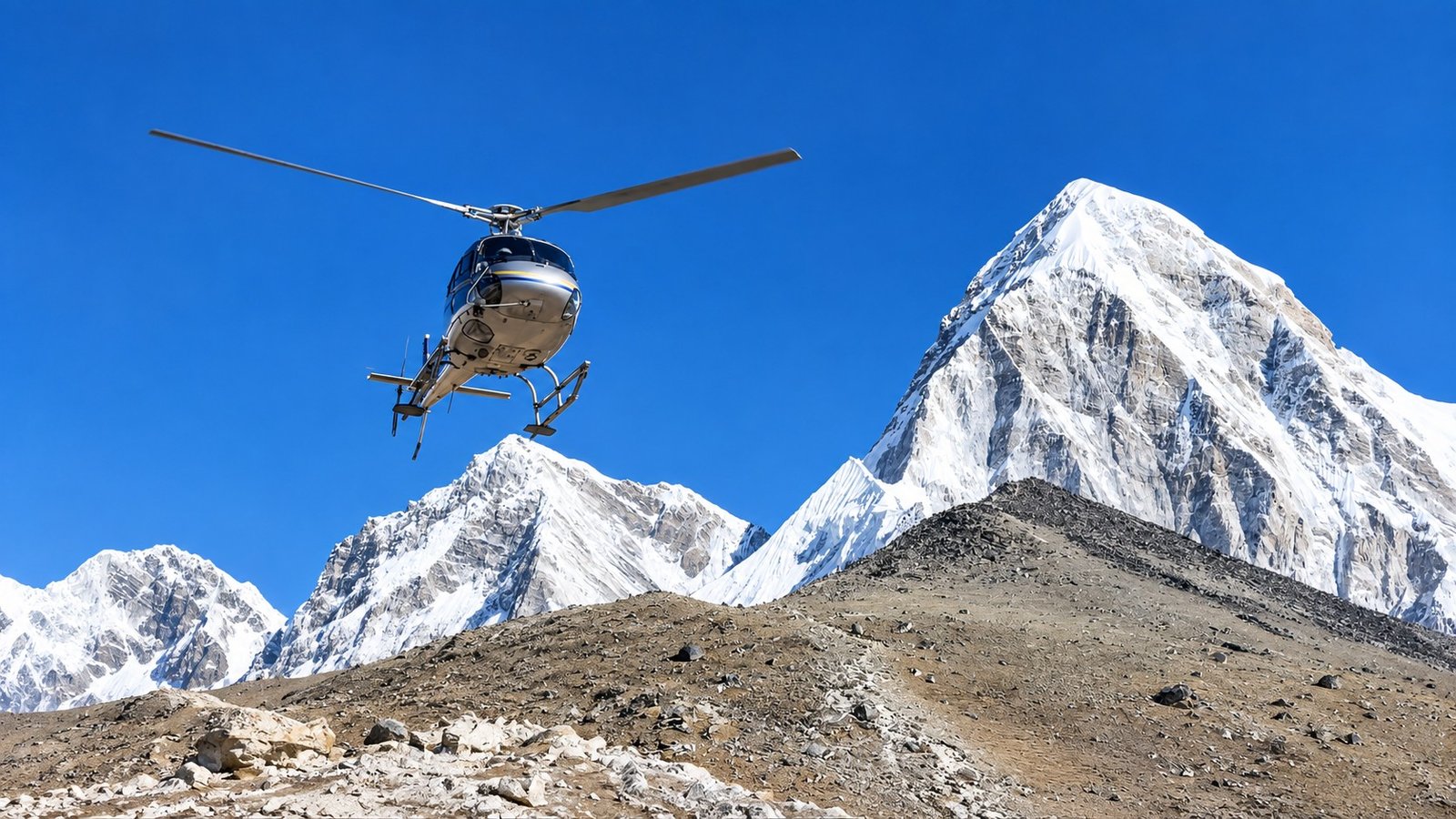
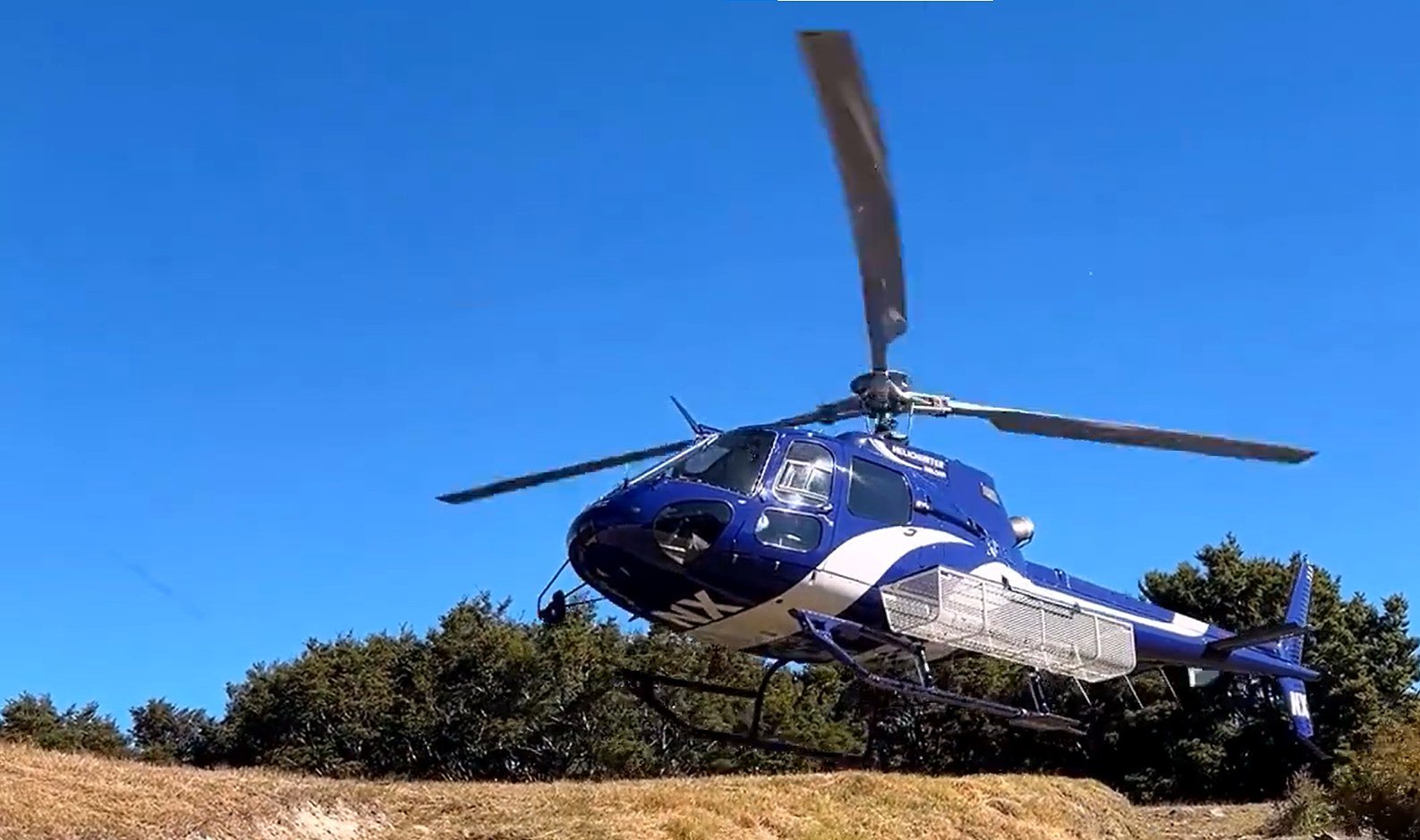
The Gorakshep to Lukla Helicopter Flight is a fast and scenic way to finish your Everest region adventure after reaching Gorakshep, Everest Base Camp or Kala Patthar.
Instead of spending another two to three days descending the trekking trail toward Lukla, travelers can take to the air and reach the gateway of the Everest region in around 20 to 25 minutes under favorable conditions.

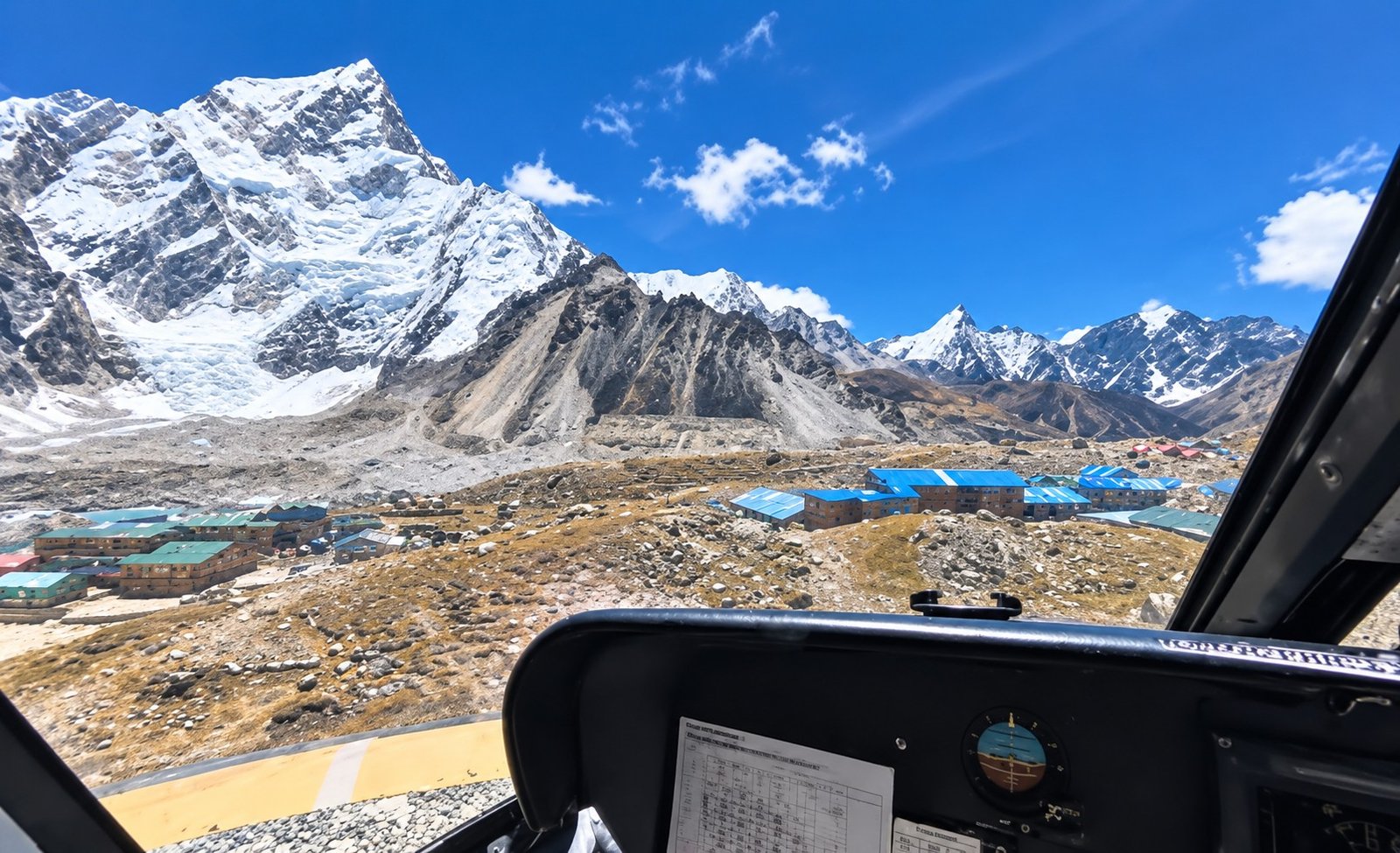
The journey starts from Gorakshep at approximately 5,164 m, one of the highest settlements regularly used by trekkers in the Khumbu.
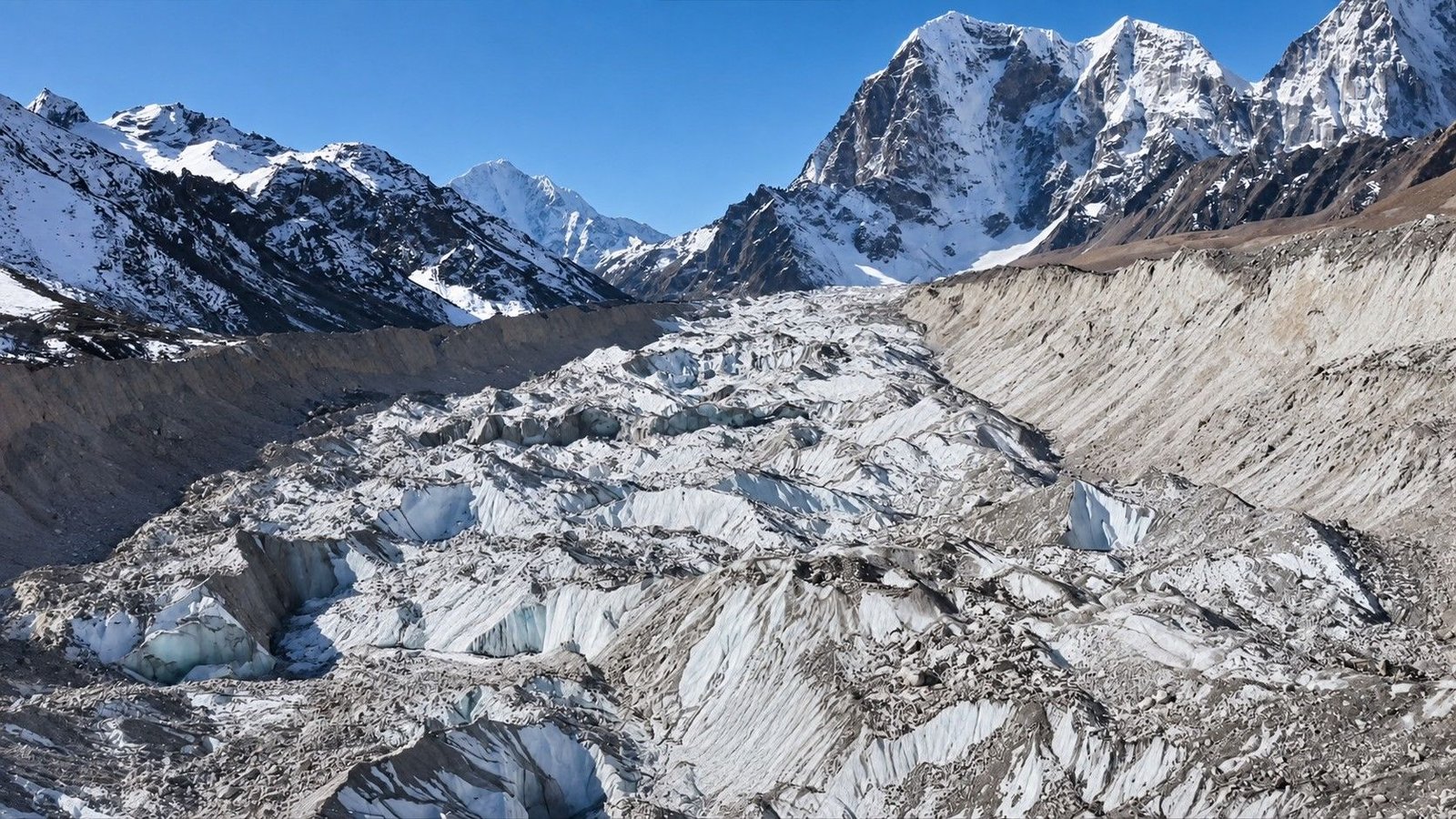
As the helicopter leaves the village, the surrounding landscape immediately opens into the high Himalayan terrain of the upper Khumbu, with rugged moraines, glacial valleys and towering peaks surrounding the route.

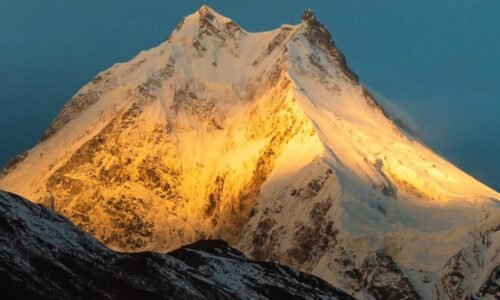
Depending on visibility and the actual flight path, passengers may see Khumbu Glacier, Khumbu Icefall, Pumori, Nuptse, Everest, Lhotse and Ama Dablam before the helicopter begins its descent toward the lower valleys.
As the aircraft loses altitude, the scenery changes remarkably quickly.

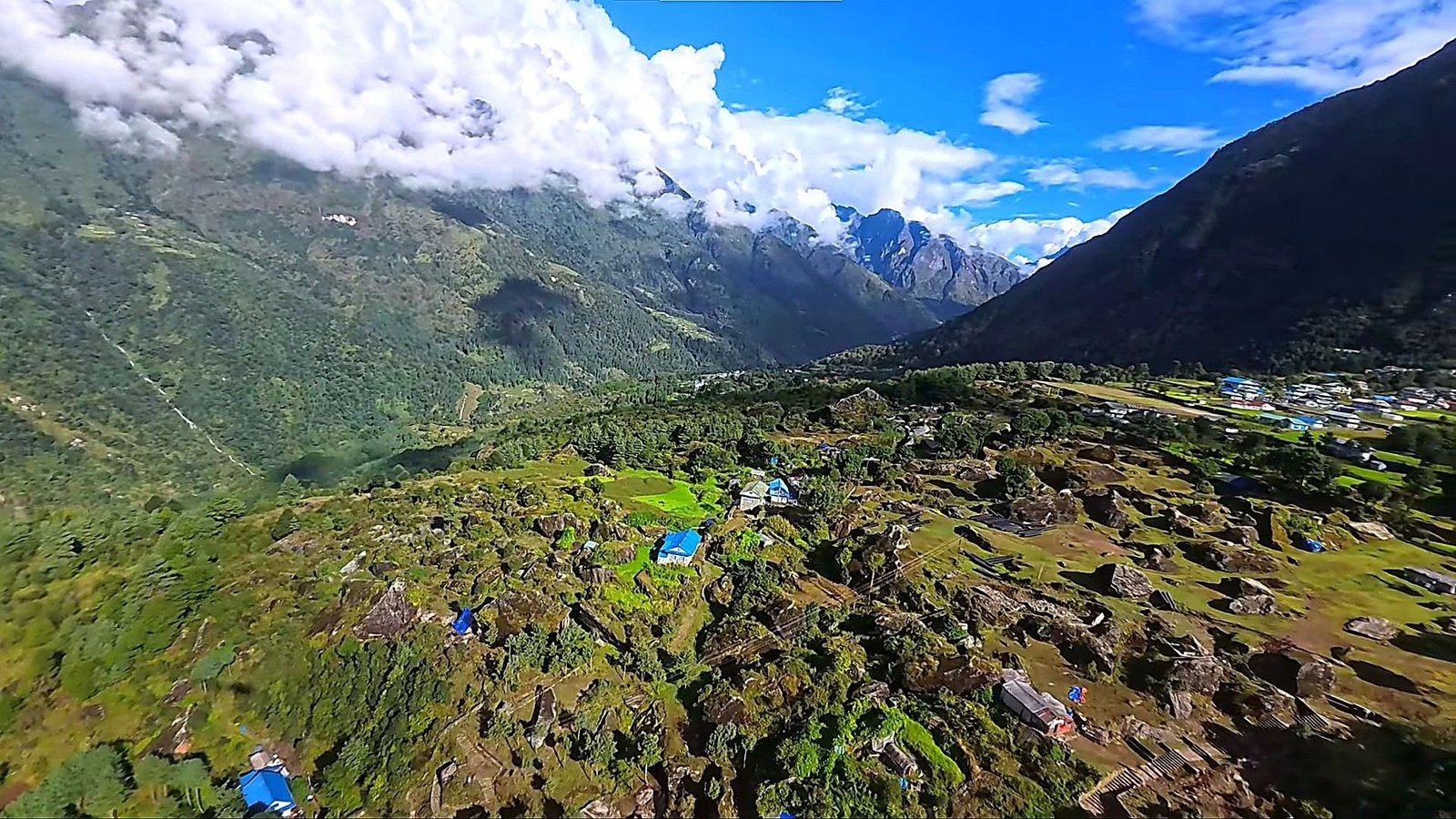
The stark high-altitude landscape around Gorakshep gives way to deeper valleys, greener slopes, Sherpa settlements and the river corridors of the lower Khumbu.
The route may pass over or near areas associated with the classic Everest trekking trail, including the landscapes around Pheriche, Tengboche and the Dudh Koshi corridor, depending on the operating route.
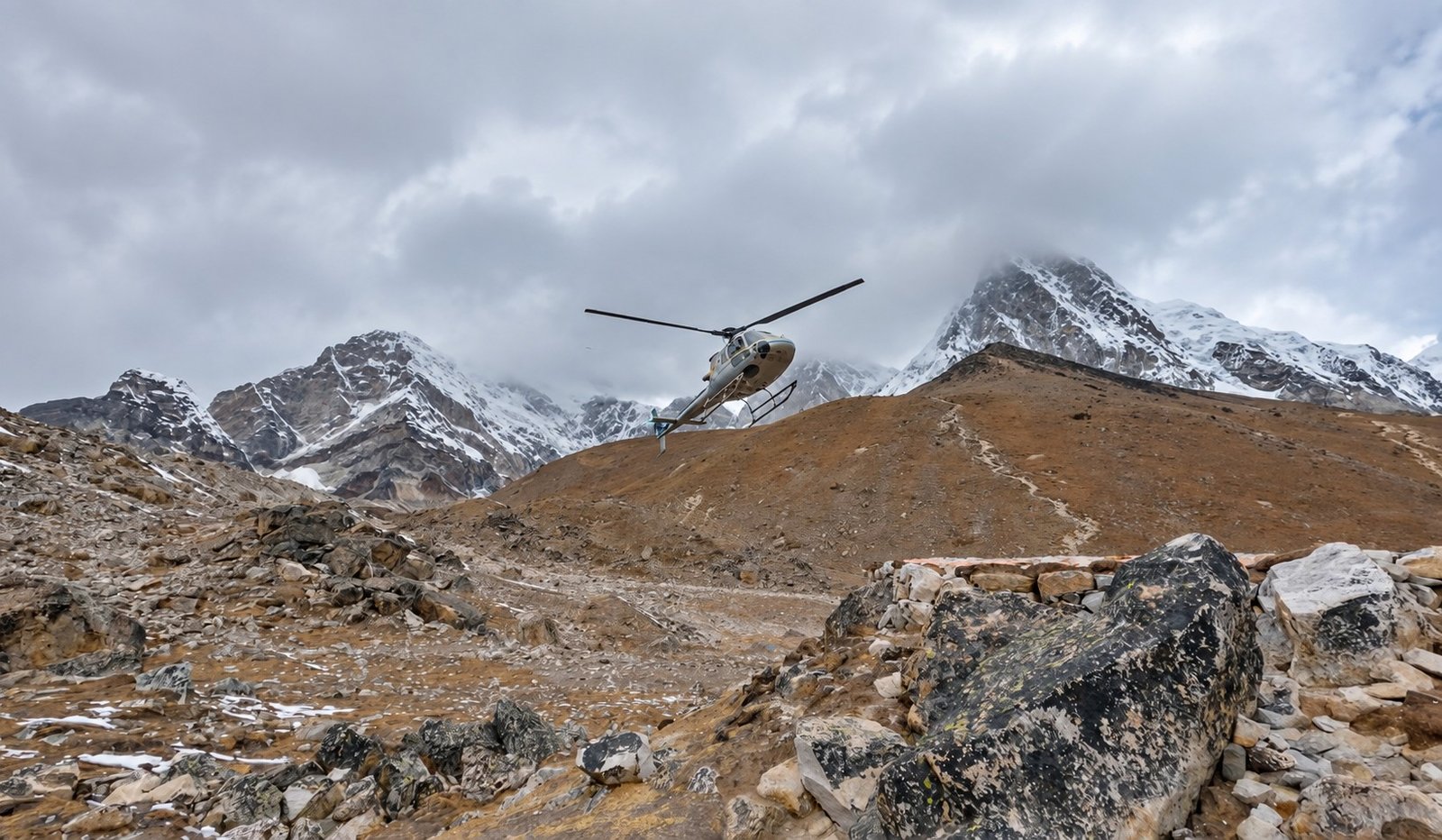
The flight finishes at Tenzing-Hillary Airport in Lukla, at roughly 2,845–2,860 m. From here, travelers can connect with their onward flight from Lukla or continue with their planned journey.
This helicopter service is particularly valuable after a demanding Everest Base Camp trek.

Trekkers who are physically tired, dealing with the strain of repeated downhill walking, short on time, or simply ready to leave the high mountains can replace several days of trekking with a short aerial transfer.
It is also useful for travelers who want a final bird’s-eye view of the Khumbu before leaving the Everest region.

One important point is that the helicopter does not normally collect passengers directly from Everest Base Camp itself.
Gorakshep is the usual departure point for this service, so trekkers finishing at Base Camp or Kala Patthar generally return to Gorakshep before their helicopter transfer.
For the strongest chance of clear Himalayan views, October to November is generally the most favorable period, while March and April are also popular for good mountain visibility and relatively stable conditions
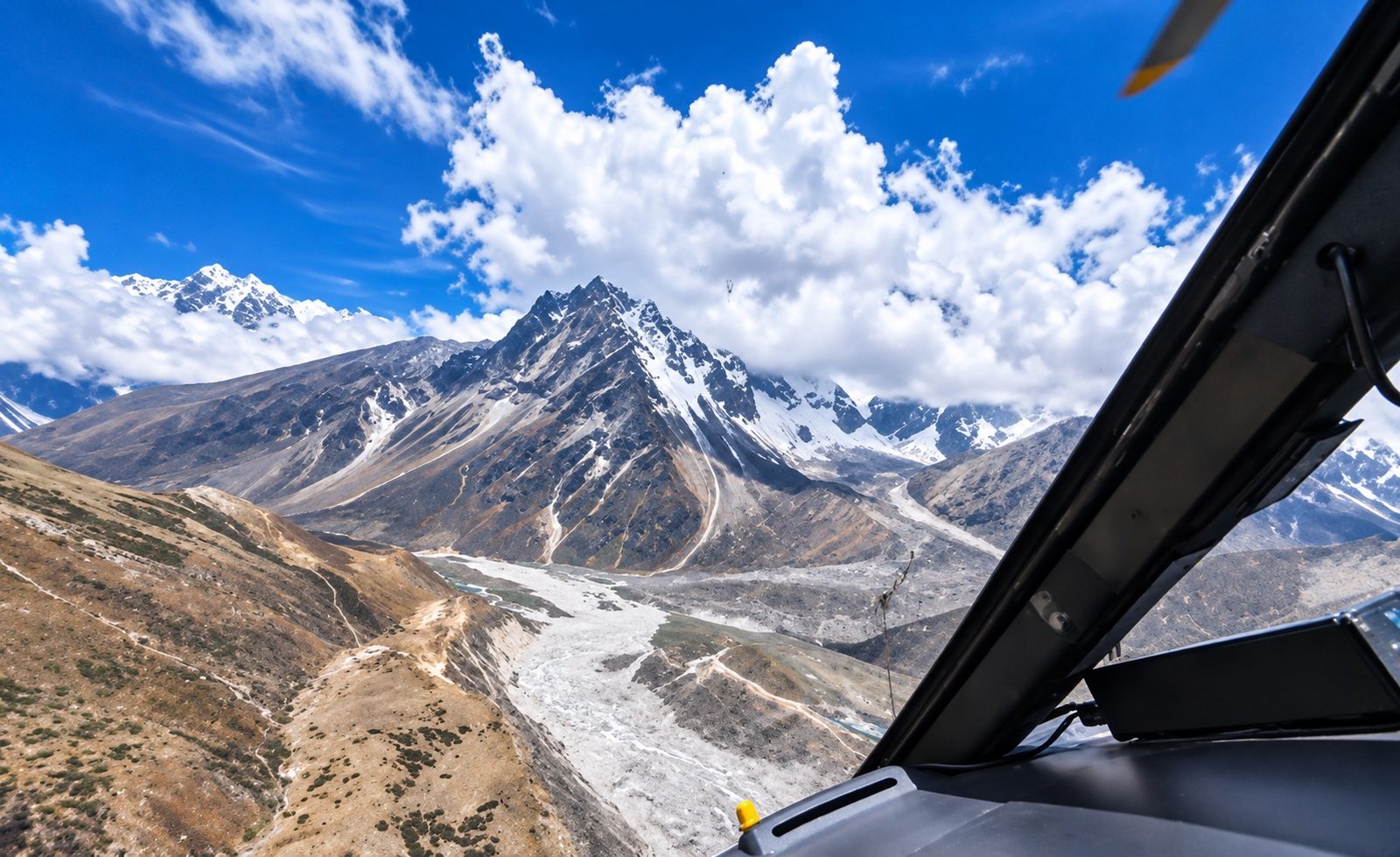
December to February can produce exceptionally clear mornings, but winter temperatures, frost and snowfall can affect high altitude operations
The June to August monsoon period is more unpredictable because cloud, rain and reduced visibility can interfere with helicopter flights. Travelers using the service during monsoon should keep additional flexibility in their itinerary
Even during the best months, clear mountain views are not guaranteed. Conditions around Gorakshep can change quickly, and the actual flight path may also influence which peaks are visible
Flight Information
| Flight Detail | Information |
|---|---|
| Route | Gorakshep to Lukla |
| Departure Point | Gorakshep Helipad |
| Departure Altitude | Approximately 5,164 m |
| Arrival | Tenzing-Hillary Airport, Lukla |
| Flight Duration | Around 15–25 minutes in favorable conditions, commonly advertised as a 20-minute flight |
| Approximate Trekking Time Replaced | Around 2–3 days of descent toward Lukla |
| Typical Departure | Early morning, subject to weather and operational clearance |
| Booking Options | Shared / Group Joining or Private Charter |
| Best For | Tired Trekkers, Time Sensitive Travelers, Families and Private Groups |
Aerial Views and Locations
| Flight Section | Possible Views |
|---|---|
| Gorakshep Departure | Gorakshep village, high-altitude moraines, rugged mountain slopes and surrounding Himalayan peaks |
| Upper Khumbu | Khumbu Glacier, Khumbu Icefall, Pumori, Nuptse, Lhotse and Everest depending on visibility and route |
| Central Khumbu | Deep mountain valleys, Sherpa settlements, trekking trails and peaks such as Ama Dablam and Thamserku |
| Dudh Koshi Corridor | River valleys, forested slopes and changing terrain as the helicopter descends toward lower Khumbu |
| Lukla Approach | Greener hills, villages and the hillside landscape surrounding Tenzing-Hillary Airport |
Safety and High Altitude Considerations
At approximately 5,164 m, Gorakshep presents very different operating conditions from a normal low altitude helicopter landing area.
Aircraft performance, passenger weight, baggage, fuel requirements, temperature and wind all influence the flight arrangement.
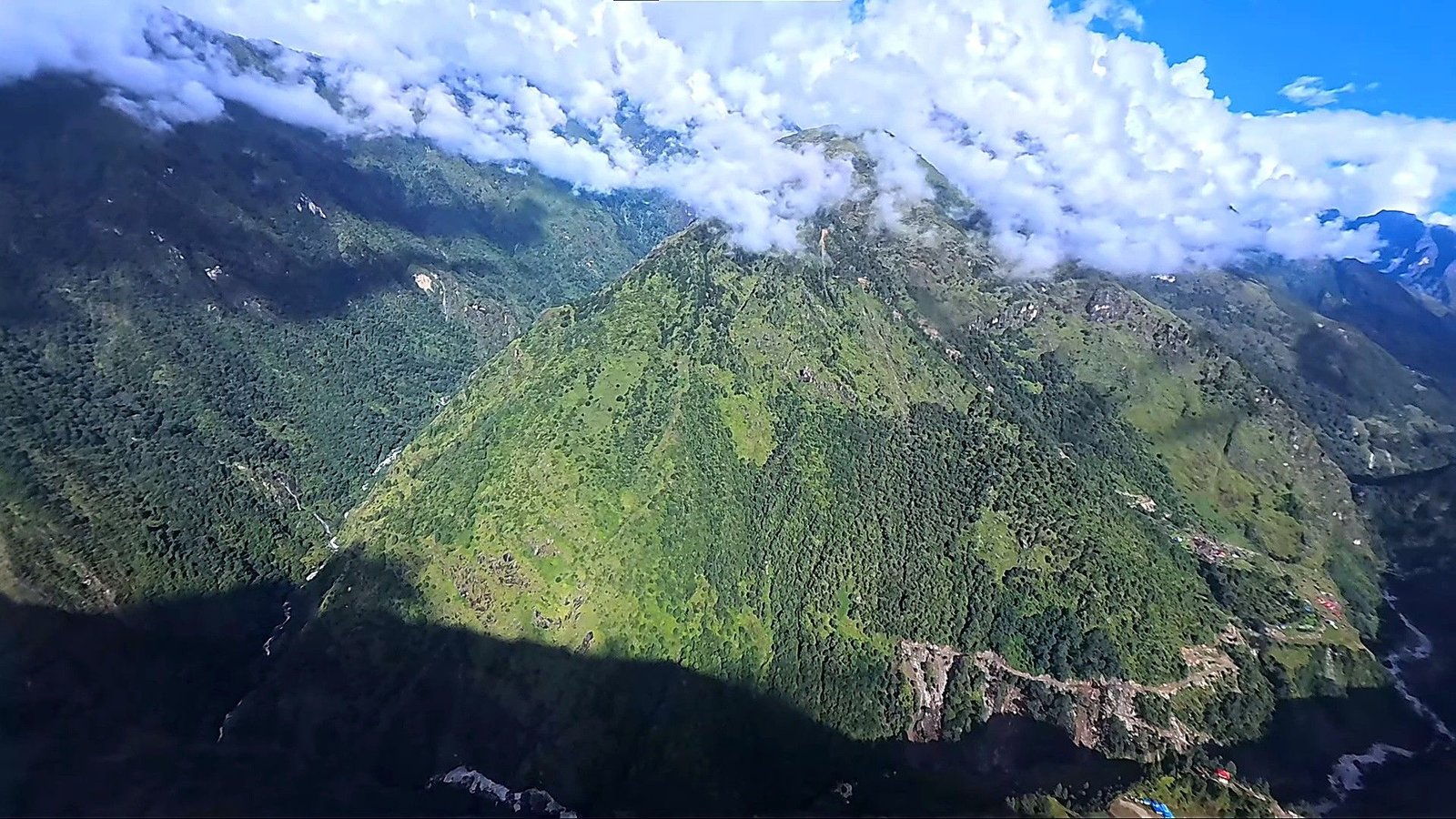
Because of this, passengers may not always be carried directly from Gorakshep in one movement if payload conditions require a different arrangement.
The operator may organize a passenger shuttle to Pheriche or another suitable location before continuing toward Lukla
Passengers should keep baggage within the allowance provided by the operator, secure loose belongings and follow crew instructions during boarding, takeoff and landing
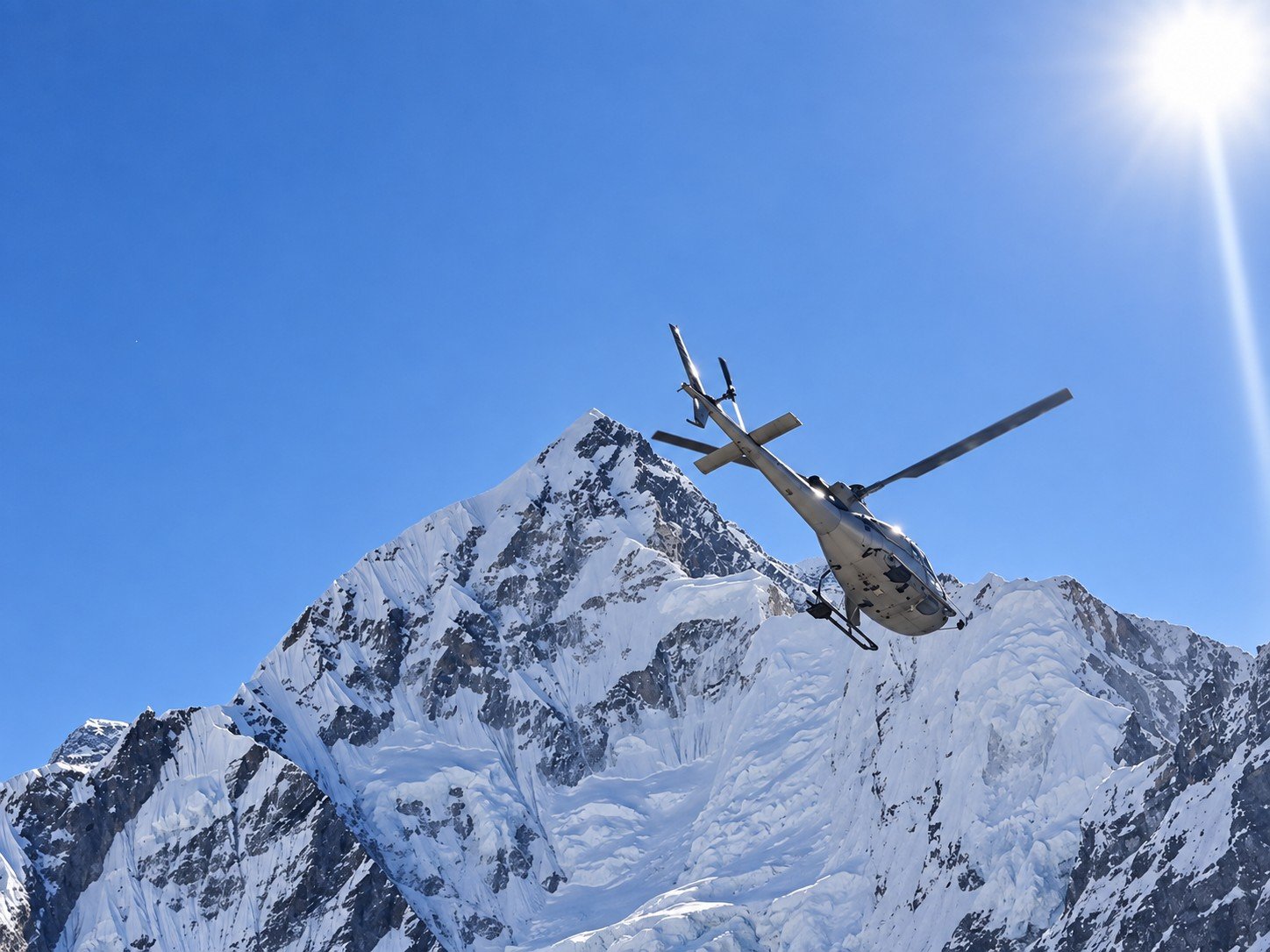
The pilot and operator have the final decision regarding departure, landing, routing and any intermediate arrangements.
A flight can be delayed, rescheduled or cancelled when weather or operational conditions are unsuitable
Shared and Private Booking
The helicopter can be arranged as a shared/group joining flight or a private charter
Shared flights are suitable for solo trekkers, couples and smaller groups who are flexible with departure arrangements.
The helicopter operates with other passengers and the final passenger load depends on aircraft capacity and high altitude payload limitations.
Private charters are suitable for families, friends, trekking groups and travelers who want the helicopter reserved exclusively for their party.
This provides greater control over the travel arrangement, subject to aircraft limitations and weather clearance.
Because a shared seat and a private helicopter involve different operating arrangements, the pricing structure is different.
The final cost depends on the travel date, passenger numbers, aircraft availability, baggage and operational requirements.
| Booking Type | Best For | Main Benefit | Important Consideration |
|---|---|---|---|
| Shared / Group Joining | Solo Travelers, Couples and Small Groups | Share the helicopter with other travelers and reduce the cost structure compared with a private charter | Departure and passenger arrangements depend on availability, aircraft capacity and payload limits |
| Private Charter | Families, Friends and Trekking Groups | Exclusive helicopter arrangement for your own group | Subject to aircraft capacity, passenger weight, baggage and weather conditions |
Book Your Everest Region Helicopter Flight
Nepal Royal Tourism Holiday operates helicopter regularly between Kathmandu and Lukla in both directions, with flights arranged according to weather, aircraft availability and operational conditions. We offer both shared/group bookings and private helicopter charters for travelers heading into or returning from the Everest region
Whether you are traveling from Gorakshep to Lukla, returning from Lukla to Kathmandu, or arranging a helicopter transfer around the Everest region, our team can coordinate the flight based on your schedule. Contact us for availability and the best available rate for your travel date
Trip Highlights
- Replace around 2–3 days of strenuous downhill trekking with a helicopter journey of approximately 20 minutes in favorable conditions
- Ideal for trekkers who have finished the Everest Base Camp route and are tired after days of high-altitude walking
- Leave Gorakshep at approximately 5,164 m and descend rapidly through some of the most dramatic landscapes of the Khumbu
- Enjoy possible aerial views of Everest, Lhotse, Nuptse, Pumori and Ama Dablam when weather and visibility are favorable
- Look down over the Khumbu Glacier and surrounding glacial terrain during the opening section of the flight
- Watch the landscape change from the barren high-altitude environment around Gorakshep to greener valleys and Sherpa settlements farther south
- Reach Tenzing-Hillary Airport in Lukla quickly, allowing you to connect with your onward flight or continue your travel plans
- Choose between shared/group joining and private helicopter arrangements according to your group size and schedule
- Finish your Everest adventure from the air with a final panoramic look at the Khumbu before descending toward Lukla
Goarkshep to Lukla Helicopter Flight – 20 Minutes ~ Itinerary
Day 1
- Starting Point: Gorakshep
- Altitude: Approximately 5,164 m
- Arrival: Tenzing-Hillary Airport, Lukla
- Flight Duration: Around 20 to 25 minutes in favorable conditions
- Total Travel Time: Can be longer if passenger shuttling or operational stops are required
- Preferred Departure: Morning, subject to weather and flight clearance
After completing your Everest Base Camp or Kala Patthar experience, make your way back to the Gorakshep helipad for the helicopter transfer to Lukla. Once the required passenger and baggage arrangements are completed, the helicopter takes off over the upper Khumbu and immediately begins descending toward lower elevations.
The opening section provides a final aerial perspective of the high Everest landscape. Depending on visibility and the operating route, you may see the Khumbu Glacier, Khumbu Icefall, Pumori, Nuptse and Lhotse, with Mount Everest and other surrounding peaks potentially visible from suitable angles
As the helicopter descends, the extreme alpine landscape gradually gives way to deeper valleys, trekking trails, Sherpa settlements and greener slopes. The scenery around Pheriche and the Dudh Koshi corridor becomes increasingly noticeable as the aircraft moves toward Lukla
The flight ends at Tenzing-Hillary Airport in Lukla, where you can connect with your onward flight or continue your planned journey
For a traveler who has already spent several days trekking downhill after Everest Base Camp, this short flight can be a major convenience.
Instead of walking the entire return route toward Lukla, you can complete the transfer in a fraction of the time while enjoying one final view of the Khumbu from above.
Flight Journey
| Stage | Experience | Approximate Timing |
|---|---|---|
| Gorakshep Departure | Passenger and baggage arrangements followed by takeoff from the upper Khumbu | Start of flight |
| Upper Khumbu | High altitude valleys, glaciers, moraines and possible views of Everest, Lhotse, Nuptse and Pumori | Opening section |
| Pheriche and Lower Khumbu | Sherpa villages, trekking routes, mountain ridges and changing valley landscapes | Middle section |
| Dudh Koshi Corridor | Deeper river valleys, forests and greener mountain slopes | Final approach |
| Lukla Arrival | Landing at Tenzing-Hillary Airport and connection to onward travel | Usually within 20–25 minutes of direct flying |
Trip Cost Includes/Excludes
Cost Includes
- Helicopter flight from Gorakshep to Lukla
- Flight coordination and booking assistance
- Coordination of any required high-altitude passenger shuttle
- Basic assistance from our team before and during the flight
- Passenger and baggage handling for the scheduled helicopter service
- Government tax and service charges
Cost Excludes
- Additional baggage charges where applicable
- Private charter charges when a private helicopter is selected
- Travel insurance and medical expenses
- Any services not specifically mentioned under the inclusions
Trip Photo/Video Gallery




Frequently Asked Questions
The biggest reason is time and fatigue. After Everest Base Camp and Kala Patthar, the descent toward Lukla normally takes several more trekking days. A helicopter reduces that journey to roughly 20 minutes of direct flying in suitable conditions, making it particularly attractive for trekkers who are exhausted or need to save time.
The direct flight is commonly around 15–20 minutes, although the actual duration can vary with routing and weather. The total transfer may take longer when passenger shuttling or other operational arrangements are necessary.
Gorakshep is the normal departure point rather than Everest Base Camp itself. After completing your Base Camp or Kala Patthar excursion, you need to return to Gorakshep for the helicopter departure.
The short journey can provide impressive views of the upper Khumbu, Khumbu Glacier, Khumbu Icefall, Pumori, Nuptse, Lhotse and Ama Dablam, followed by deeper valleys and greener terrain toward Lukla. What is visible depends on cloud, haze, flight direction and the actual route flown.
Very much so. It is especially useful for trekkers who are physically tired after the trek, want to avoid another few days of downhill walking, have limited time, or need to reach Lukla for their onward flight.
Not necessarily. Gorakshep is at around 5,164 m, where helicopter payload is significantly affected by altitude. Depending on passenger and baggage weight, the operator may need to shuttle some passengers to a lower point such as Pheriche before continuing to Lukla.
At extreme altitude, the thinner air reduces helicopter lift capacity. The safe payload therefore depends on aircraft type, passenger weight, baggage, temperature, wind and fuel requirements rather than one universal passenger limit.
Yes, but a larger group may be divided into multiple high-altitude shuttles before continuing toward Lukla. The exact arrangement depends on the aircraft and the group’s combined weight and baggage.
Yes. Shared or group-joining seats can be arranged when available. This is generally suitable for solo trekkers, couples and smaller groups who are flexible with the departure arrangement.
The flight can be delayed, rescheduled or cancelled when the pilot determines that visibility, wind, cloud or other conditions are unsuitable. On mountain routes, safety takes priority over the planned departure time.
You may also like
Menu