


Festivals in Nepal: 12 Cultural Celebrations & Best Places to Experience
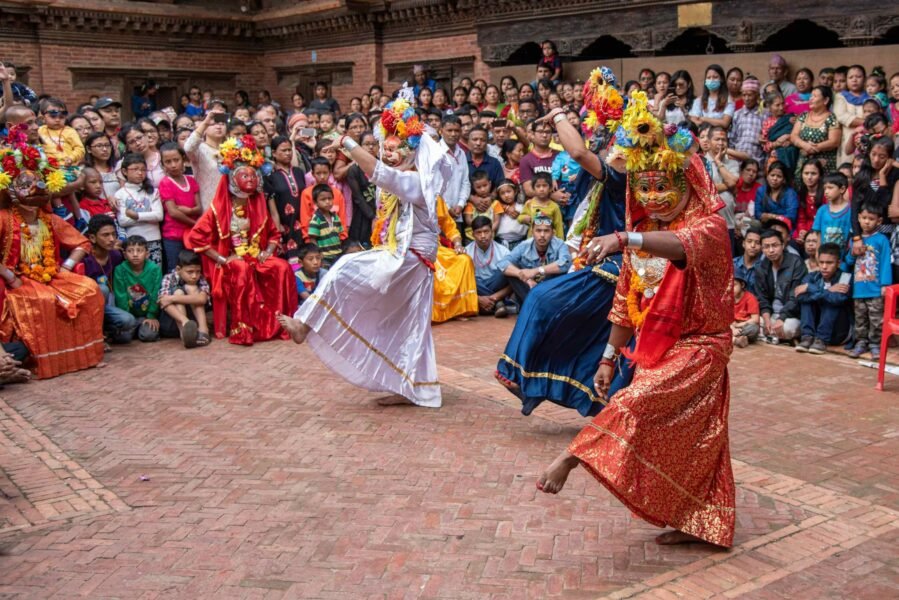
A festival can completely change the experience of travelling through Nepal. Kathmandu Durbar Square can feel like an ordinary heritage stop one week and become the centre of a chariot procession, masked dances and huge crowds the next.
A trek through the Everest region can already be memorable for its mountains and Sherpa villages, but reaching Tengboche while Mani Rimdu is taking place adds an entirely different layer to the journey.
The same is true across the country. In Bhaktapur, Nepali New Year arrives with the dramatic traditions of Bisket Jatra. Upper Mustang has Tiji and Yartung, two celebrations that belong closely to the culture and landscape of the region.

Holi fills streets with colour, while Tihar transforms homes and neighbourhoods with lamps, decorations and evening celebrations. Dashain is quieter in a different way, drawing families together and changing the rhythm of towns and villages across Nepal.
For travellers, the important question is therefore not simply which festivals are the biggest. It is which celebration fits the kind of Nepal journey you actually want.

Some are easy to experience during a few days in Kathmandu. Others are worth arranging an entire trek around. A few are mainly family occasions, where visitors should expect to observe the wider atmosphere rather than walk into private celebrations.
The 12 celebrations below were chosen for that reason. They offer something distinctive in the place where they are celebrated, and each can become more meaningful when it is connected with the right destination, cultural tour or trekking route.
Festival Dates in Nepal Change from Year to Year
Nepal’s celebrations follow several calendars, including Hindu, Buddhist, Tibetan lunar and Bikram Sambat traditions. Some dates are already fixed for early 2027, while festivals later in the year still depend on the next calendar, monastery decisions or local programmes. When a 2027 date is not yet confirmed, the seasonal period is more useful than pretending an exact day is certain.
Nepal Festival Calendar 2027
The first months of 2027 can already be planned with reasonable certainty. Sonam Lhosar falls on February 7, Maha Shivaratri on March 6, Gyalpo Lhosar on March 9, and Holi is observed on March 21 in Nepal’s hill and mountain districts and March 22 in the Terai. Nepali New Year follows in mid-April.
For later festivals such as Tiji, Yartung, Indra Jatra, Dashain, Tihar and Mani Rimdu, use the expected season for planning and confirm the final date before buying flights around the event.
| Festival | 2027 Date or Period | Best Place to Experience | Date Status |
|---|---|---|---|
| Sonam Lhosar | February 7 | Kathmandu and Tamang communities | Confirmed calendar date |
| Maha Shivaratri | March 6 | Pashupatinath, Kathmandu | Confirmed calendar date |
| Gyalpo Lhosar | March 9 | Boudhanath and Himalayan Buddhist communities | Confirmed calendar date |
| Holi – Hills | March 21 | Kathmandu and Pokhara | Confirmed calendar date |
| Holi – Terai | March 22 | Janakpur and Terai districts | Confirmed calendar date |
| Nepali New Year & Bisket Jatra | Around April 14 | Bhaktapur | Local programme to confirm |
| Rato Machhindranath & Bhoto Jatra | April–May | Patan, Lalitpur | Date to confirm |
| Buddha Jayanti | May | Lumbini, Boudhanath and Swayambhunath | Full-moon date to confirm |
| Tiji Festival | May–June | Lo Manthang, Upper Mustang | Monastery schedule to confirm |
| Yartung | August–September | Mustang | Local lunar schedule to confirm |
| Indra Jatra | September | Kathmandu Durbar Square | Date to confirm |
| Dashain | September–October | Across Nepal | 2084 date to confirm |
| Tihar | October–November | Across Nepal | 2084 date to confirm |
| Mani Rimdu | October–November | Tengboche, Everest region | Monastery schedule to confirm |
| Tamu Lhosar | December | Pokhara and Gurung communities | 2027 date to confirm |
Losar Celebrations: Different Himalayan Communities, Different New Years
| Festival Period | Different dates from winter into early spring |
| 2027 Dates | Sonam Lhosar – February 7; Gyalpo Lhosar – March 9; Tamu Lhosar – December date to confirm |
| Best Places | Kathmandu, Boudhanath, Pokhara and Himalayan communities |
Losar is often spoken about as though it were one single Himalayan New Year, but Nepal’s cultural reality is more interesting than that.
Tamu Lhosar is associated with the Gurung community, Sonam Lhosar with the Tamang community, and Gyalpo Lhosar with Sherpa, Tibetan and other Himalayan Buddhist communities. Their dates and traditions are not interchangeable.
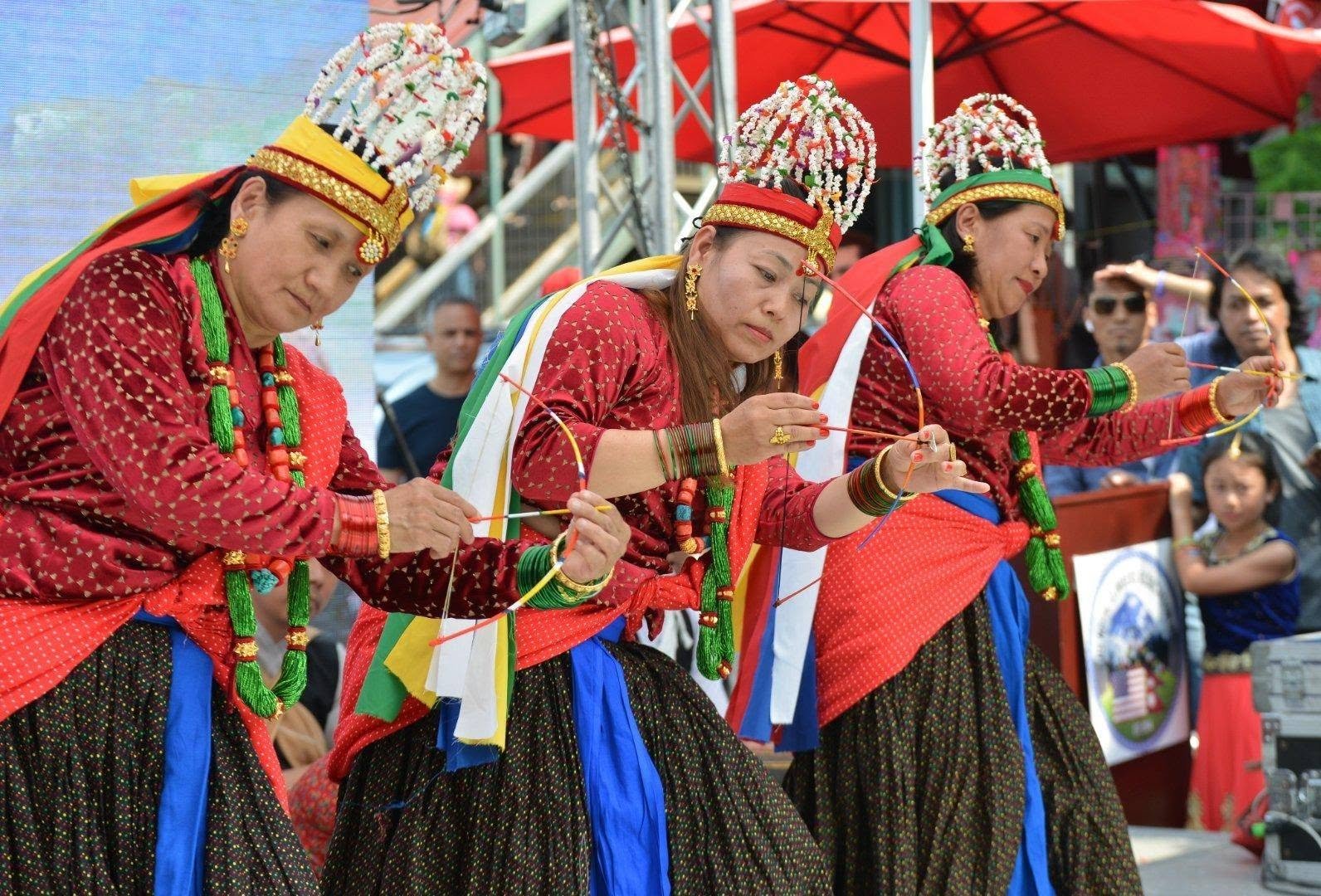
Public celebrations can include traditional clothing, music, dancing, community gatherings, religious ceremonies and special food.
Boudhanath becomes particularly interesting around Buddhist New Year observances because monasteries, pilgrims and the surrounding Tibetan-influenced community give the celebration a natural setting rather than the feeling of a staged cultural event.
Tamu Lhosar connects especially well with Pokhara and the surrounding Gurung regions. Sonam Lhosar can fit naturally into a Kathmandu stay or a journey towards Tamang areas such as Langtang.

Gyalpo Lhosar is particularly relevant for travellers interested in Sherpa and Tibetan Buddhist culture.
For a visitor, the best approach is to find out which community’s Losar falls during your trip and experience that celebration in the place where it belongs. Trying to compress all three into one generic “Losar festival” loses exactly the cultural difference that makes them worth seeing.
Maha Shivaratri: Experience Pashupatinath at Its Most Intense
| 2027 Date | March 6 |
| Best Place | Pashupatinath Temple, Kathmandu |
| Best Combined With | Kathmandu Valley cultural sightseeing |
Maha Shivaratri is one of the most powerful times of the year to visit the wider Pashupatinath area. Dedicated to Lord Shiva, the festival brings large numbers of devotees, pilgrims and sadhus into Kathmandu for prayer, fasting, worship and night-long religious observances.

The atmosphere is very different from an ordinary sightseeing visit to Pashupatinath. Religious practitioners gather around the wider complex, lamps and fires appear throughout the area, and the movement of pilgrims continues from morning into the night.
For photographers and culturally curious visitors, the visual side can be fascinating, but the religious meaning should remain more important than getting a dramatic photograph.

Expect crowds, traffic changes and slower movement around the temple area. Non-Hindu visitors cannot enter the main sanctum of Pashupatinath, but much of the wider complex and the opposite side of the Bagmati River can still provide a meaningful view of the occasion.
Shivaratri is an easy festival to build into a normal Nepal holiday because you do not need to alter the entire trip around it. Spend a few days exploring Kathmandu Valley, keep March 6 available for Pashupatinath and then continue towards Pokhara or begin a spring trek afterwards.
Explore Kathmandu Heritage Tour
Holi: Nepal’s Festival of Colours
| 2027 Dates | March 21 in hill and mountain districts; March 22 in the Terai |
| Best Places | Kathmandu, Pokhara and Janakpur |
| Best Combined With | Spring sightseeing or a trek beginning after the celebration |
Holi is probably the easiest Nepal festival for an international visitor to recognise instantly. Streets fill with coloured powder, water, music and groups of people celebrating together, particularly around busy city areas and university neighbourhoods.
There is one important planning detail that catches visitors out: Nepal does not celebrate Holi everywhere on the same day. In 2027, the hill and mountain districts, including Kathmandu and Pokhara, observe it on March 21.

The Terai celebrates on March 22, which means a traveller moving south can encounter a different regional atmosphere on the following day.
Kathmandu offers the most concentrated experience, while Pokhara combines the festival with a lakeside holiday and the beginning of the spring travel season.
Janakpur provides a very different setting in the Terai, where the cultural connection with the wider Mithila region gives Holi another character.

Participating does not mean throwing colour or water at everybody you see. Some people are travelling to work, some are observing quietly and others simply do not want to take part.
Protect your phone and camera, wear clothes you do not mind staining, use colours responsibly and respect anyone who signals that they want to stay out of it.
Nepali New Year and Bisket Jatra: Come to Bhaktapur in April
| Festival Period | Mid-April around Nepali New Year |
| Best Place | Bhaktapur |
| Best Combined With | Kathmandu, Patan and Bhaktapur cultural sightseeing |
Nepali New Year marks the beginning of a new Bikram Sambat year, but the most dramatic place to build a cultural trip around the period is Bhaktapur.
Bisket Jatra brings enormous chariots, traditional processions, community participation and the raising of the ceremonial lingo pole into one of Nepal’s best-preserved historic cities.

The scale matters. Bhairav’s large chariot is pulled through streets that were never designed for modern crowds, and the event can feel intense when thousands of people gather around the route. It is completely different from walking through Bhaktapur Durbar Square during an ordinary sightseeing day.
As the festival is a living Newar tradition rather than a tourism performance, visitors should watch carefully from safe areas and avoid standing in front of moving chariots, ropes or ceremonial structures.

Local police and community organisers may close certain routes temporarily, and access can change as the procession moves.
For an international traveller with a spring holiday, this is one of the strongest festival-and-destination combinations in Nepal. Spend several days in Kathmandu Valley, keep Bhaktapur central to the New Year period, then begin an April trek once the festival celebrations are finished.
Explore Kathmandu Valley Heritage
Buddha Jayanti: Build the Trip around Lumbini
| Festival Period | April–May full moon; 2027 date to confirm |
| Best Places | Lumbini, Boudhanath and Swayambhunath |
| Best Combined With | Buddhist heritage travel through Lumbini and Kathmandu |
Buddha Jayanti commemorates the birth of Siddhartha Gautama, and for a traveller there is no more meaningful place to experience the occasion than Lumbini.
The Maya Devi Temple, sacred garden and international monastic zone already make Lumbini one of Nepal’s most important pilgrimage destinations; the festival adds prayers, ceremonies, processions and a much larger gathering of Buddhist communities.
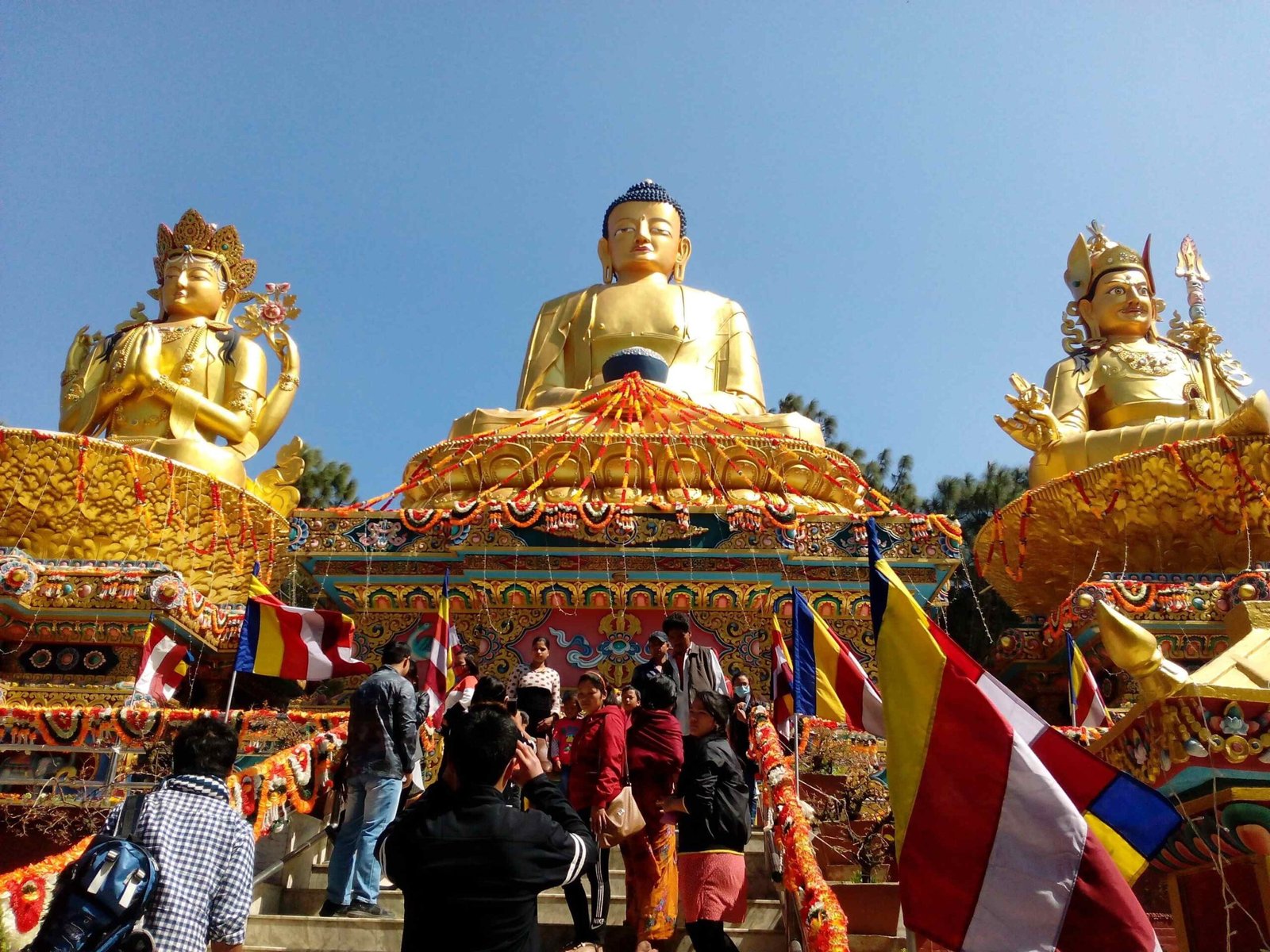
The celebration is not limited to Lumbini. Boudhanath and Swayambhunath in Kathmandu also become important places for prayer, butter lamps, circumambulation and monastery activities.
That makes it possible to experience part of Buddha Jayanti even when your itinerary cannot include the journey south to Lumbini.
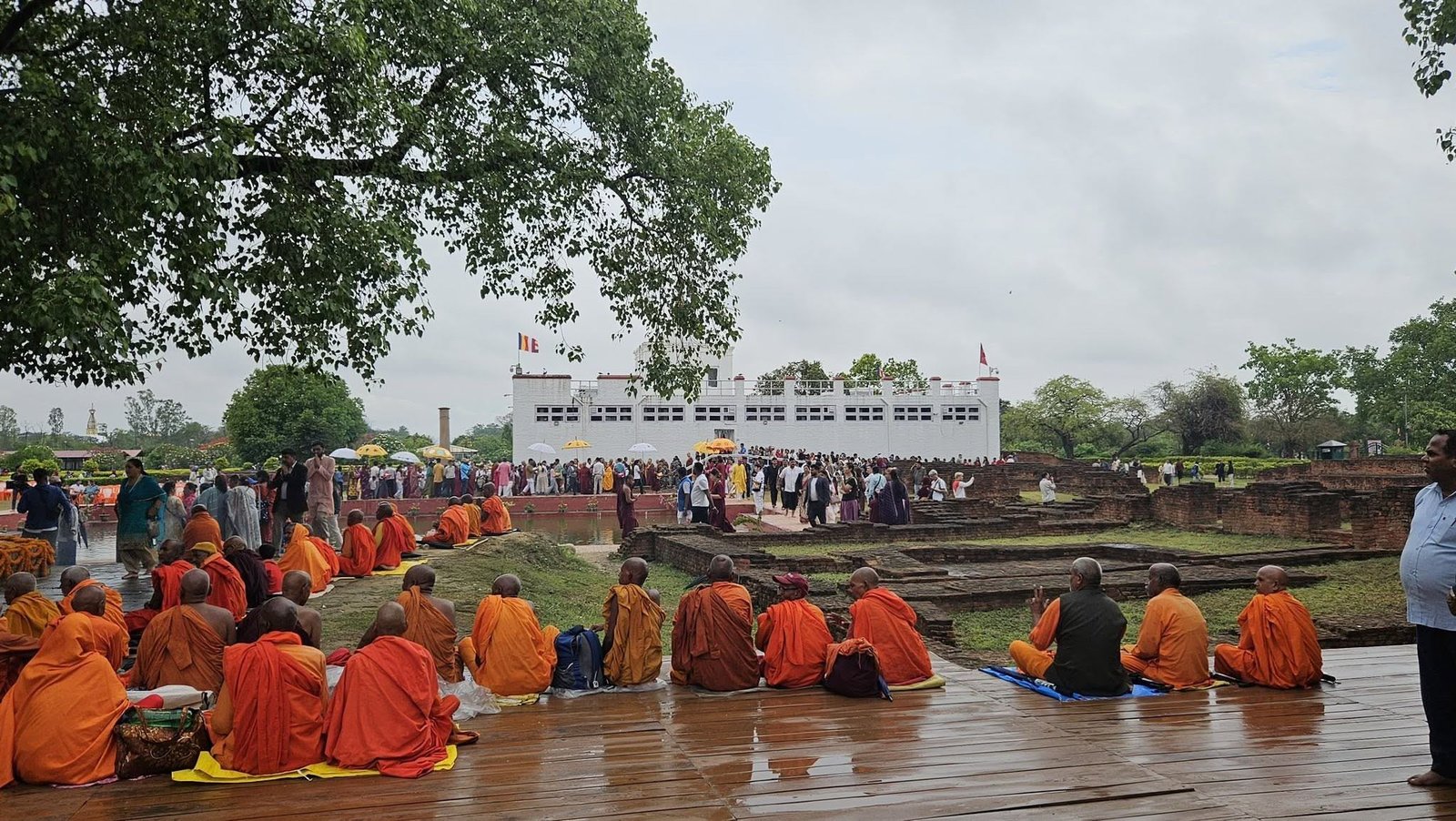
If the festival is the main reason for travelling, Lumbini deserves more than a rushed visit between two bus journeys. Allow time for the sacred garden, monasteries and surrounding Buddhist sites rather than arriving for a few hours and leaving immediately after the main ceremony.
This is one of the calmer festival experiences in the article. It is less about entertainment and more about pilgrimage, reflection and religious practice, which makes respectful behaviour around monks, worshippers and sacred spaces particularly important.
Inquire About a Buddha Jayanti Trip
Rato Machhindranath and Bhoto Jatra: See Patan beyond Durbar Square
| Festival Period | Generally April–May; route and dates vary |
| Best Place | Patan, Lalitpur |
| Best Combined With | Kathmandu Valley heritage trip |
Rato Machhindranath Jatra gives visitors a completely different view of Patan. Instead of treating the city only as a beautiful Durbar Square surrounded by cafés and heritage buildings, you see how traditional neighbourhoods continue to organise around one of the valley’s most important chariot festivals.
A towering wooden chariot carrying Rato Machhindranath moves through different areas of Lalitpur over an extended festival period. The deity is associated with rain, agriculture and community wellbeing, giving the celebration a strong connection with the farming history of the Kathmandu Valley.

Bhoto Jatra forms an important part of the festival cycle, with the ceremonial display of the bhoto, or vest, drawing large crowds.
Because the procession does not stay in one location throughout the entire festival, visitors need to know where the chariot has reached rather than simply arriving at Patan Durbar Square and expecting everything to happen there.
This is one of the best examples of why festival travel benefits from local planning. A normal sightseeing day can be arranged almost any time; catching a moving chariot festival requires understanding the programme, procession route and access conditions.
Explore Kathmandu Valley Cultural Tour
Tiji Festival: A Reason to Plan an Upper Mustang Journey
| Festival Period | Usually May or early June |
| Best Place | Lo Manthang, Upper Mustang |
| 2027 Date | Expected around late May–early June; final monastery schedule should be confirmed |
| Best Combined With | Upper Mustang Trek |
Tiji is one of the few Nepal festivals strong enough to justify arranging an entire Himalayan journey around its dates. The celebration takes place in Lo Manthang, the old walled capital of Upper Mustang, and is closely connected with Vajrayana Buddhist ritual rather than being a performance created for visitors.
Monks perform sacred masked dances associated with Vajrakila, or Dorje Phurba, and the festival develops through several days of prayers, symbolic performances and ceremonies connected with overcoming destructive forces and restoring harmony.
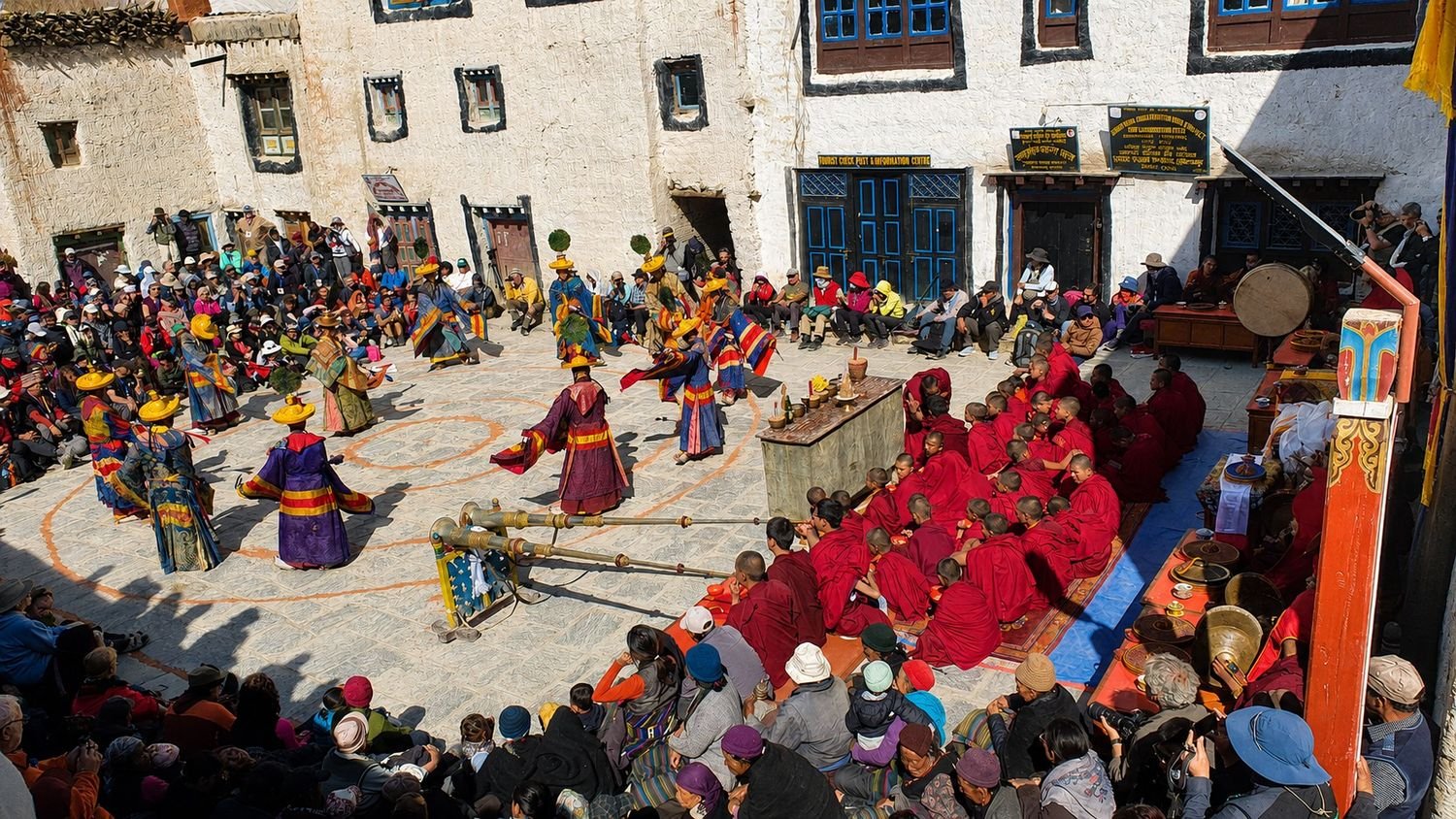
The setting makes the experience even stronger: dry cliffs, monasteries, mud-brick settlements and the old walls of Lo Manthang surround the festival rather than sitting outside it.
The difficult part is timing. Tiji follows a Tibetan lunar schedule, so flights and fixed trekking dates should not be built around an unverified internet date months in advance.
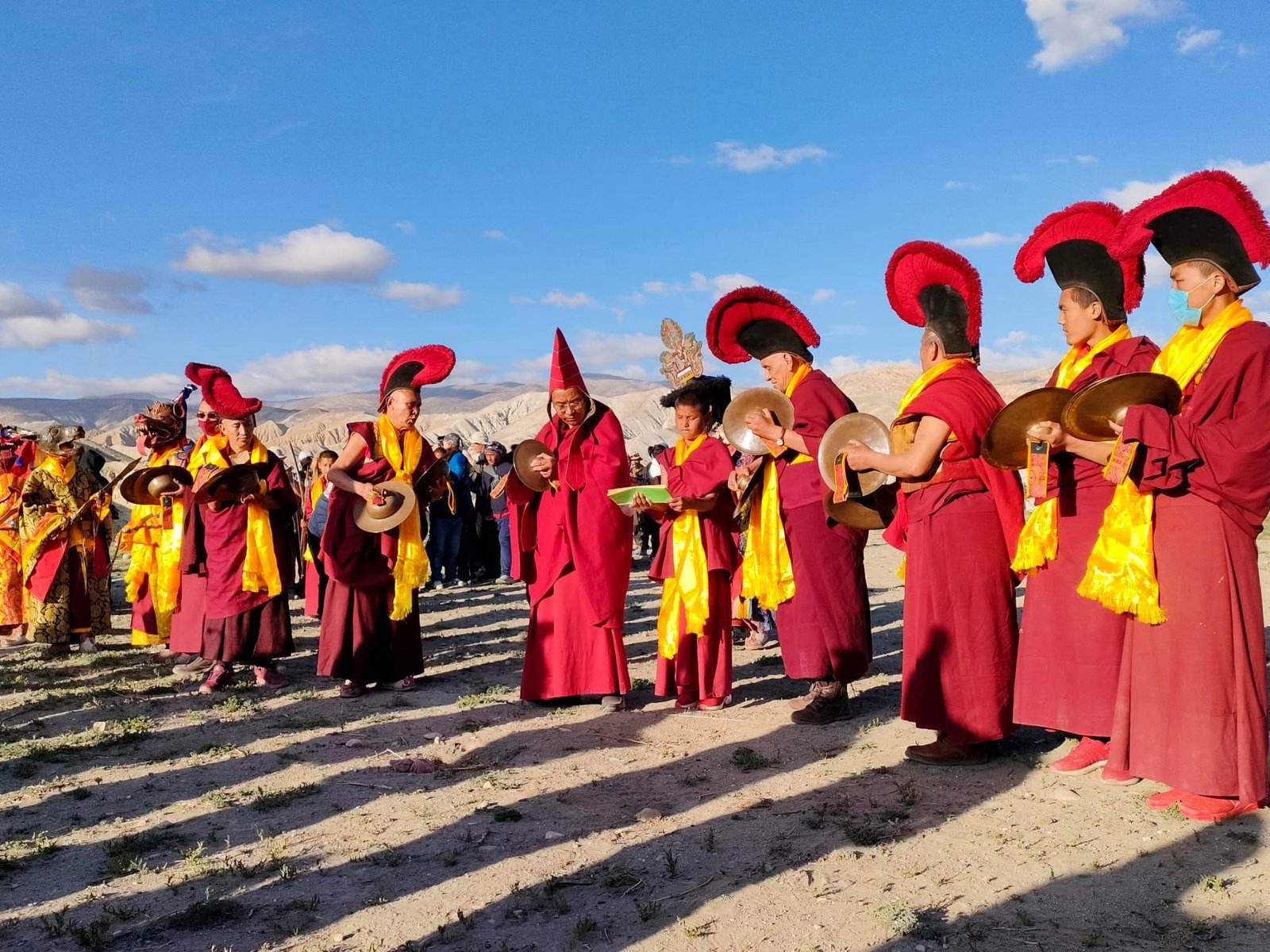
Current planning places the 2027 celebration around late May or early June, but the final Lo Manthang monastery programme should remain the reference before a festival-specific itinerary is locked.
Upper Mustang is also a restricted region, so the trip requires more planning than a normal Kathmandu festival.
Permits, guide arrangements, accommodation and transport need to be organised in advance, especially when the limited lodges in Lo Manthang become busy around the celebration.
Yartung: Horse Racing and Summer Celebration in Mustang
| Festival Period | Usually August–September around the late-summer full-moon period |
| Best Places | Lo Manthang and the Mustang region |
| Best Combined With | Upper Mustang cultural trekking |
Tiji is the better-known Mustang festival internationally, but Yartung shows a more social and seasonal side of life in the region.
Horse racing sits at the centre of the celebration, supported by community gatherings, food, music, dancing and the sense that villages have reached an important point in the summer agricultural calendar.
The horses are not an imported entertainment added for tourists. Riding remains closely connected with Mustang’s history, terrain and way of life, which is why the races feel completely natural against the dry high-altitude landscape around Lo Manthang.
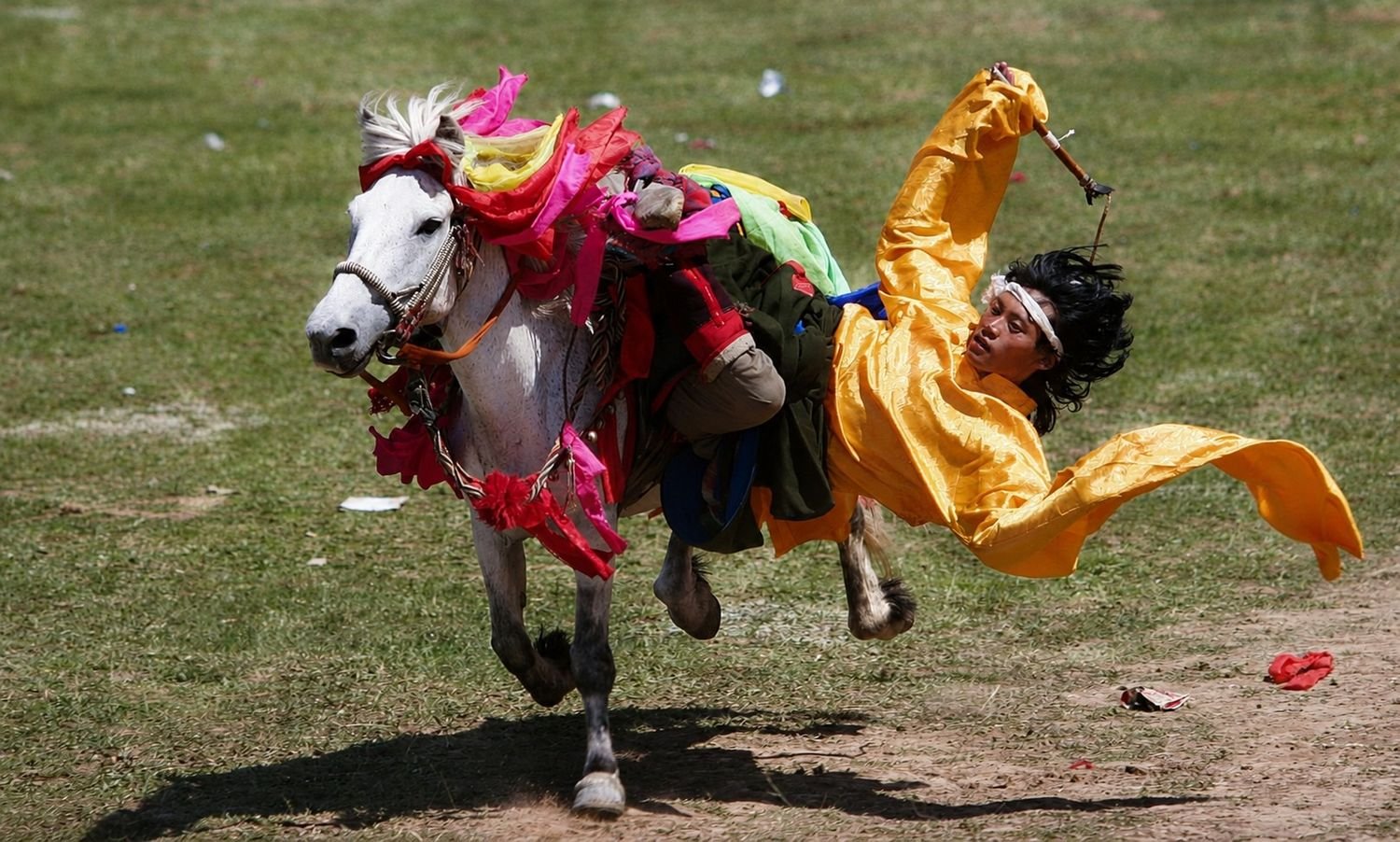
Yartung can be particularly appealing for travellers who want Mustang during the summer months. Much of Upper Mustang lies in a rain-shadow environment, so it can remain more practical than many wetter trekking regions during Nepal’s monsoon season.
Because the festival follows local and lunar timing, it is still important to confirm the exact programme before planning a journey specifically around it. Arriving a little early is far better than reaching Lo Manthang after the horse races have already finished.
Read Our Yartung Festival Story
Indra Jatra: Kathmandu’s Old City Comes Alive
| Festival Period | September; 2027 date to confirm |
| Best Place | Kathmandu Durbar Square and the old city |
| Best Combined With | Kathmandu Valley heritage travel before an autumn trek |
Indra Jatra may be the strongest festival in this article for somebody who wants dramatic public culture without leaving Kathmandu.
The old city around Basantapur and Kathmandu Durbar Square becomes the stage for processions, traditional music, masked Lakhey dances, religious performances and the ceremonial movement of the Living Goddess Kumari.
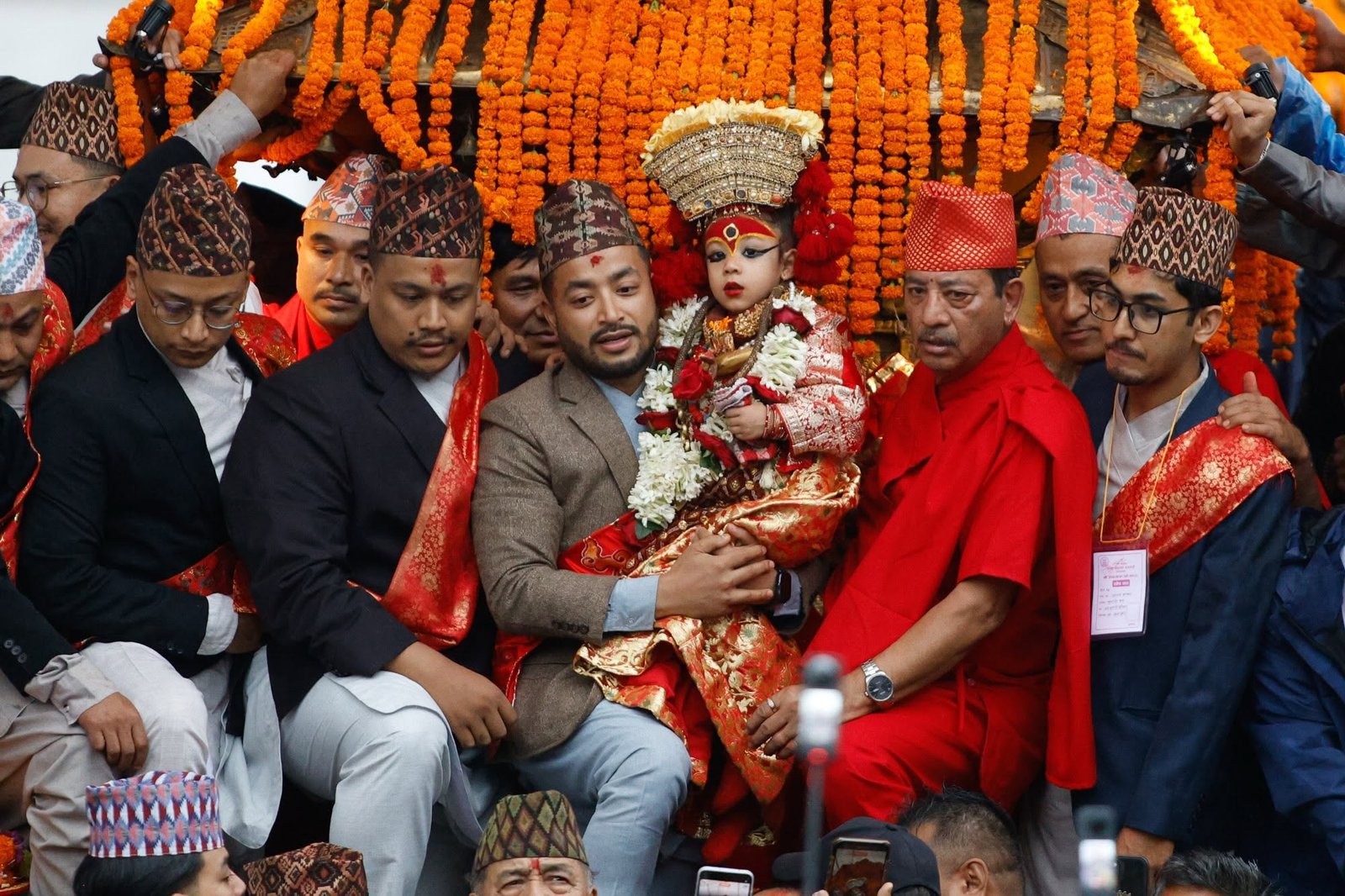
The festival extends beyond one afternoon. A ceremonial pole is raised near Hanuman Dhoka, shrines become active and different events unfold through the old streets over several days.
When the Kumari’s chariot moves through central Kathmandu, enormous crowds gather along the route to watch.
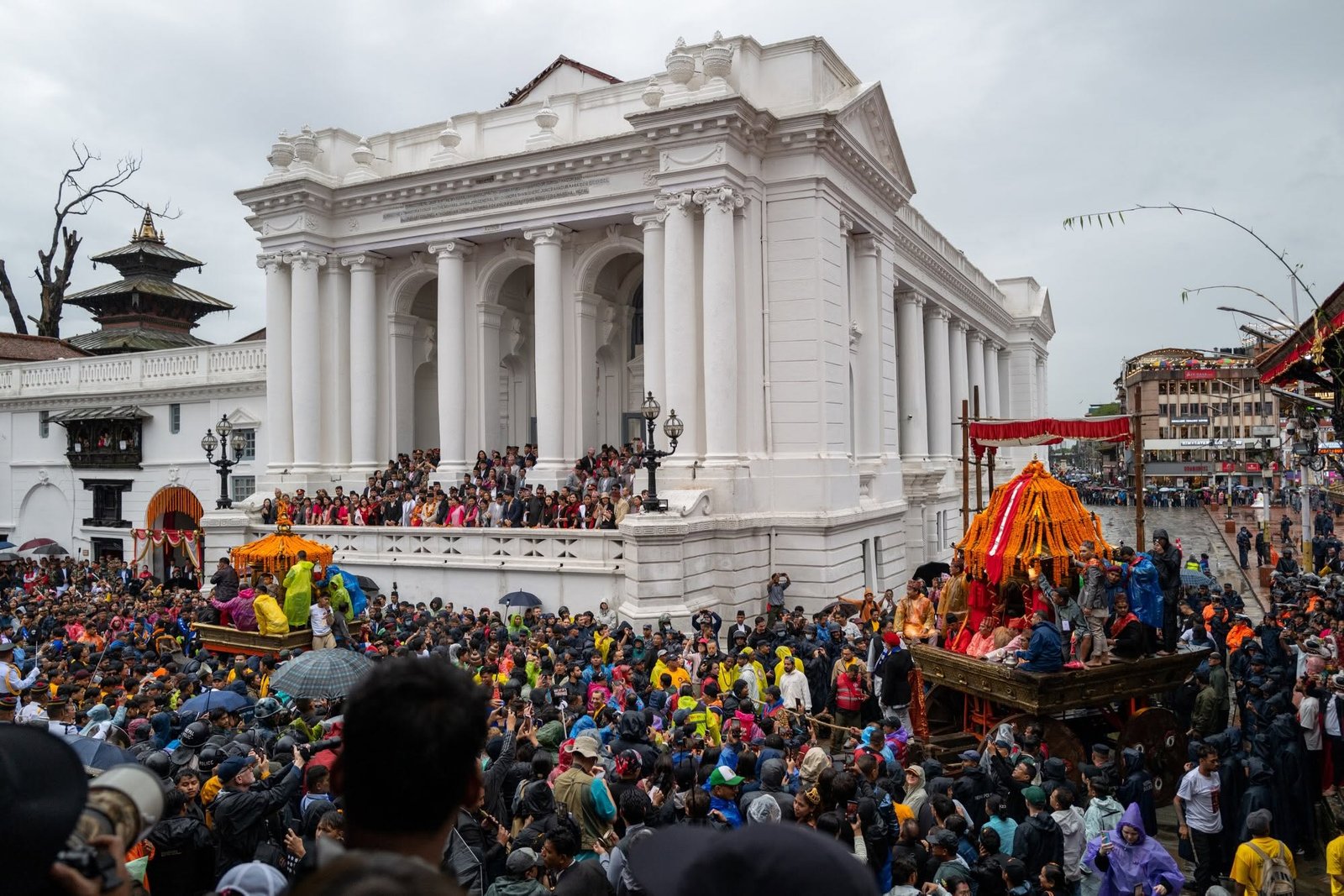
For travellers arriving before Nepal’s main autumn trekking season, the timing can be excellent. Spend several days in Kathmandu, experience the festival and then continue towards Everest, Annapurna, Langtang or another mountain region as autumn conditions improve.
The old streets become crowded, so this is not the day for rushing between every monument on a Kathmandu checklist. Pick a good viewing area, understand where the procession is expected and allow the festival to determine the pace of the day.
Explore Kathmandu Heritage Tour
Dashain: Nepal’s Biggest Family Festival
| Festival Period | September–October; 2027 dates to confirm |
| Where | Across Nepal |
| Best Combined With | Autumn travel and trekking, with extra transport planning around the main family days |
Dashain is Nepal’s biggest festival, but international travellers should understand that it is not a giant public street party. Its real importance lies in family reunions, blessings, religious traditions and the movement of people back towards their home towns and villages.

During the main period, elders place tika and jamara on younger relatives and give blessings. Families gather for meals, children enjoy swings and kites, and people who may live or work far from home make a serious effort to return to their families.
That movement changes the rhythm of Kathmandu more than almost any other time of year.
For travellers, this can be fascinating but requires realistic expectations. Some businesses reduce their hours or close during the most important days, domestic transport becomes busy before the festival and Kathmandu can feel noticeably quieter as residents leave the valley.
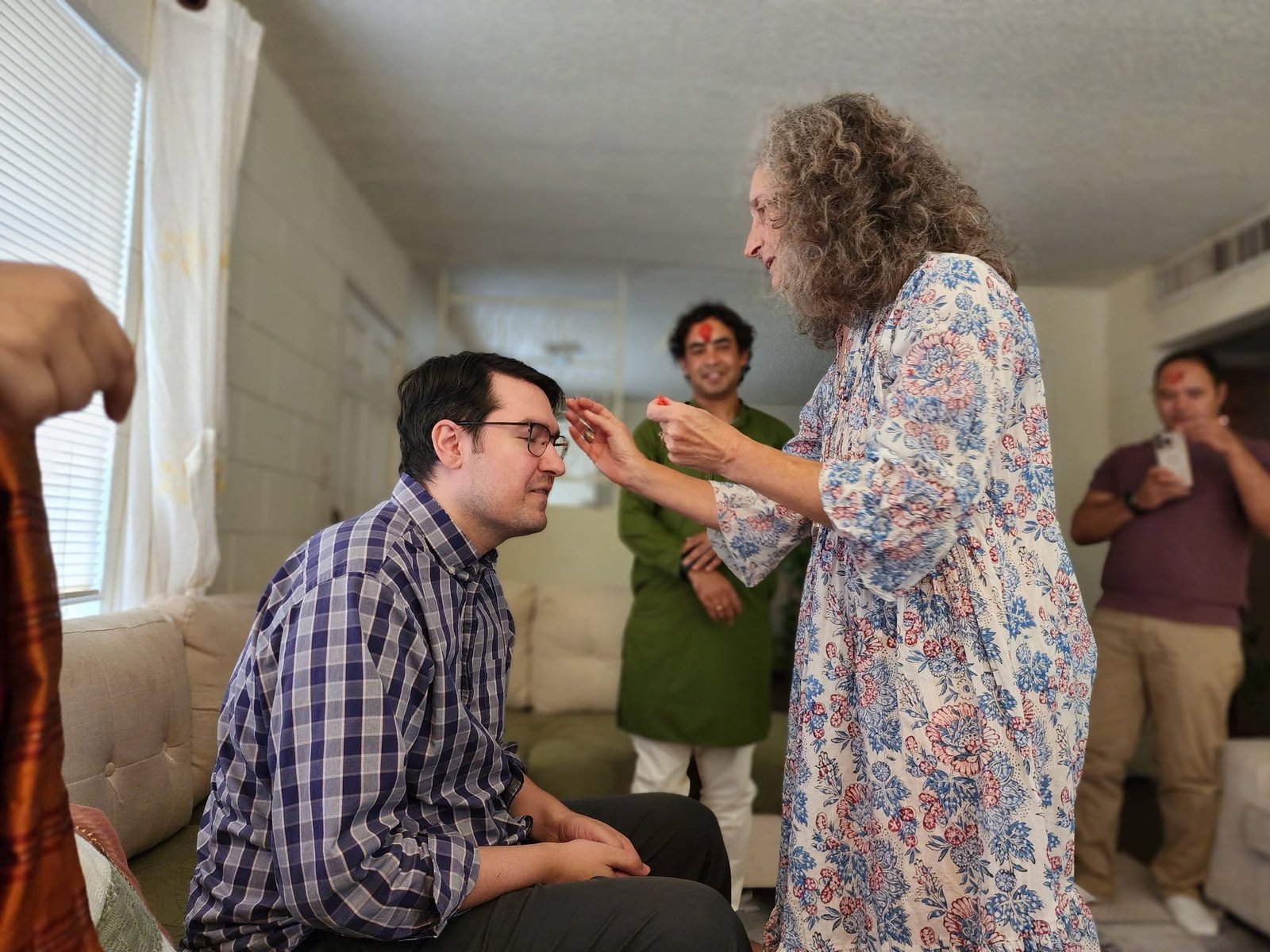
Dashain often overlaps with Nepal’s excellent autumn trekking period, so it can add a cultural dimension to an October journey. Just do not build the trip around the assumption that every lodge, office and transport service operates exactly as it would during an ordinary week.
Dashain Feels Different from a Public Festival
A visitor may see temples, swings, kites, tika and busy markets before the main holiday, but the heart of Dashain is inside families and communities. If you are invited into a home, treat the invitation as hospitality rather than as access to a tourist attraction.
Tihar: The Festival of Lights Is Easier to See from the Street
| Festival Period | October–November; 2027 dates to confirm |
| Best Places | Kathmandu, Pokhara and towns across Nepal |
| Best Combined With | Late-autumn trekking followed by a few days in Kathmandu or Pokhara |
Tihar is one of Nepal’s most visually beautiful celebrations for visitors because so much of its atmosphere is visible from outside the home. Lamps, electric lights, marigold garlands and colourful decorations appear around streets, shops and houses, especially during Laxmi Puja.
The festival unfolds across several days rather than repeating one ritual. Crows, dogs and cows are honoured on different days, Laxmi is worshipped, Newar communities observe Mha Puja, and the festival concludes with Bhai Tika, when brothers and sisters exchange tika, blessings and gifts.

For travellers, Kukur Tihar often receives the most international attention because dogs are decorated with garlands and tika.
Laxmi Puja creates the strongest evening atmosphere as homes are illuminated and decorated to welcome the goddess of wealth, while Deusi and Bhailo groups can bring music and singing into neighbourhoods after dark.

Tihar works particularly well as the end of an autumn trek. Return to Kathmandu or Pokhara, clean up after the trail and spend the next few evenings walking through illuminated streets rather than immediately flying home.
Mani Rimdu: Combine a Buddhist Festival with an Everest Trek
| Festival Period | Usually October–November |
| Best Place | Tengboche Monastery, Everest region |
| 2027 Date | Monastery schedule to confirm |
| Best Combined With | Tengboche trek or a longer Everest Base Camp journey |
Mani Rimdu is one of the strongest examples of a festival that belongs naturally inside a trekking itinerary. Tengboche Monastery sits directly on the main Everest trekking corridor, so travellers can experience the festival as part of a journey through Namche Bazaar, Sherpa settlements and the mountain landscapes of the Khumbu.
The celebration includes Buddhist rituals, blessings and Cham masked dances performed by monks. Tengboche already has one of the most memorable monastery settings in Nepal, with Ama Dablam dominating the surrounding skyline, but during Mani Rimdu the courtyard becomes a gathering place for monks, Sherpa families, pilgrims and trekkers.
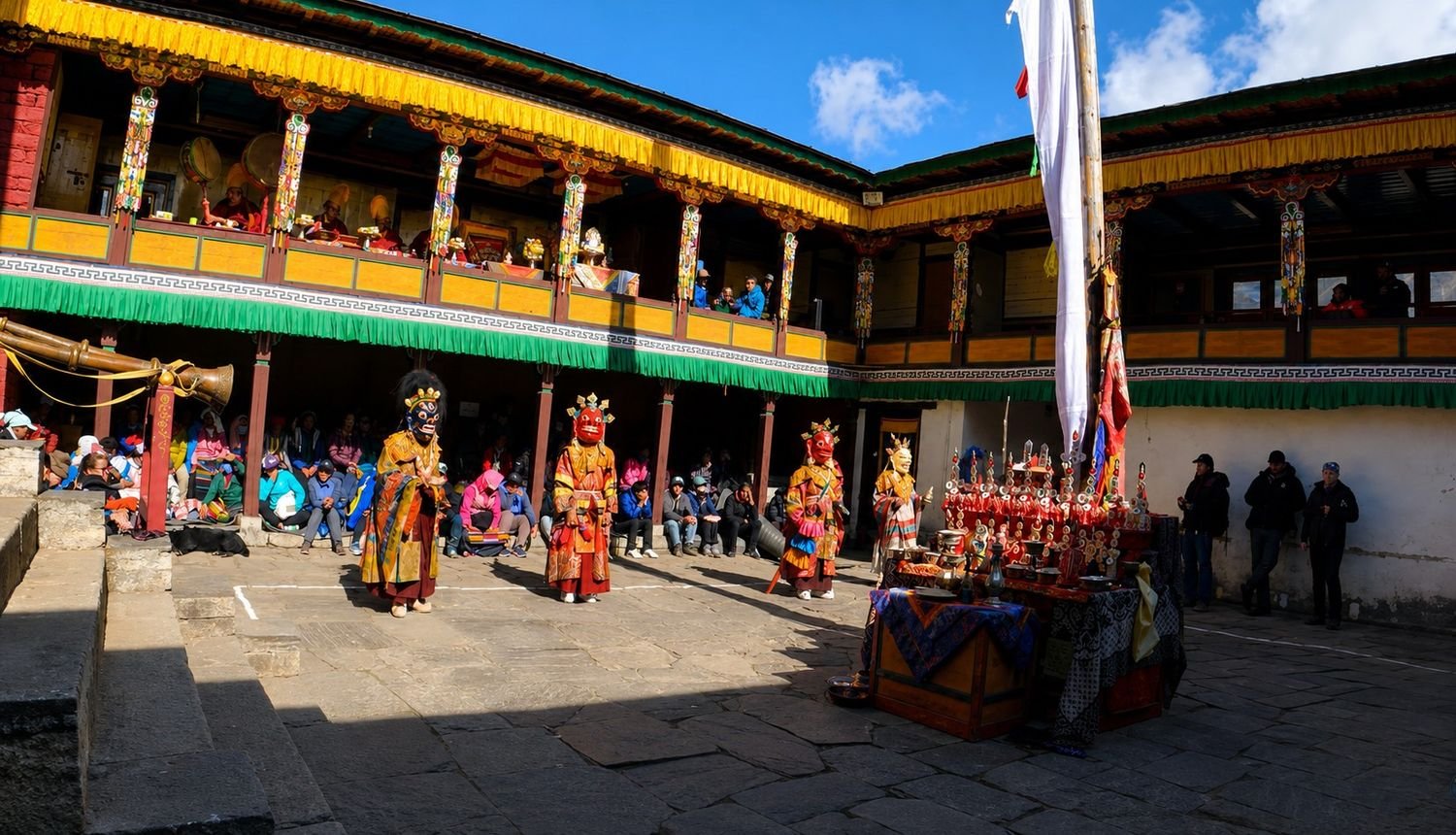
The exact schedule follows the Tibetan lunar calendar and must be confirmed with the monastery before a festival-focused departure is fixed.
That matters because reaching Tengboche is not as simple as taking a taxi across Kathmandu. Most visitors fly towards Lukla and trek for several days through the Everest region before arriving at the monastery.
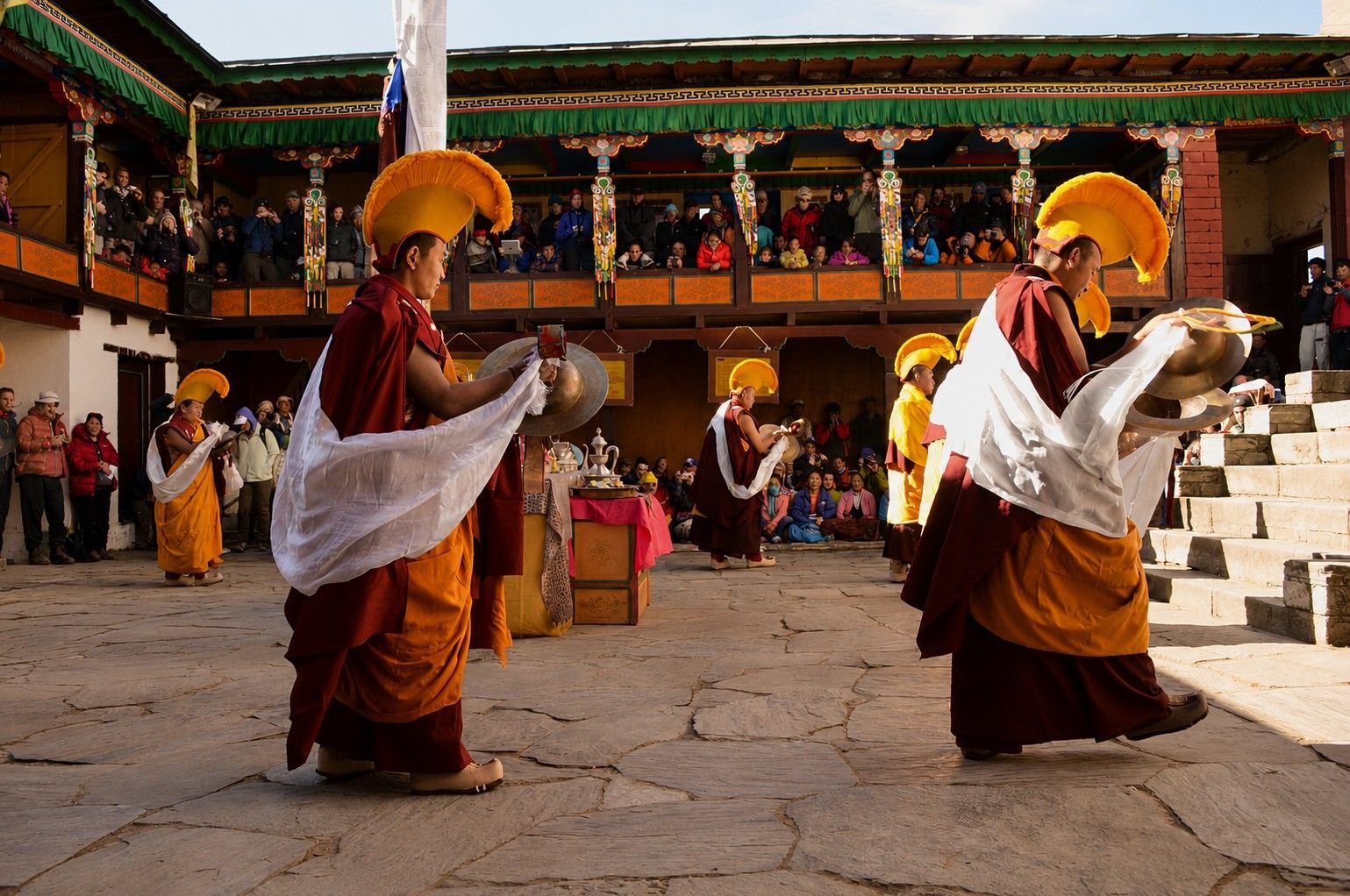
The festival can be the main objective of a shorter Tengboche journey or become part of a longer route continuing towards Dingboche, Lobuche and Everest Base Camp.
For somebody who already wants to trek in the Khumbu during autumn, matching the itinerary with Mani Rimdu can make the trip considerably more distinctive.
Which Nepal Festival Should You Plan Your Trip Around?
The answer depends less on which festival is biggest and more on the kind of travel experience you want. Somebody interested in crowded public celebrations will probably enjoy Holi or Indra Jatra far more than Dashain, while a traveller already dreaming about Mustang should look seriously at Tiji or Yartung.
| What You Want | Festival to Consider | Best Destination |
|---|---|---|
| Colourful public celebration | Holi | Kathmandu or Pokhara |
| Historic chariot procession | Bisket Jatra | Bhaktapur |
| Kathmandu street culture and masked dances | Indra Jatra | Kathmandu old city |
| Buddhist pilgrimage and spirituality | Buddha Jayanti | Lumbini |
| Remote Himalayan culture | Tiji | Upper Mustang |
| Horse racing and Mustang community life | Yartung | Mustang |
| Festival combined with Everest trekking | Mani Rimdu | Tengboche |
| Lights and evening atmosphere | Tihar | Kathmandu or Pokhara |
| Understanding Nepalese family culture | Dashain | Across Nepal |
How to Experience a Festival without Treating It Like a Tourist Show
The easiest mistake is assuming that because a festival is visible in public, everything happening around it is open to visitors. A chariot route through Bhaktapur is public.
A private Dashain tika ceremony inside someone’s home is not. A monastery courtyard may welcome visitors during Mani Rimdu, while another ritual inside the monastery may have different access rules.

Photography deserves the same judgement. Wide photographs of a public procession are different from putting a camera close to somebody’s face during worship.
Ask when you are unsure, especially around monks, sadhus, private homes, religious offerings and people wearing ceremonial clothing.
Crowds can also affect travel more than first-time visitors expect. Bisket Jatra, Indra Jatra, Shivaratri and other major celebrations can close roads or make normal vehicle access impractical.

Dashain can have the opposite effect, with Kathmandu becoming quieter while buses and flights become extremely busy as people travel home.
The most enjoyable approach is usually to leave space in the itinerary. A festival should not be treated like a ten-minute sightseeing stop between two temples. Give the celebration enough time to unfold and let the local rhythm determine at least part of the day.
Plan the Destination around the Festival, Not Only the Date
The best festival trips in Nepal work because the celebration and destination belong together. Tiji without Upper Mustang loses the landscape and history that give the ritual its context.
Mani Rimdu becomes far more meaningful when you have already walked through Sherpa villages towards Tengboche. Bisket Jatra makes sense inside Bhaktapur’s old streets, while Indra Jatra belongs naturally to Kathmandu’s historic centre.

That is also why Dashain and Tihar should not be planned in exactly the same way. Dashain is strongly family-centred and can disrupt transport during the main holiday period.
Tihar is much easier to experience visually from the street because lights, decorations, Deusi Bhailo groups and different daily rituals spill into public spaces.
If the festival is important enough to determine your international travel dates, arrive early rather than planning to reach the destination on the morning the main ceremony begins.

Road delays, domestic flights, mountain weather and programme changes can all matter, particularly for Mustang and Everest-region festivals.
A few extra days can also turn the festival from a single event into a complete Nepal journey: Kathmandu Valley around Bisket or Indra Jatra, Upper Mustang around Tiji or Yartung, Lumbini around Buddha Jayanti, and the Khumbu around Mani Rimdu.
Planning Your Nepal Trip around a Festival?
Tell Nepal Royal Tourism Holiday which festival interests you, your travel dates and how many days you have in Nepal. We can match the celebration with Kathmandu Valley sightseeing, Upper Mustang, Everest trekking or another route that makes sense around the event.