


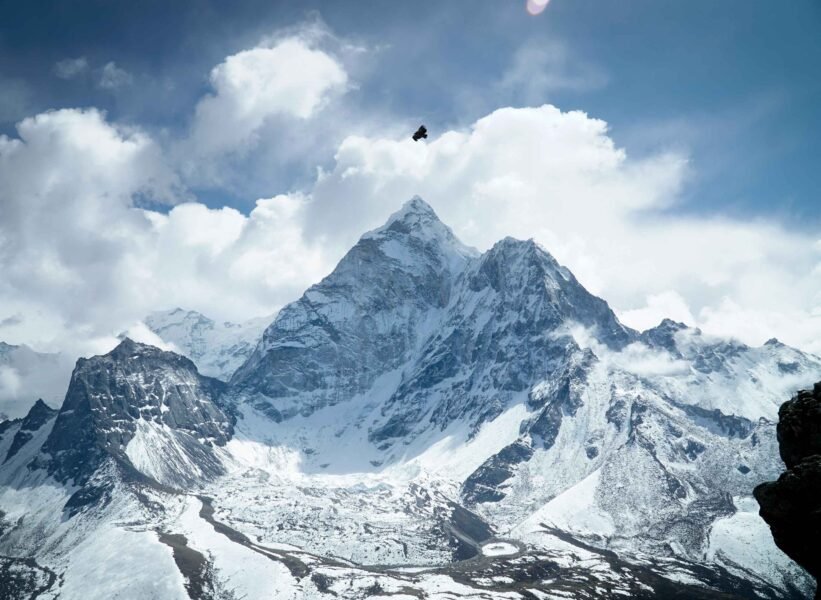
Clear Mountain Views in Nepal: Best Viewpoints, Treks & Places to See the Himalayas
Seeing Nepal’s Himalayan mountains does not always require a long trek, weeks in the high mountains or a difficult expedition.
Some of the country’s most memorable views can be enjoyed from hilltops near Kathmandu and Pokhara, while others reward travellers who are willing to walk for several days into the Himalayas.
That variety is what makes Nepal unusual. A family can watch sunrise over the Annapurna range from Sarangkot, a first-time hiker can walk to Australian Camp or Poon Hill, and an experienced trekker can climb above 5,000 metres for the panorama from Kala Patthar or Gokyo Ri.

The best viewpoint therefore depends on more than the mountain you want to see. Your available time, fitness, tolerance for altitude and preferred style of travel all matter.
Some people want a comfortable sunrise outing before breakfast. Others want the feeling of spending several days walking closer and closer to the mountains.
This guide compares some of the best places for clear mountain views in Nepal, from road-accessible viewpoints for non-trekkers to short hikes, moderate treks and demanding high-altitude destinations.
Quick Answer: Where Can You Find the Best Mountain Views in Nepal?
Best easy viewpoint near Pokhara: Sarangkot for sunrise over the Annapurna range and Machhapuchhre.
Best easy viewpoint near Kathmandu: Nagarkot for a broad Himalayan horizon when visibility is good.
Best short walking experience: Australian Camp and Dhampus.
Best beginner-friendly trekking viewpoint: Poon Hill at approximately 3,210 m.
Best moderate trek for close Annapurna views: Mardi Himal.
Best quieter Everest panorama: Pikey Peak.
Best high-altitude Everest viewpoints: Kala Patthar and Gokyo Ri.
Best Places for Mountain Views in Nepal at a Glance
The easiest way to choose a viewpoint is to start with the amount of effort you want to make. The table below ranges from places accessible by road or cable car to serious high-altitude viewpoints that require proper acclimatisation.
| Place | Effort | Main Mountain Experience | Best For |
|---|---|---|---|
| Sarangkot | Easy / road access | Annapurna range, Machhapuchhre and Dhaulagiri panorama when clear. | Non-trekkers, families and photographers. |
| Nagarkot | Easy / road access | Wide Himalayan horizon from the Kathmandu Valley hills. | Short stays, couples and families. |
| Chandragiri Hills | Very easy / cable car | Kathmandu Valley and distant Himalayan skyline. | Families and visitors avoiding strenuous walking. |
| Peace Pagoda & Pumdikot | Easy | Pokhara Valley, Phewa Lake and Annapurna backdrop. | Sightseers and short-stay travellers. |
| Bandipur | Easy | Long central Himalayan panorama from a historic hill town. | Cultural travellers and relaxed overnight stays. |
| Australian Camp & Dhampus | Easy to moderate hike | Annapurna South, Hiunchuli and Machhapuchhre. | First-time hikers and families. |
| Ghandruk | Easy to moderate | Annapurna South, Hiunchuli and Machhapuchhre above a traditional Gurung village. | Beginners and cultural travellers. |
| Poon Hill | Moderate multi-day trek | Classic sunrise panorama over Annapurna and Dhaulagiri. | Beginner trekkers and photographers. |
| Mardi Himal | Moderate to challenging | Close ridge views of Machhapuchhre and the Annapurna range. | Regular hikers wanting a more alpine experience. |
| Khopra Ridge & Muldai | Moderate to challenging | Wide Annapurna and Dhaulagiri panoramas from quieter ridges. | Trekkers wanting fewer crowds. |
| Annapurna Base Camp | Moderate to challenging | A high mountain amphitheatre surrounded by Annapurna peaks. | Prepared multi-day trekkers. |
| Pikey Peak | Moderate trek | Broad eastern Himalayan panorama including Everest when clear. | Trekkers wanting a quieter Everest-region experience. |
| Langtang & Tserko Ri | Moderate to challenging | Langtang Lirung, glaciers and a 360-degree upper-valley panorama. | Intermediate trekkers wanting a region close to Kathmandu. |
| Tengboche | Multi-day trek | Ama Dablam and Everest-region peaks around Tengboche Monastery. | Trekkers wanting Khumbu scenery without climbing a 5,000 m viewpoint. |
| Kala Patthar | Very strenuous high-altitude hike | Classic close panorama of Everest, Nuptse and the upper Khumbu. | Acclimatised Everest Base Camp trekkers. |
| Gokyo Ri | Very strenuous high-altitude hike | Everest, major 8,000 m peaks, Gokyo Lakes and Ngozumpa Glacier. | Experienced high-altitude trekkers. |
Best Mountain Views in Nepal Without Trekking
You do not need trekking boots or several weeks in Nepal to enjoy Himalayan scenery. Kathmandu and Pokhara both have viewpoints that can be reached by road, while Chandragiri adds the option of cable-car access.
Sarangkot: The Classic Pokhara Sunrise View
Sarangkot is one of Nepal’s most recognised sunrise viewpoints. Sitting above Pokhara Valley, it looks towards the Annapurna range, with Machhapuchhre standing prominently above the surrounding hills. When visibility is excellent, the panorama can extend towards Dhaulagiri and other peaks farther west.
The biggest advantage is accessibility. Travellers can drive most of the way and walk only a short distance around the viewpoint area, making Sarangkot suitable for families, older travellers and anyone whose itinerary does not include trekking.

October and November are particularly attractive for post-monsoon views, while March and April can combine good visibility with spring conditions.
Sunrise is popular, but the mountains remain weather-dependent. Staying in Pokhara for several nights gives you another opportunity if the first morning is cloudy.
Sarangkot Options
Nepal Royal’s Nepal Beauty Tour includes Pokhara, Sarangkot sunrise and Nagarkot, making it suitable for travellers who want Himalayan viewpoints without a trekking itinerary.
Nagarkot: Himalayan Views Near Kathmandu
Nagarkot sits on the eastern side of Kathmandu Valley at approximately 2,175 m. It is one of the easiest places to combine an overnight hill stay with sunrise or sunset views across a long Himalayan horizon.

On exceptionally clear days, distant Everest-region peaks may be visible, but Everest should never be treated as a guaranteed Nagarkot sight. The real appeal is the broad skyline, terraced hills and easy access from Kathmandu.
Nagarkot works particularly well for travellers with limited time and can be combined with Bhaktapur. Staying overnight is usually more rewarding than rushing from Kathmandu for a single early-morning stop.
Chandragiri Hills: Mountain Views by Cable Car
Chandragiri is one of the easiest elevated viewpoints around Kathmandu. The cable car removes the need for a long climb, making it especially useful for families or visitors who want a mountain-view outing within a busy sightseeing itinerary.
At the top, you can look across Kathmandu Valley and towards the Himalayan skyline when visibility is clear. It is best approached as a scenic hilltop experience rather than a guaranteed close mountain view, because haze or cloud can obscure the distant peaks.
Dhulikhel: A Quieter Kathmandu Valley Alternative
Dhulikhel is useful for travellers who want Himalayan scenery, traditional neighbourhoods and a quieter overnight stay outside Kathmandu. On clear days, views extend towards the central Himalayas, including the Langtang side of the range.
Unlike a single roadside viewpoint, Dhulikhel can be combined with short ridge walks, nearby villages and cultural sightseeing. It is a good alternative if you want more than a quick sunrise stop.
World Peace Pagoda and Pumdikot: Pokhara Views Beyond Sarangkot
Sarangkot is not the only place around Pokhara with a mountain backdrop. The World Peace Pagoda sits above Phewa Lake and looks across the valley towards the Annapurna range, while Pumdikot provides another elevated perspective over the surrounding hills and city.
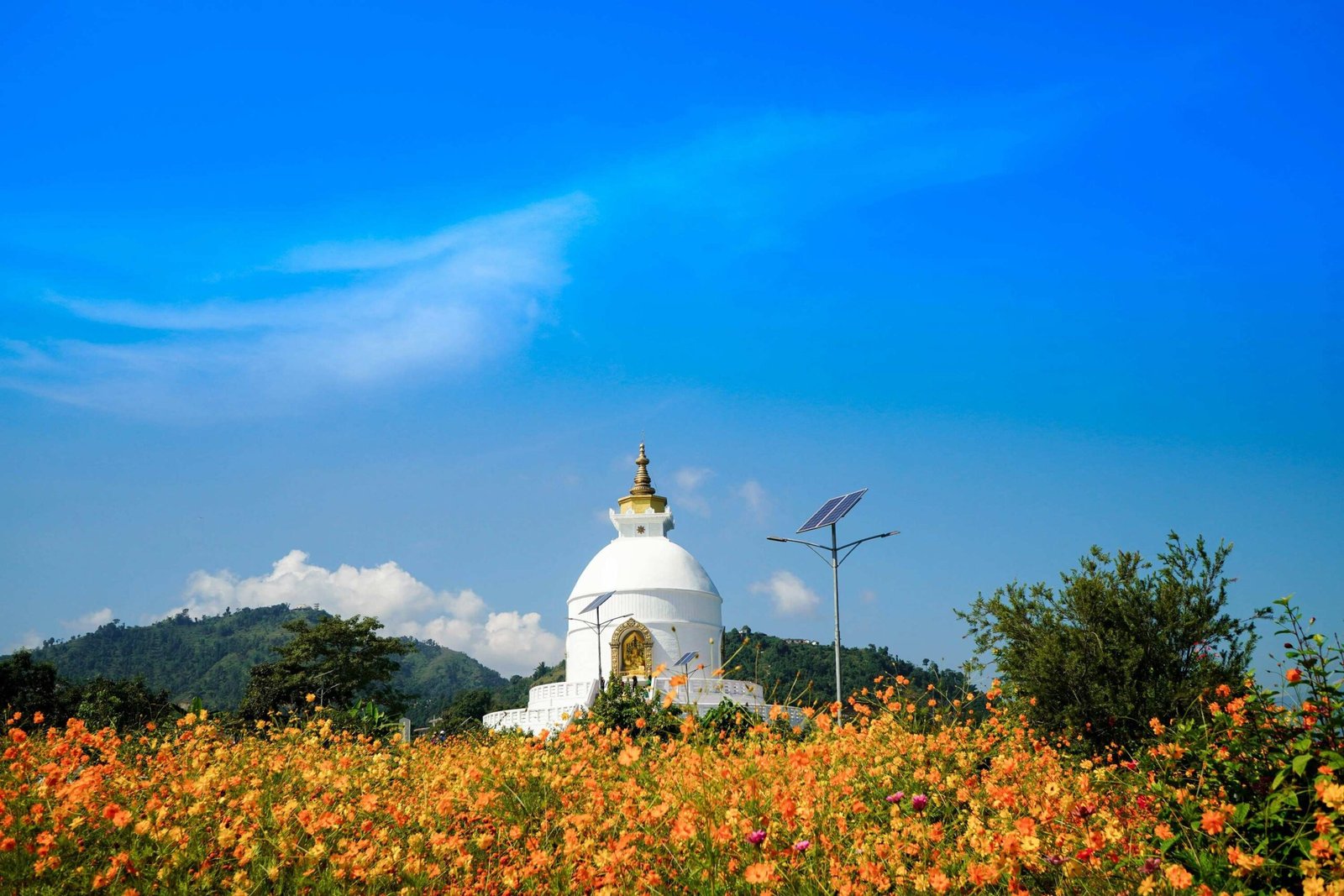
These are good options for people who want a relaxed scenic outing rather than a sunrise-only viewpoint. They also work well when combined with boating, sightseeing and other activities around Pokhara.
Bandipur: Heritage and a Broad Himalayan Horizon
Bandipur offers a different kind of mountain-view experience. The historic hill town combines traditional Newar architecture and pedestrian streets with viewpoints overlooking Nepal’s middle hills and distant Himalayan ranges.
It is particularly attractive for travellers moving between Kathmandu and Pokhara who want to break the journey with a cultural overnight stop. Clear conditions can reveal a wide mountain horizon, while the town itself remains rewarding even if cloud hides the highest peaks.
Best Mountain Views for Short Walks and Beginner Hikers
If driving directly to a viewpoint feels too easy but a major Himalayan trek sounds like too much, Nepal has several excellent middle-ground options. These places involve real walking without requiring the altitude or commitment of Everest Base Camp or a high pass.
Australian Camp and Dhampus
Australian Camp, at roughly 2,060 m, offers a strong introduction to walking in the Annapurna foothills. From the open ridge, clear conditions reveal Machhapuchhre, Annapurna South, Hiunchuli and surrounding peaks.

Dhampus can be linked naturally with Australian Camp, creating a short route through forest, terraced fields and village landscapes. Depending on the starting point, the trip can be completed as a day hike or turned into a relaxed overnight stay.
This combination is especially useful for families, first-time hikers and travellers who want to experience a Nepal trail without committing to a full trekking holiday.
Ghandruk: Village Life Beneath the Annapurna Range
Ghandruk is one of the Annapurna region’s best-known Gurung villages and works particularly well for travellers who want mountain views mixed with culture rather than a single summit viewpoint.

Annapurna South, Hiunchuli and Machhapuchhre rise prominently above the village when conditions are clear. The experience can be kept relatively short or incorporated into longer Annapurna routes.
Ghorepani Poon Hill: Nepal’s Classic Beginner Trekking Viewpoint
Poon Hill sits at approximately 3,210 m above Ghorepani and is famous for sunrise views across the Annapurna and Dhaulagiri ranges. The panorama can include Annapurna I, Annapurna South, Dhaulagiri, Nilgiri, Hiunchuli and Machhapuchhre when conditions are clear.

The route is often recommended to first-time Himalayan trekkers because the journey is shorter and lower than major base-camp treks. It is still a genuine trek, however. Stone staircases, repeated climbs and several days of walking mean reasonable fitness is useful.
October and November are excellent for clearer post-monsoon views, while March and April add the colour of rhododendron forests along suitable sections of the trail.
Best Mountain Views for Intermediate Trekkers
Intermediate trekkers can reach viewpoints where the mountains feel much closer and the scenery becomes more alpine. These routes require more consecutive walking days and greater altitude, but they do not necessarily involve the extreme elevations of Kala Patthar or Gokyo Ri.
Mardi Himal: Close Views of Machhapuchhre
Mardi Himal is one of the strongest options for hikers who want to move from forested foothills into an exposed Himalayan ridge. As the trail rises, the view towards Machhapuchhre becomes increasingly dramatic.

The route reaches approximately 4,500 m around the base-camp area. Higher sections are colder and more exposed than Poon Hill, so this trek suits hikers who are comfortable with several days of climbing and changing mountain weather.
Khopra Ridge and Muldai Viewpoint
Khopra Danda offers a wide ridge panorama across the Annapurna and Dhaulagiri massifs. The route generally feels quieter than some of the busiest Annapurna trails and passes through villages, forest and increasingly open mountain terrain.
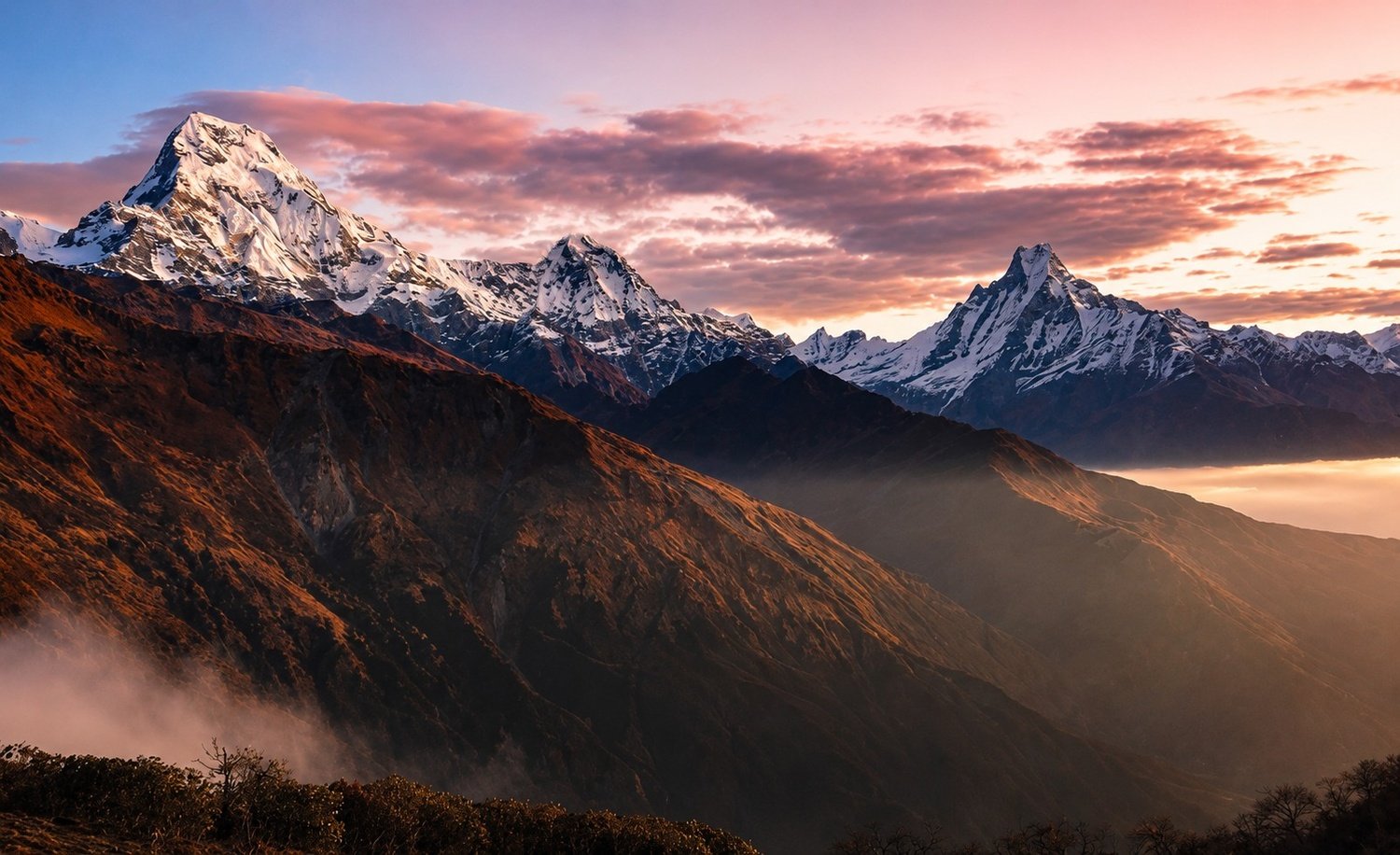
Muldai Viewpoint is another excellent viewing point on this side of the Annapurna region. Together, Khopra and Muldai give the trek variety: one experience comes from a high open ridge, while the other provides another broad sunrise-style panorama over surrounding peaks.
Some itineraries continue to Khayer Lake, which makes the trip considerably more demanding because of the additional altitude and walking time. Travellers primarily interested in mountain views do not need to treat every optional high-altitude side trip as compulsory.
Annapurna Base Camp: Mountains on Every Side
Annapurna Base Camp gives a different type of view from a ridge or sunrise hill. The trail enters the Annapurna Sanctuary, where the surrounding peaks rise around the basin rather than appearing along one distant horizon.

At approximately 4,130 m, the base camp is surrounded by major peaks including Annapurna I, Annapurna South, Hiunchuli and Machhapuchhre. It is one of the best choices for travellers who want to feel inside the high mountain landscape rather than simply look towards it.
Pikey Peak: A Wide Everest Panorama Without the Main Khumbu Trail
Pikey Peak is an excellent choice for travellers who want Everest-region mountain views without following the busy Lukla–Namche route. The trail passes through lower Solukhumbu villages, forests and monasteries before reaching the viewpoint at approximately 4,065 m.
The attraction is the width of the panorama. On a clear day, the eastern Himalayan skyline can include Everest, Lhotse, Makalu, Cho Oyu, Kanchenjunga, Numbur and other peaks across the horizon.
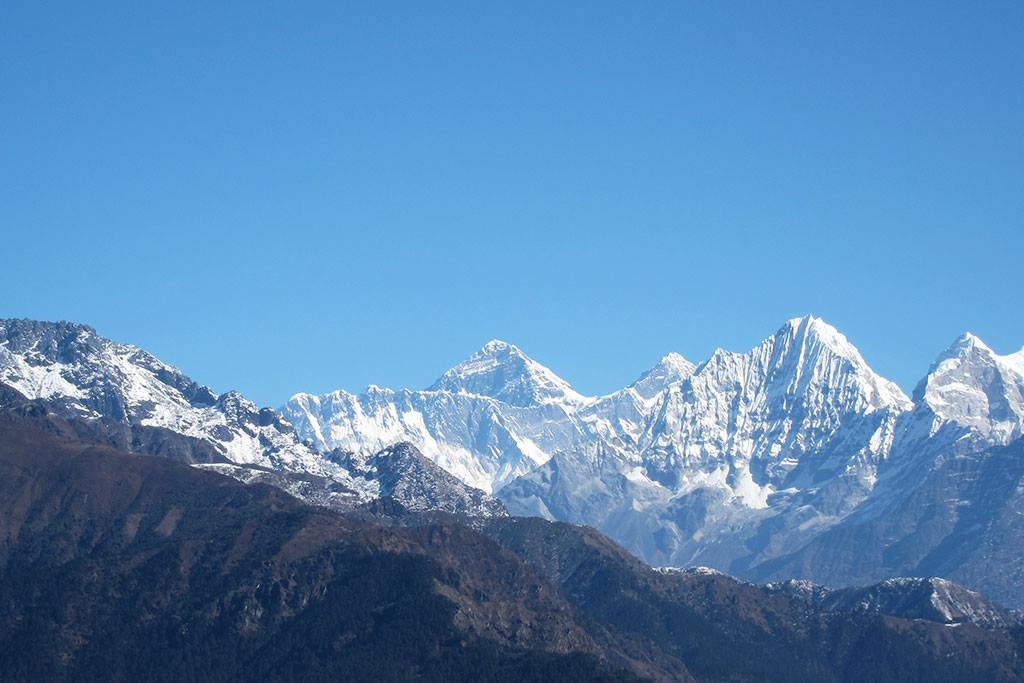
It is not the closest possible view of Everest, but that is precisely why Pikey feels different from Kala Patthar. Instead of one immediate mountain environment dominating the scene, the viewpoint gives you a broad sense of the Himalayan chain.
Langtang Valley and Tserko Ri
Langtang adds an important alternative to the Annapurna and Everest regions. The valley is reached by road from Kathmandu and combines Tamang culture, forest trails, Kyanjin Gompa and increasingly dramatic views of Langtang Lirung and neighbouring peaks.

Kyanjin Gompa itself sits at approximately 3,870 m in an open upper valley surrounded by high mountain terrain. Stronger trekkers can continue to Tserko Ri, around 5,000 m on the current Nepal Royal itinerary, for a far wider panorama of the Langtang Himal and surrounding glaciers.
This makes Langtang particularly useful for travellers who want a substantial Himalayan trek without taking a domestic flight to Lukla or travelling as far west as Annapurna.
Best High-Altitude Mountain Viewpoints in Nepal
The higher viewpoints of the Everest region deliver some of Nepal’s most dramatic mountain scenery, but they should not be compared with Sarangkot or Poon Hill simply because they are all called viewpoints. Above 5,000 m, thin air, cold and acclimatisation become major parts of the experience.
Tengboche: Everest Scenery Without a 5,000 m Viewpoint
Tengboche sits at about 3,867 m and combines one of the Khumbu’s best-known monasteries with an impressive Himalayan setting. Ama Dablam is especially striking from this area, while Everest-region peaks rise beyond the valley.
It still takes several days of trekking to reach Tengboche, but the altitude commitment is lower than climbing Kala Patthar or Gokyo Ri. That makes it a good option for travellers who want the character of the Everest region without pushing to the highest viewpoints.
Kala Patthar: The Classic Everest Panorama
Kala Patthar is one of Nepal’s most famous high-altitude viewpoints and is normally visited as part of an Everest Base Camp itinerary. At approximately 5,545 m, it gives trekkers a much clearer perspective on Everest than they usually get from Everest Base Camp itself.

Everest, Nuptse and the surrounding upper-Khumbu landscape dominate the view, with glaciers and rocky high-altitude terrain below. The climb is steep and strenuous because of the elevation, even for trekkers who have walked comfortably on earlier days.
A successful trek to Kala Patthar depends on proper acclimatisation. It should never be treated as a casual sunrise hill simply because many itineraries include it.
Gokyo Ri: Lakes, Glaciers and a Wider Everest View
Gokyo Ri rises to approximately 5,357 m above the Gokyo Valley. It gives a very different view from Kala Patthar because the scene includes the turquoise Gokyo Lakes and the enormous Ngozumpa Glacier as well as major Himalayan peaks.

When visibility is clear, the panorama can include Everest, Lhotse, Makalu and Cho Oyu. The combination of lake, glacier and mountain scenery makes Gokyo Ri one of Nepal’s strongest high-altitude photography locations.
The ascent remains steep and physically demanding. Choose Gokyo for the broader landscape; choose Kala Patthar if the classic close Everest perspective is your main priority.
Kala Patthar, Gokyo Ri or Pikey Peak: Which View Is Better?
| Viewpoint | Choose It For | Main Trade-Off |
|---|---|---|
| Kala Patthar | The classic close Everest panorama and upper-Khumbu atmosphere. | Very high altitude and strenuous ascent. |
| Gokyo Ri | A wider panorama with lakes, glacier and multiple major peaks. | Also above 5,000 m and requires a substantial trek. |
| Pikey Peak | A wide Everest-region skyline on a quieter lower-Solukhumbu route. | Everest is more distant than from the high Khumbu viewpoints. |
Can You See the Himalayas Without Trekking?
Yes. Road-access viewpoints such as Sarangkot and Nagarkot are the simplest options, but helicopter tours can take non-trekkers directly into high Himalayan landscapes when weather and operational conditions allow.
These experiences are not substitutes for trekking. A helicopter can place you inside the mountains very quickly, while a trek gives you days of changing landscapes, villages and gradual acclimatisation. They simply serve different travellers.
| Option | Experience | Best For | Action |
|---|---|---|---|
| Everest Helicopter Tour | Aerial Everest-region scenery within a short trip. | Non-trekkers and travellers with limited time. | View Trip WhatsApp |
| Annapurna Base Camp Helicopter Tour | Fly from Pokhara into the Annapurna Sanctuary with a high-altitude landing when conditions permit. | Pokhara visitors who cannot complete a multi-day ABC trek. | View Trip WhatsApp |
| Langtang Helicopter Tour | Fly from Kathmandu to the upper Langtang Valley and Kyanjin Gompa. | Families, photographers and travellers wanting Langtang scenery without several trekking days. | View Trip WhatsApp |
All mountain flights and helicopter landings remain weather-dependent. Cloud, wind, visibility, air traffic and operational conditions can change or cancel a flight, so avoid treating a scheduled departure as a guaranteed mountain view.
Which Months Offer the Clearest Mountain Views in Nepal?
October and November are among the strongest months for widespread mountain visibility because the summer monsoon has usually cleared much of the dust and moisture from the atmosphere. March and April are also excellent choices and add the colour of spring to many trekking regions.
| Period | Visibility | What to Expect |
|---|---|---|
| March–April | Often very good | Spring mountain views with flowering forests on many trekking routes. |
| May | Good but more variable later in the month | Warmer conditions with a greater chance of haze, afternoon cloud and pre-monsoon storms. |
| June–August | Less reliable | Monsoon cloud frequently hides the peaks, although short clear windows can still occur. |
| September | Improving | Early September can remain wet; visibility generally improves as autumn develops. |
| October–November | Excellent overall | Clear post-monsoon air and strong conditions for both viewpoints and trekking routes. |
| December–February | Often crisp on clear days | Excellent visibility can occur, but high trails may be affected by snow, ice and severe cold. |
No month guarantees clear mountains. A cloudy October morning can hide the peaks while a winter day may be exceptionally sharp. If mountain visibility is the main purpose of your trip, staying for more than one night gives you another opportunity if conditions are poor.
What Is the Best Time of Day for Mountain Views?
| Time | Typical Advantage | Planning Advice |
|---|---|---|
| Sunrise / early morning | Often clearer air and attractive light on snow-covered peaks. | Best suited to places such as Sarangkot, Poon Hill and Pikey Peak when conditions are safe. |
| Late morning | Warmer and easier for sightseeing. | Cloud may begin building around some mountain ranges. |
| Afternoon | Can still provide excellent views on stable days. | Do not assume morning visibility will continue all day. |
| Sunset | Warm evening colour across ridges and peaks. | Use a safe viewpoint and allow enough time to return before dark. |
Early morning is a useful strategy rather than a guarantee. Some mornings begin cloudy and clear later, while other days start perfectly and become obscured by midday.
How to Improve Your Chances of a Clear Himalayan View
| Planning Choice | Why It Helps |
|---|---|
| Allow more than one morning | A second viewing opportunity can make a major difference if your first morning is cloudy. |
| Prioritise October–November or March–April | These periods often provide a better overall balance of mountain visibility and access. |
| Check local conditions, not only a national forecast | Pokhara, Kathmandu and high-altitude trekking regions can experience very different cloud and weather on the same day. |
| Start early where appropriate | Many viewpoints offer excellent early light before daytime cloud develops. |
| Do not chase a view unsafely | At high altitude, snow, wind, poor visibility and health matter more than reaching a viewpoint for a photograph. |
Which Mountain-View Destination Should You Choose?
| If You Want… | Consider | Why |
|---|---|---|
| Big views with almost no trekking | Sarangkot or Nagarkot | Easy access and excellent sunrise possibilities. |
| A very easy family outing | Chandragiri | Cable-car access avoids a substantial climb. |
| A short taste of hiking | Australian Camp & Dhampus | Real trail walking without a long high-altitude commitment. |
| Your first multi-day Nepal trek | Poon Hill | Classic sunrise views with comparatively manageable altitude. |
| Close Machhapuchhre views | Mardi Himal | The ridge leads directly towards dramatic Annapurna scenery. |
| A quieter Annapurna panorama | Khopra & Muldai | Wide ridge views away from some busier classic trails. |
| Mountains surrounding you | Annapurna Base Camp | The Sanctuary creates a natural mountain amphitheatre. |
| A quieter Everest-region panorama | Pikey Peak | Broad Himalayan skyline without the busiest Khumbu corridor. |
| A different major trekking region | Langtang & Tserko Ri | Glacial valley scenery and high viewpoints accessible by road from Kathmandu. |
| The classic close Everest view | Kala Patthar | The famous panorama above Gorak Shep. |
| Everest plus lakes and glaciers | Gokyo Ri | A broader high-altitude landscape than Kala Patthar. |
Frequently Asked Questions About Clear Mountain Views in Nepal
Which place has the clearest mountain views in Nepal?
There is no single place that is always the clearest. Sarangkot is excellent for the Annapurna panorama near Pokhara, while Poon Hill, Pikey Peak, Kala Patthar and Gokyo Ri offer increasingly demanding trekking viewpoints. Weather and visibility ultimately decide what you see.
Can I see Mount Everest without trekking?
Yes. An Everest mountain or helicopter flight can provide an aerial perspective when visibility and flight conditions are suitable. Distant Everest-region views may also be possible from selected hill viewpoints on exceptionally clear days, but they should never be guaranteed.
Do I need to trek to see the Annapurna mountains?
No. Sarangkot, World Peace Pagoda and other Pokhara viewpoints offer Annapurna scenery without a multi-day trek. Australian Camp and Dhampus add a short hiking experience, while Poon Hill, Mardi Himal and Annapurna Base Camp take you progressively closer to the mountains.
What is the best mountain viewpoint for beginners?
For almost no trekking, choose Sarangkot or Nagarkot. For a short hike, Australian Camp and Dhampus are strong choices. For a first multi-day Himalayan trek, Poon Hill provides one of the best balances of mountain scenery and manageable altitude.
Is Pikey Peak easier than Kala Patthar?
Pikey Peak is considerably lower, at around 4,065 m compared with Kala Patthar at 5,545 m, and the overall experience is different. It still requires a multi-day trek and a summit-style viewpoint walk, but it avoids the extreme altitude of the upper Khumbu.
Which is better for mountain views: Kala Patthar or Gokyo Ri?
Choose Kala Patthar for the classic Everest and Nuptse panorama. Choose Gokyo Ri if you prefer a wider landscape containing Everest, other major Himalayan peaks, the Gokyo Lakes and Ngozumpa Glacier.
What are the best months for mountain photography in Nepal?
October and November are among the strongest months for clear post-monsoon visibility. March and April are also excellent, particularly if you want spring forests alongside the mountain scenery. Winter can produce exceptionally crisp views on clear days, although higher routes become much colder.
Are clear mountain views guaranteed in October?
No. October is one of the most reliable periods overall, but cloud, haze, snow and changing mountain weather can still obscure the peaks. No trekking company or viewpoint can guarantee that the mountains will be visible on a particular morning.
What should I do if the mountains are hidden by cloud?
If your itinerary allows, try again the following morning rather than rushing to another viewpoint immediately. Conditions can change dramatically from one day to the next. On a trekking route, follow your guide’s advice rather than taking unnecessary risks simply to reach a viewpoint in poor weather.
Choosing Your Mountain-View Experience in Nepal
Nepal’s best mountain view is not necessarily the highest one. A traveller watching sunrise from Sarangkot with family may have a better experience than struggling towards a 5,000 m viewpoint they were not prepared for.
If you are not trekking, start with Sarangkot, Nagarkot, Chandragiri or one of Pokhara’s hill viewpoints. If you want to walk but keep the commitment manageable, Australian Camp, Dhampus, Ghandruk and Poon Hill provide a natural progression.

Mardi Himal, Khopra, Annapurna Base Camp, Pikey Peak and Langtang suit travellers who want a deeper mountain journey. Kala Patthar and Gokyo Ri belong in a different category again, where altitude and acclimatisation become central to the experience.
Choose the viewpoint according to your time, fitness and the kind of scenery you want. Then give the weather enough flexibility to do the rest.
Want Help Choosing the Best Mountain View for Your Nepal Trip?
Tell us how many days you have, whether you want to trek and which mountains or regions interest you. We can help you compare easy viewpoints, short hikes, trekking routes and Himalayan flight options.