


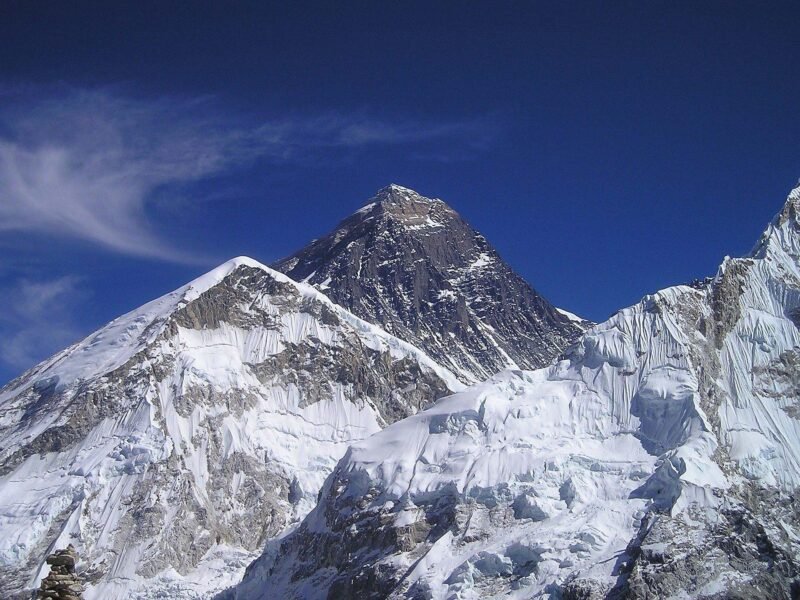
Everest Base Camp vs Everest High Three Passes Trek: Distance, Difficulty, Route & Which One to Choose?
Everest Base Camp and the Everest High Three Passes Trek are often compared because they travel through the same famous Khumbu region and share several important stops.
Both take you through Sherpa villages, suspension bridges, high mountain valleys and some of the most famous scenery in the Everest region. But they are not the same trek with a slightly different itinerary.
The Everest Base Camp Trek follows the classic route toward Everest Base Camp and Kala Patthar and then returns through the Khumbu Valley.

The Everest Three Passes Trek takes a much wider loop, adding Kongma La, Cho La and Renjo La while also including Everest Base Camp, Kala Patthar and Gokyo.
That difference changes almost everything: the number of days, the total walking distance, the amount of climbing and descending, the type of terrain, the level of isolation and the physical demands placed on your body.
Our current Nepal Royal Tourism Holiday itineraries make the difference quite clear. The EBC itinerary is designed as a 14-day trek, while the Three Passes itinerary is an 18-day journey.

For a fair comparison, it is better to use practical complete-route estimates rather than simply adding the kilometre figures printed beside individual itinerary days.
Our Everest Three Passes distance guide uses approximately 150–170 km (93–106 miles) for the complete route, including the main side hikes and acclimatization walking. F
or the current 14-day EBC route, a practical planning estimate is approximately 110–130 km (68–81 miles), depending on the exact acclimatization hikes, lodge locations and GPS track.
The biggest difference is not the kilometre total
Three Passes is longer overall, but the more important difference is where those kilometres occur. It adds three major passes above 5,300 metres, more repeated climbing and descending, more remote sections and a much broader circuit through the Khumbu. The difficulty gap is therefore much larger than distance alone suggests.
Everest Base Camp vs Three Passes Main Takeaway
| Category | Everest Base Camp Trek | Everest Three Passes Trek |
|---|---|---|
| Current itinerary duration | 14 days | 18 days |
| Practical walking distance | Approx. 110–130 km / 68–81 mi | Approx. 150–170 km / 93–106 mi |
| Highest point | Kala Patthar, 5,545 m | Kala Patthar, 5,545 m |
| High passes | No major trekking pass above 5,300 m | Kongma La, Cho La and Renjo La |
| Pass altitudes | — | Kongma La 5,535 m; Cho La 5,420 m; Renjo La 5,360 m |
| EBC included? | Yes | Yes |
| Kala Patthar included? | Yes | Yes |
| Gokyo included? | No | Yes |
| Acclimatization | Namche and Dingboche acclimatization built into the itinerary | Dedicated acclimatization in Namche and Gokyo, with a gradual Dingboche–Chhukung stage before Kongma La |
| Accommodation | Tea house / lodge | Tea house, with simpler facilities as altitude and remoteness increase |
| Overall character | Classic Everest route | Full Khumbu circuit with high-pass crossings |
| Difficulty | Challenging | Strenuous high-altitude trekking |
Distance: EBC vs Everest Three Passes
Distance is one of the easiest ways to compare the two routes, provided you remember that the numbers come from the actual itineraries being compared.
Our Everest Three Passes distance guide uses a practical complete-route estimate of approximately 150–170 km (93–106 miles). That figure includes the high-pass circuit, Everest Base Camp, Kala Patthar, Gokyo Ri and normal acclimatization walking.

For the current 14-day Everest Base Camp itinerary, a comparable planning estimate is approximately 110–130 km (68–81 miles). The exact total depends on how much walking is done on acclimatization days, the lodge used, viewpoint detours and the GPS track recorded.
So Three Passes is clearly the longer route, but it is better not to reduce the comparison to one exact kilometre difference.
The EBC route spends most of its effort moving progressively toward Everest Base Camp and Kala Patthar before descending back through the Khumbu. Three Passes takes you off that main corridor and repeatedly moves over very high terrain, including three passes above 5,300 metres.
| Distance comparison | EBC | Three Passes |
|---|---|---|
| Practical complete-route estimate | Approx. 110–130 km / 68–81 mi | Approx. 150–170 km / 93–106 mi |
| Why the total varies | Acclimatization hikes, viewpoints, lodge locations and exact GPS track | The same factors, plus the wider high-pass circuit and side hikes such as Gokyo Ri |
| What adds the extra distance? | Focused route to EBC and Kala Patthar | Kongma La, Cho La, Renjo La, Gokyo and the wider Khumbu circuit |
One important distance note
Trekking distances are not fixed like distances measured on a road. Your GPS may show a different total because of lodge locations, small detours, viewpoint walks, acclimatization hikes and changes in the exact trail. The figures here are therefore best used to compare the two itineraries rather than as survey-grade measurements.
How Many Days Do You Need?
The current Nepal Royal Tourism Holiday itineraries make the time commitment one of the clearest differences.
The Everest Base Camp Trek is 14 days. The itinerary includes the flight to Lukla, the trek to Phakding and Namche, acclimatization, the approach to Everest Base Camp, Kala Patthar, the return to Namche and the flight back to Kathmandu.

The Everest Three Passes Trek is 18 days. Those extra days are used to build a wider route through the Khumbu, including Chhukung, Kongma La, Everest Base Camp, Kala Patthar, Cho La, Gokyo, Renjo La, Marlung, Thame and the return to Lukla.
There are also longer versions of both treks available across the wider trekking industry, so travellers should always compare the actual itineraries rather than choosing by the headline number of days alone. For this comparison, however, we are using the current Nepal Royal Tourism Holiday packages.
What Does the Extra Four Days Give You?
The additional four days on Three Passes are not simply spare rest days. They allow the route to leave the standard Everest Base Camp corridor and connect several different valleys.
You get the Everest Base Camp and Kala Patthar experience, but you also cross Kongma La into the Lobuche side, cross Cho La toward Gokyo and then cross Renjo La before descending through Marlung and Thame.

That means the extra time changes the breadth of the experience rather than simply making the same route slower.
| What you see | EBC | Three Passes |
|---|---|---|
| Everest Base Camp | Yes | Yes |
| Kala Patthar | Yes | Yes |
| Gokyo Lakes | No | Yes |
| Kongma La | No | Yes |
| Cho La | No | Yes |
| Renjo La | No | Yes |
| Thame and Marlung | No | Yes |
Which Trek Is Harder: Everest Base Camp or Three Passes?
This is probably the most important difference between the two itineraries. Everest Base Camp is challenging. Everest Three Passes is more demanding.
The reason is not simply that Three Passes covers more kilometres. The difference comes from the amount of time spent at high altitude and the terrain encountered along the wider circuit.

The standard EBC route gradually climbs through the Khumbu Valley toward Everest Base Camp and Kala Patthar. Three Passes follows much of this high-altitude territory but then adds three major crossings: Kongma La at approximately 5,535 m, Cho La at approximately 5,420 m and Renjo La at approximately 5,360 m.
That means Three Passes asks trekkers to deal with several separate high-altitude climbs and descents instead of concentrating mainly on the route toward Base Camp.
| Difficulty factor | Everest Base Camp | Everest Three Passes |
|---|---|---|
| Overall duration | 14 days | 18 days |
| High-altitude exposure | Substantial, especially above Dingboche and around Gorak Shep | Greater, with repeated crossings above 5,300 m |
| Major high passes | None of the Three Passes | Kongma La, Cho La and Renjo La |
| Terrain | Mountain trails, suspension bridges, stone paths and glacier moraine | All of the EBC-style terrain plus steeper high-pass, moraine, rocky and potentially icy sections |
| Route isolation | Generally follows the established Everest corridor | More remote sections between the main valleys |
| Experience required | Good fitness and proper acclimatization are essential | Good fitness, stronger preparation and comfort with prolonged high-altitude trekking are especially important |
Altitude Makes the Three Passes Difference Much Bigger
Imagine two trekking days that both cover 10 kilometres.
On the EBC route, that 10 km might involve a more gradual valley trail between established settlements. On Three Passes, a similar distance can involve a long steep ascent over rough terrain, a pass above 5,300 metres and a demanding descent on the other side.
The distance on the GPS screen looks similar. The physical experience is not.
At higher elevations, trekkers normally move more slowly. Breathing becomes more noticeable, recovery takes longer and every steep ascent consumes more energy. Rocky moraine and irregular trail surfaces can also make progress slower than a normal hiking trail.
This is why the Three Passes circuit should be judged by the combination of altitude, elevation gain, terrain and distance.
The key comparison
EBC is mainly a high-altitude journey to one major destination. Three Passes is a high-altitude circuit that repeatedly asks you to climb over major mountain barriers.
Everest Base Camp vs Three Passes: Accommodation
Accommodation is more similar between these two treks than many people expect. Both are primarily tea-house treks.
You are not camping in tents every night on either of these itineraries. Instead, you stay in locally operated mountain lodges where trekkers normally sleep in simple rooms and gather in a communal dining area.
However, the quality and range of facilities change considerably with altitude.
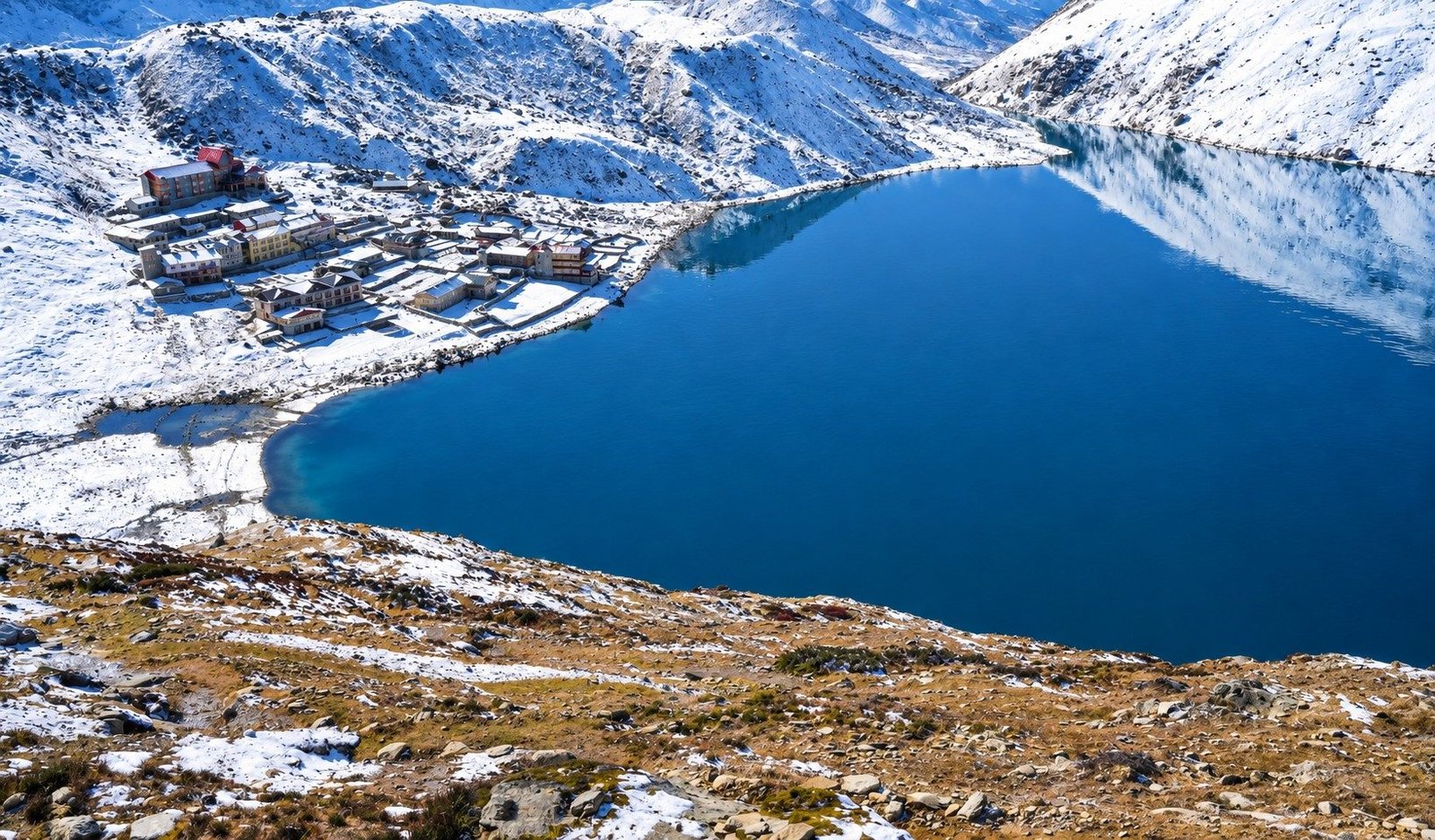
Lukla and Namche Bazaar have some of the most developed accommodation on the route. You can find more comfortable rooms, better food choices, showers and easier access to charging and internet services.

Once the trail climbs beyond the major settlements, expectations should become more modest. Rooms are generally simpler, bathrooms are more commonly shared, hot showers can cost extra and electricity becomes more valuable.
The Three Passes route pushes even farther away from the most developed sections because it includes places such as Chhukung, Dzongla, Thaknak, Gokyo and Marlung. These stops have a more remote trekking character than the main EBC corridor.
| Accommodation factor | EBC | Three Passes |
|---|---|---|
| Lodging type | Tea houses and trekking lodges | Tea houses and trekking lodges |
| Lower Khumbu | Generally more developed facilities | Generally more developed facilities in the shared lower sections |
| Higher villages | Facilities become simpler | Facilities become simpler, with additional remote settlements |
| Private bathrooms | Available in some lower lodges but not something to expect throughout the route | Available in some lower lodges; shared facilities become more normal at higher and remote stops |
| Hot showers | Often available for an additional charge | Available in some settlements, but increasingly limited at high and remote stops |
| WiFi | Available at many lodges and through regional services, but not guaranteed everywhere | Available at some lodges and through regional services, but the remote sections have less reliable access |
| Overall comfort | More consistent along the main route | More variation because of the additional remote valleys and high-pass settlements |
Food and Dining on Both Treks
Food is another area where the two itineraries are broadly similar at first.
The main villages of the Khumbu offer a surprisingly wide range of food. Dal bhat, noodles, pasta, soup, rice dishes, eggs, potatoes and Tibetan-style breads are common trekking choices, while larger settlements such as Namche can have much more variety.
As you move higher, menus naturally become simpler.

This difference becomes more noticeable on Three Passes because the circuit spends more nights in smaller settlements away from the busiest EBC corridor.
For both treks, eating enough food and drinking enough fluid is more important than trying to maintain a familiar restaurant menu from home. The body is working hard for several consecutive days, and appetite can change at altitude.
Acclimatization: EBC vs Three Passes
Both routes require proper acclimatization, but Three Passes places greater demands on it because the itinerary repeatedly returns to very high elevations.
Our current EBC itinerary includes dedicated acclimatization days around Namche Bazaar and Dingboche. The Three Passes itinerary has dedicated acclimatization in Namche and Gokyo, while the shorter Dingboche-to-Chhukung stage helps maintain a gradual altitude progression before the first major pass.

These slower or acclimatization days are not wasted days.
They are part of the reason the itineraries can gradually take trekkers from the lower Khumbu into the highest sections of the route.
| Acclimatization point | EBC | Three Passes |
|---|---|---|
| Namche | Yes | Yes |
| Dingboche / Chhukung | Dedicated Dingboche acclimatization day | No separate Dingboche rest day; the shorter Dingboche–Chhukung stage supports gradual altitude gain |
| Gokyo | Not part of the standard EBC itinerary | Yes |
EBC Is More Straightforward; Three Passes Is More Varied
The word “straightforward” does not mean easy.
The EBC route is easier to understand because the objective is simple. You move through the Khumbu toward Everest Base Camp, climb Kala Patthar, and then return along the established route.
Three Passes is more complicated. You need to cross from one high valley to another while managing three separate passes and several remote sections.

This makes navigation and weather awareness more important. The high-pass trail may not feel as obvious as the main EBC corridor, and conditions around snow, ice and moraine can change the character of the route.
For trekkers who enjoy route variety, this is one of the biggest attractions. For someone who prefers a more predictable trekking structure, the classic EBC route may feel more comfortable.
Best Season and Weather: Which Route Is More Sensitive?
Both treks are normally planned for the main spring and autumn trekking seasons, especially March to May and September to November.
Weather matters on both routes, but it matters even more on Three Passes. The standard EBC trail can still be affected by snow, wind, cloud and changing mountain conditions, but the route generally follows the established Khumbu corridor.

Three Passes adds Kongma La, Cho La and Renjo La. Snow, ice, strong wind or poor visibility around any one of those crossings can make a planned day slower and more demanding, and conditions sometimes require the trekking plan to be adjusted.
For that reason, travellers choosing Three Passes should be more comfortable with the idea that the mountain conditions may influence the exact pace of the itinerary.
Which Trek Feels Quieter?
The classic Everest Base Camp route is one of Nepal’s best-known trekking trails, so the main corridor can feel busy during the peak spring and autumn seasons.
Three Passes shares some of those same villages, particularly in the lower Khumbu and around the Everest Base Camp section.
But once the route moves toward Chhukung, the high passes, Dzongla, Gokyo, Renjo La and the western side toward Marlung and Thame, the trekking experience can feel noticeably quieter.

That does not mean Three Passes is empty. It simply spends more time away from the busiest part of the standard EBC trail.
For someone who wants the classic Everest atmosphere and a more social trekking corridor, EBC has a strong appeal. For someone who likes longer stretches of quieter mountain trail, Three Passes offers more of that experience.
Who Should Choose Everest Base Camp?
EBC can make sense for travellers who have a limited amount of time and want the classic Everest experience.

You still experience Lukla, Namche Bazaar, Tengboche, Dingboche, Lobuche, Gorak Shep, Everest Base Camp and Kala Patthar. You spend several days at high altitude and still need serious preparation, but you do not have to cross three additional 5,000 metre passes.
It is also a natural choice for someone whose main goal is simply to stand at Everest Base Camp and see Everest from Kala Patthar.
Who Should Choose Everest Three Passes?
Three Passes is for travellers who want more than the standard Everest Base Camp experience.
The route is particularly attractive to people who want to explore multiple valleys, see Gokyo, experience the three major passes and spend longer in the high Himalayas.

It is a much better match for trekkers who genuinely enjoy challenging terrain and are comfortable with the possibility of slower progress on high-altitude days.
You should also be prepared for simpler accommodation in the more remote sections. Three Passes is not simply “EBC plus a few extra kilometres.” It is a different level of mountain journey.
Everest Base Camp vs Three Passes: Which Trek Fits Your Trip?
The right choice between Everest Base Camp and Everest Three Passes depends much more on the traveller than on a simple difficulty label.
Someone with two weeks in Nepal may prefer the more focused EBC itinerary. A trekker with additional time who wants to see several valleys and cross high mountain passes may prefer the Three Passes circuit.
The important thing is to understand what changes when you move from one itinerary to the other.
| Your priority | EBC | Three Passes |
|---|---|---|
| Limited time | 14-day itinerary | 18-day itinerary |
| Main objective | Everest Base Camp and Kala Patthar | EBC, Kala Patthar, Gokyo and three major high passes |
| Practical walking distance | Approx. 110–130 km / 68–81 mi | Approx. 150–170 km / 93–106 mi |
| Pass crossings | No Three Passes crossings | Kongma La, Cho La and Renjo La |
| Route variety | More focused | Much broader circuit through multiple valleys |
| High-altitude challenge | High | Very high, with repeated 5,000+ m crossings |
| Accommodation | Tea houses and lodges | Tea houses and lodges, with more remote stops |
| Internet access | Generally more consistent on the main route | Available in many villages, but more variable in remote sections |
| Ideal trekker | Someone focused on the classic Everest journey | Someone wanting a longer and more varied high-altitude adventure |
Which Trek Is Better for a First Everest Trek?
A first trek in the Everest region does not automatically mean you have to choose the easiest available itinerary.
What matters is your previous hiking experience, physical preparation, comfort with long days on uneven terrain and how you respond to altitude.
The EBC route has a simpler structure because the main objective is straightforward and the route follows a well-established trekking corridor. That can make it easier for someone experiencing the Khumbu for the first time to understand the progression of the journey.

Three Passes demands more from the trekker because the route repeatedly moves into very high terrain and crosses three major passes. Previous experience with multi-day hiking is useful, and serious preparation is particularly important.
Someone who has never trekked for multiple consecutive days should think carefully before choosing the Three Passes route simply because they want to “see more.” More kilometres are only one part of the equation.
Which Trek Has More Mountain Scenery?
Both provide exceptional mountain scenery, but the experience is different.
EBC gives you the classic progression through the Khumbu, with views around Namche, Tengboche, Dingboche, Lobuche, Gorak Shep and the Everest Base Camp area. Kala Patthar provides one of the major panoramic viewpoints of the itinerary.

Three Passes adds more variety because the route moves through several valleys. You get the Everest Base Camp and Kala Patthar sections, but you also experience the Gokyo Valley and viewpoints around the high passes.
Instead of spending almost the entire trek moving toward one major objective, Three Passes continually changes the landscape around you.
That is one of the main reasons trekkers choose the longer circuit.
How Are the Daily Walking Days Different?
The difference becomes particularly clear when you put the walking stages side by side.
| Walking pattern | Everest Base Camp | Three Passes |
|---|---|---|
| Lower Khumbu | Gradual progression through Lukla, Phakding and Namche | Similar lower route before branching into the wider circuit |
| Middle Khumbu | Tengboche and Dingboche toward the Everest Base Camp corridor | Adds Chhukung and the approach to Kongma La |
| Highest section | Lobuche, Gorak Shep, EBC and Kala Patthar | Kongma La, EBC, Kala Patthar, Cho La, Gokyo and Renjo La |
| Return | Returns through the main Khumbu corridor | Returns through Marlung, Thame and Namche after completing the third pass |
What About WiFi and Mobile Network?
Connectivity is another small but useful difference.
The standard EBC route generally has more consistent access to mobile service, lodge WiFi and dedicated trekking internet because it follows the busiest corridor in the region.
Three Passes still has connectivity in many important settlements. Gokyo, for example, has access to trekking WiFi services, but the route between villages and particularly the high-pass sections should still be treated as potentially offline.

This means travellers who need to work or communicate regularly may find the EBC route slightly easier to manage from a connectivity perspective. On Three Passes, it is more important to download maps, documents and other information before leaving a connected village.
Neither trek should be treated as an always-online holiday.
What About Showers, Charging and Other Facilities?
Both itineraries use tea houses and trekking lodges, so facilities generally become simpler as you move higher.
In lower settlements such as Lukla and Namche, trekkers can find more developed accommodation and easier access to electricity, showers, WiFi and other services. Higher villages offer fewer conveniences, and facilities can vary from one lodge to another.

Three Passes adds several remote stops where trekkers should be prepared for a simpler experience. A lodge may have hot showers or charging available for an additional fee, while another property may have more limited facilities.
This is not a disadvantage of the route. It is simply part of what comes with moving away from the main trekking corridor and into more remote valleys.
Which Trek Usually Costs More?
Three Passes is the longer itinerary, so the total trip cost can naturally be higher even when the two packages look fairly close at first glance.
The extra days can mean more spending on meals, hot showers, charging, WiFi, snacks and other personal expenses in the mountains. The more remote sections can also make some services more limited or more expensive.

Because package prices can change by season, group size and service level, it is better to check the current EBC and Three Passes trip pages rather than fixing one price inside this comparison article.
The more useful comparison is simple: EBC is the shorter commitment, while Three Passes requires more days and usually a larger overall trekking budget.
How Much Preparation Does Each Trek Need?
| Preparation area | EBC | Three Passes |
|---|---|---|
| Cardio endurance | Important | Very important |
| Hill training | Strongly recommended | Especially important because of repeated steep climbs |
| Long-distance hiking | Useful | Very useful, particularly for preparing for the longer return days |
| High-altitude experience | Helpful | Strongly helpful because of three passes above 5,300 m |
| Back-to-back trekking | Important | Very important |
| Mental preparation | Important for long mountain days | Especially important when weather or pass conditions slow progress |
Which Trek Takes You Deeper Into the Khumbu?
Three Passes. Not necessarily because it is dramatically longer in kilometres, but because it takes you away from the main EBC corridor and connects different parts of the Khumbu through high mountain passes.
The route around Kongma La introduces the Imja and Lobuche side of the region. Cho La connects the Everest side with Gokyo, and Renjo La takes the route back toward the Thame and Marlung side.

By the time you finish, you have experienced much more of the Everest region than someone following the classic Base Camp route.
EBC, on the other hand, gives you a more concentrated experience centred around the world’s highest mountain and the famous Khumbu route leading toward Base Camp.
Which One Should You Book?
There is no need to choose based on which trek sounds more impressive on paper. Think about what you actually want from the trip.
Choose the Everest Base Camp Trek when your main goal is to experience the classic Khumbu route, reach Everest Base Camp and climb Kala Patthar, while keeping the overall itinerary shorter than Three Passes.

Consider the Everest Three Passes Trek when you have more time, want Gokyo as well as Everest Base Camp, enjoy challenging terrain and specifically want to cross Kongma La, Cho La and Renjo La.
If you are still uncertain, the most useful questions are simple: How many days do you have? How much high-altitude trekking have you done before? Do you want the classic Everest journey or a much wider Khumbu circuit?
A simple way to decide
If your priority is Everest Base Camp itself, the standard EBC itinerary keeps the journey focused. If your priority is exploring more of the Khumbu and crossing three high passes, the longer circuit gives you that broader experience.
Frequently Asked Questions About EBC vs Three Passes
Is Everest Three Passes harder than Everest Base Camp?
Yes, the two routes have different physical demands. Three Passes includes three major crossings above 5,300 metres in addition to the Everest Base Camp and Kala Patthar sections, making it a more demanding high-altitude itinerary.
Which trek is longer, EBC or Three Passes?
The current Nepal Royal Tourism Holiday EBC itinerary is 14 days, while the Three Passes itinerary is 18 days.
How far is the Everest Three Passes Trek?
Our Everest Three Passes distance guide uses approximately 150–170 km (93–106 miles) for the complete route, including the main side hikes and acclimatization walking.
How far is the Everest Base Camp Trek?
For the current 14-day EBC itinerary, a practical complete-route estimate is approximately 110–130 km (68–81 miles), depending on the exact acclimatization hikes, lodge locations and GPS track.
Does Three Passes include Everest Base Camp?
Yes. The Three Passes itinerary includes Everest Base Camp and Kala Patthar alongside Kongma La, Cho La, Renjo La and Gokyo.
Does EBC include Gokyo Lakes?
The standard EBC itinerary does not include Gokyo Lakes. Gokyo is included in the Three Passes circuit.
Which trek has better accommodation?
Both are primarily tea-house treks. Accommodation is generally more developed in places such as Lukla and Namche, while higher villages have simpler facilities. Three Passes includes more remote settlements, so there can be greater variation in accommodation.
Which trek has better internet?
Both have internet access in many major villages, but EBC generally follows the more developed trekking corridor. Three Passes also has WiFi and mobile coverage in several settlements, but connectivity becomes less predictable around remote sections and high passes.
Can a first-time trekker do Three Passes?
It is possible for a well-prepared trekker, but the route demands considerably more than a straightforward trekking itinerary. Fitness, previous long-distance hiking experience and careful altitude preparation are especially important.
Which trek should I choose if I have only two weeks in Nepal?
The 14-day EBC itinerary may fit more naturally around a shorter holiday, while the Three Passes itinerary requires 18 days in the current Nepal Royal Tourism Holiday programme. Your international travel time and other Nepal plans should also be considered.
EBC or Three Passes?
Both take you deep into the Everest region, but they offer different levels of time commitment, distance and high-altitude challenge. Nepal Royal Tourism Holiday can help you compare the itineraries and plan the trek around your available days and trekking experience.