-
 Duration
30 Days
Duration
30 Days
-
 Difficulty
Strenuous
Difficulty
Strenuous
-
 Max Elevation
6,812m
Max Elevation
6,812m
-
 Group Size
1 to 10 People Person
Group Size
1 to 10 People Person
-
 Accommodation
Teahouse/Camping
Accommodation
Teahouse/Camping
-
 Start/End
Kathmandu/Kathmandu
Start/End
Kathmandu/Kathmandu
-
 Destination
Everest Region
Destination
Everest Region
-
 Best Season
Spring and Autumn
Best Season
Spring and Autumn
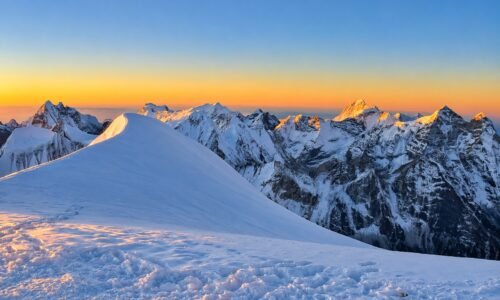
Ama Dablam Expedition is a serious technical mountaineering journey to one of the most distinctive mountains in the Nepal Himalayas.
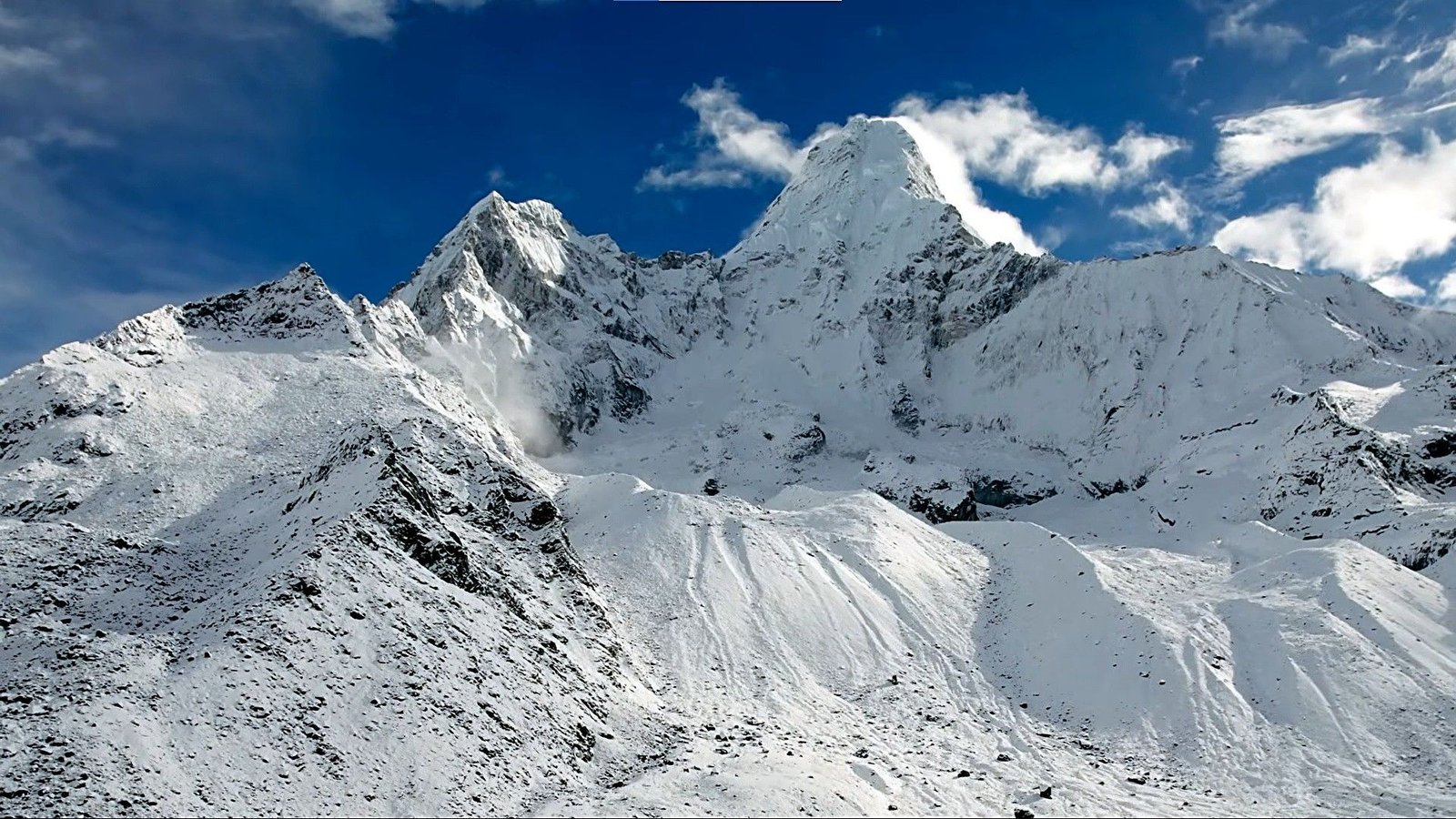
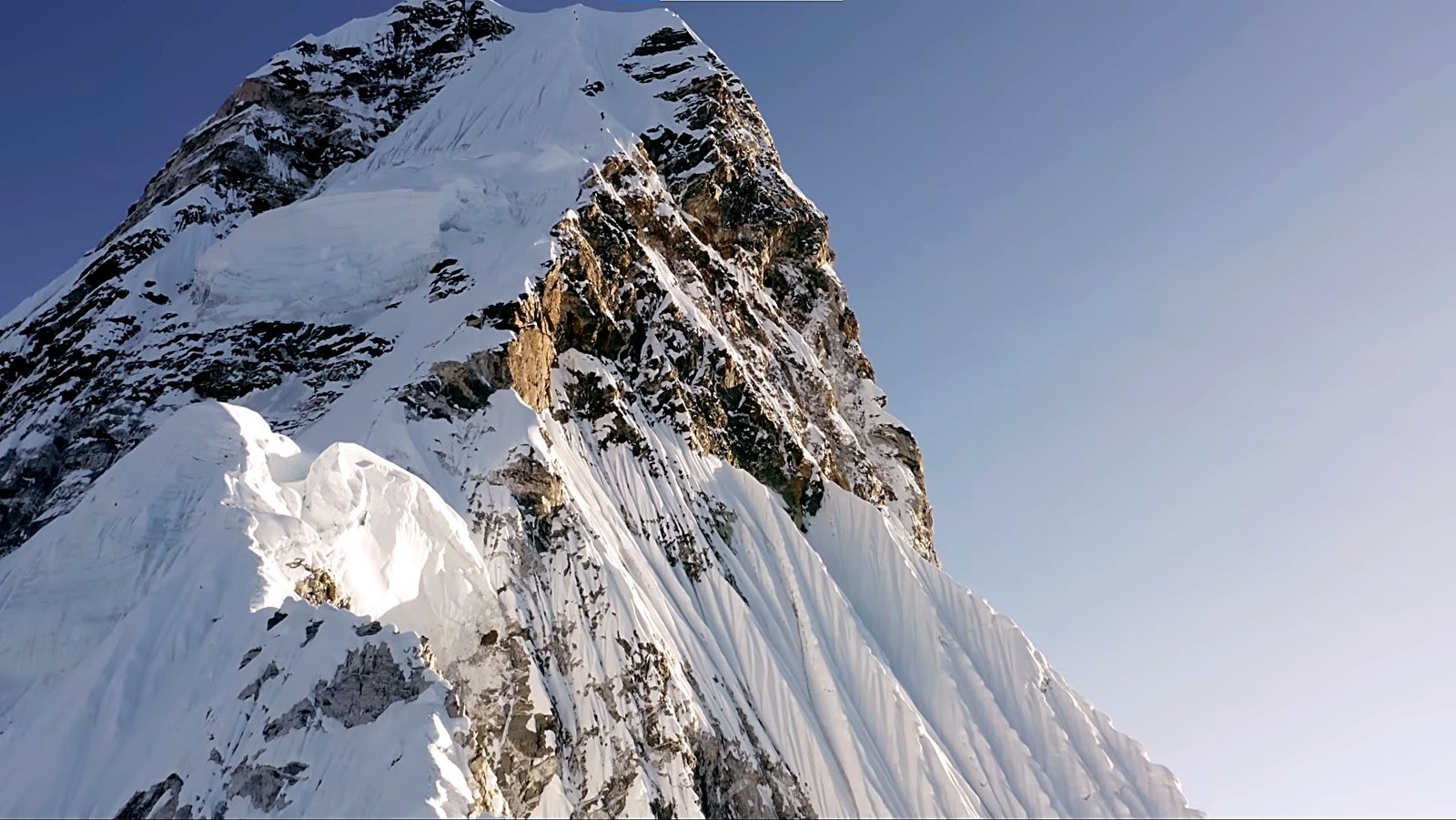
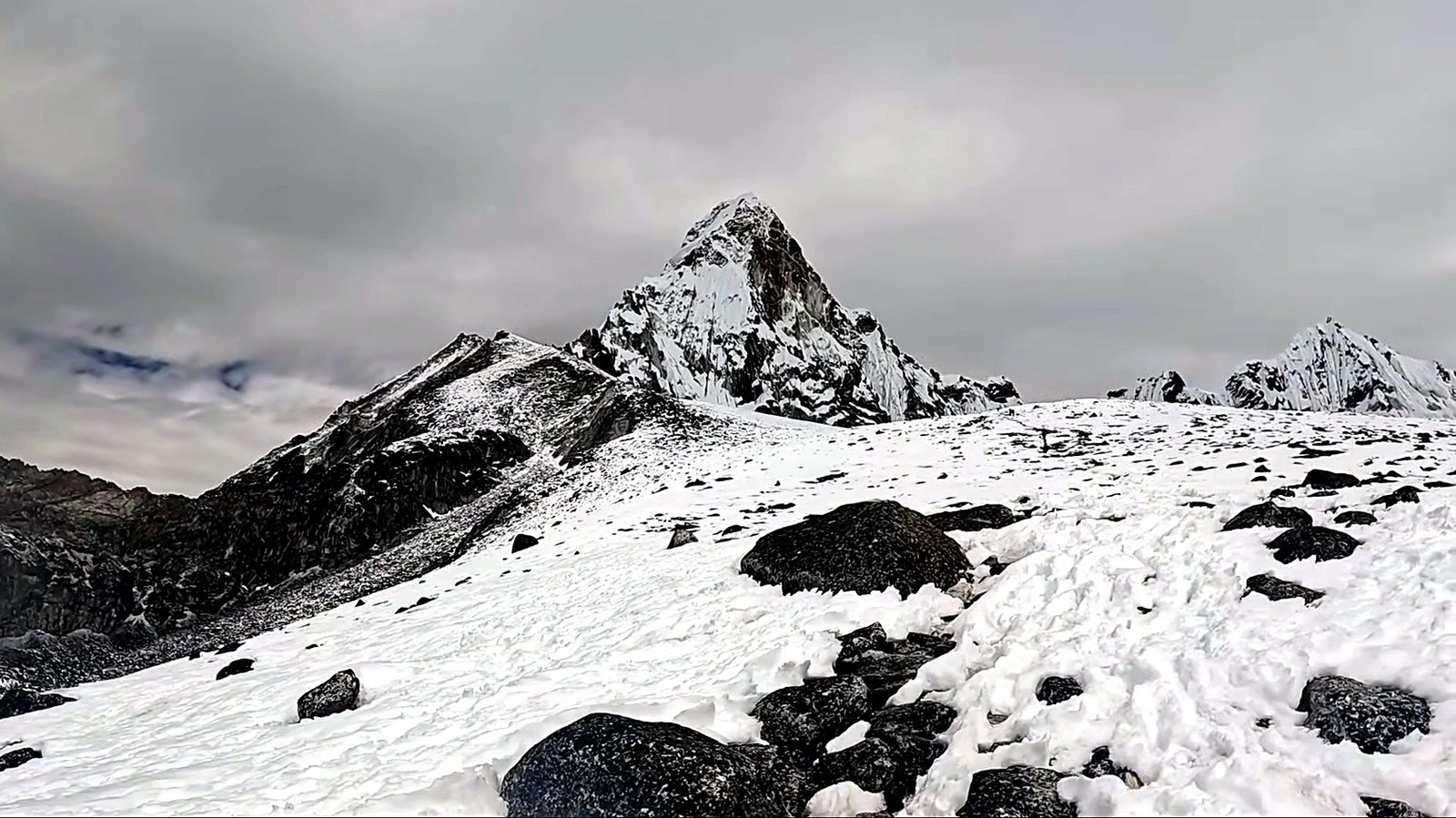
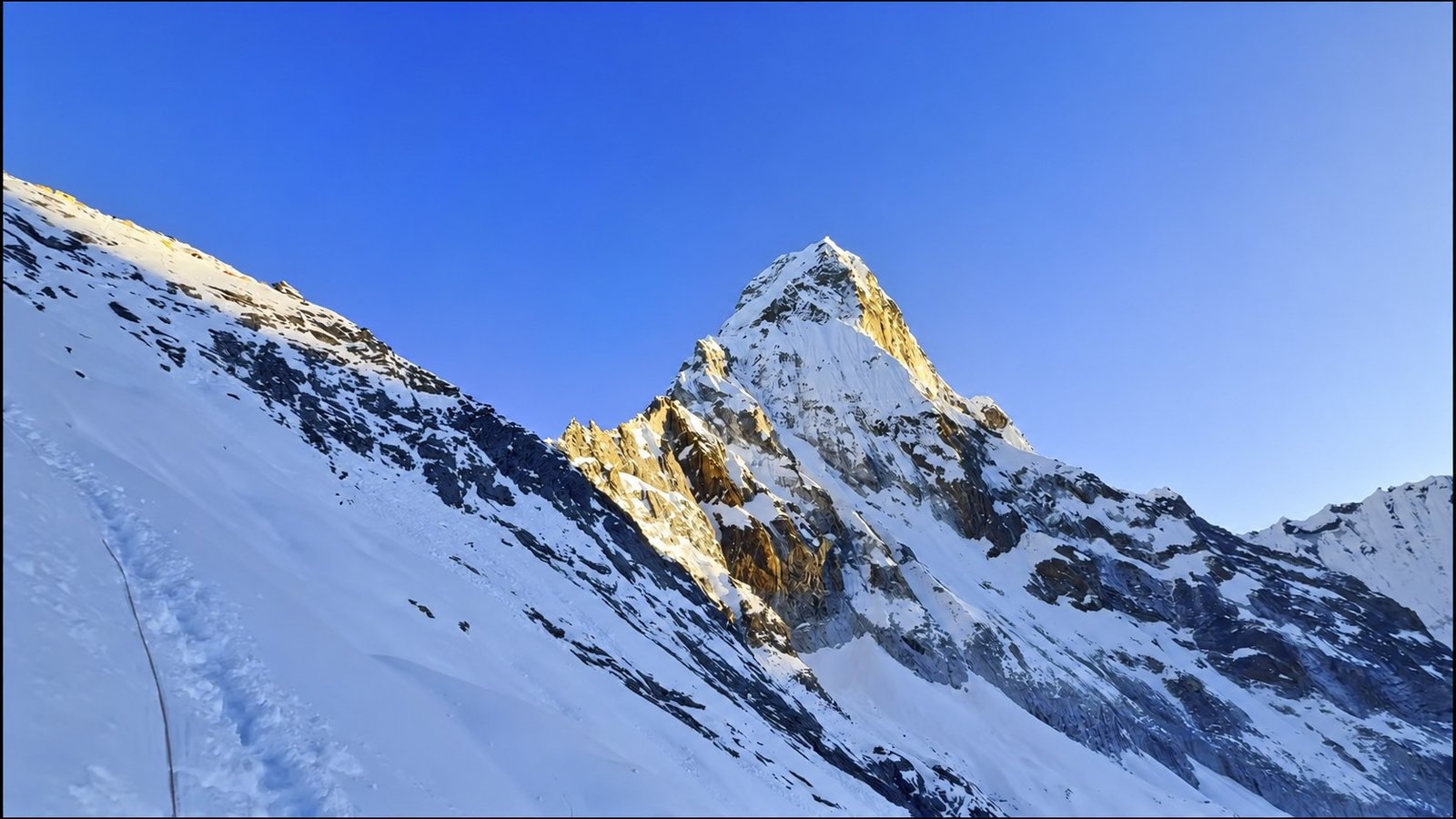
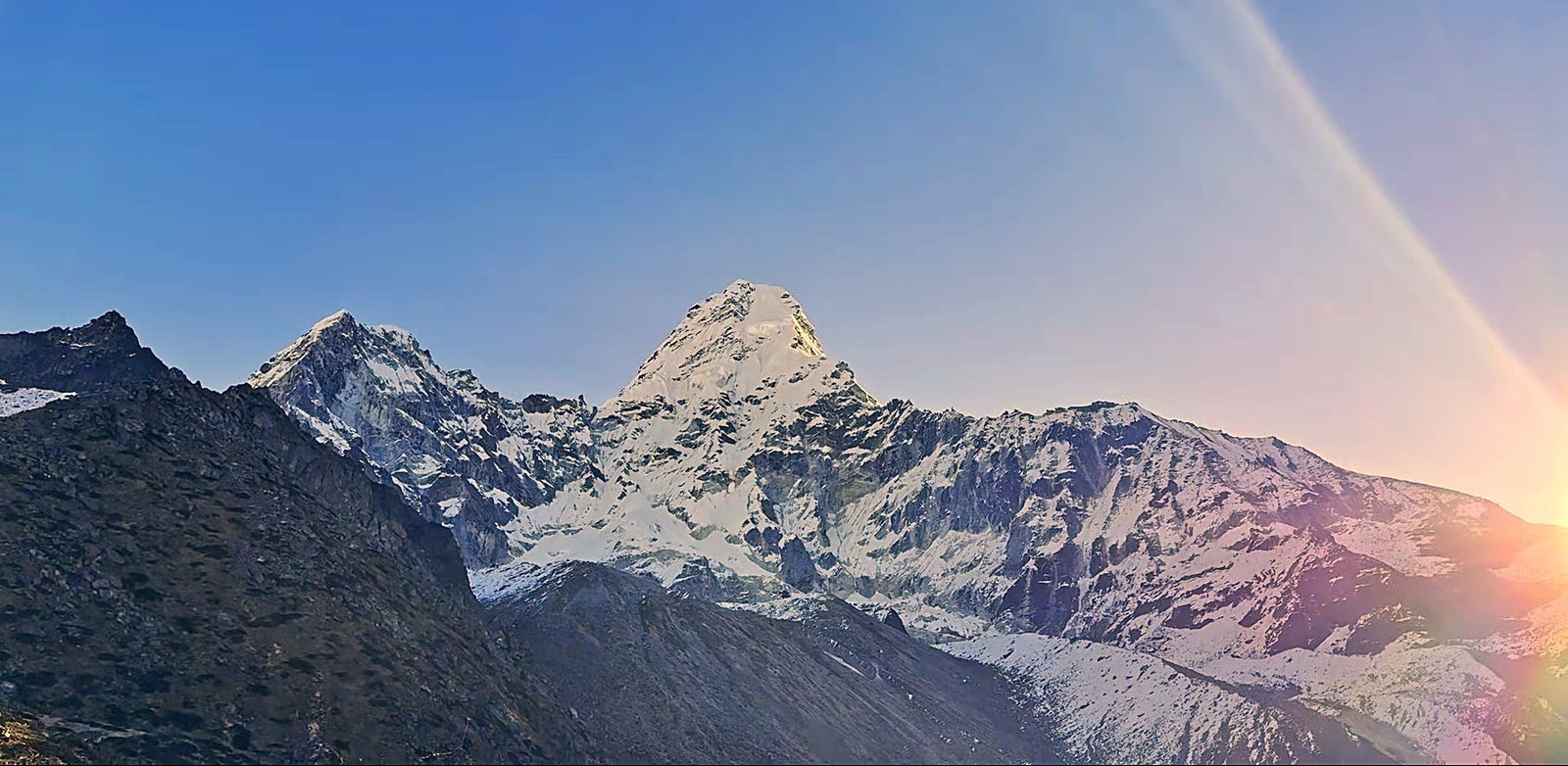
Rising to 6,812 m above the Khumbu Valley, Ama Dablam is instantly recognizable from its sharp ridges, steep faces and the hanging glacier that gives the mountain its name.

Its appearance is elegant from the trekking trail below, but climbing it is a very different proposition.
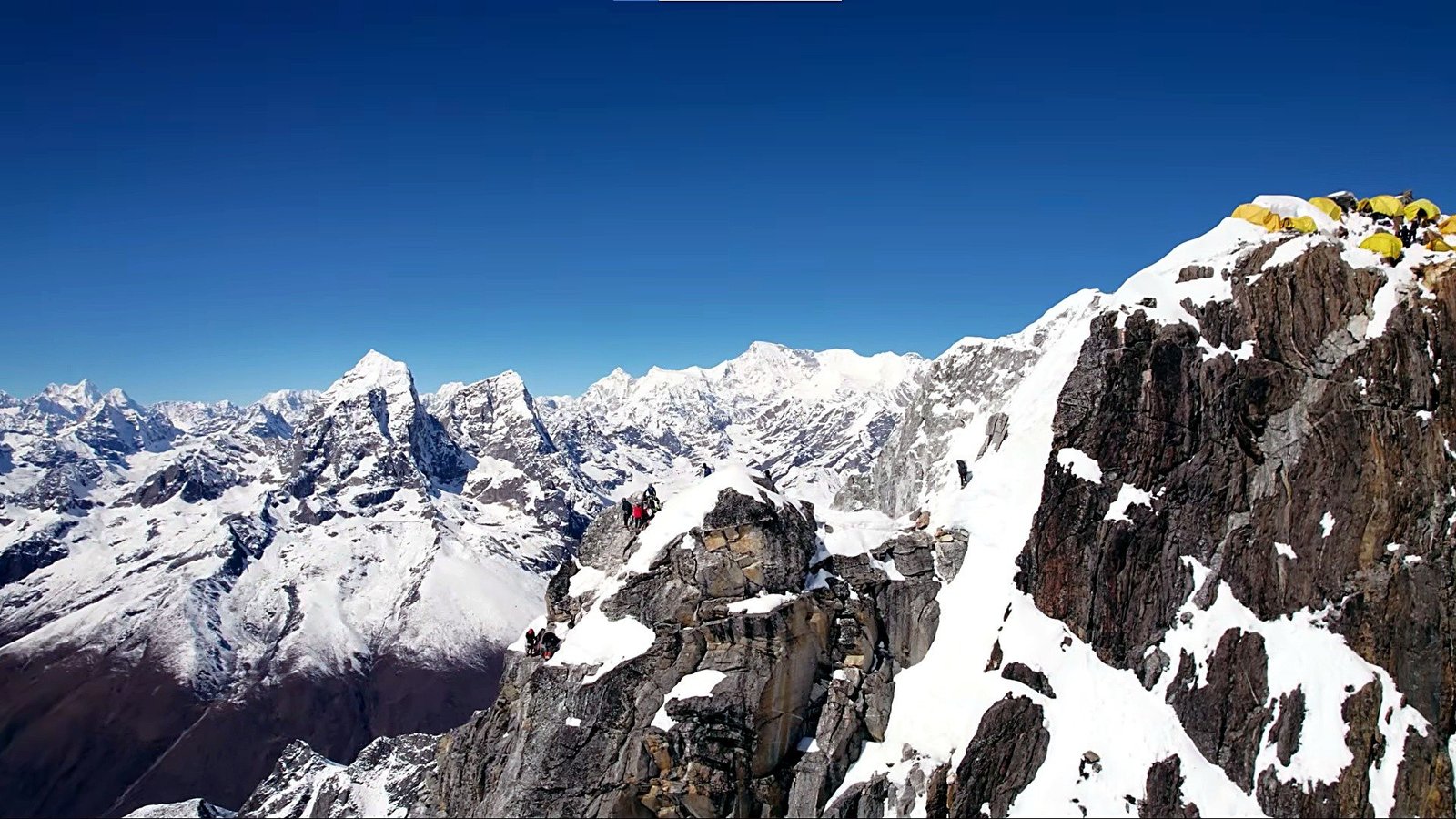
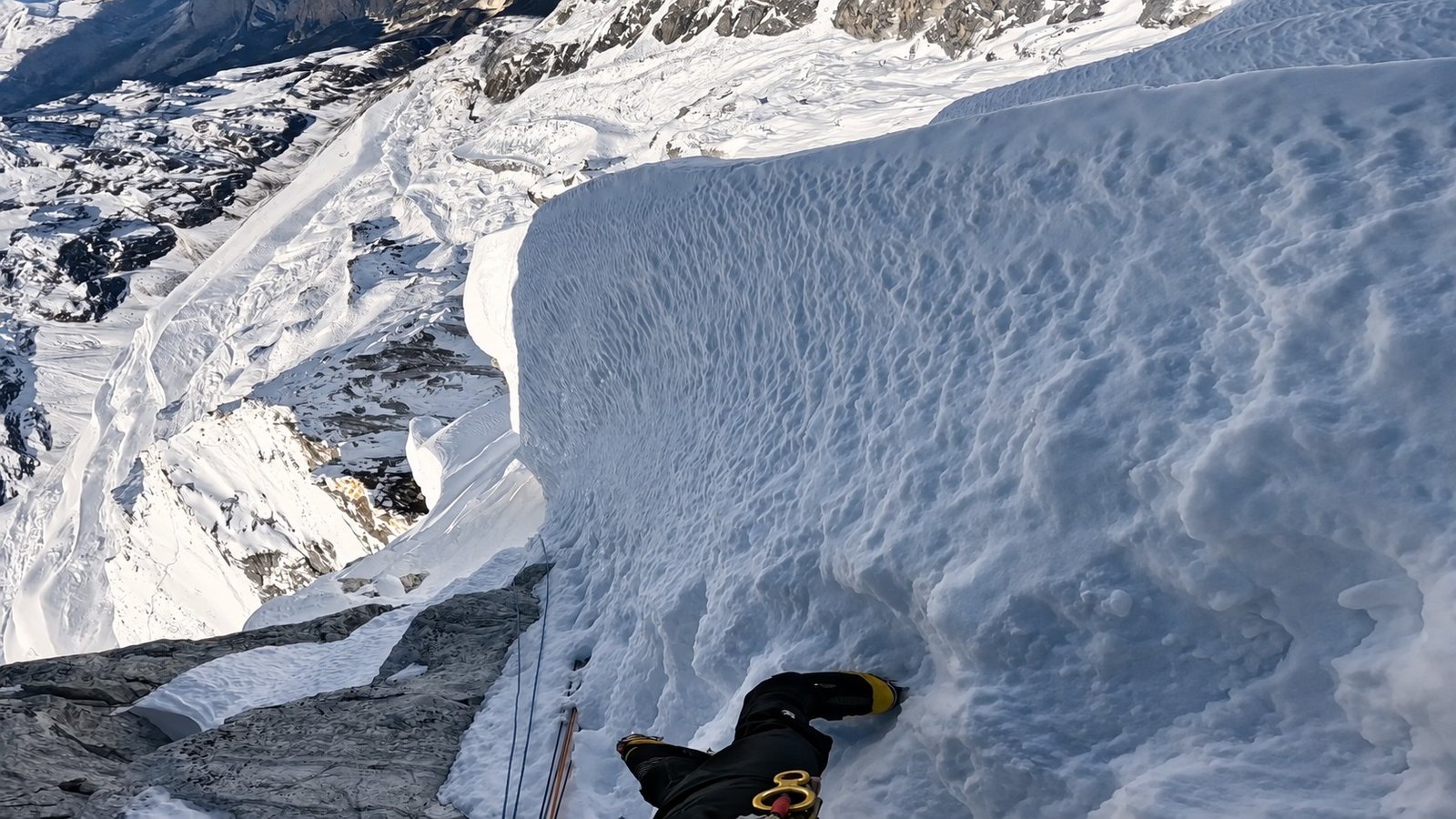
The standard commercial route follows the Southwest Ridge, combining exposed rock climbing, fixed-rope movement, steep mixed terrain, snow and ice.
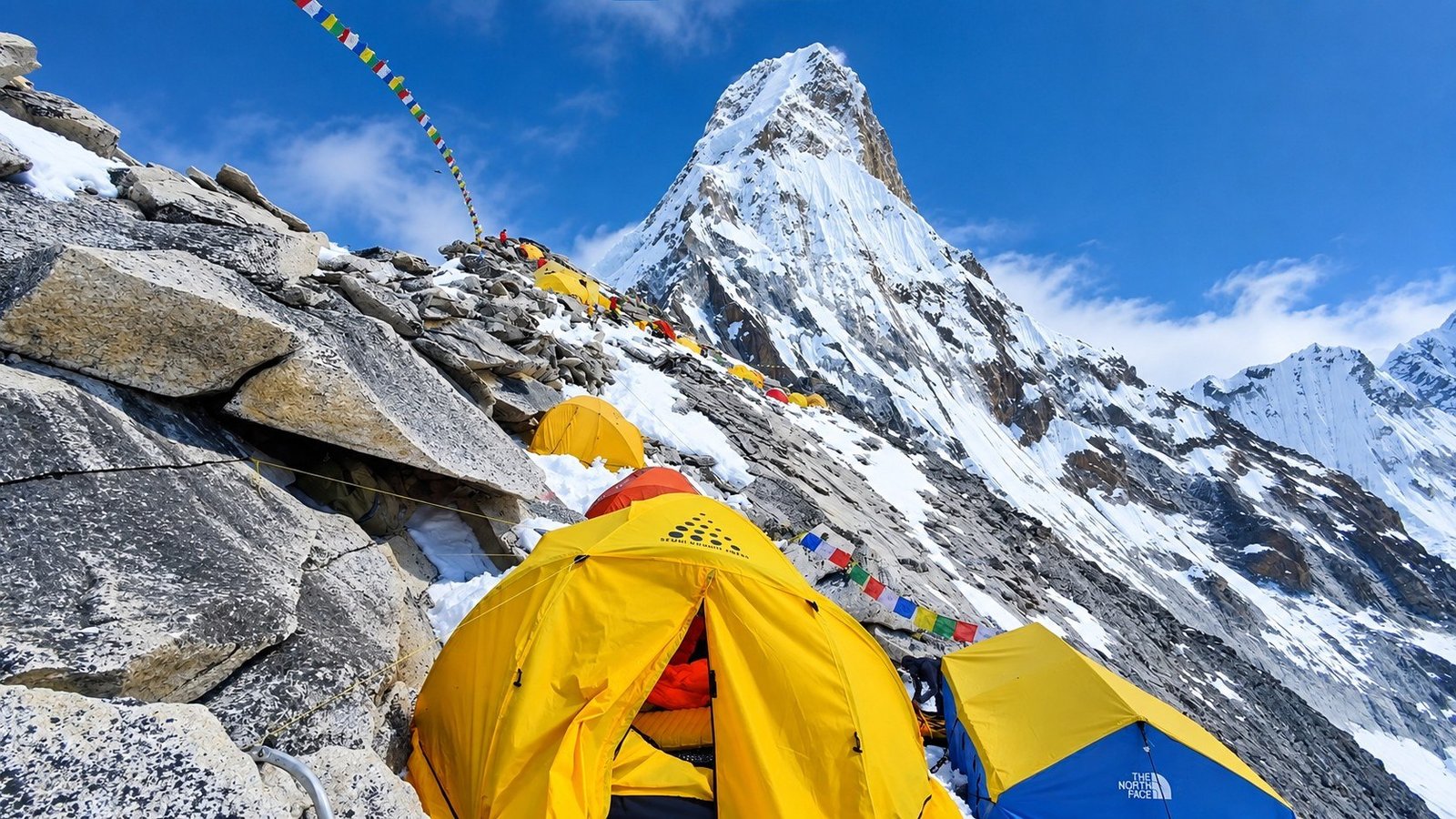
Climbers must be comfortable operating with a harness, crampons, ascender, rappel device and fixed safety systems while carrying equipment at altitude.
The expedition begins in Kathmandu before continuing into the Everest region by air. From Lukla, the approach follows the familiar Khumbu trail through Phakding, Namche Bazaar, Tengboche and Pangboche.

This gradual approach is an important part of the expedition because it allows the body to begin adapting to altitude before climbers reach Ama Dablam Base Camp at approximately 4,600 m.
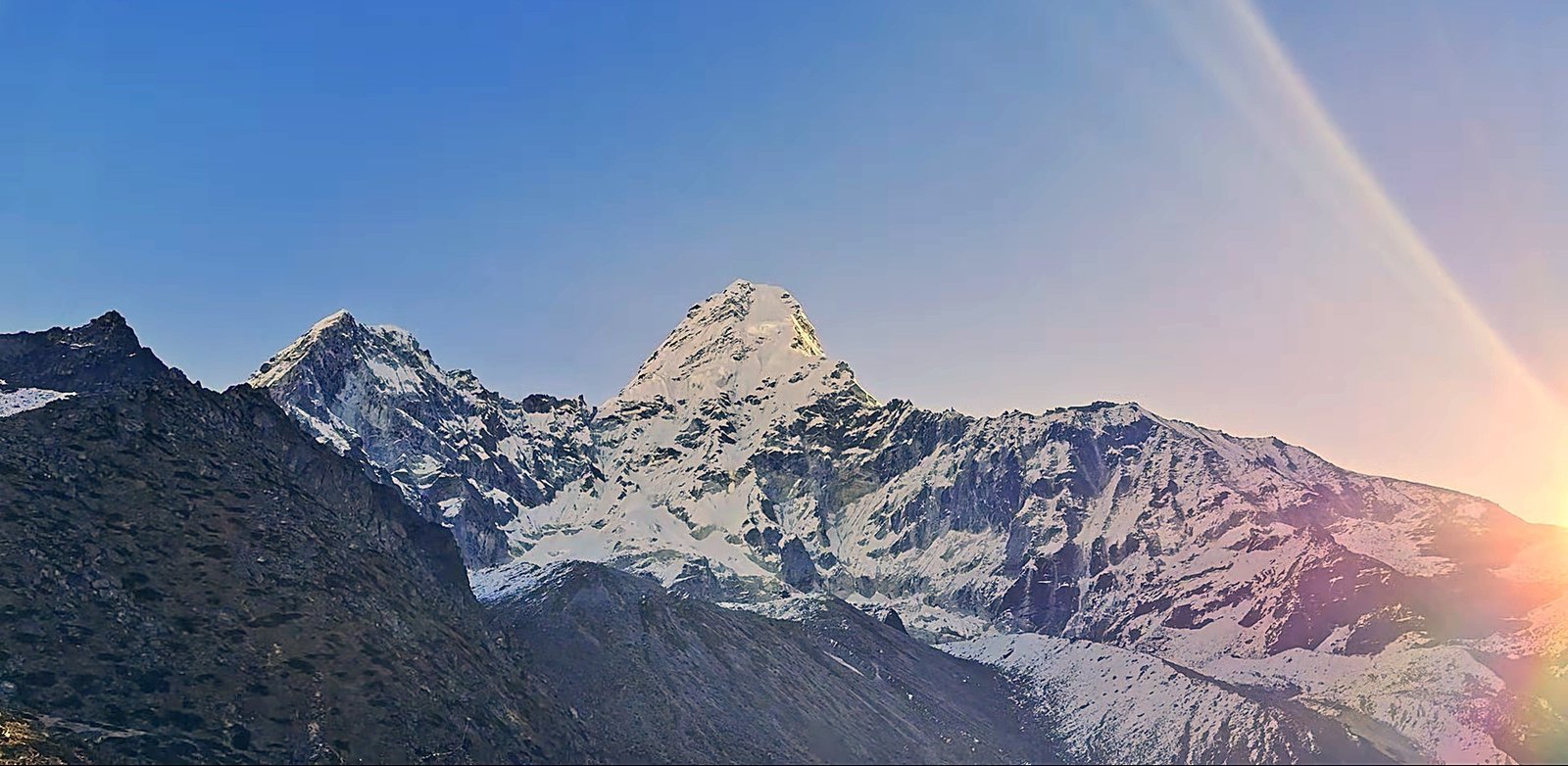
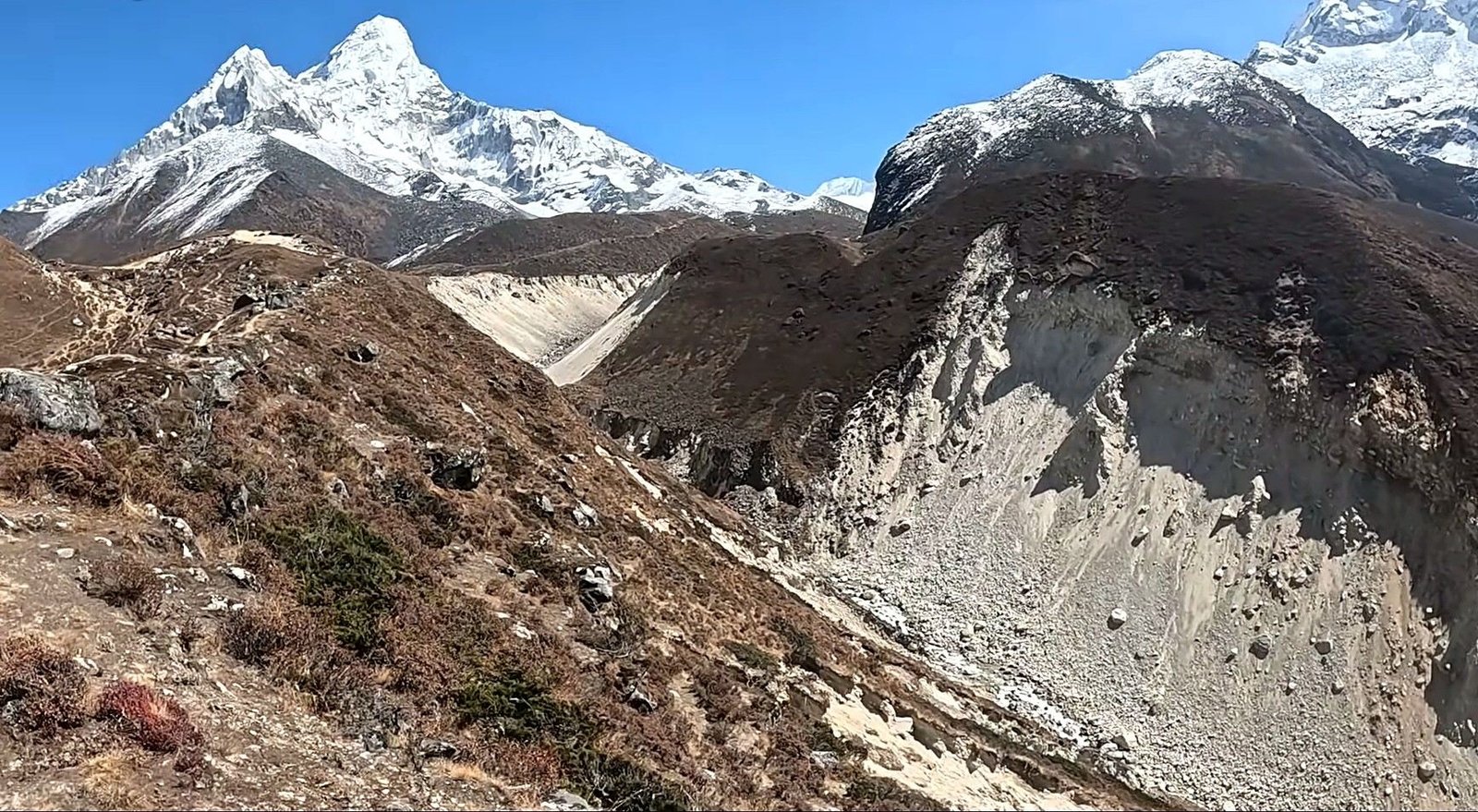
Ama Dablam becomes increasingly dominant throughout the approach. From Tengboche and Pangboche, the mountain rises almost directly above the valley, allowing climbers to see the Southwest Ridge they will later attempt from several different angles.
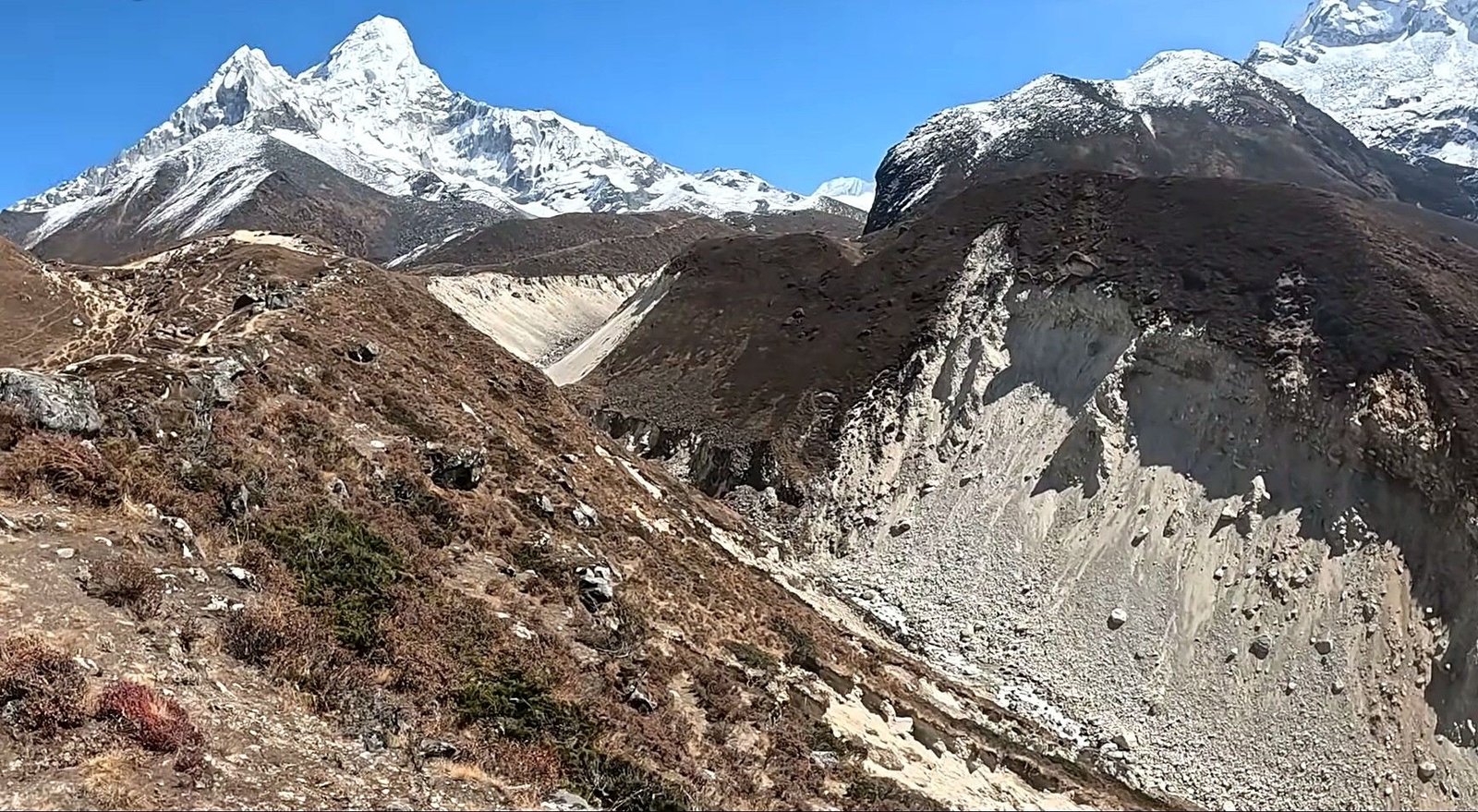
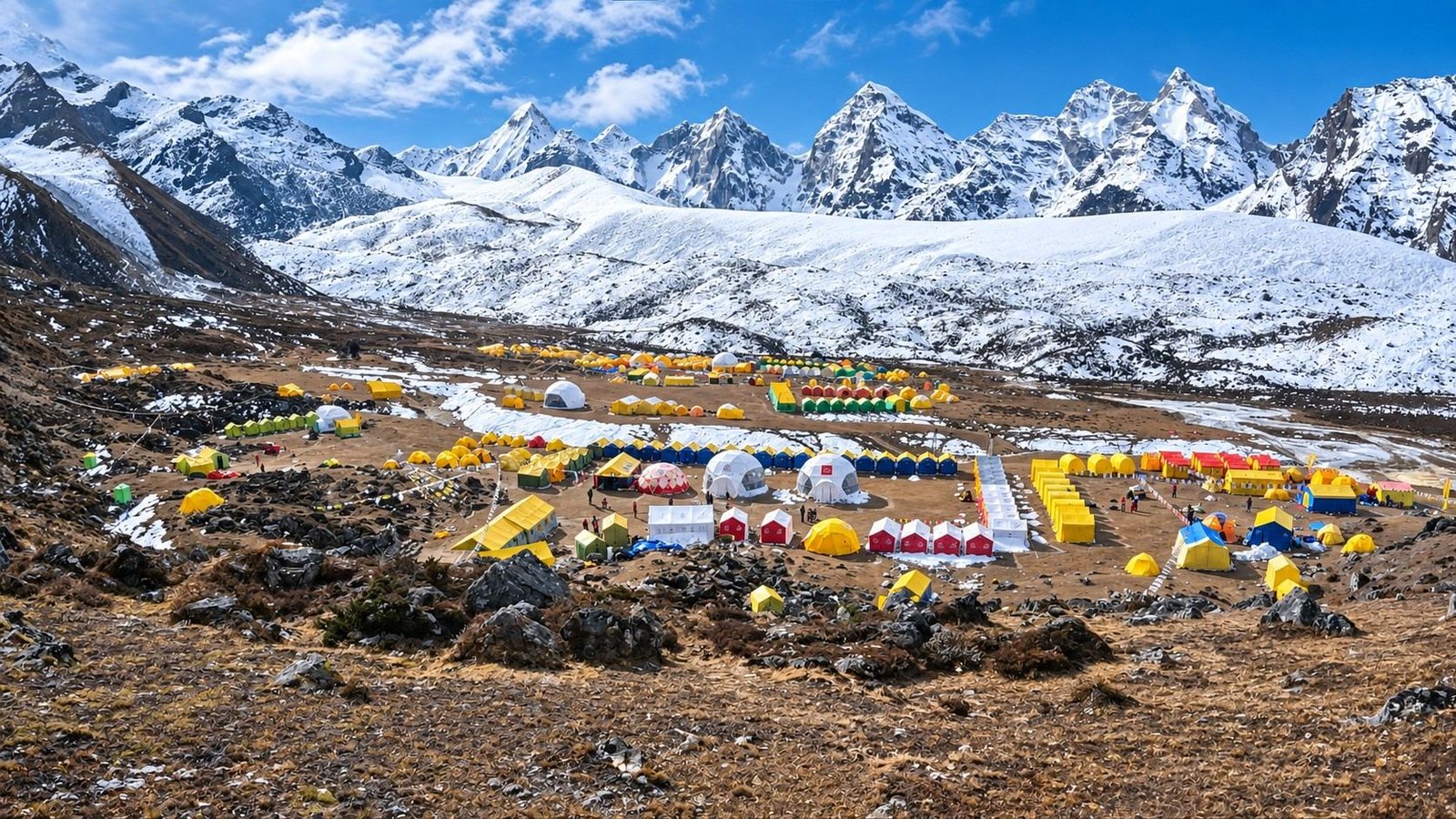
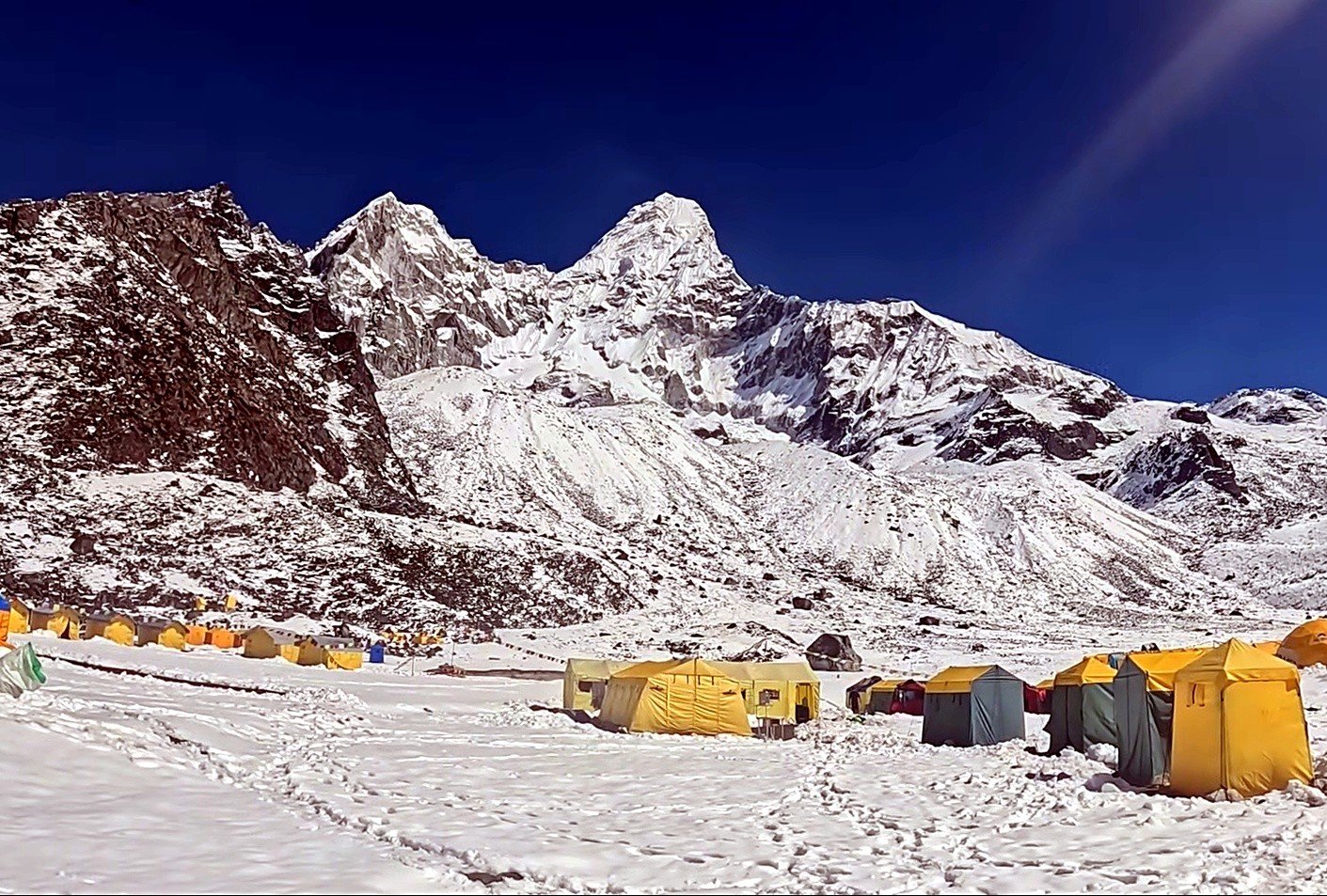
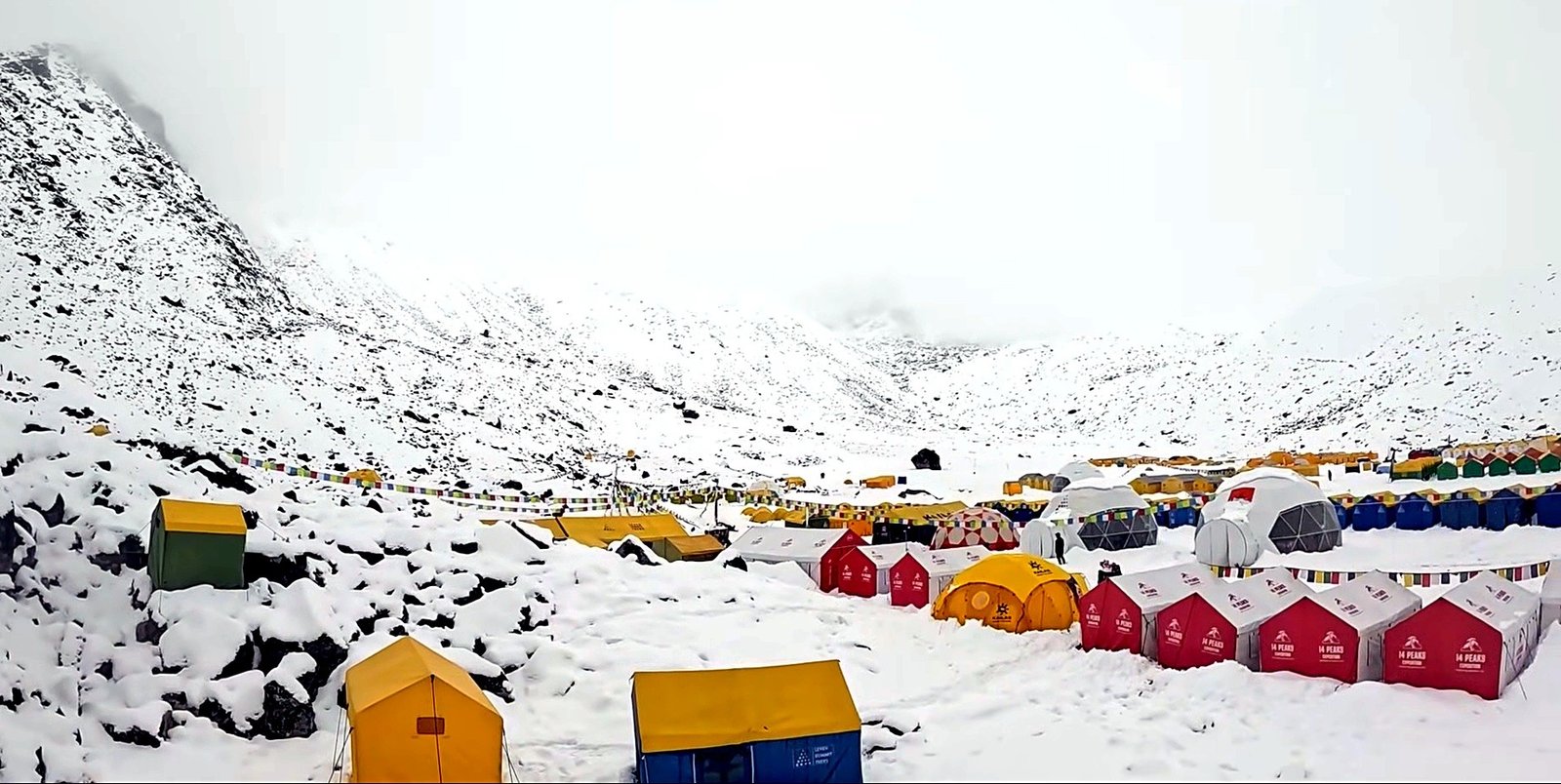
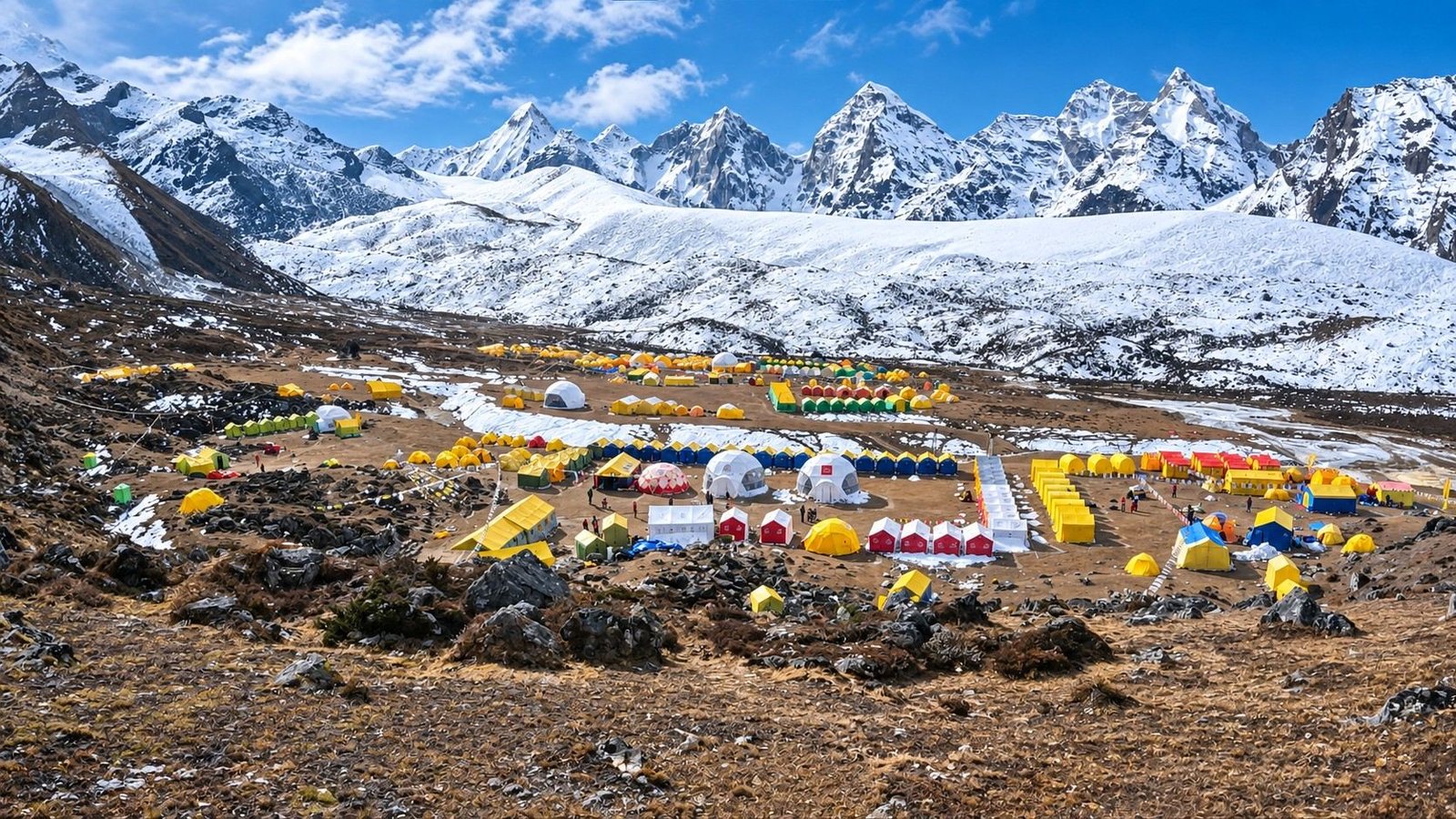
Once the team reaches Base Camp, the nature of the journey changes completely. Teahouse trekking gives way to expedition life, with tents, climbing equipment, technical training, weather monitoring and structured acclimatization rotations becoming part of the daily routine.
Before committing to the summit push, climbers spend time reviewing fixed-rope movement, Jumar or ascender use, rappelling, crampon technique, rope transitions and movement on steep terrain.
The aim is not to introduce these skills for the first time, but to make sure everyone can use them efficiently with gloves, a backpack and reduced oxygen at altitude.
The first acclimatization rotation moves progressively above Base Camp toward Yak Camp and Camp 1.
A later rotation takes climbers onto the more technical ridge between Camp 1 and Camp 2, including the famous Yellow Tower.
After gaining altitude and becoming familiar with the terrain, the team descends to Base Camp for proper rest before the summit rotation.
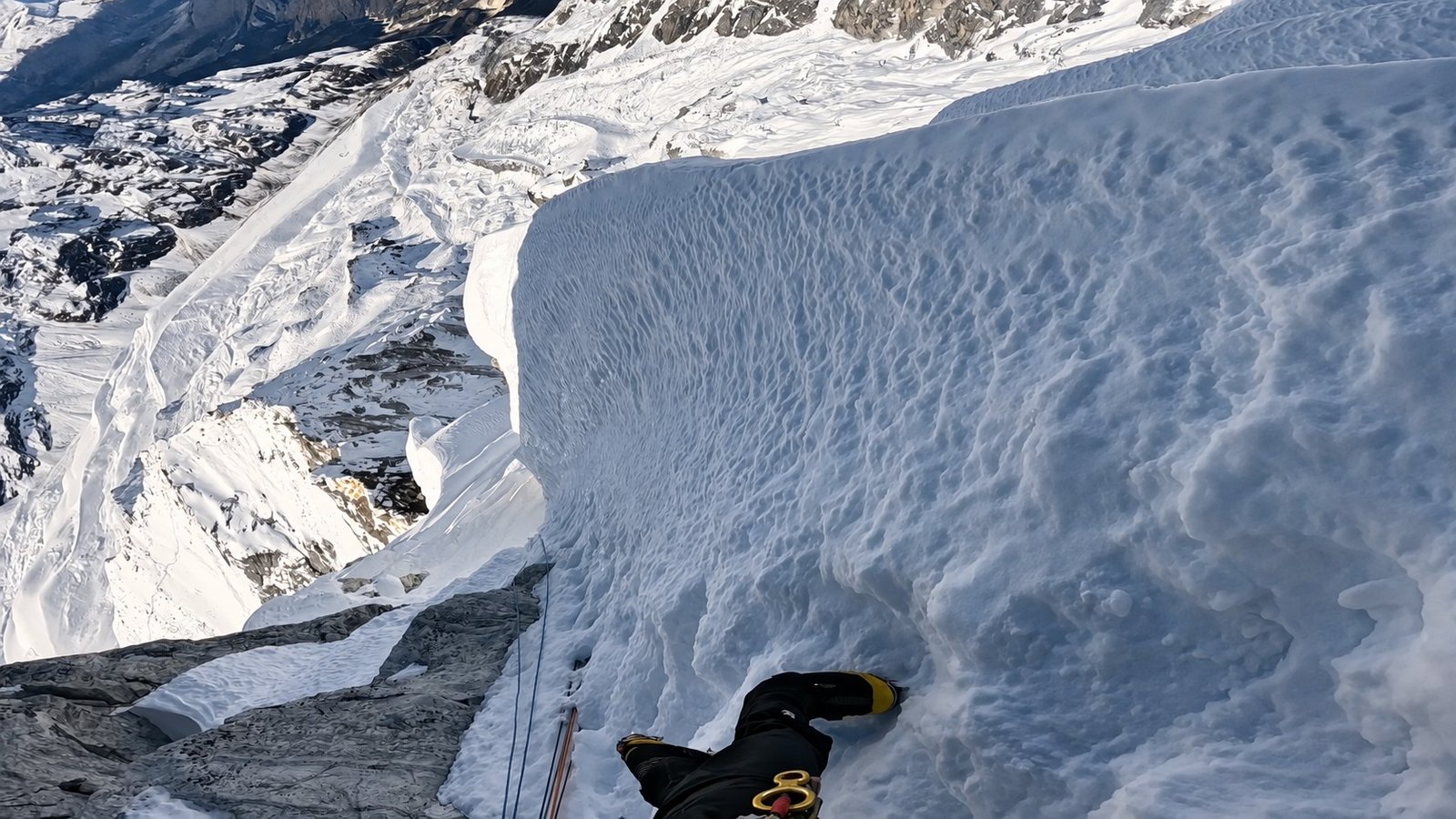
During the final push, climbers return through Camp 1 and Camp 2 and may use an upper camp, often described as Camp 2.7, depending on the route setup and conditions that season.
The exact camp strategy is intentionally flexible because snow, ice, fixed-line placement, weather and the condition of the mountain can change from one expedition to another.
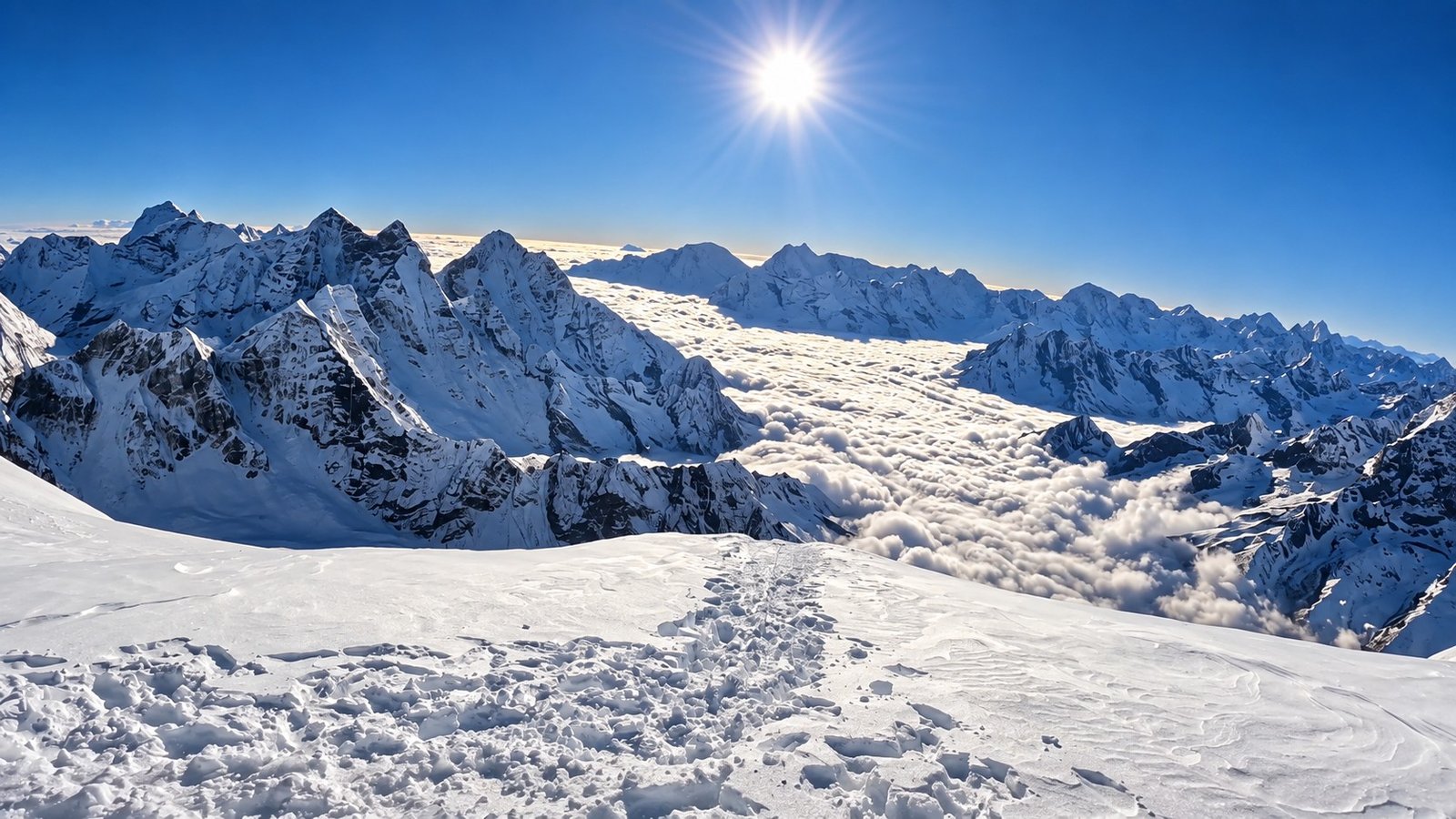
The summit climb continues through the upper mixed terrain and exposed ridge system before reaching steep snow slopes leading toward the top of Ama Dablam.
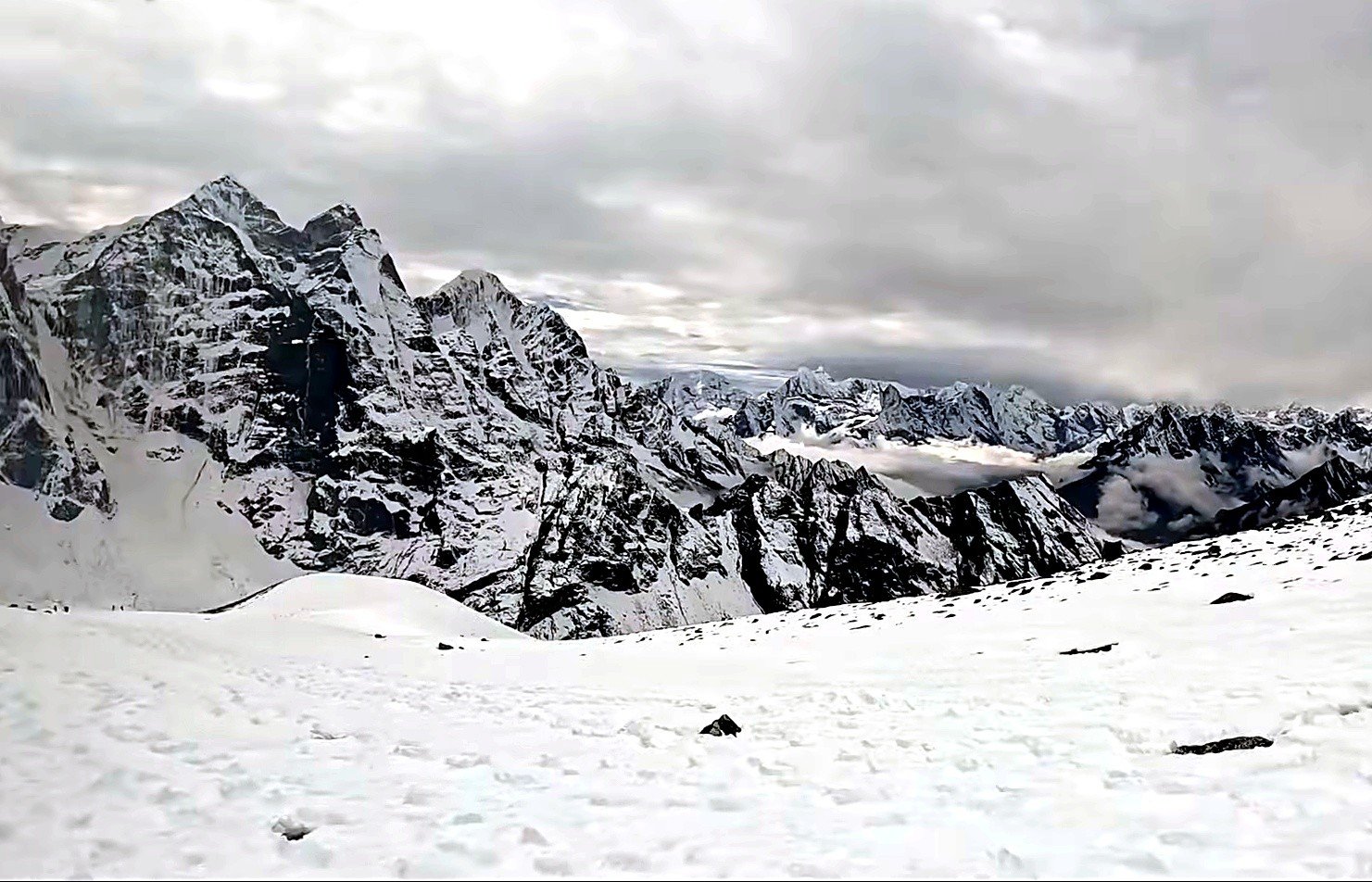
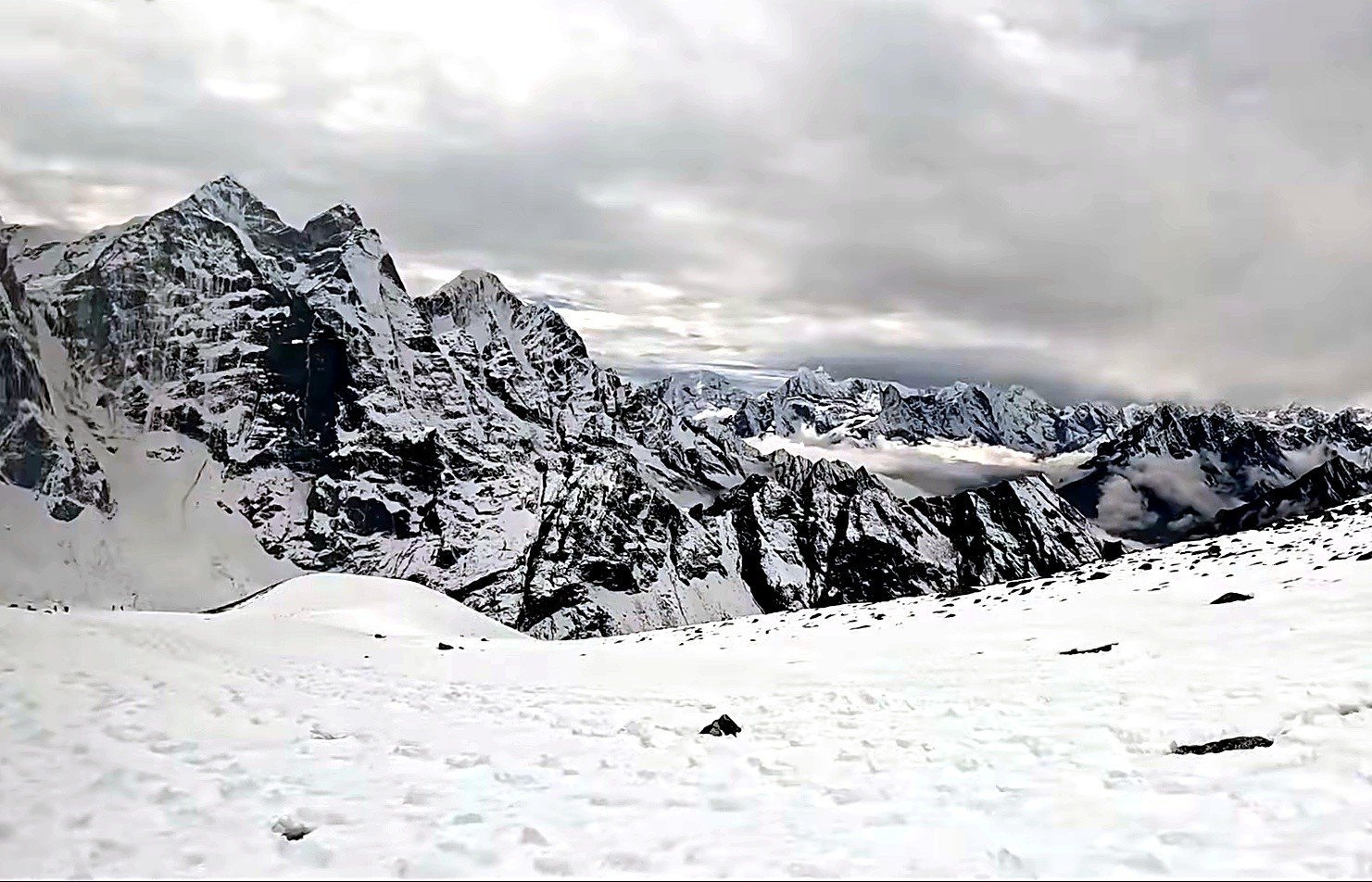
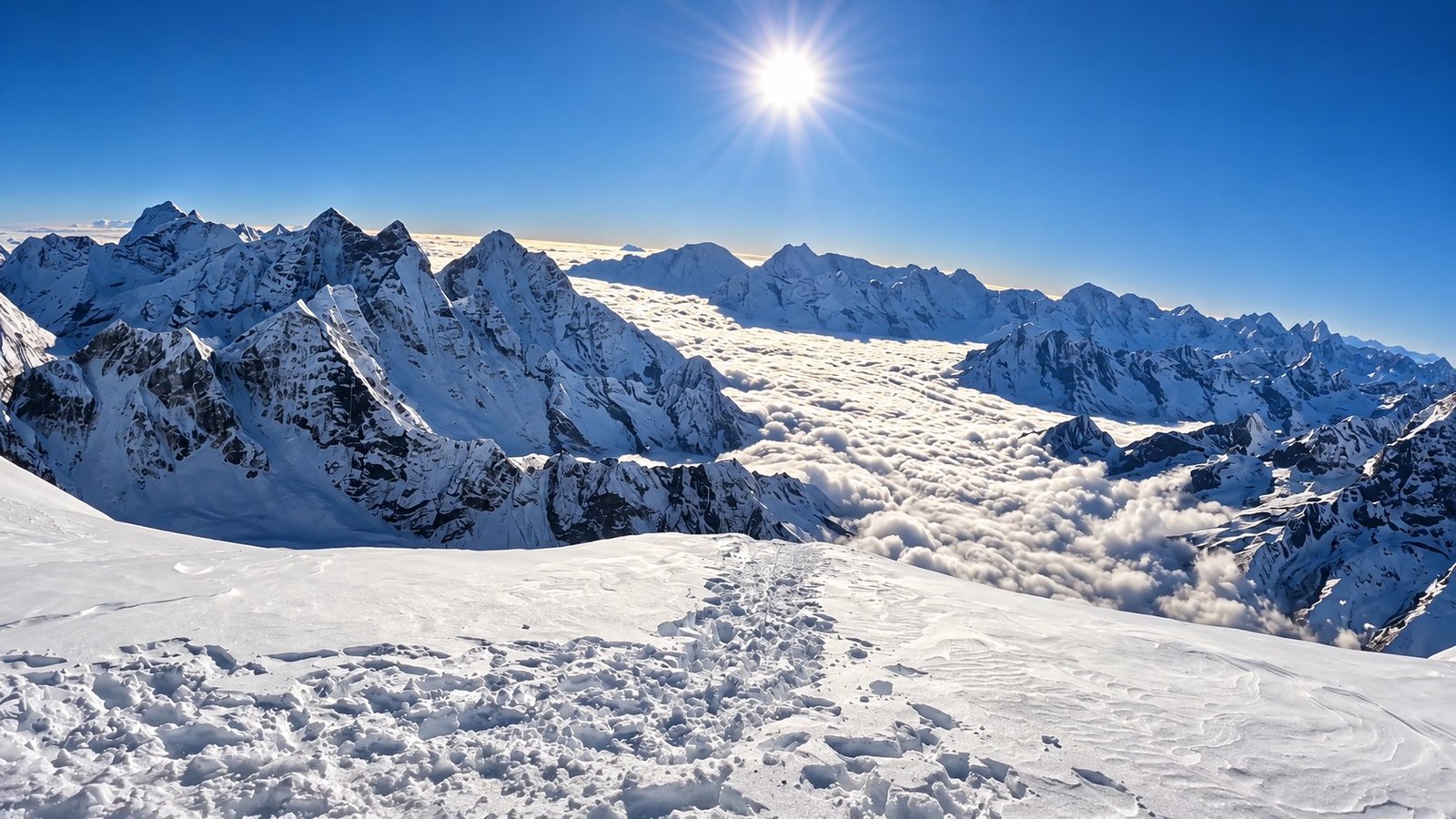
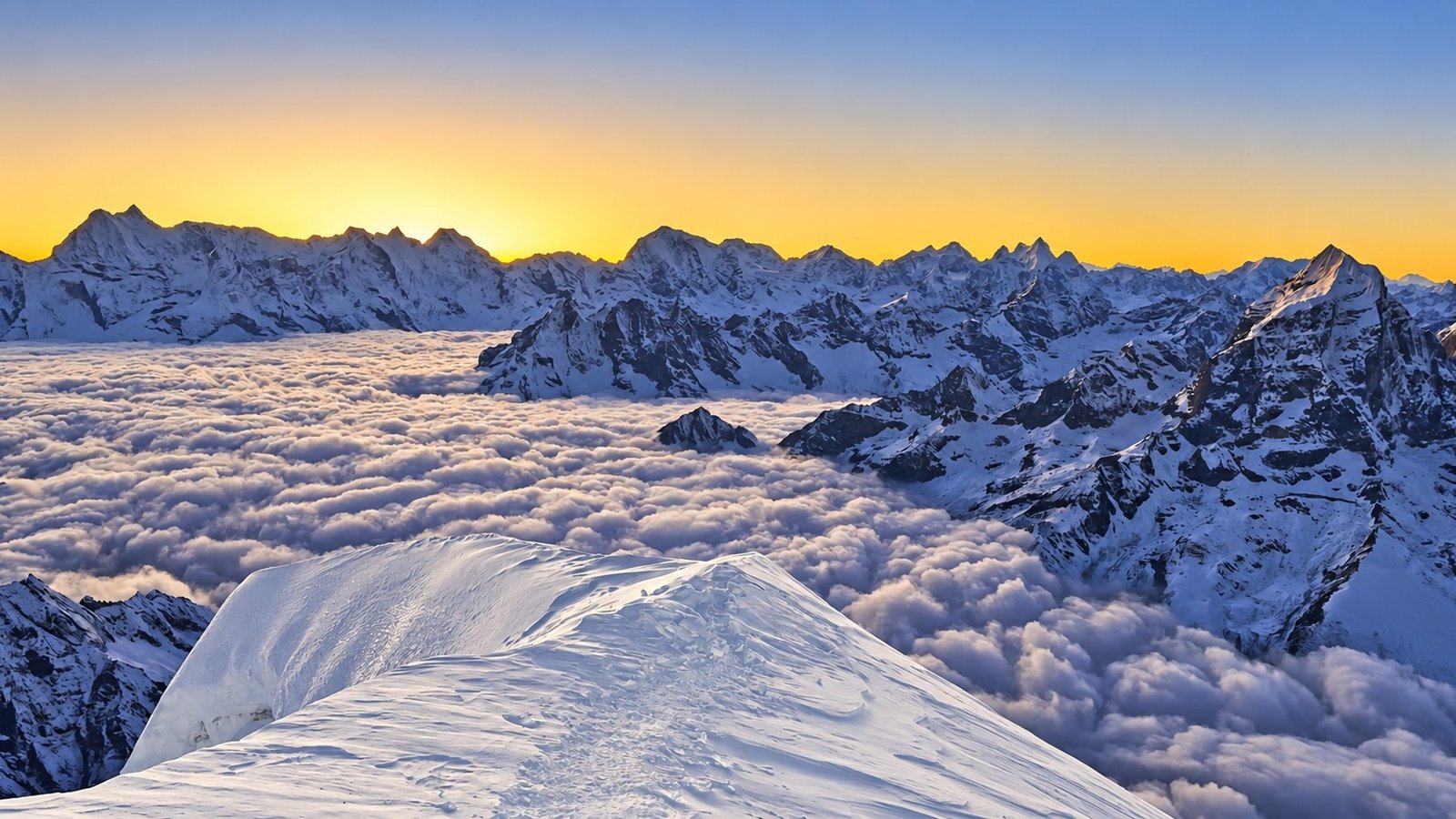
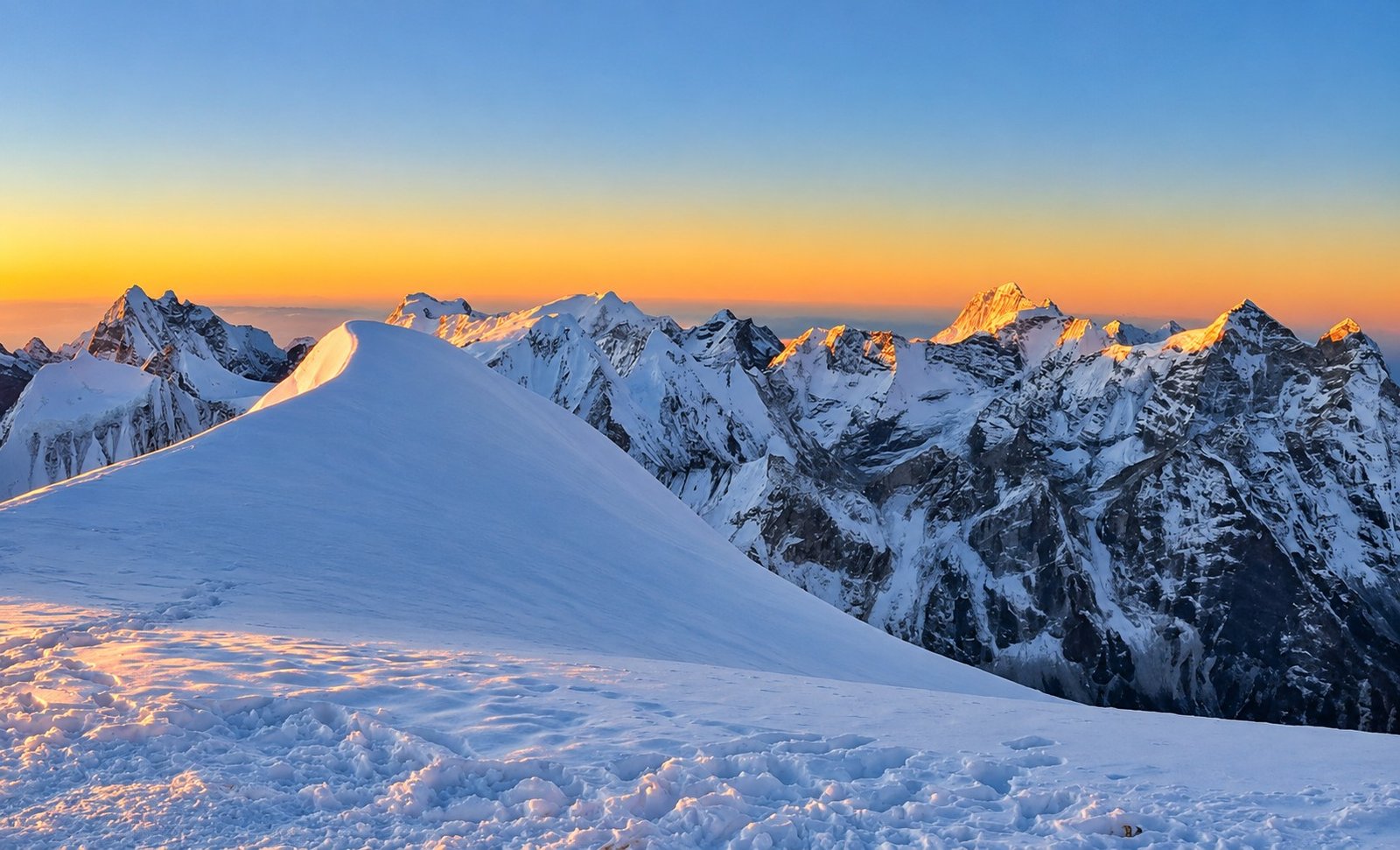
At 6,812 m, the summit stands above an extraordinary part of the Khumbu, with views toward Everest, Lhotse, Nuptse, Makalu and numerous surrounding Himalayan peaks when the weather is clear.
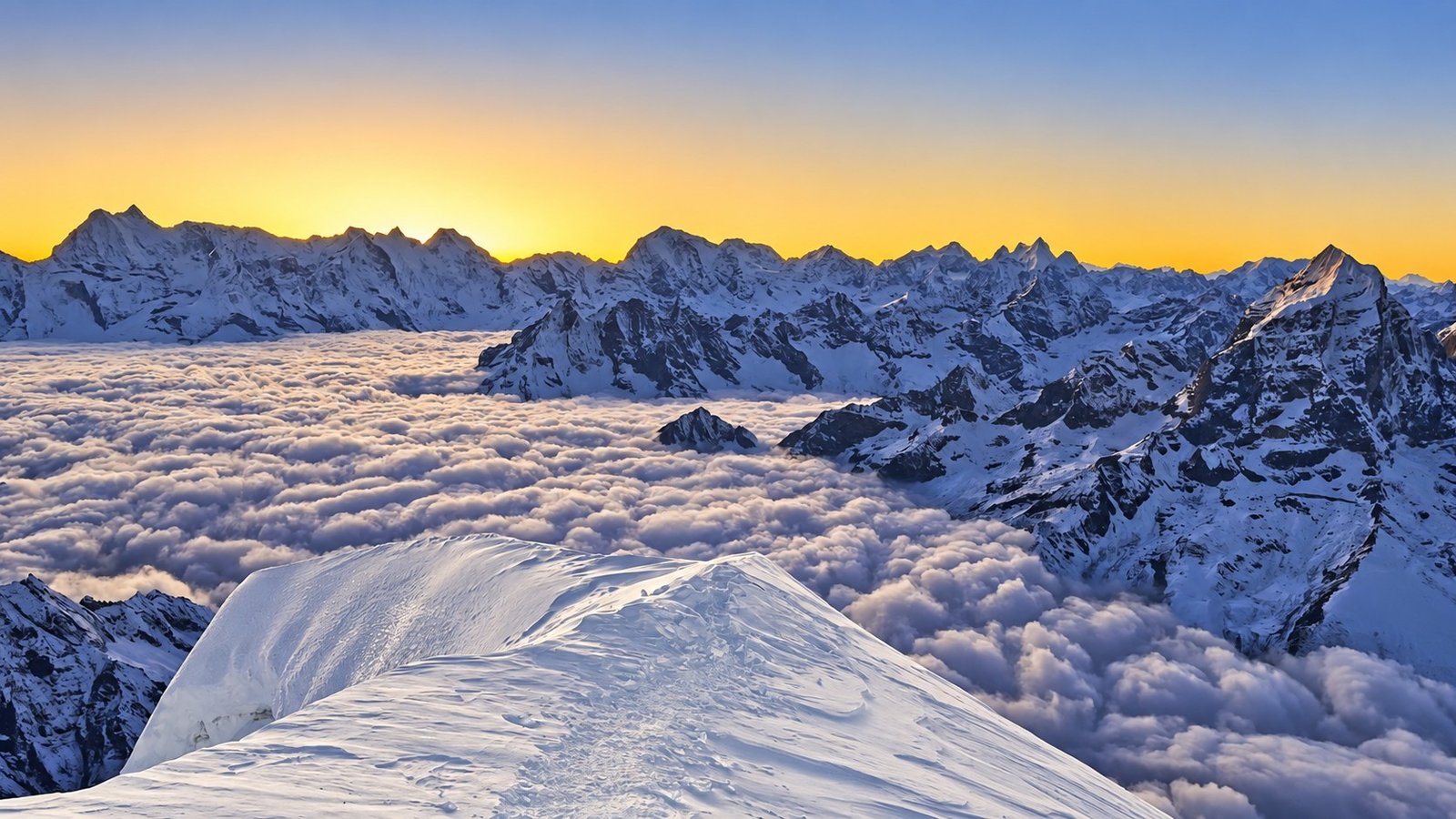
Reaching the summit is only half of the job. Climbers must still descend the same technical mountain while tired and operating at altitude.
For that reason, the expedition schedule includes recovery periods and contingency days rather than treating the summit as something that can be fixed to one guaranteed calendar date.
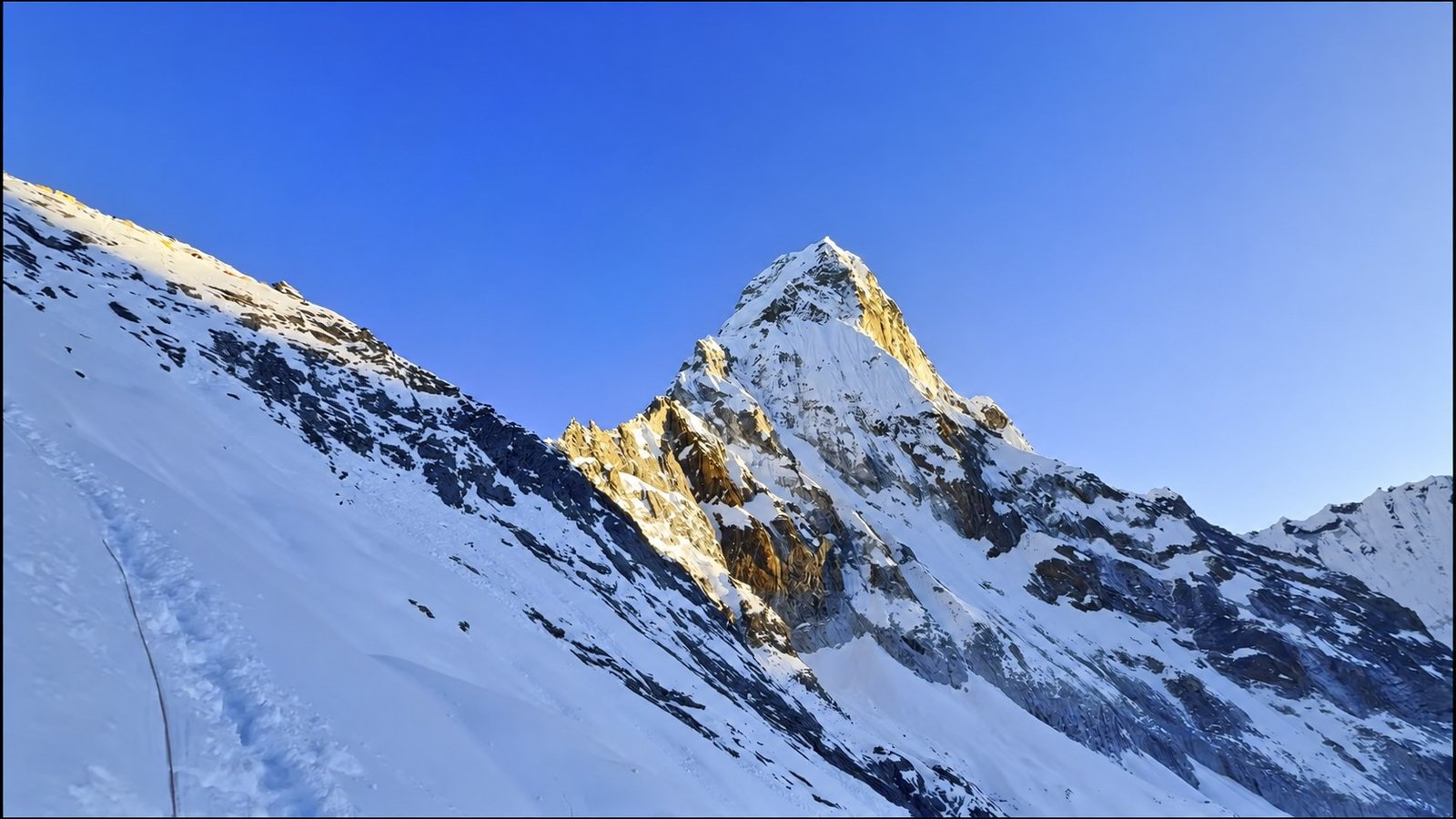
Ama Dablam is therefore best suited to climbers who already have mountaineering experience and want to progress onto a more technical Himalayan objective.
Strong trekking fitness alone is not enough. Previous experience with crampons, ice axe, fixed ropes, rappelling, steep rock and high-altitude climbing is highly recommended.
Ama Dablam Expedition Details
| Expedition Detail | Information |
|---|---|
| Mountain | Ama Dablam |
| Elevation | 6,812 m / 22,349 ft |
| Region | Khumbu, Everest Region, Nepal |
| Expedition Duration | 30 Days |
| Standard Route | Southwest Ridge |
| Base Camp | Approximately 4,600 m |
| Camp 1 | Approximately 5,750–5,800 m |
| Camp 2 | Approximately 5,950–6,000 m |
| Upper Camp | Camp 2.7 / Upper Camp around 6,250–6,300 m when used |
| Climbing Style | Technical Rock, Mixed Snow and Ice, Fixed Ropes and Exposed Ridge Climbing |
| Difficulty | Technical / Very Challenging |
| Main Climbing Seasons | Spring and Autumn |
| Start / End | Kathmandu / Kathmandu |
Ama Dablam Southwest Ridge Route
The Southwest Ridge is what gives Ama Dablam much of its reputation. The technical difficulty builds progressively rather than appearing only near the summit.
Climbers first move from Base Camp through rocky terrain toward Camp 1 before entering the more exposed climbing above.
| Route Section | Approx. Elevation | What to Expect |
|---|---|---|
| Ama Dablam Base Camp | ~4,600 m | Acclimatization, training, expedition preparation and recovery between rotations |
| Yak Camp | ~5,180 m | Useful acclimatization point on the long climb between Base Camp and Camp 1 |
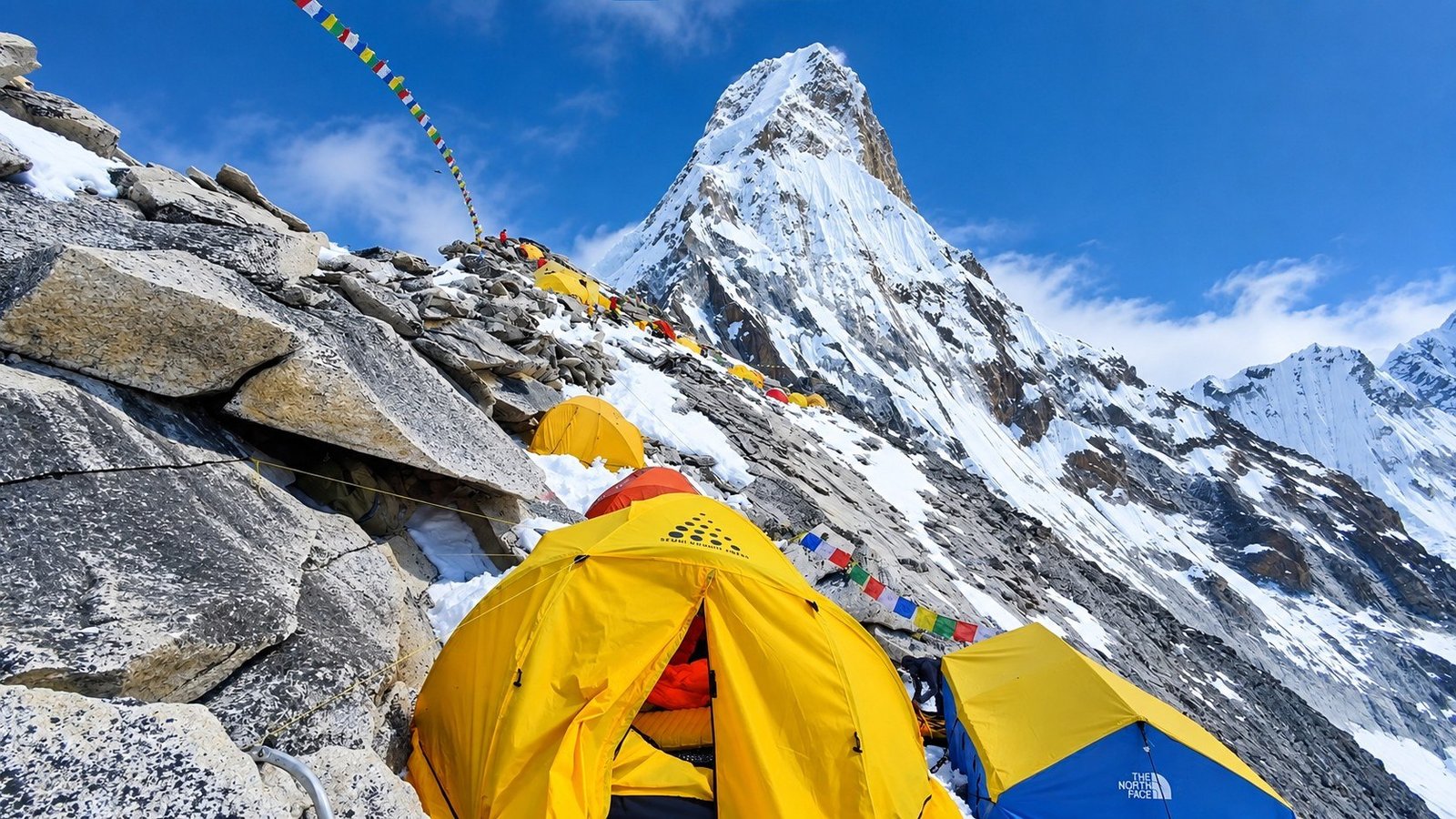
| Camp 1 | ~5,750–5,800 m | Exposed ridge terrain and the beginning of the main technical climbing |
| Yellow Tower | Between Camp 1 and Camp 2 | Steep rock climbing on fixed ropes and one of the best-known technical sections of the route |
| Camp 2 | ~5,950–6,000 m | Highly exposed camp reached after sustained technical ridge climbing |
| Grey Tower & Upper Ridge | Above Camp 2 | Steep mixed terrain, fixed lines and increasingly serious high-altitude climbing |
| Mushroom Ridge / Upper Camp | ~6,250–6,300 m | Exposed snow and ice terrain leading toward the upper summit slopes; camp use depends on the season |
| Summit | 6,812 m | Steep upper snow slopes and final ridge leading to the summit |
Who Should Attempt Ama Dablam?
Ama Dablam should not be marketed as a climber’s first experience with ropes and crampons.
The expedition is considerably more technical than the normal trekking peaks of Nepal.
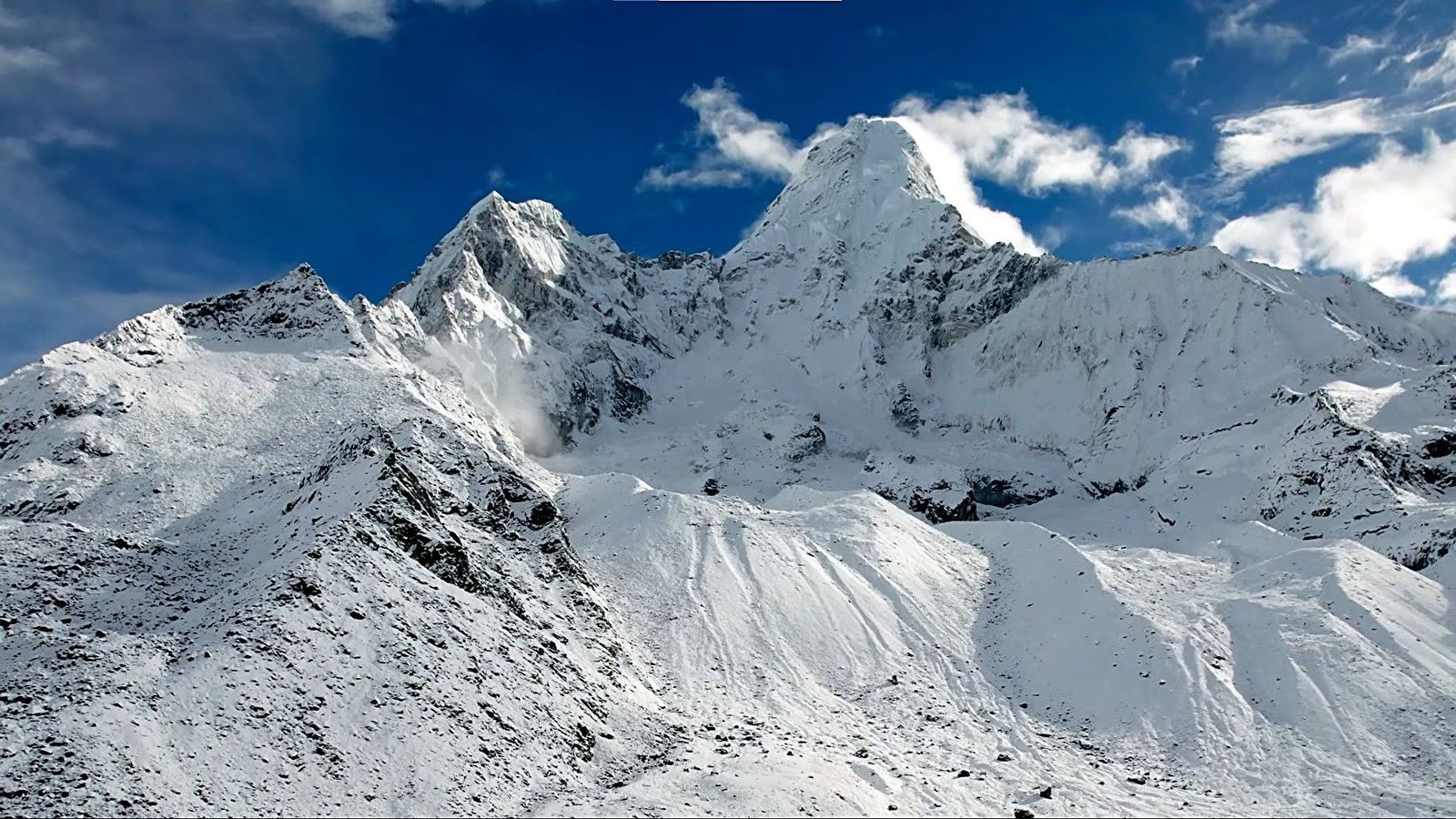
Climbers should already understand how to move efficiently in crampons, use an ice axe, ascend fixed lines with a Jumar or mechanical ascender, rappel independently and manage their safety system while moving through anchors.
Previous experience around or above 6,000 m is strongly beneficial. Technical climbing becomes much more demanding when the same movements must be completed while cold, tired and operating with substantially less oxygen than at sea level.
| Experience / Skill | Why It Matters on Ama Dablam |
|---|---|
| Crampon Technique | Required for efficient movement on steep snow, ice and mixed terrain |
| Fixed-Rope Experience | Essential throughout the technical sections of the Southwest Ridge |
| Jumar / Ascender Use | Climbers need to move efficiently upward on fixed lines without wasting energy |
| Rappelling | The technical descent requires controlled and confident use of rappel systems |
| Rock / Mixed Climbing | Important for the Yellow Tower, upper ridge and other exposed technical sections |
| High-Altitude Experience | Helps climbers understand how their body and decision-making change above 5,000–6,000 m |
| Strong Endurance | Needed for long climbing days while carrying personal equipment at altitude |
Acclimatization and Summit Strategy
The approach through the Khumbu provides the first stage of acclimatization, but arriving at Base Camp does not mean the team is ready for the summit.
The first days at Base Camp are used for rest, technical practice and a traditional climbing puja.

Climbers then move progressively higher, first toward Yak Camp and later onto Camp 1 and the ridge toward Camp 2.
After completing the main acclimatization rotation, the team returns to Base Camp. Sleeping lower, eating properly and recovering before the summit push is as important as the climbing itself.
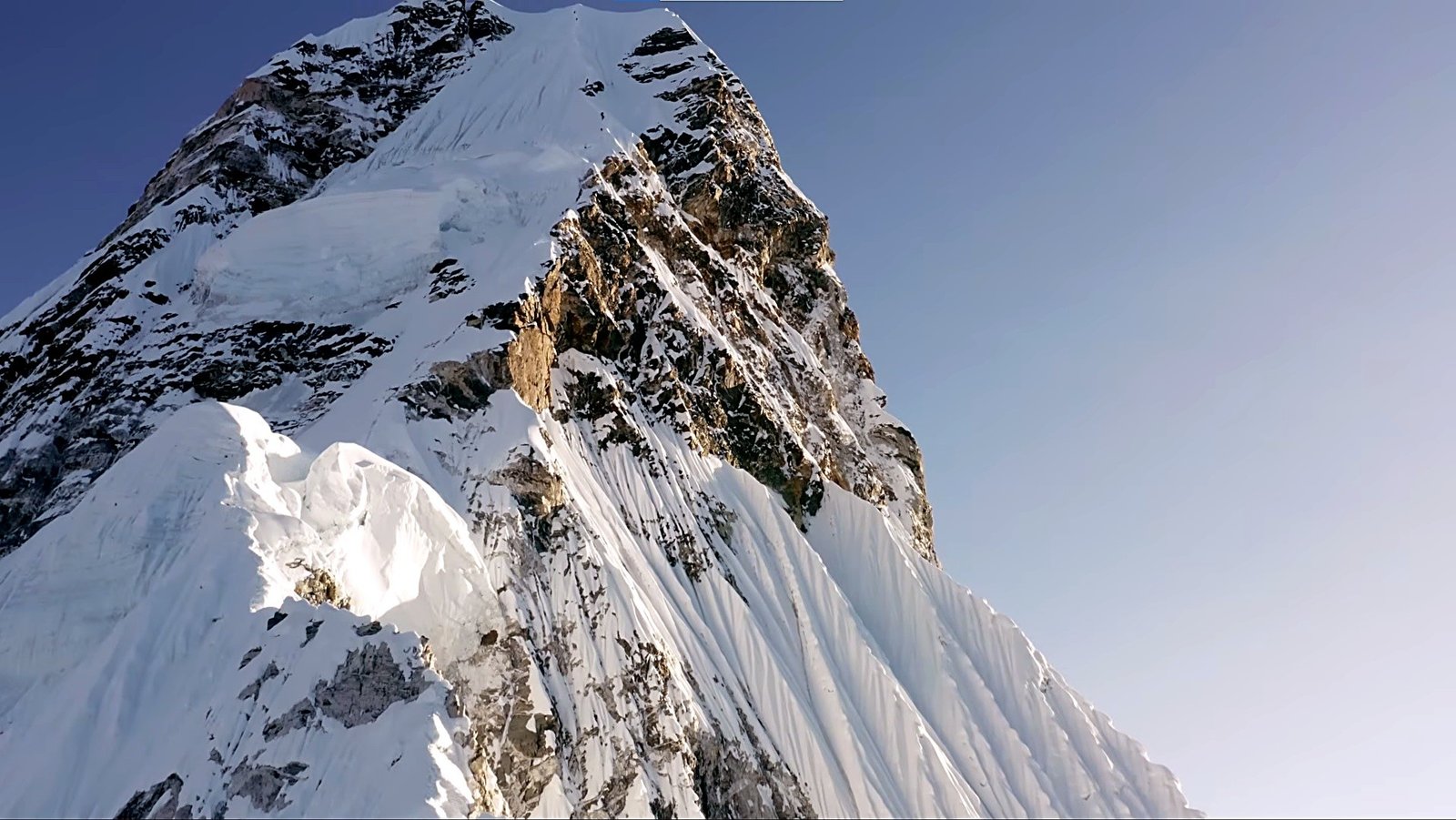
The final rotation is timed around a suitable weather and route window rather than a guaranteed summit date.
A planned sequence may use Camp 1, Camp 2 and an upper Camp 2.7 position before summit day, but the expedition leader can change this strategy according to conditions.
Best Season for the Ama Dablam Expedition
Autumn and spring are the principal Ama Dablam climbing seasons. Autumn, particularly October and November, is especially popular because the monsoon has normally withdrawn and the Khumbu often experiences colder, drier conditions.
Spring, particularly April and May, is the other major climbing window.
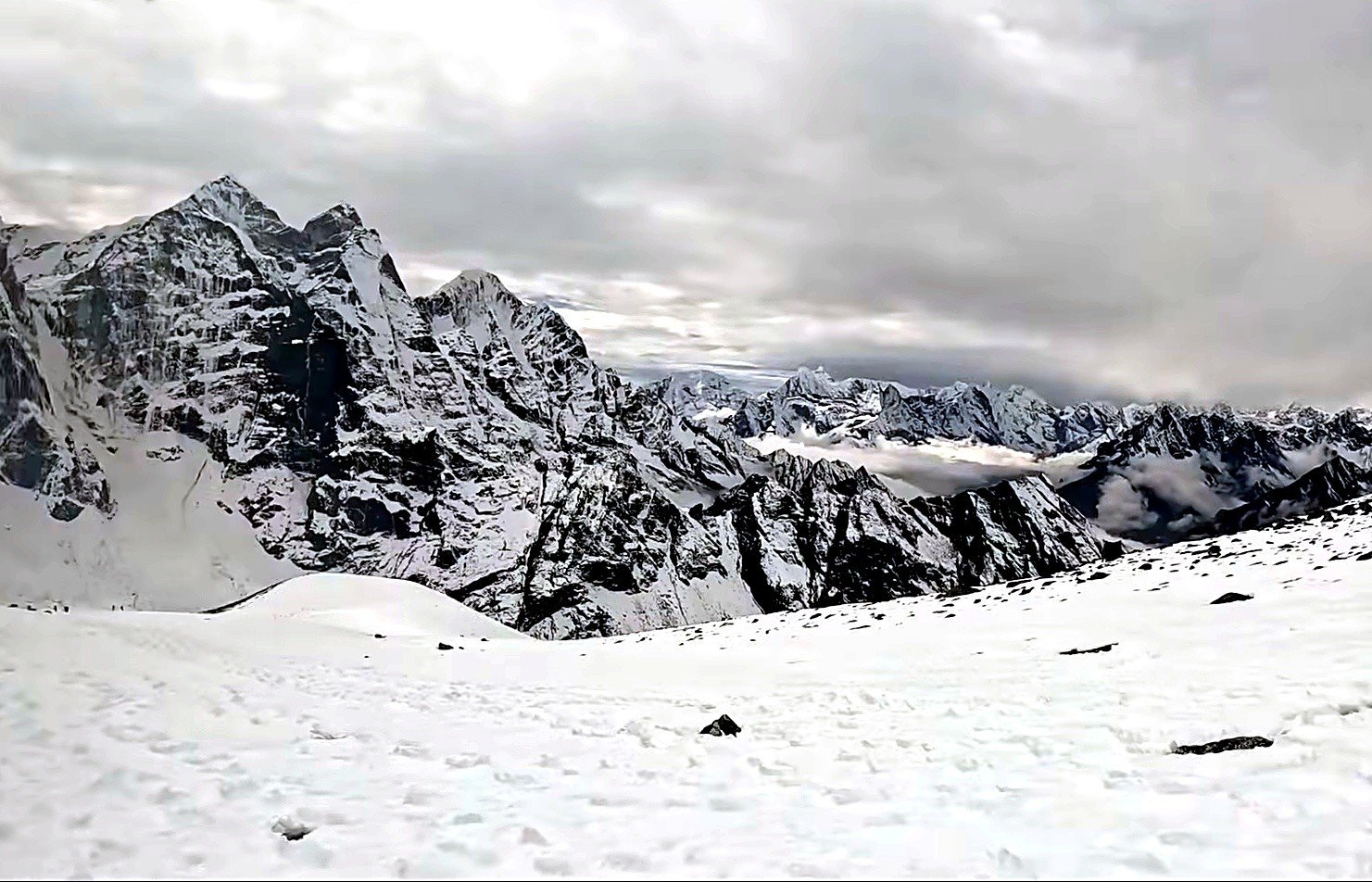
Temperatures gradually become warmer as the season progresses, although snow, wind and route conditions still determine whether individual climbing days are suitable.
Even during the main season, the weather window cannot be guaranteed. High winds, snowfall, changing ice conditions or problems on the fixed-line route can all delay the summit push.
Ama Dablam Permits and Current Government Charges
Ama Dablam is a regulated expedition mountain rather than an NMA trekking peak. Nepal Royal Tourism Holiday coordinates the applicable expedition permit and supporting documentation according to the regulations in effect for the climbing season.
| Government / Local Requirement | Current Published Rate | Notes |
|---|---|---|
| Ama Dablam Royalty – Spring | USD 1,000 per foreign climber | Current Department of Tourism rate |
| Ama Dablam Royalty – Autumn | USD 1,000 per foreign climber | Current Department of Tourism rate |
| Winter / Summer Royalty | USD 500 per foreign climber | Lower seasonal royalty |
| Garbage Management Deposit | USD 2,000 per expedition team | Team-level deposit rather than a per-person royalty |
| Sagarmatha National Park | NPR 3,000 per foreign visitor | Required for the Khumbu approach |
| Khumbu Trek-Card / Local Tourism Fee | NPR 3,000 other foreign nationals / NPR 2,000 SAARC and China | Current Khumbu Pasang Lhamu Rural Municipality rate |
Important: Government fees, documentation procedures and local charges can change. The applicable amount is reconfirmed when Nepal Royal Tourism Holiday processes the expedition documents.
Expedition Support on the Mountain
Ama Dablam requires considerably more logistical support than a normal trekking package. The expedition needs a functioning Base Camp, high-altitude camp systems, climbing staff, route coordination, communications and weather information.
| Expedition Support | Typical Arrangement |
|---|---|
| Climbing Leadership | Experienced expedition and high-altitude climbing team coordinating the route and climbing decisions |
| Climbing Sherpa Support | High-altitude Sherpa assistance according to the climber-to-Sherpa arrangement in the package |
| Base Camp | Sleeping tents, dining tent, kitchen, toilet facilities and expedition camp infrastructure |
| High Camps | High-altitude tents and group equipment positioned according to the climbing strategy |
| Fixed-Line System | Fixed ropes on the technical route according to the current seasonal setup |
| Communication | Radio and/or satellite communication for expedition coordination and emergency use |
| Weather Monitoring | Forecast monitoring to help identify suitable rotation and summit windows |
Technical Climbing Gear for Ama Dablam
Ama Dablam requires considerably more equipment than a normal trekking or introductory peak-climbing trip.
Climbers should arrive with technical gear they already know how to use rather than relying on unfamiliar equipment for the first time at Base Camp.
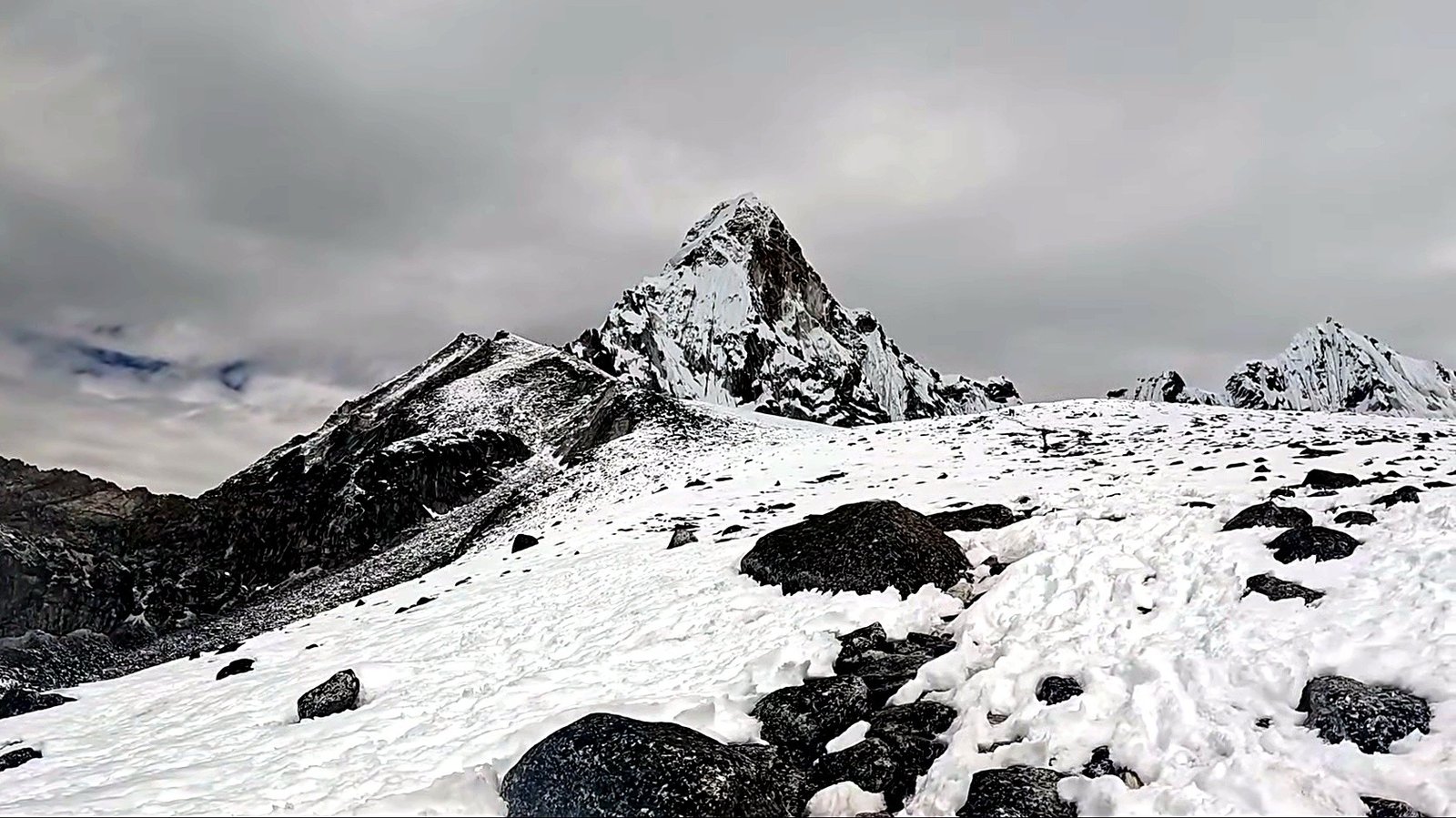
All personal climbing equipment should be checked before leaving Kathmandu.
Boots must work properly with the selected crampons, the harness should fit comfortably over expedition clothing, and ascender and rappel systems should be familiar before moving onto the Southwest Ridge.
| Climbing Gear | Recommended Equipment |
|---|---|
| Climbing Harness | Adjustable mountaineering harness that can be worn comfortably over high-altitude layers |
| Climbing Helmet | Lightweight certified climbing helmet suitable for rock, ice and mixed climbing |
| Mechanical Ascender / Jumar | Reliable ascender compatible with the fixed-rope system and familiar to the climber |
| Belay / Rappel Device | Belay and rappel device suitable for controlled fixed-line descents |
| Carabiners | Several locking carabiners together with appropriate non-locking carabiners |
| Slings and Safety Cord | Personal slings, safety lanyard, prusik cord and accessory cord according to the climbing system |
| Ice Axe | Technical or general mountaineering ice axe appropriate for steep snow and mixed terrain |
| Crampons | 12-point steel mountaineering crampons compatible with the climber’s high-altitude boots |
| Mountaineering Boots | Insulated high-altitude mountaineering boots suitable for climbing above 6,000 m |
| Gaiters | Compatible gaiters where they are not integrated into the selected mountaineering boots |
Ama Dablam Personal Packing List
Technical hardware is only one part of the equipment needed for Ama Dablam.
Climbers also need a layering system that works from the relatively mild Khumbu approach to exposed high camps where temperatures can fall well below freezing.
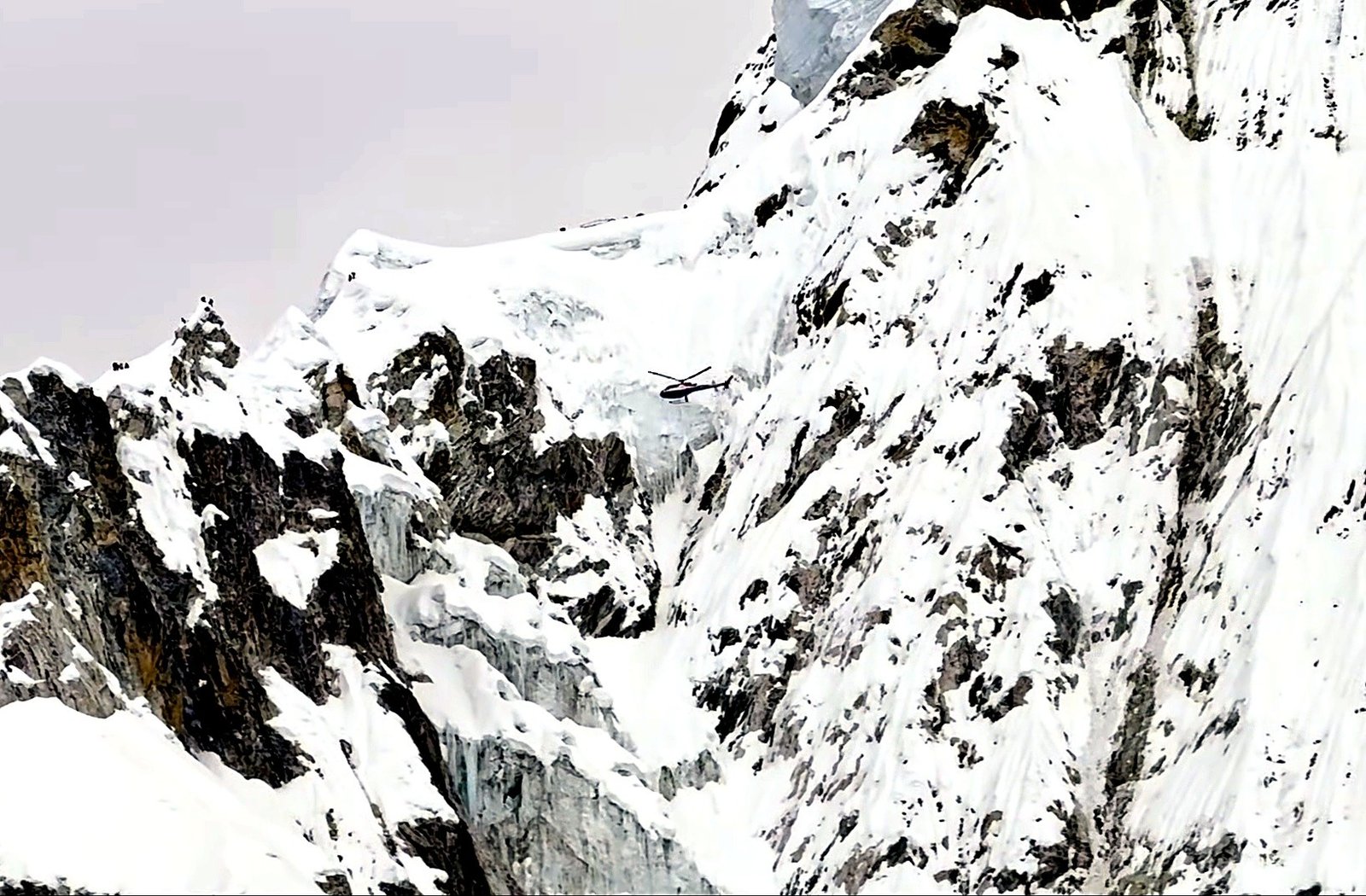
The list below is intended as a practical expedition checklist. Exact quantities and specifications can be adjusted during the pre-expedition gear check according to the climbing season and individual equipment system.
| Category | Personal Packing List |
|---|---|
| Base Layers | Moisture-wicking thermal tops and bottoms for trekking, Base Camp and high-altitude use |
| Mid Layers | Fleece jacket, insulated mid-layer and/or technical softshell suitable for active climbing |
| Outer Shell | Waterproof and windproof shell jacket with compatible shell trousers |
| High-Altitude Insulation | Expedition-grade down parka or suitable high-altitude down system, plus insulated trousers where required |
| Trekking Clothing | Trekking shirts, trekking trousers, lightweight insulation and comfortable clothing for the Khumbu approach |
| Head Protection | Warm hat, balaclava or face protection, sun hat and neck protection |
| Eye Protection | Category-appropriate glacier glasses and ski or expedition goggles for wind, snow and poor visibility |
| Hands | Liner gloves, technical climbing gloves, insulated gloves and high-altitude mittens |
| Trekking Footwear | Comfortable trekking boots or shoes for the approach and insulated camp footwear for Base Camp |
| Socks | Trekking socks, heavyweight mountaineering socks and spare dry pairs for the high camps |
| Sleeping System | Expedition sleeping bag suitable for severe cold, sleeping-bag liner if preferred and personal sleeping pad where required |
| Climbing Pack | Approximately 40–55 L technical climbing pack suitable for carrying personal equipment above Base Camp |
| Duffel / Expedition Bag | Durable expedition duffel for porter, yak and Base Camp transport |
| Hydration | Two wide-mouth insulated bottles, insulated bottle covers, thermos flask and personal water-treatment method where required |
| Headlamp | Powerful headlamp suitable for summit climbing with spare batteries stored warm |
| Electronics | Power bank, charging cables, spare batteries and cold-protected electronics as needed |
| Sun Protection | High-SPF sunscreen, lip balm with sun protection and protective face covering |
| Personal Medical Kit | Personal prescription medication, blister treatment, basic first-aid supplies and any medication advised by your doctor |
| Personal Items | Toiletries, quick-dry towel, hand sanitizer, wet wipes and other lightweight personal necessities |
Gear Check: Climbers should bring their expedition equipment to Kathmandu with enough time for a complete gear check. Any rental or replacement equipment required in Nepal should be arranged before flying into the Khumbu.
Group Expedition Equipment and Camp Systems
The personal packing list should be kept separate from group expedition equipment.
Climbers are responsible for their own technical and personal gear, while the expedition team arranges the shared systems required to operate Base Camp and the high camps according to the confirmed service package.
| Expedition System | Typical Group Arrangement |
|---|---|
| Base Camp Sleeping Tents | Expedition sleeping tents with appropriate camp setup for the Base Camp period |
| Dining and Kitchen | Dining tent, kitchen tent, cooking equipment, tables, chairs and common Base Camp furniture |
| Sanitation | Toilet arrangements and basic washing or shower facilities according to the Base Camp setup |
| High-Altitude Tents | Technical high-camp tents positioned at Camp 1, Camp 2 and the upper camp when required by the expedition strategy |
| Fixed-Rope System | Fixed-line arrangements used on the technical sections of the Southwest Ridge according to the route setup for the season |
| High-Camp Cooking Equipment | Stoves, fuel and essential cooking equipment used during the high-altitude climbing rotations |
| High-Altitude Food | Expedition rations and appropriate food for Camp 1, Camp 2 and upper-mountain climbing days |
| Communication | Radio communication and/or satellite communication used for expedition coordination and emergencies |
| Emergency Equipment | Shared emergency and first-aid equipment maintained by the expedition team according to the operational plan |
| Climbing Sherpa Support | High-altitude load carrying, camp support and climbing assistance according to the confirmed Sherpa-to-climber arrangement |
| Load Transportation | Porter and/or yak transport for expedition loads between the approach trail and Base Camp according to the logistics plan |
Important: Personal climbing equipment and group expedition equipment should not be confused. The exact items supplied by Nepal Royal Tourism Holiday are confirmed in the final expedition inclusion list, while climbers are given a separate personal gear checklist before departure.
Travel Insurance and Emergency Planning
A normal trekking insurance policy is not sufficient for an Ama Dablam expedition. Climbers should arrange a policy that specifically covers technical mountaineering at least to 6,812 m, together with emergency medical treatment and helicopter evacuation where medically necessary.
Read the policy wording carefully. Some policies advertise trekking at altitude while excluding technical climbing, ropes or mountaineering equipment.
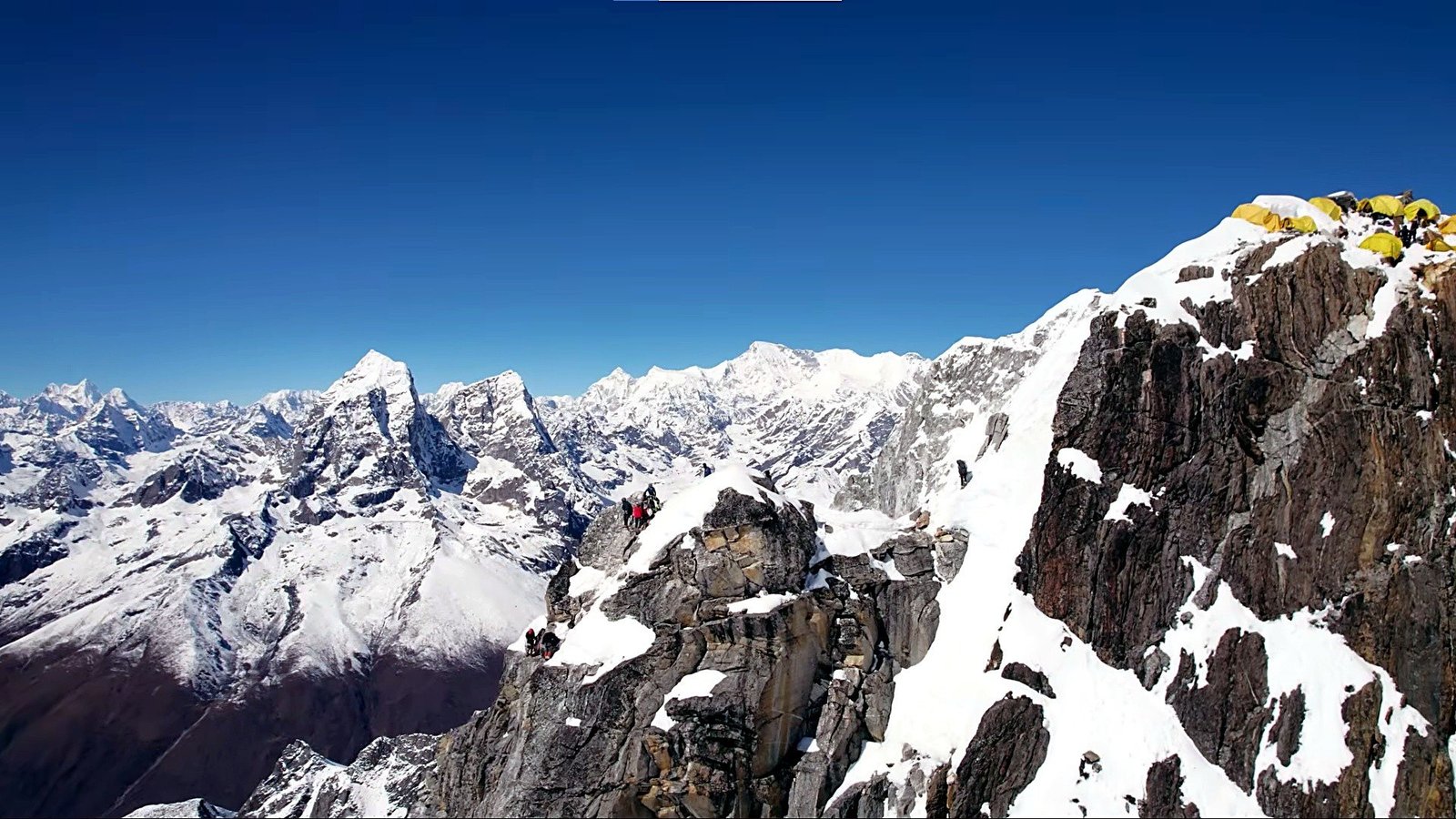
Emergency decisions are made according to the climber’s condition and the situation on the mountain.
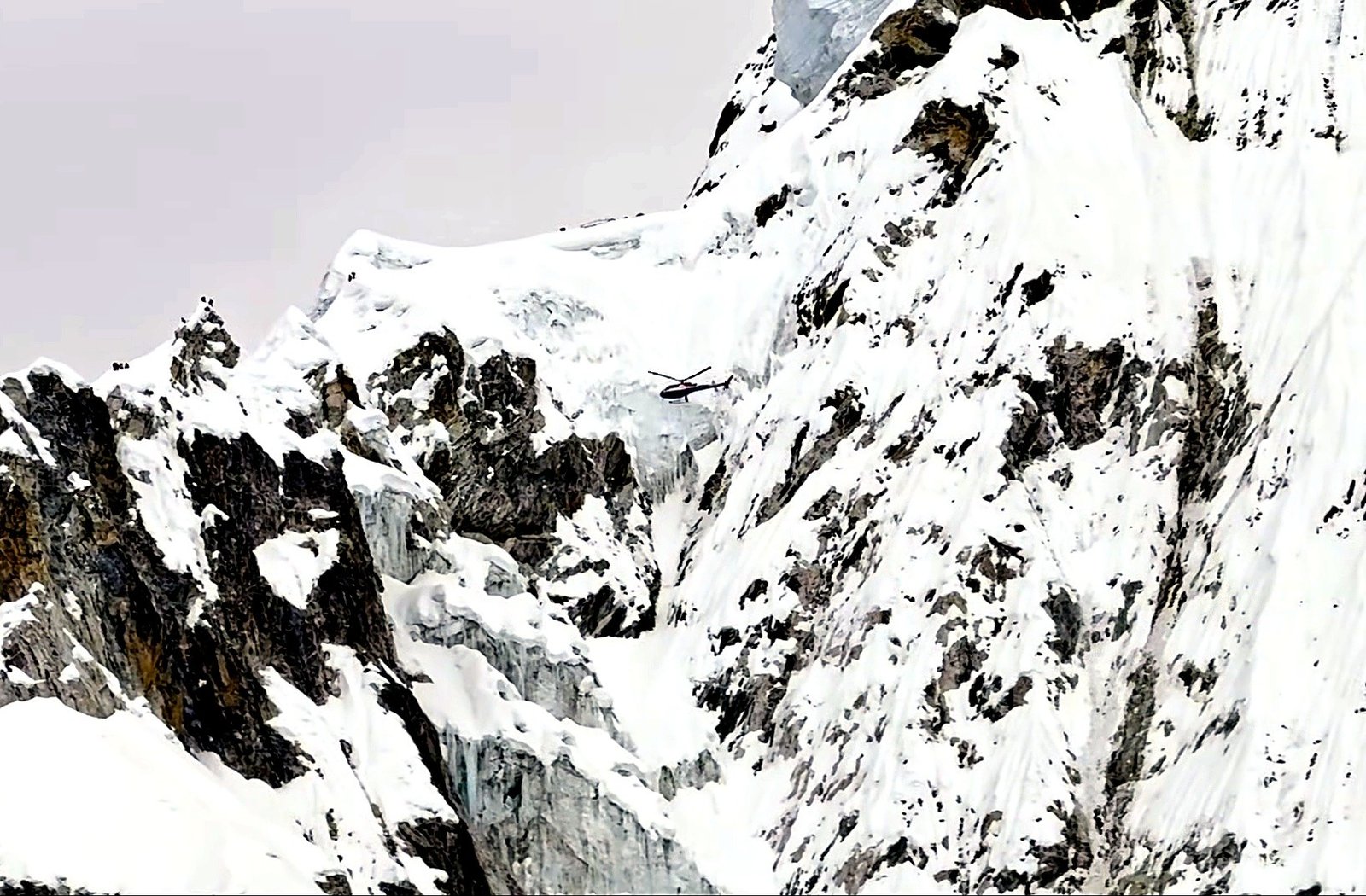
A descent may be required before any helicopter evacuation is possible, and aircraft operations remain dependent on weather, landing conditions and availability.
Plan Your Ama Dablam Expedition
Ama Dablam is a technical expedition rather than an introductory peak climb. Tell Nepal Royal Tourism Holiday about your previous climbing experience, preferred season and expedition expectations so our team can discuss the appropriate climbing arrangement with you.
Our expedition planning covers the Khumbu approach, permits, Base Camp logistics, climbing support, high camps and summit-window preparation, with the final mountain strategy adjusted according to conditions.
Contact us with your preferred expedition date, climbing history and group size for the current expedition arrangement and quotation.
Trip Highlights
- Attempt the 6,812 m Ama Dablam through the classic Southwest Ridge, one of the most technical and recognizable climbing routes in the Khumbu
- Approach the mountain through Phakding, Namche Bazaar, Tengboche and Pangboche while gradually acclimatizing through the Everest region
- Establish expedition life at Ama Dablam Base Camp around 4,600 m beneath the mountain's dramatic Southwest Ridge
- Complete practical technical training covering fixed ropes, Jumar use, rappelling, crampon movement and high-altitude rope transitions
- Use structured acclimatization rotations toward Yak Camp, Camp 1 and Camp 2 before committing to the summit push
- Climb the famous Yellow Tower between Camp 1 and Camp 2, one of the defining technical rock sections of Ama Dablam
- Continue above Camp 2 through the Grey Tower, Mushroom Ridge and exposed mixed terrain of the upper mountain
- Use an upper Camp 2.7 position when required by the expedition strategy rather than relying on one fixed Camp 3 arrangement
- Attempt the 6,812 m summit with possible views toward Everest, Lhotse, Nuptse, Makalu and the wider Khumbu Himalaya
- Keep dedicated contingency days available for weather, route conditions, acclimatization and changes to the summit window
- Climb with expedition logistics, high-altitude support, Base Camp infrastructure and technical mountain systems designed for Ama Dablam
- - Return through Pangboche, Namche and Lukla after completing the climbing phase rather than rushing directly out of the mountains
Ama Dablam Expedition – 30 Days ~ Itinerary
Day 1
Arrival in Kathmandu
- Maximum Altitude: Kathmandu – 1,350 m
- Overnight Altitude: Kathmandu – 1,350 m
- Accommodation: Standard Three Star Hotel in Thamel
Welcome to Nepal. A Nepal Royal Tourism Holiday representative will meet you at Tribhuvan International Airport and transfer you to your hotel in Thamel.
The first day is deliberately easy after the international journey. Once you have settled in, you will meet the expedition team and receive an initial introduction to the 30-day program. This is also a good opportunity to discuss personal equipment, previous climbing experience and any practical questions before the formal expedition preparation begins.
Day 2
Expedition Briefing, Gear Check and Permit Preparation
- Maximum Altitude: Kathmandu – 1,350 m
- Overnight Altitude: Kathmandu – 1,350 m
- Meal: Breakfast
- Accommodation: Standard Three Star Hotel in Thamel
Today is reserved for the practical preparation required before leaving Kathmandu. The expedition team reviews the climbing route, acclimatization strategy, high-camp plan, communication procedures and the general schedule for the weeks ahead.
Your personal mountaineering equipment is checked carefully. High-altitude boots, crampons, harness, helmet, ascender, rappel device, technical clothing and sleeping equipment should all be confirmed before departure. Any missing or unsuitable gear can be dealt with in Kathmandu before the team flies into the Everest region.
Day 3
Fly to Lukla and Trek to Phakding
- Maximum Altitude: Lukla – 2,840 m
- Overnight Altitude: Phakding – 2,610 m
- Flight Duration: Around 30 to 35 minutes from Kathmandu or approximately 15 to 20 minutes from Ramechhap
- Trek Duration: 3 to 4 hours
- Trek Distance: Approximately 7 to 8 km
- Meal: Breakfast, Lunch and Dinner
- Accommodation: Teahouse in Phakding
Take the mountain flight toward Lukla and land at Tenzing-Hillary Airport. During busy trekking seasons, Lukla flights may operate through Manthali Airport in Ramechhap, depending on the airline schedule and aviation arrangements.
From Lukla, begin the expedition approach with a relatively gentle walk through Sherpa settlements and along the Dudh Koshi Valley. The shorter first trekking day allows the body to start adapting gradually after the rapid gain in altitude.
Day 4
Trek from Phakding to Namche Bazaar
- Maximum Altitude: Namche Bazaar – 3,440 m
- Overnight Altitude: Namche Bazaar – 3,440 m
- Trek Duration: 5 to 7 hours
- Trek Distance: Approximately 10 to 11 km
- Meal: Breakfast, Lunch and Dinner
- Accommodation: Teahouse in Namche Bazaar
You continue along the Dudh Koshi Valley through forests and small settlements, crossing several suspension bridges before entering Sagarmatha National Park.
The final section involves a sustained climb toward Namche Bazaar. At 3,440 m, Namche becomes the expedition’s first important acclimatization base and provides a chance to recover before continuing higher into the Khumbu.
Day 5
Acclimatization Day in Namche Bazaar
- Maximum Altitude: Everest View Hotel Area – approximately 3,880 m
- Overnight Altitude: Namche Bazaar – 3,440 m
- Hike Duration: Approximately 3 to 5 hours
- Hike Distance: Approximately 4 to 7 km depending on route
- Meal: Breakfast, Lunch and Dinner
- Accommodation: Teahouse in Namche Bazaar
Spend the day acclimatizing with a hike above Namche rather than remaining at the same elevation all day. A common route climbs toward the Everest View Hotel area and may continue toward Khumjung before returning to Namche.
The hike provides useful exposure close to 3,900 m while allowing you to sleep lower again in Namche. On a clear day, the surrounding viewpoints can provide early views of Everest, Lhotse, Nuptse, Thamserku and Ama Dablam.
Day 6
Trek from Namche Bazaar to Tengboche
- Maximum Altitude: Tengboche – approximately 3,860 m
- Overnight Altitude: Tengboche – approximately 3,860 m
- Trek Duration: 5 to 6 hours
- Trek Distance: Approximately 9.5 to 10 km
- Meal: Breakfast, Lunch and Dinner
- Accommodation: Teahouse in Tengboche
Leave Namche and follow the trail high above the Dudh Koshi before descending toward Phunki Tenga. From the river, climb steadily through forest toward Tengboche.
Ama Dablam becomes increasingly prominent during the day. Tengboche is also home to one of the Khumbu’s most important Buddhist monasteries and provides one of the classic views of the mountain’s Southwest Ridge.
Day 7
Trek from Tengboche to Pangboche
- Maximum Altitude: Pangboche – approximately 3,930 m
- Overnight Altitude: Pangboche – approximately 3,930 m
- Trek Duration: 3 to 4 hours
- Trek Distance: Approximately 6 km
- Meal: Breakfast, Lunch and Dinner
- Accommodation: Teahouse in Pangboche
Descend through Debuche, cross the Imja Khola and continue gradually toward Pangboche. The shorter walking day provides another controlled increase in sleeping altitude before reaching Base Camp.
Ama Dablam now rises directly above the valley. From Pangboche, the expedition begins leaving the main Everest Base Camp trekking corridor, with the following day’s trail turning toward the mountain itself.
Day 8
Trek from Pangboche to Ama Dablam Base Camp
- Maximum Altitude: Ama Dablam Base Camp – approximately 4,600 m
- Overnight Altitude: Ama Dablam Base Camp – approximately 4,600 m
- Trek Duration: 4 to 5 hours
- Trek Distance: Approximately 6 km
- Meal: Breakfast, Lunch and Dinner
- Accommodation: Expedition Tent at Ama Dablam Base Camp
Leave Pangboche and move away from the main Khumbu trekking trail toward the quieter slopes below Ama Dablam. The trail climbs through increasingly open alpine terrain as you approach the Mingbo Valley.
Base Camp lies at approximately 4,600 m beneath the Southwest Ridge. From here, the journey changes from teahouse trekking into a full mountaineering expedition. Settle into camp, organize equipment and become familiar with the Base Camp facilities and climbing systems.
Day 9
Itinerary Title: Base Camp Acclimatization and Technical Training
- Maximum Altitude: Approximately 4,750 to 4,800 m during local acclimatization
- Overnight Altitude: Ama Dablam Base Camp – approximately 4,600 m
- Activity Duration: Approximately 3 to 5 hours
- Meal: Breakfast, Lunch and Dinner
- Accommodation: Expedition Tent at Ama Dablam Base Camp
Spend the day combining acclimatization with practical technical preparation. The climbing team checks harness systems, crampon compatibility and the equipment that will be used on the fixed ropes higher on the mountain.
Training includes ascending fixed lines with a Jumar or mechanical ascender, rappelling, clipping through anchors, crampon movement and managing personal safety systems while wearing gloves. The purpose is to improve efficiency with techniques climbers should already understand before attempting Ama Dablam.
Day 10
Puja Ceremony and Final Rotation Preparation
- Maximum Altitude: Ama Dablam Base Camp – approximately 4,600 m
- Overnight Altitude: Ama Dablam Base Camp – approximately 4,600 m
- Activity: Puja Ceremony, Equipment Check and Climbing Preparation
- Meal: Breakfast, Lunch and Dinner
- Accommodation: Expedition Tent at Ama Dablam Base Camp
A traditional climbing puja is normally held before the team begins moving seriously onto the mountain. The ceremony remains an important part of Sherpa climbing culture and traditionally asks for safe passage during the expedition.
The remainder of the day is used for equipment organization, communication checks, route discussion, weather review and preparation of the climbing loads needed for the first acclimatization rotation.
Day 11
Acclimatization Climb toward Yak Camp and Return
- Maximum Altitude: Yak Camp Area – approximately 5,180 m
- Overnight Altitude: Ama Dablam Base Camp – approximately 4,600 m
- Climbing Duration: Approximately 5 to 6 hours round trip
- Meal: Breakfast, Lunch and Dinner
- Accommodation: Expedition Tent at Ama Dablam Base Camp
Make the first meaningful climb above Base Camp toward the lower Southwest Ridge and Yak Camp area. This provides an important step between living at 4,600 m and later sleeping at Camp 1 close to 5,800 m.
Gain altitude, become familiar with the lower route and then descend back to Base Camp. The day follows the acclimatization principle of climbing higher while returning to sleep at a lower elevation.
Day 12
Rest and Recovery at Ama Dablam Base Camp
- Maximum Altitude: Ama Dablam Base Camp – approximately 4,600 m
- Overnight Altitude: Ama Dablam Base Camp – approximately 4,600 m
- Meal: Breakfast, Lunch and Dinner
- Accommodation: Expedition Tent at Ama Dablam Base Camp
Take a full recovery day after the first altitude push. Rest, eat properly and rehydrate while giving the body time to respond to the previous day’s climb above 5,000 m.
Any issues with boots, crampons, harness systems or technical clothing should be dealt with today. The climbing leaders also review route conditions before the team begins the first overnight rotation on the mountain.
Day 13
Ama Dablam Base Camp to Camp 1
- Maximum Altitude: Camp 1 – approximately 5,750 to 5,800 m
- Overnight Altitude: Camp 1 – approximately 5,750 to 5,800 m
- Altitude Gain: Approximately 1,150 to 1,200 m
- Climbing Duration: Approximately 5 to 7 hours
- Meal: Breakfast, Lunch and High Camp Dinner
- Accommodation: High-Altitude Tent at Camp 1
Leave Base Camp for the first overnight stay on Ama Dablam. The route climbs steadily through rocky terrain, gradually becoming steeper and more exposed as you move toward the Southwest Ridge.
The large altitude gain requires controlled pacing. After reaching Camp 1, organize the tent, hydrate and rest while preparing for the following day’s technical movement toward Camp 2 and the Yellow Tower.
Day 14
Itinerary Title: Climb from Camp 1 to Camp 2 and Return to Camp 1
- Maximum Altitude: Camp 2 – approximately 5,950 to 6,000 m
- Overnight Altitude: Camp 1 – approximately 5,750 to 5,800 m
- Climbing Duration: Approximately 5 to 7 hours
- Meal: High Camp Meals and Expedition Rations
- Accommodation: High-Altitude Tent at Camp 1
This is the first major technical climbing day of the expedition. From Camp 1, follow the exposed rocky ridge while remaining connected to the fixed-rope system.
The Yellow Tower is the defining section between Camp 1 and Camp 2, requiring steep rock climbing on fixed protection. After reaching the exposed Camp 2 area close to 6,000 m, descend back through the technical route to Camp 1. This gives valuable altitude exposure without requiring an overnight stay at Camp 2 during the acclimatization rotation.
Day 15
Itinerary Title: Descend from Camp 1 to Ama Dablam Base Camp
- Maximum Altitude: Camp 1 – approximately 5,750 to 5,800 m
- Overnight Altitude: Ama Dablam Base Camp – approximately 4,600 m
- Descent Duration: Approximately 4 to 6 hours
- Meal: Breakfast, Lunch and Dinner
- Accommodation: Expedition Tent at Ama Dablam Base Camp
Descend from Camp 1 after completing the main acclimatization rotation. Careful movement is still required on the exposed and rocky lower route even though the team is now returning toward thicker air.
Back at Base Camp, begin the recovery period before the summit rotation. Climbing equipment can be checked, dried and reorganized while the body benefits from sleeping substantially lower again.
Day 16
Rest, Weather Review and Summit Preparation
- Maximum Altitude: Ama Dablam Base Camp – approximately 4,600 m
- Overnight Altitude: Ama Dablam Base Camp – approximately 4,600 m
- Meal: Breakfast, Lunch and Dinner
- Accommodation: Expedition Tent at Ama Dablam Base Camp
Use the day for complete physical recovery after the first high-altitude rotation. Resting properly now is more valuable than adding another unnecessary climbing day.
The expedition team studies weather forecasts, route conditions, fixed-line status and the condition of individual climbers. Summit packs, technical equipment, food and high-camp supplies are checked before committing to the final rotation.
Day 17
Summit Rotation: Base Camp to Camp 1
- Maximum Altitude: Camp 1 – approximately 5,750 to 5,800 m
- Overnight Altitude: Camp 1 – approximately 5,750 to 5,800 m
- Climbing Duration: Approximately 5 to 7 hours
- Meal: Breakfast, Lunch and High Camp Dinner
- Accommodation: High-Altitude Tent at Camp 1
Begin the main summit rotation by returning from Base Camp to Camp 1. The route is now familiar from the previous acclimatization climb, allowing the team to move more efficiently and conserve energy.
From this stage onward, the schedule becomes increasingly dependent on weather, route traffic, snow and ice conditions and the physical condition of each climber.
Day 18
Camp 1 to Camp 2 via the Yellow Tower
- Maximum Altitude: Camp 2 – approximately 5,950 to 6,000 m
- Overnight Altitude: Camp 2 – approximately 5,950 to 6,000 m
- Climbing Duration: Approximately 4 to 6 hours
- Meal: Expedition Rations
- Accommodation: High-Altitude Tent at Camp 2
Climb once again along the exposed ridge and through the Yellow Tower, but this time continue to Camp 2 for the night.
The Camp 2 area is highly exposed and has limited space, making careful organization important. Rest, hydrate and conserve energy while preparing for the transition into the mixed rock, snow and ice terrain of the upper mountain.
Day 19
Camp 2 to Upper Camp / Camp 2.7
- Maximum Altitude: Upper Camp / Camp 2.7 – approximately 6,250 to 6,300 m
- Overnight Altitude: Upper Camp / Camp 2.7 – approximately 6,250 to 6,300 m when established
- Climbing Duration: Approximately 4 to 6 hours
- Meal: Expedition Rations
- Accommodation: Upper High Camp Tent when used
Continue above Camp 2 into increasingly serious mixed terrain. The route follows fixed ropes through the upper ridge system, including areas associated with the Grey Tower and Mushroom Ridge.
Depending on current mountain conditions and the expedition strategy, an upper camp may be established around 6,250 to 6,300 m. This position is often referred to as Camp 2.7 and provides a higher starting point for the summit attempt.
Day 20
Ama Dablam Summit Day
- Maximum Altitude: Ama Dablam Summit – 6,812 m
- Overnight Altitude: Camp 1 around 5,750 to 5,800 m or Camp 2 around 5,950 to 6,000 m depending on descent progress
- Climbing Duration: Commonly around 10 to 14 hours for the summit climb and descent
- Meal: Expedition Rations
- Accommodation: High Camp Tent according to descent progress
The summit attempt normally begins well before daylight, with the exact departure time determined by the expedition leader, weather forecast and conditions on the upper mountain.
Climb through steep snow, ice and exposed terrain while managing fixed-rope transitions, hydration and energy carefully. At 6,812 m, the summit can provide extensive views toward Everest, Lhotse, Nuptse, Makalu and the surrounding Khumbu Himalaya when conditions are clear.
Reaching the summit is only half of the day. Begin the technical descent immediately and continue down as far as daylight, weather, route conditions and climber strength safely allow.
Day 21
Complete the Descent to Ama Dablam Base Camp
- Maximum Altitude: Up to approximately 6,000 m depending on the previous overnight camp
- Overnight Altitude: Ama Dablam Base Camp – approximately 4,600 m
- Descent Duration: Approximately 5 to 8 hours depending on starting point
- Meal: Breakfast, Lunch and Dinner
- Accommodation: Expedition Tent at Ama Dablam Base Camp
Continue descending through the technical sections of the Southwest Ridge and make your way back toward Ama Dablam Base Camp.
After several days spent at high altitude, returning to approximately 4,600 m provides a significant recovery opportunity. Eat properly, rehydrate and rest while the team begins organizing equipment brought down from the mountain.
Day 22
Contingency and Summit Weather Reserve Day
- Maximum Altitude: Variable up to Ama Dablam Summit – 6,812 m if required
- Overnight Altitude: Variable according to expedition progress
- Meal: Breakfast, Lunch and Dinner or Expedition Rations according to location
- Accommodation: Base Camp or High Camp according to expedition progress
This day is intentionally kept flexible. If weather or route conditions delayed the planned summit rotation, the reserve day can be used while the team remains on the mountain.
If the summit attempt has already been completed according to schedule, use the day for recovery, equipment organization and rest at Base Camp.
Day 23
Additional Contingency and Recovery Day
- Maximum Altitude: Variable up to Ama Dablam Summit – 6,812 m if required
- Overnight Altitude: Approximately 4,600 m at Base Camp when the reserve is not required higher on the mountain
- Meal: Breakfast, Lunch and Dinner or Expedition Rations according to location
- Accommodation: Expedition Tent at Base Camp or High Camp if required
A second reserve day provides additional flexibility for high winds, snowfall, delayed route preparation, acclimatization needs or other conditions beyond the team’s control.
When no additional summit activity is required, the day can be used for recovery and for preparing expedition equipment and loads for the return toward Pangboche.
Day 24
Trek from Ama Dablam Base Camp to Pangboche
- Maximum Altitude: Ama Dablam Base Camp – approximately 4,600 m
- Overnight Altitude: Pangboche – approximately 3,930 m
- Trek Duration: 3 to 4 hours
- Trek Distance: Approximately 6 km
- Meal: Breakfast, Lunch and Dinner
- Accommodation: Teahouse in Pangboche
Leave Ama Dablam Base Camp and descend toward Pangboche after completing the climbing phase of the expedition.
The return to a teahouse and lower altitude feels noticeably different after the high camps and prolonged Base Camp stay. The trail also provides one final close perspective of Ama Dablam before the mountain gradually begins to disappear behind the surrounding ridges.
Day 25
Trek from Pangboche to Namche Bazaar
- Maximum Altitude: Pangboche – approximately 3,930 m
- Overnight Altitude: Namche Bazaar – 3,440 m
- Trek Duration: Approximately 6 to 7 hours
- Trek Distance: Approximately 14 to 16 km
- Meal: Breakfast, Lunch and Dinner
- Accommodation: Teahouse in Namche Bazaar
Retrace the Khumbu trail through Tengboche, descending toward the Dudh Koshi before making the final climb back toward Namche Bazaar.
The lower altitude makes breathing easier, but tired legs can make the long day surprisingly demanding after several weeks in the mountains. Reaching Namche marks a return to the busiest and most comfortable settlement of the Khumbu.
Day 26
Trek from Namche Bazaar to Lukla
- Maximum Altitude: Namche Bazaar – 3,440 m
- Overnight Altitude: Lukla – 2,840 m
- Trek Duration: Approximately 6 to 8 hours
- Trek Distance: Approximately 18 km
- Meal: Breakfast, Lunch and Dinner
- Accommodation: Teahouse in Lukla
Make the final long trek through Monjo and Phakding before following the trail back toward Lukla.
This is the last walking day of the expedition. Once in Lukla, organize your luggage and prepare for the mountain flight out of the Khumbu. The evening also provides an opportunity to spend time with the guides, Sherpa team and expedition members after the completed mountain journey.
Day 27
Itinerary Title: Fly from Lukla to Kathmandu
- Maximum Altitude: Lukla – 2,840 m
- Overnight Altitude: Kathmandu – 1,350 m
- Flight Duration: Around 30 to 35 minutes to Kathmandu or approximately 15 to 20 minutes to Ramechhap depending on seasonal operations
- Meal: Breakfast
- Accommodation: Standard Three Star Hotel in Thamel
Take the scheduled morning flight from Lukla, weather permitting. Depending on the season and airline operations, the flight may operate directly to Kathmandu or through Manthali Airport in Ramechhap.
After reaching Kathmandu, transfer to your hotel and enjoy a comfortable shower, proper bed and lower-altitude recovery. The remainder of the day is free for rest or a relaxed evening around Thamel.
Day 28
Recovery and Expedition Wrap-Up
- Maximum Altitude: Kathmandu – 1,350 m
- Overnight Altitude: Kathmandu – 1,350 m
- Meal: Breakfast
- Accommodation: Standard Three Star Hotel in Thamel
Keep today relaxed after returning from the mountains. Any remaining expedition administration can be completed and rented or borrowed equipment can be returned or reorganized.
The farewell dinner provides an opportunity for the climbing team to come together after the expedition and reflect on the Khumbu approach, acclimatization rotations, technical climbing and summit period.
Day 29
Kathmandu Free Day and Travel Buffer
- Maximum Altitude: Kathmandu – 1,350 m
- Overnight Altitude: Kathmandu – 1,350 m
- Meal: Breakfast
- Accommodation: Standard Three Star Hotel in Thamel
The final full day in Nepal serves as both a free day and an important travel buffer. Flights from Lukla are weather dependent, so keeping additional time between the mountain flight and an international departure is sensible.
If the expedition has returned according to schedule, use the day for sightseeing, shopping, rest or simply enjoying Kathmandu after several weeks in the mountains.
Day 30
Final Departure
- Maximum Altitude: Kathmandu – 1,350 m
- Meal: Breakfast
After breakfast, prepare for your international departure. A Nepal Royal Tourism Holiday representative will arrange your transfer to Tribhuvan International Airport according to your scheduled flight time.
The Ama Dablam Expedition concludes after the gradual approach through the Khumbu, Base Camp preparation, technical acclimatization rotations, summit period and return from the mountain to Kathmandu.
Trip Cost Includes/Excludes
Cost Includes
- Airport pickup and final departure transfer in Kathmandu
- Standard three-star hotel accommodation in Kathmandu according to the itinerary
- Ama Dablam climbing permit and expedition permit processing
- Applicable Sagarmatha National Park entry arrangement
- Applicable Khumbu Pasang Lhamu local tourism / Trek-Card arrangement
- Government expedition paperwork and administrative coordination required for the confirmed expedition
- Kathmandu/Ramechhap to Lukla and return mountain flights according to seasonal airline operations
- Required ground transfers associated with the Lukla flight arrangement
- Teahouse accommodation during the approach to and return from Ama Dablam Base Camp
- Supplemental oxygen for climbing use
- Breakfast, lunch and dinner during the trekking sections
- Full-board meals at Ama Dablam Base Camp
- High-camp food and expedition rations according to the climbing plan
- Ama Dablam Base Camp sleeping tents and expedition camp facilities
- Dining tent, kitchen facilities and standard Base Camp furniture
- Toilet and basic sanitation arrangements at Base Camp
- High-altitude tents at Camp 1, Camp 2 and the upper camp according to the expedition strategy
- Experienced expedition and climbing leadership
- High-altitude Climbing Sherpa support according to the confirmed climber-to-Sherpa arrangement
- Base Camp cooking and support staff
- Porters, yaks or expedition load transportation according to the confirmed logistics plan
- Shared expedition climbing equipment and common mountain equipment
- Fixed-rope systems and route-support arrangements used by the expedition
- Radio and/or satellite communication for expedition coordination and emergency use according to the expedition setup
- Weather monitoring used for climbing rotations and summit-window planning
- Technical training and climbing-system review at Ama Dablam Base Camp
- Staff insurance and official expedition support obligations handled by the company where required
- Nepal Royal Tourism Holiday expedition coordination and support throughout the program
- Nepal Royal Tourism Holiday expedition completion certificate and T-shirt
Cost Excludes
- International airfare to and from Nepal
- Nepal entry visa fee
- Personal travel and mountaineering insurance
- Emergency helicopter evacuation and medical treatment expenses
- Personal mountaineering equipment such as high-altitude boots, crampons, harness, helmet, ice axe, Jumar, rappel device and personal carabiners
- Personal high-altitude clothing and down equipment
- Personal satellite phone, international phone or data usage
- Personal sleeping bag and personal sleeping equipment
- Personal expenses such as Wi-Fi, charging, laundry, snacks, bottled drinks and alcoholic beverages
- Meals in Kathmandu other than those specifically listed in the itinerary
- Additional hotel, teahouse or transportation costs caused by international-flight changes or personal itinerary changes
- Expenses arising from early withdrawal from the expedition
- Extra accommodation or logistics required beyond the included contingency period
- Personal climbing equipment rental unless specifically arranged
- Summit bonus or additional high-altitude staff bonus
- Tips and gratuities for guides, Climbing Sherpas, porters, cooks and Base Camp staff
- Any additional service or expense not specifically mentioned under the inclusions
Trip Photo/Video Gallery
Frequently Asked Questions
Ama Dablam reaches 6,812 m above sea level in Nepal’s Khumbu region. Ama Dablam Base Camp is around 4,600 m, with the climbing route progressing through high camps before reaching the summit.
No. Ama Dablam is a technical Himalayan expedition and is not recommended as a first mountaineering objective. Climbers should already have experience with technical equipment, steep terrain and high-altitude climbing.
You should be comfortable using crampons, an ice axe, fixed ropes, a mechanical ascender and rappel equipment. Experience climbing steep rock, snow or ice and previous exposure to altitudes around 5,000–6,000 m is highly valuable.
This itinerary is designed as a 30-day expedition from arrival in Kathmandu to final departure. The schedule includes the Khumbu approach, acclimatization, technical training, climbing rotations, summit period, contingency days and return to Kathmandu.
The standard commercial route is the Southwest Ridge. It includes exposed ridge climbing, steep rock, fixed ropes, mixed snow and ice and well-known technical sections such as the Yellow Tower and upper Mushroom Ridge area.
Camp arrangements vary according to conditions and expedition strategy. Camp 1 and Camp 2 are commonly used, while many modern expeditions also establish an upper position often referred to as Camp 2.7. A traditional Camp 3 should not be assumed to be used every season.
The Yellow Tower is a steep rock section between Camp 1 and Camp 2 and is one of the defining technical features of the Southwest Ridge. Climbers normally ascend it using fixed protection and need to be confident managing their climbing system on exposed rock at close to 6,000 m.
Many climbers attempt Ama Dablam without supplemental oxygen, and it is not automatically part of every expedition package. Oxygen arrangements depend on the expedition strategy, individual requirements and the services confirmed before departure.
Spring and autumn are the main climbing seasons. April and May are commonly used in spring, while October and November are especially popular during autumn. Actual climbing conditions still depend on wind, snowfall, temperature and the state of the route.
The climbing schedule is adjusted rather than forcing the summit on a fixed date. Contingency days are included specifically so the team can respond to wind, snowfall, route conditions, acclimatization or other delays.
You need a policy that explicitly covers technical mountaineering to at least the altitude of Ama Dablam, along with emergency medical treatment and helicopter evacuation. A normal trekking or general travel policy may exclude this type of climb.
Yes. The trekking approach is relatively predictable, but the climbing rotation and summit period remain flexible. Weather, climber health, route preparation, fixed-line conditions and decisions made by the expedition leader can all change the mountain schedule.
You may also like
7 Nights 8 Days Bhutan Tour: Paro, Punakha, Bumthang & Tiger’s Nest Experience
-
Trip
8 Days
-
Grade
Easy to Moderate
-
Altitude
3,980m
Menu