


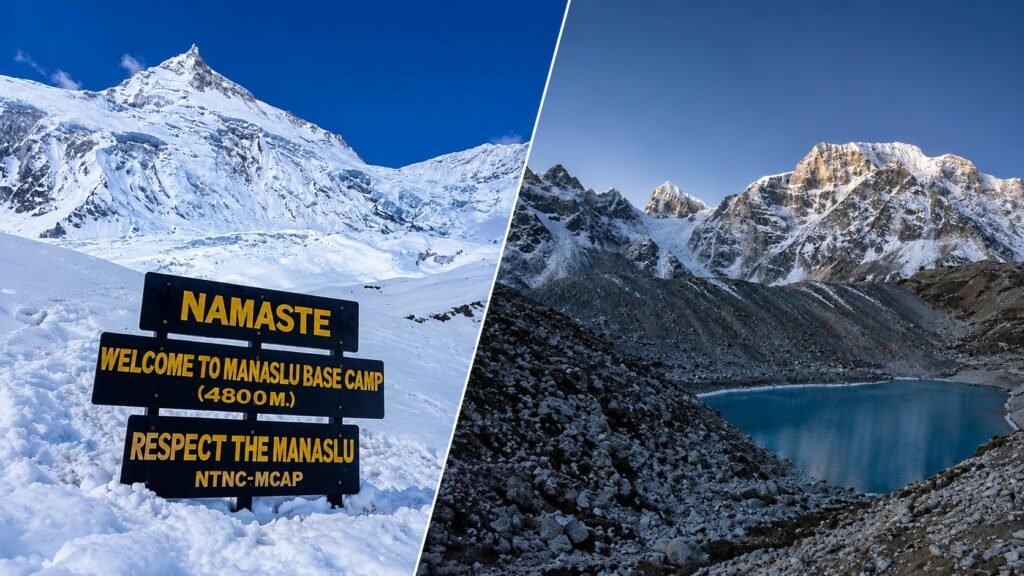
Manaslu Base Camp and Birendra Lake in Manaslu Circuit: Side Trips from Samagaon
The Manaslu Circuit Trek is known for its remote Himalayan villages, dramatic mountain scenery and the challenging crossing of Larkya La Pass.
However, one of the most interesting parts of the journey takes place before reaching the highest point of the circuit.
From Samagaon, trekkers can explore the beautiful Birendra Lake, hike towards Manaslu Base Camp or visit the culturally important Pungyen Gompa beneath Mount Manaslu via Shyala too.

These places offer very different experiences. Birendra Lake is a relatively short walk from Samagaon, while Manaslu Base Camp involves a considerably longer and steeper hike through high-altitude mountain terrain.
Pungyen Gompa adds a cultural and spiritual dimension to the journey, with impressive views of Manaslu and its surrounding glaciers.

For trekkers following the full Manaslu Circuit, these side trips are more than optional sightseeing opportunities. They provide a chance to explore the landscape around one of the highest mountains in the world before continuing towards Samdo, Dharmashala and Larkya La Pass.
However, not everyone needs to attempt the Manaslu Base Camp hike. The elevation gain is substantial, the upper trail can be steep and rocky, and snow or ice can change the difficulty considerably.

Some trekkers may prefer a shorter visit to Birendra Lake, while others who feel strong and have adjusted well to the altitude may choose to continue towards Base Camp.
In this guide, we explore Manaslu Circuit Base Camp, Birendra Lake and Pungyen Gompa, including their elevations, trail conditions, walking time, equipment requirements and the factors that should influence your decision on the day.
Our recommendation: Let your trekking guide help you choose the right excursion after assessing your condition, the weather and the trail. Reaching Manaslu Base Camp is a rewarding experience, but it should never come at the expense of your safety.
Where Are Manaslu Base Camp and Birendra Lake?
Both destinations are located near Samagaon in the Manaslu region of Gorkha District, northern Nepal. Samagaon is one of the most important settlements on the Manaslu Circuit and provides the main starting point for exploring the surrounding glacial landscape.
Mount Manaslu rises to 8,163 metres and is the eighth-highest mountain in the world. Its enormous glacier system dominates the landscape above Samagaon, creating a dramatic setting for the side hikes.
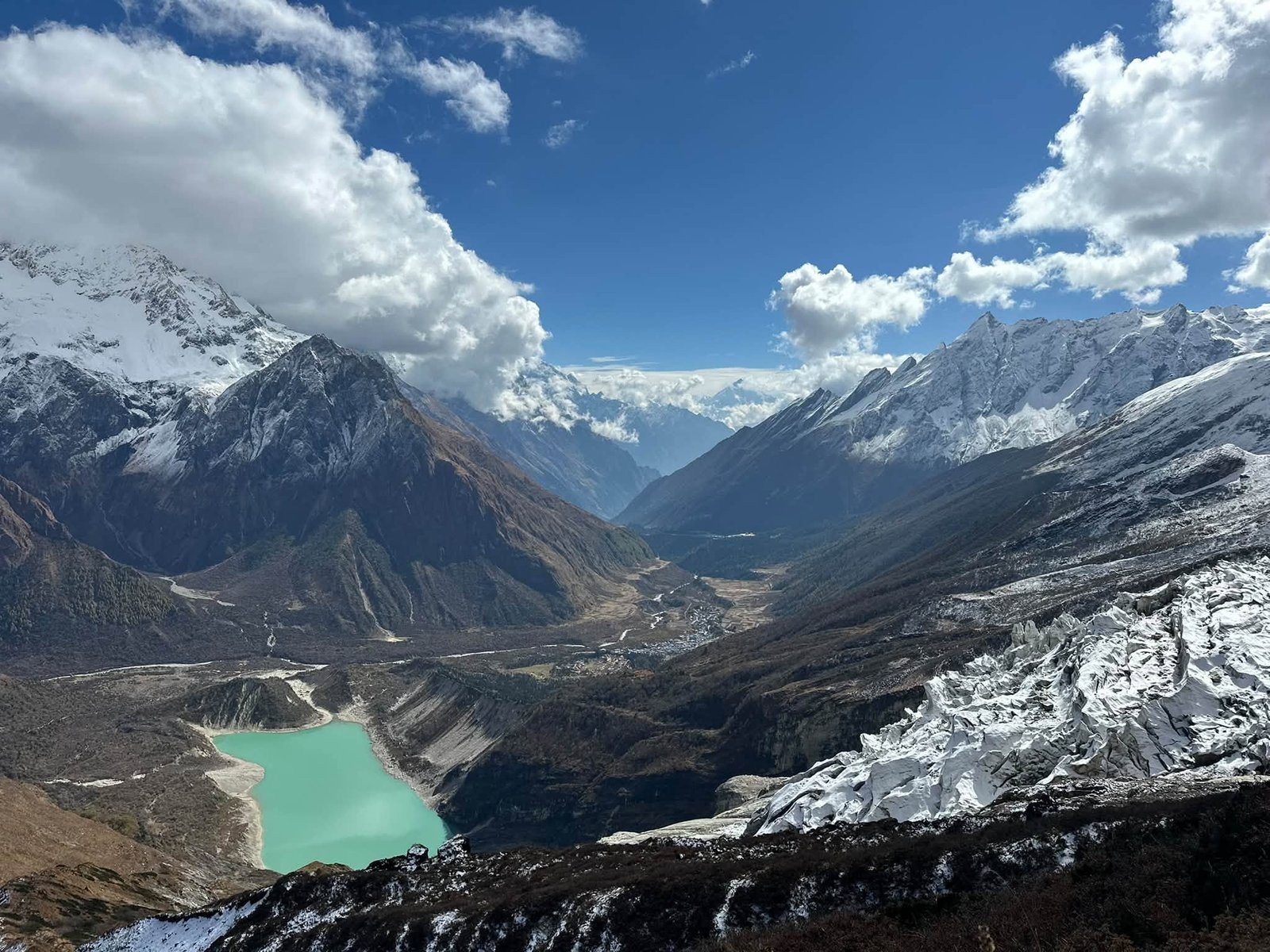
Birendra Lake lies beneath the Manaslu Glacier at approximately 3,691 metres. From the lake, the trail continues towards higher and rougher mountain terrain, eventually reaching Manaslu Base Camp at approximately 4,800 metres.
Pungyen Gompa is another important destination in the same area. Situated at approximately 4,000 metres, the monastery overlooks the surrounding mountain landscape and offers a closer look at the Buddhist heritage of the upper Manaslu region.
| Location | Approximate Elevation | Main Attraction |
|---|---|---|
| Samagaon | 3,530 m | Main village and starting point for the side hikes. |
| Birendra Lake | 3,691 m | High-altitude glacial lake beneath Manaslu Glacier. |
| Pungyen Gompa | Approximately 4,000 m | Traditional Buddhist monastery and mountain views. |
| Manaslu Base Camp | Approximately 4,800 m | Glacial mountain scenery and views towards Mount Manaslu. |
| Larkya La Pass | 5,106 m | Highest point of the Manaslu Circuit. |
Birendra Lake: The Beautiful Glacial Lake Below Mount Manaslu
Elevation: Approximately 3,691 metres
Starting point: Samagaon, approximately 3,530 metres
Elevation gain: Approximately 161 metres
Suggested walking time: Around 1.5–2 hours return, depending on pace and conditions
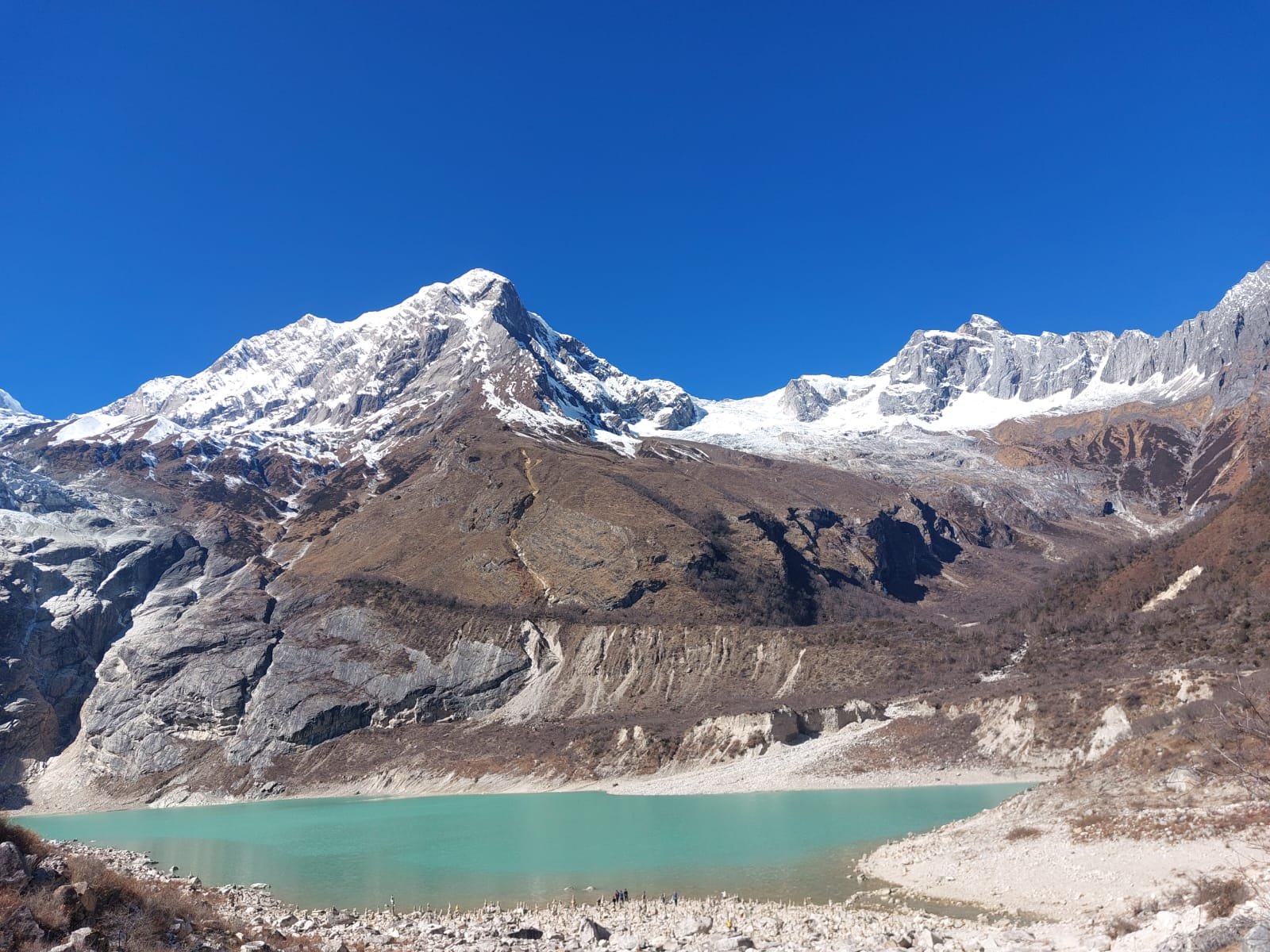
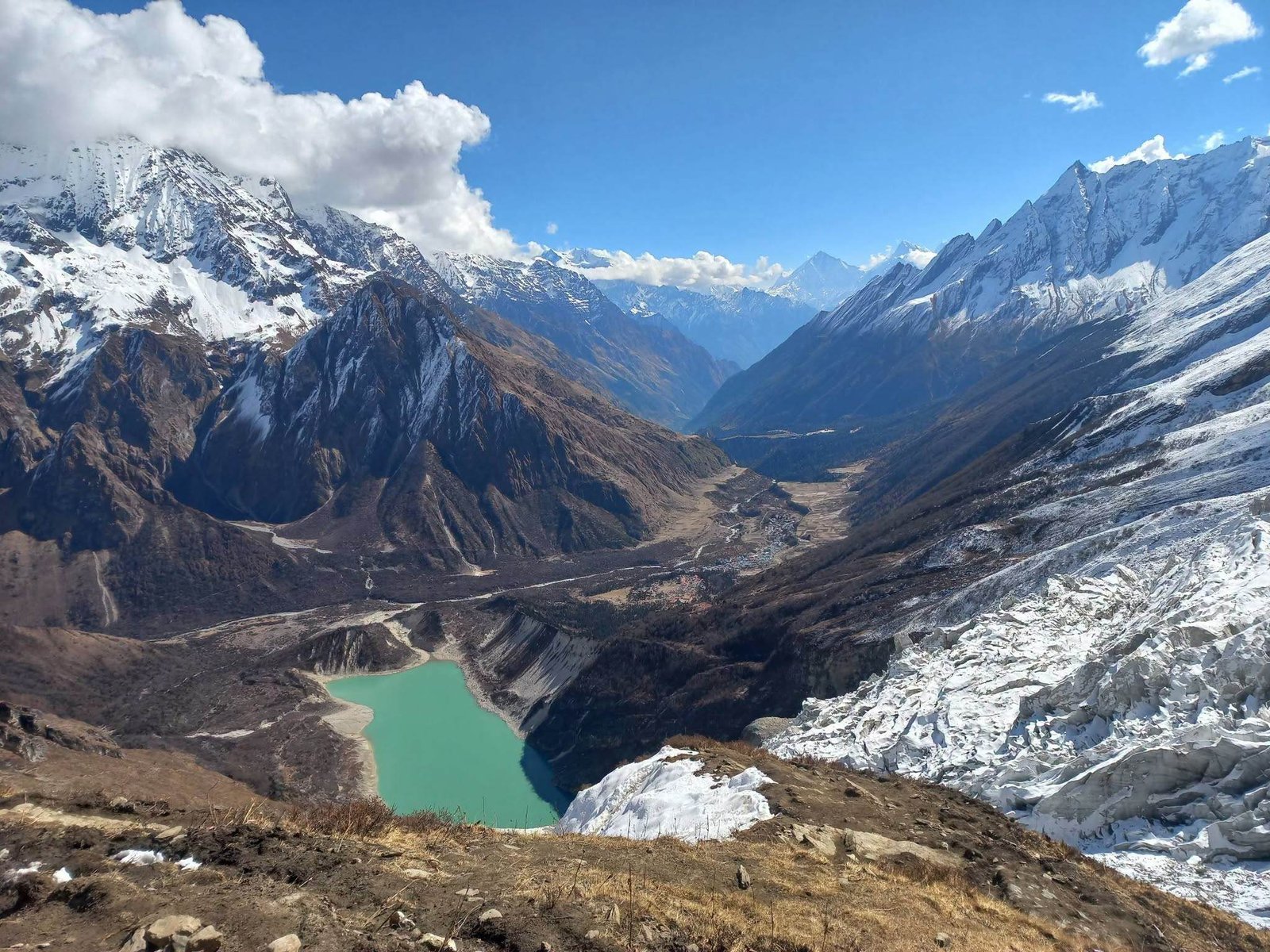
Birendra Lake, also known as Birendra Tal, is one of the most accessible natural attractions around Samagaon. Located beneath the Manaslu Glacier, this high-altitude lake is known for its striking water colours and the surrounding mountain scenery.
The lake is fed by glacial water, and its appearance changes depending on sunlight, weather and the conditions of the surrounding ice and rock. On a clear day, the turquoise or blue-green water creates a beautiful contrast against the grey mountain slopes and snowy landscape.

From Samagaon, the walk towards Birendra Lake follows a relatively short trail through the surrounding hillside.
Compared with the Manaslu Base Camp excursion, it involves a much smaller elevation gain, making it a more approachable option for trekkers who prefer a shorter walk on their day in Samagaon.

For many visitors, the lake itself is the main attraction. You can spend some time enjoying the scenery, taking photographs and appreciating the enormous glacier above it before returning to the village.
Another advantage is that Birendra Lake lies on the route towards Manaslu Base Camp. Trekkers who choose the longer excursion can visit the lake before continuing upwards towards the higher mountain terrain.
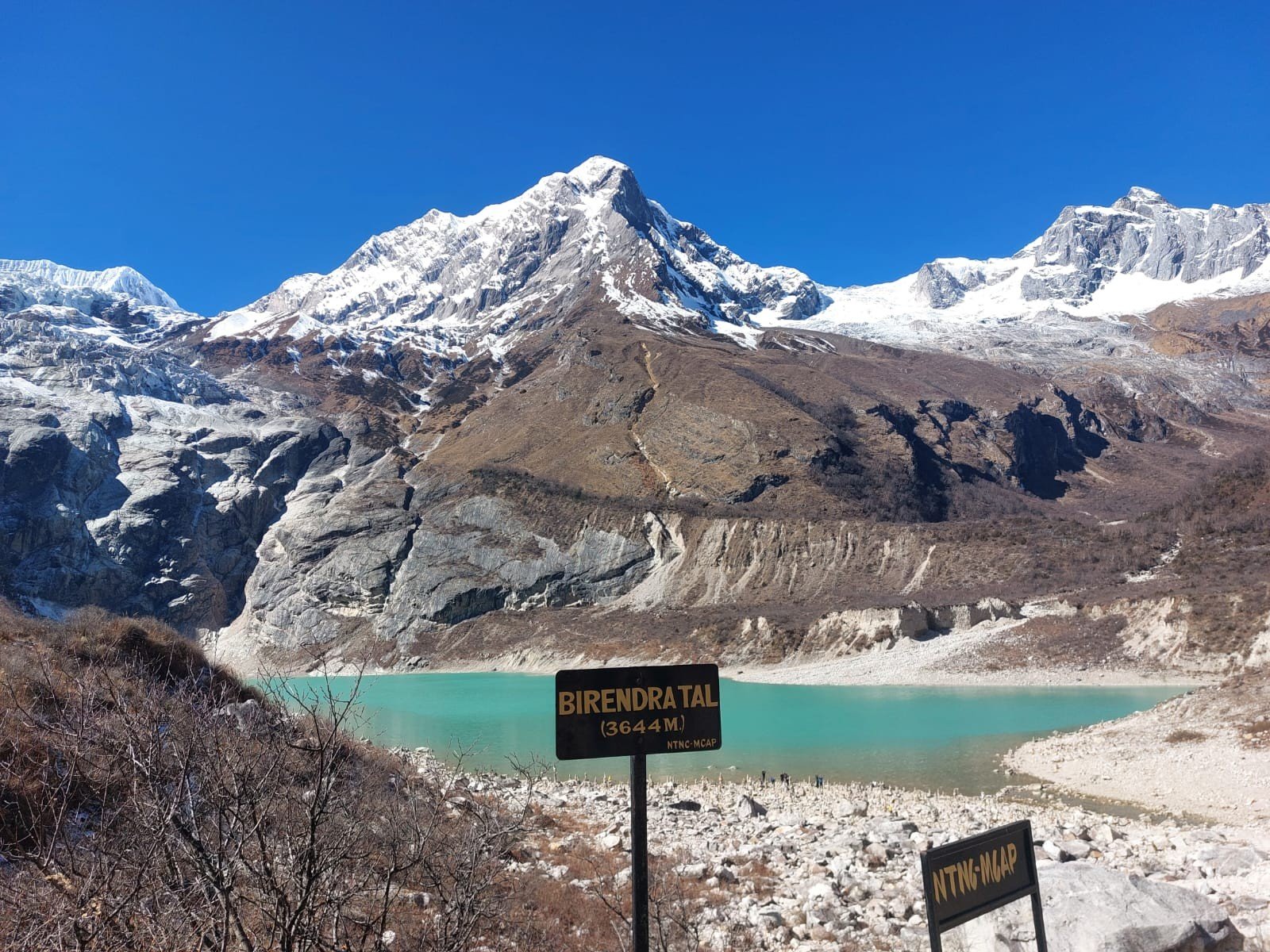
However, Birendra Lake should not be treated as an ordinary lakeside picnic area. It is a glacial environment, and conditions around the glacier can change.
Avalanches, falling ice and unstable ground are natural hazards in this type of landscape. Stay on the route recommended by your guide and avoid approaching exposed areas directly beneath unstable ice.
Who Should Choose the Birendra Lake Hike?
Birendra Lake is a suitable option for trekkers who want to explore the surroundings of Samagaon without taking on the strenuous climb towards Base Camp.
It can be especially appealing to those who have already completed several long walking days and want to spend a more relaxed day in the area.
The lake is also an option for people who are not interested in committing to a 6–9-hour mountain excursion. However, anyone experiencing symptoms of altitude illness should inform their guide rather than treating a shorter lake walk as a solution.
The appropriate decision may be to rest, undergo assessment or descend, depending on the symptoms.
If the weather is poor, the trail is icy or the guide believes conditions are unsuitable, the lake visit should also be reconsidered. A shorter hike is not automatically safe in every weather condition.
Manaslu Base Camp: A Challenging Side Hike from Samagaon
Base Camp elevation: Approximately 4,800 metres
Starting point: Samagaon, approximately 3,530 metres
Total elevation gain: Approximately 1,270 metres
Suggested distance: Around 12–16 km return, depending on the route and turnaround point
Walking time: Approximately 6–9 hours return
For trekkers who want a bigger mountain experience, the hike to Manaslu Base Camp is one of the most rewarding side trips on the circuit. It takes visitors closer to the glaciers and enormous slopes of Mount Manaslu, offering a much more exposed and demanding mountain environment than the village trails below.
The hike begins in Samagaon at approximately 3,530 metres and climbs towards the base camp area at around 4,800 metres. This means trekkers gain approximately 1,270 metres in elevation before returning along the same general route.
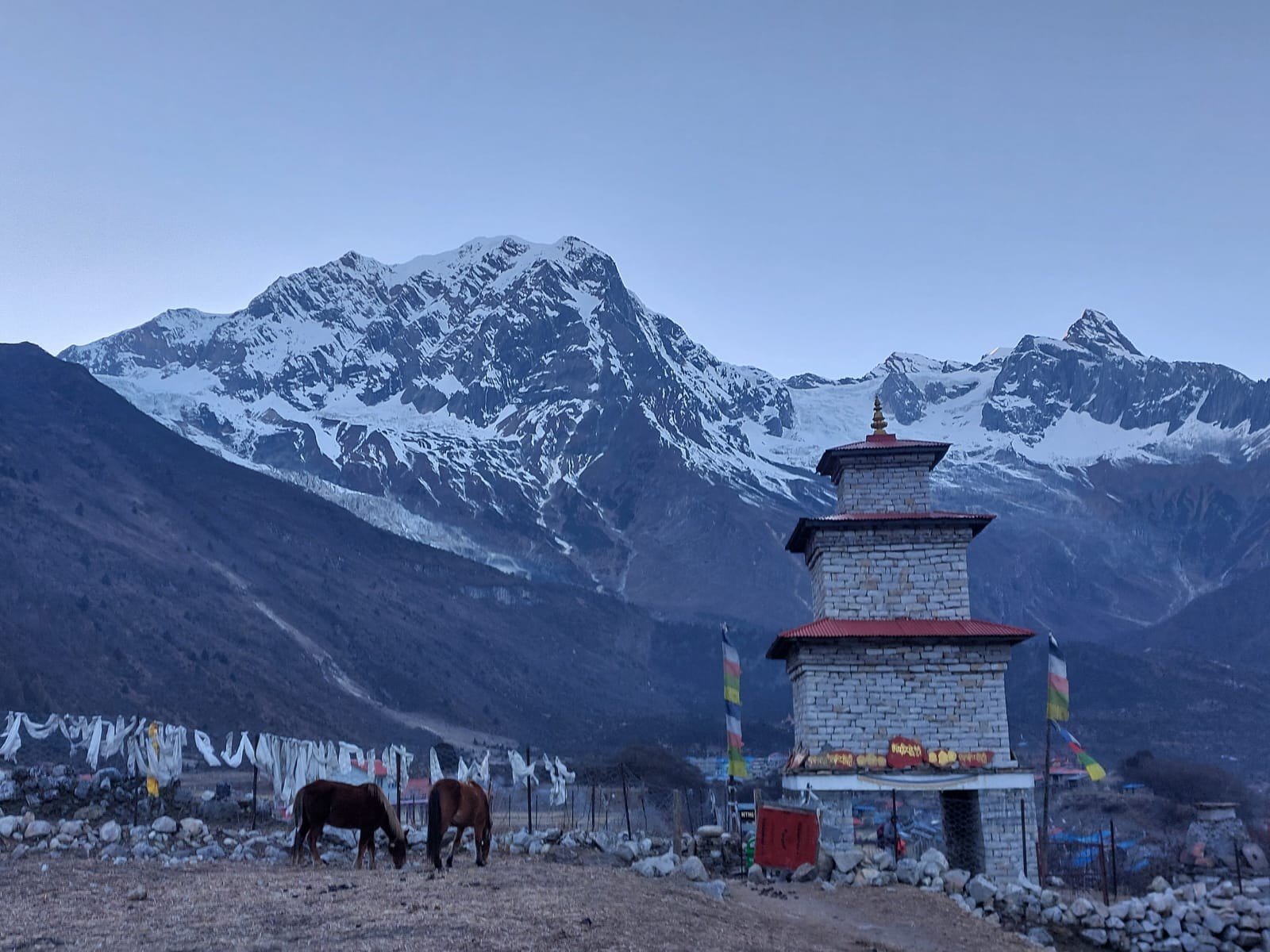
That is a substantial amount of climbing for one day, especially when starting above 3,500 metres. The thinner air, steep uphill sections, rocky ground and previous trekking fatigue all contribute to the difficulty.
The lower section of the walk takes trekkers towards Birendra Lake. After reaching the lake, the route continues upwards along a much steeper mountainside. The trail becomes increasingly rugged, with sections of rocky moraine, loose gravel and exposed mountain terrain.
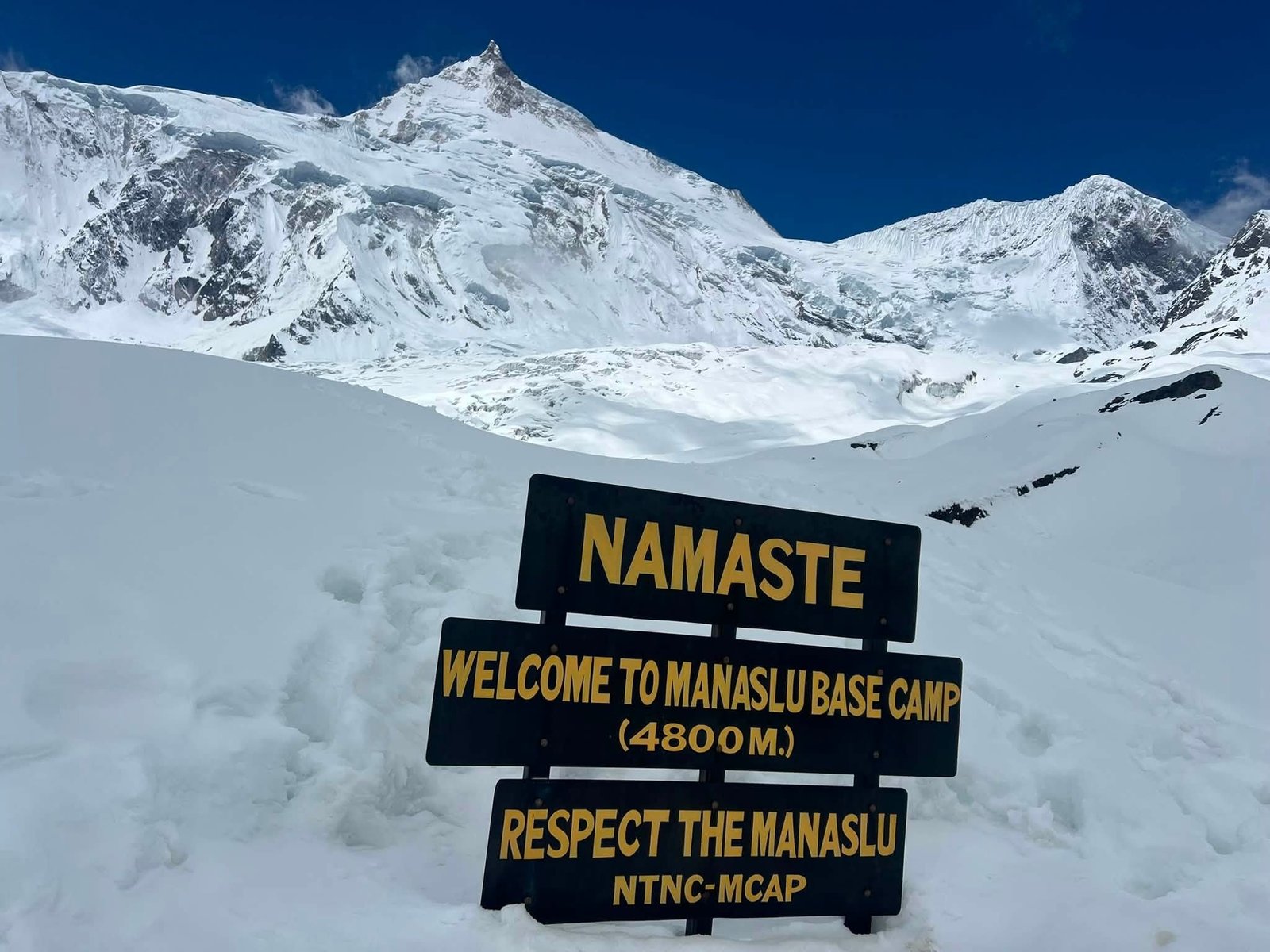
As you gain elevation, the surrounding landscape becomes more dramatic. The views open towards Manaslu Glacier and the high mountain slopes, while the village of Samagaon gradually appears smaller below.
Reaching Base Camp is a memorable achievement, but trekkers should not underestimate the descent. After several hours of uphill walking, the return journey follows steep and uneven terrain back towards Samagaon. Loose stones and tired legs can make the descent slow, so trekking poles are particularly useful.
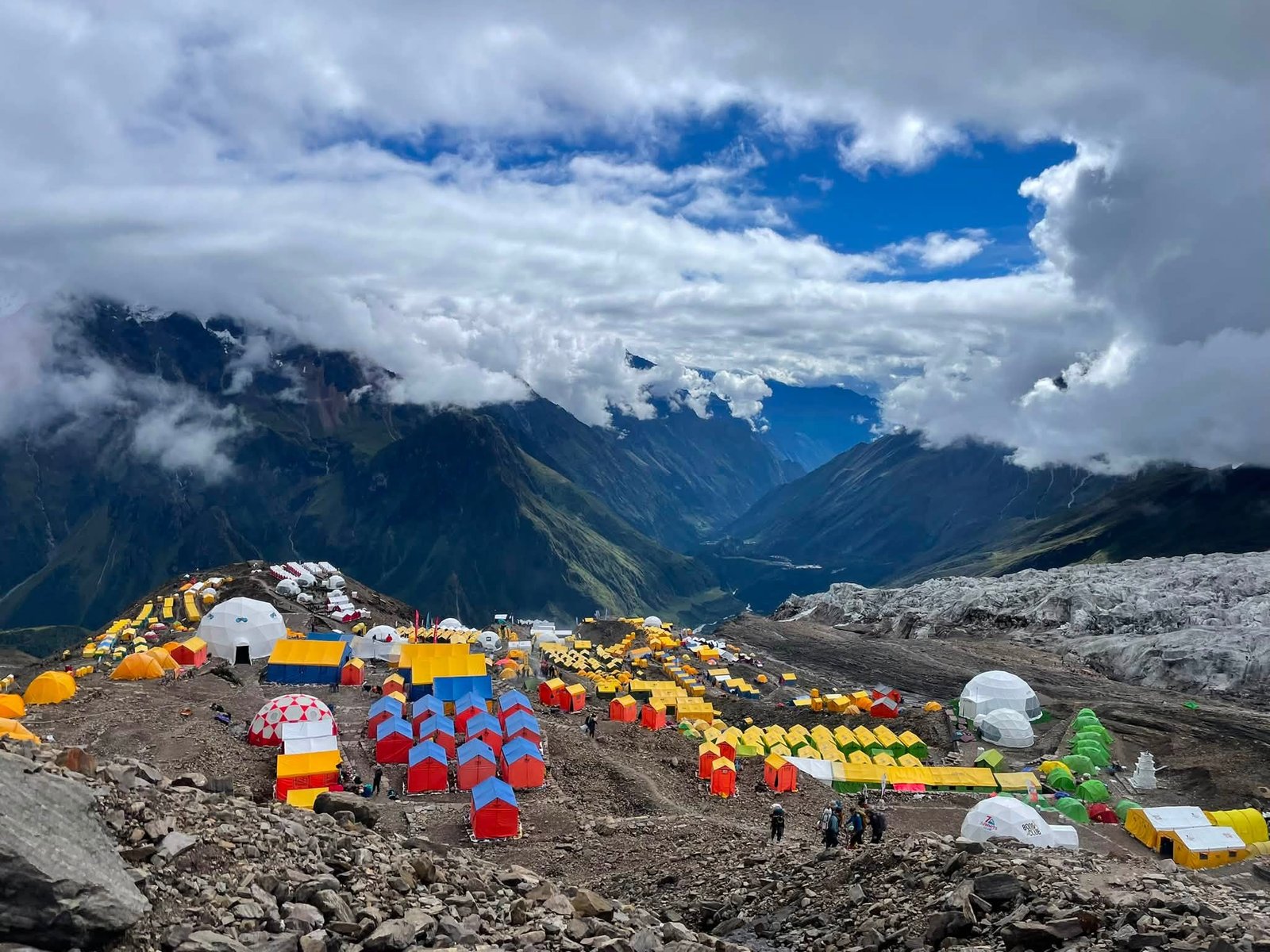
There are no regular teahouses, restaurants or shops along the route where trekkers can buy lunch or refreshments. Everyone should carry the food, water and clothing needed for the entire excursion. You should return to Samagaon for the night rather than planning to stay at Base Camp.
How Difficult Is the Manaslu Base Camp Hike?
The Manaslu Base Camp hike is best described as a strenuous high-altitude side excursion. It does not normally require technical climbing skills, ropes or mountaineering equipment in favourable trekking conditions.
However, the amount of elevation gain and the condition of the upper trail make it considerably more challenging than the shorter walk to Birendra Lake.
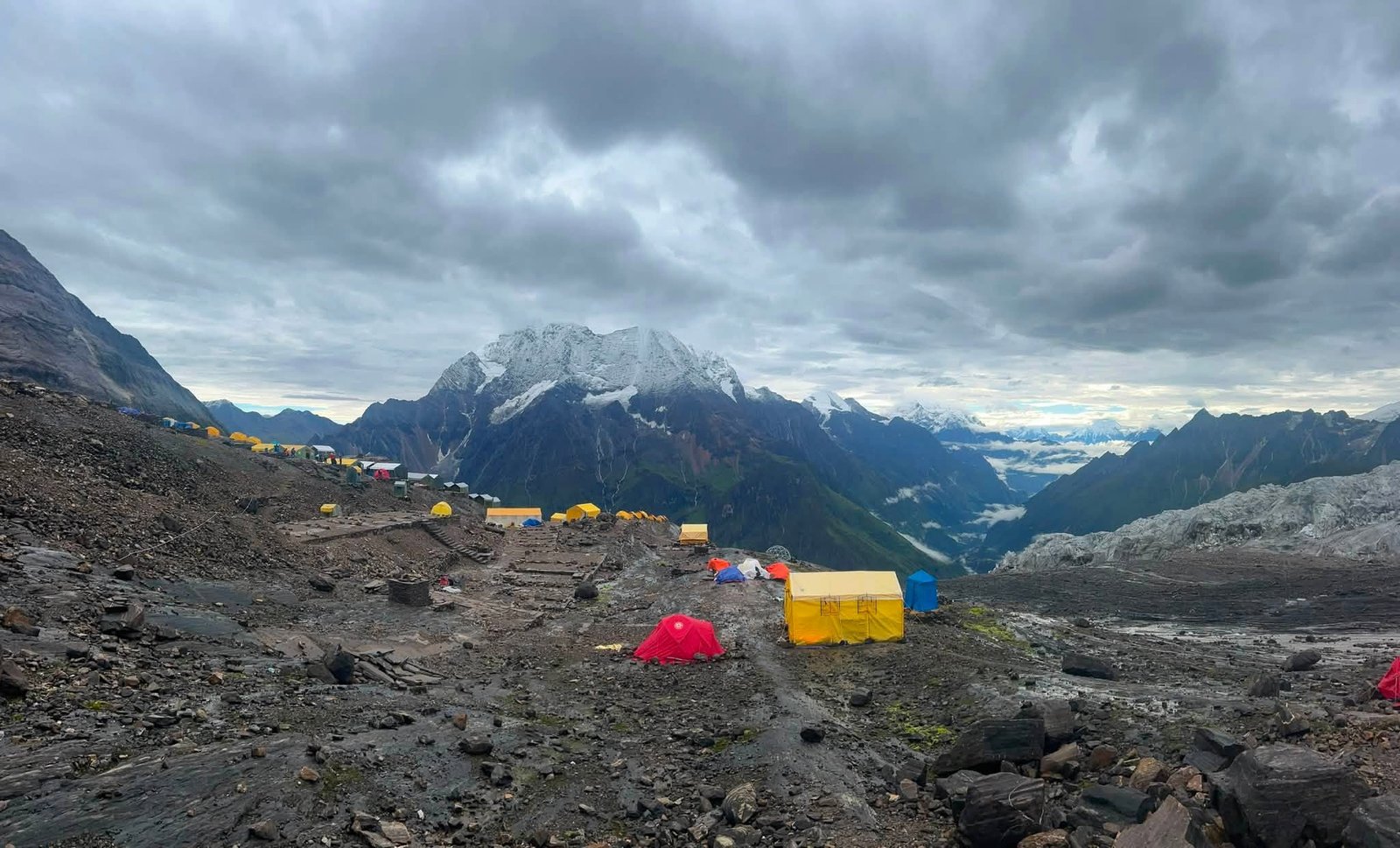
The biggest difficulty is the sustained climb from Samagaon. A gain of approximately 1,270 metres in one outing is demanding even for fit trekkers, and the effect of altitude becomes more noticeable as you move above 4,000 metres.
The upper trail can also be steep and uneven. Loose scree, rocky slopes, moraine and exposed sections require careful foot placement. When snow or ice is present, the difficulty can increase significantly.
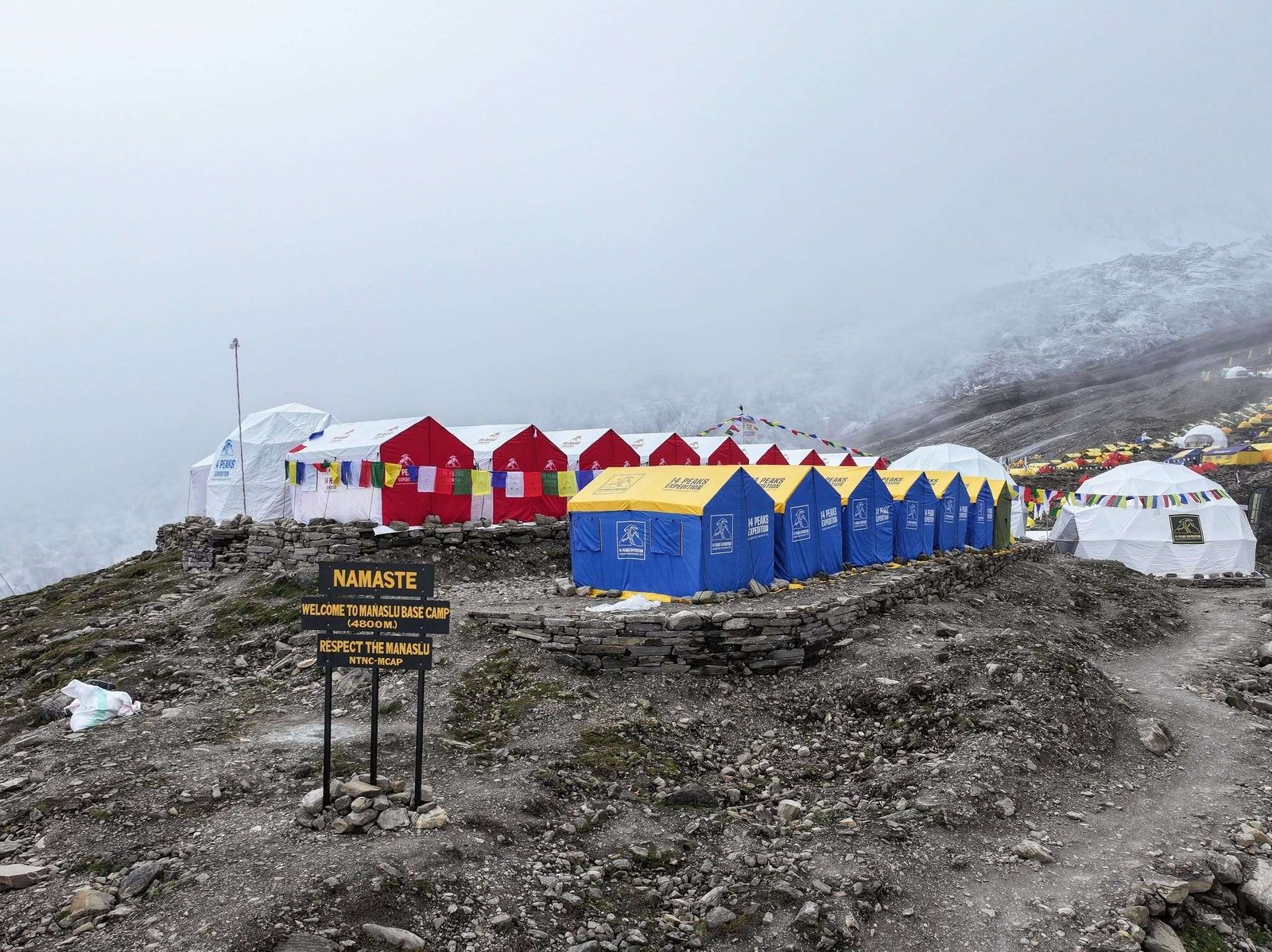
It is important not to judge the hike only by its distance. A route covering 12–16 km may appear manageable on paper, but climbing to 4,800 metres and descending the same steep terrain is a different experience from walking the same distance along a lower mountain trail.
Trekkers should be comfortable with long mountain walking days, have previous high-altitude trekking experience and feel well enough to attempt the excursion. Your guide should assess the group’s condition and the route before deciding whether to continue towards Base Camp.
Trail Conditions, Snow and Crampons: What Should You Prepare For?
The route towards Manaslu Base Camp changes with the season, recent snowfall and current weather. During favourable spring and autumn conditions, trekkers may be able to complete the hike using suitable trekking boots and poles.
However, the upper section can become much more difficult when snow and ice cover the trail.
After fresh snowfall, some parts of the route may be slippery or difficult to identify. Hard-packed snow and icy slopes can reduce traction, particularly on steep sections and during the descent.
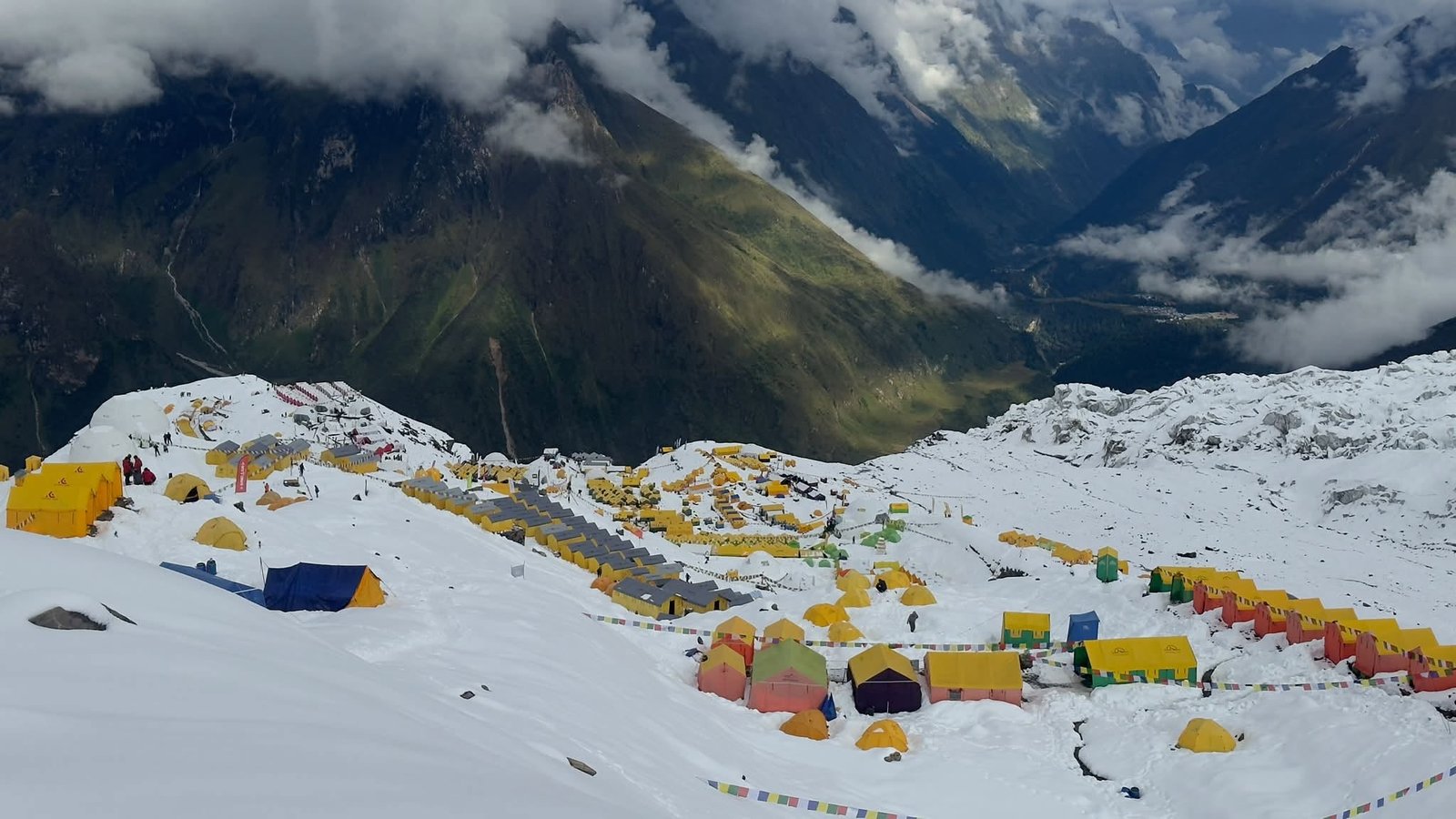
Depending on the actual conditions, your guide may recommend microspikes or crampons.
Microspikes can help provide grip on relatively moderate icy paths, while proper mountaineering crampons may be necessary on harder or steeper snow and ice. The correct choice depends on the terrain, footwear compatibility and the condition of the trail.
Do not assume that crampons are required on every departure, and do not assume that ordinary trekking boots will always be sufficient.

The equipment decision should be made after checking recent snowfall and the actual route conditions. Trekkers must also understand how to use any traction equipment safely.
The standard Manaslu Base Camp hike is not normally a technical climbing route in favourable trekking conditions. Ropes and climbing equipment are not routinely required.
Nevertheless, difficult snow or ice conditions can change the risk considerably, and the guide may decide that the hike should be shortened, postponed or cancelled.
Weather is another important factor. Cloud, snowfall, strong wind and low visibility can make the upper route uncomfortable or unsafe.
Even on a clear morning, conditions can change as you gain elevation. The cold wind coming from the glacier can also make the exposed upper slopes feel much colder than Samagaon.
Important: Do not continue towards Base Camp simply because it is included in your planned acclimatization day. If the upper trail is covered with unsafe ice, visibility becomes poor or the guide believes the weather is unsuitable, follow the guide’s advice. Reaching Base Camp is never more important than returning safely to Samagaon.
What Should You Carry for the Manaslu Base Camp Hike?
Preparation is especially important because there are no regular shops or teahouses along the Base Camp trail. Once you leave Samagaon, you should be prepared to complete the hike with the supplies you have carried yourself or arranged with your trekking team.
We recommend preparing the following items before leaving the village:
| Item | Why You Need It |
|---|---|
| Packed lunch | There are no regular restaurants or shops along the route. Arrange your lunch with the teahouse before departure. |
| Water | Carry approximately 2 litres or the amount advised by your guide for the day’s conditions. Do not rely on finding a shop or reliable refill point on the trail. |
| Energy snacks | Chocolate, nuts, dried fruit, biscuits or energy bars can provide convenient food during the long climb. |
| Warm clothing | Carry an insulated jacket, fleece, warm gloves and a windproof outer layer for exposed high-altitude sections. |
| Trekking boots | Wear comfortable, well-broken-in footwear with good grip and suitable support for rocky and uneven terrain. |
| Trekking poles | Useful for maintaining balance, reducing strain and controlling movement on steep ascents and descents. |
| Sun protection | Bring UV-protective sunglasses, sunscreen, lip balm and a suitable cap or hat. |
| Microspikes or crampons | Carry or arrange them when your guide recommends them based on snow and ice conditions. Ensure they are compatible with your boots. |
| Headlamp | Useful in case the return takes longer than expected or the group starts early in low light. |
| Small first-aid supplies | Carry personal medication and basic supplies recommended by your guide or healthcare professional. |
It is better to arrange a packed lunch with your teahouse the evening before the hike. A simple meal such as bread, boiled potatoes, eggs, fruit or other easily carried food can be useful. You can also take a thermos of warm tea if you have one available.
Start after an early breakfast, but do not rush the climb. The group should agree on a suitable turnaround time with the guide before departure, allowing enough time to return to Samagaon during daylight.
Pungyen Gompa: A Cultural Highlight near Samagaon
Elevation: Approximately 4,000 metres
Location: Above the Samagaon area, beneath Mount Manaslu
While Birendra Lake and Manaslu Base Camp attract trekkers because of their glacial scenery, Pungyen Gompa offers a different experience.
This traditional Buddhist monastery is located in an open mountain setting beneath Manaslu and has important cultural and spiritual significance for the local community.
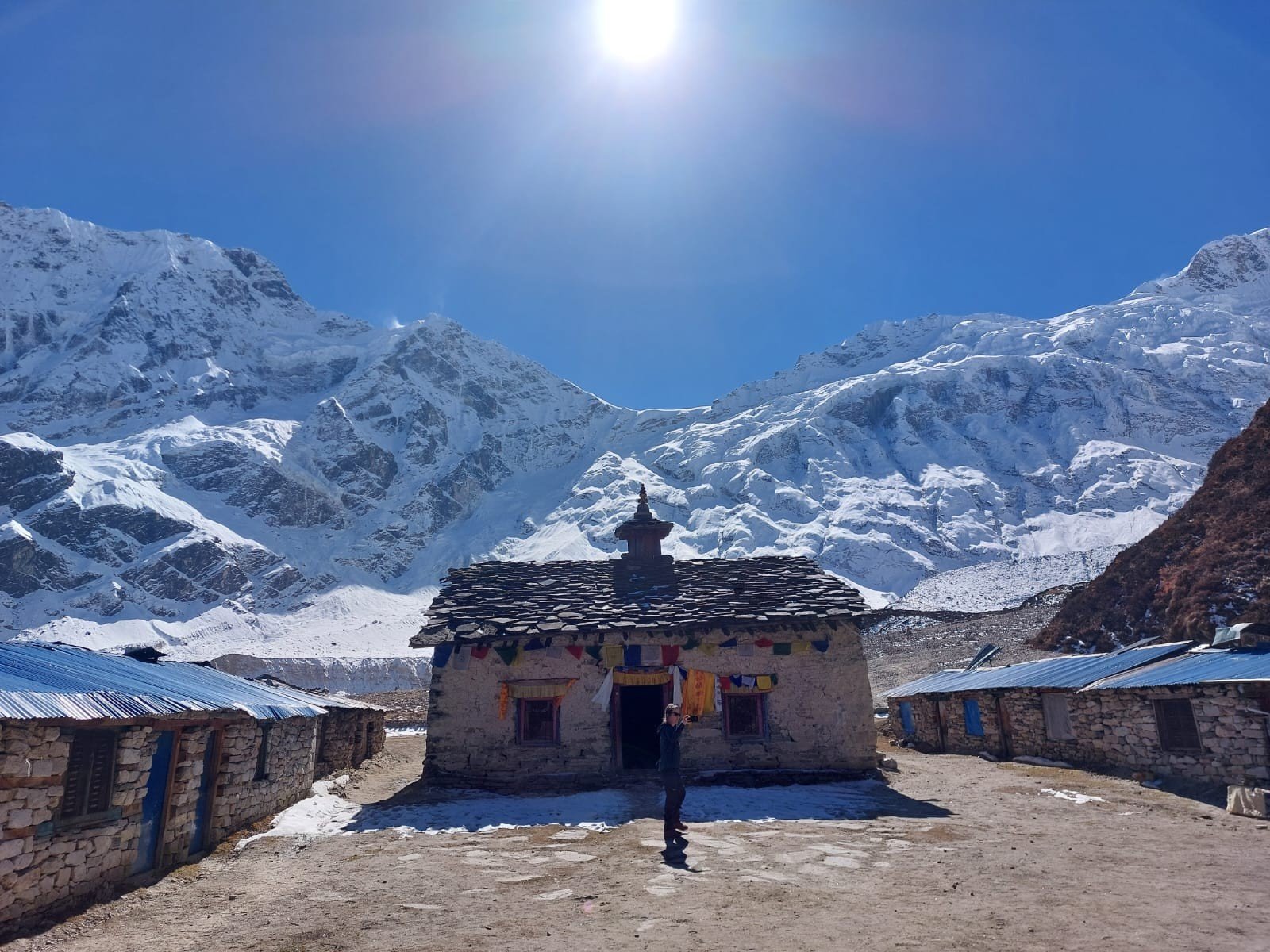
The monastery is surrounded by a dramatic landscape of mountains, glaciers and high-altitude slopes. The peaceful setting makes it an interesting place to understand the Buddhist traditions of the upper Manaslu region, which have strong cultural connections with Tibetan communities.
The visit also offers excellent mountain views. From the surrounding area, trekkers can appreciate the impressive scale of Mount Manaslu and the glacial landscape that dominates this part of the valley.
On our 15-day Manaslu Circuit itinerary, Pungyen Gompa is already included on Day 7 during the trek from Shyala to Samagaon. Trekkers visit the monastery before continuing to Samagaon, where they spend the night.
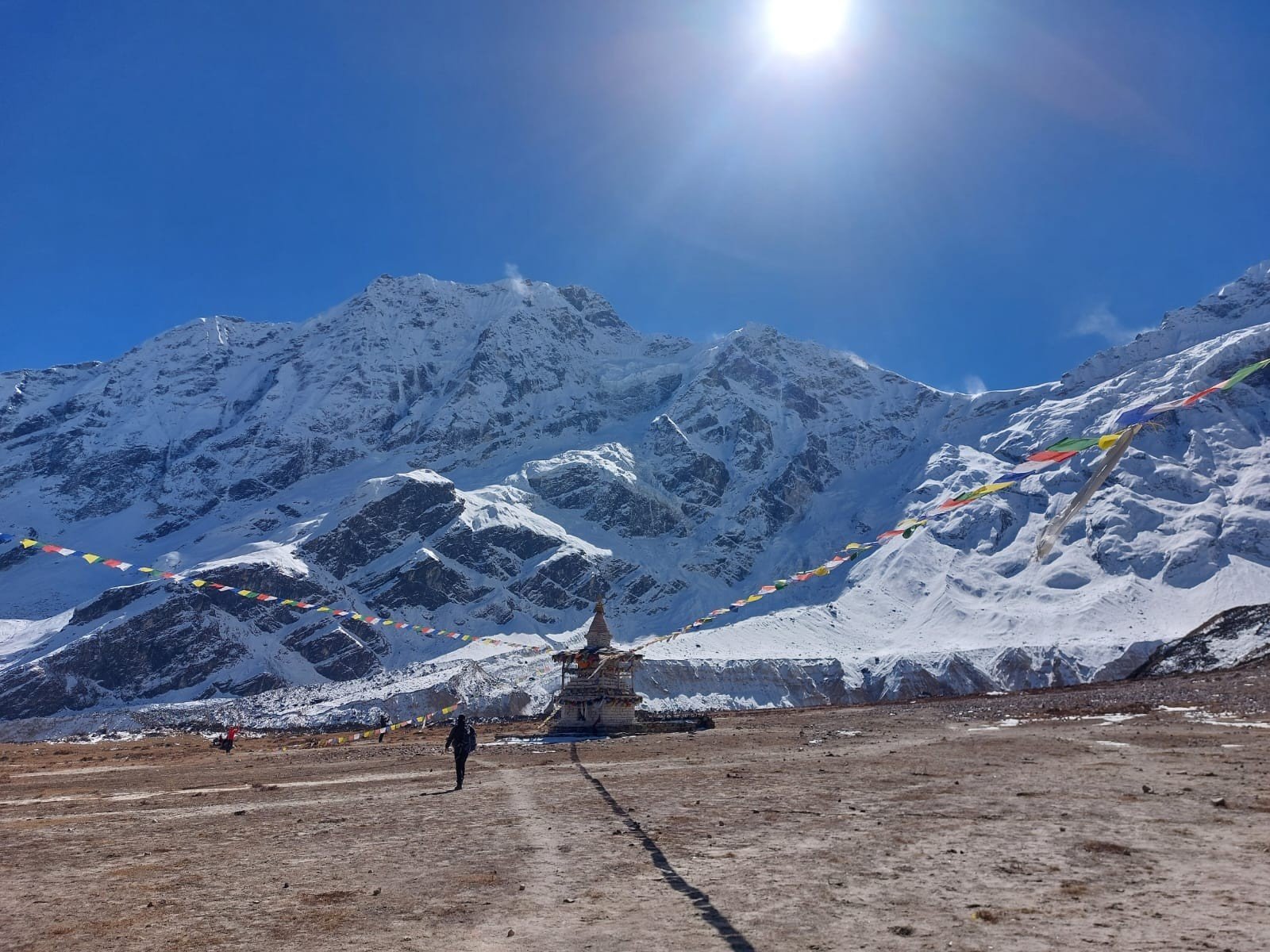
The following day is the dedicated acclimatization day in Samagaon. This is when the group can consider the shorter Birendra Lake walk or the more demanding Manaslu Base Camp excursion, depending on individual condition and the guide’s assessment.
It is important to understand this itinerary arrangement. Pungyen Gompa is not automatically a third excursion that everyone must complete on the same day as Manaslu Base Camp. It is already part of the previous day’s route, although additional visits may be arranged if the itinerary, time and conditions allow.
Manaslu Base Camp vs Birendra Lake: Which One Should You Choose?
Both destinations are worth visiting, but they suit different walking abilities and preferences. The best choice depends on your physical condition, previous altitude experience, energy level and the condition of the trail.
| Factor | Birendra Lake | Manaslu Base Camp |
|---|---|---|
| Elevation | 3,691 m | Approximately 4,800 m |
| Gain from Samagaon | Approximately 161 m | Approximately 1,270 m |
| Suggested duration | Around 1.5–2 hours return | Around 6–9 hours return |
| Difficulty | Relatively easy to moderate, subject to conditions | Strenuous high-altitude hike |
| Terrain | Short hillside trail and glacial lake surroundings | Steep slopes, rocky moraine, loose gravel and possible snow or ice |
| Best suited for | Trekkers looking for a shorter outing and scenic lake views | Fit trekkers who feel well and are prepared for a demanding day |
Trekkers who have enough energy, feel comfortable at the altitude and want a bigger mountain challenge may choose Manaslu Base Camp. Those who prefer a shorter walk can visit Birendra Lake instead.
There is also nothing wrong with spending the day resting in Samagaon. Not every trekker needs to complete an additional hike to make the Manaslu Circuit worthwhile. The purpose of the day is to prepare for the higher sections of the journey, and the right activity is the one that matches your condition.
Is the Manaslu Base Camp Hike Good Preparation for Larkya La Pass?
This is an interesting comparison because both Manaslu Base Camp and Larkya La are among the highest points encountered during the Manaslu Circuit.
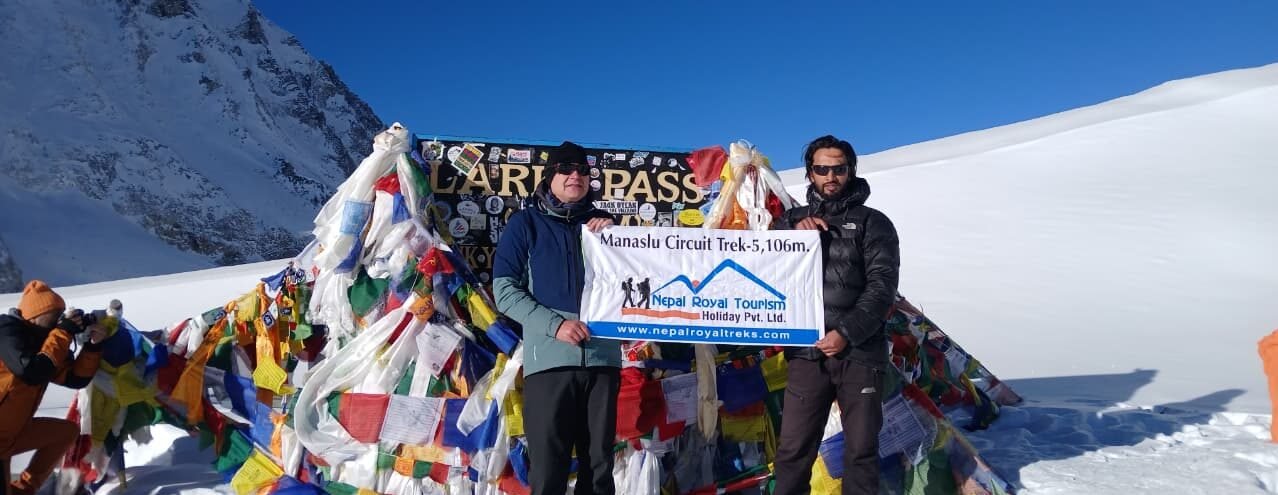
Manaslu Base Camp is approximately 4,800 metres, while Larkya La Pass reaches 5,106 metres. The pass is therefore approximately 306 metres higher than Base Camp.
However, the elevation gain during the two outings is quite different.
From Samagaon at approximately 3,530 metres to Manaslu Base Camp at 4,800 metres, trekkers gain around 1,270 metres. By comparison, the crossing day begins at Dharmashala at approximately 4,470 metres and climbs around 636 metres to reach Larkya La at 5,106 metres.
Comparing the uphill elevation gain
Samagaon to Manaslu Base Camp: +1,270 m
Dharmashala to Larkya La: +636 m
The Manaslu Base Camp hike therefore involves nearly twice the vertical ascent from its starting point compared with the ascent from Dharmashala to Larkya La. This is one reason the Base Camp excursion can feel particularly strenuous.
However, the comparison needs some context. The two walks start at different elevations and have different terrain. The Base Camp excursion begins in Samagaon and involves a steep climb followed by a return descent along the same general route.
Larkya La is a longer high-altitude crossing, with an early start, cold and exposed conditions, a climb towards the pass and a substantial descent towards Bhimthang.

The standard Manaslu Circuit itinerary schedules approximately 16 km and 7–8 hours for the Dharmashala to Bhimthang crossing, although the actual duration depends on weather, snow, pace and group condition.
Completing the Base Camp hike can provide useful experience of sustained uphill walking at high altitude. It also gives trekkers an opportunity to understand how their bodies respond to a demanding outing before reaching the higher pass.

Nevertheless, it does not guarantee that someone will be ready for Larkya La. The pass is higher, and its long crossing day presents different challenges. Trekkers should still follow the planned gradual ascent through Samdo and Dharmashala, monitor their condition and listen to their guide.
The Base Camp hike is a useful experience, not a replacement for proper acclimatization or a guarantee of successful pass crossing.
How Manaslu Base Camp and Birendra Lake Fit into Our Manaslu Circuit Itinerary
On our 15-day Manaslu Circuit Trek, Samagaon is an important stage of the journey. The itinerary includes a visit to Pungyen Gompa during the trek from Shyala to Samagaon, followed by a dedicated acclimatization day in Samagaon.
This arrangement gives trekkers time to explore the area before continuing towards Samdo and Dharmashala.
| Day | Route | Main Experience |
|---|---|---|
| Day 6 | Namrung to Shyala | Mountain scenery, alpine landscapes and traditional settlements. |
| Day 7 | Shyala to Samagaon via Pungyen Gompa | Visit the monastery before reaching Samagaon. |
| Day 8 | Acclimatization day in Samagaon | Choose a suitable excursion towards Birendra Lake or Manaslu Base Camp, or take additional rest. |
| Day 9 | Samagaon to Samdo | Continue gradually into the higher alpine region. |
| Day 10 | Samdo to Dharmashala | Reach the last major overnight stop before Larkya La. |
| Day 11 | Dharmashala to Bhimthang via Larkya La | Cross Larkya La Pass at 5,106 metres. |
The exact excursion on Day 8 should be decided according to the condition of each trekker and the trail. Some people may be comfortable hiking to Base Camp, while others may prefer Birendra Lake or a quieter day around the village.
This flexibility is important. An itinerary should provide a framework for the journey, but the guide’s assessment and the group’s condition should determine what is appropriate on the day.
Explore the Manaslu Circuit with Nepal Royal Tourism Holiday
Experience Samagaon, Pungyen Gompa, Birendra Lake, the Manaslu Base Camp side hike and the spectacular crossing of Larkya La Pass on our 15-day Manaslu Circuit Trek.
When Is the Best Time to Visit Manaslu Base Camp and Birendra Lake?
Spring and autumn are generally the most suitable seasons for trekking in the Manaslu region. Both seasons offer opportunities to enjoy the mountain scenery, although weather and trail conditions are never completely predictable at high altitude.
During spring, particularly April and May, the weather can offer pleasant daytime conditions in many parts of the route. However, snow can remain on higher sections, and recent snowfall may affect the trail towards Base Camp.

Autumn, especially October and November, is another popular period. After the monsoon, visibility is often good, and many trekkers enjoy clearer mountain views. However, temperatures become colder as the season progresses, particularly in the morning and evening.
Winter brings much colder conditions, and snow or ice can make the upper trail difficult or unsuitable for an ordinary trekking excursion. During and after periods of snowfall, the guide must assess whether the route is safe. The same applies during periods of strong wind, cloud or poor visibility.
For the Manaslu Base Camp hike, the best decision is not based on the month alone. The guide should check recent weather, snow cover, ice conditions and the physical condition of the group before departure.
A Few Important Safety Considerations
Although the Manaslu Base Camp hike is not normally a technical climbing route, it takes place in a serious high-altitude environment. Trekkers should approach it with the same care they would give to any demanding mountain excursion.
- Follow your guide’s decision: The guide should assess the weather, snow and trail before the group commits to the higher section.
- Start early: Leave Samagaon with sufficient daylight available for the ascent and return journey.
- Carry your own supplies: There are no regular shops or teahouses on the route, so take lunch, water and snacks from the village.
- Use suitable footwear: Wear trekking boots with good grip and use microspikes or crampons only when conditions require them and your guide advises.
- Monitor your condition: Headache, nausea, dizziness or unusual fatigue should be reported to the guide. Do not continue higher when altitude symptoms are developing.
- Agree on a turnaround time: The group should not feel pressured to reach Base Camp if the weather deteriorates or the ascent takes longer than expected.
- Return before dark: The descent is steep and uneven in places, so enough time should be allowed to return safely to Samagaon.
For more information about altitude-related illness, warning signs and prevention, read our guide to altitude sickness during Nepal treks.