-
 Duration
48 Days
Duration
48 Days
-
 Difficulty
Strenuous
Difficulty
Strenuous
-
 Max Elevation
8,485m
Max Elevation
8,485m
-
 Group Size
1 to 10 People Person
Group Size
1 to 10 People Person
-
 Accommodation
Teahouse/Camping
Accommodation
Teahouse/Camping
-
 Start/End
Kathmandu/Kathmandu
Start/End
Kathmandu/Kathmandu
-
 Destination
Makalu Region
Destination
Makalu Region
-
 Best Season
Spring and Autumn
Best Season
Spring and Autumn

The Mount Makalu expedition is a technical 8,000-meter climbing expedition to the summit of Makalu Mountain which rises to 8,463 m / 27,766 ft and is the fifth-highest mountain in the world.
Makalu is immediately recognizable by its steep four-sided pyramid and sharp upper ridges. Makalu has a very different character from Nepal’s busier commercial 8,000-meter mountains.

The expedition begins with a journey into the remote Makalu-Barun region, where climbers travel from Kathmandu to Tumlingtar and continue toward the trailhead before approaching the mountain through forests, villages, alpine passes and the upper Barun Valley.
The gradual approach is an important part of the expedition. Climbers move from the warm lower valleys around the Arun region into increasingly wild alpine terrain before reaching Makalu Base Camp at around 4,870 m.

By the time the climbing phase begins, the landscape has changed completely to rock, moraine, glacier and enormous Himalayan walls.
Above Base Camp, the standard commercial route follows the Northwest Ridge system through Makalu La.

The mountain combines glacier travel, steep snow and ice, fixed ropes and mixed climbing with increasingly exposed terrain above 7,000 meters.
The final summit pyramid is particularly serious and is one of the features that makes Makalu more technically demanding than many other normal routes on the world’s highest mountains.

Nepal Royal Tourism Holiday structures this expedition as a 48-day Kathmandu-to-Kathmandu program.
The schedule allows time for the full Makalu-Barun approach, progressive high-altitude rotations, substantial recovery at Base Camp, upper-mountain preparation and flexibility around the final summit window.
Mount Makalu Expedition Facts
| Expedition Detail | Information |
|---|---|
| Mountain | Mount Makalu |
| Summit Elevation | 8,463 m / 27,766 ft |
| World Ranking | Fifth-highest mountain in the world |
| Location | Sankhuwasabha, Eastern Nepal |
| Protected Area | Makalu-Barun National Park |
| Nepal Royal Program | 48 Days Kathmandu to Kathmandu |
| Typical Expedition Duration | Around 47–50 Days for a full trekking-approach program |
| Standard Route | Northwest Ridge via Makalu La |
| Main Access | Kathmandu – Tumlingtar – Num – Makalu-Barun – Makalu Base Camp |
| Makalu Base Camp | Approx. 4,870 m |
| Advanced Base Camp | Approx. 5,600–5,700 m |
| High Camps | Four principal high camps, with positions adjusted to seasonal conditions |
| Climbing Grade | Extreme / Technical 8,000-Meter Expedition |
| Best Seasons | Spring and Autumn |
| First Ascent | 15 May 1955 – Lionel Terray and Jean Couzy |
From the Arun Valley to Makalu Base Camp
The Makalu journey begins with a domestic flight from Kathmandu to Tumlingtar in eastern Nepal. From there, road transportation takes the expedition toward Num, where the walking approach into Makalu-Barun National Park begins.
The early trail passes through Seduwa and Tashi Gaon, moving through cultivated hillsides, subtropical forest and traditional settlements.

Tashi Gaon is one of the last substantial permanent villages before the expedition begins climbing into more isolated country.
Above the village, the route gains altitude quickly toward the higher ridge and pass system. Forest gradually gives way to rhododendron, alpine vegetation and exposed mountain terrain before the trail drops toward the upper Barun Valley.

The approach then continues through remote camps and settlements toward Sherson and Makalu Base Camp.
By this stage, the environment is dominated by glacier, moraine, rock and some of the largest Himalayan walls in eastern Nepal.
Why the Makalu Approach Matters
For Makalu, the approach is more than transportation to Base Camp. It provides the first major stage of acclimatization and gives climbers time to adjust gradually before beginning technical climbing above 5,000 meters.
The journey also contributes strongly to the character of the expedition.

Climbers experience a transition from humid eastern valleys to high alpine passes and eventually the glaciated upper Barun landscape.
This remoteness also means logistics must be organised carefully. Porters, expedition staff, food, fuel and climbing equipment need to move through the same mountain corridor before the high-altitude phase can operate effectively.
Makalu Base Camp
Makalu Base Camp is generally established around 4,870 m in the upper Barun Valley. Base Camp becomes the operational centre of the expedition.
Climbers return here between rotations for food, sleep and recovery, while the expedition team manages communications, weather forecasts, medical monitoring, equipment and the movement of supplies toward the upper camps.

The camp normally includes member sleeping tents, dining and kitchen facilities, communication equipment, expedition medical supplies and the support infrastructure needed for several weeks on the mountain.
Before the serious climbing period begins, the team completes technical preparation and the traditional expedition puja ceremony.
Advanced Base Camp and the Glacier Route
An Advanced Base Camp is commonly established around 5,600–5,700 m, although its exact position depends on the glacier and the route selected during the season.
The move from Base Camp toward ABC marks the transition from trekking to technical mountaineering.

Glacier travel, crevasses and changing snow conditions become part of daily movement, and the route requires the equipment and systems used later on the mountain.
ABC can function as a higher staging position during rotations and as an important point for equipment and supply movement between Base Camp and Camp I.
High Camps on Mount Makalu
Modern commercial expeditions generally use four principal high camps above the advanced base system.
Exact positions vary because different teams may choose slightly different staging points and camp names according to the glacier, snowpack and route fixed during the season.
| Camp | Working Elevation | Role |
|---|---|---|
| Advanced Base Camp | Approx. 5,600–5,700 m | Glacier staging and load movement |
| Camp I | Approx. 6,100–6,150 m | First high camp and early acclimatization |
| Camp II | Approx. 6,500–6,700 m | Higher rotation camp and upper-route staging |
| Camp III | Approx. 7,300–7,400 m | Makalu La / very-high-altitude staging |
| Camp IV | Approx. 7,600–7,800 m | Final summit camp |
| Makalu Summit | 8,463 m | Highest point of the expedition |
These elevations are working references rather than permanent camp locations. Snow accumulation, crevasses, fixed-rope placement and the operating strategy can move the practical camps during a particular expedition.
The Northwest Ridge and Makalu La
Makalu’s standard commercial line climbs through the Northwest Ridge system toward Makalu La, one of the defining sections of the route.
As climbers progress above the lower glacier camps, the mountain becomes increasingly technical. Snow and glacier terrain are joined by steeper ice and mixed sections, requiring efficient crampon work, fixed-rope movement and careful rope management.

The Makalu La area lies deep in the extreme-altitude environment. By the time climbers reach this section, every technical movement is made more difficult by cold, wind, fatigue and reduced oxygen.
The route above the La continues toward the higher ridge and final summit camp before entering Makalu’s summit pyramid.
The Summit Pyramid
The summit pyramid gives Makalu much of its reputation among experienced mountaineers.
Unlike an 8,000-meter mountain where the final section is primarily a broad snow slope, Makalu retains technical climbing very high on the route. The final summit line can include steep snow, ice and mixed terrain as the route approaches the upper ridge.

The well-known upper route includes the French Couloir and exposed summit-ridge terrain before the small summit area is reached.
At this altitude, technical difficulty cannot be separated from the physiological challenge. Even familiar climbing movements become slow and demanding above 8,000 meters, making efficient technique and disciplined turnaround decisions particularly important.
Experience Required for Makalu
Makalu is not an introductory 8,000-meter mountain. Climbers should arrive with a substantial mountaineering background rather than expecting Base Camp training to provide the skills needed for the upper route.
You should already be confident using crampons, an ice axe, harness, ascender and descender and have practical experience travelling on glaciers and climbing fixed ropes.

Previous technical climbing on 6,000-meter and 7,000-meter mountains is strongly recommended. Previous 8,000-meter experience is an important advantage because Makalu combines extreme altitude with technical climbing very high on the mountain.
Physical fitness alone is not enough. Climbers also need the ability to function after several weeks at altitude, manage cold and fatigue and make disciplined decisions when conditions require retreat.
Acclimatization and Climbing Rotations
The long approach into Makalu-Barun provides useful initial acclimatization, but the main preparation for the summit takes place through repeated climbing rotations above Base Camp.
The first rotation normally introduces Advanced Base Camp and Camp I before climbers descend for recovery. A later rotation extends toward Camp II, increasing both sleeping altitude and time spent on the technical route.
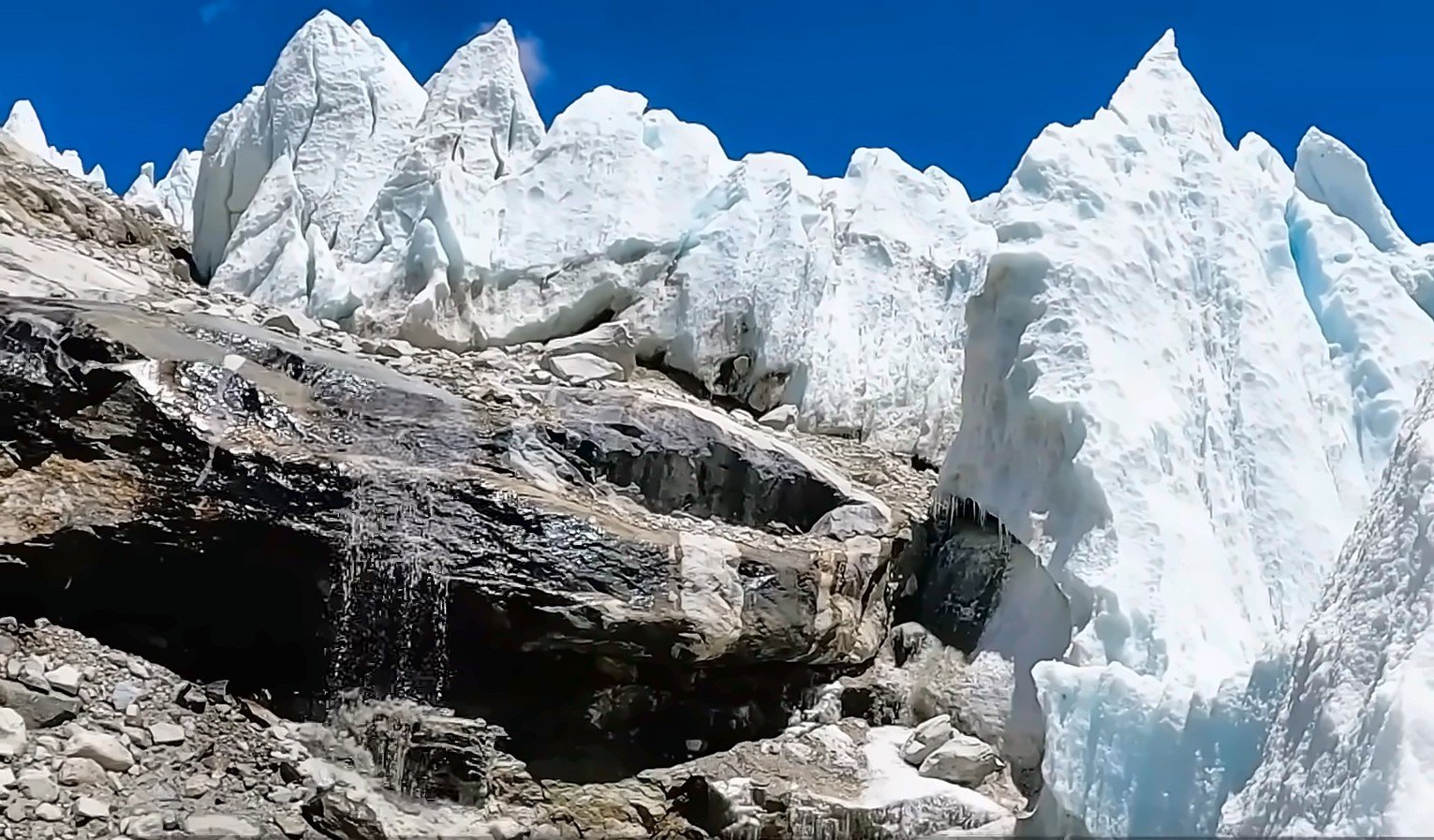
The highest acclimatization rotation may continue toward the Camp III / Makalu La zone before the team returns to Base Camp for substantial recovery.
The printed itinerary is therefore a framework rather than a rule that forces the team onto a particular camp on a particular date. Snowfall, winds, route fixing, individual acclimatization and the condition of the glacier determine the actual rotation schedule.
Oxygen and the Final Summit Push
Supplemental oxygen is commonly incorporated into modern commercial Makalu expeditions during the highest stages of the climb.
The exact starting point, cylinder allocation and flow rate depend on the confirmed service package and the climber’s strategy. Oxygen supplies can be positioned at upper camps by the high-altitude support team before the summit rotation.
When the team is sufficiently acclimatized and a suitable weather window develops, the final summit push progresses through the established high camps toward Camp IV.

The summit attempt normally begins during the night or very early morning. Climbers move through the upper mountain toward the French Couloir and exposed final ridge before reaching the 8,463-meter summit.
After the summit, descending safely becomes the immediate priority. The team aims to lose altitude efficiently rather than spending unnecessary time in the most exposed part of the mountain.
Best Season for Mount Makalu
Spring and autumn are the main expedition periods, although spring is particularly important for major Makalu summit attempts.
Spring provides a more established expedition season for route preparation and high-altitude climbing. Autumn can also offer expedition opportunities after the monsoon, depending on snow, wind and upper-mountain conditions.

Makalu should never be scheduled purely around a calendar date. Strong winds, fresh snowfall and instability on the technical upper route can delay climbing even during the normal expedition seasons.
Makalu Expedition Permits and Fees
Makalu requires an official Nepal Government climbing permit and the expedition documentation applicable to an 8,000-meter mountain.
The approach also enters Makalu-Barun National Park, so the appropriate protected-area entry permit is required.
| Current Requirement | Reference Fee |
|---|---|
| Makalu Climbing Royalty – Spring | USD 3,000 per foreign climber |
| Makalu Climbing Royalty – Autumn | USD 1,500 per foreign climber |
| Winter / Summer Royalty | USD 750 per foreign climber |
| Garbage Management Deposit | USD 3,000 per expedition team under the current category |
| Makalu-Barun National Park | NPR 3,000 per foreign visitor |
Government fees and regulations can change. Nepal Royal Tourism Holiday reconfirms the applicable permit charges and documentation when the expedition is processed.
Accommodation and Expedition Life
The Makalu Expedition uses a combination of hotels, local lodges and expedition camps.
Kathmandu accommodation is provided in a hotel, while lodges or guesthouses are used where practical during the lower Makalu-Barun approach. As the team enters the more remote upper valley, accommodation becomes increasingly camping based.

Makalu Base Camp operates as a fully organised expedition camp with sleeping tents, dining and kitchen facilities and the logistical infrastructure required for a long climbing period.
Above Base Camp, lightweight high-altitude tents are used at the climbing camps, where meals become simpler and are based on food that can be carried, melted and prepared efficiently in extreme conditions.
Safety on Makalu
Makalu combines the normal dangers of extreme altitude with a technically serious climbing route.
Glacier crevasses, unstable snow, avalanche terrain, seracs, falling ice, strong winds, severe cold and exposed mixed climbing can all influence the expedition.
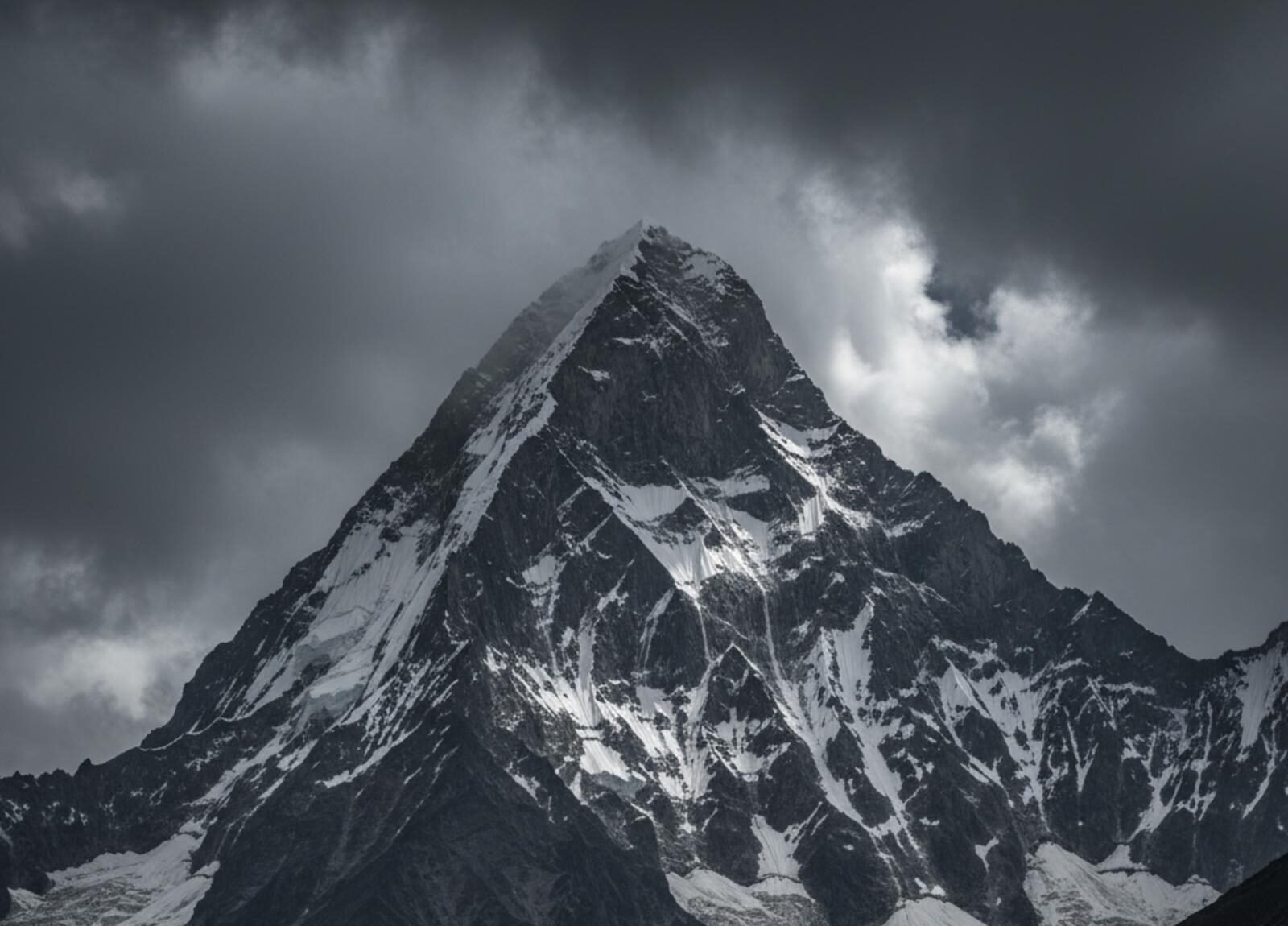
Route conditions are assessed continually rather than assuming that a line used during an earlier season remains safe. Fixed ropes, camp positions and rotation schedules may all change when the mountain changes.
Every member should carry specialist insurance that explicitly covers technical mountaineering to at least 8,463 meters, emergency medical treatment, helicopter evacuation where operationally possible and repatriation.
Why We Use a 48-Day Makalu Itinerary
A full Makalu expedition with the traditional trekking approach commonly requires approximately seven weeks. Current commercial programs using this route are offered around 47 to 50 days, while longer programs also exist.
Our 48-day itinerary keeps the parts of the expedition where time is genuinely valuable: gradual acclimatization during the approach, several climbing rotations, Base Camp recovery and flexibility around the summit window.

Rather than adding unnecessary administrative or leisure days, the schedule reserves its flexibility for weather, route conditions and high-altitude climbing.
The exact summit date can still move substantially. A 48-day itinerary should therefore be understood as the overall expedition framework, not a guarantee that every camp movement will happen on its originally printed day.
Plan Your Mount Makalu Expedition
Makalu is designed for climbers who already have a strong technical and high-altitude background. Before confirming a place, previous expedition experience, climbing ability, preferred season and the required level of Sherpa and oxygen support should be reviewed carefully.
Share your climbing history and preferred departure period with Nepal Royal Tourism Holiday. Our team can confirm current permits, expedition logistics, climbing support, oxygen allocation and the final operating plan for your Makalu Expedition.
Trip Highlights
- Take a journey from the low Arun Valley into the isolated wilderness of Makalu-Barun National Park, watching the environment change completely along the way
- Cross the dramatic Shipton La high-pass system before entering the upper Barun Valley and approaching the mountain from below
- Walk beneath Makalu’s unmistakable four-sided pyramid, one of the most striking mountain profiles in the Himalaya
- Establish expedition life at Makalu Base Camp around 4,870 m, surrounded by glaciers, moraine and enormous Himalayan walls
- Move from the trekking approach into a genuine glacier expedition through Advanced Base Camp and the lower climbing route
- Follow Makalu’s technically serious Northwest Ridge route, where steep snow, ice and mixed terrain remain important high on the mountain
- Climb toward Makalu La, one of the defining sections of the standard route and a major landmark above 7,000 meters
- Build experience progressively through four high camps rather than making a rushed move toward the summit
- Face Makalu’s famous upper mountain, where technical climbing continues even after entering the extreme-altitude zone
- Climb through the French Couloir and exposed summit-ridge terrain on the final approach to the top
- Attempt the 8,463 m summit of Mount Makalu, the fifth-highest mountain in the world
- Experience an 8,000-meter expedition with a much stronger wilderness and traditional mountaineering character than Nepal’s busiest commercial peaks
Makalu Expedition – 48 Days ~ Itinerary
Day 1
Arrival in Kathmandu
- Maximum Altitude: Kathmandu – 1,350 m
- Overnight Altitude: Kathmandu – 1,350 m
- Accommodation: Three Star Hotel in Kathmandu
Your Mount Makalu Expedition journey begins with your arrival in Kathmandu. A representative from Nepal Royal Tourism Holiday will meet you at Tribhuvan International Airport and transfer you to your hotel.
The remainder of the day is kept relaxed after your international journey. Depending on your arrival time, you can rest, organise your belongings and meet members of the expedition team.
Day 2
Expedition Briefing, Gear Check and Final Preparation
- Maximum Altitude: Kathmandu – 1,350 m
- Overnight Altitude: Kathmandu – 1,350 m
- Meal: Breakfast
- Accommodation: Three Star Hotel in Kathmandu
Today brings all Kathmandu preparations together into one focused expedition day. Personal climbing equipment, high-altitude boots, technical hardware, clothing and expedition luggage are checked before being organised for the journey into eastern Nepal.
The expedition leader reviews the Makalu-Barun approach, acclimatization rotations, high-camp system, oxygen strategy, communications and the flexible nature of the summit schedule.
Required permits and expedition documents are also checked before departure.
Day 3
Fly to Tumlingtar and Drive to Num
- Maximum Altitude: Num – approx. 1,500–1,560 m
- Overnight Altitude: Num – approx. 1,500–1,560 m
- Flight Duration: Around 40–45 minutes
- Drive Duration: Around 4–6 hours
- Drive Distance: Around 50–60 km depending on the operating road route
- Meal: Breakfast, Lunch and Dinner
- Accommodation: Lodge in Num
You take a morning flight from Kathmandu to Tumlingtar in eastern Nepal and begin the overland journey toward Num.
The drive climbs from the lower Arun Valley into increasingly mountainous country, passing through Khandbari and rural settlements before reaching the trekking trailhead.
Road conditions can affect the actual driving time, particularly after seasonal rain.
Day 4
Trek from Num to Seduwa
- Maximum Altitude: Seduwa – approx. 1,500 m
- Overnight Altitude: Seduwa – approx. 1,500 m
- Trek Duration: Around 5–6 hours
- Trek Distance: Around 8 km
- Terrain: Steep descent and sustained climb from the Arun River
- Meal: Breakfast, Lunch and Dinner
- Accommodation: Lodge in Seduwa
The walking approach begins with a steep descent from Num toward the Arun River.
After crossing the river, the trail climbs steadily through forest and cultivated hillsides toward Seduwa, the gateway settlement for the Makalu-Barun region.
Although the start and finish elevations are similar, the large descent and climb make this a substantial first trekking day.
Day 5
Trek from Seduwa to Tashigaon
- Maximum Altitude: Tashigaon – approx. 2,100 m
- Overnight Altitude: Tashigaon – approx. 2,100 m
- Trek Duration: Around 5–6 hours
- Trek Distance: Around 7–9 km
- Altitude Gain: Around 600 m
- Meal: Breakfast, Lunch and Dinner
- Accommodation: Lodge in Tashigaon
You continue through forests, terraced fields and small settlements as the route gains elevation toward Tashigaon.
The village is one of the last substantial permanent settlements before the expedition moves into the much higher and more isolated Makalu-Barun wilderness.
Day 6
Trek from Tashigaon to Khongma Danda
- Maximum Altitude: Khongma Danda – approx. 3,500–3,560 m
- Overnight Altitude: Khongma Danda – approx. 3,500–3,560 m
- Trek Duration: Around 6–7 hours
- Trek Distance: Around 7–10 km
- Altitude Gain: Around 1,400–1,460 m
- Meal: Breakfast, Lunch and Dinner
- Accommodation: Lodge / Trekking Camp
Today brings one of the largest altitude gains of the approach as you climb steeply through rhododendron and cloud forest toward Khongma Danda.
The vegetation gradually thins as the route approaches the high ridge, and the first broader views of the surrounding Himalayan landscape begin to appear.
Because of the significant gain in altitude, the following day is reserved for acclimatization.
Day 7
Acclimatization Day at Khongma Danda
- Maximum Altitude: Around 3,900–4,000 m depending on the acclimatization hike
- Overnight Altitude: Khongma Danda – approx. 3,500–3,560 m
- Activity: Acclimatization hike and recovery
- Activity Duration: Around 3–5 hours
- Meal: Breakfast, Lunch and Dinner
- Accommodation: Lodge / Trekking Camp
A dedicated acclimatization day follows yesterday’s major ascent.
You can make a controlled hike toward the higher ridge before returning to Khongma Danda for the night. This provides additional altitude exposure without carrying expedition loads over the passes immediately.
Rest, hydration and preparation for the Shipton La crossing remain the priorities.
Day 8
Cross the High Passes to Dobate
- Maximum Altitude: Shipton La area – approx. 4,200–4,220 m
- Overnight Altitude: Dobate – approx. 3,600–3,650 m
- Trek Duration: Around 6–8 hours
- Trek Distance: Around 8–11 km
- Terrain: High passes, rocky trail and steep descents
- Meal: Breakfast, Lunch and Dinner
- Accommodation: Lodge / Trekking Camp at Dobate
The route crosses one of the most dramatic sections of the Makalu approach, climbing through a series of high passes including the Shipton La area.
The trail repeatedly rises and falls through exposed alpine country, with weather conditions capable of changing quickly around the passes.
After completing the high crossing, you descend toward Dobate for the night.
Day 9
Trek from Dobate to Yangle Kharka
- Maximum Altitude: Around 3,650 m
- Overnight Altitude: Yangle Kharka – approx. 3,550–3,600 m
- Trek Duration: Around 6–7 hours
- Trek Distance: Around 9–10 km
- Terrain: Forest descent followed by the upper Barun Valley trail
- Meal: Breakfast, Lunch and Dinner
- Accommodation: Lodge / Trekking Camp at Yangle Kharka
You descend from the high ridge through forest before entering the broad upper Barun Valley.
The landscape changes noticeably as the route begins following the Barun River through increasingly open alpine terrain.
Yangle Kharka provides a useful staging point before the expedition begins gaining altitude more aggressively toward Base Camp.
Day 10
Trek from Yangle Kharka to Langmale Kharka
- Maximum Altitude: Langmale Kharka – approx. 4,410 m
- Overnight Altitude: Langmale Kharka – approx. 4,410 m
- Trek Duration: Around 5–6 hours
- Trek Distance: Around 10–11 km
- Altitude Gain: Around 800–850 m
- Meal: Breakfast, Lunch and Dinner
- Accommodation: Lodge / Trekking Camp at Langmale Kharka
The trail continues deeper into the upper Barun Valley as vegetation becomes increasingly sparse.
You pass through alpine meadows and rocky terrain while gaining nearly 800 meters of elevation toward Langmale Kharka.
The surrounding peaks now dominate the valley, signalling that Makalu Base Camp is close.
Day 11
Trek from Langmale Kharka to Makalu Base Camp
- Maximum Altitude: Makalu Base Camp – approx. 4,870 m
- Overnight Altitude: Makalu Base Camp – approx. 4,870 m
- Trek Duration: Around 5–6 hours
- Trek Distance: Around 8–9 km
- Altitude Gain: Around 450–500 m
- Meal: Breakfast, Lunch and Dinner
- Accommodation: Expedition Tent at Makalu Base Camp
You continue through moraine and the glacial upper valley toward Makalu Base Camp.
The enormous pyramid of Makalu increasingly dominates the surroundings as the expedition reaches approximately 4,870 meters.
Base Camp becomes the main recovery and logistical centre for the climbing phase ahead.
Day 12
Rest and Acclimatization at Makalu Base Camp
- Maximum Altitude: Around 5,000–5,100 m depending on the acclimatization walk
- Overnight Altitude: Makalu Base Camp – approx. 4,870 m
- Activity: Rest, acclimatization and camp orientation
- Meal: Breakfast, Lunch and Dinner
- Accommodation: Expedition Tent at Makalu Base Camp
Your first full day at Base Camp is deliberately unhurried after the long approach.
A short acclimatization walk may be completed depending on conditions, but the main objectives are recovery, hydration and becoming familiar with the expedition camp.
Equipment and loads for the first climbing rotation are also organised.
Day 13
Puja Ceremony and Technical Preparation
- Maximum Altitude: Makalu Base Camp area – approx. 4,870 m
- Overnight Altitude: Makalu Base Camp – approx. 4,870 m
- Activity: Puja ceremony, technical training and route preparation
- Meal: Breakfast, Lunch and Dinner
- Accommodation: Expedition Tent at Makalu Base Camp
The traditional expedition puja ceremony is held before the team begins serious climbing on Makalu.
Technical systems are then reviewed, including crampon movement, glacier travel, fixed-rope ascending, descending and equipment management.
The climbing team also reviews the route toward Advanced Base Camp and the current condition of the glacier.
Day 14
First Rotation – Base Camp to Advanced Base Camp
- Maximum Altitude: Advanced Base Camp – approx. 5,600–5,700 m
- Overnight Altitude: Advanced Base Camp – approx. 5,600–5,700 m
- Climbing Duration: Around 5–7 hours depending on glacier conditions
- Climb Distance: Route-dependent and variable with the seasonal glacier line
- Altitude Gain: Around 700–830 m
- Meal: High-Altitude Meals and Expedition Rations
- Accommodation: Expedition Tent at Advanced Base Camp
The first climbing rotation begins as you leave Base Camp and enter the glacier environment toward Advanced Base Camp.
Crevasses, moraine and changing snow conditions require careful movement as the expedition transitions from trekking to technical mountaineering.
ABC becomes an important staging point for the higher camps.
Day 15
Climb from Advanced Base Camp to Camp I
- Maximum Altitude: Camp I – approx. 6,100–6,150 m
- Overnight Altitude: Camp I – approx. 6,100–6,150 m
- Climbing Duration: Around 4–5 hours
- Climb Distance: Route-dependent
- Altitude Gain: Around 400–550 m
- Meal: High-Altitude Meals and Expedition Rations
- Accommodation: High-Altitude Tent at Camp I
You climb from ABC toward Camp I through glacier and mixed terrain.
Crevasses and icy sections may require fixed ropes or careful rope-team movement depending on conditions.
The overnight stay above 6,000 meters provides the first major high-altitude exposure of the climbing phase.
Day 16
Acclimatization Above Camp I
- Maximum Altitude: Above Camp I according to the planned acclimatization high point
- Overnight Altitude: Camp I – approx. 6,100–6,150 m
- Climbing Duration: Around 4–6 hours
- Climb Distance: Route-dependent
- Activity: Controlled acclimatization climb
- Meal: High-Altitude Meals and Expedition Rations
- Accommodation: High-Altitude Tent at Camp I
You climb above Camp I for further altitude exposure before returning to the same camp.
The objective is not to reach Camp II during the first rotation but to gain useful acclimatization while keeping fatigue under control.
Day 17
Descend to Makalu Base Camp
- Maximum Altitude: Camp I – approx. 6,100–6,150 m
- Overnight Altitude: Makalu Base Camp – approx. 4,870 m
- Climbing Duration: Route-dependent
- Climb Distance: Variable with the glacier route
- Altitude Loss: Around 1,200–1,300 m
- Meal: Breakfast, Lunch and Dinner
- Accommodation: Expedition Tent at Base Camp
You descend through Advanced Base Camp and continue to Makalu Base Camp.
The large reduction in altitude allows the body to recover more effectively after the first nights above 5,500 and 6,000 meters.
Day 18
Rest and Recovery at Base Camp
- Maximum Altitude: Makalu Base Camp – approx. 4,870 m
- Overnight Altitude: Makalu Base Camp – approx. 4,870 m
- Activity: Full recovery day
- Meal: Breakfast, Lunch and Dinner
- Accommodation: Expedition Tent at Base Camp
A complete recovery day follows the first rotation.
Food, hydration and sleep become the priorities while the climbing team checks the route and prepares equipment for the next move toward Camp II.
Day 19
Second Rotation – Base Camp to Advanced Base Camp
- Maximum Altitude: Advanced Base Camp – approx. 5,600–5,700 m
- Overnight Altitude: Advanced Base Camp – approx. 5,600–5,700 m
- Climbing Duration: Around 5–7 hours
- Climb Distance: Route-dependent
- Altitude Gain: Around 700–830 m
- Meal: High-Altitude Meals and Expedition Rations
- Accommodation: Expedition Tent at ABC
You return to Advanced Base Camp to begin the second acclimatization rotation.
The lower climbing route is now more familiar, allowing the team to concentrate on efficient movement and preparation for Camp I and Camp II.
Day 20
Advanced Base Camp to Camp I
- Maximum Altitude: Camp I – approx. 6,100–6,150 m
- Overnight Altitude: Camp I – approx. 6,100–6,150 m
- Climbing Duration: Around 4–5 hours
- Climb Distance: Route-dependent
- Altitude Gain: Around 400–550 m
- Meal: High-Altitude Meals and Expedition Rations
- Accommodation: High-Altitude Tent at Camp I
You climb back to Camp I and prepare for the first overnight at Camp II during this rotation.
The focus remains on efficient rope work and conserving energy for the higher terrain ahead.
Day 21
Climb from Camp I to Camp II
- Maximum Altitude: Camp II – approx. 6,500–6,700 m
- Overnight Altitude: Camp II – approx. 6,500–6,700 m
- Climbing Duration: Around 4–6 hours
- Climb Distance: Route-dependent
- Altitude Gain: Around 350–600 m
- Meal: High-Altitude Meals and Expedition Rations
- Accommodation: High-Altitude Tent at Camp II
The route from Camp I to Camp II combines glacier, ice and mixed terrain with fixed ropes used on the more demanding sections.
As the altitude increases, movement becomes slower despite the relatively moderate vertical gain.
The overnight stay around 6,500–6,700 meters is an important part of summit preparation.
Day 22
Acclimatization Above Camp II
- Maximum Altitude: Above Camp II according to the planned high point
- Overnight Altitude: Camp II – approx. 6,500–6,700 m
- Climbing Duration: Around 4–6 hours
- Climb Distance: Route-dependent
- Activity: Controlled upper-mountain acclimatization
- Meal: High-Altitude Meals and Expedition Rations
- Accommodation: High-Altitude Tent at Camp II
You climb above Camp II for additional altitude exposure before returning to camp.
The objective is to introduce the upper mountain without forcing an early move toward Makalu La or Camp III.
Another night at Camp II strengthens the acclimatization gained during this rotation.
Day 23
Descend to Makalu Base Camp
- Maximum Altitude: Camp II – approx. 6,500–6,700 m
- Overnight Altitude: Makalu Base Camp – approx. 4,870 m
- Climbing Duration: Route-dependent
- Climb Distance: Variable with the established climbing route
- Altitude Loss: Around 1,600–1,800 m
- Meal: Breakfast, Lunch and Dinner
- Accommodation: Expedition Tent at Base Camp
You descend through Camp I and ABC toward Makalu Base Camp.
Returning below 5,000 meters gives the body considerably better conditions for recovery after sleeping near 6,700 meters.
Day 24
Full Recovery at Base Camp
- Maximum Altitude: Makalu Base Camp – approx. 4,870 m
- Overnight Altitude: Makalu Base Camp – approx. 4,870 m
- Activity: Full recovery day
- Meal: Breakfast, Lunch and Dinner
- Accommodation: Expedition Tent at Base Camp
Today is used entirely for recovery after the Camp II rotation.
You rest, eat and hydrate while the support team continues preparing the upper route and positioning supplies higher on the mountain.
Day 25
Weather Review and Upper-Route Preparation
- Maximum Altitude: Makalu Base Camp – approx. 4,870 m
- Overnight Altitude: Makalu Base Camp – approx. 4,870 m
- Activity: Weather monitoring, equipment preparation and route assessment
- Meal: Breakfast, Lunch and Dinner
- Accommodation: Expedition Tent at Base Camp
The expedition reviews upper-mountain conditions before beginning the highest acclimatization rotation.
Forecast winds, snowfall, route fixing, high-camp supplies and individual recovery are assessed before committing toward the Makalu La zone.
Day 26
Third Rotation – Base Camp to Advanced Base Camp
- Maximum Altitude: Advanced Base Camp – approx. 5,600–5,700 m
- Overnight Altitude: Advanced Base Camp – approx. 5,600–5,700 m
- Climbing Duration: Around 5–7 hours
- Climb Distance: Route-dependent
- Altitude Gain: Around 700–830 m
- Meal: High-Altitude Meals and Expedition Rations
- Accommodation: Expedition Tent at ABC
The third rotation begins as you move back to Advanced Base Camp.
The purpose of this rotation is to extend acclimatization toward the upper mountain before the final summit campaign.
Day 27
Advanced Base Camp to Camp I
- Maximum Altitude: Camp I – approx. 6,100–6,150 m
- Overnight Altitude: Camp I – approx. 6,100–6,150 m
- Climbing Duration: Around 4–5 hours
- Climb Distance: Route-dependent
- Altitude Gain: Around 400–550 m
- Meal: High-Altitude Meals and Expedition Rations
- Accommodation: High-Altitude Tent at Camp I
You continue from ABC to Camp I through familiar glacier terrain.
Energy conservation now becomes increasingly important because the team intends to climb higher than during previous rotations.
Day 28
Climb from Camp I to Camp II
- Maximum Altitude: Camp II – approx. 6,500–6,700 m
- Overnight Altitude: Camp II – approx. 6,500–6,700 m
- Climbing Duration: Around 4–6 hours
- Climb Distance: Route-dependent
- Altitude Gain: Around 350–600 m
- Meal: High-Altitude Meals and Expedition Rations
- Accommodation: High-Altitude Tent at Camp II
You move from Camp I to Camp II and return to the high-altitude environment above 6,500 meters.
The team rests early and prepares for the highest acclimatization movement of the expedition.
Day 29
Acclimatization Climb Toward Camp III and Makalu La
- Maximum Altitude: Upper route toward Camp III – according to conditions, potentially above 7,000 m
- Overnight Altitude: Camp II – approx. 6,500–6,700 m
- Climbing Duration: Around 6–8 hours round trip
- Climb Distance: Route-dependent
- Activity: Highest acclimatization climb before summit campaign
- Meal: High-Altitude Expedition Rations
- Accommodation: High-Altitude Tent at Camp II
You climb toward the upper Camp III and Makalu La route, reaching the highest safe acclimatization point selected by the expedition leader.
The purpose is exposure to the very high mountain rather than an unnecessary early stay at Camp III around 7,300–7,400 meters.
After reaching the planned high point, you descend to Camp II for the night.
Day 30
Descend to Makalu Base Camp
- Maximum Altitude: Camp II – approx. 6,500–6,700 m
- Overnight Altitude: Makalu Base Camp – approx. 4,870 m
- Climbing Duration: Route-dependent
- Climb Distance: Variable with glacier conditions
- Altitude Loss: Around 1,600–1,800 m
- Meal: Breakfast, Lunch and Dinner
- Accommodation: Expedition Tent at Base Camp
You descend through the lower camps and return to Base Camp after completing the highest acclimatization rotation.
The main acclimatization work is now complete, and the focus shifts toward recovery and identifying the summit window.
Day 31
Full Recovery at Base Camp
- Maximum Altitude: Makalu Base Camp – approx. 4,870 m
- Overnight Altitude: Makalu Base Camp – approx. 4,870 m
- Activity: Full recovery
- Meal: Breakfast, Lunch and Dinner
- Accommodation: Expedition Tent at Base Camp
Today is dedicated to complete recovery after the third rotation.
You minimise unnecessary activity and focus on food, hydration and sleep while the effects of the previous high-altitude exposure are absorbed.
Day 32
Summit Weather Watch and Final Preparation
- Maximum Altitude: Makalu Base Camp – approx. 4,870 m
- Overnight Altitude: Makalu Base Camp – approx. 4,870 m
- Activity: Weather review, oxygen preparation and summit checks
- Meal: Breakfast, Lunch and Dinner
- Accommodation: Expedition Tent at Base Camp
The expedition leader studies the developing weather window and conditions on the upper ridge.
Oxygen systems, masks, regulators, summit clothing, food, headlamps and technical equipment are checked before the final rotation.
If the weather window has not developed, this day can be moved within the climbing schedule rather than forcing the team upward.
Day 33
Begin Summit Rotation – Base Camp to Advanced Base Camp
- Maximum Altitude: Advanced Base Camp – approx. 5,600–5,700 m
- Overnight Altitude: Advanced Base Camp – approx. 5,600–5,700 m
- Climbing Duration: Around 5–7 hours
- Climb Distance: Route-dependent
- Altitude Gain: Around 700–830 m
- Meal: High-Altitude Meals and Expedition Rations
- Accommodation: Expedition Tent at ABC
With an acceptable weather window developing, you leave Base Camp and begin the final summit rotation.
The route is now familiar, and the priority is to climb efficiently while preserving energy for the technical upper mountain.
Day 34
Advanced Base Camp to Camp I
- Maximum Altitude: Camp I – approx. 6,100–6,150 m
- Overnight Altitude: Camp I – approx. 6,100–6,150 m
- Climbing Duration: Around 4–5 hours
- Climb Distance: Route-dependent
- Altitude Gain: Around 400–550 m
- Meal: High-Altitude Expedition Rations
- Accommodation: High-Altitude Tent at Camp I
You climb from Advanced Base Camp to Camp I.
The day’s movement is deliberately controlled, allowing the team to arrive with enough energy for the increasingly serious stages ahead.
Day 35
Climb from Camp I to Camp II
- Maximum Altitude: Camp II – approx. 6,500–6,700 m
- Overnight Altitude: Camp II – approx. 6,500–6,700 m
- Climbing Duration: Around 4–6 hours
- Climb Distance: Route-dependent
- Altitude Gain: Around 350–600 m
- Meal: High-Altitude Expedition Rations
- Accommodation: High-Altitude Tent at Camp II
You continue from Camp I to Camp II.
Supplemental oxygen may be introduced around this stage according to the confirmed climbing strategy and individual requirements.
After reaching camp, hydration and rest become the priorities before entering the Makalu La zone.
Day 36
Climb from Camp II to Camp III
- Maximum Altitude: Camp III – approx. 7,300–7,400 m
- Overnight Altitude: Camp III – approx. 7,300–7,400 m
- Climbing Duration: Around 5–7 hours
- Climb Distance: Route-dependent
- Altitude Gain: Around 700–900 m
- Meal: High-Altitude Expedition Rations
- Accommodation: High-Altitude Tent at Camp III
You climb from Camp II toward Camp III in the Makalu La region.
The route is long and increasingly exposed as the expedition enters the very-high-altitude zone above 7,000 meters.
Fixed ropes, steep snow and changing mixed terrain may all feature according to the route established during the season.
Day 37
Climb from Camp III to Camp IV
- Maximum Altitude: Camp IV – approx. 7,600–7,800 m
- Overnight Altitude: Camp IV – approx. 7,600–7,800 m
- Climbing Duration: Around 4–6 hours depending on camp placement
- Climb Distance: Route-dependent
- Altitude Gain: Around 300–500 m
- Meal: High-Altitude Expedition Rations
- Accommodation: High-Altitude Tent at Camp IV
You move from Camp III toward the final summit camp on the upper mountain.
Although the vertical gain is smaller than on previous days, movement near 7,800 meters is slow and physically expensive.
Once at Camp IV, the team rests, hydrates and makes final preparations for the summit attempt, which normally begins during the night.
Day 38
Summit Attempt to Mount Makalu 8,463 m
- Maximum Altitude: Mount Makalu Summit – 8,463 m
- Overnight Altitude: Camp III, Camp II or another safe lower position depending on descent progress
- Climbing Duration: Long summit day; commonly around 10–14 hours depending on conditions
- Climb Distance: Route-dependent and variable with the established summit line
- Altitude Gain: Around 650–850 m from Camp IV
- Meal: High-Altitude Expedition Rations
- Accommodation: High-Altitude Tent
The summit attempt begins during the night or very early morning from Camp IV. Using supplemental oxygen according to the confirmed strategy, you begin climbing toward Makalu’s distinctive summit pyramid.
The upper route remains technical at extreme altitude. Depending on the line fixed during the season, climbers negotiate steep snow, ice and mixed terrain toward the French Couloir and the exposed final ridge.
The combination of technical movement and altitude makes efficient climbing particularly important above 8,000 meters.
After reaching the 8,463-meter summit of Mount Makalu, the descent begins immediately. The team aims to return through the upper camps and reach the safest practical lower position according to daylight, weather, oxygen supply and individual condition.
The summit attempt proceeds only while conditions remain acceptable. Turnaround decisions are based on the ability to descend safely rather than the printed itinerary.
Day 39
Summit Contingency and Upper-Mountain Descent
- Maximum Altitude: Up to Mount Makalu Summit – 8,463 m if required
- Overnight Altitude: Depends on the active summit and descent schedule
- Activity: Summit contingency or descent through the high camps
- Meal: Expedition Meals and High-Altitude Rations
- Accommodation: High-Altitude Tent
This day provides flexibility around the summit window.
If wind, snowfall or route conditions delayed the planned attempt, the climbing sequence may shift and today can become the summit day.
If the summit was completed on schedule, you continue descending through Camp III, Camp II and toward lower terrain.
Day 40
Return to Makalu Base Camp
- Maximum Altitude: Depends on the previous overnight camp
- Overnight Altitude: Makalu Base Camp – approx. 4,870 m
- Climbing Duration: Route-dependent
- Climb Distance: Depends on the previous overnight position
- Altitude Loss: Significant descent from the high camps
- Meal: Breakfast, Lunch and Dinner
- Accommodation: Expedition Tent at Base Camp
You continue through the lower climbing camps and return to Makalu Base Camp.
Reaching Base Camp marks the end of the main climbing phase and provides much better conditions for food, sleep and physical recovery.
Day 41
Recovery and Base Camp Cleanup
- Maximum Altitude: Makalu Base Camp – approx. 4,870 m
- Overnight Altitude: Makalu Base Camp – approx. 4,870 m
- Activity: Recovery, equipment packing and expedition cleanup
- Meal: Breakfast, Lunch and Dinner
- Accommodation: Expedition Tent at Base Camp
A final day at Base Camp allows the team to recover after the summit rotation and begin closing the expedition camp.
Climbing equipment is consolidated, loads are organised and environmental and waste-management responsibilities are completed before the return trek.
Day 42
Trek from Makalu Base Camp to Yangle Kharka
- Maximum Altitude: Makalu Base Camp – approx. 4,870 m
- Overnight Altitude: Yangle Kharka – approx. 3,550–3,600 m
- Trek Duration: Around 7–8 hours
- Trek Distance: Around 17–20 km
- Altitude Loss: Around 1,300 m
- Meal: Breakfast, Lunch and Dinner
- Accommodation: Lodge / Trekking Camp at Yangle Kharka
You leave Makalu Base Camp and descend rapidly through the upper Barun Valley.
After weeks in the expedition environment, the return to lower altitude is immediately noticeable as the air becomes thicker and the valley gradually regains vegetation.
Day 43
Trek from Yangle Kharka to Khongma Danda
- Maximum Altitude: Shipton La area – approx. 4,200–4,220 m
- Overnight Altitude: Khongma Danda – approx. 3,500–3,560 m
- Trek Duration: Long trekking day; around 8–10 hours depending on conditions
- Trek Distance: Around 16–19 km
- Terrain: Valley trail followed by the high-pass crossing
- Meal: Breakfast, Lunch and Dinner
- Accommodation: Lodge / Trekking Camp at Khongma Danda
The expedition climbs back from the Barun Valley toward Dobate and continues across the high-pass system toward Khongma Danda.
This is a long return day, but the team is fully acclimatized after the expedition. Conditions around Shipton La still require careful pacing, particularly if snow remains on the passes.
Day 44
Trek from Khongma Danda to Seduwa
- Maximum Altitude: Khongma Danda – approx. 3,500–3,560 m
- Overnight Altitude: Seduwa – approx. 1,500 m
- Trek Duration: Around 7–9 hours
- Trek Distance: Around 14–18 km
- Altitude Loss: Around 2,000 m
- Meal: Breakfast, Lunch and Dinner
- Accommodation: Lodge in Seduwa
You make a long descent through the forests toward Tashigaon and continue into the lower Makalu-Barun region.
The change in climate and vegetation is dramatic after the weeks spent on the glacier and upper mountain.
You eventually reach Seduwa for the night.
Day 45
Trek to Num and Drive to Tumlingtar
- Maximum Altitude: Num – approx. 1,500–1,560 m
- Overnight Altitude: Tumlingtar – approx. 400–500 m
- Trek Duration: Around 5–6 hours
- Trek Distance: Around 8 km
- Drive Duration: Around 4–6 hours depending on road conditions
- Meal: Breakfast, Lunch and Dinner
- Accommodation: Lodge / Hotel in Tumlingtar
The final trekking day descends from Seduwa toward the Arun River before making the last climb back to Num.
At Num, vehicles meet the expedition for the drive back toward Tumlingtar.
Arrival time depends heavily on road conditions, so the day remains flexible.
Day 46
Fly from Tumlingtar to Kathmandu
- Maximum Altitude: Kathmandu – 1,350 m
- Overnight Altitude: Kathmandu – 1,350 m
- Flight Duration: Around 40–45 minutes
- Activity: Domestic flight and hotel transfer
- Meal: Breakfast
- Accommodation: Three Star Hotel in Kathmandu
You take the scheduled flight from Tumlingtar back to Kathmandu, subject to weather and aircraft operations.
After arrival, you transfer to your hotel and return to normal accommodation after several weeks in the Makalu-Barun wilderness.
Day 47
Recovery and Contingency Day in Kathmandu
- Maximum Altitude: Kathmandu – 1,350 m
- Overnight Altitude: Kathmandu – 1,350 m
- Activity: Recovery, contingency and free time
- Meal: Breakfast
- Accommodation: Three Star Hotel in Kathmandu
The final full day is kept as a useful contingency buffer after the expedition.
If summit timing, the return trek, road travel or the Tumlingtar flight caused a delay, this day helps protect the international departure schedule.
If everything has remained on schedule, the day is free for rest, shopping or sightseeing in Kathmandu.
Day 48
Final Departure
- Maximum Altitude: Kathmandu – 1,350 m
- Overnight Altitude: None
- Activity: Airport transfer and international departure
- Meal: Breakfast
- Accommodation: None
Your 48-day Mount Makalu Expedition comes to an end today.
Depending on your international flight schedule, you may have some free time before a Nepal Royal Tourism Holiday representative transfers you to Tribhuvan International Airport.
The expedition concludes after a journey from the Arun Valley and Makalu-Barun wilderness to Makalu Base Camp, followed by progressive rotations through the high camps and the planned summit attempt on Mount Makalu at 8,463 m.
Important Expedition Note: This 48-day itinerary is a working expedition framework rather than a fixed mountain calendar. The exact position of Advanced Base Camp and the high camps, climbing rotations, supplemental oxygen strategy, summit date, fixed-rope progress and return schedule may change according to glacier conditions, snowfall, wind, individual acclimatization and the expedition leader’s assessment. Weather or route conditions may require climbing and recovery days to move within the overall program.
Trip Cost Includes/Excludes
Cost Includes
- Airport pickup and departure transfer in Kathmandu
- Kathmandu hotel accommodation according to the itinerary
- Kathmandu–Tumlingtar–Kathmandu domestic flights
- Ground transportation between Tumlingtar and Num
- Makalu climbing permit and required expedition administration
- Makalu-Barun National Park entry arrangement
- Expedition leader and professional climbing support
- Climbing Sherpa support according to the confirmed service level
- Porter support for the Makalu-Barun approach
- Staff transport, meals, wages and expedition accommodation
- Lodges or trekking accommodation where available on the lower approach
- Organised camping in remote sections of the Barun Valley
- Full Makalu Base Camp sleeping-tent setup
- Base Camp dining, kitchen and hygiene facilities
- Meals throughout the organised trekking and camping program
- Base Camp meals prepared by the expedition kitchen team
- High-altitude food and climbing rations
- High-camp tents according to the confirmed expedition package
- Shared fixed-rope and route-fixing logistics
- Shared expedition climbing infrastructure
- Supplemental oxygen according to the agreed allocation
- Oxygen mask and regulator according to the selected package
- Expedition communication systems
- Weather forecasting and summit-window coordination
- High-altitude logistics and movement of group equipment between camps
- Expedition completion certificate and T-shirt from company
Cost Excludes
- International flights to and from Nepal
- Nepal tourist visa fee
- Personal high-altitude mountaineering insurance
- Emergency helicopter evacuation or rescue costs
- Personal medical tests and medications
- 8,000-meter mountaineering boots
- Personal crampons and ice axe
- Climbing harness and helmet
- Ascender, descender and personal carabiners
- Expedition down suit and personal technical clothing
- Extreme-cold sleeping bag and personal sleeping system
- Personal trekking and climbing equipment not listed as included
- Personal satellite phone or communication charges
- Laundry, internet, charging and other personal services
- Snacks, bottled drinks and personal purchases
- Extra hotel nights caused by personal itinerary changes or international flight delays
- Extra baggage charges beyond the included allowance
- Additional personal Sherpa services beyond the confirmed package
- Tips and gratuities for guides, Sherpas, porters and expedition staff
- Expenses resulting from personal withdrawal or early departure
- Any service not specifically stated in the confirmed expedition package
Trip Photo/Video Gallery



Frequently Asked Questions
Mount Makalu rises to 8,463 meters / 27,766 feet according to the elevation, making it the fifth-highest mountain in the world.
Our program is planned for 48 days from Kathmandu to Kathmandu. The schedule includes the Makalu-Barun approach, acclimatization rotations, Base Camp recovery, summit contingency and the return to Tumlingtar.
Yes. Makalu is considered a technically serious 8,000-meter objective because steep snow, ice and mixed terrain continue very high on the mountain. The summit pyramid and upper ridge demand more technical competence than many standard commercial routes.
The expedition follows the standard Northwest Ridge route through the Makalu La area before continuing toward the upper mountain and summit pyramid.
You should already have strong high-altitude mountaineering experience and be comfortable with crampons, an ice axe, fixed ropes, ascenders, descenders and glacier travel. Technical 6,000-meter and 7,000-meter experience is strongly recommended, and previous 8,000-meter experience is a major advantage.
The working structure normally includes Advanced Base Camp followed by Camp I, Camp II, Camp III and probably Camp IV. Exact locations vary with glacier conditions, snow accumulation and the route fixed during the season.
Makalu La is a high saddle on the standard route and one of the defining parts of the climb. Reaching this area means the expedition is already operating deep in the extreme-altitude zone before continuing toward the summit pyramid.
The summit section remains technical at very high altitude. Climbers may encounter steep snow, ice and mixed terrain through the French Couloir and final exposed ridge rather than simply walking up a broad summit slope.
Yes, supplemental oxygen is commonly used during the upper stages and summit push on modern commercial Makalu expeditions. The exact starting altitude and cylinder allocation depend on the agreed climbing strategy.
Spring is one of the main seasons for Makalu expeditions and generally offers the most established climbing environment. Autumn can also be used depending on snow, wind and upper-mountain conditions.
Very remote. After flying to Tumlingtar and travelling toward Num, the expedition enters the Makalu-Barun region on foot. Beyond the lower settlements, facilities become limited and the expedition increasingly depends on organised porters, camping support and Base Camp logistics.
Yes. On Makalu, the printed itinerary is a framework rather than a fixed climbing calendar. Glacier conditions, rope fixing, snowfall, wind, acclimatization and the summit window can all change when the team moves between camps or attempts the summit.
You may also like


Menu