


Group Trekking in Nepal: Guided Himalayan Adventures for Friends, Families and Travel Groups
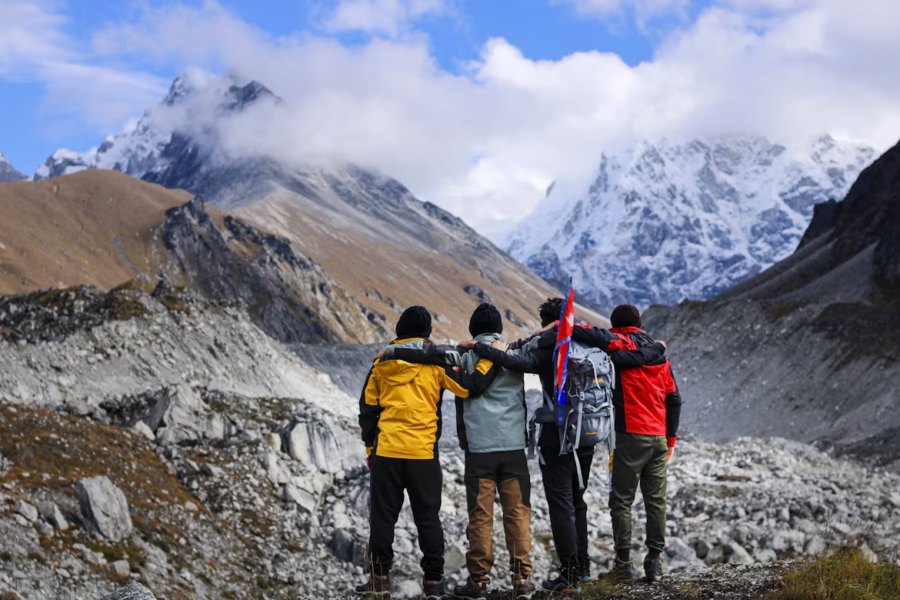
Sharing a Himalayan adventure with other people can make trekking in Nepal an entirely different experience.
Long climbs become conversations, teahouse evenings are shared around the same table, and reaching a viewpoint or base camp becomes something the whole group remembers together.
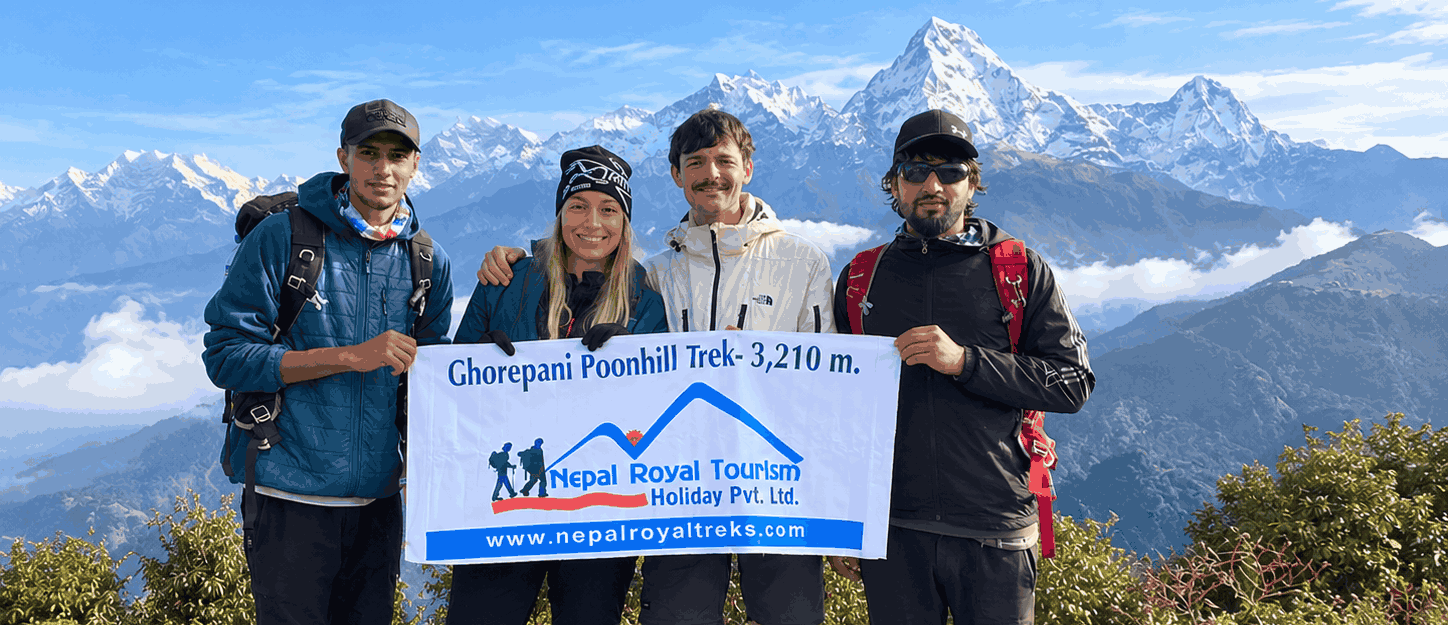
But group trekking in Nepal does not always mean arriving with ten friends. You might already have your own group, be organising a family or university trip, or be travelling alone and hoping to join other trekkers heading towards the same destination.
These arrangements work differently. A private group can plan around its own dates and requirements, while a group-joining departure depends on whether a suitable scheduled trip is actually available.

Choosing between them depends on your travel dates, budget, preferred route, experience and how much flexibility you want.
Nepal Royal Tourism Holiday can help organise private group treks and discuss group-joining possibilities where suitable departures are available.
This guide explains how the different options work, which Nepal treks are worth considering for groups, what affects the cost and what to think about when people in the same group walk at different speeds or respond differently to altitude.
Can You Join a Trekking Group in Nepal?
Yes. Travellers can trek as part of a private group they organise themselves or, where available, join other travellers on a scheduled departure.
If you are travelling alone, send your preferred trek and travel dates to Nepal Royal Tourism Holiday. A suitable group departure may be available, or you can compare a private option if no matching group is confirmed.
The important part is to not assume every trek has a group leaving on every date. Join-in departures should always be confirmed before you make travel plans around them.
What Does Group Trekking in Nepal Mean?
Group trekking means completing a trekking itinerary with other people rather than arranging the entire journey as a completely independent traveller. The group might consist of people who already know one another or travellers who meet because they have joined the same departure.
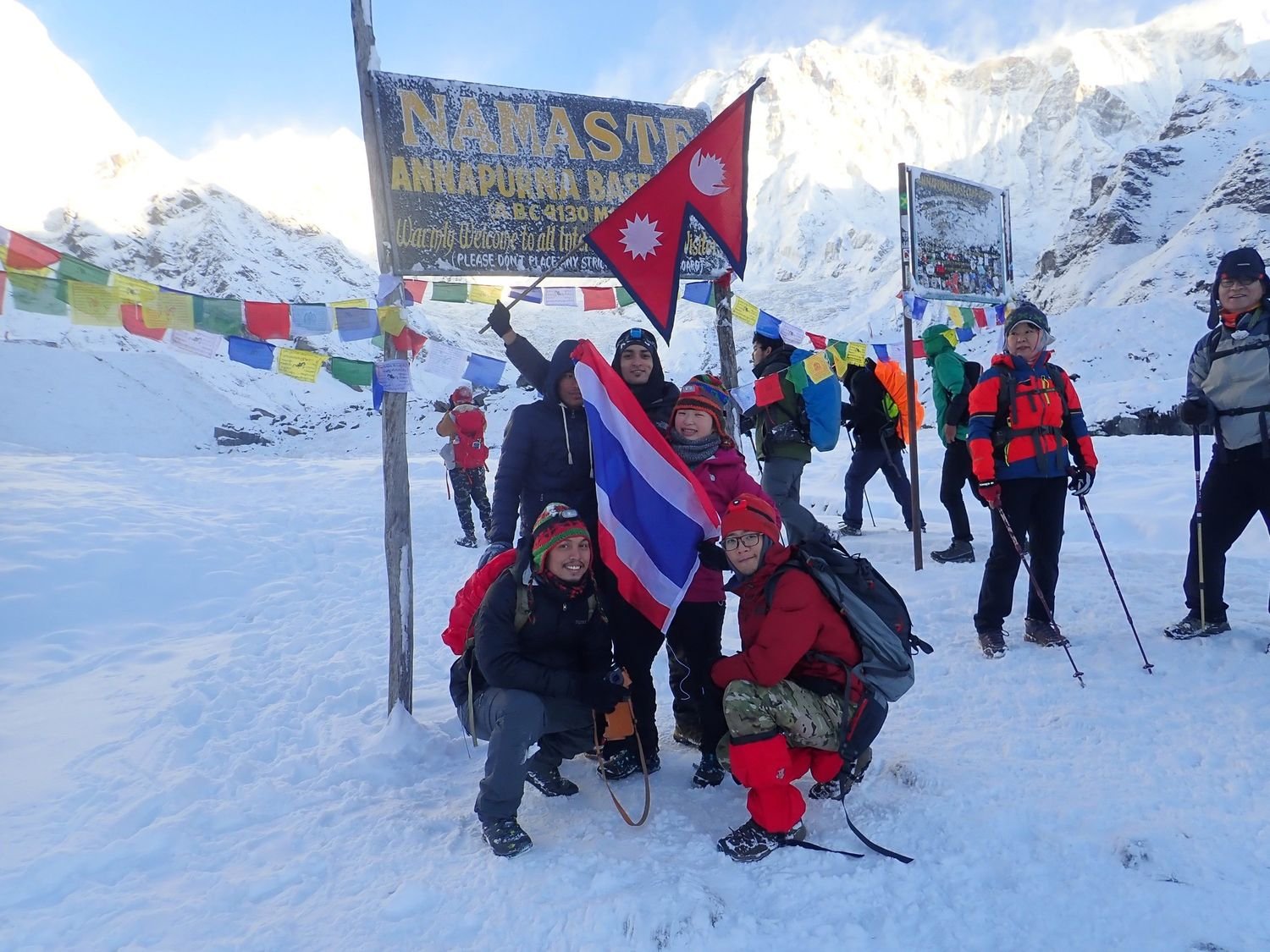
A guided group trek normally follows an agreed route and daily schedule. Depending on the trek package, arrangements may include a trekking guide, porter support, accommodation, meals, permits, domestic transportation and transfers between the city and trailhead.
The exact services are not identical on every trek, which is why the itinerary and written inclusions should always be reviewed before booking.
| Group Style | How It Works | Who It Suits |
|---|---|---|
| Private group trek | Your own group travels together on an agreed itinerary and preferred dates, subject to route requirements and availability. | Friends, families, couples, clubs, university groups and organisations. |
| Join-in group departure | Individual travellers reserve a place on a suitable scheduled departure where one is available. | Solo travellers, couples and people who enjoy meeting other trekkers. |
| Custom group trek | The group discusses its dates, destination, available days and service requirements before settling on the itinerary. | Groups with specific schedules, interests or accommodation preferences. |
| Community hike | Usually a shorter social hike or outdoor activity rather than a complete multi-day Himalayan package. | People wanting a day hike, weekend walk or casual social outdoor experience. |
Private Group Trek vs Join-In Group Trek
The biggest difference is control over the trip. With a private group, you already know who is travelling and can discuss dates and arrangements around that group. A join-in departure brings together travellers who may not know one another beforehand and usually follows a more fixed schedule.
| Planning Point | Private Group | Join-In Group |
|---|---|---|
| Departure date | Can be discussed around your group’s travel plans. | Usually follows a scheduled departure. |
| Group members | People you already know. | May include travellers who meet for the first time. |
| Flexibility | Generally easier to discuss group-specific preferences. | Usually less flexible because everyone follows the same itinerary. |
| Social experience | Shared mainly with your existing friends or family. | Opportunity to meet travellers from different backgrounds. |
| Availability | Can be discussed directly for your preferred dates. | Depends on an actual suitable group departure being available. |
Travelling Alone? How Joining a Trekking Group Works
Solo travel does not necessarily mean trekking alone. Many travellers arrive in Nepal independently but prefer to share the mountain portion of their journey with other people.

A group-joining trek can provide the social side of group travel while allowing you to book as an individual. You share the itinerary with other participants, walk the same route and normally use the same guide arrangement.
Before arranging your flights around a join-in trek, confirm the departure date, itinerary, package cost, accommodation arrangement and exactly what services are included.
Looking for a Group to Join?
Send Nepal Royal Tourism Holiday the trek you are interested in, your approximate arrival dates and how many days you have. If a suitable group departure is available, you can discuss the details before booking.
What If There Is No Group Available for Your Dates?
A join-in departure depends on other travellers and an actual scheduled trip, so sometimes there may not be a group that matches your exact trek and travel dates.
That does not automatically mean you have to abandon the trek. Depending on your schedule, you may be able to discuss a private departure, adjust the date slightly or compare another trekking route that fits your available time.

This is why it is useful to make contact before arranging the rest of your Nepal trip around an assumed departure. Share your route, dates and available days first, then compare the realistic options.
Already Have Your Own Group?
If you are travelling with friends, family members, colleagues, classmates or a hiking club, a private group trek gives you more control over the planning.
Start with the basic details: how many people are travelling, how many days everyone has, which month you plan to visit and what level of trekking experience the group has.

From there, Nepal Royal Tourism Holiday can discuss a suitable existing package or a private arrangement around the group’s requirements, subject to the route, season and necessary logistics.
Why Trek in a Group?
| Advantage | What It Means on the Trek |
|---|---|
| Shared experience | Viewpoints, villages, difficult climbs and memorable moments are experienced together. |
| Social atmosphere | Walking days and teahouse evenings can be more social, particularly for solo travellers. |
| Trip coordination | The route, transport and agreed services can be organised around one itinerary. |
| Guide support | A guide helps coordinate daily movement, local communication and route decisions. |
| Some shared costs | Certain services such as guide arrangements or private transport may be shared across the group. |
Group trekking also has trade-offs. People do not always walk at the same speed, everyone may have different expectations and larger groups require more coordination. The goal is not simply to make the group as large as possible, but to create an itinerary that works for the people actually joining.
What Is a Good Group Size for Trekking in Nepal?
There is no universal perfect group size. A small group provides more flexibility, while a larger group can create a stronger social atmosphere but requires more organisation.
| Group Size | What It Usually Feels Like |
|---|---|
| 2–4 travellers | Personal and relatively easy to coordinate. Useful for close friends, couples and families. |
| 5–8 travellers | A social group without necessarily becoming difficult to manage on the trail. |
| 9–12 travellers | A stronger group atmosphere, with more attention needed for walking pace, rooms, transportation and staffing. |
| Larger groups | Possible on suitable routes, but guide staffing, porters, accommodation and transportation need more detailed planning. |
Best Group Treks in Nepal
The best group trek depends on the amount of time available and how experienced the participants are. A first-time group does not need to choose a high pass just because it sounds more adventurous.
These routes give groups a useful range to compare, from shorter Himalayan journeys to demanding high-altitude adventures.
| Trek | Duration | Group Fit | Why Consider It | Trip |
|---|---|---|---|---|
| Ghorepani Poon Hill | 8 days | First-time groups, friends, families | Village trails, forests and a classic sunrise viewpoint without committing to a very long high-altitude itinerary. | View Trip |
| Mardi Himal | 9 days | Active friends and small groups | A compact trek with forest trails, ridges and close Himalayan scenery. | View Trip |
| Langtang Valley | 10 days | Mixed-experience groups | A Himalayan valley journey combining forests, traditional settlements and mountain scenery. | View Trip |
| Annapurna Base Camp Luxury | 10 days | Friends, couples or private groups wanting added comfort | A group journey into the Annapurna Sanctuary with the accommodation and transport arrangements described in the package. | View Trip |
| Everest Base Camp | 14 days | Prepared groups seeking a major Himalayan objective | Sherpa villages, high-altitude scenery, Everest Base Camp and the shared challenge of the Khumbu trail. | View Trip |
| Annapurna Circuit | Longer itinerary | Experienced walking groups | Large changes in landscape and elevation with a demanding high-pass section. | View Trip |
| Manaslu Circuit | 15 days | Experienced groups | Remote mountain settlements, changing landscapes and the Larkya La crossing. | View Trip |
| Everest Three High Passes | Extended high-altitude trek | Experienced, well-prepared groups | A demanding Everest circuit involving several high passes, long walking days and substantial altitude exposure. | View Trip |
Which Group Trek Fits Your Travellers?
| Your Group | Treks to Start Comparing |
|---|---|
| First-time trekkers | Ghorepani Poon Hill or Langtang Valley. |
| Active friends | Mardi Himal, Annapurna Base Camp or Everest Base Camp. |
| Family or private group | Choose according to the least experienced participant rather than the strongest walker. |
| Experienced trekking group | Annapurna Circuit or Manaslu Circuit. |
| Experienced high-altitude group | Everest Three High Passes or another demanding high-pass itinerary. |
How Much Does Group Trekking in Nepal Cost?
There is no single group trekking price because the cost depends on the route, duration, number of travellers and services included.
A group may be able to share certain expenses such as private transportation or guide services. However, many costs remain connected to each traveller, including accommodation, meals, flights and permit fees.
| Cost Factor | Why It Matters |
|---|---|
| Group size | Some shared costs can be divided among more travellers, while larger groups may require additional staff. |
| Trek duration | Longer trips require more accommodation, meals, staff time and transport. |
| Guide and staffing | A larger group or demanding route may require different staffing arrangements. |
| Porter support | Costs depend on the agreed porter arrangements and group luggage. |
| Transport | Private vehicles, domestic flights and remote trailhead access can significantly affect the package. |
| Accommodation | Standard teahouses and upgraded hotel arrangements have different costs. |
| Permits | Protected and restricted regions can involve additional permit expenses. |
Get a Quote for Your Group
For a useful price, send the route, number of travellers, preferred dates and available days. A quote based on the actual group is more meaningful than a generic group price.
What Is Usually Included in a Group Trek?
The exact package depends on the route, so always read the written inclusions. A guided trekking arrangement may include some or all of the following.
| Service | What to Confirm |
|---|---|
| Trekking guide | Guide services and any additional staffing for the group size. |
| Porter service | Whether porter support is included and how luggage allocation works. |
| Accommodation | City hotel and mountain teahouse arrangements, including room sharing. |
| Meals | Which meals are included and on which days. |
| Transport | Airport transfers, trailhead transport and domestic flights where relevant. |
| Permits | Which trekking and entry permits are included for the route. |
Best Time for Group Trekking in Nepal
Spring and autumn are popular for many group treks because they offer a broad range of route choices. Winter can work for selected treks, while monsoon travel requires more careful route selection.
| Season | Group Trekking Conditions | Routes to Consider |
|---|---|---|
| Spring March–May |
Warmer daytime conditions, flowering forests and popular trekking trails. | Poon Hill, Mardi Himal, Langtang, ABC and Everest routes. |
| Monsoon June–September |
Rain, cloud and transport disruption across many regions. | Rain-shadow routes such as Upper Mustang are worth investigating. |
| Autumn September–November |
Excellent visibility potential and a wide range of trekking choices. | Everest, Annapurna, Langtang, Manaslu and many classic routes. |
| Winter December–February |
Quieter trails with cold mornings and possible snow at altitude. | Suitable lower and shorter routes after checking current conditions. |
What If Some People Walk Faster Than Others?
Different walking speeds are completely normal. Even people with similar fitness can climb differently, prefer different break schedules or react differently after several consecutive trekking days.

The fastest trekker should not automatically set the pace for everyone else. The daily plan has to work for the whole group and for the terrain being crossed.
Before departure, discuss walking arrangements with the guide. Larger groups may have different staffing arrangements from a small private group, so it is better to understand how different walking speeds will be managed before the trail begins.
Nobody Needs to Win the Trek
Trekking is not a race. A sensible pace is especially important at altitude, where walking faster does not mean your body is acclimatising better.
Altitude Is Not a Group Competition
Group members can react very differently to altitude. One person may feel completely normal while another develops a headache or nausea at the same elevation.
The fact that the strongest or youngest person in the group feels fine does not mean everyone should continue climbing. A high-altitude itinerary should have a sensible ascent profile and enough time for acclimatisation.

Everyone should be encouraged to report symptoms rather than hiding them because they do not want to slow the group down. Worsening altitude symptoms should never be treated as a lack of fitness or determination.
What Happens If Someone Becomes Sick?
A group trek should have a plan for situations where someone becomes unwell. The correct response depends on the illness, location, altitude, weather and seriousness of the symptoms.
For minor problems, additional rest or a slower pace may be enough. More serious illness, injury or altitude-related symptoms may require stopping the ascent, descending or arranging further assistance.

Participants should carry suitable travel insurance for the trekking activity and maximum planned altitude, including emergency evacuation where relevant. The policy details should be checked before travelling rather than after a problem occurs.
The group should also understand that changing the itinerary for someone’s safety is not ruining the trek. Mountain travel requires flexibility.
A Simple Group Trekking Packing Guide
Even if your group uses porter support, each participant is responsible for arriving with suitable personal equipment. Weather, altitude and accommodation should determine the final packing list.
| Category | What to Prepare |
|---|---|
| Clothing | Base layers, insulating layers, trekking trousers and dry spare clothing. |
| Weather protection | Waterproof shell, warm hat, gloves, sunglasses and sun protection. |
| Footwear | Broken-in trekking boots or suitable trail footwear. |
| Daily essentials | Daypack, water bottle, headlamp, snacks and personal medication. |
| Documents | Passport, insurance information and relevant trekking documents. |
Responsible Group Trekking in Nepal
A group has a larger presence on the trail than an individual traveller, so small decisions matter. Keep noise reasonable in villages and lodges, follow local customs and ask before photographing people.
Avoid leaving food packaging, plastic bottles, batteries or other waste on the trail. Reusable bottles and careful waste management become particularly useful when several travellers are moving together.

Guides and porters are also part of the trekking team. Respect agreed luggage limits, listen to staff recommendations and remember that decisions about weather, snow or difficult trail conditions are connected to everyone’s safety, not simply the group’s holiday schedule.
How Nepal Royal Tourism Holiday Can Organise Your Group Trek
You do not need to arrive with every detail already decided. Start with the information you know: your preferred trekking region, travel month, number of travellers, available days and general experience level.

Nepal Royal Tourism Holiday can then help you compare suitable trekking packages and discuss a private group arrangement around the route and services you need.
If you are travelling alone or as a couple and want to join other trekkers, you can also ask whether a suitable group departure is available for your intended route and dates. Availability should always be confirmed before building the rest of the trip around a join-in departure.
| Tell Us | Why It Helps |
|---|---|
| Your travel month | Helps narrow suitable regions and seasonal conditions. |
| Number of people | Helps plan guide, porter, rooms and transport arrangements. |
| Available days | Prevents choosing a route that has to be rushed. |
| Preferred trek | Provides a starting point even if you later compare alternatives. |
| Group experience | Helps identify whether the intended route matches the group’s preparation. |
Plan a Nepal Trek That Works for the Whole Group
A successful group trek is not defined by having the largest number of people or choosing the hardest route. It comes from matching the itinerary to the people who are actually joining.
For some groups, that may mean a shorter journey through the Annapurna foothills. Others may be ready to spend two weeks heading towards Everest Base Camp or crossing a demanding Himalayan pass.

The important thing is to agree on the route, pace, expectations and services before departure. If you are joining strangers, confirm the departure rather than assuming a group exists. If you are bringing your own group, plan around the least experienced participant as well as the strongest.
With realistic preparation and a route that suits the group, trekking together can become one of the most memorable ways to experience Nepal.
Travelling Alone or Bringing Your Own Group?
Tell Nepal Royal Tourism Holiday your preferred trek, travel dates, number of travellers and available days. We can help you compare a private group trip and, where available, a suitable group-joining departure.